In this article:
What Makes This Recipe Special
Maple brown butter cornbread takes a humble Southern staple and dresses it for autumn. Browning the butter coaxes out toasted, hazelnut-like notes that plain melted butter simply cannot deliver. Pure maple syrup replaces ordinary sugar, trading flat sweetness for deep caramel warmth. Buttermilk keeps the crumb tender for days, while a ripping hot cast-iron skillet builds a crisp, golden crust. The result walks the line between side dish and dessert, equally at home next to a bowl of chili or on the Thanksgiving table. One bowl of batter, one skillet, and about fifteen minutes of hands-on time stand between you and the best cornbread of your fall. Even devoted cornbread skeptics tend to change their minds after a warm wedge of this one.
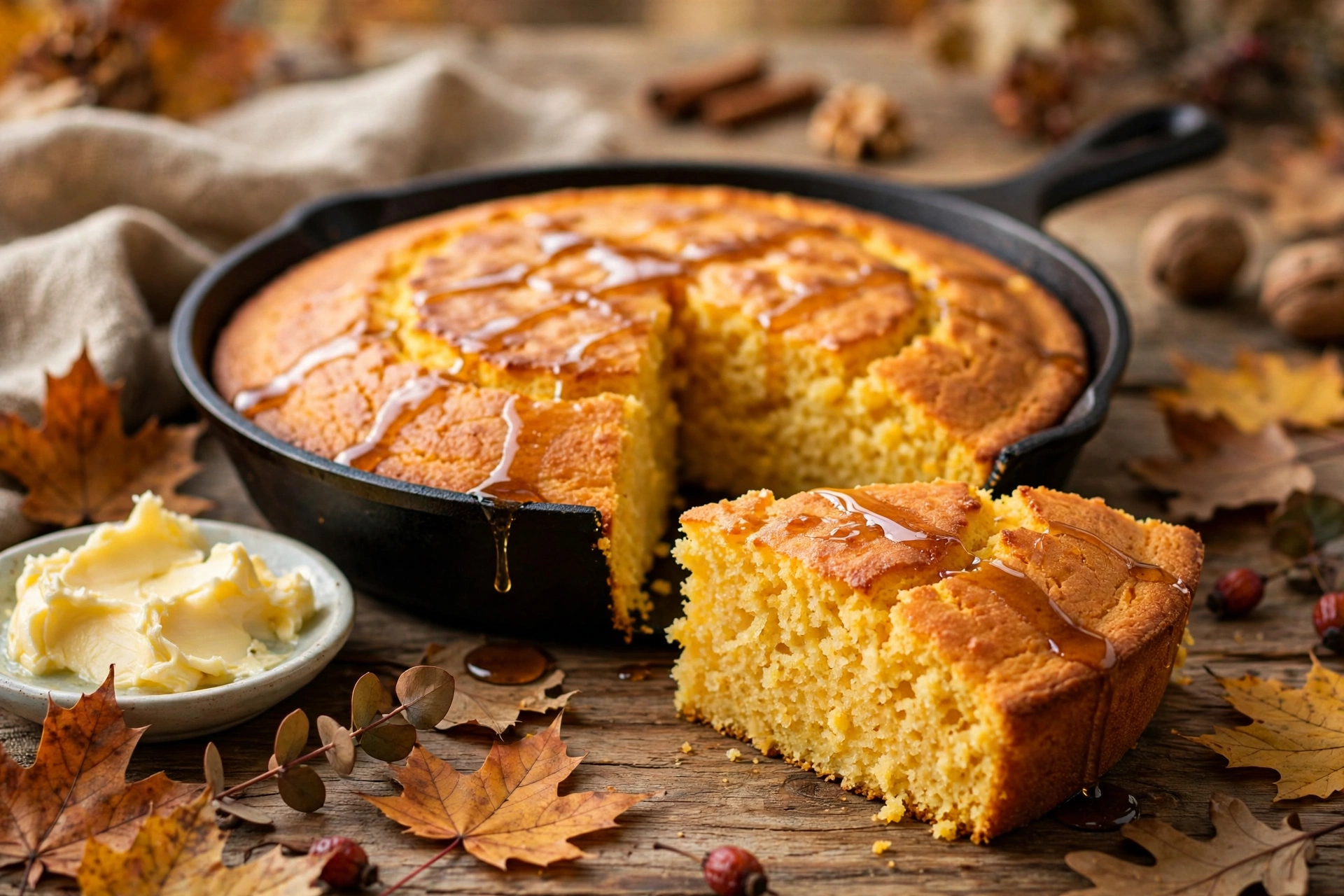
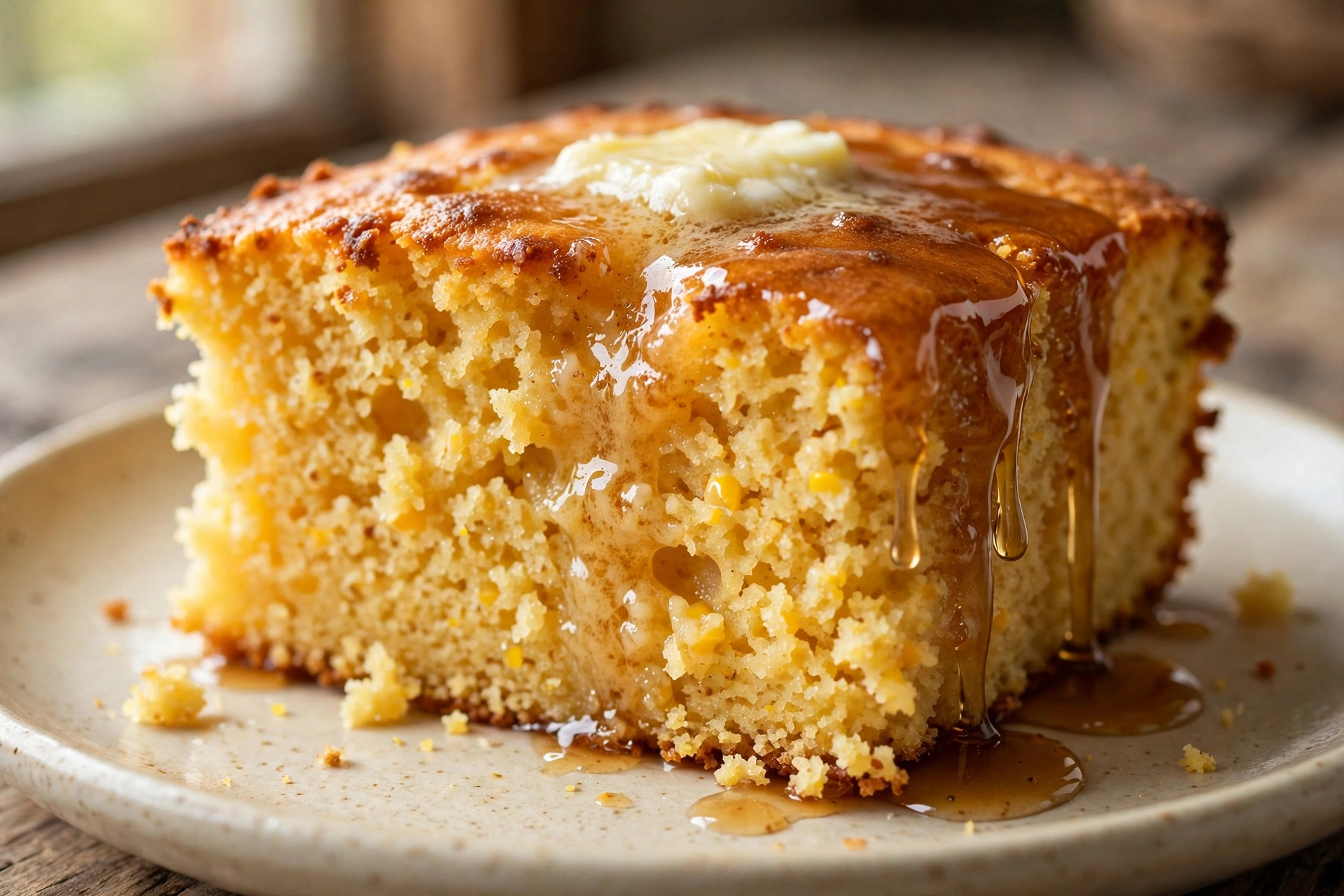
Maple brown butter cornbread is the kind of recipe that makes a whole kitchen smell like October. Picture a golden round fresh from the oven, edges crisp from the hot skillet, the top gleaming under a slow drizzle of maple syrup. Cut into it and the crumb is soft and buttery, freckled with tiny amber specks of browned butter. Each bite opens with gentle maple sweetness, then settles into that toasty, almost nutty finish only browned butter brings. It feels celebratory without being fussy, the kind of bread you bake when company is coming and you want the house to smell incredible. Serve it warm with a pat of salted butter and it will steal attention from whatever sits next to it. Once you have tasted it, plain cornbread will feel like a missed opportunity.
Flavor Notes and Texture Contrast
The dominant flavor is nuttiness, a toasty warmth that arrives the moment the butter foams and the milk solids turn amber. Those browned bits are not decoration; they carry dozens of aromatic compounds born from the Maillard reaction, the same chemistry behind toasted bread and roasted coffee. Maple syrup adds a second layer of depth, its caramel and woodsy notes rounding out the butter instead of overpowering it. Together they make the crumb taste far richer than its simple ingredient list suggests.
Texture is where the hot skillet earns its keep. Pouring batter into a preheated, buttered pan sears the outside on contact, forming a crisp, caramelized crust with slightly chewy edges. Inside, buttermilk and eggs keep the crumb soft, springy, and just sturdy enough to feel satisfying. That contrast between crackly shell and tender middle is what separates skillet cornbread from the pale, cakey versions baked in glass dishes.
Sweetness stays in the medium range, closer to a breakfast bread than a dessert, so it partners happily with savory dishes. A full teaspoon of fine sea salt sharpens everything and keeps the maple from tipping the loaf toward candy. If maple is your weakness, our pumpkin baked donuts with maple glaze scratch the same itch in breakfast form. Warm from the oven, with butter melting into the crumb, this cornbread is deeply comforting without ever feeling heavy.
Leftovers toast beautifully, the edges crisping up even more under the broiler. At room temperature the next day, the maple reads a little stronger, which makes the second slice its own small experience.
Why It Fits Your Schedule
From pantry to table in about forty minutes, this is genuinely a weeknight bread. The batter comes together in one large bowl with a whisk: no mixer, no whipped egg whites, no drama. Browning the butter adds roughly six minutes to the prep, but those six minutes are the entire secret, so they earn their keep.
Baking takes twenty to twenty-five minutes, which is exactly the window you need to reheat soup or finish a pot of chili. Because the skillet is both the baking pan and the serving dish, cleanup is a bowl, a whisk, and one pan. It is built for weeknight dinners, the kind of satisfying meal our harvest chicken and vegetable sheet pan dinner delivers.
It is also a natural make-ahead for holidays: bake it in the morning, warm it before dinner, and nobody will guess it was not fresh from the oven. Sliced and frozen, it feeds a Thanksgiving stuffing project two weeks later with zero extra shopping.
Busy cooks can even brown the butter the night before and stash it in the fridge; it melts right back into the batter the next day. Few fall recipes give this much payoff for this little calendar space.
Diet Conscious Twists
This cornbread is naturally pork-free and alcohol-free, and it adapts well to several common dietary needs without losing its identity. For a gluten-free version, swap the all-purpose flour for a 1-to-1 gluten-free baking blend and check that your cornmeal is certified gluten-free. The crumb stays tender because cornmeal does most of the structural work, so the flour swap is unusually forgiving here. Dairy-free bakers can use a plant-based butter that browns reasonably well, and replace the buttermilk with oat milk plus a tablespoon of lemon juice. The browned flavor will be milder with vegan butter, so add an extra tablespoon of maple syrup to keep the depth. To trim the sugar, cut the maple sugar to a quarter cup and lean on the maple syrup in the batter, plus a drizzle at serving. Low-fat buttermilk works fine for a lighter crumb, though the full-fat version gives a noticeably richer mouthfeel. Whatever the adaptation, keep the browned butter step if you can; it is the soul of the recipe.
Ingredients
- 1/2 cup (1 stick) unsalted butter, cut into pieces
- 1 1/4 cups fine or medium-grind yellow cornmeal
- 1 cup all-purpose flour
- 1/3 cup maple sugar (or packed light brown sugar)
- 1 tablespoon baking powder
- 1/2 teaspoon baking soda
- 1 teaspoon fine sea salt
- 1 1/4 cups buttermilk, at room temperature
- 1/3 cup pure maple syrup, plus more for serving
- 2 large eggs, at room temperature
- 2 tablespoons unsalted butter, melted, for greasing the skillet
- Softened salted butter, for serving
Step by Step Instructions
- Place a 10-inch cast-iron skillet on the center rack and preheat the oven to 400 degrees. Heating the skillet with the oven means zero extra waiting; it will be ready the moment the batter is. Brush the inside of the hot skillet with the melted butter, coating the bottom and sides generously.
- Cut the stick of butter into pieces and melt it in a light-colored saucepan over medium heat. A light pan lets you watch the color change, which is the whole point of this step. If the butter starts to pop, lower the heat slightly; a slower foam gives you more control over the color.
- Keep cooking, swirling the pan often, as the butter foams, then the foam subsides and the milk solids sink and turn amber. This takes about 5 to 6 minutes; tilt the pan so the melted butter pools at one edge, which makes the color of the solids easier to judge. Pull it off the heat the moment it smells nutty and looks the color of toasted hazelnuts, then pour it into a heatproof bowl so it stops cooking.
- Whisk the maple syrup straight into the warm brown butter, then let the mixture cool for 5 minutes so it does not scramble the eggs later.
- In a large mixing bowl, whisk together the cornmeal, flour, maple sugar, baking powder, baking soda, and salt until evenly combined and free of lumps. Whisk for a full thirty seconds so the leaveners distribute evenly; hidden pockets of baking powder taste bitter in the finished crumb.
- In a second bowl, whisk the buttermilk and eggs until smooth, then whisk in the cooled brown butter and maple mixture. At this point the bowl smells like a maple orchard in October, which is the first real hint of what makes maple brown butter cornbread so irresistible.
- Pour the wet mixture into the dry ingredients and fold gently with a spatula just until no dry streaks remain. Scrape the bowl well with the spatula; the browned bits tend to settle at the bottom and you want every last one in the batter. A few small lumps are fine, and overmixing will make the crumb tough instead of tender.
- Carefully pour the batter into the hot greased skillet; it should sizzle faintly at the edges. Use serious oven mitts here; a cast-iron handle stays dangerously hot long after it leaves the oven. Smooth the top with the spatula and slide it into the oven.
- Bake for 20 to 25 minutes, until the top is deep golden and a toothpick inserted in the center comes out clean or with a few moist crumbs. If the top is browning faster than the center is setting, tent it loosely with foil for the last five minutes. Cool in the skillet for 10 minutes, then cut into 8 wedges and serve warm with softened butter and extra maple syrup.
Secrets for Foolproof Success
Watch the butter like a hawk in the final minute; it goes from perfectly amber to scorched in about thirty seconds. Use a light-colored saucepan if you own one, because in a dark pan you cannot see the milk solids change color and browning becomes guesswork; King Arthur Baking walks through the visual cues in their brown butter guide. If you do scorch it, start over; burnt butter tastes bitter and no amount of maple will hide it.
Room-temperature buttermilk and eggs matter more than they seem: cold dairy can make the warm brown butter seize into little beads instead of blending smoothly. Set the dairy on the counter thirty minutes before you start, and give the brown butter five full minutes to cool before whisking it in. Fold the batter gently and stop early; overworked cornbread turns dense and crumbly instead of tender.
A genuinely hot skillet is non-negotiable for the crisp crust, so preheat it with the oven and do not skip the greasing step. If your oven runs hot, check at eighteen minutes; a too-dark crust usually means the oven was the culprit, not the recipe.
Finally, give it ten minutes of rest before slicing so the crumb sets and the wedges cut cleanly. Use a sharp serrated knife with a gentle sawing motion, and serve the wedges on warmed plates; cold plates steal heat from that crisp crust fast.
Variations to Try Next Time
Fold a cup of fresh or frozen cranberries into the batter for a tart contrast that fits Thanksgiving perfectly. A cup of toasted pecans adds crunch and leans into the nutty flavor the brown butter already started. For a gentle heat, whisk one finely minced, seeded jalapeno into the wet ingredients; maple and mild spice are surprisingly good friends. Swap the jalapeno for a cup of sharp cheddar and you get a sweet-salty loaf that disappears at potlucks.
Bake the batter in a buttered 12-cup muffin tin at 375 degrees for 15 to 18 minutes for portable cornbread muffins. No cast iron? A buttered 9×9-inch metal pan at 400 degrees for 20 to 25 minutes works nearly as well, with slightly softer edges. Double the recipe in a 9×13-inch pan for a crowd, keeping the same temperature and adding about five minutes to the bake.
For a breakfast version, split warm wedges and fill them with softened cream cheese and a spoonful of slow cooker apple butter. That pairing lands somewhere between toast and pastry, and it is dangerously good. You can also crumble day-old slices over a bowl of chili, where the maple-tinged crumbs soak up broth like tiny dumplings.
Keeping It Fresh: Storage Guide
Maple brown butter cornbread stores beautifully, which makes it one of the rare quick breads that tastes nearly as good on day three. Keep leftover wedges in an airtight container at room temperature for up to two days, or in the refrigerator for up to five. Warm slices in a 300-degree oven for eight minutes or toast them in a dry skillet to bring the crust back to life. Avoid the microwave if you can; it steams the crust soft and ruins the texture you worked for.
For longer storage, wrap individual wedges tightly in plastic, then foil, and freeze for up to three months. Thaw overnight in the refrigerator or on the counter for an hour, then rewarm in the oven. Frozen wedges also make excellent stuffing: cube them, dry the cubes in a low oven, and proceed with your favorite holiday recipe. If you plan to freeze a whole round for the holidays, slice it first; frozen wedges thaw faster and reheat more evenly than a whole loaf.
Conclusion
Maple brown butter cornbread is proof that a few smart techniques beat a long ingredient list every time. Browned butter brings the nuttiness, maple brings the warmth, and a hot skillet brings the crunch; together they turn a humble quick bread into the dish people ask about. It fits busy weeknights, crowded holiday tables, and quiet fall mornings with equal ease. Bake it once and you will find yourself looking for excuses to make it again, starting with breakfast tomorrow alongside our cinnamon swirl pumpkin bread. This is the cornbread I will be baking all season, and I have a feeling it will become yours too.
FAQ
Can I make this cornbread without a cast-iron skillet?
Yes. Use a buttered 9×9-inch metal baking pan at the same 400-degree temperature for 20 to 25 minutes. You will get slightly softer edges and less of that signature crust, but the flavor stays the same. A glass dish works too, though it browns less; drop the temperature to 375 degrees if the top darkens too fast.
My brown butter smells sharp and the bits look black. Can I still use it?
No, start over. Sharp or acrid smells and black specks mean the milk solids burned, and that bitterness will carry straight through the crumb. Brown butter is ready when the foam subsides, the bits are amber, and it smells like toasted nuts. The whole step takes about five minutes, so a second batch costs almost nothing.
Can I swap the maple syrup for honey in maple brown butter cornbread?
You can, using the same amount, but the bread will taste different. Honey brings floral notes and a little more sweetness, while maple brings the caramel depth that pairs with the brown butter. If you make the swap, keep at least two tablespoons of maple syrup in the batter so the recipe keeps some of its identity.
Why did my cornbread come out dry and crumbly?
The usual suspects are overbaking, overmixing, or mismeasured cornmeal. Start checking at eighteen minutes and pull the pan when a toothpick shows moist crumbs, not a dry stick. Fold the batter just until no dry streaks remain, and spoon your cornmeal into the measuring cup instead of scooping, which packs it down and adds too much.
Can I bake this ahead and freeze it for Thanksgiving stuffing?
Absolutely, and it makes outstanding stuffing. Bake and cool the cornbread completely, wrap the wedges tightly in plastic and foil, and freeze for up to three months. Thaw overnight, cut into cubes, and dry them in a 250-degree oven for about an hour before mixing your stuffing.
Maple Brown Butter Cornbread
Ingredients
-
- 1/2 cup (1 stick) unsalted butter, cut into pieces
-
- 1 1/4 cups fine or medium-grind yellow cornmeal
-
- 1 cup all-purpose flour
-
- 1/3 cup maple sugar (or packed light brown sugar)
-
- 1 tablespoon baking powder
-
- 1/2 teaspoon baking soda
-
- 1 teaspoon fine sea salt
-
- 1 1/4 cups buttermilk, at room temperature
-
- 1/3 cup pure maple syrup, plus more for serving
-
- 2 large eggs, at room temperature
-
- 2 tablespoons unsalted butter, melted, for greasing the skillet
-
- Softened salted butter, for serving
Instructions
Place a 10-inch cast-iron skillet on the center rack and preheat the oven to 400 degrees F. Brush the inside of the hot skillet with the melted butter, coating the bottom and sides generously.
Cut the stick of butter into pieces and melt it in a light-colored saucepan over medium heat. Watch the color change as it cooks.
Keep cooking, swirling the pan often, as the butter foams, then the foam subsides and the milk solids sink and turn amber, about 5 to 6 minutes. Pull it off the heat the moment it smells nutty, then pour it into a heatproof bowl so it stops cooking.
Whisk the maple syrup straight into the warm brown butter, then let the mixture cool for 5 minutes so it does not scramble the eggs.
In a large mixing bowl, whisk together the cornmeal, flour, maple sugar, baking powder, baking soda, and salt until evenly combined and free of lumps.
In a second bowl, whisk the buttermilk and eggs until smooth, then whisk in the cooled brown butter and maple mixture.
Pour the wet mixture into the dry ingredients and fold gently with a spatula just until no dry streaks remain. A few small lumps are fine; overmixing makes the crumb tough.
Carefully pour the batter into the hot greased skillet; it should sizzle faintly at the edges. Smooth the top with the spatula and slide it into the oven.
Bake for 20 to 25 minutes, until the top is deep golden and a toothpick inserted in the center comes out clean or with a few moist crumbs.
Cool in the skillet for 10 minutes, then cut into 8 wedges and serve warm with softened butter and extra maple syrup.