In this article:
- Why these eggnog pancakes rise so tall
- Whipped egg whites, the step nobody bothers with
- Getting the batter thickness right with any brand of eggnog
- Ingredients
- Making the eggnog pancakes, step by step
- Griddle heat and the two minute flip
- Nutmeg butter, eggnog glaze and the topping bar
- Lighter, dairy free and whole grain versions
- Serving a crowd without a cold pancake
- Freezing the leftovers for January mornings
- Questions I get about these eggnog pancakes
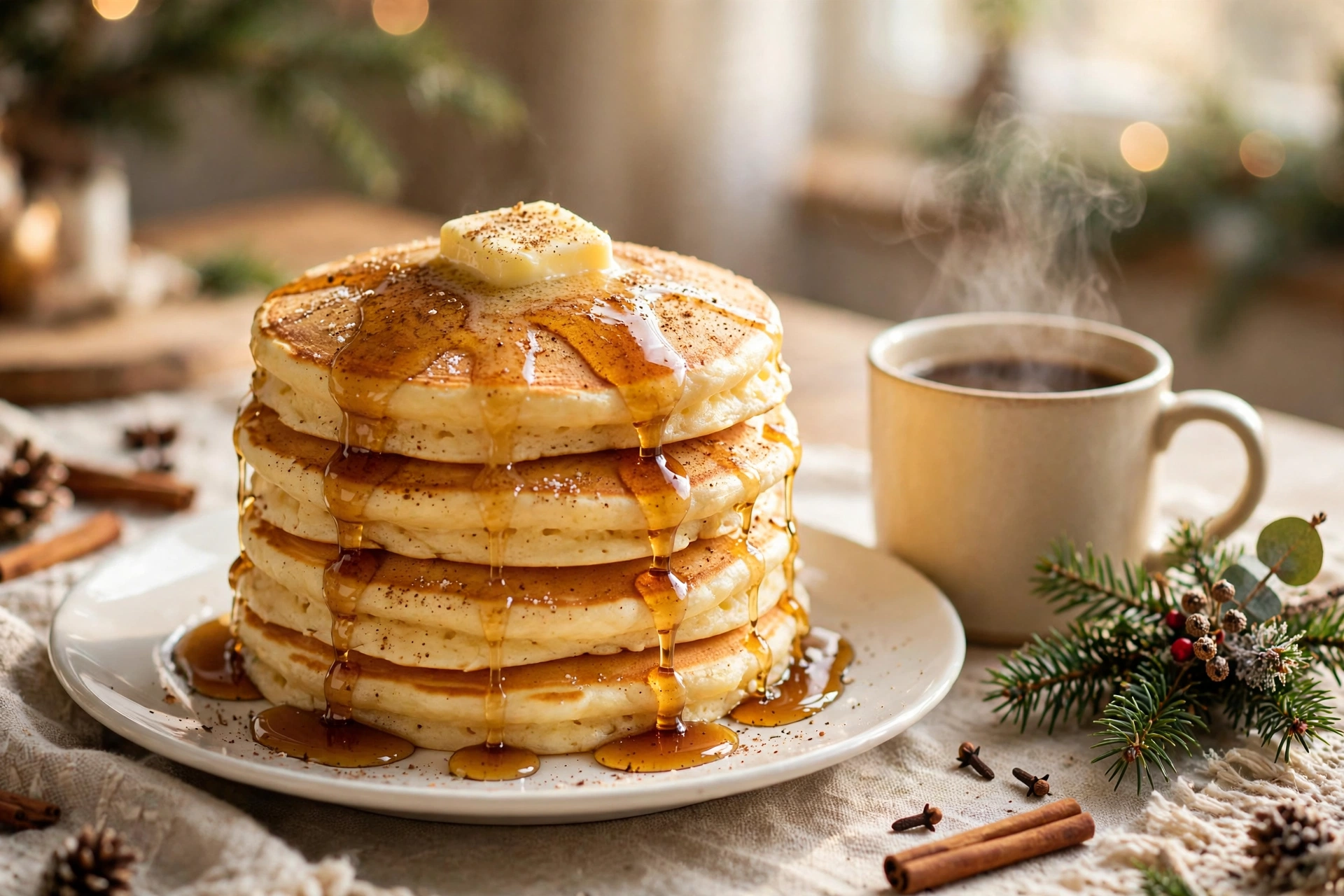
These eggnog pancakes are the Christmas morning stack that finally does the drink justice: tall, golden, custard flavored all the way through, with nutmeg grated fresh over a melting knob of spiced butter.
The batter borrows everything good about eggnog, the creaminess, the gentle spice, the holiday smell, and then fixes the one thing eggnog usually ruins, which is lift. A rich liquid makes heavy pancakes unless you build the air in yourself.
That is what the whipped whites are for. Four extra minutes with a whisk, and the stack stands up like it came from a diner griddle, only softer in the middle and edged in gold.
Why These Eggnog Pancakes Rise So Tall
These eggnog pancakes rise because the recipe refuses to ask one ingredient to do two jobs. Baking powder gives the first lift in the bowl, but the real height comes from air beaten into the egg whites and folded through at the end.
Eggnog is a heavy liquid, closer to a thin custard than to milk. Poured straight into flour with whole eggs, it produces a tender pancake that spreads wide and stays low, pleasant but forgettable.
Separating the eggs changes the structure entirely. The yolks go in with the eggnog for richness and color, and the whites, whipped to soft peaks, carry thousands of tiny air pockets that expand on the hot griddle.
The ten minute rest is the quiet partner of the method. Flour hydrates, the baking powder wakes up, and the batter thickens to the point where a scoop holds its shape for a moment instead of running to the edges of the pan.
Heat does the rest. At 350 degrees the bottom sets before the air escapes, the sides firm up, and by the time you flip, the pancake has already decided to be tall.
Whipped Egg Whites, the Step Nobody Bothers With
Most eggnog pancake recipes skip the whites because the drink already contains eggs, and one bowl feels easier than two. Easier, yes. The same result, no. The whites are the difference between a pancake and a small cake.
Soft peaks are the target, not stiff ones. The whites should stand up, then curl gently at the tip when you lift the whisk. Stiff, dry whites fold in badly and leave white streaks that cook into rubbery threads.
Fold in two additions, not one. The first third loosens the thick batter so the rest of the whites can go through it without being beaten flat by a heavy spoon.
Use a wide spatula and turn the bowl as you work, cutting down the middle and sweeping up from the bottom. Twelve gentle turns is about right; a few small white wisps are fine and far better than a deflated batter. Work this step last, with the griddle already heating: whipped whites wait for no one.
Getting the Batter Thickness Right With Any Brand of Eggnog
Eggnog is not one ingredient, it is a category. Some brands pour like heavy cream, others like milk, and the sugar level swings just as widely. A recipe that ignores this sends half its readers a batter that is wrong.
The target consistency is a thick ribbon. Lift the whisk and the batter should fall in a slow fold that holds its shape on the surface for two seconds before melting back in.
If your batter runs like water, your eggnog was thin; whisk in flour one tablespoon at a time, up to three, and give it two minutes to hydrate before judging again. Thin batter makes wide, floppy pancakes no matter how good the whites were.
If the batter stands in stiff dollops, the eggnog was rich; loosen it with milk, one tablespoon at a time, until the ribbon behaves. A batter that cannot spread a little on the griddle cooks up bready and pale.
Taste the first pancake and adjust the salt and nutmeg, not the sugar. Most eggnogs are sweet enough already, and the toppings bring more. The cook’s pancake is the calibration tool; use it.
Ingredients
For the pancakes: – 2 cups (250 g) all purpose flour – 2 tablespoons granulated sugar – 1 tablespoon baking powder – 1/2 teaspoon baking soda – 3/4 teaspoon fine salt – 1 teaspoon ground cinnamon – 3/4 teaspoon freshly grated nutmeg, plus more for serving – 1 1/2 cups (360 ml) eggnog, well shaken – 2 large eggs, separated, at room temperature – 3 tablespoons unsalted butter, melted, plus more for the griddle – 1 teaspoon vanilla extract
For serving: – 4 tablespoons unsalted butter, softened, stirred with 1/4 teaspoon grated nutmeg (nutmeg butter) – Maple syrup, warmed – Optional eggnog glaze: 3/4 cup (90 g) powdered sugar whisked with 2 to 3 tablespoons eggnog
Making the Eggnog Pancakes, Step by Step
- In a large bowl, whisk together the flour, sugar, baking powder, baking soda, salt, cinnamon and nutmeg until the spices are evenly distributed and no streaks remain.
- In a second bowl, whisk the eggnog with the two egg yolks, the melted butter and the vanilla until smooth and pale.
- Pour the wet mixture into the dry and stir with a spatula until just combined. The batter should be thick and lumpy; stop as soon as no dry flour shows.
- In a clean bowl, beat the egg whites with a whisk or hand mixer to soft peaks: glossy, standing up, with tips that curl gently over.
- Fold one third of the whites through the batter to loosen it, then fold in the rest in about twelve gentle turns, keeping as much air as you can. Let the batter rest for 10 minutes while the griddle heats.
- Heat a griddle or large skillet to 350°F (175°C), medium heat, and brush lightly with butter. Scoop a heaping 1/3 cup of batter per pancake, leaving room to spread slightly.
- Cook for 2 to 3 minutes, until bubbles cover the surface, the edges look set and matte, and the bottom is deep golden. Flip once and cook 1 to 2 minutes more, until the second side is golden and the pancake springs back when pressed.
- Move finished pancakes to a wire rack in a 200°F (95°C) oven while you cook the rest. Serve in warm stacks with the nutmeg butter melting over the top, maple syrup or eggnog glaze, and a final grating of nutmeg.
Griddle Heat and the Two Minute Flip
Pancakes forgive almost everything except the wrong heat. Too hot, and the bottom scorches while the middle stays raw under all that lovely height; too cool, and the air leaks out before the structure sets, leaving a pale, tired disc.
A griddle at 350 degrees is the sweet spot, and the water test tells you where you are without a thermometer: flick a few drops on the surface, and they should dance and vanish in about two seconds. Sitting and simmering means too cool; vanishing on contact means too hot.
Butter the surface lightly and wipe most of it back off with a folded paper towel. A thin film gives golden, even color; a puddle fries the edges into dark lace and hides the flip signals under foam.
Flip once, and flip on evidence, not on the clock. Bubbles across the whole surface, edges that look dry and set, and a bottom that releases without tearing: that is the moment, usually near two minutes with this batter.
Resist pressing the pancake with the spatula after the flip. Every press squeezes out the air you folded in so carefully and trades height for a dense, gummy middle. Hands off, and let the second side have its ninety seconds.
Nutmeg Butter, Eggnog Glaze and the Topping Bar
The nutmeg butter is the smallest recipe in this article and the one people ask about. Softened butter stirred with freshly grated nutmeg melts over the hot stack and carries the spice into every layer as it runs down.
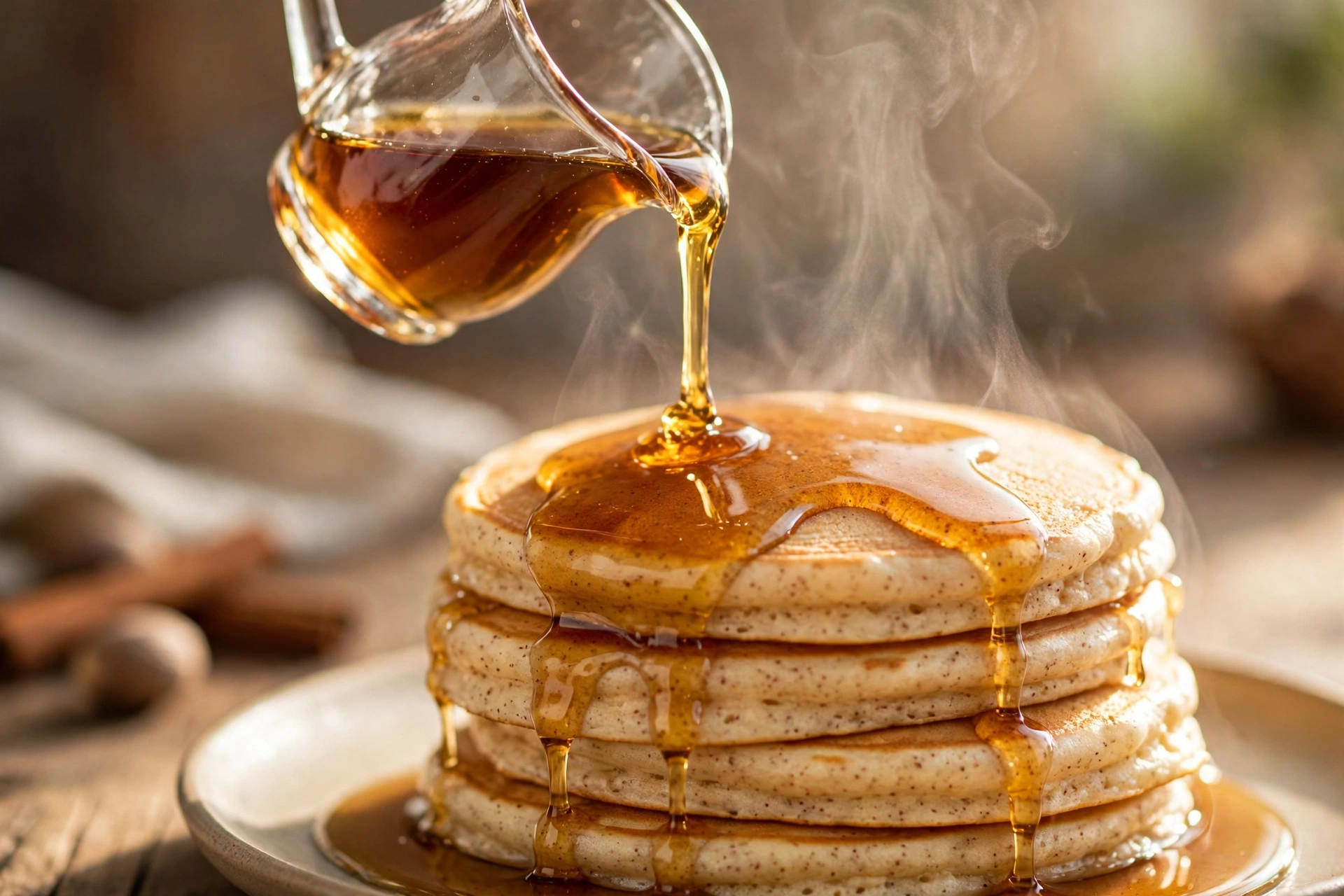
Maple syrup is the classic pour, and warm syrup matters more than the grade: cold syrup on hot pancakes drops the whole plate ten degrees. A small pitcher in a bowl of hot water on the table solves it quietly.
The eggnog glaze is the finishing option for a sweet table. Whisked thick with powdered sugar, it drapes the stack like the icing on a cinnamon roll and doubles down on the custard flavor of the pancakes themselves.
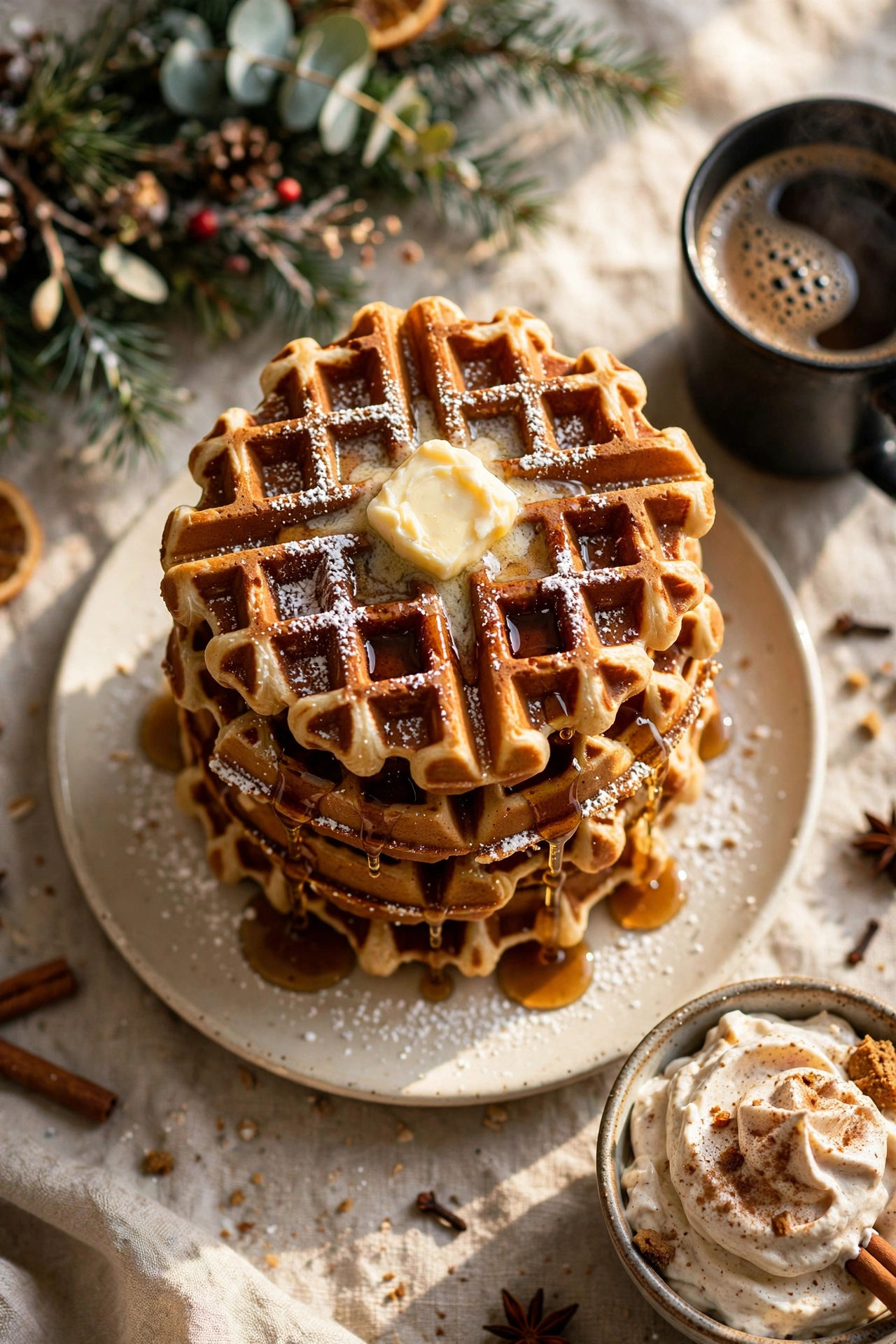
For a full Christmas morning spread, set the stack beside the gingerbread waffles from yesterday’s baking and let people argue their loyalties, then put out a bowl of macerated cranberries or orange segments. The bright, tart note cuts the richness exactly where the plate needs it.
Powdered sugar snow is decoration, nothing more, but on Christmas morning decoration is part of breakfast. Dust it on at the table, never before, because it melts into the butter within minutes.
Lighter, Dairy Free and Whole Grain Versions
For a lighter stack, swap half the eggnog for low fat milk and keep the whites exactly as written. You lose a little custard depth, the nutmeg compensates, and the height stays because the height was never about the fat.
Dairy free works with the oat based and almond based nogs sold every December. They run thinner than dairy eggnog, so expect to add a tablespoon or two of flour to reach the ribbon consistency described above.
Whole grain is the swap that needs honesty about texture. Half whole wheat pastry flour and half all purpose keeps the stack tender; a full swap makes a hearty, wheaty pancake that is good, but a different breakfast.
Gluten free blends with xanthan gum included behave well here, because the whipped whites carry the structure. Rest that batter the full ten minutes; those flours hydrate slowly. For a smaller table, halve everything and use one egg, divided as written.
Serving a Crowd Without a Cold Pancake
The oven rack trick is the whole system. A wire rack set over a sheet pan in a 200 degree oven holds finished pancakes warm and dry; stacked on a plate, they steam each other soft and lose their golden edges.
Cook in the order people will eat, not in the order of the batter bowl. The first two pancakes of any batch are the calibration pair; eat those standing at the griddle, adjust the heat, then cook the table’s stacks in earnest.
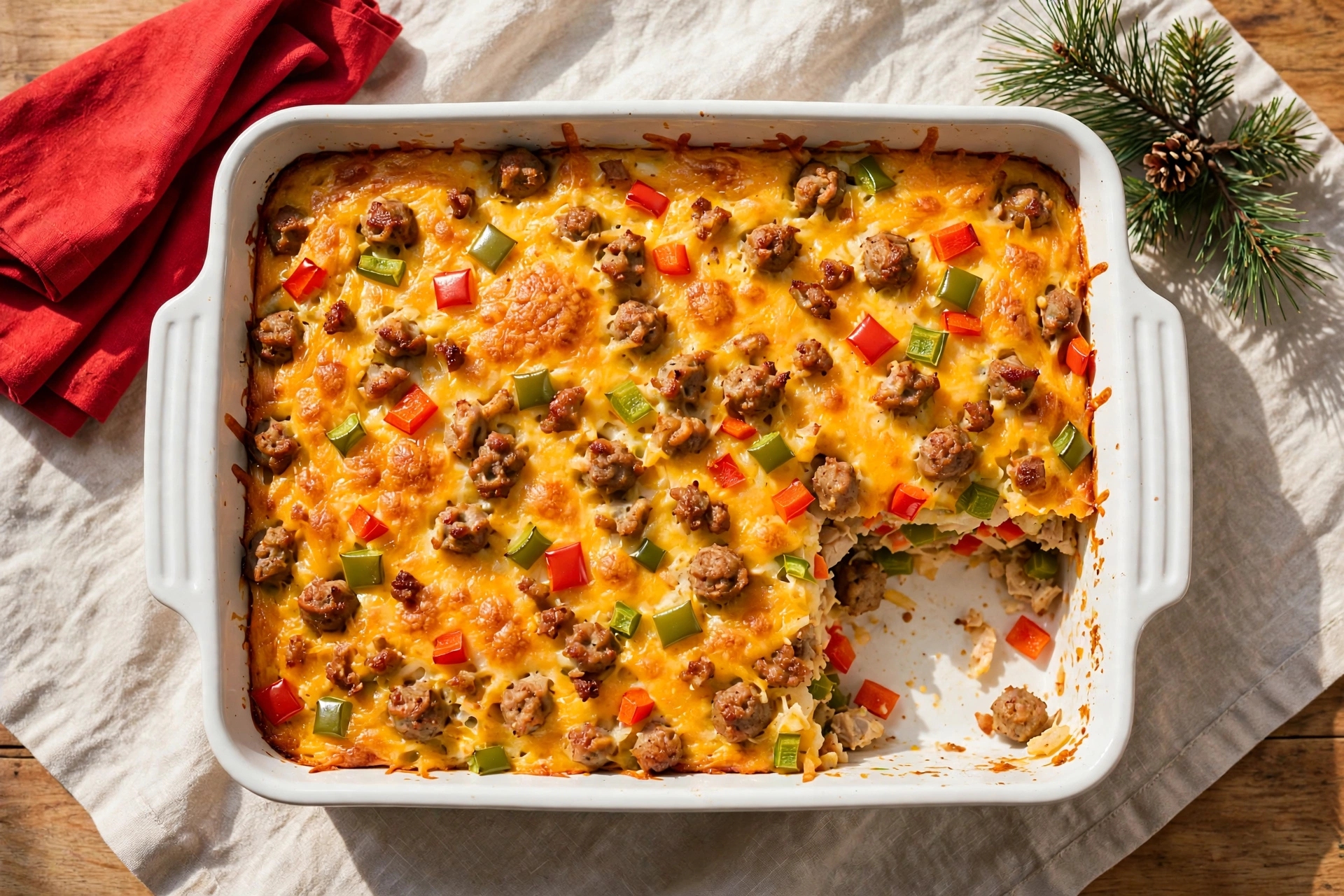
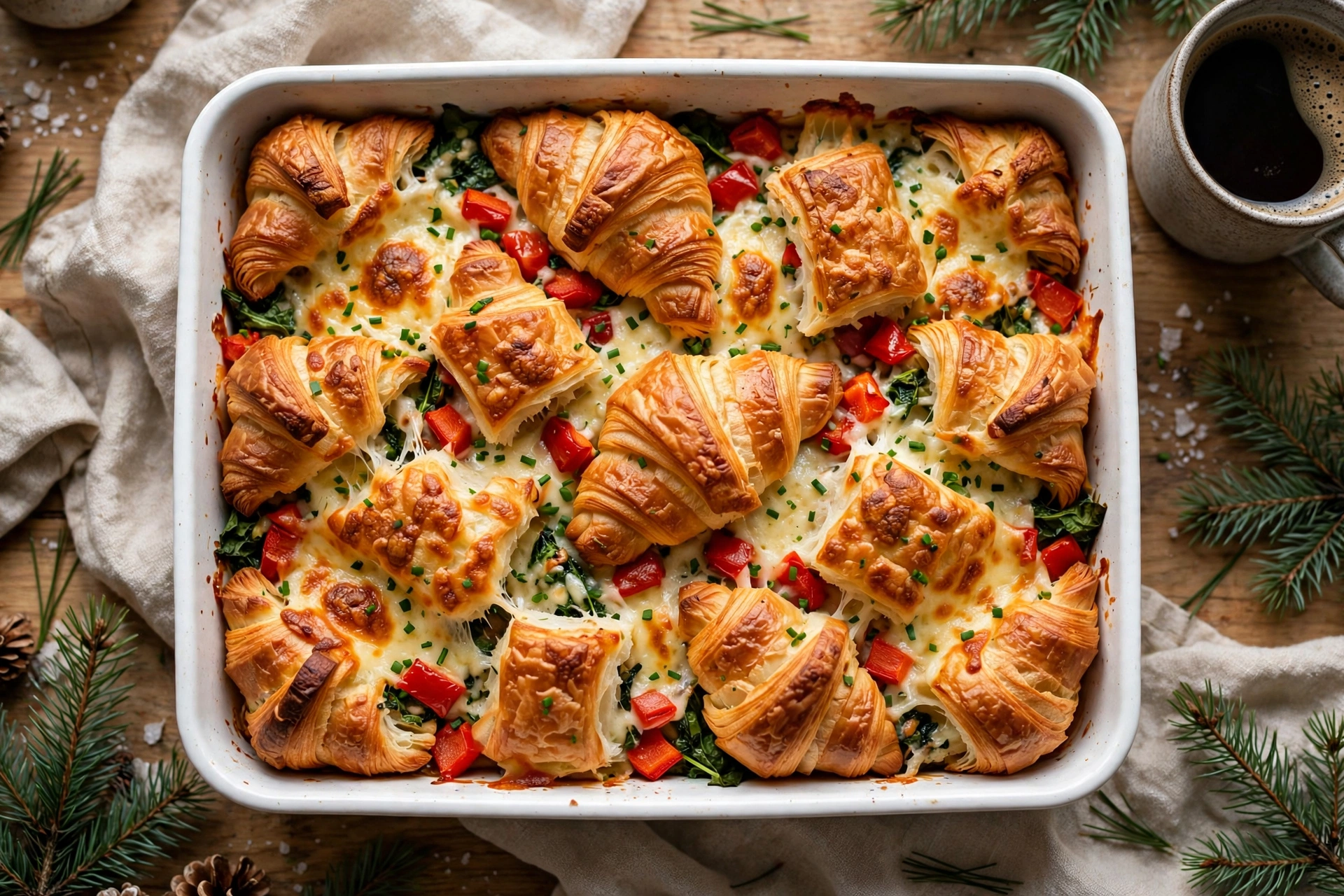
With the savory side covered by the christmas breakfast strata and a pan of the overnight hash brown breakfast casserole reheating alongside, the pancakes can be the last thing cooked and the first thing carried in, which is exactly the entrance they deserve.
Do not make the batter the night before, whatever the internet promises. Baking powder starts spending itself the moment it meets liquid, and whipped whites cannot be held at all. The morning work is fifteen honest minutes; everything else, the coffee, the table, the strata, can be done ahead.
If a second batch is likely, hold back a third of the dry mix in reserve. A fresh small batter at the end beats a tired big one that has been sitting, deflating, since the first round.
Freezing the Leftovers for January Mornings
Leftover pancakes freeze better than almost any breakfast I know. Cool them completely on a rack first; freezing warm pancakes traps steam, and steam is what turns a thawed pancake soggy.
Layer them between small squares of parchment in a freezer bag, press the air out, and freeze for up to two months. The parchment is not fussiness; it is what lets you take out two pancakes on a grey Tuesday instead of a frozen brick of eight.
Reheat from frozen in the toaster on a medium setting, or in a 350 degree oven for 6 to 8 minutes on a rack. The microwave works in 30 second bursts but returns a soft pancake, fine for a desk breakfast, not for company.
Fridge leftovers keep three days, wrapped, and reheat the same way with a minute less. Food safety guidance for egg based breakfasts is simple: refrigerate within two hours, and the foodsafety.gov storage charts give the same windows if you want them in writing.
Eggnog pancakes on Christmas morning are a celebration; the same stack reheated in January is a small, deliberate kindness to yourself. Both are worth the four minutes it takes to whip the whites.
Questions I Get About These Eggnog Pancakes
Do I really have to whip the egg whites separately? For the tall stack, yes. Whole eggs whisked in give a good, ordinary pancake; the whipped whites are what make this version stand up. If you skip them, add a quarter teaspoon more baking powder and accept a flatter, denser result.
Can I use homemade eggnog instead of store bought? Yes, and it is often better, because you control the spice. Homemade eggnog tends to be thinner, so expect to add a tablespoon or two of flour to reach the thick ribbon consistency. Taste the first pancake and adjust the nutmeg upward.
Why did my pancakes come out flat even with whipped whites? Three usual causes: the whites were beaten stiff and dry, so they broke instead of folding; the batter waited too long before cooking; or the griddle was too cool and the air escaped before the structure set. Soft peaks, a rested but prompt batter, and 350 degrees fix nearly every case.
My eggnog is very sweet. Should I change the recipe? Drop the 2 tablespoons of sugar in the dry mix entirely and keep everything else. Then serve with the nutmeg butter and fruit rather than syrup, and the plate balances itself. The salt stays; it is what keeps the spice flavors in focus.
Can I make these on a regular skillet instead of a griddle? Yes. Use your heaviest skillet over medium heat, work two pancakes at a time so the pan keeps its heat, and give the surface a fresh wipe of butter between rounds. Heavy pans hold temperature, and temperature is the whole game here.
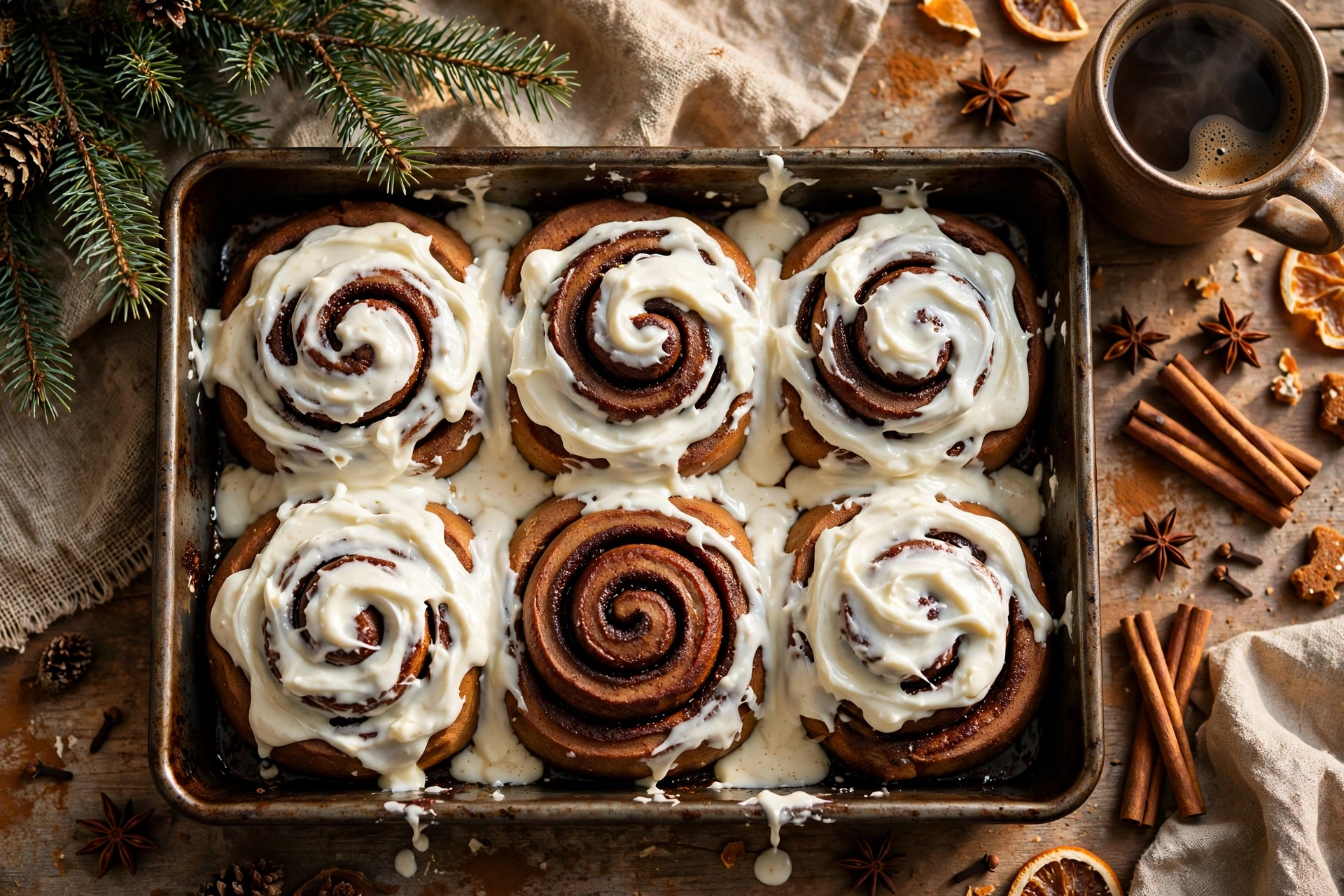
What else goes on a Christmas morning table with these? Something savory and something bright. At our house it is the gingerbread cinnamon rolls for the sweet tooths who arrive early, coffee that never seems to empty, and a bowl of orange segments with the pancakes. Keep the menu short and the stacks tall.
Nutrition per serving (estimated, 6 servings, 2 pancakes each, without toppings): Calories 330, Total Fat 12 g, Saturated Fat 6 g, Unsaturated Fat 5 g, Trans Fat 0 g, Carbohydrates 45 g, Fiber 1 g, Sugar 16 g, Protein 8 g, Sodium 480 mg, Cholesterol 95 mg.
Prep Time: 25 minutes Cook Time: 15 minutes Total Time: 40 minutes Yield: 12 pancakes (6 servings)
Print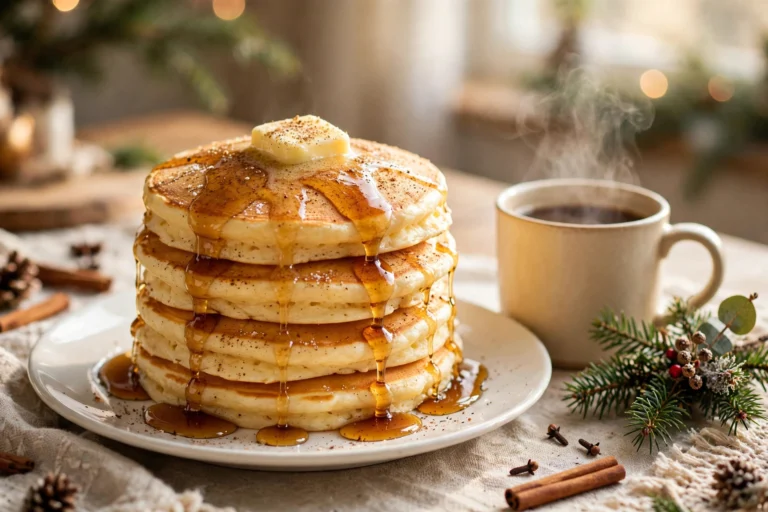
Eggnog Pancakes, Tall and Fluffy
Tall, fluffy Christmas morning pancakes made with real eggnog, separated eggs and whipped whites folded in at the end for height, plus a batter thickness guide for any brand of eggnog, nutmeg butter, an optional eggnog glaze, and a freezing plan for leftovers.
- Total Time: 40 minutes
- Yield: 12 pancakes (6 servings) 1x
Ingredients
- 2 cups (250 g) all purpose flour
- 2 tablespoons granulated sugar
- 1 tablespoon baking powder
- 1/2 teaspoon baking soda
- 3/4 teaspoon fine salt
- 1 teaspoon ground cinnamon
- 3/4 teaspoon freshly grated nutmeg, plus more for serving
- 1 1/2 cups (360 ml) eggnog, well shaken
- 2 large eggs, separated, at room temperature
- 3 tablespoons unsalted butter, melted, plus more for the griddle
- 1 teaspoon vanilla extract
- 4 tablespoons unsalted butter, softened, stirred with 1/4 teaspoon grated nutmeg (nutmeg butter, for serving)
- Maple syrup, warmed, for serving
- 3/4 cup (90 g) powdered sugar whisked with 2 to 3 tablespoons eggnog (optional eggnog glaze)
Instructions
- In a large bowl, whisk together the flour, sugar, baking powder, baking soda, salt, cinnamon and nutmeg until the spices are evenly distributed and no streaks remain.
- In a second bowl, whisk the eggnog with the two egg yolks, the melted butter and the vanilla until smooth and pale.
- Pour the wet mixture into the dry and stir with a spatula until just combined. The batter should be thick and lumpy; stop as soon as no dry flour shows.
- In a clean bowl, beat the egg whites with a whisk or hand mixer to soft peaks: glossy, standing up, with tips that curl gently over.
- Fold one third of the whites through the batter to loosen it, then fold in the rest in about twelve gentle turns, keeping as much air as you can. Let the batter rest for 10 minutes while the griddle heats.
- Heat a griddle or large skillet to 350°F (175°C), medium heat, and brush lightly with butter. Scoop a heaping 1/3 cup of batter per pancake, leaving room to spread slightly.
- Cook for 2 to 3 minutes, until bubbles cover the surface, the edges look set and matte, and the bottom is deep golden. Flip once and cook 1 to 2 minutes more, until the second side is golden and the pancake springs back when pressed.
- Move finished pancakes to a wire rack in a 200°F (95°C) oven while you cook the rest. Serve in warm stacks with the nutmeg butter melting over the top, maple syrup or eggnog glaze, and a final grating of nutmeg.
- Prep Time: 25 minutes
- Cook Time: 15 minutes
Nutrition
- Serving Size: 2
- Calories: 330
- Sugar: 16
- Sodium: 480
- Fat: 12
- Saturated Fat: 6
- Unsaturated Fat: 5
- Trans Fat: 0
- Carbohydrates: 45
- Fiber: 1
- Protein: 8
- Cholesterol: 95