

Pfeffernusse Cookies, German Spiced Domes in a Lemon Glaze
In this article:
- What Makes Pfeffernusse Cookies the Snow Domes of December
- The Spice Ledger: Seven Warm Notes, One Quiet Heat
- Ingredients
- Mixing, Chilling and Rolling the Pfeffernusse Cookies
- Glaze That Sets Hard, or a Coat of Snow
- The Two Day Wait That Makes Them Better
- Building the Christmas Cookie Box Around Them
- Your Pfeffernusse Questions, Answered
- The First Box Leaves the House
Pfeffernusse cookies are the small, spice dark domes that German bakers have tucked into Christmas tins for centuries, and they might be the most rewarding cookie on my whole December list. The name means pepper nuts, a nod to their size and to the real white pepper warming the crumb.
They look plain in the tin, all white and round like a row of snowballs. Then you bite one and the whole spice cabinet arrives in order: cinnamon first, then ginger and clove, cardamom humming underneath, and a slow, gentle heat at the very end that makes you reach for a second.
This version keeps the old bones, honey and molasses, a firm chill, a short hot bake, but finishes them with a lemon glaze that sets hard and travels well. No baker’s ammonia, nothing to special order. Just a dough that rests, a spice blend measured with intent, and cookies that taste better on day three than on day one.
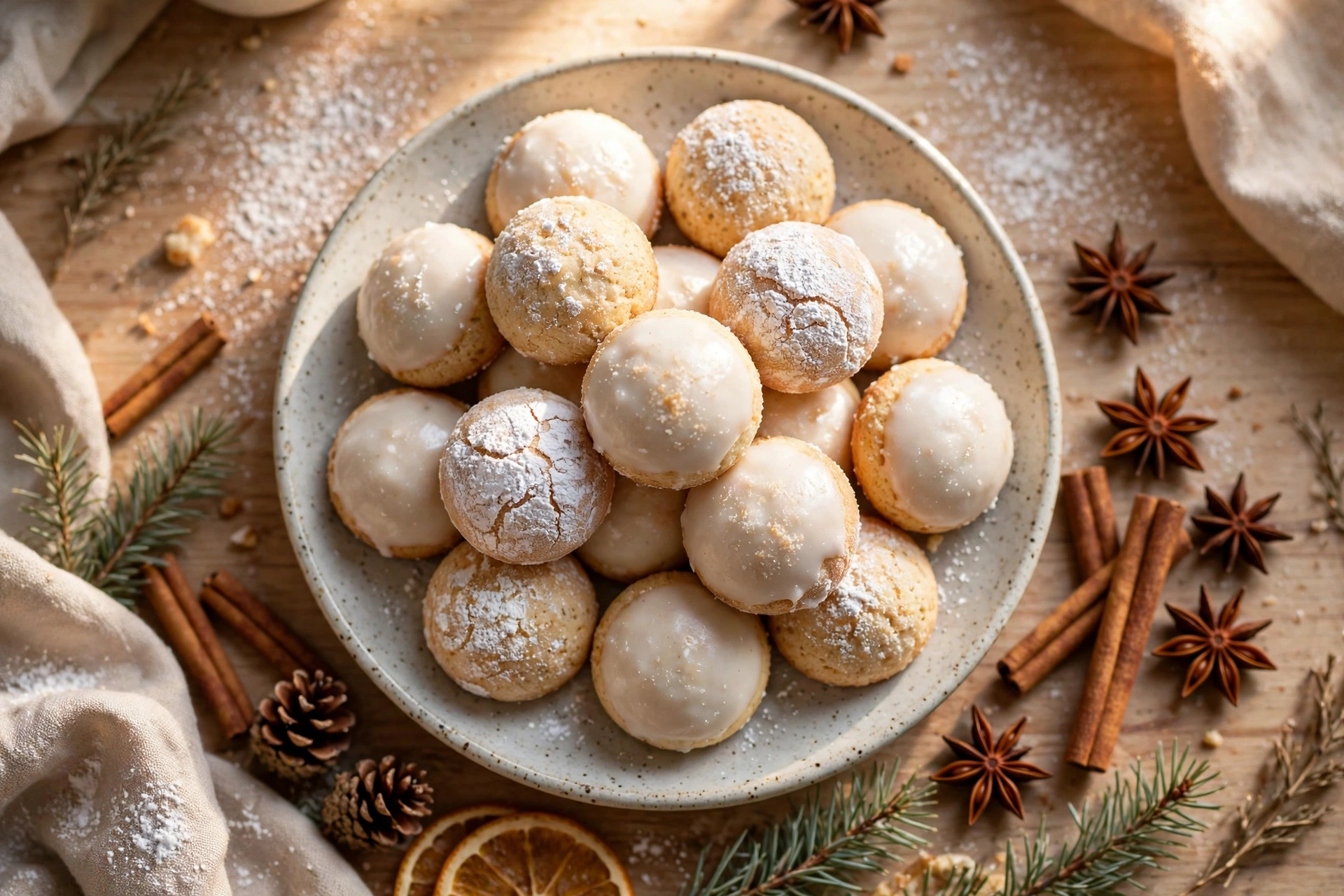
What Makes Pfeffernusse Cookies the Snow Domes of December
Pfeffernusse cookies work because they are built like a spice cake in miniature, not like a sugar cookie with spices sprinkled on. Honey and molasses carry the flour, which gives the crumb its deep color, its chew, and its keeping power. A pale, buttery cookie could never hold seven spices in balance; this dark base can.
The dome shape is functional, not cute. A small, thick ball of dough bakes with a set shell and a soft center, and it stays soft because there is so little surface drying out. Roll them bigger and they eat like scones. Roll them true to size, about an inch across, and they stay tender for weeks.
The white coat is the last piece of engineering. It seals the surface, slows the drying, and gives the eye a winter signal before the first bite. Between the dark crumb, the white glaze and the slow pepper finish, every cookie delivers three small surprises. That is a lot of architecture for something eaten in two bites.
They belong to the lebkuchen family, the honey sweetened spice cakes of Nuremberg and the towns around it, shrunk to pocket size for travel and gifting. Bakers shaped them small because a cookie this dense is rich fast, and because small domes pack tight in a tin with no wasted corners. Centuries of December trading turned that practical shape into a tradition nobody questions now.
The Spice Ledger: Seven Warm Notes, One Quiet Heat
Here is the blend, measured the way I write it on the tin lid every year: cinnamon one and a half teaspoons, ginger three quarters, cloves and cardamom a half teaspoon each, nutmeg and white pepper a quarter teaspoon each, all of it over two and a quarter cups of flour. It reads bold on paper. In the dough, honey and molasses round every edge.
Cinnamon leads because it is the flavor most people name as Christmas. Ginger and clove bring the warmth up the nose. Cardamom is the one nobody can identify and everybody misses when it is gone; it makes the blend smell expensive. Nutmeg fills the middle. Nothing in the jar should shout alone.
The white pepper deserves its own paragraph, because it is the ingredient readers most want to skip. A quarter teaspoon across forty two cookies does not make them spicy. It blooms late, a warmth at the back of the throat that arrives after the sweetness leaves, and it is what separates pfeffernusse from every other spiced cookie on the tray. Black pepper works in a pinch but speckles the crumb and bites harder; white pepper disappears and glows.
One signature of this house version: a teaspoon of orange zest beaten in with the egg. German bakers lean on lemon and candied peel; the orange sits between the molasses and the spices like a candle in a window, bright without stealing the scene.
Freshness decides everything in a blend this central. Ground spices fade quietly after six months in a warm cupboard, and a faded blend makes a polite, forgettable cookie. If your cinnamon smells like scented dust instead of bark and warmth, replace the jars before you replace the recipe. This is the one recipe of the season where the spice drawer is the ingredient list.
Ingredients
- 2 1/4 cups all purpose flour (270 g)
- 1 teaspoon baking soda
- 1 1/2 teaspoons ground cinnamon
- 3/4 teaspoon ground ginger
- 1/2 teaspoon ground cloves
- 1/2 teaspoon ground cardamom
- 1/4 teaspoon ground nutmeg
- 1/4 teaspoon ground white pepper
- 1/4 teaspoon fine sea salt
- 1/2 cup unsalted butter, at room temperature
- 1/2 cup packed dark brown sugar
- 1/4 cup honey
- 1/4 cup molasses
- 1 large egg, at room temperature
- 1 teaspoon vanilla extract
- 1 teaspoon finely grated orange zest
- 1 cup powdered sugar, for the glaze
- 2 tablespoons milk, for the glaze
- 1 teaspoon lemon juice, for the glaze
Mixing, Chilling and Rolling the Pfeffernusse Cookies
- Whisk the flour, baking soda, cinnamon, ginger, cloves, cardamom, nutmeg, white pepper and salt together in a medium bowl until the mixture looks evenly sandy and smells like December.
- Beat the butter and brown sugar in a large bowl for 2 minutes, until lighter in color and fluffy at the edges. Pour in the honey and molasses and beat until the mixture turns glossy and dark.
- Beat in the egg, vanilla and orange zest until smooth. The mixture may look slightly curdled from the molasses; that is normal and the flour will fix it.
- Add the dry ingredients in two additions, mixing on low just until no streaks of flour remain. The dough will be soft, dark and sticky, closer to a thick batter than a roll out dough.
- Scrape the dough onto plastic wrap, pat it into a disk, wrap tightly and chill for at least 1 hour, or up to 3 days. Cold dough is the whole secret to clean domes.
- Heat the oven to 350 degrees F and line two baking sheets with parchment. Scoop teaspoon portions of dough, about 15 grams each, and roll into 1 inch balls with lightly floured hands. Set them 1 1/2 inches apart on the sheets.
- Bake for 10 to 12 minutes, until the domes are set, the tops look matte and the bottoms are just golden. The centers will feel soft when pressed; they firm as they cool, so do not chase a hard cookie in the oven.
- Cool on the pan for 5 minutes. Whisk the powdered sugar, milk and lemon juice into a glaze that falls off the spoon in a ribbon. Dip the warm tops, set the cookies glaze side up on a rack, and let the glaze dry for 1 hour before boxing.
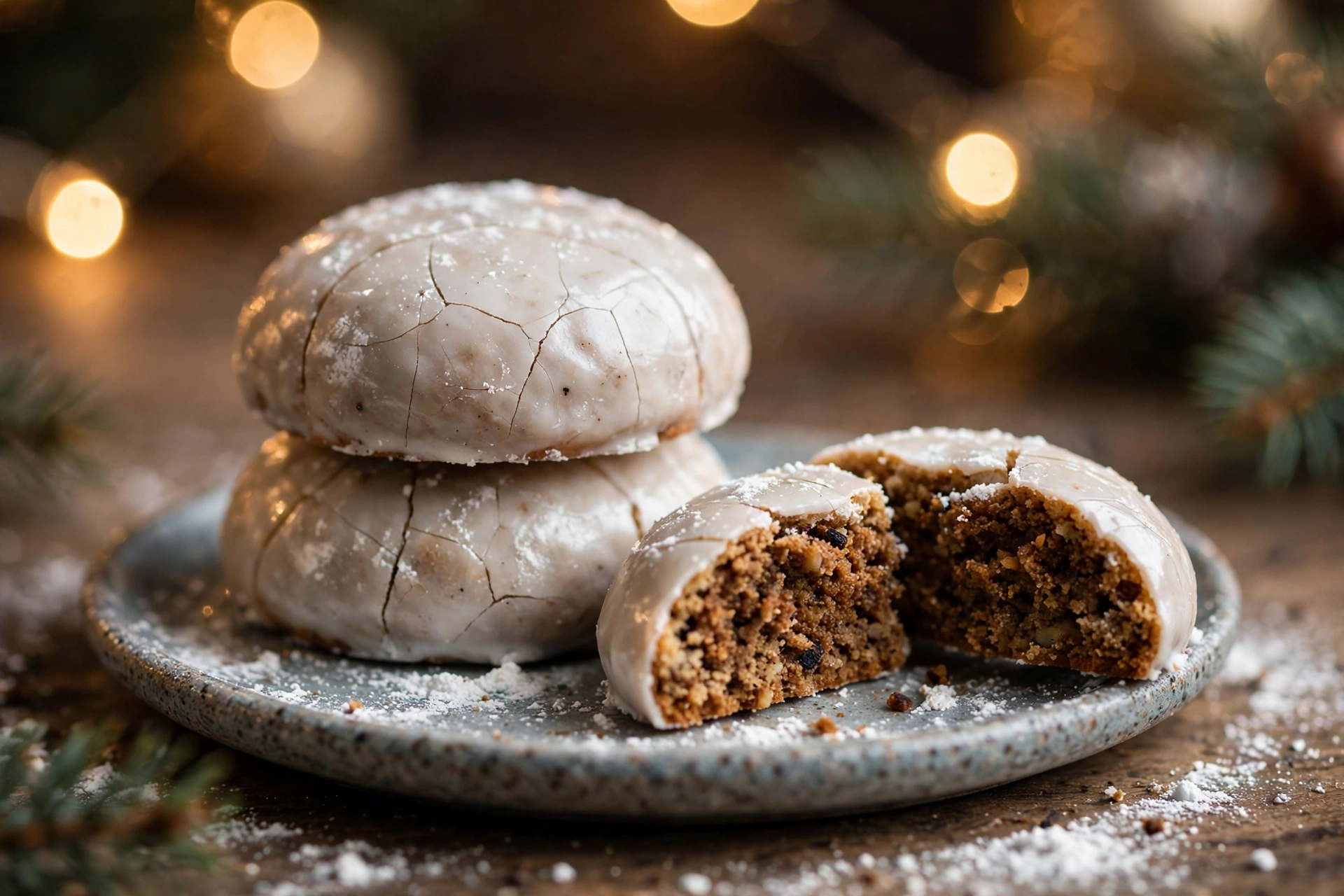
Glaze That Sets Hard, or a Coat of Snow
Two finishes divide the pfeffernusse world. The snowy school tosses the warm cookies in powdered sugar, sometimes twice, for a soft matte coat that photographs like fresh snowfall. The glaze school dips them in a thin icing that dries to a shell. Both are traditional; they are not interchangeable, and choosing well depends on what happens to the cookies next.
For a cookie box that travels, choose the glaze, and it is not close. The lemon glaze in this recipe dries hard within the hour, so stacked cookies do not dust each other, and the coat seals the crumb for weeks. Powdered sugar, by contrast, melts into any humidity, marks every neighbor in the tin, and needs a fresh dusting before serving to look like anything.
At home, for a plate eaten the same weekend, the sugar coat is lovelier and softer on the tongue. My compromise most years: glaze the boxes I give away, sugar the plate I keep. If you glaze, work while the cookies are warm, not hot; a hot dome melts the coat into a glaze puddle and a cold one wears it like a hat.
For an extra snowy look on glazed cookies, dust a whisper of powdered sugar over the wet glaze before it sets. The shell still dries hard underneath, so the box stays clean, but the tops read frosted instead of glossy. It is the finish in the photos here, and the one my family asks for by name.
The Two Day Wait That Makes Them Better
Fresh from the oven, these cookies are good in a simple way: warm spice, soft center, sweet cap. Two days later they are a different and better cookie. The spices trade places and settle, the pepper moves from a surprise to a finish, and the crumb tightens into that dense, cake like chew that defines the style.
German bakers plan for this on purpose. The dough itself can wait up to 3 days in the fridge, and the baked cookies hold 3 weeks in a tin at room temperature, which makes pfeffernusse the smartest first bake of the season. My December calendar runs like this: dough on the fifth, bake on the sixth, boxes out from the twelfth, and the last tin still excellent at New Year.
If yours bake up firmer than you like on day one, do not judge them yet. Seal the tin and wait. A slice of sandwich bread tucked into the tin overnight lends a little moisture back to the batch, an old trick that has rescued many a firm cookie in my kitchen.
Store the tin cool and dark, away from the stove’s steam, and keep the glazed and sugared batches in separate tins so their finishes do not trade places. The storage guidance collected by University of Minnesota Extension makes the same point for all sturdy baked goods: airtight, cool and dry beats the refrigerator every time, because fridge air dries a crumb like this faster than a cupboard ever will.
Building the Christmas Cookie Box Around Them
A good cookie box needs contrast, and these dark, spiced domes are the anchor every box wants. They sit happily beside pale butter cookies and give the eye a rest from red and green. In my boxes they share the tin with snowball cookies, whose powdery white melt plays against the pfeffernusse chew.
For shape and rhythm, add something pressed or piped: spritz cookies bring the wreaths and trees, and gingerbread crinkle cookies echo the spice family with a crackled, softer bite. Finish with one bright note, like cranberry orange shortbread cookies, and the box reads complete: dark, white, green free, and jewel toned.
Count on six to eight pfeffernusse per box. Line the tin with parchment, layer the glazed domes in a single row if you can, and never box them warm or the glaze will sweat. Because they keep for weeks, they are the cookie I bake first and the insurance policy for every late addition to the gift list.
Your Pfeffernusse Questions, Answered
My dough is too sticky to roll. What went wrong?
Probably nothing. This dough is sticky by design, because honey and molasses never firm up like butter doughs do. Chill it the full hour, flour your hands lightly, and roll quickly. If it still fights you, chill the scooped portions on the sheet for 10 minutes before rolling.
Can I leave out the anise? This recipe has none, and I am used to seeing it.
You are reading the version correctly: there is no anise here on purpose. Many regional recipes include it, but the orange zest carries the bright top note instead, and readers who dislike licorice flavors get a cookie they can love. Add 1/4 teaspoon ground anise with the spices if your family expects it.
Why did my cookies spread flat instead of doming?
Warm dough is the usual cause, followed by butter that was melted instead of room temperature. The fix is the chill, plus baking on a cool sheet. If a batch spreads anyway, the flavor is untouched; call them spice thins and glaze them twice.
Can I freeze pfeffernusse, dough or baked?
Both. Freeze rolled balls on a sheet, bag them for up to 3 months, and bake from frozen with 1 extra minute. Baked and glazed cookies freeze for 2 months in a rigid container; thaw them in the closed container so the glaze does not pick up moisture and turn spotty.
How long do they keep, really?
Three weeks in a sealed tin at room temperature, and the flavor peaks somewhere in the second week. That keeping power is exactly why they anchor the cookie box: bake them first, and they are at their best when the last minute cookies join them.
The First Box Leaves the House
Pfeffernusse cookies ask for a little patience and give back a tin that perfumes the whole kitchen every time the lid lifts. Dark dough, seven spices, one quiet heat, and a white cap that sets like frost.
Bake them early this December, before the season gets loud. When the first box leaves your house, you will understand why German bakers never let a Christmas pass without them.
Print
Pfeffernusse Cookies
Small, dark and deeply spiced German Christmas cookies made with honey, molasses and seven spices, finished with a whisper of white pepper and a lemon glaze that sets hard for cookie boxes. The total time includes 1 hour of chilling for the dough; the baked cookies keep 3 weeks in a tin and taste best after two days of rest. No alcohol, no special order ingredients.
- Total Time: 1 hour 45 minutes
- Yield: About 42 cookies 1x
Ingredients
- 2 1/4 cups all purpose flour (270 g)
- 1 teaspoon baking soda
- 1 1/2 teaspoons ground cinnamon
- 3/4 teaspoon ground ginger
- 1/2 teaspoon ground cloves
- 1/2 teaspoon ground cardamom
- 1/4 teaspoon ground nutmeg
- 1/4 teaspoon ground white pepper
- 1/4 teaspoon fine sea salt
- 1/2 cup unsalted butter, at room temperature
- 1/2 cup packed dark brown sugar
- 1/4 cup honey
- 1/4 cup molasses
- 1 large egg, at room temperature
- 1 teaspoon vanilla extract
- 1 teaspoon finely grated orange zest
- 1 cup powdered sugar, for the glaze
- 2 tablespoons milk, for the glaze
- 1 teaspoon lemon juice, for the glaze
Instructions
- Whisk the flour, baking soda, cinnamon, ginger, cloves, cardamom, nutmeg, white pepper and salt together in a medium bowl.
- Beat the butter and brown sugar for 2 minutes, until lighter and fluffy. Pour in the honey and molasses and beat until glossy and dark.
- Beat in the egg, vanilla and orange zest until smooth.
- Add the dry ingredients in two additions, mixing on low just until no streaks of flour remain. The dough will be soft and sticky.
- Scrape the dough onto plastic wrap, pat into a disk, wrap tightly and chill for at least 1 hour, or up to 3 days.
- Heat the oven to 350 degrees F and line two baking sheets with parchment. Scoop teaspoon portions of dough, about 15 grams each, roll into 1 inch balls with lightly floured hands, and set 1 1/2 inches apart on the sheets.
- Bake for 10 to 12 minutes, until the domes are set, the tops look matte and the bottoms are just golden. The centers will feel soft; they firm as they cool.
- Cool on the pan for 5 minutes. Whisk the powdered sugar, milk and lemon juice into a ribbon glaze, dip the warm tops, and set glaze side up on a rack to dry for 1 hour before boxing.
- Prep Time: 30 minutes
- Cook Time: 12 minutes
Nutrition
- Serving Size: 1
- Calories: 70
- Sugar: 7
- Sodium: 45
- Fat: 2
- Saturated Fat: 1
- Unsaturated Fat: 1
- Trans Fat: 0
- Carbohydrates: 12
- Fiber: 1
- Protein: 1
- Cholesterol: 10

2 thoughts on “Pfeffernusse Cookies, German Spiced Domes in a Lemon Glaze”