

Cranberry Walnut Rugelach, Orange Soaked and Sparkling
In this article:
- The Cream Cheese Dough Behind Great Cranberry Walnut Rugelach
- Flaky, Tart and Buttery: What Each Bite Does
- Orange Juice, Not Brandy: Plumping the Cranberries
- Dough Day and Rolling Day: The Two Day Rhythm
- Ingredients
- Rolling, Cutting and Coiling Cranberry Walnut Rugelach, Wedge by Wedge
- Leaks, Unrolling Points and Other Rugelach Rescues
- Fillings to Rotate Through December
- The Cookie Box Calendar: Bake, Freeze, Gift
- The Box They Ask About Next Year
The Cream Cheese Dough Behind Great Cranberry Walnut Rugelach
Cranberry walnut rugelach live or die on their dough, and the dough that works is the old cream cheese one. Butter brings flavor, cream cheese brings tenderness, and a spoonful of sour cream brings the gentle tang that keeps the pastry from tasting flat.
Worked just until it holds together and rested cold, that dough bakes into something between a pie crust and a Danish pastry: layered, shattering at the edges, and soft where the filling spirals through it.
The filling in this version is built for December. Cranberries are plumped in warm orange juice until they turn juicy and bright, then chopped with toasted walnuts, brown sugar, cinnamon and orange zest into a mixture that tastes like the holidays smell.
A whisper thin layer of apricot preserves goes under the filling, the trick bakery versions use to keep every wedge moist and to glue the spiral together, so the cookies bake up neat instead of unraveling.
The finish matters more than it looks. An egg wash and a snowfall of coarse sugar give the tops a deep golden color and a delicate crunch, the sparkle that makes a simple cookie look gift worthy.
Nothing here is difficult, but the sequence is everything: cold dough, plump fruit, a chilled tray before the oven. Follow the order and forty eight small crescents come out looking like a bakery box.
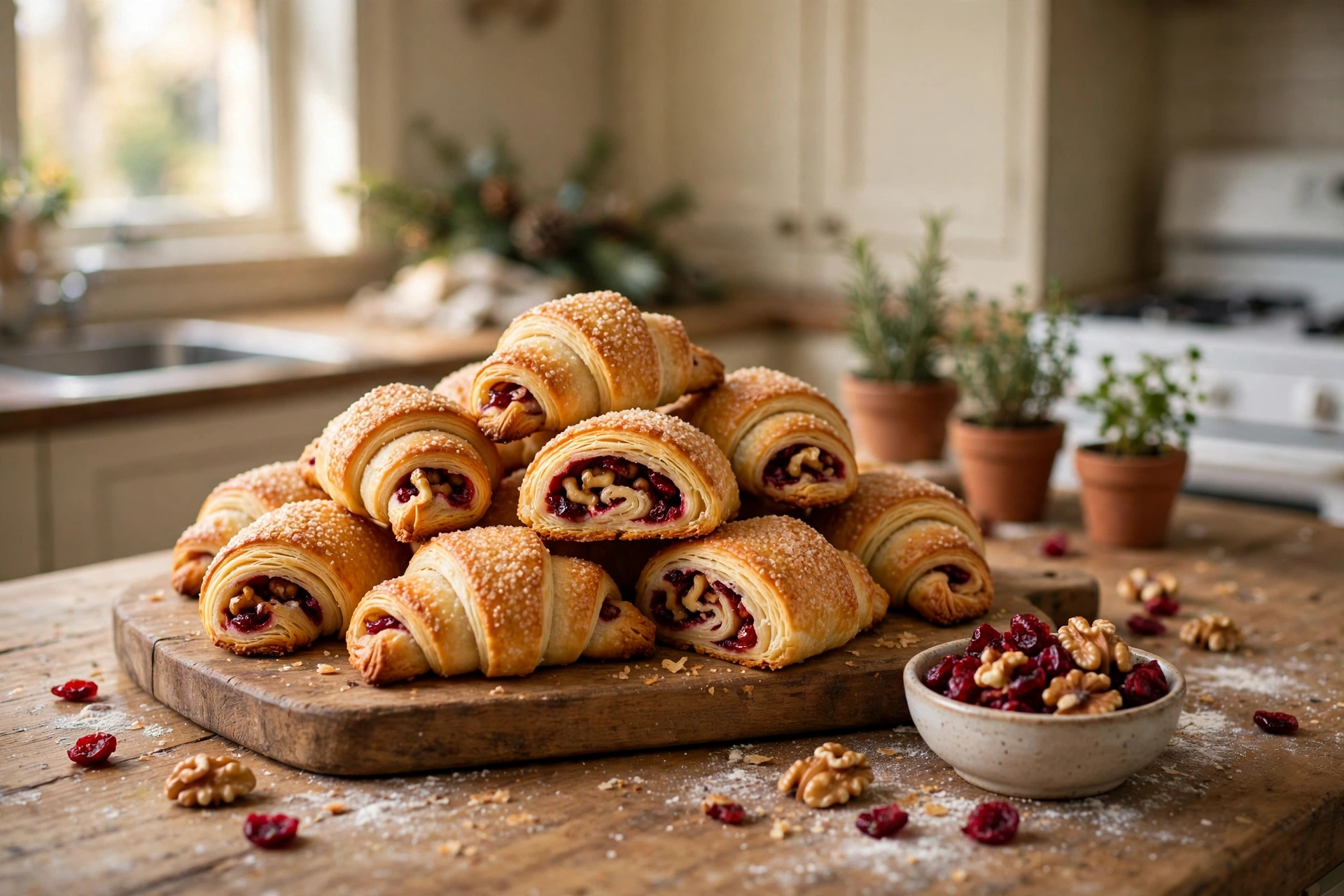
Cranberry walnut rugelach are the cookies that make a Christmas cookie box feel complete. Next to the big frosted cutouts and the chocolate everything, these little crescents bring butter, tart fruit and a proper pastry crunch.
They also carry a story people love to hear. Rugelach come from the Jewish bakeries of Eastern Europe and became a holiday staple in American bakeries, where the cream cheese dough version earned its permanent place.
This recipe makes four dozen, which sounds like a lot until you start handing them out. A dozen for the neighbors, a dozen for the office, a dozen for your own tin, and suddenly the last dozen feels precious.
The work spreads kindly over two days. The dough takes ten minutes and chills overnight, the filling stirs together in five, and the rolling and coiling is the kind of quiet kitchen work December is made for.
Flaky, Tart and Buttery: What Each Bite Does
The first thing you notice is the shatter. The outside of a well made rugelach is crisp and layered, giving way with a small crackle, and the coarse sugar on top adds a second, finer crunch of its own.
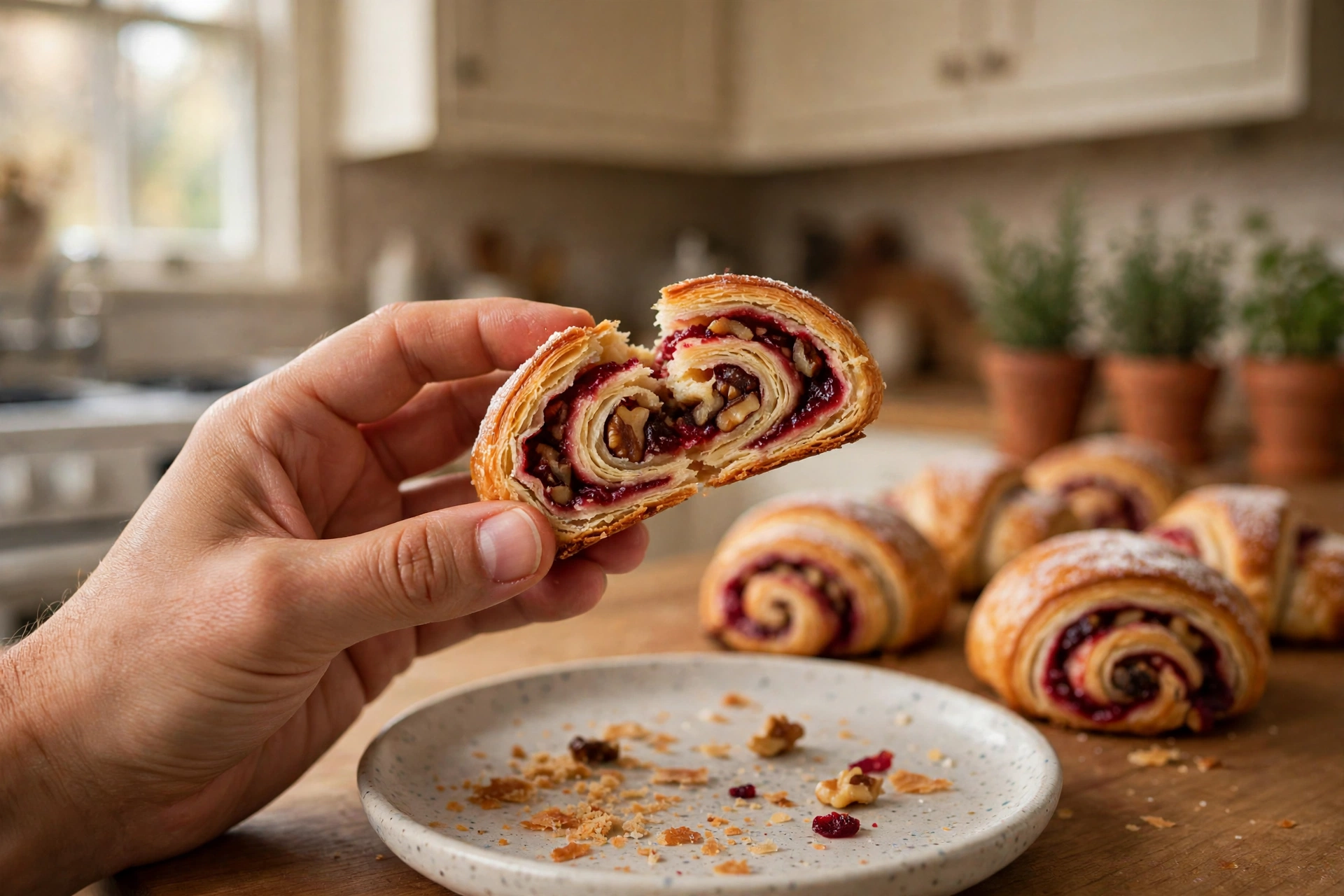
Then the center turns tender. The spiral of dough around the filling stays soft, almost cake like, because the preserves and the plumped cranberries keep that inner coil moist while the outside crisps.
Flavor moves in waves. Butter and vanilla first, then the warm hit of cinnamon and brown sugar, then the cranberries arrive with their tartness and cut the richness exactly where it needs cutting.
The walnuts are not decoration. Toasted and chopped fine, they bring a deep, almost savory note that keeps the cookie grown up, the same way they do in the iced cherry almond linzer cookies on this site.
Size is part of the pleasure. At two bites each, rugelach are built for cookie box grazing, the one you take with coffee in the morning and again after dinner without feeling like you committed to a dessert.
Served slightly warm, the filling relaxes and the butter perfume blooms. Served cold from the tin a week later, the layers firm up and the spice comes forward. Both versions are correct, which is rare.
Orange Juice, Not Brandy: Plumping the Cranberries
Many classic recipes plump their cranberries in brandy, and the fruit does love a warm bath. But plenty of households bake without alcohol on the table, and the good news is that orange juice does the same job with its own gift of flavor.
Twenty minutes in warm orange juice turns dried cranberries from hard little pebbles into plump, juicy pieces that chop cleanly and stay tender in the oven. Dry cranberries, by contrast, can bake up tough and scorch at the edges.
Drain them well and pat them dry before chopping. Extra juice in the filling steams the pastry from inside and makes the spiral slip, which is how neat wedges turn into leaking puddles on the tray.
It is the same thinking behind this site’s Christmas stollen, where the fruit soaks in orange juice instead of rum. One small swap, and everybody at the table can eat everything, which is rather the point of a cookie box.
The orange theme finishes in the filling itself: a teaspoon of zest stirred through the walnuts and sugar, so the cranberries taste brighter and the whole cookie smells like Christmas morning when the tray comes out.
Dough Day and Rolling Day: The Two Day Rhythm
Rugelach reward bakers who split the work. Dough day takes ten minutes: beat, mix, divide, wrap, chill. The dough actually improves overnight, because the flour hydrates fully and the butter and cream cheese firm into one clean, rollable mass.
Rolling day is the pleasant part. The filling stirs together while the first disk loses its refrigerator chill at the counter for exactly ten minutes, long enough to roll without cracking, never long enough to slump.
Set up like a small bakery line: flour in a shaker, preserves in a ramekin with a spoon, filling in a wide bowl, trays lined and waiting. Four disks roll, fill and coil in about forty relaxed minutes once the station is ready.
This rhythm is why bakeries can produce rugelach by the hundred in December. Nothing is rushed, nothing warms up, and the trays go into the oven in a steady rotation while the kitchen stays calm.
If a day gets away from you, the rhythm stretches without penalty. Dough waits three days chilled, disks wait a month frozen, and filled trays wait for tomorrow in the refrigerator, covered, ready for the oven.
Ingredients
For the cream cheese dough:
- 1 cup unsalted butter, softened (2 sticks)
- 8 ounces cream cheese, softened
- 1/3 cup sour cream
- 3 tablespoons granulated sugar
- 1 teaspoon vanilla extract
- 1/2 teaspoon fine sea salt
- 2 1/4 cups all-purpose flour, plus more for rolling
For the cranberry walnut filling:
- 3/4 cup dried cranberries, finely chopped
- 1/3 cup warm orange juice
- 1 cup walnuts, toasted and finely chopped
- 1/3 cup packed brown sugar
- 1 teaspoon ground cinnamon
- 1 teaspoon orange zest
- 1/3 cup apricot preserves
To finish:
- 1 large egg, beaten with 1 teaspoon water
- 2 tablespoons coarse sugar
Rolling, Cutting and Coiling Cranberry Walnut Rugelach, Wedge by Wedge
- Beat the butter and cream cheese together until completely smooth and fluffy. Mix in the sour cream, granulated sugar, vanilla and salt, then add the flour and stir just until a soft dough forms with no dry pockets.
- Divide the dough into 4 equal pieces, flatten each into a disk about an inch thick, wrap well and refrigerate for at least 2 hours, or overnight. Cold dough is what makes clean spirals possible.
- While the dough chills, cover the dried cranberries with the warm orange juice and leave them for 20 minutes. Drain very well, pat dry on a clean towel, then chop finely.
- Stir the chopped cranberries with the walnuts, brown sugar, cinnamon and orange zest until the mixture looks evenly speckled and smells like Christmas.
- Working with one disk at a time and keeping the rest refrigerated, roll the dough on a lightly floured surface into a circle about 9 inches across and an eighth of an inch thick.
- Spread about 4 teaspoons of apricot preserves over the circle in the thinnest possible layer, then sprinkle a quarter of the filling over it and press it down lightly with your palm.
- Cut the circle into 12 wedges, like a pizza. Roll each wedge up from the wide outer edge toward the point, and place it point side down on a parchment lined baking sheet.
- Repeat with the remaining disks. Refrigerate the filled trays for 15 minutes before baking; this short chill is what keeps the points sealed and the shapes sharp.
- Heat the oven to 350 degrees F. Brush the rugelach with the egg wash, sprinkle generously with coarse sugar, and bake for 22 to 25 minutes, until deeply golden at the edges.
- Cool on the pan for 10 minutes, where the sugary edges will set crisp, then move to a rack. Serve warm, or cool completely before boxing for gifts.
Leaks, Unrolling Points and Other Rugelach Rescues
If a few points unroll in the oven, the tray skipped its chill or the points were placed facing up. The point always goes underneath the cookie, where its own weight seals it, and fifteen cold minutes firm the butter so the seal holds.
If the filling leaks and caramelizes on the pan, the circle was filled to the very edge. Leave a slim bare border at the wide end of each wedge, and press the filling down so it rides inside the spiral instead of escaping it.
If the dough sticks and tears while rolling, it has simply warmed up. Slide the circle, parchment and all, back into the refrigerator for ten minutes. Cream cheese dough is forgiving, but only when it is cold.
If the bottoms brown too fast, your preserves layer was generous in spots. A thinner layer, truly a whisper, protects the base, and a second sheet pan slipped underneath halfway through baking slows the bottom heat.
And if the spirals look rustic rather than perfect, congratulations, they look homemade in the best sense. The egg wash and sugar hide a multitude of small sins, and the taste never depended on geometry.
One more rescue worth knowing: if the baked cookies stick where a little preserve escaped and caramelized, let the tray cool for the full ten minutes. Warm caramel is glue; cooled caramel releases with one confident nudge of a thin spatula.
Fillings to Rotate Through December
Once the dough is in your repertoire, the filling can follow the month. Raspberry preserves with finely chopped dark chocolate and the same walnuts gives a deeper, moodier cookie for the darkest week of the year.
A cinnamon sugar version with finely chopped pecans and a little maple sugar tastes like a tiny sticky bun. It pairs beautifully next to the gingerbread crinkle cookies in the same box, spice beside spice.
For a brighter box, try orange marmalade under a filling of pistachios and dried cherries. The method does not change at all: plump the fruit, chop everything fine, keep the layer thin, and chill the tray.
Whatever you choose, keep two rules. The filling pieces must be small enough to roll without tearing the dough, and anything juicy must be drained and dried before it meets the pastry.
A mixed tray is a lovely thing to bake for a party platter: one disk cranberry walnut, one chocolate raspberry, one pecan maple, one cherry pistachio. Same dough, same timing, four personalities, and guests get to argue about favorites, which is half the fun of a cookie spread.
The Cookie Box Calendar: Bake, Freeze, Gift
Rugelach were born for the make ahead calendar. The dough keeps three days in the refrigerator and a month in the freezer, so a December weekend can start with dough and end with options.
Better still, the shaped, unbaked cookies freeze beautifully. Freeze them solid on their trays, bag them, and bake straight from frozen at the same temperature with three to four extra minutes. Fresh rugelach on demand, all season.
Baked cookies keep a full week in a metal tin at room temperature, layered with parchment, and their flavor honestly deepens by day three as the spice settles into the pastry. Store them away from frosted cookies, whose moisture softens the crisp edges.
For the box itself, pack rugelach in a single snug layer or separated by parchment, never loose with soft cookies. Following basic FoodSafety.gov storage sense, cool rooms and airtight tins are all they ask, and they travel better than almost anything else you bake.
The Box They Ask About Next Year
Cranberry walnut rugelach do something few Christmas cookies manage: they taste like a pastry, travel like a biscuit, and keep like they were designed for a tin. That is a rare combination, and it is why bakeries guard their December supply.
Set them beside the snowball cookies and the eggnog cheesecake slices on a holiday table, and watch which plate empties first. The little crescents go quietly, two at a time, until the plate is suddenly bare.
Make the dough this week, coil a tray this weekend, and freeze a second tray for the day the box needs filling. Next December, nobody will ask whether you are making them. They will ask when.
FAQ
Why does rugelach dough have to chill so long?
The dough is mostly butter and cream cheese, so it is very soft at room temperature. Two hours of chilling firms the fats, which is what lets you roll thin circles, cut clean wedges and bake up distinct flaky layers instead of spreading cookies.
Can I freeze cranberry walnut rugelach before baking?
Yes, and it is one of the best ways to make them. Freeze the shaped cookies solid on their tray, store them in a bag for up to a month, then bake from frozen at 350 degrees F with 3 to 4 extra minutes.
My rugelach unrolled in the oven. How do I stop that?
Place every cookie with the point tucked underneath, and chill the filled tray for 15 minutes before baking. Cold butter and a point sealed under the cookie’s own weight keep the spiral closed.
What can I use instead of walnuts in rugelach?
Pecans are the closest swap and need no other change. For a nut free filling, use finely chopped sunflower seeds plus an extra tablespoon of brown sugar, and keep the cranberries and cinnamon exactly the same.
How long do rugelach stay fresh in a cookie tin?
About a week at room temperature in an airtight metal tin, layered with parchment. Their flavor deepens after two or three days. Keep them away from soft frosted cookies, which give up moisture and soften the crisp edges.
Cranberry Walnut Rugelach, Orange Soaked and Sparkling
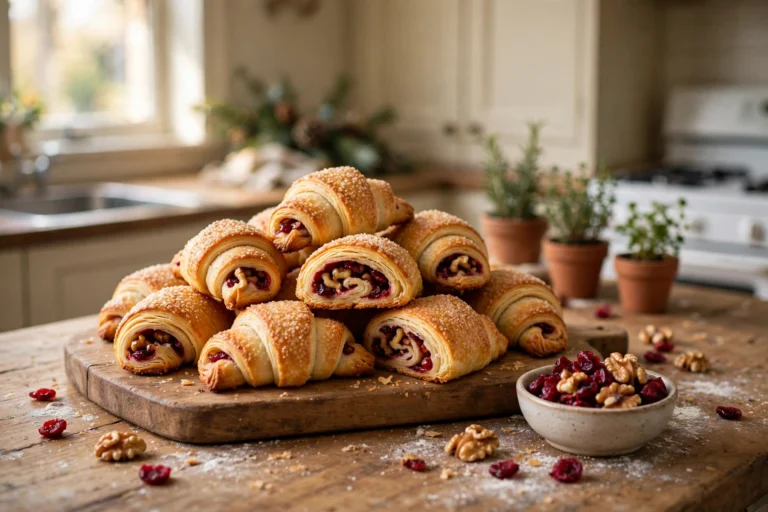
Cranberry walnut rugelach with a flaky cream cheese and sour cream dough, cranberries plumped in warm orange juice instead of brandy, a whisper of apricot preserves under the brown sugar, cinnamon and walnut filling, and an egg wash with coarse sugar so the little crescents come out sparkling. Forty eight cookies built for the Christmas cookie box: bake, freeze and gift all December.
- Total Time: 3 hours 10 minutes
- Yield: 48 rugelach cookies 1x
Ingredients
- 1 cup unsalted butter, softened (2 sticks)
- 8 ounces cream cheese, softened
- 1/3 cup sour cream
- 3 tablespoons granulated sugar
- 1 teaspoon vanilla extract
- 1/2 teaspoon fine sea salt
- 2 1/4 cups all-purpose flour, plus more for rolling
- 3/4 cup dried cranberries, finely chopped
- 1/3 cup warm orange juice
- 1 cup walnuts, toasted and finely chopped
- 1/3 cup packed brown sugar
- 1 teaspoon ground cinnamon
- 1 teaspoon orange zest
- 1/3 cup apricot preserves
- 1 large egg, beaten with 1 teaspoon water
- 2 tablespoons coarse sugar
Instructions
- Beat the butter and cream cheese together until completely smooth and fluffy. Mix in the sour cream, granulated sugar, vanilla and salt, then add the flour and stir just until a soft dough forms with no dry pockets.
- Divide the dough into 4 equal pieces, flatten each into a disk about an inch thick, wrap well and refrigerate for at least 2 hours, or overnight. Cold dough is what makes clean spirals possible.
- While the dough chills, cover the dried cranberries with the warm orange juice and leave them for 20 minutes. Drain very well, pat dry on a clean towel, then chop finely.
- Stir the chopped cranberries with the walnuts, brown sugar, cinnamon and orange zest until the mixture looks evenly speckled and smells like Christmas.
- Working with one disk at a time and keeping the rest refrigerated, roll the dough on a lightly floured surface into a circle about 9 inches across and an eighth of an inch thick.
- Spread about 4 teaspoons of apricot preserves over the circle in the thinnest possible layer, then sprinkle a quarter of the filling over it and press it down lightly with your palm.
- Cut the circle into 12 wedges, like a pizza. Roll each wedge up from the wide outer edge toward the point, and place it point side down on a parchment lined baking sheet.
- Repeat with the remaining disks. Refrigerate the filled trays for 15 minutes before baking; this short chill is what keeps the points sealed and the shapes sharp.
- Heat the oven to 350 degrees F. Brush the rugelach with the egg wash, sprinkle generously with coarse sugar, and bake for 22 to 25 minutes, until deeply golden at the edges.
- Cool on the pan for 10 minutes, where the sugary edges will set crisp, then move to a rack. Serve warm, or cool completely before boxing for gifts.
- Prep Time: 45 minutes
- Cook Time: 25 minutes
Nutrition
- Serving Size: 1
- Calories: 105
- Sugar: 5
- Sodium: 45
- Fat: 7
- Saturated Fat: 4
- Unsaturated Fat: 3
- Trans Fat: 0
- Carbohydrates: 10
- Fiber: 1
- Protein: 1
- Cholesterol: 18


2 thoughts on “Cranberry Walnut Rugelach, Orange Soaked and Sparkling”