

Maple Roasted Acorn Squash, Glazed at the End and Finished With Crunch
In this article:
- Why the Maple Goes on Last in This Maple Roasted Acorn Squash
- Deep Caramel Edges, a Shiny Glaze and One Crunchy Bite
- Timed for the Turkey Rest, Held Warm Without Going Soft
- Cutting the Squash Into Wedges Without a Wrestling Match
- Ingredients for Maple Roasted Acorn Squash
- How to Roast Acorn Squash Wedges, Step by Step
- My Best Tips for Wedges That Stay Crisp at the Edge
- Swaps and Variations for the Maple Butter
- Make Ahead, Storage and Reheating Without Losing the Glaze
- The Wedge That Brightens the Whole Turkey Plate
- FAQ
Why the Maple Goes on Last in This Maple Roasted Acorn Squash
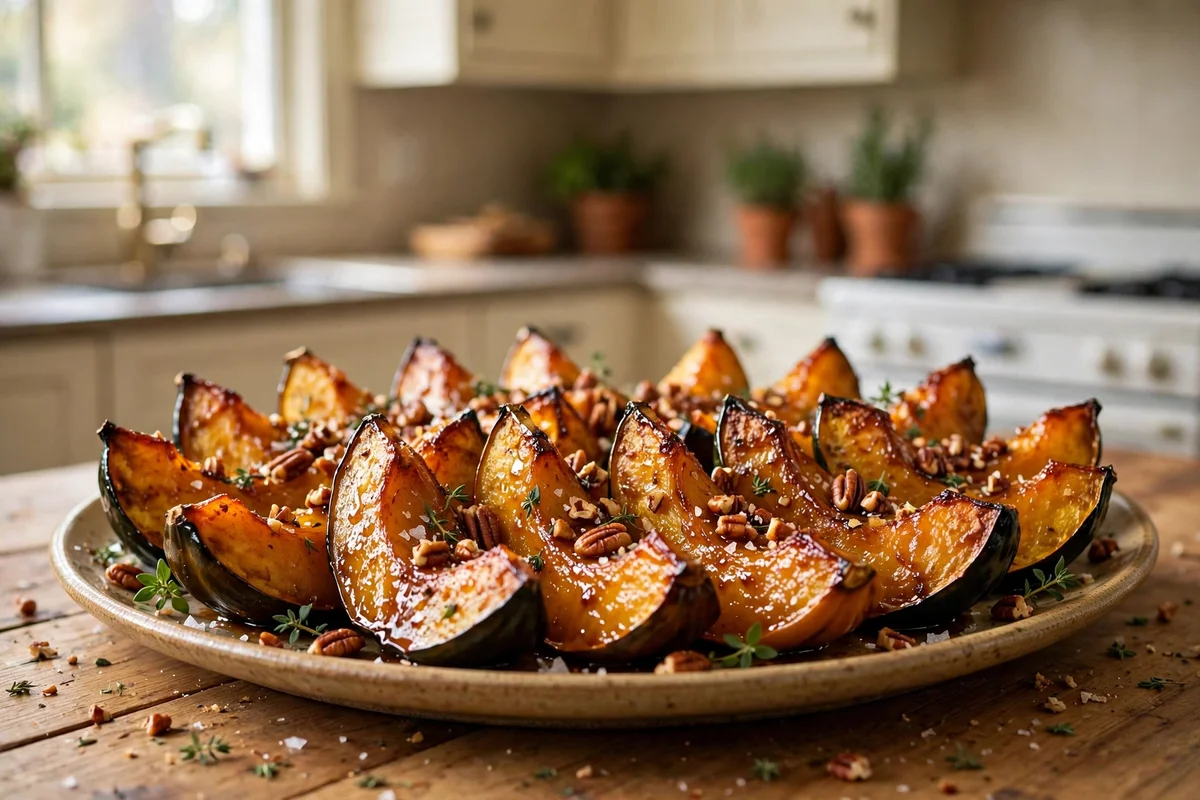
Most maple roasted acorn squash recipes brush the syrup on at the start, and that is exactly where they lose the plot. Maple syrup is mostly sugar and water, and forty minutes in a hot oven turns it thin, then dark, then bitter at the edges. My wedges roast plain first, with oil, salt and a whisper of cinnamon, until the cut faces are deeply caramelized. Only then does the maple butter go on, twice, in the last stretch of cooking.
The result is a wedge that behaves like two dishes at once. The flesh stays savory and roasted, almost nutty, while the surface turns glossy and candy edged in the final minutes. Because the glaze never sits in the heat long enough to scorch, it keeps its true maple flavor, the one that tastes like a Vermont sugar shack instead of burnt sugar.
The wedges matter as much as the timing. Cutting the squash through its ridges gives every piece two flat faces and long edges, far more contact with the hot pan than a half moon slice or a hollowed half. More contact means more browning, and browning is where roasted squash gets its deep, almost caramel flavor before any syrup arrives.
Then comes the finish the other recipes skip. A shower of toasted pecans, fresh thyme leaves and flaky salt lands on the hot glaze and sticks to it. The pecans bring crunch against the soft flesh, the thyme brings a green, piney note, and the salt flakes keep the sweetness honest. It is a small step that makes the platter look and taste finished.
Deep Caramel Edges, a Shiny Glaze and One Crunchy Bite
Acorn squash on its own is mild, sweet and a little earthy, closer to a cross between sweet potato and chestnut than to pumpkin. Roasting concentrates that sweetness as the water leaves, and the natural sugars in the flesh brown into something richer. A pinch of cinnamon stays in the background, warming everything up without announcing itself.
The maple butter glaze is the top note. Butter carries the maple across the surface and helps it set into a shine rather than a puddle. The pecans echo the nuttiness of the roasted flesh, and the thyme keeps the whole bite from reading as dessert. Served next to turkey and gravy, the wedges taste like the bright, sweet corner of the plate everyone goes back for.
Timed for the Turkey Rest, Held Warm Without Going Soft
Here is the schedule that makes maple roasted acorn squash the easiest side on the Thanksgiving table. The turkey needs to rest for at least thirty minutes before carving, and that resting window is exactly when the squash should go into the oven. As the bird comes out, the oven is already hot, the wedges go in at 425°F, and by the time the turkey is carved and the gravy is made, the squash is glazed and ready.
If the wedges finish before everything else, hold them in a 200°F oven, uncovered, for up to thirty minutes. Uncovered is the key word. A covered pan traps steam, and steam is the enemy of those caramelized edges you worked for. A loose sheet of foil tented high above the platter is fine for a short hold, but never seal it tight.
For the count, plan on two wedges per person when the table is full of other sides, and three per person for squash lovers or a smaller spread. Two medium acorn squash give twelve wedges, which covers six people comfortably at two each. Doubling is easy: use two pans, swap their positions halfway, and add five minutes to the first roast.
Cutting the Squash Into Wedges Without a Wrestling Match
The hard green shell is the only real obstacle in this recipe, and there is a simple trick for it. Microwave the whole squash for three minutes before you cut. The short burst of heat softens the shell just enough that your knife slides in instead of skating across. It also warms the flesh slightly, which helps the wedges roast evenly.
Work on a damp towel so the squash cannot roll. Trim a thin slice off each end to make flat, stable bases. Stand the squash on one flat end and cut straight down through the stem. Scoop the seeds with a sturdy spoon, scrape the stringy bits clean, then lay each half cut side down and cut along the ridges into three wedges. The ridges are your guide lines, drawn by the squash itself.
Keep the wedges close to the same thickness, about one inch at the widest point. Even wedges roast evenly, which sounds obvious until one thin piece scorches while a thick one stays firm. If a wedge ends up much thicker than the rest, give it its own corner of the pan and check it separately at the flip.
Ingredients for Maple Roasted Acorn Squash
The ingredient list is short, so each one has to pull its weight. Pure maple syrup is non negotiable here. Pancake syrup is mostly corn syrup and flavoring, and it turns thin and harsh in the glaze. A dark, robust maple syrup gives the deepest flavor, though any pure grade you have will work.
- 2 acorn squash, about 1 1/2 pounds each
- 2 tablespoons olive oil
- 1 teaspoon kosher salt
- 1/2 teaspoon black pepper
- 1/4 teaspoon ground cinnamon
- 2 tablespoons unsalted butter, melted
- 3 tablespoons pure maple syrup
- 1/3 cup chopped pecans, toasted
- 1 teaspoon fresh thyme leaves
- Flaky sea salt, for finishing
A note on the squash itself, for the cooks who like the numbers: acorn squash is a genuinely nutritious side, rich in fiber, potassium and vitamin C for very few calories, and the USDA FoodData Central database lists the full profile if you want to check it against your own squash.
How to Roast Acorn Squash Wedges, Step by Step
- Heat the oven to 425°F. Line a large rimmed sheet pan with parchment so the glaze that drips later does not weld the wedges to the pan.
- Microwave each whole squash for 3 minutes to soften the shell. Trim the ends, halve the squash through the stem, scoop out the seeds, and cut each half along the ridges into 3 wedges, 12 wedges in total.
- Toss the wedges in a large bowl with the olive oil, kosher salt, pepper and cinnamon until every cut face looks glossy. Take your time here; dry patches roast pale.
- Arrange the wedges cut side down on the pan with space between them. Roast for 20 minutes without moving them, so the faces in contact with the pan brown deeply.
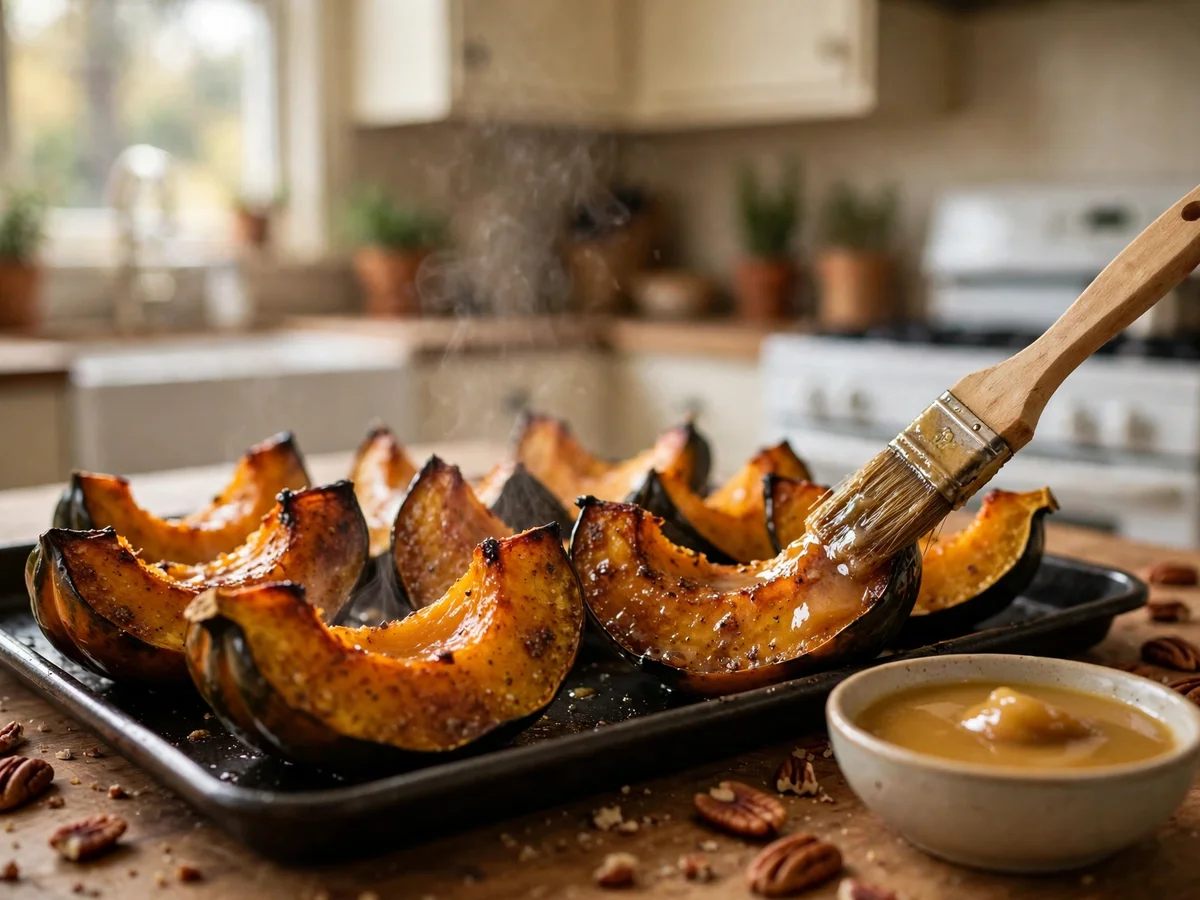
- Stir the melted butter and maple syrup together. Flip the wedges, brush them generously with half of the maple butter, and return the pan to the oven for 8 minutes.
- Brush with the remaining maple butter and roast 4 to 6 minutes more, until the glaze bubbles at the edges and the tips are deep amber. Watch closely in these last minutes; glaze goes from shiny to scorched fast.
- Move the wedges to a warm platter, spoon any pan drippings over the top, and scatter the toasted pecans and thyme over everything. Finish with flaky salt and serve warm.
My Best Tips for Wedges That Stay Crisp at the Edge
Space is the first rule. Wedges that touch steam each other and roast soft and pale. If your pan is crowded, use two pans rather than squeezing everything onto one. The second rule is a hot pan: putting the pan in the oven while it preheats gives the first cut face a head start on browning, almost like a sear.
Toast the pecans while the squash roasts, in a dry skillet over medium heat for three to four minutes, shaking often. Raw pecans scattered on at the end taste waxy and dull. Toasted ones crackle a little when you bite them, and their oils bloom against the hot glaze. Keep them moving in the pan; nuts go from golden to burnt in the time it takes to answer the door.
Finally, salt twice, on purpose. The kosher salt in the toss seasons the flesh itself. The flaky salt at the end is texture and sparkle, little bursts that reset your palate between sweet bites. If you only do one, do the finishing salt; it is the difference between sweet squash and a side dish people ask about.
Swaps and Variations for the Maple Butter
The glaze formula stays the same, one part melted butter to one and a half parts syrup, but the flavoring can wander. A pinch of cayenne in the maple butter makes a sweet heat version that loves grilled meats in the summer. A half teaspoon of orange zest brightens the glaze for a Christmas table, and a splash of vanilla makes it taste almost like dessert.
No pecans in the house? Toasted walnuts swap in cleanly, and pumpkin seeds make the dish nut free for guests who need that. Butter can be replaced with an equal amount of olive oil or a plant based butter for a dairy free platter; the glaze will be a touch less glossy but still shiny and full flavored.
The same method flatters other squash. Delicata wedges need no peeling and roast about five minutes faster. Butternut cut into one inch half moons takes about five minutes longer. If you are planning the full spread, this squash sits happily next to our classic roast turkey and a pan of best homemade stuffing, and it shares the oven timing with the honey butter roasted parsnips and carrots from earlier this week.
Make Ahead, Storage and Reheating Without Losing the Glaze
You can cut the wedges a day ahead and keep them in a sealed container in the fridge, layered with a paper towel. Roast them straight from cold and add three to four minutes to the first roast. The glaze and the finish should always happen the day you serve; maple roasted acorn squash reheated in its glaze never quite shines the same way, so glaze fresh and add the pecans after reheating if you are working ahead.
Leftovers keep for up to four days in the fridge. Reheat them on a sheet pan in a 375°F oven for ten to twelve minutes, which brings back some of the edge, rather than the microwave, which softens everything. For general leftover timing and safety, the federal guidance at FoodSafety.gov is the reference I check every holiday season.
Leftover wedges are worth planning for. Chop them into a grain bowl with farro and a soft egg, mash them into soup with a little broth, or fold them into a hash with onions for the Friday after Thanksgiving. The sweet flesh and the pecan crunch disappear into a sweet potato casserole style topping too, if you are building a leftovers casserole.
The Wedge That Brightens the Whole Turkey Plate
Every Thanksgiving plate needs one thing that is glossy, sweet and a little bit fancy, and maple roasted acorn squash is built for that job. The wedges carry their own shape, so the platter looks composed with no effort at all, and the dark green skin against the amber flesh reads as autumn before anyone takes a bite.
Make it once with the glaze at the end and the crunch on top, and the plain version from the box of your youth will not stand a chance. If your table loves it as much as mine does, double the batch and keep the second pan warm in the cooling oven. Seconds are the whole point of this holiday.
FAQ
Can you eat the skin of roasted acorn squash?
Yes. Acorn squash skin softens as it roasts and is completely edible, especially on wedges roasted at high heat. It also helps the wedges hold their shape on the platter. If someone at the table prefers to skip it, the flesh scoops away from the skin easily with a fork.
Why does the maple syrup go on at the end?
Maple syrup scorches in a hot oven. Brushed on for only the last 10 to 12 minutes, it reduces into a shiny glaze and keeps its true maple flavor. Added at the start, it thins out, darkens too far and can turn bitter at the edges of the wedges.
How do I know the wedges are done?
The flesh should be tender all the way through when pierced with the tip of a knife, with no resistance in the thickest part. The cut faces should be deep golden with amber edges, and the glaze should look glossy and bubbled rather than watery.
Can I make maple roasted acorn squash a day ahead?
Cut the wedges a day ahead and refrigerate them raw. Roast, glaze and finish the day you serve for the best texture. Fully roasted leftovers reheat well on a sheet pan at 375°F for 10 to 12 minutes, with fresh pecans scattered on after reheating.
What can I use instead of butter in the glaze?
Olive oil works at the same amount, and a plant based butter keeps the glaze rich for a dairy free platter. The glaze will be slightly less glossy without butter but still shiny and full of maple flavor. Do not skip the fat entirely or the syrup will pool instead of coating.
Maple Roasted Acorn Squash
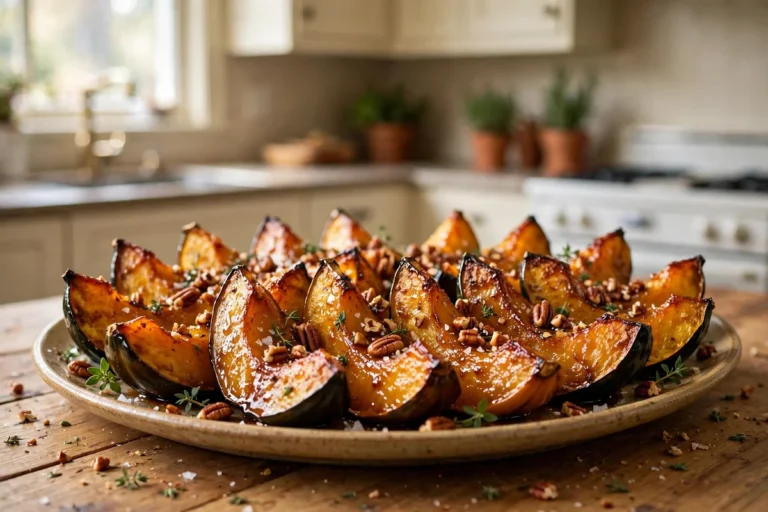
Acorn squash wedges roasted hard for caramel edges, brushed with maple butter only in the last minutes so the glaze stays shiny, then finished with toasted pecans, thyme and flaky salt.
- Total Time: 50 minutes
- Yield: 12 wedges 1x
Ingredients
- 2 acorn squash, about 1 1/2 pounds each
- 2 tablespoons olive oil
- 1 teaspoon kosher salt
- 1/2 teaspoon black pepper
- 1/4 teaspoon ground cinnamon
- 2 tablespoons unsalted butter, melted
- 3 tablespoons pure maple syrup
- 1/3 cup chopped pecans, toasted
- 1 teaspoon fresh thyme leaves
- Flaky sea salt, for finishing
Instructions
- Heat the oven to 425°F. Line a large rimmed sheet pan with parchment so the glaze that drips later does not weld the wedges to the pan.
- Microwave each whole squash for 3 minutes to soften the shell. Trim the ends, halve the squash through the stem, scoop out the seeds, and cut each half along the ridges into 3 wedges, 12 wedges in total.
- Toss the wedges in a large bowl with the olive oil, kosher salt, pepper and cinnamon until every cut face looks glossy.
- Arrange the wedges cut side down on the pan with space between them. Roast for 20 minutes without moving them, so the faces in contact with the pan brown deeply.
- Stir the melted butter and maple syrup together. Flip the wedges, brush them generously with half of the maple butter, and return the pan to the oven for 8 minutes.
- Brush with the remaining maple butter and roast 4 to 6 minutes more, until the glaze bubbles at the edges and the tips are deep amber.
- Move the wedges to a warm platter, spoon any pan drippings over the top, and scatter the toasted pecans and thyme over everything. Finish with flaky salt and serve warm.
- Prep Time: 15 minutes
- Cook Time: 35 minutes
Nutrition
- Serving Size: 2
- Calories: 178
- Sugar: 11
- Sodium: 315
- Fat: 8
- Saturated Fat: 3
- Unsaturated Fat: 5
- Trans Fat: 0
- Carbohydrates: 27
- Fiber: 4
- Protein: 2
- Cholesterol: 8



1 thought on “Maple Roasted Acorn Squash, Glazed at the End and Finished With Crunch”