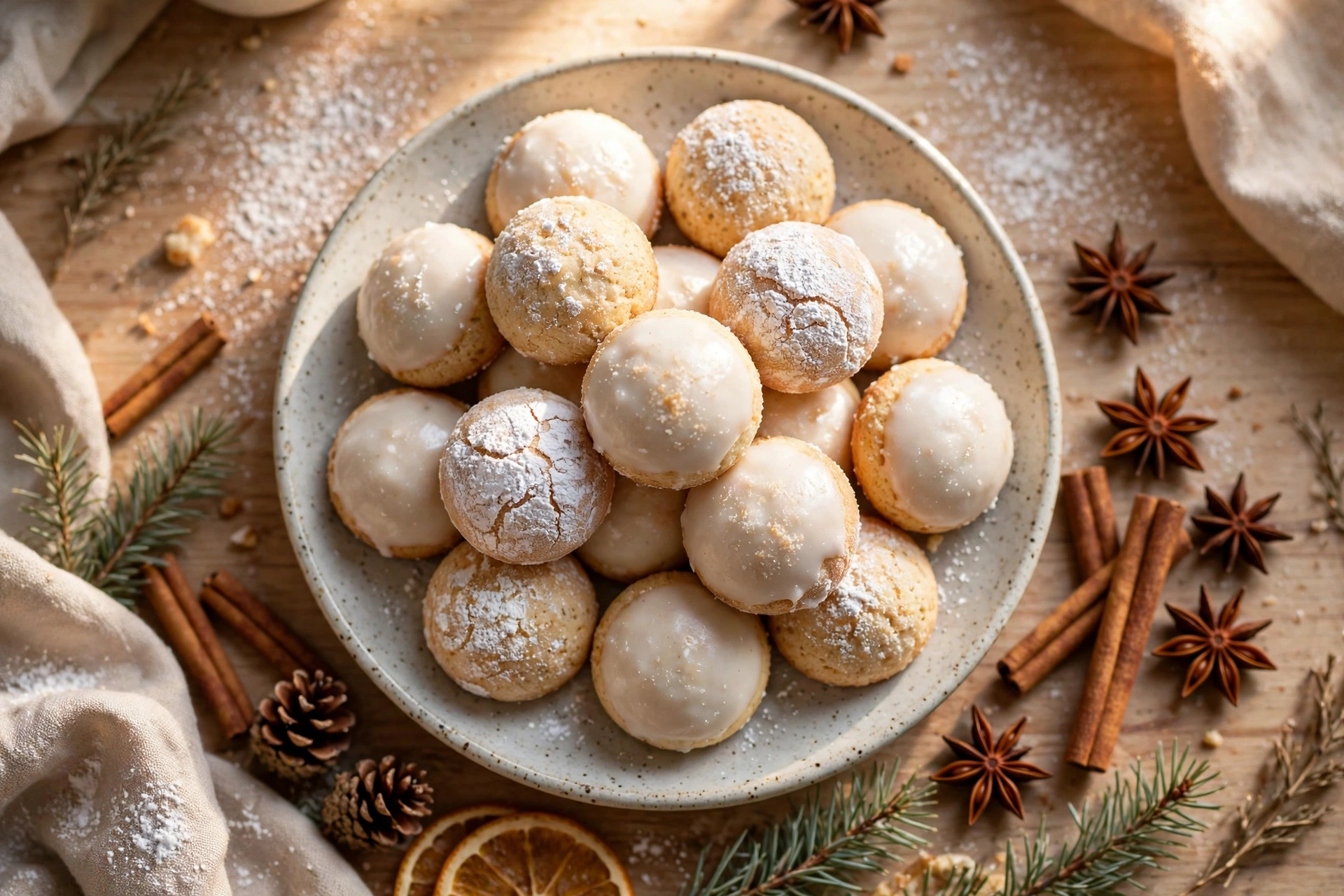
Pignoli Cookies, Chewy Almond Hearts Under a Golden Pine Nut Coat
In this article:
- Why These Pignoli Cookies Stay Chewy, Not Cakey
- Almond Paste, Not Marzipan: How to Buy the Right Can
- Buttery Pine Nuts Over a Soft Almond Center
- The Full Coat: Rolling in Pine Nuts So Nothing Falls Off
- Ingredients for Pignoli Cookies
- How to Make Pignoli Cookies, Step by Step
- Three Trays for the Christmas Cookie Box
- Sticky Dough, Solved
- Keeping the Centers Chewy: Tins, Freezers and Gifting
- The Cookie Everyone Asks About
- FAQ
Why These Pignoli Cookies Stay Chewy, Not Cakey
Pignoli cookies ask very little of the baker: almond paste, sugar, egg whites and a coat of pine nuts. With only four real ingredients, there is nowhere for a mistake to hide, and most disappointing batches fail on method rather than ingredients. The center bakes up cakey, or the nuts fall off, or the cookie spreads into a lace of itself.
This recipe follows the Italian bakery method, and the choice is deliberate. The egg whites go straight into the food processor with the crumbled almond paste, rather than being beaten to peaks and folded in. Beaten whites make a lighter, almost meringue cookie; the bakery version is denser, moister and deeply chewy, and it keeps that chew for days.
The paste itself is broken down in stages, first pulsed alone into coarse sand, then pulsed again with the two sugars. Almond paste straight from the can is firm and stubborn, and adding the whites too early leaves pale lumps that never fully disappear into the dough. Sand first, liquid last, gives a smooth, even paste every time.
A small amount of almond flour joins the dough for insurance. It firms the mixture just enough that the cookies hold a round shape in the oven instead of relaxing into puddles, without adding any wheat. The orange zest is my Christmas touch, bright against all that rich almond.
Everything else is about restraint: a moderate oven, a short bake, and the discipline to pull the tray while the centers still look pale and soft. Pignoli cookies finish setting as they cool, and the baker who waits for them to look done in the oven has already gone too far.
Almond Paste, Not Marzipan: How to Buy the Right Can
The single most important purchase for pignoli cookies is almond paste, and it is not the same product as marzipan. Almond paste is built on almonds, roughly equal parts nuts and sugar or more nuts than sugar, and it tastes intensely of almond. Marzipan carries far more sugar, eats like candy, and makes a cookie that is sweet and flat in flavor.
You do not need a specific brand, you need the right specifications. Choose a firm paste sold in a can or a sealed block in the baking aisle, the kind that feels dense and slightly springy when you press the package. Read the ingredient list: almonds should come first. A soft, squeezable tube is usually a different, looser product and gives a wetter dough.
At home, the paste should break into firm chunks that crumble rather than smear. If your paste feels dry and hard, that is normal for a good firm can, and the food processor handles it without complaint. If it feels oily and soft, chill it for twenty minutes before processing so it sands instead of clumping.
One more check before you start: pignoli cookies contain no wheat flour, which makes them one of the rare Christmas cookies a gluten free guest can eat from the same tin as everyone else. The almond flour in this recipe keeps that true, so read its label too if the tin will be shared.
Buttery Pine Nuts Over a Soft Almond Center
The pleasure of a pignoli cookie is a contrast of textures that arrives in order. First the pine nuts, toasted by the oven itself, give a gentle crunch and a buttery, almost resinous richness. Then the center yields, dense and moist, with the deep marzipan-adjacent sweetness of baked almond paste.
Pine nuts are small but luxurious, rich in soft oils that brown quickly and turn fragrant, a profile visible in the USDA FoodData Central nutrition entries for pine nuts. That same oiliness is why they must be watched in the oven: a minute too long and the coat goes from golden to scorched, taking the whole cookie with it.
The orange zest works quietly underneath. It does not make the cookies taste of orange; it lifts the almond, the way a squeeze of lemon lifts a sauce, so the sweetness reads as bright rather than heavy. On a Christmas tray crowded with chocolate and spice, that brightness is exactly what pignoli bring.
Temperature changes the experience, too. Warm from the oven, the center is almost molten and the nuts are at their most aromatic. A day later, at room temperature, the cookie settles into its famous chew, supple and dense, the version Italian bakeries sell by the pound all December.
The Full Coat: Rolling in Pine Nuts So Nothing Falls Off
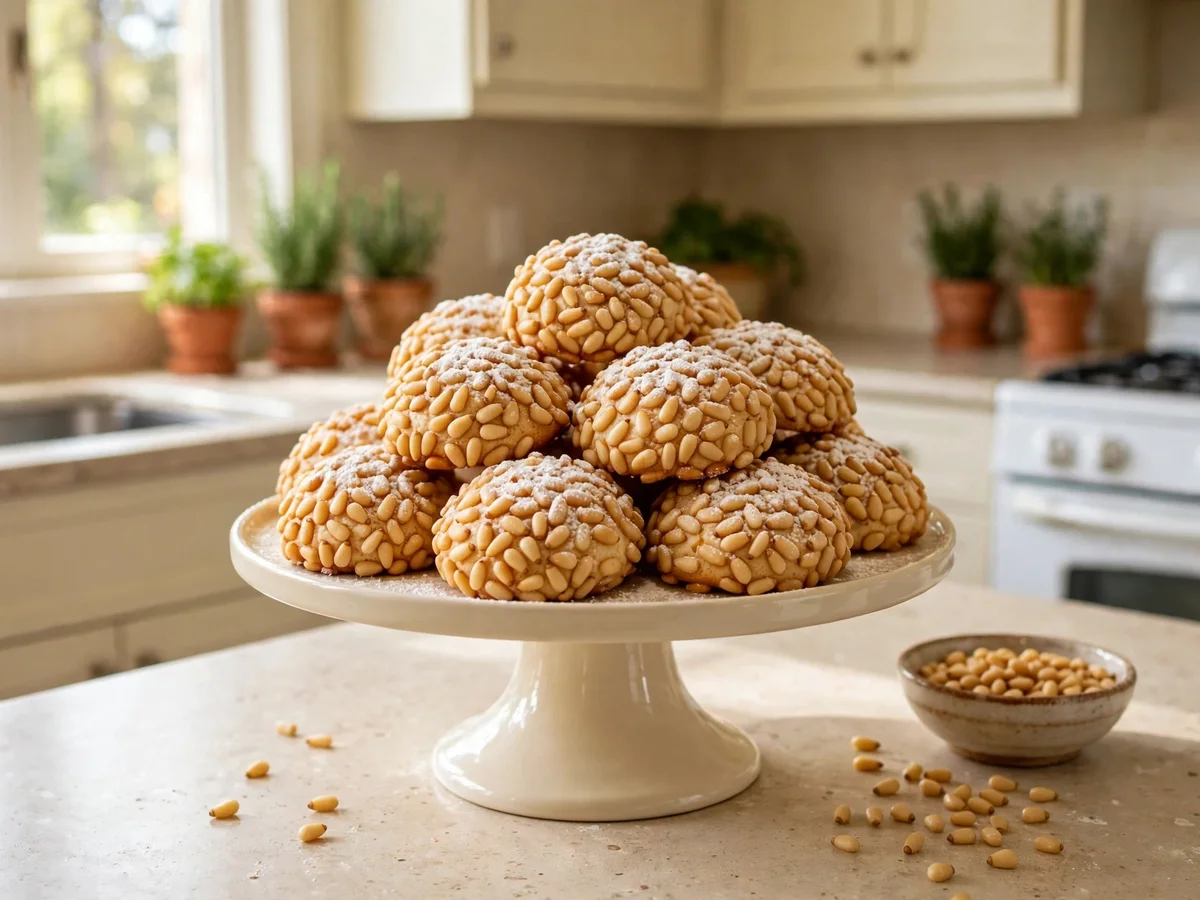
A pignoli cookie should wear its pine nuts like a crust, not a garnish. Cookies topped with a symbolic eight or ten nuts look sparse and taste unbalanced: too much bare almond dough in every bite. The classic bakery cookie is coated across the top and sides, with only the flat bottom left bare so it sits cleanly on the pan.
The quantity that makes this possible is a cup and a half of pine nuts for this batch. It sounds like a lot until you watch how they pack onto the sticky dough, and any nuts that fall back into the bowl simply get used again on the next ball, so almost nothing is wasted.
Technique is simple but specific. Roll the ball with wet hands, drop it into the nuts, and press gently with your fingertips, turning it twice so the coat is even. Pressing matters: nuts that are merely touching the dough let go in the oven, while nuts pressed in by a fingertip’s pressure stay through baking, cooling and the cookie tin.
Set each coated ball bare side down on the parchment and leave it alone. Rearranging coated cookies knocks nuts loose, and the dough is soft enough at this stage to take fingerprints. Once the tray is full, it goes straight into the oven, where the egg white in the dough sets the coat in place within the first few minutes.
Ingredients for Pignoli Cookies
- 16 ounces almond paste, broken into small pieces
- 3/4 cup granulated sugar
- 1/4 cup powdered sugar, plus more for dusting if you like
- 2 large egg whites, at room temperature
- 1/4 cup almond flour
- 1 teaspoon finely grated orange zest
- 1/2 teaspoon vanilla extract
- 1/4 teaspoon fine sea salt
- 1 1/2 cups pine nuts
How to Make Pignoli Cookies, Step by Step
- Line 2 large sheet pans with parchment paper. Put the pine nuts in a wide, shallow bowl and set them near your work surface.
- Pulse the almond paste in a food processor until it looks like coarse sand. Add the granulated sugar and powdered sugar and pulse again until the mixture is sandy and combined.
- Add the egg whites, almond flour, orange zest, vanilla and salt. Process until a thick, smooth and very sticky dough forms, about 30 seconds, scraping the bowl once halfway.
- Scrape the dough into a bowl, cover and refrigerate for 30 minutes. This rest is what makes the sticky dough easy to roll.
- Heat the oven to 325°F. With wet hands, roll the dough into 1 inch balls, about 1 tablespoon each, rewetting your hands whenever the dough starts to stick.
- Roll each ball in the pine nuts, pressing gently so the top and sides are fully coated and the bottom stays bare. Set the cookies on the prepared pans, bare side down, about 2 inches apart.
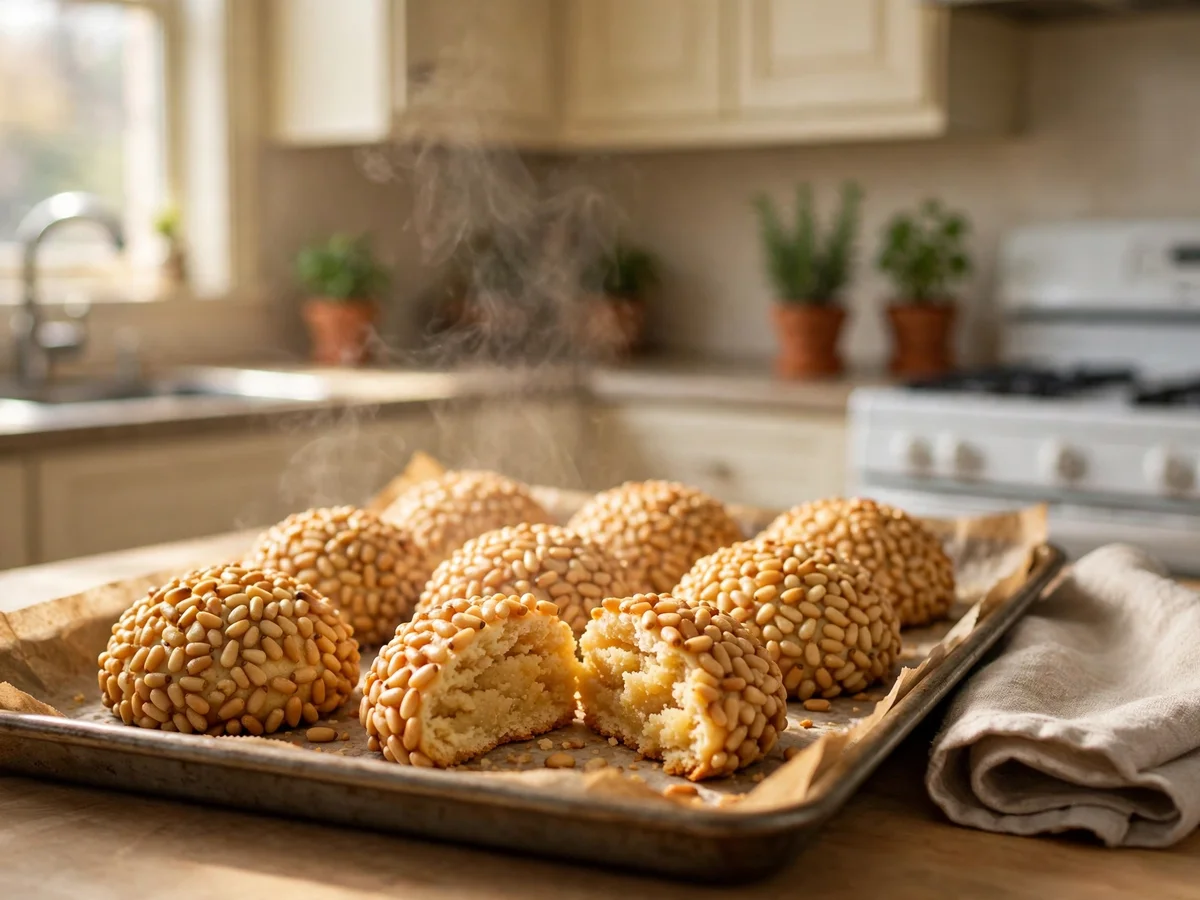
- Bake for 15 to 18 minutes, rotating the pans halfway, until the nuts at the edges are just turning golden, the centers are still pale and the bottoms are light blond. The cookies will feel soft, that is correct.
- Cool on the pan for 10 minutes, the cookies firm up as they cool, then move them to a rack. Dust lightly with powdered sugar if you like.
Three Trays for the Christmas Cookie Box
The classic cookie needs nothing, but the dough accepts small changes gracefully for a mixed box. The first tray I keep pure, because pignoli purists exist in every family and they can tell. Powdered sugar snow on top, nothing else.
For the second tray, stir a teaspoon of lemon zest in place of the orange and add a tiny pinch of extra salt. The lemon version tastes brighter and lighter, and side by side with our pfeffernusse cookies it gives the box a lovely arc from citrus to warm spice.
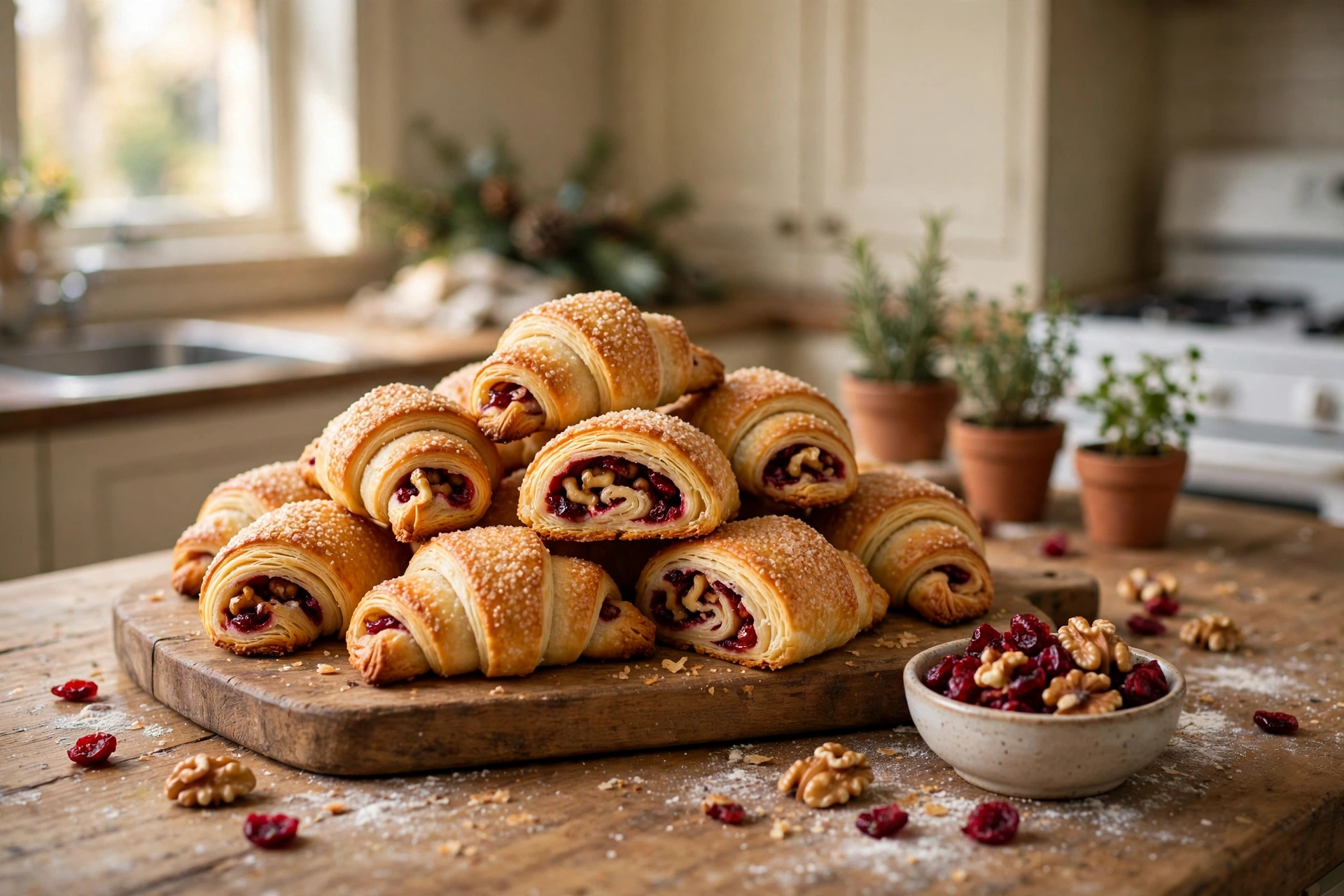
The third tray can lean into almond even further: a single whole blanched almond pressed into the center of each cookie before baking, in the Sicilian style. It marks the tray instantly and adds one clean crunch at the heart of the chew. Next to a tray of cranberry walnut rugelach, the box covers almond, spice and fruit in three bites.
One variation to handle with respect: the beaten white method. If your family remembers a lighter pignoli, whisk the whites to soft peaks and fold them through the processed paste and sugars instead of processing them in. The cookie bakes up airier and more delicate, a different pleasure, and the coating and timing stay exactly the same.
Sticky Dough, Solved
This dough is sticky by design, and fighting it dry handed is the fastest way to a frustrating afternoon. The full solution has three parts: chill the dough for the full 30 minutes, wet your hands before rolling, and rewet them the moment a ball starts to drag. Cool, damp palms roll perfect balls in seconds.
Scoop before you roll. Use a small cookie scoop or a tablespoon measure to portion all the dough first, dropping the rough portions onto a piece of parchment. Even portions bake evenly, and rolling goes twice as fast when you are not stopping to measure between balls.
Read the doneness cue as a set of three signals, not a timer. The nuts at the very edges of the cookies should be just turning golden, the centers should still look pale, and a lifted cookie should show a light blond bottom. If all three agree, the tray comes out, even if the cookies feel too soft to move.
Then leave them alone. Pignoli cookies straight from the oven are fragile and will tear if you slide a spatula under them too soon. Ten minutes on the hot pan firms the centers and sets the bottoms, and after that they lift cleanly and hold together in the tin.
Finally, buy the pine nuts last and smell them before you start. Pine nuts carry a lot of oil and can taste tired if they have sat in a warm pantry for months. Fresh ones smell sweet and buttery. If yours are old, a fresh bag matters more here than in almost any other cookie, because the nuts are half the recipe.
Keeping the Centers Chewy: Tins, Freezers and Gifting
Pignoli cookies are among the best keeping cookies on the Christmas tray. Stored in a metal tin at room temperature with parchment between the layers, they stay moist and chewy for about 5 days, then slowly turn softly crisp, still lovely, over the second week. A tin breathes enough; a sealed plastic box can make the coats go slack.
For longer keeping, freeze the baked cookies in a single layer, then pack them into a container for up to 2 months. Thaw them in the closed container at room temperature so moisture settles back into the centers instead of condensing on the pine nuts. A box built this way travels beautifully beside sturdy bakes like our christmas stollen.
You can also freeze the work instead of the cookies. Roll the dough balls, freeze them solid on a tray, and store them for up to a month. Coat the frozen balls in pine nuts, pressing a little more firmly than usual, and bake from frozen at 325°F, adding 2 to 3 minutes. Fresh pignoli on demand, all season.
The Cookie Everyone Asks About
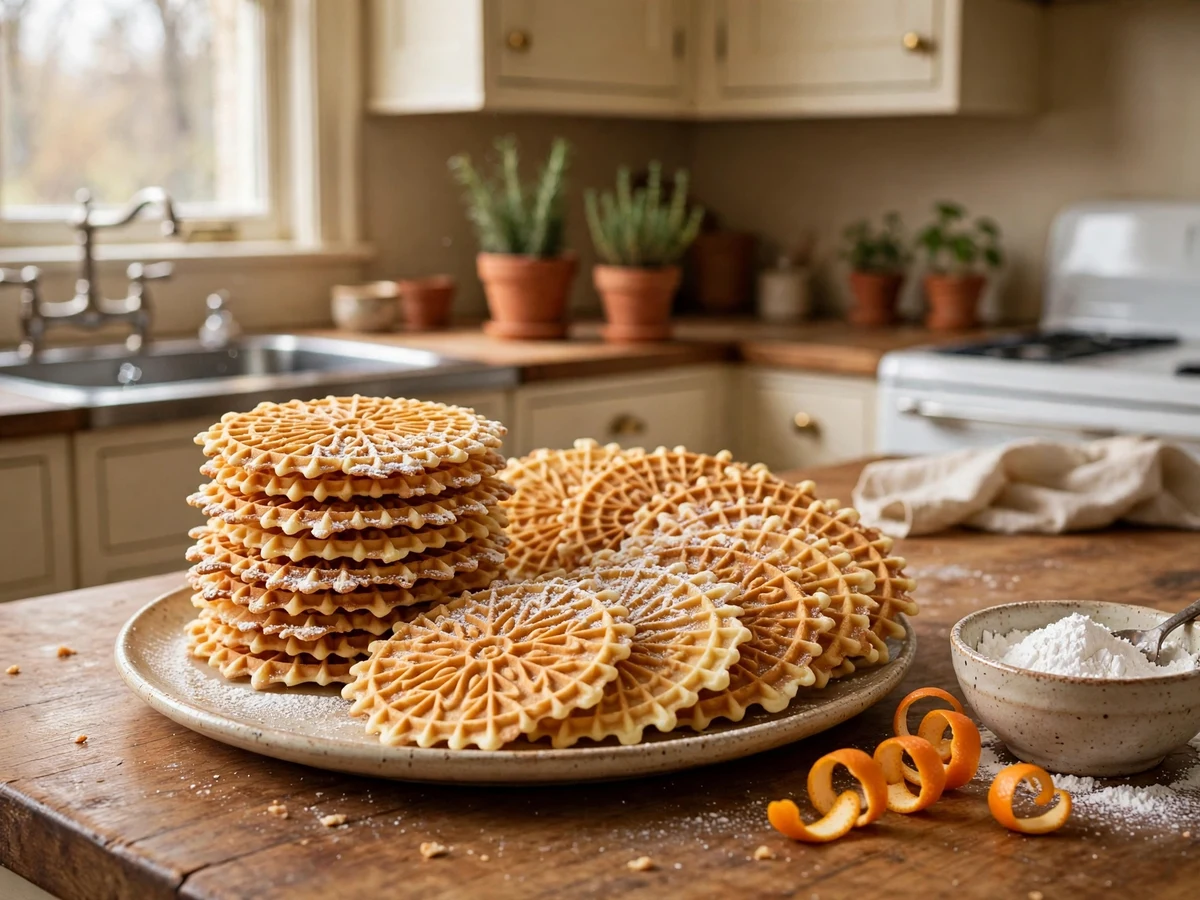
On a full Christmas tray, the pignoli cookies are always the ones people point at. They glow a little, golden nuts over pale almond, and they look like something from a glass bakery case rather than a home oven. Paired with a plate of italian pizzelle cookies, they carry the whole Italian side of the box.
Make them once with the firm paste, the rested dough and the full coat, and their reputation explains itself at the first chewy bite. Four ingredients, honestly handled, have carried this cookie through a century of Christmases. It will carry yours too.
FAQ
Can I use marzipan instead of almond paste for pignoli cookies?
It is not a good swap. Marzipan contains much more sugar and proportionally fewer almonds than almond paste, so the cookies bake up sweeter, flatter in flavor and firmer in texture. Buy firm almond paste with almonds as the first ingredient; it is sold in cans or sealed blocks in the baking aisle.
Why did my pignoli cookies spread flat?
Spreading usually means the dough was too warm or the paste was a soft, wet style. Chill the dough for the full 30 minutes before rolling, and if the balls still relax in your hands, chill the portioned balls again for 10 minutes before coating. The small amount of almond flour in this recipe also helps the cookies hold their shape.
How do I know the pine nuts are fresh enough?
Smell them. Fresh pine nuts smell sweet, buttery and mild, while older ones smell sharp or taste bitter because of their high oil content. Store pine nuts in the refrigerator or freezer, and buy them close to baking day for a recipe like this one, where the nuts cover every cookie.
Can I make pignoli cookies without a food processor?
It is possible but slow. Grate the cold almond paste on the coarse side of a box grater, then knead the sugars into it with your hands until the mixture feels like wet sand, and beat in the egg whites with a sturdy spoon. The processor does in 30 seconds what takes about 10 minutes by hand.
Are pignoli cookies really gluten free?
Yes, as written here they are. The dough is almond paste, sugars, egg whites and a little almond flour, with no wheat anywhere. If you are baking for someone with celiac disease, check the labels of your almond paste and almond flour for a certified gluten free statement, and use a clean, dedicated scoop for the pine nuts.

Pignoli Cookies
The classic Italian bakery cookie: a dense, chewy almond paste center under a full coat of buttery pine nuts, scented with orange zest for the Christmas box. One temperature, one clear doneness cue, and a dough that behaves once it has rested in the cold.
- Total Time: 1 hour 10 minutes
- Yield: About 30 cookies 1x
Ingredients
- 16 ounces almond paste, broken into small pieces
- 3/4 cup granulated sugar
- 1/4 cup powdered sugar, plus more for dusting if you like
- 2 large egg whites, at room temperature
- 1/4 cup almond flour
- 1 teaspoon finely grated orange zest
- 1/2 teaspoon vanilla extract
- 1/4 teaspoon fine sea salt
- 1 1/2 cups pine nuts
Instructions
- Line 2 large sheet pans with parchment paper. Put the pine nuts in a wide, shallow bowl and set them near your work surface.
- Pulse the almond paste in a food processor until it looks like coarse sand. Add the granulated sugar and powdered sugar and pulse again until the mixture is sandy and combined.
- Add the egg whites, almond flour, orange zest, vanilla and salt. Process until a thick, smooth and very sticky dough forms, about 30 seconds, scraping the bowl once halfway.
- Scrape the dough into a bowl, cover and refrigerate for 30 minutes. This rest is what makes the sticky dough easy to roll.
- Heat the oven to 325°F. With wet hands, roll the dough into 1 inch balls, about 1 tablespoon each, rewetting your hands whenever the dough starts to stick.
- Roll each ball in the pine nuts, pressing gently so the top and sides are fully coated and the bottom stays bare. Set the cookies on the prepared pans, bare side down, about 2 inches apart.
- Bake for 15 to 18 minutes, rotating the pans halfway, until the nuts at the edges are just turning golden, the centers are still pale and the bottoms are light blond. The cookies will feel soft, that is correct.
- Cool on the pan for 10 minutes, the cookies firm up as they cool, then move them to a rack. Dust lightly with powdered sugar if you like.
- Prep Time: 50 minutes
- Cook Time: 16 minutes
Nutrition
- Serving Size: 1
- Calories: 110
- Sugar: 8
- Sodium: 15
- Fat: 6
- Saturated Fat: 1
- Unsaturated Fat: 5
- Trans Fat: 0
- Carbohydrates: 10
- Fiber: 1
- Protein: 2
- Cholesterol: 0