In this article:
Roasted Butternut Squash Soup | Silky, Caramelized and Cozy
Why You Will Love This Recipe
Roasted Butternut Squash Soup is the bowl that tastes like October feels: golden, cozy, and a little bit sweet. High heat roasting caramelizes the squash edges, building a depth that boiled squash soups never reach. A swirl of brown butter and shatteringly crisp sage leaves on top turns a humble soup into a restaurant worthy starter.
The ingredient list is short and honest, with one apple for brightness and maple syrup for roundness. Everything roasts on sheet pans while you do something else, so the active work stays under twenty minutes.
It is naturally vegetarian, easily made vegan, and it reheats like a dream for Thanksgiving week. One pot, one pan, one blender: that is the entire equipment list.
Roasted Butternut Squash Soup is the recipe I make the moment the first cool evening arrives. Picture this: a velvety orange bowl, glossy with brown butter, crowned with crackling sage leaves and toasted pumpkin seeds. The first spoonful is sweet and nutty, then a whisper of cider vinegar lifts it before the cream rounds everything out.
I tested this soup six times to nail the roast: 425 degrees for 35 to 40 minutes, with chunky pieces so the centers stay creamy and the edges caramelize without bitterness.
It has anchored our Thanksgiving table for three years running, always the first empty pot of the night. By the end of this guide, you will know how to pick the right squash, roast for maximum caramelization, and make the whole pot two days ahead.
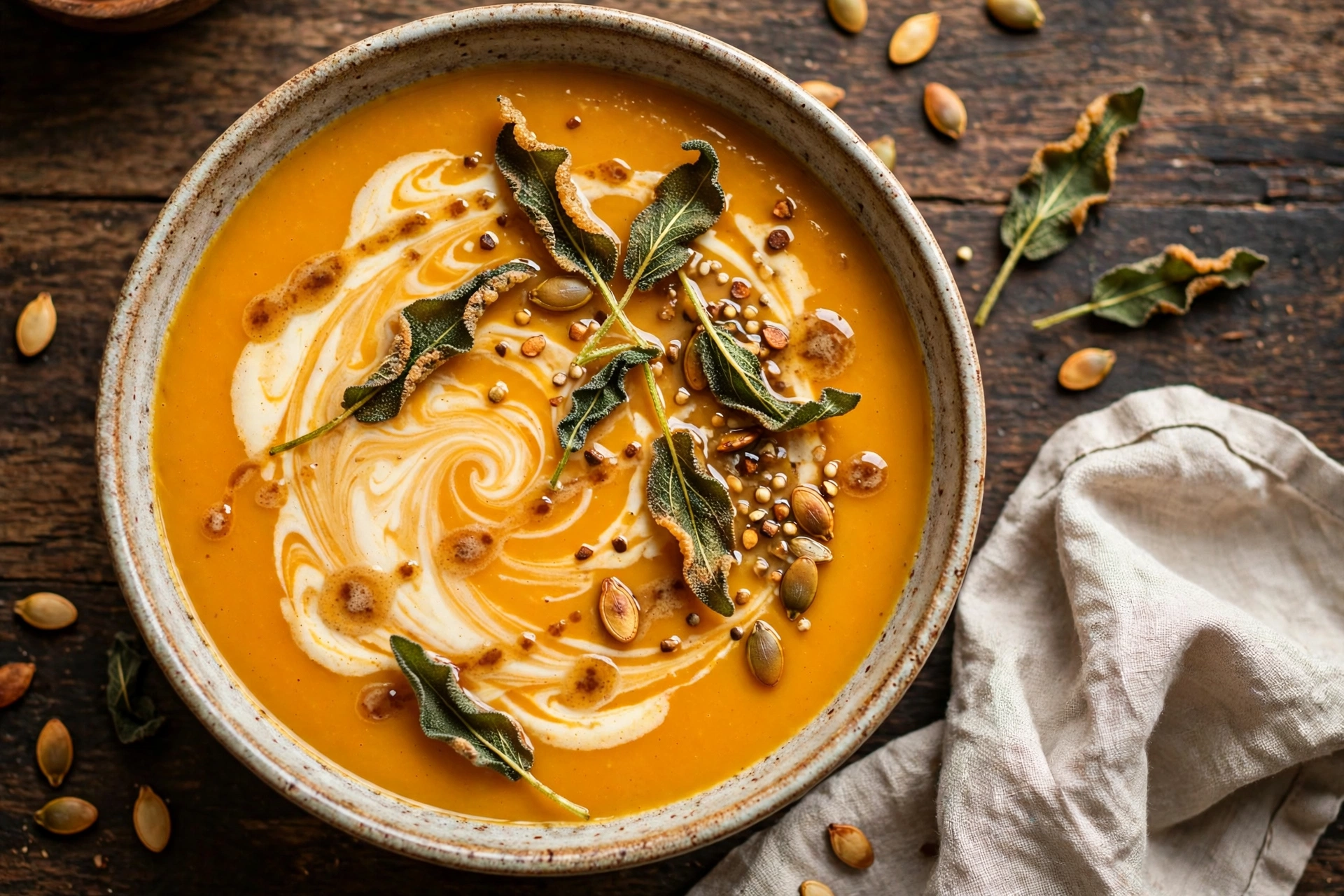
” alt=”Bowl of roasted butternut squash soup topped with crispy sage leaves and a swirl of cream” />
Taste and Texture Profile
The dominant flavor is deep caramelized squash, sweet and almost nutty from the high heat roast. Roasted onion melts into the background, adding savory depth without ever announcing itself. A Honeycrisp apple roasts alongside, contributing a bright fruity note that keeps the soup from tasting one dimensional.
Maple syrup rounds the edges while a spoonful of cider vinegar sharpens them, the classic sweet sour balance. A pinch of nutmeg and a whisper of cinnamon warm the background like a distant fireplace. The texture is the triumph: blended long and finished with cream, it pours like silk and coats the spoon.
Then come the garnishes, which are not optional in my house. Brown butter adds toasted hazelnut notes, crispy sage brings an earthy crunch, and pumpkin seeds add pops of texture. If squash is your love language, our creamy butternut squash mac and cheese takes the same sweet vegetable in a comfort food direction.
Served steaming, every spoonful balances sweet, savory, and bright. It tastes like effort, though the oven did most of the work, and that roasted depth is what makes it the fall soup people request by name.
Quick and Easy Preparation
This soup respects a busy weeknight and an even busier Thanksgiving week. Peeling and cubing the squash is the only real labor, about fifteen minutes with a sharp Y peeler. After that, the oven takes over for nearly forty minutes while you handle everything else.
The whole pot comes together in about an hour, and most of that time is gloriously hands off. An immersion blender purees everything right in the pot, so there is no hot soup shuttled between blender batches. For another hands off fall favorite, our rotisserie chicken mushroom soup leans on store bought chicken for similar weeknight ease.
Thanksgiving hosts take note: roast and blend the base up to two days early, refrigerate, then rewarm gently and finish with cream and garnishes. It frees the oven and stove on the big day with very little day of effort.
Lighter and Diet Adaptations
The base recipe is naturally vegetarian and gluten free. For a fully vegan version, swap the butter for olive oil, use vegetable broth, and finish with coconut milk instead of cream.
To lighten it up, skip the cream entirely and blend in an extra half cup of broth; the roasted vegetables still give body. A drizzle of good olive oil replaces the brown butter drizzle with zero fuss. Butternut squash brings real nutrition to the bowl: Healthline notes it is rich in vitamin A, vitamin C, and fiber.
For exact numbers, the USDA FoodData Central database lists the full nutrient profile of cooked butternut squash. Whatever version you make, do not skip the acid: vinegar or lemon keeps lighter versions tasting bright, not flat.
Ingredients
- 3 to 3 1/2 pounds butternut squash (1 large), peeled, seeded, and cut into 1 inch chunks
- 1 large Honeycrisp apple, peeled, cored, and cut into 1 inch chunks
- 1 medium yellow onion, peeled and quartered
- 4 to 6 garlic cloves, left in their skins
- 3 tablespoons olive oil
- 1 1/2 teaspoons kosher salt, plus more to taste
- 1/2 teaspoon freshly ground black pepper
- 1/4 teaspoon ground nutmeg
- 2 tablespoons pure maple syrup
- 1 tablespoon apple cider vinegar, plus more to taste
- 4 cups low sodium vegetable broth (or chicken broth)
- 1/2 cup heavy cream, plus more for drizzling
- 4 tablespoons unsalted butter
- 12 fresh sage leaves, patted dry
- 1/3 cup roasted pumpkin seeds
- Flaky sea salt, for finishing
Step by Step Instructions
- Heat the oven to 425°F (220°C) and line two large rimmed sheet pans with parchment paper for easy cleanup. Toss the squash, apple, onion, and garlic cloves in their skins with the olive oil, kosher salt, pepper, and nutmeg until every piece glistens.
- Spread the vegetables in a single layer across both pans, leaving real space between the pieces. Crowded vegetables steam instead of roasting, and steaming never builds caramel color. Two pans of spaced out chunks beat one packed pan every single time.
- Roast 35 to 40 minutes, turning the vegetables once at the halfway mark so every side picks up color. The squash is done when the edges are deeply golden and the centers yield easily to a fork. The apple pieces should look jammy and collapsed, melting into sweetness.
- While the vegetables roast, crisp the sage and brown the butter in one move. Melt the butter in a small skillet over medium heat until it foams, then slide in the dry sage leaves. They crisp in 15 to 20 seconds, turning dark green and glassy.
- Keep watching the butter as it quiets down and turns amber, smelling like toasted hazelnuts; that is the brown butter moment. Immediately pour it into a small heatproof bowl so it stops cooking. Lift the sage leaves out with a fork, drain them on a paper towel, and sprinkle with flaky salt.
- Squeeze the soft roasted garlic out of its skins straight into a large pot or Dutch oven. Add all the roasted vegetables with every caramelized scraped bit from the pans, then pour in the broth, maple syrup, and cider vinegar.
- Bring the pot to a gentle simmer over medium heat and cook 10 minutes so the flavors marry. Blend with an immersion blender for a full 2 minutes, moving it slowly across the bottom, until the soup pours completely silky with no fibrous bits.
- Stir in the heavy cream and warm the soup through over low heat without letting it boil. Taste carefully and adjust: more salt if it tastes flat, another teaspoon of vinegar if it needs brightness, or a drizzle of maple if you want more roundness.
- If the soup is thicker than you like, thin it with warm broth a quarter cup at a time until it coats the back of a spoon. Ladle it into warm bowls, since a hot bowl keeps the soup steaming at the table. A cold bowl steals the heat before anyone tastes a spoonful.
- Finish each bowl with a spoonful of the amber brown butter, a thin swirl of cream, three crisp sage leaves, and a generous scatter of pumpkin seeds. Serve immediately while the sage still crackles and the butter smells like toasted nuts.
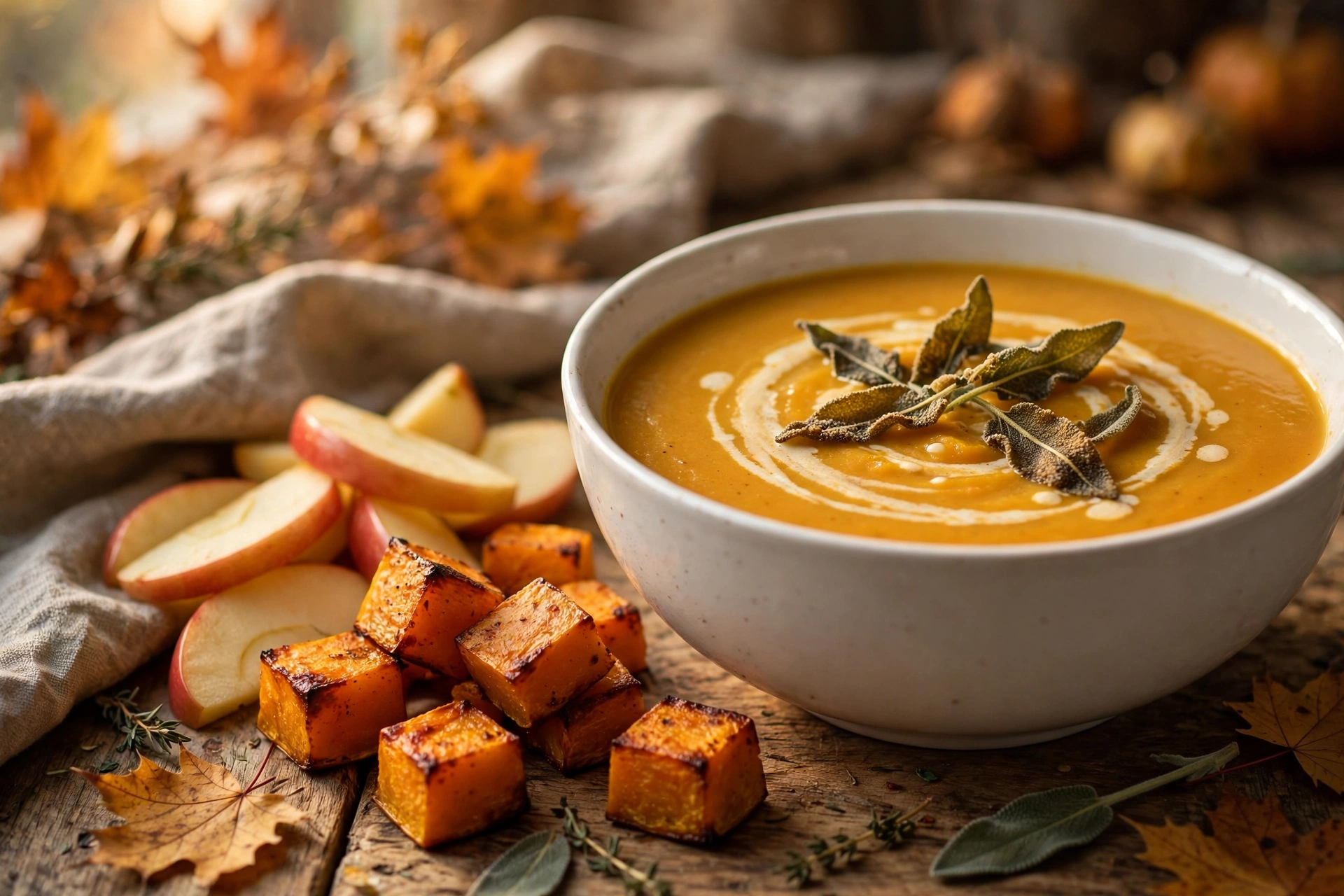
” alt=”Overhead shot of roasted butternut squash soup with brown butter, crispy sage leaves, and toasted pumpkin seeds” />
Pro Tips for Perfect Results
Cut the squash into honest one inch chunks, since small dice burn before the centers turn creamy. Give every piece elbow room on the pans, because crowded vegetables steam instead of caramelizing. That deep brown edge is where the flavor lives, so two pans beat one crowded pan every time.
Keep the garlic cloves in their skins while they roast, since naked garlic scorches at 425 degrees and turns the whole pot bitter. Turn the vegetables once at the halfway mark so every side picks up color. Squeeze the soft roasted garlic out of its skin right into the pot, where it melts into sweetness.
Blend for a full two minutes, longer than feels necessary, because silky soup comes from time, not just power. Taste and adjust the acid before you add the cream: a teaspoon more cider vinegar can rescue a flat pot. Season in layers, since the broth salt, maple sweetness, and vinegar brightness all shift as the soup sits.
For the crispiest sage, the butter must be foaming and hot before the leaves go in; they crisp in about fifteen seconds. Drain them on a paper towel and salt them immediately, since warm leaves grab salt best. The same high heat roasting works beautifully for weeknight sheet pan dinners too, so give every piece its space on the pan.
Save the squash seeds instead of tossing them: rinse, dry well, and roast at 300 degrees for 10 to 12 minutes with oil and salt. They turn into the exact crunchy garnish this soup wants. Two ingredients from one squash feels like a small kitchen victory.
Easy Swaps and Tasty Variations
No butternut in sight? Kabocha or acorn squash swap in one for one, with the same roast time. Sugar pumpkins work too, though their watery flesh needs an extra five minutes to caramelize. I would skip spaghetti squash here, since its strands never blend silky no matter how long you roast them.
A Bosc pear replaces the Honeycrisp beautifully, bringing honeyed notes that love nutmeg. To go dairy free, use full fat coconut milk instead of cream and olive oil for the butter. The coconut whisper reads as intentional, not like a compromise.
Stir a teaspoon of curry powder into the hot butter for a golden, gently spiced version. Smoked paprika and a pinch of cayenne push it toward campfire territory, while fresh thyme leaves can stand in for sage. A swirl of harissa on top turns the bowl into dinner party material.
For a heartier bowl, top each serving with a spoonful of warm white beans or crispy chickpeas. They add protein and chew that turn the soup into a full lunch. A drizzle of chili crisp on top is the shortcut I reach for on tired weeknights.
How to Store and Make Ahead
The blended base keeps four days refrigerated in a sealed container and tastes even better on day two; hold the cream and garnishes back until serving, and warm gently over medium low heat since hard boiling can split the cream. For Thanksgiving, roast and blend the base on Tuesday, refrigerate, then rewarm Thursday morning while the turkey rests and finish with cream, brown butter, and sage.
To freeze, cool the soup completely and portion into freezer containers or flat zip top bags (squeeze out the air for space saving stacks) without the cream or butter drizzle; it keeps three months frozen. Thaw overnight in the refrigerator, rewarm on the stove, then swirl in the cream and crisp the sage fresh.
Conclusion
Roasted Butternut Squash Soup is the rare fall recipe that tastes like hours of work and asks for twenty minutes of yours. The oven builds the caramel depth, the maple and vinegar keep it balanced, and the brown butter sage crown makes it unforgettable.
Make it on a quiet Sunday, freeze a batch, and let it carry you through the holidays. If you are planning the full Thanksgiving spread, our pistachio cranberry wreath cookies make a beautiful edible gift to serve alongside. From my kitchen to yours, happy cooking.
FAQ
Why does my soup taste bitter even though I followed the roast times?
Bitterness almost always comes from garlic roasted without its skin, or onion edges that went from charred to scorched. Trim any blackened bits before blending, and roast the garlic in its skin next time. A teaspoon of maple syrup stirred in at the end rounds out mild bitterness.
Can I roast the vegetables a full day before blending the soup?
Yes, roast them, cool completely, and refrigerate in a sealed container up to 48 hours. Blend them cold with the broth, then warm the pot gently before stirring in the cream. The flavors actually meld beautifully overnight, which is why this is my Thanksgiving strategy.
Can I toast the seeds from my own butternut squash for the garnish?
Absolutely, rinse them clean, pat them very dry, toss with a little oil and salt, and roast at 300 degrees for 10 to 12 minutes. They pop and turn golden when they are done. Use them within two days, since homemade seeds go soft faster than store bought ones.
My soup came out too thick, or too thin. How do I fix it?
Too thick usually means the squash was extra starchy, so thin it with warm broth a quarter cup at a time. Too thin means too much broth, so simmer uncovered for 10 minutes to reduce. A longer blend also builds body naturally, so try that before reaching for a thickener.
What can I use instead of heavy cream to keep it lighter or dairy free?
For a lighter bowl, blend in an extra half cup of warm broth and finish with a drizzle of good olive oil. For dairy free, full fat coconut milk gives the richest result. Either way, keep the cider vinegar, since acid does the heavy lifting for flavor when cream is gone.
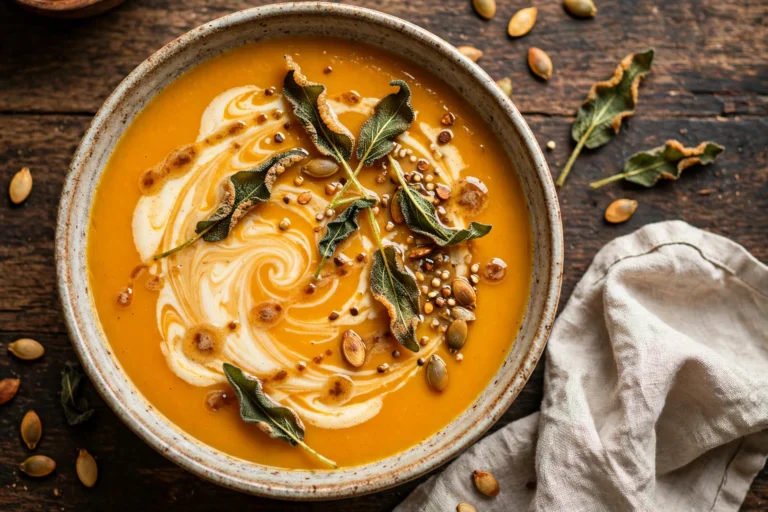
Roasted Butternut Squash Soup
Silky roasted butternut squash soup with caramelized edges, Honeycrisp apple, maple syrup and cider vinegar, finished with nutty brown butter, crispy sage leaves and toasted pumpkin seeds.
- Total Time: PT1H10M
- Yield: 6 servings 1x
Ingredients
- 3 to 3 1/2 pounds butternut squash (1 large), peeled, seeded, and cut into 1-inch chunks
- 1 large Honeycrisp apple, peeled, cored, and cut into 1-inch chunks
- 1 medium yellow onion, peeled and quartered
- 4 to 6 garlic cloves, left in their skins
- 3 tablespoons olive oil
- 1 1/2 teaspoons kosher salt, plus more to taste
- 1/2 teaspoon freshly ground black pepper
- 1/4 teaspoon ground nutmeg
- 2 tablespoons pure maple syrup
- 1 tablespoon apple cider vinegar, plus more to taste
- 4 cups low-sodium vegetable broth (or chicken broth)
- 1/2 cup heavy cream, plus more for drizzling
- 4 tablespoons unsalted butter
- 12 fresh sage leaves, patted dry
- 1/3 cup roasted pumpkin seeds
- Flaky sea salt, for finishing
Instructions
- Heat the oven to 425F (220C) and line two large rimmed sheet pans with parchment paper. Toss the squash, apple, onion, and garlic cloves in their skins with the olive oil, kosher salt, pepper, and nutmeg until every piece glistens.
- Spread the vegetables in a single layer across both pans with space between the pieces. Roast 35 to 40 minutes, turning once halfway, until deeply golden with charred edges and fork tender.
- Meanwhile, melt the butter in a small skillet over medium heat until foaming. Slide in the dry sage leaves and crisp 15 to 20 seconds until dark green and glassy.
- Watch the butter turn amber and smell like toasted hazelnuts, then immediately pour it into a small heatproof bowl. Lift the sage out with a fork, drain on a paper towel, and sprinkle with flaky salt.
- Squeeze the roasted garlic from its skins into a large pot or Dutch oven. Add all the roasted vegetables with the caramelized bits, then pour in the broth, maple syrup, and cider vinegar.
- Bring to a gentle simmer over medium heat and cook 10 minutes. Blend with an immersion blender for a full 2 minutes until completely silky.
- Stir in the heavy cream and warm through over low heat without boiling. Taste and adjust salt, vinegar, and maple syrup to balance.
- Thin with warm broth a quarter cup at a time if needed, then ladle into warm bowls. Finish each bowl with brown butter, a swirl of cream, three sage leaves, and pumpkin seeds. Serve immediately.
- Prep Time: PT20M
- Cook Time: PT50M