In this article:
Why This Maple Glazed Roast Turkey Breast Recipe Works
Maple glazed roast turkey breast works because the method respects two truths: lean breast meat dries out fast, and sugar burns faster. The breast roasts plain for nearly an hour at 325 degrees, building golden color with no glaze. Only then does the maple mixture go on, lacquering the skin so it caramelizes instead of scorching.
The glaze is built like a vinaigrette in reverse: Dijon emulsifies the maple syrup and melted butter into a clinging coat. A spoonful of apple cider vinegar keeps the sweetness honest, while smoked paprika and thyme push it savory. Pull the breast at 160 to 162 degrees and rest it tented for twenty minutes; carryover heat finishes the job.
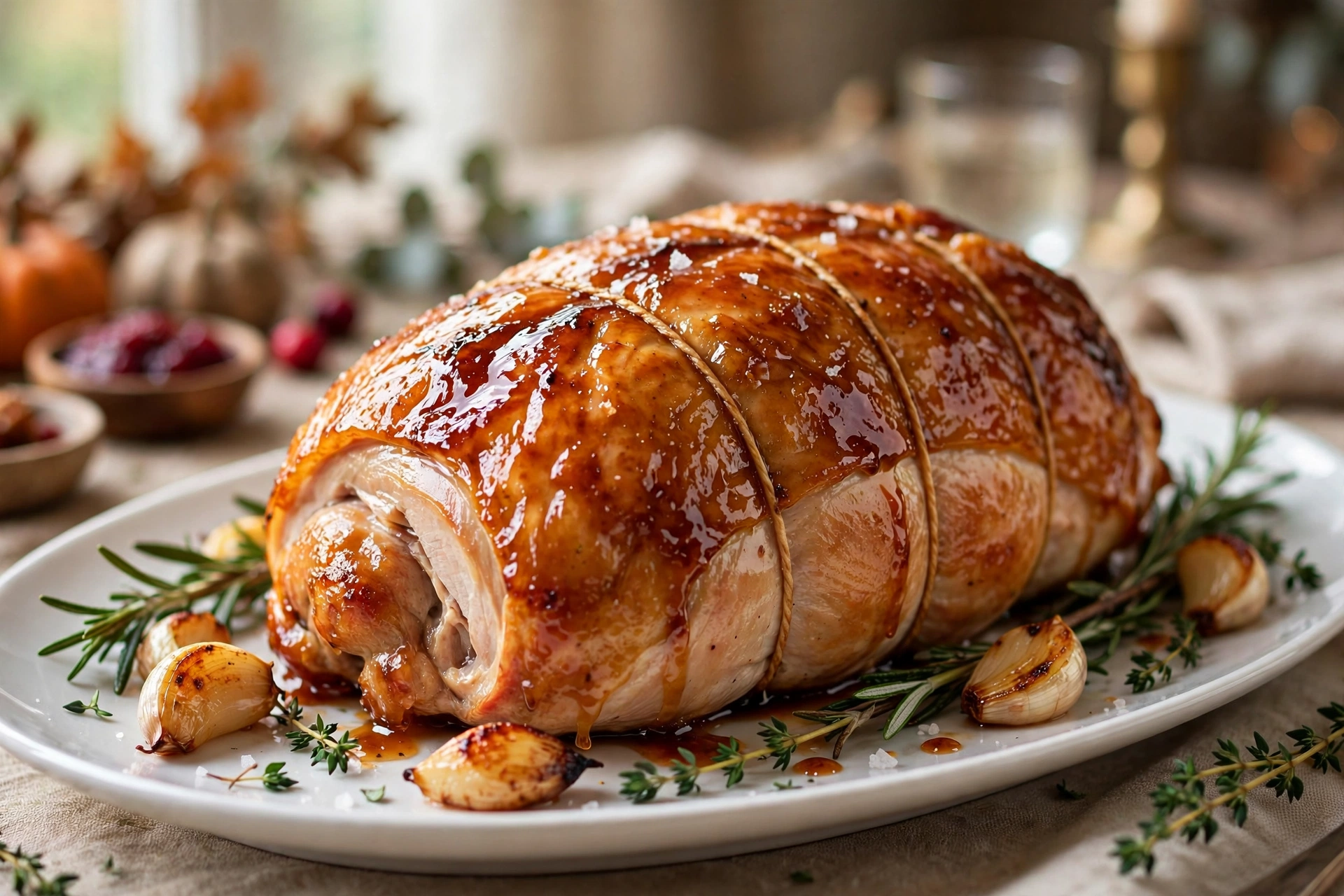
Maple glazed roast turkey breast is the holiday centerpiece for smaller tables: all the Thanksgiving drama with none of the whole bird wrestling. Picture a burnished, lacquered roast arriving on a platter wreathed with thyme, the kitchen smelling of caramel and woodsmoke. Each slice is blushing and juicy, edged with crackling skin that shatters softly under the knife.
I developed this recipe after too many Novembers of dry breast meat dressed up with gravy apologies. The fix was patience: salt the bird the night before, roast it low, and treat the glaze as a finishing lacquer. Six tests later, this is the method my family requests by name every fall.
Flavor and Texture
The first thing you taste in this maple glazed roast turkey breast is the glaze: dark maple syrup reduced to a sticky shell with a whisper of smoke. Underneath, the Dijon brings a mellow tang that stops the sweetness from turning one note, and vinegar lifts the finish. It is the rare holiday roast that tastes rich and bright in the same bite.
Then comes the meat itself, and this is where the low roast pays off. The exterior firms into a burnished crust while the interior stays blushing and juicy, each slice bending rather than crumbling. Because the breast rests a full twenty minutes, the juices settle back into the fibers instead of flooding the board.
Texture contrast is the quiet star here. The skin renders under the glaze into a lacquered, lightly crackled shell, while the thyme leaves turn fragrant and friable. If maple is your love language, our maple brown butter cornbread carries the same caramel notes into bread form. Serve the slices fanned on a warm platter so the glaze catches the light.
Temperature matters as much as seasoning for the final impression. Served warm, the glaze stays supple and glossy, melting into the meat with each cut. Let it sit too long and the shell firms up, so time your carving for the moment guests sit down. A final drizzle of warm pan sauce at the table brings back the shine.
Convenience and Time
This maple glazed roast turkey breast is a weeknight feasible roast wearing a holiday costume. Active work totals about twenty minutes: whisking the glaze, seasoning the breast, and brushing twice near the end. The oven handles the other ninety minutes while you make sides, set the table, or simply sit down. No basting marathons, no cheesecloth, no drama.
The timeline is genuinely forgiving, which matters on a day with a crowded oven. The breast can rest tented for up to forty minutes, buying you a wide window to finish everything else. If your sides run late, the roast waits gracefully; few centerpieces offer that patience. Plan for two hours from fridge to platter, rest included.
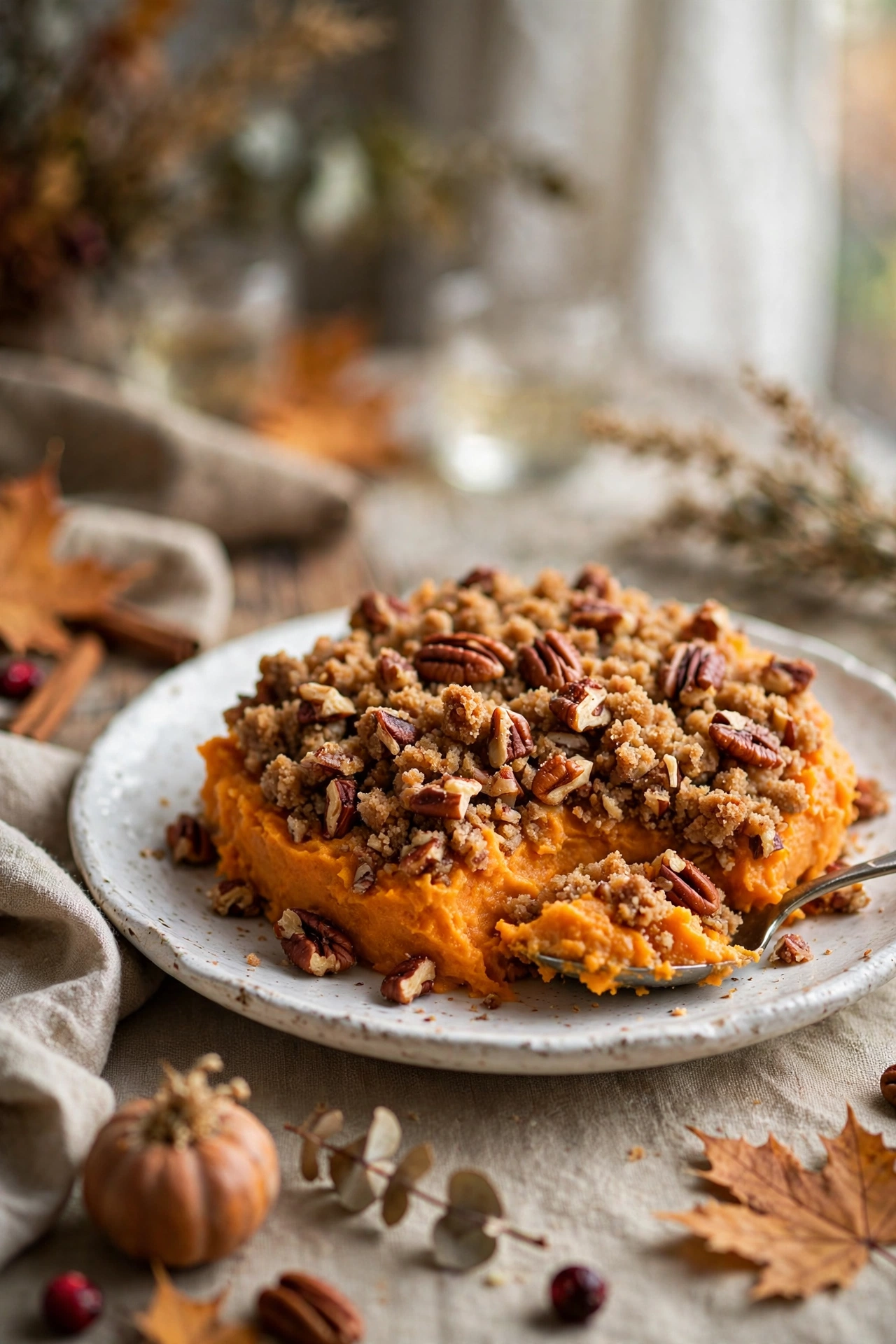
It also scales beautifully for the classic small Thanksgiving of six to eight. One three and a half pound breast feeds the table with leftovers, and it frees the oven for high heat dishes. Pair it with our green bean casserole and sweet potato casserole with pecan streusel for a complete holiday plate that practically plans itself.
Diet Friendly Options
The base recipe is naturally gluten free and dairy flexible, which covers most holiday tables without any awkward substitutions. Swap the butter in the glaze for a neutral oil or vegan butter and the whole roast becomes dairy free with no loss of shine. The pan sauce thickens with cornstarch rather than flour, so it stays gluten free too.
For a lighter plate of maple glazed roast turkey breast, the glaze is already portion controlled: most of the sugar stays on the skin, and you choose how much pan sauce to drizzle. Serve thicker slices with extra roasted vegetables and a bright salad to balance the richness. The breast itself is lean protein, so the indulgence is entirely in the lacquer you add.
Watch the labels if sodium is a concern, since many store bought breast roasts arrive pre salted or enhanced with broth. When the package says enhanced, skip the dry brine salt and season lightly at the end instead. You keep full control of the salt while the maple and mustard carry the flavor.
Ingredients
- 1 boneless turkey breast roast, 3 to 3 1/2 pounds, skin on (thawed completely if frozen)
- 1 tablespoon kosher salt, for the dry brine (use 2 teaspoons if the roast is pre seasoned)
- 1 teaspoon freshly ground black pepper
- 1 cup low sodium chicken broth, for the roasting pan
- 1/2 cup pure maple syrup, dark or robust grade
- 3 tablespoons unsalted butter, melted
- 2 tablespoons Dijon mustard
- 1 tablespoon apple cider vinegar
- 2 cloves garlic, minced
- 1 tablespoon fresh thyme leaves (or 1 teaspoon dried thyme)
- 1 teaspoon smoked paprika
- 1/2 teaspoon kosher salt
- All the pan drippings from the roasting pan
- 1/2 cup low sodium chicken broth
- 2 tablespoons reserved maple glaze
- 1 tablespoon cold unsalted butter
Step by Step Instructions
- Start with an overnight dry brine if you can: pat the breast very dry, rub it all over with the kosher salt, and refrigerate uncovered on a rack for 12 to 24 hours. The salt seasons deeply and the uncovered rest dries the skin for better browning. Uncovered is the key detail, since circulating air dries the surface into the kind of skin that turns gorgeously crisp. If your roast is labeled pre seasoned or enhanced, skip this step entirely.
- Take the breast out of the fridge 45 minutes before roasting so it loses its chill and cooks evenly. Heat the oven to 325°F (165°C) with a rack in the middle position. Set a wire rack inside a roasting pan and pour the cup of chicken broth into the pan to keep the oven environment moist.
- Pat the breast dry once more and season with the black pepper on all sides. Place it skin side up on the rack, keeping any netting or string in place for now so the roast holds its shape. Tuck a few thyme sprigs under the rack if you like the aroma.
- Roast plain, with no glaze yet, for 55 to 60 minutes until the skin turns light gold and taut. This head start renders the skin and builds color without any sugar present to burn. Rotate the pan once at the halfway mark if your oven runs hot on one side, so the browning stays even. The broth in the pan will bubble gently and catch the early drippings.
- While the breast roasts, whisk the maple syrup, melted butter, Dijon, vinegar, garlic, thyme, paprika, and salt into a smooth glaze. The mustard will emulsify the mixture into a thick, paintable coating. Scoop out 2 tablespoons into a small dish and reserve it for the pan sauce later.
- Brush the breast generously with about half the glaze, reaching into every fold and over the top. Return the pan to the oven and roast 15 minutes, letting the coating set and darken slightly. The kitchen will start to smell like a sugar shack.
- Brush on the remaining glaze and roast 15 to 20 minutes more, until an instant read thermometer in the thickest part reads 160 to 162°F. If the glaze darkens too quickly, tent the breast loosely with foil for the rest of the cook. Do not wait for 165 on the thermometer; carryover heat does the rest.
- Transfer the breast to a cutting board and tent it loosely with foil. Rest a full 20 minutes so the juices redistribute and the internal temperature coasts to a safe 165°F. Use this quiet window to warm your serving platter in the turned off oven and finish the pan sauce. This rest is the difference between juicy slices and a puddle on the board.
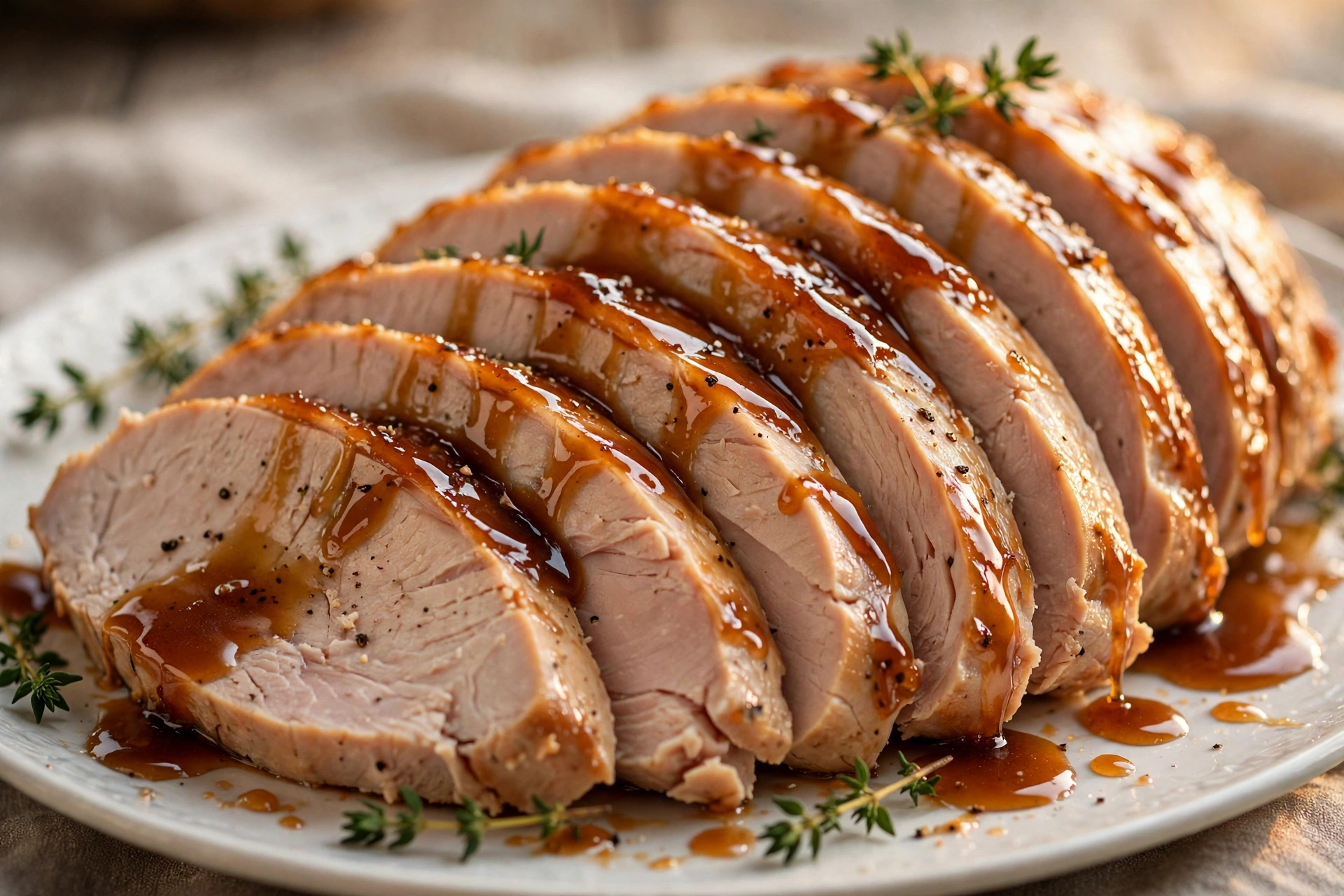
- Snip off the netting or string only after resting, then slice the breast against the grain into half inch thick pieces. A long, sharp carving knife gives the cleanest cuts through the lacquered skin. Arrange the slices overlapping on a warm platter.
- For the pan sauce, pour the drippings through a strainer into a small saucepan and add the broth plus the reserved glaze. Simmer 4 to 5 minutes until slightly syrupy, then whisk in the cold butter off the heat for shine. Taste and add a pinch of salt if needed, or a tiny splash of vinegar if the sauce tastes flat. Keep it warm over the lowest heat until serving.
- Serve the sliced breast with the warm glaze or pan sauce spooned over and around it, plus extra thyme for color. Bring any remaining sauce to the table in a small pitcher. Slice only what you will serve so leftovers stay moist.
Tips and Tricks for Success
The single habit that turns a good maple glazed roast turkey breast into a great one is glazing late, never early. Sugar begins to scorch well before lean poultry finishes cooking, so the first hour belongs to the bare bird. Two thin coats in the final thirty minutes build deeper flavor than one heavy coat ever could.
Trust the thermometer over the clock, because breast thickness varies more than recipes admit. Insert the probe into the thickest part without touching any netting, and start checking ten minutes before you think it is done. The USDA safe cooking guidance for turkey sets 165°F as the target, which the resting carryover reaches after a 160 to 162°F pull.
Choose dark or robust grade maple syrup, the kind once labeled Grade B, because its deep caramel notes survive the oven. Pale, delicate syrups taste lovely on pancakes but fade to plain sweetness under sustained heat. Real maple is non negotiable here; pancake syrup brings none of the woodsy depth this glaze needs.
Ingredient Swaps and Variations
A bone in breast works beautifully with this exact glaze, and many cooks swear the bone adds flavor insurance. Add 20 to 30 minutes to the plain roasting phase and judge doneness by temperature, not time. Shield the exposed bone ends with small foil caps if they brown too fast.
For a smokier profile, swap the smoked paprika for chipotle powder and add a pinch of cayenne to the glaze. For a brighter, more herbal version, trade the thyme for chopped rosemary and sage and finish with lemon zest instead of vinegar. The maple Dijon base welcomes both directions without losing its identity.
Honey can stand in for the maple in equal measure, giving a floral sweetness that pairs well with the mustard. Whole grain mustard replaces Dijon for a rustic, seedy texture in the coating. If you avoid butter, a fruity olive oil keeps the glaze glossy and the recipe fully dairy free.
Storage and Make Ahead
The glaze can be whisked up to three days ahead and refrigerated in a jar; bring it to room temperature and whisk again before brushing. You can also dry brine the breast a full day early, which is genuinely the best make ahead move for juiciness. Do not roast the bird ahead, though; reheated breast never matches freshly rested slices.
Refrigerate leftover maple glazed roast turkey breast in an airtight container within two hours of serving, where they keep for three to four days. Store the slices with a spoonful of pan sauce or glaze to protect them from drying. For longer keeping, freeze sliced portions with their sauce for up to three months, thawing overnight in the fridge.
Reheat gently to protect all your careful work: warm slices covered in a 300 degree oven with a splash of broth for 10 minutes. Leftover slices make a legendary sandwich with slow cooker apple butter, sharp cheddar, and arugula on toasted sourdough. They also shine diced into soup, pot pie, or a hearty grain bowl the next day.
Conclusion
Maple glazed roast turkey breast belongs in every small Thanksgiving playbook: juicy slices, crackling lacquered skin, and a glaze that tastes like the season itself. The late glaze method removes the two classic risks, dryness and burnt sugar, in one calm afternoon of cooking. It looks like a showpiece and behaves like a weeknight roast.
Make it once and the technique becomes instinct: salt ahead, roast low, glaze late, rest well. I hope it earns the same permanent spot at your table that it has at mine. Happy roasting, and save me a corner slice with extra crispy skin.
FAQ
What internal temperature should I pull the turkey breast at?
Pull the breast when an instant read thermometer reads 160 to 162°F in the thickest part, then tent it loosely with foil and rest for 20 minutes. Carryover heat will coast the meat to the USDA safe target of 165°F. Waiting for 165°F on the thermometer guarantees drier slices.
Should I brine the turkey breast before roasting?
A simple overnight dry brine of kosher salt is the easiest upgrade you can make, seasoning the meat deeply and drying the skin for better browning. Use 1 tablespoon per breast and refrigerate uncovered 12 to 24 hours. Skip it if your roast is labeled pre seasoned or enhanced, since those are already salted.
How do I keep the maple glaze from burning?
Apply the glaze only during the final 30 to 35 minutes of roasting, when the breast is nearly done. Roast at 325°F rather than higher, brush on two thin coats instead of one heavy layer, and tent loosely with foil if the coating darkens too fast. This late glaze method keeps your maple glazed roast turkey breast lacquered, not scorched.
How long should the breast rest before slicing?
Rest the breast a full 20 minutes tented loosely with foil before you slice or remove the netting. The rest lets juices redistribute through the meat and allows carryover heat to finish cooking gently. Slicing early spills those juices onto the board instead of keeping them in the meat.
Can I use a bone-in turkey breast instead of boneless?
Yes, the same glaze and method work for a bone-in breast, and the bone adds a little flavor insurance against drying. Add 20 to 30 minutes to the initial plain roasting phase and rely on the thermometer, pulling at the same 160 to 162°F. Plan on about 3/4 pound of bone-in breast per person versus 1/2 pound boneless.
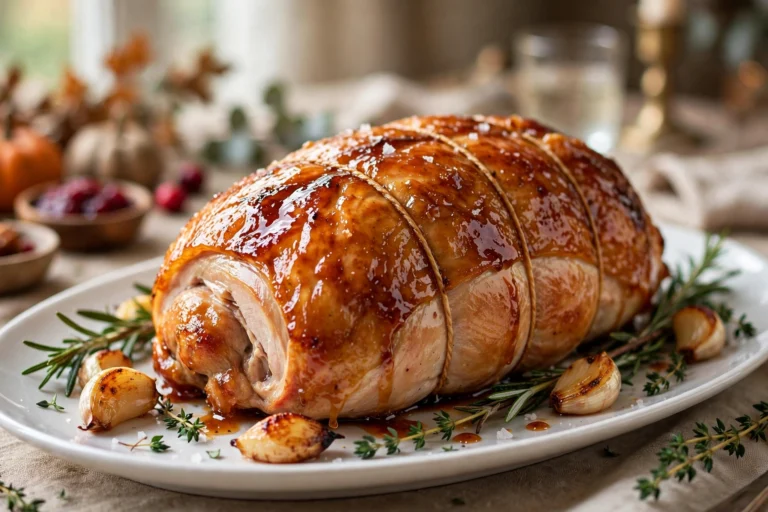
Maple Glazed Roast Turkey Breast
Juicy roast turkey breast lacquered with a sticky maple Dijon glaze, roasted low and slow and finished with a quick pan sauce. A foolproof centerpiece for a small Thanksgiving.
- Total Time: 2 hours
- Yield: 8 servings 1x
Ingredients
- 1 boneless turkey breast roast, 3 to 3 1/2 pounds, skin on (thawed if frozen)
- 1 tablespoon kosher salt, for dry brining (2 teaspoons if pre seasoned)
- 1 teaspoon freshly ground black pepper
- 1 cup low sodium chicken broth
- 1/2 cup pure maple syrup, dark or robust grade
- 3 tablespoons unsalted butter, melted
- 2 tablespoons Dijon mustard
- 1 tablespoon apple cider vinegar
- 2 cloves garlic, minced
- 1 tablespoon fresh thyme leaves (or 1 teaspoon dried)
- 1 teaspoon smoked paprika
- 1/2 teaspoon kosher salt
- 1/2 cup low sodium chicken broth, for the pan sauce
- 1 tablespoon cold unsalted butter, for the pan sauce
Instructions
- Optional dry brine: pat the breast dry, rub with the kosher salt, and refrigerate uncovered on a rack 12 to 24 hours. Skip if the roast is pre seasoned or enhanced.
- Rest the breast at room temperature 45 minutes. Heat the oven to 325F (165C) and set a wire rack in a roasting pan with the chicken broth in the bottom.
- Pat the breast dry, season with black pepper, and place skin side up on the rack, keeping any netting in place.
- Roast plain for 55 to 60 minutes until light gold. Whisk the maple syrup, melted butter, Dijon, vinegar, garlic, thyme, paprika, and salt into a glaze; reserve 2 tablespoons for the sauce.
- Brush the breast with half the glaze and roast 15 minutes until the coating sets.
- Brush with the remaining glaze and roast 15 to 20 minutes more, until a thermometer in the thickest part reads 160 to 162F. Tent with foil if browning too fast.
- Transfer to a board, tent loosely with foil, and rest 20 minutes; carryover heat brings it to 165F.
- Snip off the netting and slice against the grain into 1/2 inch pieces. Arrange overlapping on a warm platter.
- For the sauce: strain the drippings into a saucepan, add the broth and reserved glaze, and simmer 4 to 5 minutes until syrupy.
- Whisk in the cold butter off the heat. Serve the sliced breast with the warm sauce spooned over.
- Prep Time: 20 minutes
- Cook Time: 1 hour 30 minutes