Creamed Pearl Onions With Tender Centers and a Silky Nutmeg Cream
In this article:
- Why creamed pearl onions still earn their place
- One minute in boiling water, the peeling trick
- Fresh, frozen or jarred, choosing your onions
- Ingredients
- Building the sauce and cooking the onions
- A cream sauce that stays silky, never watery
- Two ways to serve, spooned soft or gratin crisp
- Beside turkey, gravy and the other rich plates
- Wednesday and Thursday, the make ahead plan
- Questions about creamed pearl onions
- The quiet dish everyone asks about
Creamed pearl onions are the small, gleaming side dish that older Thanksgiving tables never skipped: whole onions, tender all the way through, held in a cream sauce that shines instead of puddling. Each spoonful tastes sweet first, then rich, then warm with nutmeg.
The dish has a reputation problem, and it is not flavor. It is the peeling. Two pounds of tiny onions can look like an hour of fiddly work, so the recipe fell behind easier sides even though the cooking itself takes half an hour.
This version removes the obstacle and protects the sauce. The onions peel in about a minute each once you know the blanching trick, and the sauce is built with a measured roux, then simmered after the onions join it, so their liquid becomes part of the silk.
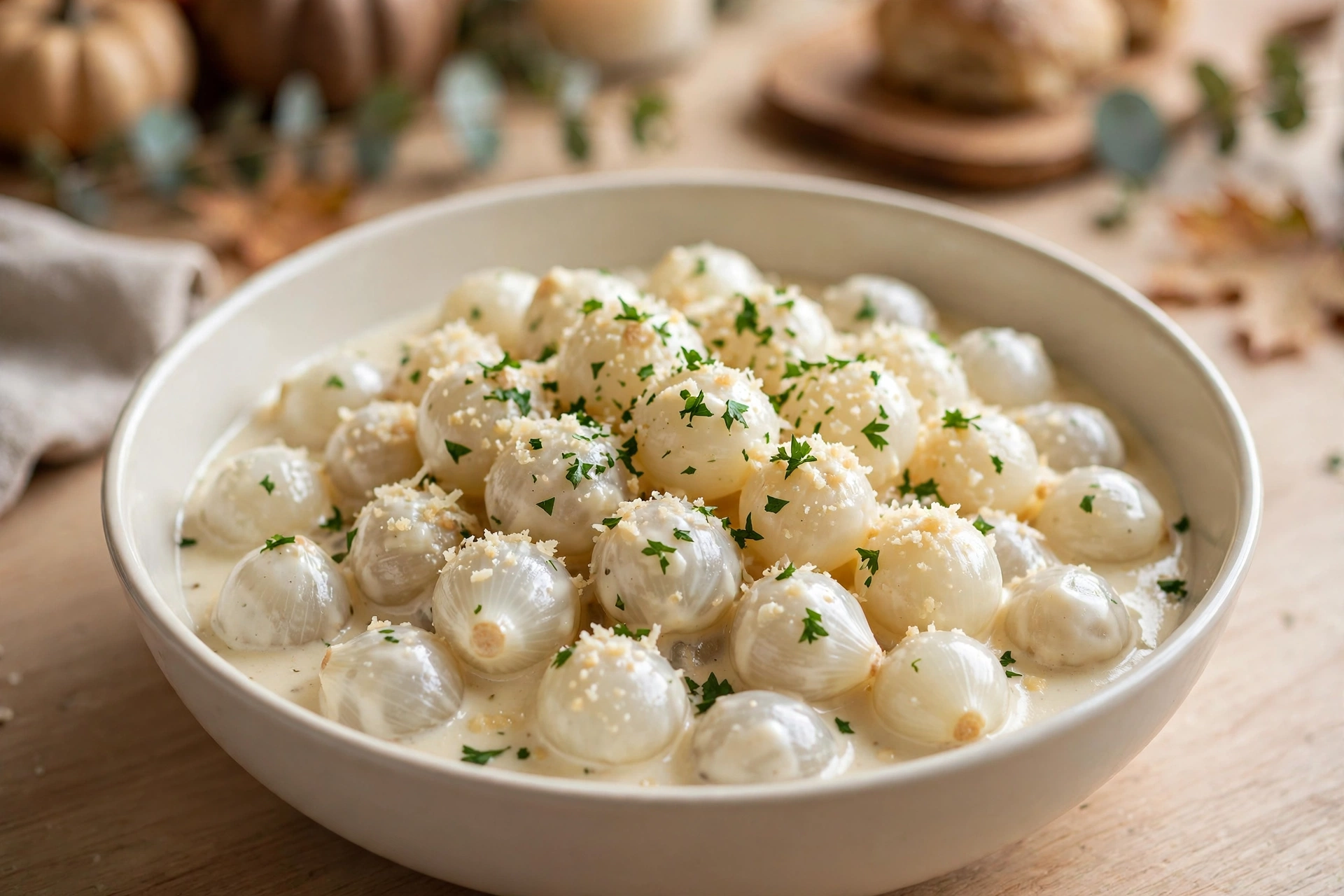
What arrives at the table is a bowl of pale, glossy spheres in a sauce that clings. Against browned turkey, amber gravy and deep green beans, it is the quiet plate that makes the rich food taste richer.
Why Creamed Pearl Onions Still Earn Their Place
Creamed pearl onions work because the onion itself does two jobs at once. Cooked whole and gently, a pearl onion turns sweet and almost candied at the center while keeping its shape, so the sauce has something definite to coat.
The sauce is deliberately restrained. Butter, a blond roux, milk and cream in two additions, plus stock for depth: nothing in it shouts. Nutmeg and thyme sit in the background, and a minced shallot melts into the base so the onion flavor reads as one clear note.
Size is the pleasure. A pearl onion is a single bite, so there is no cutting at the table and no half eaten wedge left on the plate. Guests take three or four with a serving spoon and come back for three or four more.
The dish also balances the menu around it. Thanksgiving plates lean brown, soft and salty; this bowl is pale, distinct and gently sweet. It refreshes the palate between stuffing and potatoes the way a salad does, while still belonging to the warm food.
One Minute in Boiling Water: the Peeling Trick
The whole method rests on sixty seconds. Drop the fresh onions into boiling water for exactly one minute, no longer, then move them straight into ice water. The skins loosen and turn papery while the onions themselves stay firm and raw inside.
Trim a thin slice from the root end of each cooled onion, then squeeze gently from the stem end. The onion pops out of its skin in one motion, clean and whole. A paring knife helps only on the stubborn few near the end of the bowl.
Keep a sliver of the root plate on every onion. That small disk is the structure that holds the layers together during simmering, so the onions stay in spheres instead of collapsing into petals in the sauce.
Work in the order that suits a holiday kitchen: blanch, chill, peel, then refrigerate the peeled onions in a covered container for up to two days. Peeled ahead, the dish on Thursday is only a sauce and a short simmer.
Fresh, Frozen or Jarred: Choosing Your Onions
Fresh pearl onions give the best result: firm spheres, a clean sweet flavor and no added liquid in the pan. They ask for the peeling step and nothing else. Choose onions of a similar size so they finish cooking at the same moment.
Frozen pearl onions are the honest shortcut, already peeled and consistent. Thaw them fully and drain them well, then pat them dry, because they release water as they heat. Add them to the sauce and take the full uncovered simmer so that water cooks back out.
Jarred onions are the emergency option. They are already cooked and seasoned, so drain them, rinse them briefly, and cut the salt in the sauce by a third. Their texture stays softer, which makes the gratin finish the better service for a jarred batch.
The weights translate cleanly. Two pounds of fresh onions equal two 14 ounce bags of frozen or about three drained jars. Whatever the starting point, the sauce below is built for the same total volume of onions.
Ingredients
- 2 pounds fresh pearl onions (about 5 cups), or 2 bags (14 ounces each) frozen pearl onions, thawed and drained
- 4 tablespoons unsalted butter, plus 1 tablespoon for the crumbs
- 1 small shallot, finely minced
- 3 tablespoons all-purpose flour
- 1 1/2 cups whole milk
- 3/4 cup heavy cream, plus 1 tablespoon for reheating
- 1/2 cup low sodium chicken or vegetable stock
- 1 bay leaf
- 2 sprigs fresh thyme, or 1/2 teaspoon dried thyme
- 1/4 teaspoon freshly grated nutmeg
- 3/4 teaspoon fine salt, plus more to taste
- 1/4 teaspoon white pepper
- 1/3 cup freshly grated parmesan cheese
- 1/2 cup panko breadcrumbs
- 2 tablespoons finely chopped fresh parsley or chives
Building the Sauce and Cooking the Onions
- To peel fresh onions, bring a pot of water to a boil. Add the onions for exactly 1 minute, drain, and drop them into ice water. Trim the root end of each onion and squeeze gently from the stem end; the onion pops out of its skin. Keep a sliver of root on each onion so the spheres stay whole.
- Melt the 4 tablespoons of butter in a wide, heavy pan over medium heat. Add the shallot and cook for 2 minutes until soft and sweet, without color.
- Sprinkle in the flour and stir for 2 full minutes to make a pale blond roux; it should smell like warm pastry, not raw flour.
- Pour in the stock first, whisking until smooth, then the milk in a slow stream, whisking constantly. Add the bay leaf, thyme, nutmeg, salt and white pepper.
- Simmer the sauce for 4 to 5 minutes, whisking often, until it thickly coats the back of a spoon. Stir in the heavy cream and simmer 1 minute more.
- Add the peeled onions (or the thawed, well drained frozen onions). Simmer uncovered on low heat for 10 to 12 minutes, stirring gently, until the onions are tender when pierced and their released liquid has cooked back into the sauce.
- Remove the bay leaf and thyme stems. Taste and adjust the salt. The sauce should be glossy and just thick enough to cling to each onion.
- For the classic service, spoon into a warm bowl, scatter the parmesan and herbs over the top, and serve. For the gratin service, transfer to a shallow baking dish, toss the panko with the remaining melted tablespoon of butter, sprinkle over the top with the parmesan, and bake at 400 degrees F for 8 to 10 minutes until the crumbs are deep golden.
A Cream Sauce That Stays Silky, Never Watery
The watery version of this dish has one cause: the onions give up liquid after they meet the sauce, and a covered pan traps it. The fix is built into the method. Once the onions go in, the pan stays uncovered and the simmer does the concentrating.
The roux is measured, not guessed. Three tablespoons of flour to four of butter, cooked a full two minutes, thickens the milk and cream without a pasty taste. A thinner sauce might look elegant in the pan and then slide off every onion on the plate.
Cream goes in after the milk has thickened, and only for a brief simmer. Cream boiled hard for a long stretch can turn greasy at the edges; added late, it stays sweet and glossy. It is the same restraint that keeps our cheesy scalloped potatoes sauce smooth to the last serving.
If the sauce still looks loose at the end, give it two more uncovered minutes before reaching for more flour. If it tightens too far while it waits for the turkey, a spoonful of warm milk brings it back without thinning the flavor.
Two Ways to Serve: Spooned Soft or Gratin Crisp
The classic service is the soft one: onions spooned into a warm bowl, parmesan and herbs scattered over, the sauce pooling slightly at the edges. It suits a menu where every other dish already carries a crust or a crumb.
The gratin service adds the contrast. A shallow dish, buttered panko and parmesan, and eight to ten minutes in a hot oven give the bowl a crisp, golden lid. The onions underneath stay in their sauce, so each serving carries both textures.
Choose by the rest of the table. Beside a cracker topped casserole and a crisp skinned turkey, the soft bowl is the calm choice. On a menu of mashed and steamed sides, the gratin top earns its oven minutes.
Either way, serve the dish hot and promptly. Cream sauces wait poorly on a crowded stove, and the onions are at their best in the first minutes after the parmesan lands.
Beside Turkey, Gravy and the Other Rich Plates
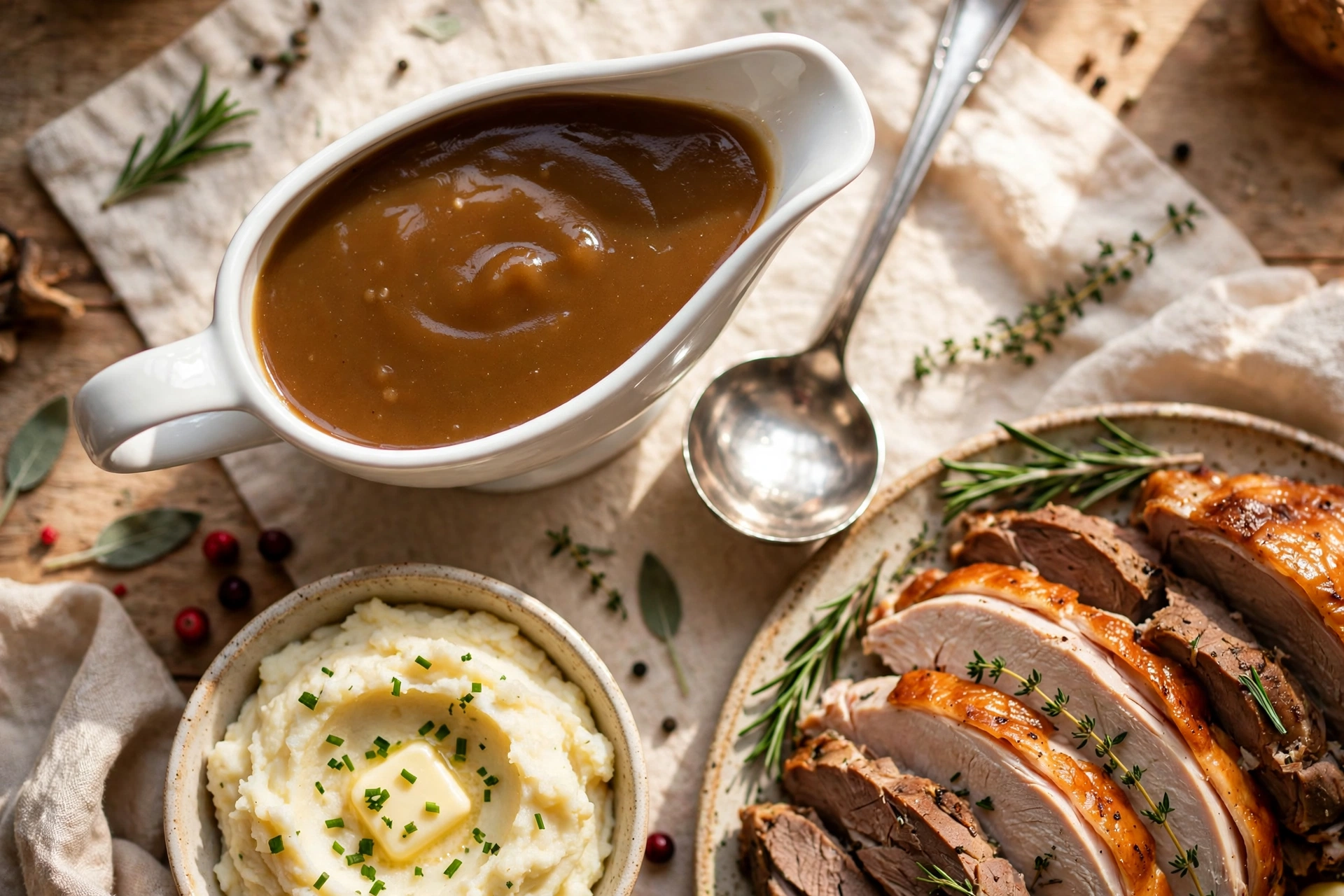
On the plate, these onions sit naturally next to sliced turkey and a ribbon of gravy. The sauce is mild enough to share space with turkey gravy from drippings without doubling the richness, and the onions themselves give the bite a small, sweet pause.
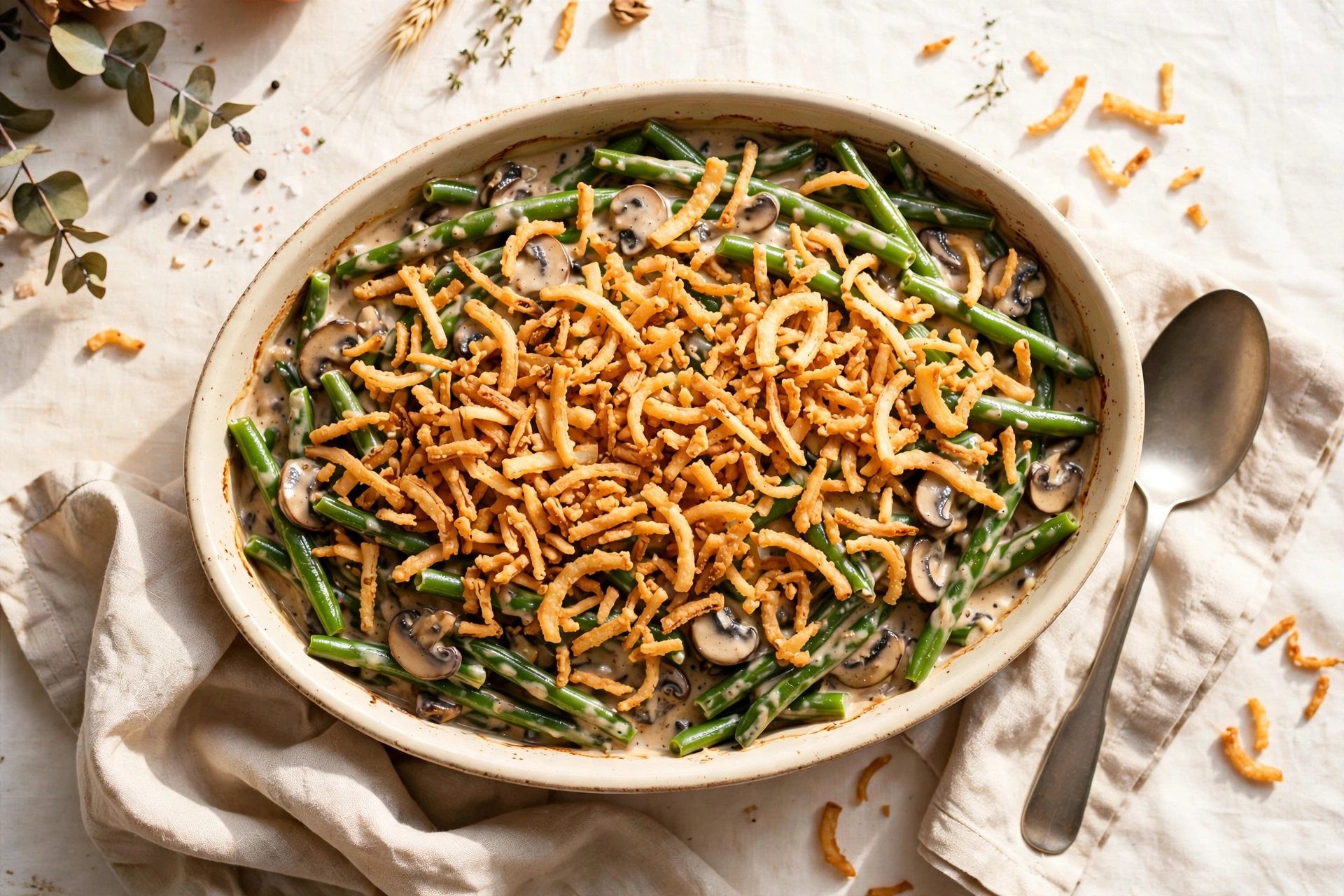
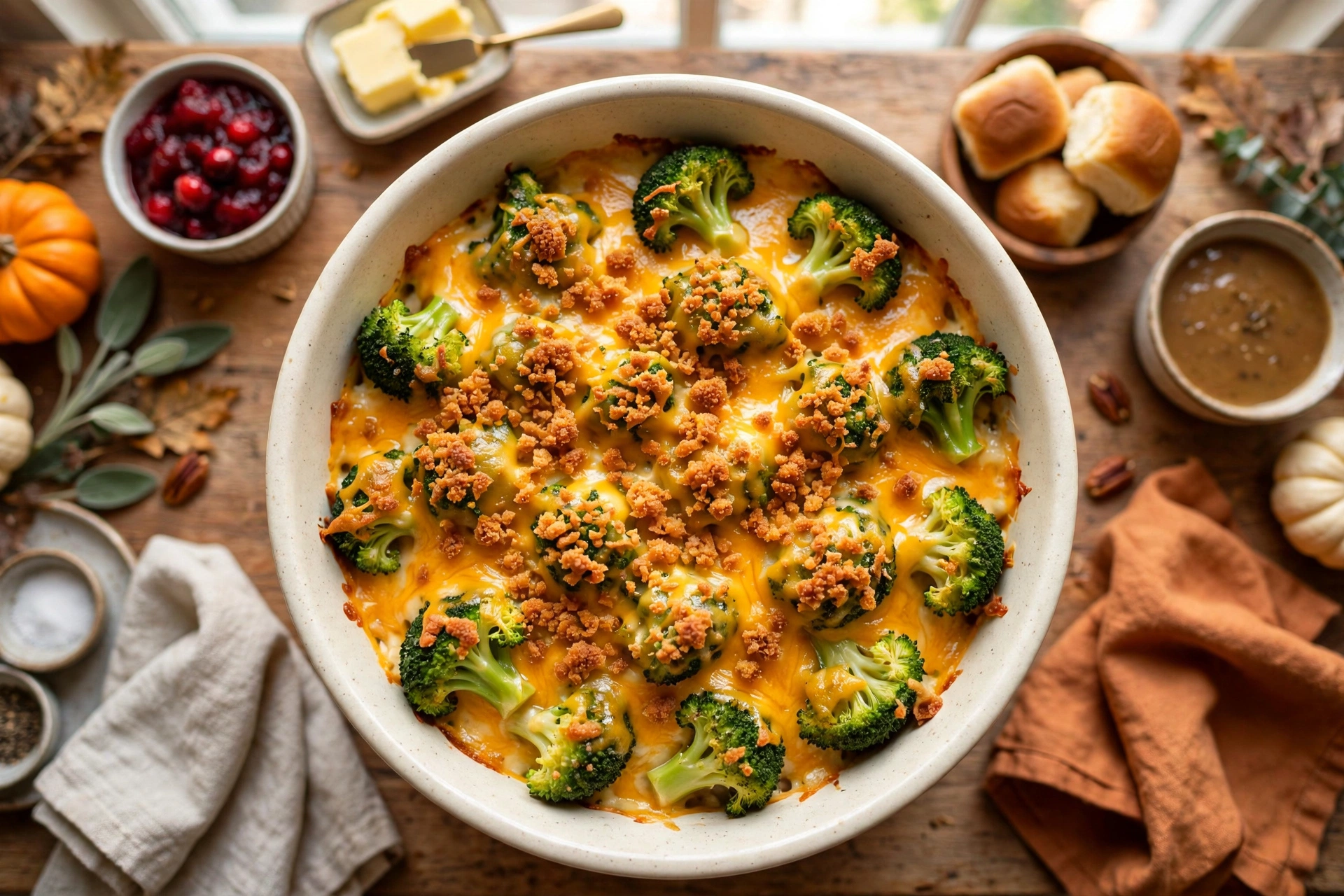
Within the side dish lineup, treat the onions as the creamy element and let the green bean casserole bring the crunch of its fried top. If both dishes are on the table, serve the onions soft rather than gratin style, so the two bowls do not wear the same golden lid.
The natural partner at the center of the table is the maple glazed roast turkey breast: its sweet edge and the onions’ gentle cream read as one course. A spoonful of onions over a slice of white meat is the bite people quietly repeat.
For Christmas, the same bowl works beside roast beef or a glazed holiday chicken, and the gratin top turns it into a small centerpiece. Few sides travel between the two holidays this easily, which is part of why the recipe survived.
Wednesday and Thursday: the Make Ahead Plan
On Wednesday, peel the onions and make the sauce, but keep them apart. The peeled onions wait in a covered container in the refrigerator, and the sauce, once cooled, keeps in its own container with a piece of parchment pressed to its surface.
On Thursday, warm the sauce slowly over low heat, whisking, and stir in the extra tablespoon of cream. The sauce loosens back to silk as it warms. Never let it boil at this stage; a hard boil is what makes a reheated cream sauce split at the edges.
Add the cold onions to the warm sauce and simmer uncovered for the full ten to twelve minutes, exactly as on the day. The dish loses nothing to the split schedule, because the onions only ever cook once, in the sauce, on serving day.
Leftovers keep for three days, covered and cold. Reheat them in a pan over the lowest heat with a splash of milk, stirring gently and often, and stop as soon as the sauce flows. Freezing is not kind to this dish: the onions turn soft and the sauce separates on thawing.
Questions About Creamed Pearl Onions
How do I peel fresh pearl onions without spending an hour at the sink?
Blanch them for exactly one minute, chill them in ice water, trim the root end and squeeze from the stem end. The skin slips off in one motion. Work through the bowl steadily and the whole batch takes about ten minutes.
My frozen pearl onions made the sauce watery. What went wrong?
They went in wet. Frozen onions release a lot of liquid as they thaw and heat. Thaw them completely, drain them in a colander, pat them dry, and keep the simmer uncovered so their water cooks back into the sauce.
How do I reheat creamed pearl onions without the sauce splitting?
Use the lowest heat, add a tablespoon of cream or milk at the start, and stir gently while the sauce warms through. Stop as soon as it flows and steams. A boil is what breaks the emulsion, so patience at low heat is the whole technique.
Can I freeze creamed pearl onions for another holiday?
It is not recommended. The onions lose their firm, whole texture and turn soft, and the cream sauce tends to separate and look grainy after thawing. The dish is quick on the day, and the components keep separately for two days in the refrigerator instead.
Why white pepper instead of black pepper in the sauce?
White pepper keeps the pale sauce visually clean and tastes a little warmer and earthier than black pepper. Black pepper works perfectly well for flavor if you do not mind dark flecks in the cream; use the same amount.
What size should the onions be for even cooking?
Choose onions close to one inch across and sort the bowl before cooking: any much larger onions can be halved through the root so every piece finishes at the same time. Even size matters more than the exact size, because the simmer is short.
The Quiet Dish Everyone Asks About
Creamed pearl onions ask for one honest trick, a measured sauce and a short, patient simmer. Nothing in the dish is difficult once the peeling stops being a mystery, and the result tastes like the holiday tables that kept it alive for generations.
Make it once with fresh onions and the one minute blanch, and the recipe becomes part of your own rotation. The bowl comes back empty, and someone always asks why the sauce stayed so smooth.
Serve it hot, with the herbs bright on top and the onions gleaming through the cream. It is the smallest dish on the table, and it holds its own against every giant beside it.
Nutrition per serving, estimated for 8 servings: Calories 255, Total Fat 18 g, Saturated Fat 12 g, Unsaturated Fat 5 g, Trans Fat 0 g, Carbohydrates 18 g, Fiber 2 g, Sugar 8 g, Protein 5 g, Sodium 270 mg, Cholesterol 45 mg. Ingredient values are informed by USDA FoodData Central.
Print
Creamed Pearl Onions With a Silky Nutmeg Cream
Creamed pearl onions in a silky nutmeg cream sauce: fresh onions peeled with the one minute blanch trick, a measured roux, milk and cream in two additions, and a simmer that keeps the sauce glossy. Serve it straight from the pan or gratin it under buttered crumbs, with a full Wednesday and Thursday plan.
- Total Time: 55 minutes
- Yield: 8 servings 1x
Ingredients
- 2 pounds fresh pearl onions (about 5 cups), or 2 bags (14 ounces each) frozen pearl onions, thawed and drained
- 4 tablespoons unsalted butter, plus 1 tablespoon for the crumbs
- 1 small shallot, finely minced
- 3 tablespoons all-purpose flour
- 1 1/2 cups whole milk
- 3/4 cup heavy cream, plus 1 tablespoon for reheating
- 1/2 cup low sodium chicken or vegetable stock
- 1 bay leaf
- 2 sprigs fresh thyme, or 1/2 teaspoon dried thyme
- 1/4 teaspoon freshly grated nutmeg
- 3/4 teaspoon fine salt, plus more to taste
- 1/4 teaspoon white pepper
- 1/3 cup freshly grated parmesan cheese
- 1/2 cup panko breadcrumbs
- 2 tablespoons finely chopped fresh parsley or chives
Instructions
- To peel fresh onions, bring a pot of water to a boil. Add the onions for exactly 1 minute, drain, and drop them into ice water. Trim the root end of each onion and squeeze gently from the stem end; the onion pops out of its skin. Keep a sliver of root on each onion so the spheres stay whole.
- Melt the 4 tablespoons of butter in a wide, heavy pan over medium heat. Add the shallot and cook for 2 minutes until soft and sweet, without color.
- Sprinkle in the flour and stir for 2 full minutes to make a pale blond roux; it should smell like warm pastry, not raw flour.
- Pour in the stock first, whisking until smooth, then the milk in a slow stream, whisking constantly. Add the bay leaf, thyme, nutmeg, salt and white pepper.
- Simmer the sauce for 4 to 5 minutes, whisking often, until it thickly coats the back of a spoon. Stir in the heavy cream and simmer 1 minute more.
- Add the peeled onions (or the thawed, well drained frozen onions). Simmer uncovered on low heat for 10 to 12 minutes, stirring gently, until the onions are tender when pierced and their released liquid has cooked back into the sauce.
- Remove the bay leaf and thyme stems. Taste and adjust the salt. The sauce should be glossy and just thick enough to cling to each onion.
- For the classic service, spoon into a warm bowl, scatter the parmesan and herbs over the top, and serve. For the gratin service, transfer to a shallow baking dish, toss the panko with the remaining melted tablespoon of butter, sprinkle over the top with the parmesan, and bake at 400 degrees F for 8 to 10 minutes until the crumbs are deep golden.
- Prep Time: 25 minutes
- Cook Time: 30 minutes
Nutrition
- Serving Size: 3
- Calories: 255
- Sugar: 8
- Sodium: 270
- Fat: 18
- Saturated Fat: 12
- Unsaturated Fat: 5
- Trans Fat: 0
- Carbohydrates: 18
- Fiber: 2
- Protein: 5
- Cholesterol: 45