In this article:
- Why a Press Beats a Rolling Pin
- Tender Crumb, Crisp Little Edges
- The Dough Temperature Window
- Ingredients for Spritz Cookies
- Pressing, One Clean Click at a Time
- When the Press Fights Back
- Granulated Sugar or Powdered Sugar?
- Almond, Lemon, Cocoa: Flavor Turns to Try
- Lighter Spritz and a Gluten Free Batch
- Cookie Tin Storage and Freezing
- Conclusion
- FAQ
Why a Press Beats a Rolling Pin
Spritz cookies exist because a press does in four seconds what a rolling pin and a cookie cutter cannot do in four minutes: it stamps out a ridged, bakery-perfect shape with edges that bake up crisp and a center that stays tender. The name comes from the German spritzen, to squirt, and the whole pleasure of the cookie is in that extruded swirl.
The dough is a short butter dough, close to a butter cookie but softer, built to flow through a disc without tearing. Butter carries the flavor, one egg gives just enough structure to hold the ridges, and there is no baking powder to puff the pattern away in the oven. What goes onto the sheet is exactly what comes out of it, only golden at the edges.
Because there is no rolling, there is no flour dusted over the dough, and no scraps re-rolled into tougher and tougher cookies. Every spritz cookie in the batch has the same crumb as the first one. That consistency is why a single bowl of dough becomes about sixty uniform cookies, ready for tins, exchanges, and the good plates.
The press also explains the decorating. The ridges catch sanding sugar and sprinkles before baking, so the color bakes in rather than sitting in frosting. If your tin needs a chocolate counterpoint next to these, our gingerbread crinkle cookies bring the spice while the spritz bring the butter.

Tender Crumb, Crisp Little Edges
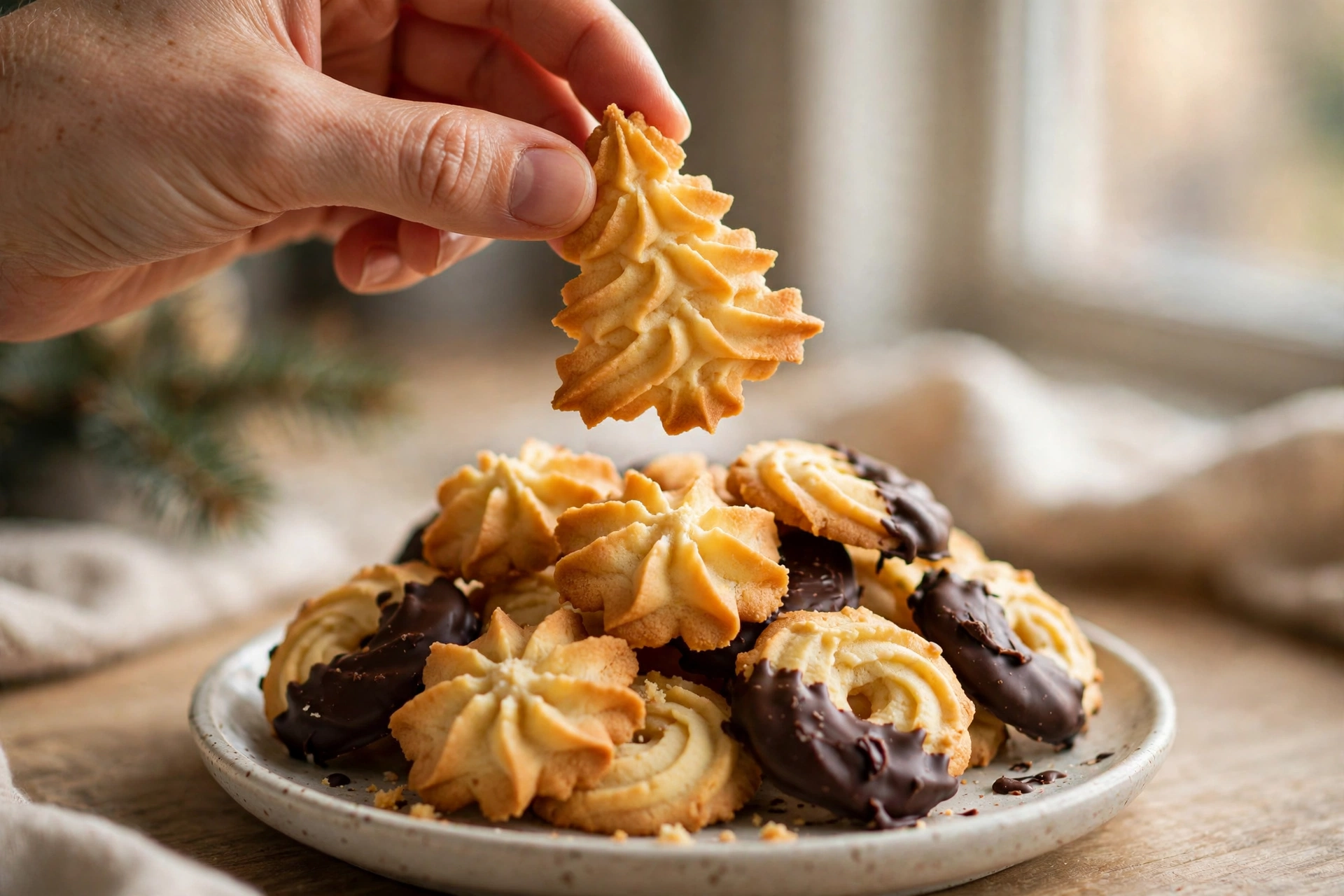
A spritz cookie should snap, then melt. The ridges and thin edges brown a breath faster than the middle, so each bite starts with a delicate crispness and finishes as a soft, buttery dissolve. It is a quiet cookie, and the texture does all the talking.
The flavor is butter first, with vanilla rounding it out and a half teaspoon of almond extract humming underneath. Almond is the note people cannot name but always miss when it is gone. It makes the cookie taste like a bakery box rather than a sugar cookie.
Size matters here. Pressed shapes are small, two bites at most, which keeps the ratio of crisp edge to tender center high. A spritz cookie is never doughy, never cakey, and never bendy; if it bends, it needed another minute in the oven.
Warm from the oven they are fragile and almost creamy. Fully cooled, they firm into their true texture and keep it for days, which is why they survive shipping and cookie tins better than almost any other Christmas cookie.
The Dough Temperature Window
Every spritz failure is a temperature failure. The butter must be cool and pliable, about 65 to 68°F, soft enough to cream but firm enough that the dough holds ridges. If your kitchen is warm, the butter reaches that point faster than you expect, so start with a cold stick and give it twenty minutes, not an hour.
Once mixed, the dough goes straight into the press. Unlike most cookie doughs, spritz dough is never chilled on purpose: cold dough refuses the press, cracks at the disc, and turns a relaxing job into a wrestling match. The one exception is a hot kitchen in December, where ten minutes in the refrigerator firms the tube without locking it.
The baking sheet has rules of its own. It must be bare, ungreased, and completely cool, because the dough needs to grip the metal to release from the press. A warm sheet from the last batch melts the butter on contact, and the shapes slump before the oven ever sees them. Rotate two sheets and let each one cool while the other bakes.
Get the window right and the rest is rhythm: load, press, decorate, bake, cool, repeat. For the numbers behind butter and flour, USDA FoodData Central is the reference bakers use, and it confirms what your tongue already knows: butter is nearly all of the flavor here, so buy the good kind.
Ingredients for Spritz Cookies
- 1 cup (226 g) unsalted butter, at 65 to 68°F, cool and pliable
- 2/3 cup (135 g) granulated sugar
- 1 large egg, at room temperature
- 2 teaspoons pure vanilla extract
- 1/2 teaspoon almond extract
- 2 1/4 cups (280 g) all-purpose flour, spooned and leveled
- 1/2 teaspoon fine salt
- Colored sanding sugar or holiday sprinkles, for decorating
- 4 oz (115 g) dark chocolate, melted, for optional dipping
One ingredient deserves a footnote: the egg. Whole egg keeps the dough supple enough to press and sets the ridges in the oven. Yolks alone, used by some classic recipes, make a richer but more fragile cookie that crumbles when the tin is jostled.
Pressing, One Clean Click at a Time
- Heat the oven to 375°F (190°C). Choose your discs, trees, wreaths, and stars are the Christmas classics, and set out two bare, ungreased baking sheets.
- Beat the butter and sugar on medium speed for about 2 minutes, until pale, smooth, and slightly fluffy. It should look like soft frosting, not melted butter.
- Beat in the egg, vanilla, and almond extract until glossy and fully combined, scraping the bowl once.
- Add the flour and salt. Mix on the lowest speed just until no dry flour remains, 30 to 45 seconds. The dough should be soft, smooth, and hold a ridge when pressed with a finger.
- Load the dough into the cookie press, packing it firmly with the back of a spoon to push out air pockets. Fit the disc you want.
- Hold the press upright with its foot flat on the cool baking sheet. Give one firm click, pause half a second, then lift straight up. The shape should stay on the sheet, clean and ridged. Space the cookies 1 inch apart.
- Decorate now, before baking: shower the shapes with sanding sugar or sprinkles and press them very lightly so they stick.
- Bake one sheet at a time for 7 to 9 minutes, until the cookies are set and the very edges are turning pale gold. The tops stay blond; that is correct.
- Rest the sheet on a rack for 2 minutes, then move the cookies to the rack to cool completely. Let the sheet cool fully before pressing the next batch.
- For dipped cookies, melt the dark chocolate, dip one edge of each cooled cookie, and set them on parchment until the chocolate firms, about 20 minutes.
When the Press Fights Back
The classic complaint is dough that will not stick to the sheet. It pulls back up with the press, taunting you. The cause is almost always the sheet: greased, lined with parchment, still warm, or carrying residue from the last batch. Wipe it clean, let it cool, and press the first cookie twice if you must; once one shape grips, the rest follow.
Shapes that spread into puddles have the opposite problem. The butter went into the mixer too soft, or the loaded press sat in a warm hand too long. Ten minutes in the refrigerator, tube and all, restores the window. Never add extra flour to fix it; that trades spread for toughness.
A press that resists every click is telling you the dough is too cold, usually because the butter started cold or the dough waited. Let the loaded press stand at room temperature for ten minutes and try again. Forcing it only compacts the dough and warps the disc.
Blurry ridges come from overmixing and from dough that is too warm. Mix the flour in at the lowest speed, stop the second it disappears, and your spritz cookies will keep the sharp little grooves that make them beautiful. Those grooves are not decoration for its own sake: they are where the crispness lives.
Granulated Sugar or Powdered Sugar?
Two sugars, two cookies. Granulated sugar creams into tiny air pockets and gives the edges a fine, delicate crispness; the motifs come out sharp. Powdered sugar, used by a few famous versions, melts completely and gives a softer, more melting crumb, but the ridges relax a little in the heat and the pattern softens.
For a cookie exchange, where the shapes are the whole point, granulated wins in this kitchen. Powdered sugar earns its place when the cookies are destined for a plate the same evening and tenderness matters more than definition. Either way, weigh the sugar if you can: a heavy hand with the measuring cup is the quiet cause of many a stiff spritz dough.
Almond, Lemon, Cocoa: Flavor Turns to Try
The almond version is the classic above, and it pairs with everything in the tin. For lemon spritz, swap the almond extract for 2 teaspoons of finely grated lemon zest and a teaspoon of lemon juice; the dough presses a touch softer, so give the loaded press five minutes in the refrigerator before a hot kitchen bake.
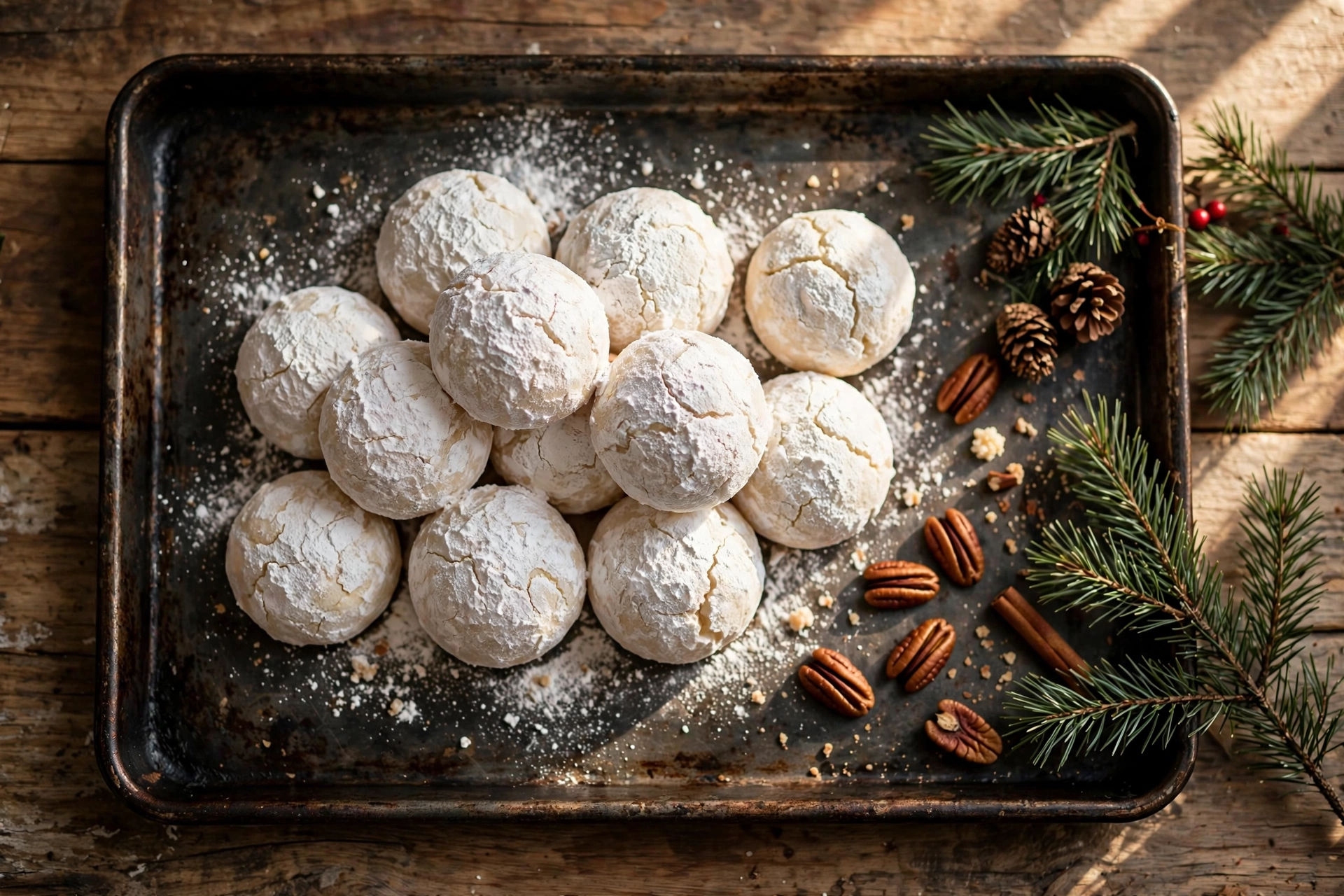
Cocoa spritz need a small correction: replace 1/4 cup of the flour with 1/4 cup of Dutch cocoa and add 1 tablespoon of milk, because cocoa drinks moisture. The shapes come out dark and elegant, and a dip in white chocolate makes them look dressed for a party. Our snowball cookies cover the snowy white end of the tin; cocoa spritz cover the dark end.
For a decorated tin, divide one batch of dough in three and tint one part with gel coloring. Gel, never liquid: liquid coloring adds water, slackens the dough, and dulls the ridges. A Christmas tree disc with green gel dough and a pinch of sanding sugar needs nothing else.
However you flavor them, spritz cookies reward restraint. One clear flavor per batch reads as intentional; three extracts in one dough reads as noise. Choose the note, let it sing, and make the next batch for the next idea.
Lighter Spritz and a Gluten Free Batch
A spritz cookie is a small cookie, and its numbers are friendlier than its butter suggests: each cookie lands near 55 calories, with about 3 g of fat, 6 g of carbohydrates, and 1 g of protein. Two or three make a reasonable sweet plate, especially next to coffee.
To lighten the batch without breaking the press, swap half the butter for an equal weight of neufchâtel cheese. The dough presses slightly softer, the crumb turns a little tangy, and the cookies keep their shape if the sheets are truly cool. Do not use whipped or tub margarine; its water content blurs the ridges and steams the crumb.
For gluten free spritz, use a measure for measure gluten free flour blend with xanthan gum, and rest the mixed dough for 15 minutes so the blend hydrates. The press will feel a bit stiffer; that is normal. Bake on the lower end of the time range and cool them fully before moving, because gluten free spritz are fragile while warm.
Cookie Tin Storage and Freezing
Cooled spritz keep for two weeks in a tin at room temperature, layered between sheets of parchment. Keep strong flavors apart: almond spritz stored against peppermint will taste faintly of peppermint by day three, because butter absorbs its neighbors. Our Christmas thumbprint cookies follow the same tin rules and travel just as well.
Freezing works at two stages. Pressed raw shapes freeze beautifully on their sheets; once solid, bag them and bake from frozen, adding one minute. Baked spritz freeze for two months and thaw at room temperature in twenty minutes, still crisp. Dip them in chocolate only after thawing, never before freezing, or the chocolate blooms.
For cookie exchanges and shipping, spritz are the safest travelers in the box: low, sturdy, and unbothered by a day at room temperature. Pad the tin, fill every gap with crumpled parchment so nothing rattles, and they arrive looking pressed yesterday.
Conclusion
Spritz cookies are the Christmas cookie for people who would rather bake than decorate. One bowl of dough, one press, and an hour of easy rhythm gives you sixty crisp, buttery shapes that look like they came from a bakery case. Respect the temperature window, keep the sheets bare and cool, and the press does the rest. First tin of the season, sorted.
FAQ
Why will my spritz cookies not stick to the baking sheet?
The sheet is working against you: it is greased, lined, warm, or carrying residue. Spritz dough needs bare, cool, clean metal to grip as the press lifts. Wipe the sheet, let it cool completely, and press the first cookie twice; once one shape sticks, the rest release cleanly.
Can I make spritz cookies without a cookie press?
Yes, with a piping bag and a large open star tip. The dough is stiffer than frosting, so work with half a bag at a time and pipe small rosettes. The ridges are softer than pressed shapes, so chill the piped sheet for 10 minutes before baking to keep the definition.
Should spritz cookie dough be chilled before pressing?
No. Chilled dough cracks at the disc and fights the press. The dough is designed to be pressed right after mixing, with butter at 65 to 68°F. The only exception is a very warm kitchen, where 10 minutes in the refrigerator firms the loaded press without locking it.
How do I make chocolate spritz cookies?
Replace 1/4 cup of the flour with 1/4 cup of Dutch cocoa and add 1 tablespoon of milk, since cocoa absorbs moisture. Everything else stays the same. The baked cookies are dark and crisp at the edges, and they look striking dipped in white chocolate.
How long do spritz cookies stay fresh in a tin?
Two weeks at room temperature in a sealed tin, layered with parchment. Butter absorbs neighboring flavors, so store almond spritz away from peppermint or spice cookies. For longer keeping, freeze baked spritz for up to 2 months and thaw 20 minutes before serving.

Spritz Cookies
Classic spritz cookies from a press, no chilling and no rolling: a soft butter dough with vanilla and almond, pressed into trees, wreaths and stars, baked blond with crisp little edges. About sixty cookies from one bowl.
- Total Time: 50 minutes
- Yield: 60 cookies 1x
Ingredients
- 1 cup (226 g) unsalted butter, at 65 to 68°F, cool and pliable
- 2/3 cup (135 g) granulated sugar
- 1 large egg, at room temperature
- 2 teaspoons pure vanilla extract
- 1/2 teaspoon almond extract
- 2 1/4 cups (280 g) all-purpose flour, spooned and leveled
- 1/2 teaspoon fine salt
- Colored sanding sugar or holiday sprinkles, for decorating
- 4 oz (115 g) dark chocolate, melted, for optional dipping
Instructions
- Heat the oven to 375°F (190°C). Set out two bare, ungreased baking sheets and fit the cookie press with your chosen disc.
- Beat the butter and sugar on medium speed for about 2 minutes, until pale, smooth, and slightly fluffy.
- Beat in the egg, vanilla, and almond extract until glossy and fully combined, scraping the bowl once.
- Add the flour and salt. Mix on the lowest speed just until no dry flour remains, 30 to 45 seconds.
- Load the dough into the cookie press, packing firmly to push out air pockets.
- Hold the press upright, flat on the cool baking sheet. Give one firm click, pause half a second, then lift straight up. Space the cookies 1 inch apart.
- Decorate before baking with sanding sugar or sprinkles, pressed very lightly so they stick.
- Bake one sheet at a time for 7 to 9 minutes, until set and the edges are just turning pale gold. The tops stay blond.
- Rest 2 minutes on the sheet, then move the cookies to a wire rack to cool completely. Let the sheet cool fully before pressing the next batch.
- Optional: dip one edge of each cooled cookie in melted dark chocolate and set on parchment until firm, about 20 minutes.
- Prep Time: 20 minutes
- Cook Time: 30 minutes