

In this article:
- Why this casserole slices clean and stays golden
- Ingredients
- Assembling the casserole on Christmas Eve, step by step
- The squeeze that saves the casserole
- Christmas morning, hour by hour
- Turkey sausage, peppers and two cheeses
- Fixing a runny center and a too dark top
- Leftovers, reheating and the freezer question
- Questions I get about this overnight breakfast casserole
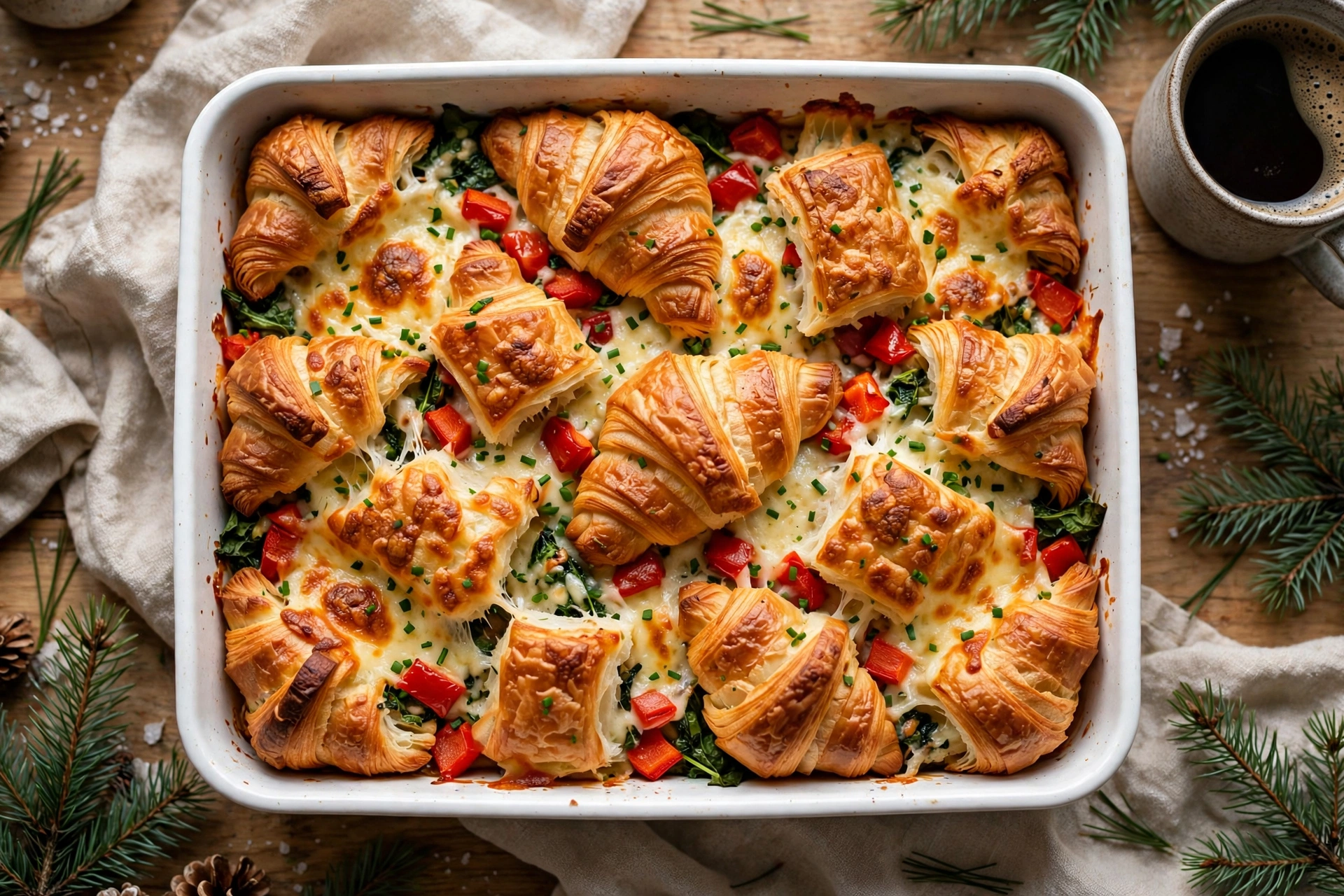
This overnight breakfast casserole is built for the one morning of the year when nobody should be standing at a stove: shredded potatoes, sage turkey sausage, peppers and two cheeses under a set, golden egg layer, assembled on Christmas Eve and baked while the stockings are emptied.
The scene it creates is the whole point. The dish goes into the oven while the coffee brews, the house fills with the smell of cheddar and peppers, and breakfast lands on the table at the exact moment the wrapping paper settles.
Everything active about this recipe happens the night before, in about twenty minutes. Christmas morning asks only for an oven, a thermometer if you have one, and the patience to let the casserole rest before slicing.
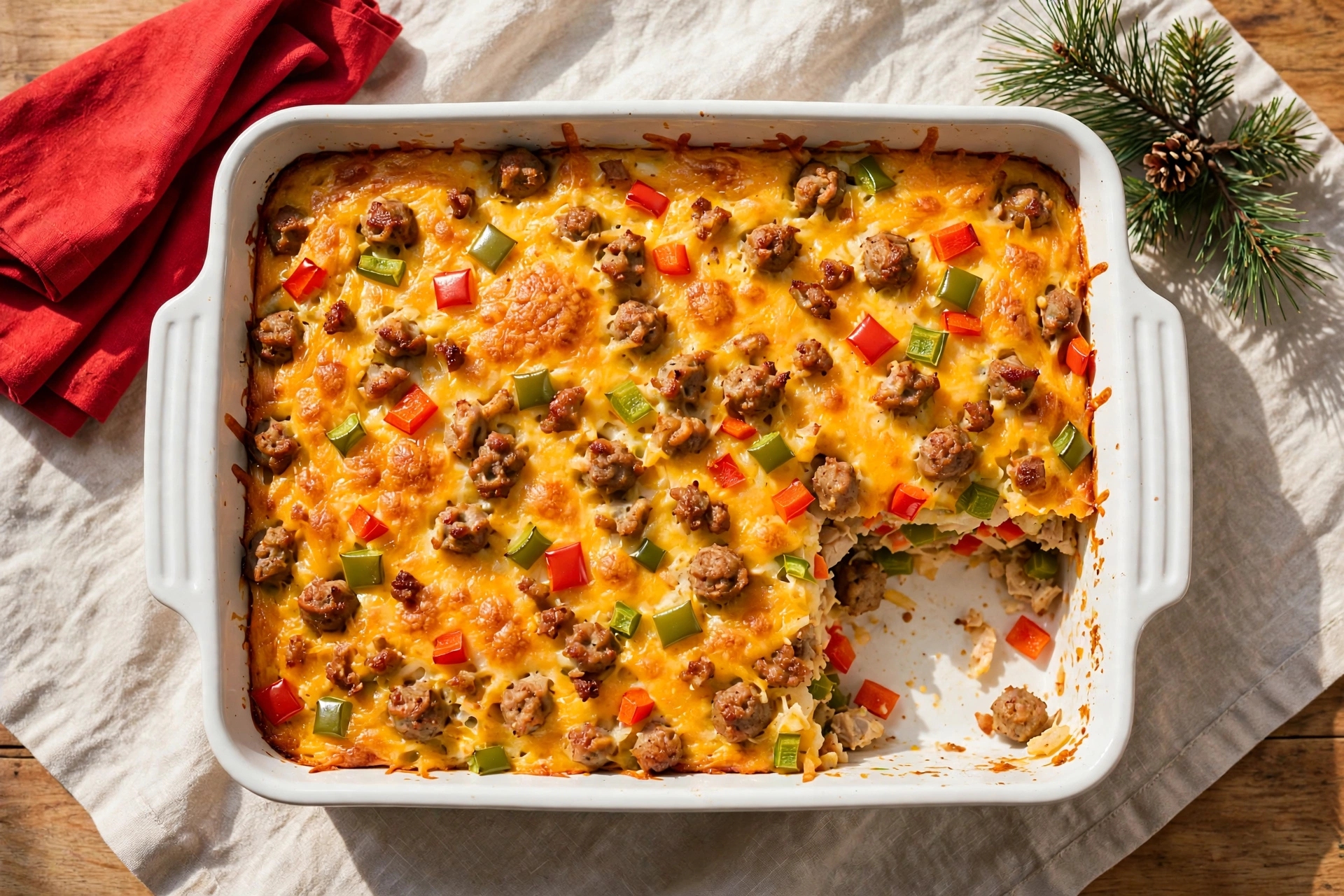
Why This Overnight Breakfast Casserole Slices Clean and Stays Golden
This overnight breakfast casserole works because it treats its two known enemies head on: water and time. Frozen shredded potatoes carry a surprising amount of liquid, and eggs left too long in a watery pan bake up spongy instead of set.
The potatoes get thawed and squeezed dry before they ever meet the eggs. A towel full of shreds gives up nearly a cup of water, and that cup stays in the sink instead of steaming your breakfast from the inside.
The egg mixture is measured for structure, not generosity. Ten eggs to one and a half cups of milk sets into clean, tender squares that hold their layers on the spatula. More milk than that and the center weeps; less and the casserole turns rubbery.
And it bakes in the oven, not a slow cooker, because a golden top is not decoration. The dry heat crisps the potato edges, browns the cheese, and gives the casserole the finish a holiday table deserves, the same reason our christmas croissant breakfast bake never goes near a crock.
Ingredients
- 1 package (30 ounces / 850 g) frozen shredded hash browns, thawed
- 1 pound (450 g) ground turkey breakfast sausage
- 1 tablespoon olive oil, if your turkey sausage is very lean
- 1 small yellow onion, finely diced (about 1 cup)
- 1 red bell pepper, diced
- 1 green bell pepper, diced
- 2 cloves garlic, minced
- 10 large eggs
- 1 1/2 cups (360 ml) whole milk
- 1 teaspoon Dijon mustard
- 1 teaspoon fine salt
- 1/2 teaspoon black pepper
- 1/2 teaspoon smoked paprika
- 2 cups (200 g) shredded sharp cheddar, divided
- 1 cup (100 g) shredded Monterey Jack
- Butter or oil, for the baking dish
- 2 green onions, thinly sliced, to serve
Assembling the Casserole on Christmas Eve, Step by Step
- Thaw the hash browns in the fridge during the day, or on the counter for about an hour. Tip them into a clean kitchen towel in batches, twist the towel hard over the sink, and squeeze until the shreds feel dry and fluffy. Set aside.
- Set a large skillet over medium high heat. Crumble in the turkey sausage and cook for 6 to 8 minutes, breaking it into small pieces, until browned in spots and cooked through. Add the olive oil only if the pan looks dry.
- Add the onion and both peppers to the sausage and cook for 4 to 5 minutes, until softened and the onion turns translucent at the edges. Stir in the garlic for the last 30 seconds, then take the pan off the heat and let the mixture cool for a few minutes.
- Butter a 9×13 inch baking dish well, including the corners. Press the squeezed hash browns into the dish in an even layer, pushing them slightly up the sides.
- Spoon the sausage and pepper mixture evenly over the potatoes. Scatter half the cheddar and half the Monterey Jack over the sausage layer.
- Whisk the eggs, milk, Dijon, salt, pepper and smoked paprika in a large bowl until completely smooth and no streaks of white remain. Pour the mixture slowly and evenly over the casserole, letting it settle into every corner.
- Scatter the remaining cheeses over the top. Cover the dish tightly and refrigerate for at least 4 hours and up to 12 hours. The casserole is now officially done until morning.
- On Christmas morning, set the dish on the counter for 30 minutes while the oven heats to 350°F (175°C). Bake covered with foil for 30 minutes, then uncovered for 25 to 30 minutes, until the top is deep golden, the edges bubble, and the center reaches 160°F (71°C) or barely trembles when the dish is nudged.
- Rest the casserole for a full 10 minutes. Scatter the green onions over the top, then cut into 10 squares and serve hot.
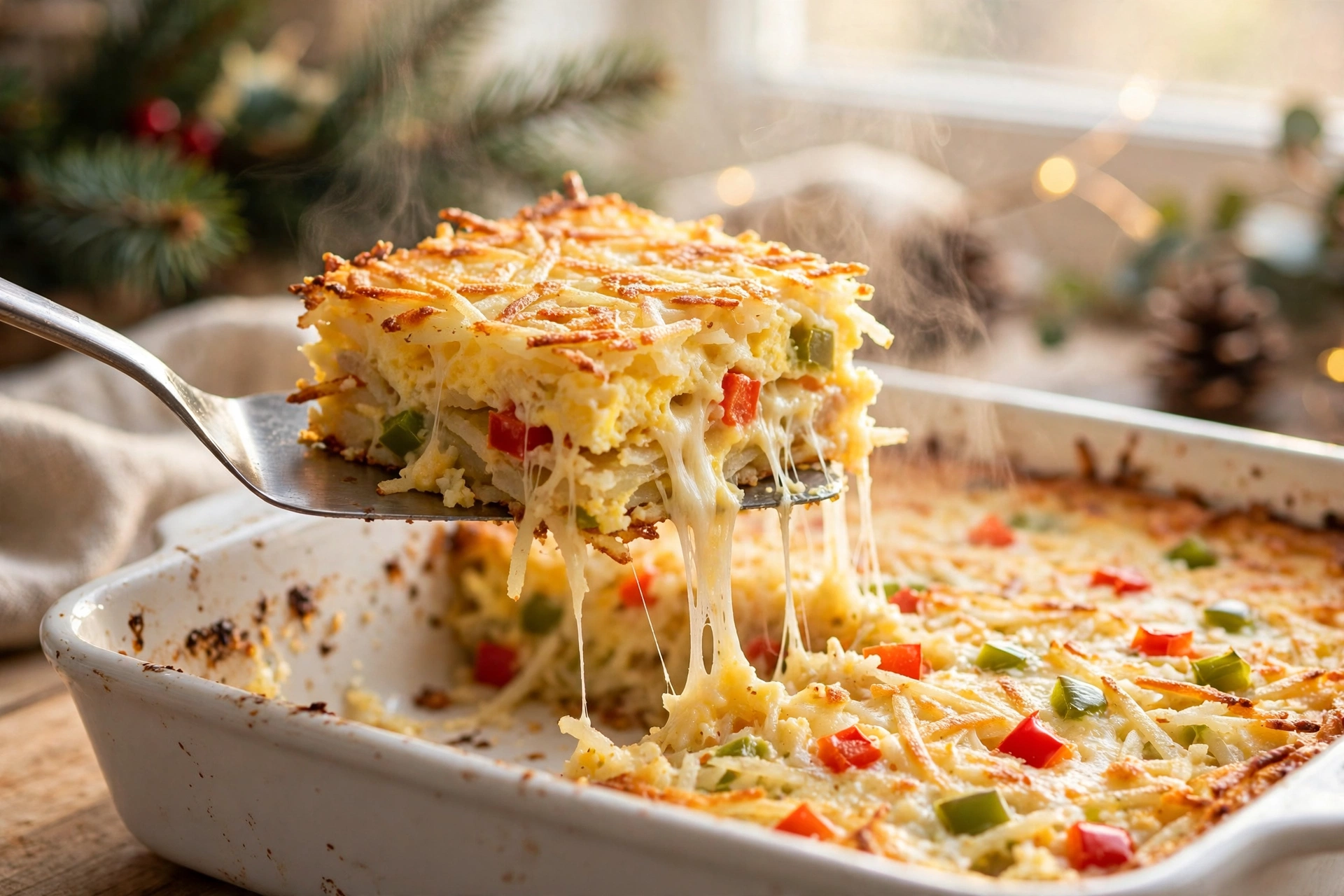
The Squeeze That Saves the Casserole
If you remember one technique from this recipe, make it the squeeze. Frozen potatoes are blanched before freezing, and their cells release water as they thaw. Baked without squeezing, that water pools under the eggs and the bottom layer steams into mush.
Work in two or three batches so the towel stays manageable, and twist until your hands complain. The shreds should separate and feel almost dry to the touch, like grated cheese rather than wet snow.
The second half of the trick is restraint with milk. Recipes that pour two cups of milk over eight eggs are building a quiche filling for a pan twice this size. For a 9×13 of potatoes and sausage, ten eggs and one and a half cups of milk is the ratio that sets with a clean knife line.
Temperature is the final check, and it removes all the guesswork from Christmas morning. Egg dishes are done at 160°F (71°C) in the center, the same benchmark food safety guides give for egg casseroles; below it the middle stays loose, above 175°F (79°C) the eggs begin to weep and toughen.
Christmas Morning, Hour by Hour
The overnight breakfast casserole earns its name in the morning schedule, so here is the one I actually follow. Say presents start at seven and breakfast should land around eight thirty, hot and unhurried.
At 7:00, the dish comes out of the fridge and onto the counter, foil still on. Cold glass or ceramic straight into a hot oven risks a crack, and the eggs bake more evenly from a cool start than an icy one.
At 7:30, the oven is at 350°F (175°C) and the covered dish goes in. At 8:00, the foil comes off so the top can brown. At about 8:25, the center should read 160°F (71°C) and the edges should be bubbling gently.
At 8:30, the casserole rests, gets its green onions, and is cut at the table. If your crowd runs late, it holds happily in a 200°F (95°C) oven for up to 30 minutes without drying out, which is more mercy than scrambled eggs ever offered anyone. Pair it with gingerbread cinnamon rolls for the sweet side of the table and the morning is fully handled.
Turkey Sausage, Peppers and Two Cheeses: The Flavor Math
Most versions of this casserole are built on pork sausage, and the dish leans on it for seasoning more than for meat. Turkey breakfast sausage seasoned with sage does the same job: it perfumes the eggs, browns into savory crumbles, and keeps the casserole firmly in poultry territory.
Buy it ground rather than in links when you can, and brown it hard. Pale sausage tastes steamed; sausage with real browned edges seasons every bite around it. If your market only sells links, slit the casings and crumble the meat out.
Red and green peppers are in the pan for more than the Christmas color scheme. Their sweetness balances the salt of the cheese, and cooking them with the sausage first keeps their water out of the eggs. Raw peppers folded in at assembly weep into the custard as they bake.
Two cheeses split the work. Sharp cheddar brings the flavor you notice, Monterey Jack brings the melt you see, stretching in soft strands when the first square lifts. Grate both from blocks if you have five minutes: pre shredded cheese is coated against melting and the top will show it.
Serve it with something sharp and fresh within reach. A spoonful of salsa, a few pickled jalapenos or simply the sliced green onions scattered over the top will do. The casserole is rich and golden; a bright, acidic note on the side of the plate makes the second square taste like the first.
Fixing a Runny Center and a Too Dark Top
A runny center at the end of the bake time means one of three things: the potatoes went in wet, the dish started ice cold, or the eggs simply need more time. Give it eight to ten more minutes uncovered and check the temperature again before you judge it.
If the top is racing ahead of the center, lay the foil back on loosely for the remaining minutes. The casserole keeps cooking underneath while the cheese stops browning, and the top stays golden instead of tipping into scorched.
A casserole that weeps liquid when cut was usually sliced too soon. The ten minute rest is structural, not a suggestion: the custard finishes setting as it stands, and squares cut after the rest come out clean with defined layers.
Greasy cheese on top points to pre shredded cheese or a very fatty sausage. Blot the surface with a paper towel corner before the green onions go on, and next time grate from a block and drain the sausage on a slotted spoon as it comes out of the pan.
Leftovers, Reheating and the Freezer Question
Leftovers keep for three days in the fridge, covered in the dish or in a sealed container. The flavors settle in pleasantly, and a square reheated for a quiet Boxing Day breakfast might honestly be the best one of the batch.
Reheat single squares in the microwave for about ninety seconds, or a whole dish at 325°F (165°C) for about twenty minutes, covered, until hot in the center. A minute under a hot broiler at the end brings the cheese back to life.
For freezing, bake first, cool completely, wrap squares individually, and freeze for up to two months. Thaw overnight in the fridge and reheat as above. Freezing the unbaked casserole is not recommended: raw eggs and thawed potatoes change texture in the freezer and bake up watery.
Serve the last squares with something bright next to them, a bowl of eggnog french toast casserole for the sweet tooths or a simple fruit salad, and let the christmas pinwheel cookies handle the afternoon. This overnight breakfast casserole has done its job by then: one dish, assembled in the quiet of Christmas Eve, feeding everyone you love with the cook sitting down too. For the second brunch bake of the season, the christmas breakfast strata takes the bread based route.
Questions I Get About This Overnight Breakfast Casserole
How far ahead can I assemble it?
Up to 12 hours is the sweet spot: assemble after dinner on Christmas Eve and bake the next morning. At 24 hours the potatoes start to darken at the edges and the eggs can separate slightly, so one night is the limit I recommend.
Can I use diced hash browns instead of shredded?
Yes, with the same squeeze. Diced potatoes give a chunkier, more distinct bite and need about five extra minutes in the oven. Shredded potatoes knit into the eggs more smoothly, which is why they are my first choice for clean slices.
My turkey sausage is plain, not breakfast seasoned. How do I fix the flavor?
Add the seasoning yourself while it browns: 1 teaspoon of rubbed sage, 1/2 teaspoon of thyme, 1/2 teaspoon of smoked paprika and a pinch of brown sugar. Cook the spices with the meat for the last minute so they bloom in the fat.
Can I make it vegetarian for part of the table?
Bake two smaller dishes instead of one large. For the vegetarian version, replace the sausage with mushrooms and peppers cooked until well browned, and keep everything else identical. The eggs and cheese carry the structure, so the swap is seamless.
Why did the eggs turn out spongy and wet on top?
Too much liquid for the pan, or the potatoes were not squeezed. The egg layer should just cover the potatoes; if it pools above them, the ratio has drifted. Trust the thermometer and the rest, and the texture follows.
Can I halve the recipe for a small Christmas morning?
Yes. Halve every ingredient, use an 8×8 inch dish, and start checking at 40 minutes. The covered and uncovered split stays roughly the same, about 22 minutes covered and 18 to 20 uncovered.
Nutrition per serving (estimated, 10 servings): Calories 445, Total Fat 28 g, Saturated Fat 12 g, Unsaturated Fat 14 g, Trans Fat 0 g, Carbohydrates 22 g, Fiber 2 g, Sugar 3 g, Protein 24 g, Sodium 760 mg, Cholesterol 215 mg. Egg dishes are done and safe at 160°F in the center; see the guidance at foodsafety.gov for egg casserole temperatures.
Prep Time: 20 minutes, plus 8 hours overnight chilling
Cook Time: 55 minutes
Total Time: 1 hour 15 minutes, plus overnight chilling
Yield: 10 servings
An overnight breakfast casserole lives or dies on two habits: dry potatoes and patience. If your overnight breakfast casserole has ever come out watery, the squeeze was skipped; if an overnight breakfast casserole sliced ragged, it needed its full ten minute rest.
Readers also ask whether an overnight breakfast casserole can hold two nights in the fridge (assemble one night ahead, no more), whether an overnight breakfast casserole freezes well (bake it first, then freeze), and what to serve beside an overnight breakfast casserole on the morning itself: something fresh, sharp and cold. Get those right and this overnight breakfast casserole is the calmest dish on the Christmas table. That is the whole promise of an overnight breakfast casserole: the work ends the night before.
Print
Overnight Hash Brown Breakfast Casserole
Overnight hash brown breakfast casserole with squeezed dry shredded potatoes, sage turkey sausage, sweet peppers and two cheeses under a set golden egg layer. Assembled on Christmas Eve, baked on Christmas morning, with an hour by hour morning plan and a 160°F center check.
- Total Time: 1 hour 15 minutes, plus overnight chilling
- Yield: 10 servings 1x
Ingredients
- 1 package (30 ounces / 850 g) frozen shredded hash browns, thawed
- 1 pound (450 g) ground turkey breakfast sausage
- 1 tablespoon olive oil, if your turkey sausage is very lean
- 1 small yellow onion, finely diced (about 1 cup)
- 1 red bell pepper, diced
- 1 green bell pepper, diced
- 2 cloves garlic, minced
- 10 large eggs
- 1 1/2 cups (360 ml) whole milk
- 1 teaspoon Dijon mustard
- 1 teaspoon fine salt
- 1/2 teaspoon black pepper
- 1/2 teaspoon smoked paprika
- 2 cups (200 g) shredded sharp cheddar, divided
- 1 cup (100 g) shredded Monterey Jack
- Butter or oil, for the baking dish
- 2 green onions, thinly sliced, to serve
Instructions
- Thaw the hash browns in the fridge during the day, or on the counter for about an hour. Tip them into a clean kitchen towel in batches, twist the towel hard over the sink, and squeeze until the shreds feel dry and fluffy. Set aside.
- Set a large skillet over medium high heat. Crumble in the turkey sausage and cook for 6 to 8 minutes, breaking it into small pieces, until browned in spots and cooked through. Add the olive oil only if the pan looks dry.
- Add the onion and both peppers to the sausage and cook for 4 to 5 minutes, until softened and the onion turns translucent at the edges. Stir in the garlic for the last 30 seconds, then take the pan off the heat and let the mixture cool for a few minutes.
- Butter a 9×13 inch baking dish well, including the corners. Press the squeezed hash browns into the dish in an even layer, pushing them slightly up the sides.
- Spoon the sausage and pepper mixture evenly over the potatoes. Scatter half the cheddar and half the Monterey Jack over the sausage layer.
- Whisk the eggs, milk, Dijon, salt, pepper and smoked paprika in a large bowl until completely smooth and no streaks of white remain. Pour the mixture slowly and evenly over the casserole, letting it settle into every corner.
- Scatter the remaining cheeses over the top. Cover the dish tightly and refrigerate for at least 4 hours and up to 12 hours.
- On Christmas morning, set the dish on the counter for 30 minutes while the oven heats to 350°F (175°C). Bake covered with foil for 30 minutes, then uncovered for 25 to 30 minutes, until the top is deep golden, the edges bubble, and the center reaches 160°F (71°C) or barely trembles when the dish is nudged.
- Rest the casserole for a full 10 minutes. Scatter the green onions over the top, then cut into 10 squares and serve hot.
- Prep Time: 20 minutes, plus 8 hours overnight chilling
- Cook Time: 55 minutes
Nutrition
- Serving Size: 1
- Calories: 445
- Sugar: 3
- Sodium: 760
- Fat: 28
- Saturated Fat: 12
- Unsaturated Fat: 14
- Trans Fat: 0
- Carbohydrates: 22
- Fiber: 2
- Protein: 24
- Cholesterol: 215
1 thought on “Overnight Hash Brown Breakfast Casserole, Golden and Ready When the Presents Are Done”