Cranberry Orange French Toast Casserole for a Slow Christmas Morning
In this article:
- Christmas Eve assembly, Christmas morning ease
- Brioche, cranberries and orange: why the trio works
- The custard ratio that prevents a soggy center
- Ingredients
- Layering the casserole the night before
- Streusel morning: bake, rest and serve
- What to serve beside the casserole
- Two days ahead, one calm morning
- Pear, apple and extra citrus variations
- Questions about cranberry orange French toast casserole
- A bright start before the day gets loud
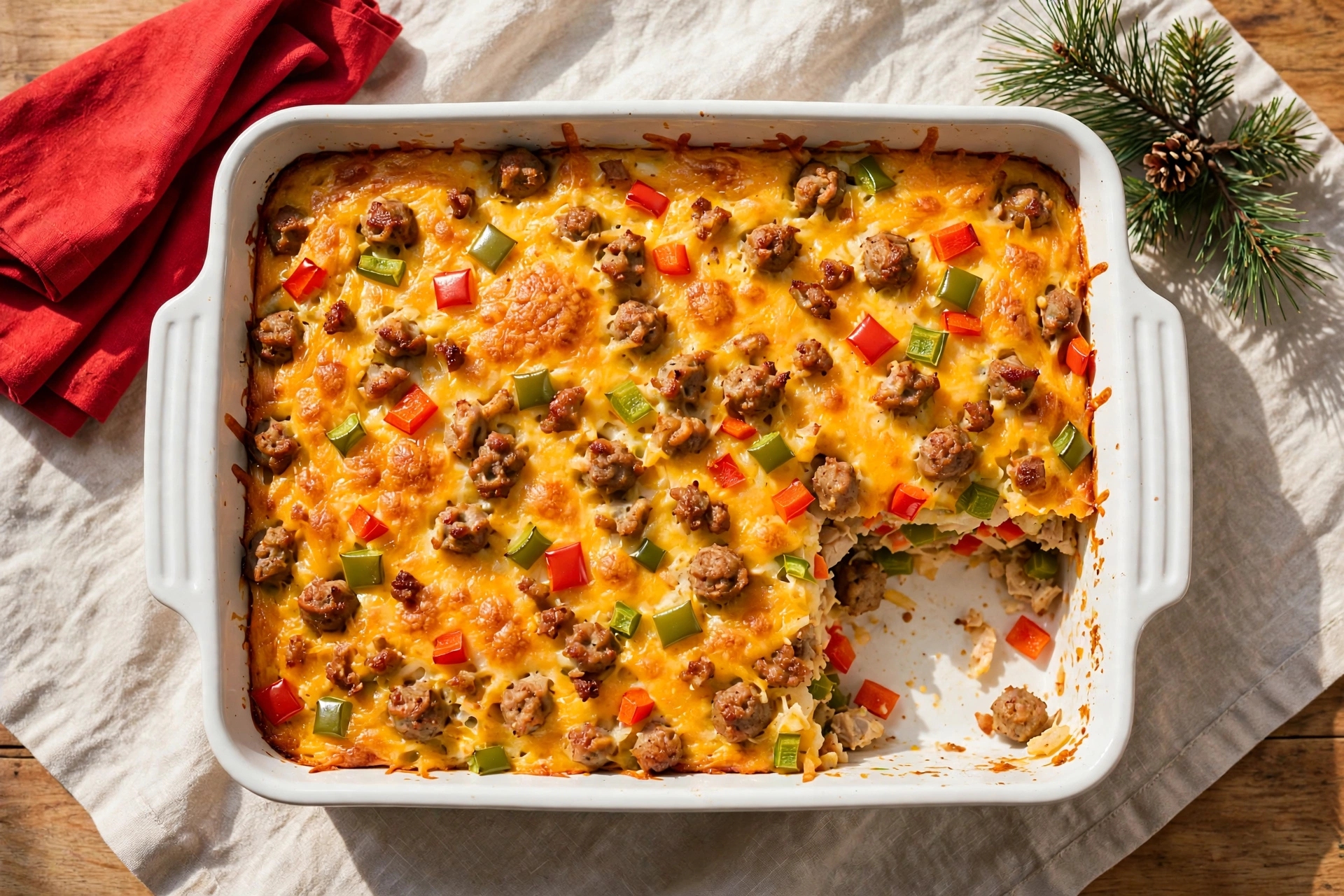
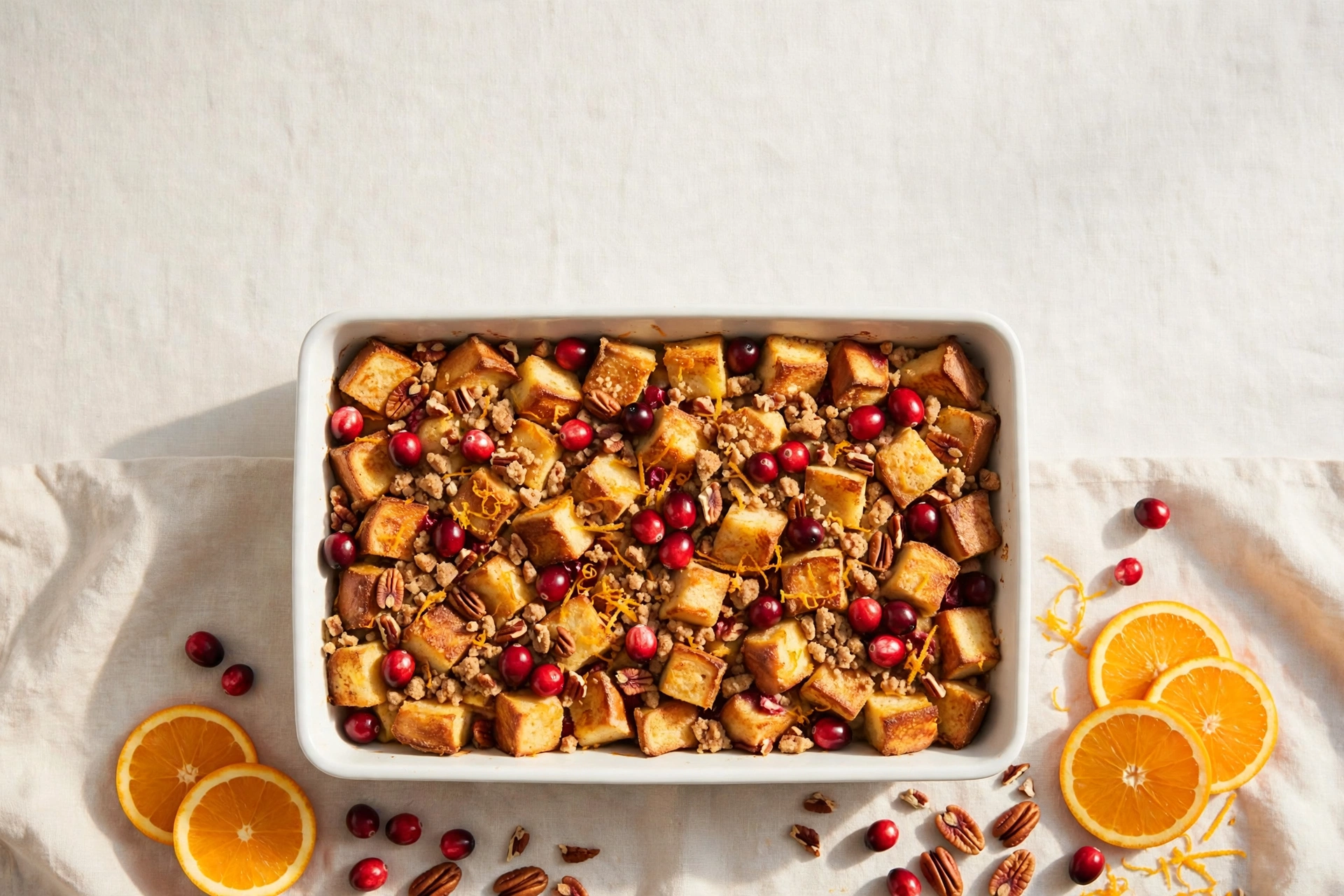
Cranberry orange French toast casserole turns Christmas Eve effort into a calm Christmas morning. Cubes of brioche soak overnight in maple custard, cranberries glow through the bread, and orange zest makes the whole dish smell like the holiday has already begun.
The promise is not just convenience. An overnight rest gives the bread time to drink the custard evenly, so the center bakes tender instead of alternating between dry corners and wet pockets. Morning work is reduced to streusel, oven and coffee.
This is not an eggnog casserole in disguise. Milk, cream, orange juice and maple build the custard, so the citrus stays clear and the cranberries taste tart and bright. Our other holiday bake can carry the eggnog role when the table wants both.
The finish matters. A pecan streusel goes on only in the morning, after the soak, and the casserole rests before cutting. Those two small choices give the dish crisp edges, clean squares and a center that feels like custard rather than pudding.
Christmas Eve Assembly, Christmas Morning Ease
Cranberry orange French toast casserole is built for the natural rhythm of Christmas. The evening has a little kitchen time while dinner dishes dry and the house settles. The morning, by contrast, fills quickly with stockings, visitors, coffee and a dozen small requests.
Assembling the night before also improves the food. Dry brioche needs time to absorb a custard that contains milk, cream, eggs and juice. A quick thirty minute soak can wet the outside of each cube while leaving the middle untouched.
Overnight, the flavors settle into the bread. Orange zest perfumes the custard, cranberry juices tint the edges, and cinnamon moves from a surface spice into the whole dish. By morning, the casserole tastes composed rather than merely mixed.
The baker gets a different morning too. There is no bread to cube, no eggs to whisk and no sink full of bowls before breakfast. You take off the cover, make the streusel, and let the oven do the visible work.
Brioche, Cranberries and Orange: Why the Trio Works
Brioche brings richness without heaviness. Its soft crumb absorbs custard quickly, while its crust gives the top cubes enough structure to toast. Challah is the closest substitute, with a slightly less buttery flavor and the same generous, braided crumb.
Cranberries keep the casserole awake. A sweet breakfast bake can blur into one soft note, especially under maple syrup. Tart berries cut through the custard and give each square small, bright interruptions that make the next bite taste fresh again.
Orange does more than add citrus flavor. Rubbing the zest into sugar releases its oils before the sugar meets the berries, so the aroma spreads through the dish instead of staying in a few bright flecks. Orange juice then carries that perfume into the custard.
The pecan streusel completes the texture. Soft bread, tender berries and smooth custard need a crisp counterpoint. Pecans toast in the oven, brown sugar caramelizes at the edges, and the top becomes the part everyone tries to claim.
The Custard Ratio That Prevents a Soggy Center
The liquid balance is deliberate: six eggs, two cups of milk, three quarters of a cup of cream and one third of a cup of orange juice for sixteen ounces of bread. It is enough to saturate the cubes without leaving a pool in the dish.
Bread dryness changes the result as much as liquid does. Day old brioche is ideal because its crumb is slightly firm and thirsty. Fresh, very soft bread can collapse into the custard, while a hard artisan loaf may need its crust trimmed or a longer rest.
Pressing is part of the method, not a rough shortcut. After pouring, press every top cube gently until it looks moist. Any pale, dry peaks will toast before they soften, and any cubes drowned at the bottom will bake dense if the custard is uneven.
The bake uses two stages for the same reason. Foil protects the center during the first thirty minutes, allowing the custard to set without darkening the top. Removing the foil then dries the surface and lets the streusel become crisp.
Ingredients
- 1 loaf day old brioche or challah (16 ounces), cut into 1 inch cubes (about 10 cups)
- 1 1/2 cups fresh or frozen cranberries, large berries coarsely chopped
- 2 tablespoons granulated sugar
- Finely grated zest of 2 oranges
- 6 large eggs
- 2 cups whole milk
- 3/4 cup heavy cream
- 1/2 cup pure maple syrup, plus more warmed for serving
- 1/3 cup fresh orange juice
- 2 teaspoons vanilla extract
- 1 1/2 teaspoons ground cinnamon
- 1/4 teaspoon freshly grated nutmeg
- 1/2 teaspoon fine salt
- 1/3 cup all-purpose flour
- 3 tablespoons packed light brown sugar
- 1/2 teaspoon ground cinnamon, for the streusel
- 1/4 cup cold unsalted butter, cut into small cubes
- 1/2 cup chopped pecans
- Powdered sugar, for serving
Layering the Casserole the Night Before
- On Christmas Eve, rub the granulated sugar and orange zest together in a small bowl with your fingertips until the sugar looks damp and smells strongly of orange. Toss the cranberries through the orange sugar and set aside.
- Grease a 9 by 13 inch baking dish. Spread half of the bread cubes in the dish, scatter half of the sugared cranberries over them, then repeat with the remaining bread and cranberries.
- Whisk the eggs, milk, heavy cream, maple syrup, orange juice, vanilla, cinnamon, nutmeg and salt in a large bowl until completely smooth. Pour the custard slowly and evenly over the bread.
- Press the bread gently with clean hands or a spatula until every top cube looks moist. Cover the dish tightly and refrigerate for at least 8 hours and up to 18 hours.
- On Christmas morning, take the casserole out of the refrigerator and let it stand for 30 minutes. Heat the oven to 350 degrees F. Stir the flour, brown sugar and streusel cinnamon in a bowl, rub in the cold butter until coarse crumbs form, then stir in the pecans.
- Scatter the streusel evenly over the casserole. Cover the dish loosely with foil and bake for 30 minutes.
- Remove the foil and bake for 20 to 25 minutes more, until the top is golden, the edges puff and the center gives only a slight wobble when the dish is nudged. A knife inserted in the center should come out with moist crumbs, not liquid custard.
- Rest the casserole for 15 minutes. Dust with powdered sugar, cut into squares and serve with warm maple syrup.
Streusel Morning: Bake, Rest and Serve
Keep the streusel off the casserole during the overnight rest. Flour and butter sitting on wet bread for eight hours turn pasty, and the pecans lose their point. Mixed in the morning, the crumbs stay separate and bake into a crisp shell.
Let the cold dish stand for thirty minutes before it enters the oven. This is not about bringing it fully to room temperature. It simply softens the thermal shock, helps the center start cooking sooner, and keeps the edges from racing too far ahead.
Judge the center with two signals. The dish should wobble slightly as one piece when nudged, and a knife in the middle should emerge with moist crumbs rather than a ribbon of liquid custard. Color alone can mislead because the top browns before the center sets.
The rest is equally important. Fifteen minutes lets the custard finish setting and makes the squares cut cleanly. Serve with warm maple syrup, not cold, so the syrup flows over the hot streusel instead of sitting on it in a thick ribbon.
What to Serve Beside the Casserole
On a Christmas brunch table, this casserole is the sweet center. It pairs naturally with the richer, spiced profile of our eggnog French toast casserole only when the crowd is large; for a smaller table, choose one and let its flavor stay distinct.
A savory bake balances the sweetness. The overnight hash brown breakfast casserole brings potatoes, eggs and a firmer bite, and it follows the same calm schedule. Put both dishes in the oven plan before guests arrive so one is not waiting raw while the other rests.
For a baked gift or a second sweet course later in the day, gingerbread cinnamon rolls deepen the spice theme without repeating the cranberry and orange pairing. Their darker molasses flavor makes the French toast casserole taste brighter by comparison.
Set out orange slices, extra cranberries and a bowl of lightly sweetened whipped cream if the morning is leisurely. A slice of cranberry orange bundt cake belongs later with coffee, not beside the casserole, because the two dishes share the same fruit and citrus perfume.
Two Days Ahead, One Calm Morning
Two days before serving, buy the bread and leave it unwrapped for a few hours if it feels very soft, then cube it and store it in a sealed bag. Zest the oranges, squeeze the juice, chop large cranberries and measure the dry streusel ingredients into separate containers.
One day before serving, assemble the casserole after dinner and refrigerate it. The ideal soak is eight to twelve hours. Eighteen hours still works with brioche or challah, but softer sandwich bread can become fragile if it waits that long.
On serving morning, the only active jobs are the streusel, the oven and the table. Start the casserole before guests sit down, because its resting time gives you a natural window to make coffee, warm the syrup and put fruit on the table.
Leftovers keep for three days, covered in the refrigerator. Reheat squares at 325 degrees F for twelve to fifteen minutes, until hot through and crisp again at the edges. A microwave works in a hurry, but the streusel will soften and the texture will be less distinct.
Pear, Apple and Extra Citrus Variations
For a pear version, replace half of the cranberries with one firm pear cut into small cubes and keep the orange sugar. Pear softens into the custard and makes the dish gentler, while the remaining cranberries still give it color and contrast.
For an apple version, use one crisp apple in small cubes and add a pinch more cinnamon. Choose an apple that holds its shape in the oven, and cut it small enough to soften in the same time as the bread. Large chunks can stay firm after the custard sets.
For extra citrus, replace the orange juice with a mix of orange and lemon juice, using no more than one tablespoon of lemon. The casserole becomes sharper and lighter. Keep the maple in the custard, because its round sweetness prevents the citrus from tasting thin.
For a nut free streusel, leave out the pecans and add two tablespoons of rolled oats to the flour mixture. The top will be crisp and golden, though less rich. For a dairy free version, use a rich unsweetened plant milk and plant cream, and choose a bread made without milk or eggs.
Questions About Cranberry Orange French Toast Casserole
Why is the center of my French toast casserole still liquid?
The bread may have been too fresh, the custard may not have been pressed evenly, or the center simply needs more covered time. Return it to the oven under foil for ten minutes, then check again with a knife. The casserole should wobble slightly, never slosh.
Can I use frozen cranberries without thawing them?
Yes. Frozen cranberries can go in as they are, and they hold their shape well during the overnight soak. Chop only the very large berries while they are still firm. Do not add thawing liquid to the dish, because the custard ratio already accounts for the fruit.
How dry should the brioche be before assembling?
It should feel slightly firm and dry at the surface while still cutting easily. If the loaf is fresh and soft, spread the cubes on a sheet pan for thirty minutes, or dry them in a low oven for eight to ten minutes without coloring them.
Can I bake it after only four hours of soaking?
Four hours can work with very dry bread, but the texture is less even. Press the cubes well and check that no pale, dry tops remain before baking. For a Christmas morning plan, the full overnight soak gives the most reliable custard center.
Why add the streusel in the morning instead of the night before?
The crumbs absorb moisture during a long rest and bake into a soft layer. Added in the morning, the butter stays in distinct pieces, the flour toasts, and the pecans crisp. That contrast is a major part of the finished dish.
Can I freeze the assembled casserole before baking?
Freezing the soaked bread is not the best route, because the custard can separate and the bread turns fragile. Freeze the baked casserole instead, in portions, for up to one month. Thaw overnight in the refrigerator and reheat in the oven until the top crisps again.
A Bright Start Before the Day Gets Loud
Cranberry orange French toast casserole gives Christmas morning a clear plan: perfume the sugar, layer the bread, pour the custard and stop. The work is finished while the house is quiet, and the reward arrives when everyone is ready to eat.
Its flavors are festive without being heavy. Brioche carries the custard, cranberries keep each bite lively, orange lifts the whole dish, and maple waits at the table where it belongs. The streusel adds the final crisp note.
Serve the squares warm, with the syrup ready and no rush to clear the table. It is a breakfast designed to make the cook part of the morning, not the person still working at the stove.
Nutrition per serving, estimated for 8 servings: Calories 455, Total Fat 21 g, Saturated Fat 11 g, Unsaturated Fat 10 g, Trans Fat 0 g, Carbohydrates 56 g, Fiber 3 g, Sugar 29 g, Protein 11 g, Sodium 330 mg, Cholesterol 165 mg. Bread and flour weights follow the King Arthur Baking ingredient weight chart.
Print
Cranberry Orange French Toast Casserole
Day old brioche soaked overnight in a maple orange custard with cranberries rubbed in orange sugar, then baked on Christmas morning under a crisp pecan streusel. No eggnog, a custard center that sets cleanly, and a full Christmas Eve and Christmas morning schedule.
- Total Time: 1 hour 15 minutes, plus overnight chilling
- Yield: 8 servings 1x
Ingredients
- 1 loaf day old brioche or challah (16 ounces), cut into 1 inch cubes (about 10 cups)
- 1 1/2 cups fresh or frozen cranberries, large berries coarsely chopped
- 2 tablespoons granulated sugar
- Finely grated zest of 2 oranges
- 6 large eggs
- 2 cups whole milk
- 3/4 cup heavy cream
- 1/2 cup pure maple syrup, plus more warmed for serving
- 1/3 cup fresh orange juice
- 2 teaspoons vanilla extract
- 1 1/2 teaspoons ground cinnamon
- 1/4 teaspoon freshly grated nutmeg
- 1/2 teaspoon fine salt
- 1/3 cup all-purpose flour
- 3 tablespoons packed light brown sugar
- 1/2 teaspoon ground cinnamon, for the streusel
- 1/4 cup cold unsalted butter, cut into small cubes
- 1/2 cup chopped pecans
- Powdered sugar, for serving
Instructions
- On Christmas Eve, rub the granulated sugar and orange zest together in a small bowl with your fingertips until the sugar looks damp and smells strongly of orange. Toss the cranberries through the orange sugar and set aside.
- Grease a 9 by 13 inch baking dish. Spread half of the bread cubes in the dish, scatter half of the sugared cranberries over them, then repeat with the remaining bread and cranberries.
- Whisk the eggs, milk, heavy cream, maple syrup, orange juice, vanilla, cinnamon, nutmeg and salt in a large bowl until completely smooth. Pour the custard slowly and evenly over the bread.
- Press the bread gently with clean hands or a spatula until every top cube looks moist. Cover the dish tightly and refrigerate for at least 8 hours and up to 18 hours.
- On Christmas morning, take the casserole out of the refrigerator and let it stand for 30 minutes. Heat the oven to 350 degrees F. Stir the flour, brown sugar and streusel cinnamon in a bowl, rub in the cold butter until coarse crumbs form, then stir in the pecans.
- Scatter the streusel evenly over the casserole. Cover the dish loosely with foil and bake for 30 minutes.
- Remove the foil and bake for 20 to 25 minutes more, until the top is golden, the edges puff and the center gives only a slight wobble when the dish is nudged. A knife inserted in the center should come out with moist crumbs, not liquid custard.
- Rest the casserole for 15 minutes. Dust with powdered sugar, cut into squares and serve with warm maple syrup.
- Prep Time: 25 minutes
- Cook Time: 50 minutes
Nutrition
- Serving Size: 1
- Calories: 455
- Sugar: 29
- Sodium: 330
- Fat: 21
- Saturated Fat: 11
- Unsaturated Fat: 10
- Trans Fat: 0
- Carbohydrates: 56
- Fiber: 3
- Protein: 11
- Cholesterol: 165