Gingerbread Pancakes, Tall, Fluffy and Built for Christmas Morning
In this article:
- The batter rest that makes gingerbread pancakes tall
- Molasses without the bitter edge
- Ingredients
- Mixing and griddling the gingerbread pancakes
- Reading the bubbles: when to flip and when to wait
- A Christmas morning timeline, coffee first
- Whole wheat, dairy free and other honest adaptations
- Freeze the stack, reheat like fresh
- Toppings that belong on a spiced pancake
- Your gingerbread pancake questions, answered
- Christmas morning, one warm stack at a time
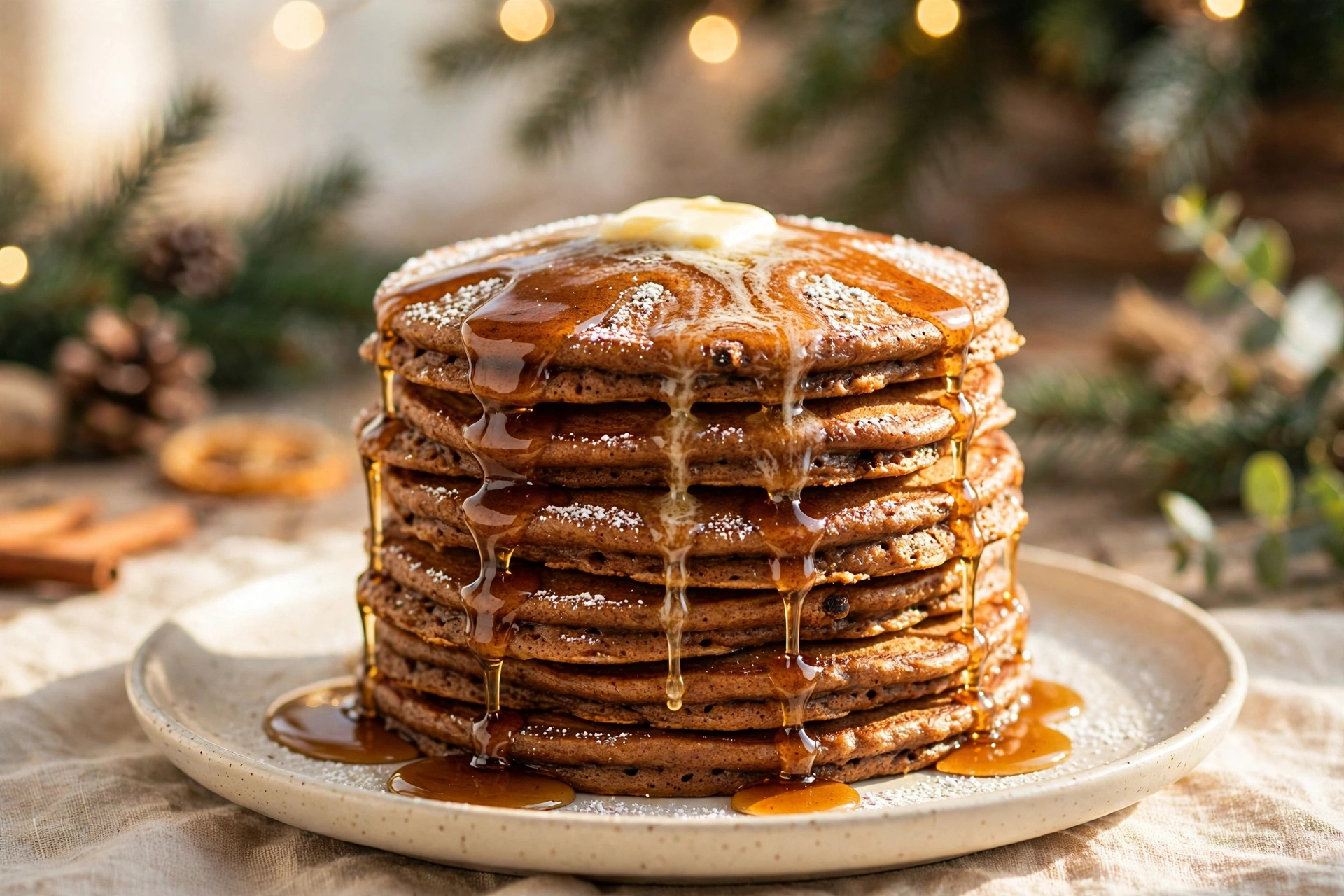
Gingerbread pancakes are what Christmas morning tastes like when somebody plans it: deep molasses, warm ginger and cinnamon, edges that crisp on the griddle and centers that stay soft as cake.
The problem with most versions is not flavor, it is height. Spiced batter browns fast and spreads thin, and too many holiday pancakes come off the griddle flat, dark and a little sad.
This recipe fixes the structure first. The batter rests while the griddle heats, the leavening is balanced against the molasses, and the heat stays lower than instinct tells you.
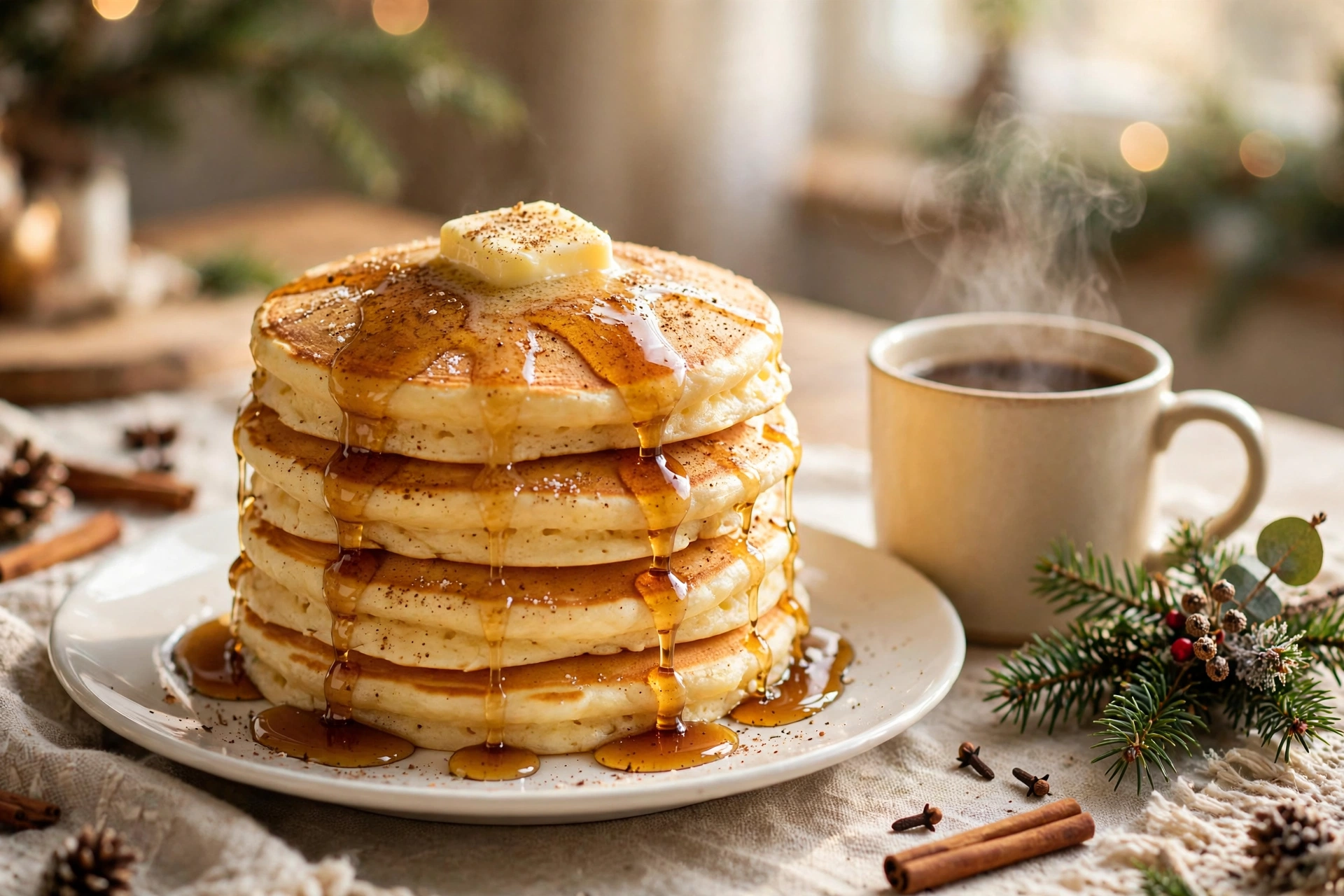
The payoff is a stack that stands up in the middle of the table, twelve pancakes deep, ready for butter and warm maple syrup while the coffee is still pouring.
The Batter Rest That Makes Gingerbread Pancakes Tall
Gingerbread pancakes live or die in the ten minutes after mixing. A rested batter hydrates the flour fully, so the pancakes set with an even, tender crumb instead of a gummy streak through the middle.
The rest does chemistry, too. Molasses is acidic, and it starts waking up the baking soda the moment they meet. Giving that reaction a head start means the lift is ready when the batter hits the heat.
Hydration also tames the spread. Fresh batter runs wide and thin on the griddle; rested batter pours in a slow ribbon and holds its round, which is where the tall edges come from.
There is a limit, and it matters. Rest ten to fifteen minutes, not an hour. Past that, the leavening spends itself in the bowl and the pancakes lose the very lift the rest created.
Use the rest well: it is exactly the time a griddle needs to heat evenly. Cold spots are the hidden cause of pale, lopsided pancakes, and a rested batter on a rushed griddle wastes both.
Molasses Without the Bitter Edge
Molasses is the flavor and the risk in one ingredient. Too little and the pancakes taste like plain spice cake; too much, or the wrong kind, and a bitter, mineral note takes over the stack.
Reach for regular unsulphured cooking molasses, the kind sold for baking. Blackstrap is a different product, concentrated and bitter, and it belongs in a small dose in savory cooking, not in Christmas breakfast.
The dose here is a third of a cup for the whole batch. That is enough for real gingerbread depth, the deep color and the slight chew at the edges, without crossing into bitterness.
Brown sugar rides along for a reason. It rounds the molasses with a clean caramel sweetness, so the spice reads warm instead of sharp, and it helps the surfaces brown evenly.
One more detail: molasses mixes best with the wet ingredients, whisked with the buttermilk and eggs before the flour arrives. Poured over dry flour, it streaks, and streaks bake into bitter pockets.
Ingredients
- 2 1/4 cups (270 g) all purpose flour
- 2 tablespoons (25 g) dark brown sugar
- 2 teaspoons baking powder
- 1/2 teaspoon baking soda
- 1 teaspoon ground ginger
- 1 teaspoon ground cinnamon
- 1/4 teaspoon ground nutmeg
- 1/4 teaspoon ground cloves
- 1/2 teaspoon fine salt
- 1 1/2 cups (360 ml) buttermilk, at room temperature
- 2 large eggs, at room temperature
- 1/3 cup (110 g) unsulphured molasses
- 3 tablespoons unsalted butter, melted, plus more for the griddle
- 1 teaspoon vanilla extract
- Warm maple syrup and soft butter, for serving
The spice rack is the full gingerbread set, and the cloves are not a typo. A quarter teaspoon is the background warmth people recognize as gingerbread without being able to name it.
Mixing and Griddling the Gingerbread Pancakes
- Whisk the flour, brown sugar, baking powder, baking soda, ginger, cinnamon, nutmeg, cloves and salt together in a large bowl. Whisking the leavening through the flour now is what keeps the rise even later.
- In a second bowl, whisk the buttermilk, eggs, molasses, melted butter and vanilla until the mixture is one deep, even caramel color with no molasses streaks at the bottom.
- Pour the wet ingredients over the dry and fold with a spatula just until no dry flour shows. The batter should look thick and slightly lumpy. Stop there; every extra stir costs height.
- Rest the batter for 10 minutes while you heat a griddle or large skillet over medium low heat. The batter will thicken and hold soft peaks on the spatula when it is ready.
- Lightly butter the griddle. Drop the batter by 1/3 cup, leaving room to spread. Cook for 2 to 3 minutes, until the edges look set and matte and bubbles on the surface stay open instead of filling back in.
- Flip each pancake once, with one confident motion, and cook 1 to 2 minutes more, until the second side is deep golden and the center springs back when pressed lightly.
- Move finished pancakes to a sheet pan in a 200 degree F oven while you cook the rest. Lower the heat a notch after the first batch if the surfaces are racing ahead of the centers.
- Serve in warm stacks with soft butter and warm maple syrup. The syrup warms in 20 seconds in the microwave, and cold syrup on hot pancakes is a small heartbreak nobody needs.
Reading the Bubbles: When to Flip and When to Wait
Every pancake recipe says to flip when bubbles appear, and that advice is half right. Bubbles appear within the first minute; the pancake is ready when the bubbles stop refilling and the holes stay open.
Read the edges at the same time. A raw pancake shines wet all the way to the rim. A ready one turns matte at the edges first, like a shoreline drying, while the center still glistens.
Heat is the other half of the read, and spiced batter is unforgiving about it. Molasses and brown sugar brown faster than plain batter, so a griddle that is right for buttermilk pancakes will scorch these.
Start at medium low and judge by the first pancake, which is always the test. If it darkens before the bubbles set, drop the heat and wait two full minutes before the next round.
Flip once. A second flip presses the rise out of the crumb and toughens the surfaces, and it almost always means the first flip came too early. Patience is an ingredient here.
A Christmas Morning Timeline, Coffee First
The morning runs in four quiet moves. Start the coffee. Mix the batter. Let it rest while the griddle heats and the table gets set. Then cook, holding each batch warm in a low oven.
The whole sequence takes about thirty five minutes, and none of it needs a second cook. Set the butter out when you start, because room temperature butter spreads instead of tearing the first stack.
If your table is bigger than six, double the batter in one bowl and cook on two burners. The rest scales fine, and the oven hold keeps batch one honest while batch two catches up.
For a full brunch spread, put these beside Christmas breakfast strata for the savory eaters and let the table choose its own balance.
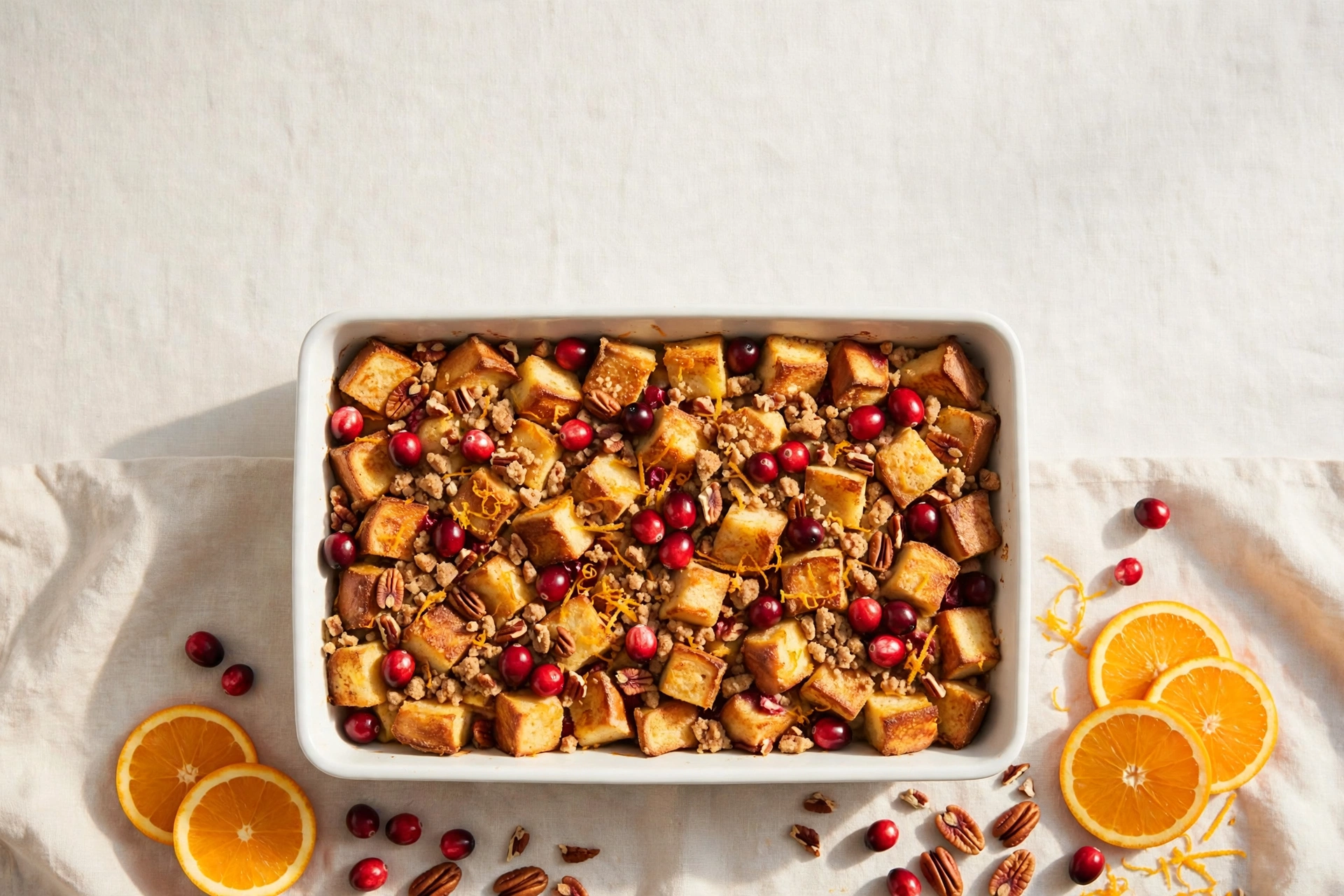
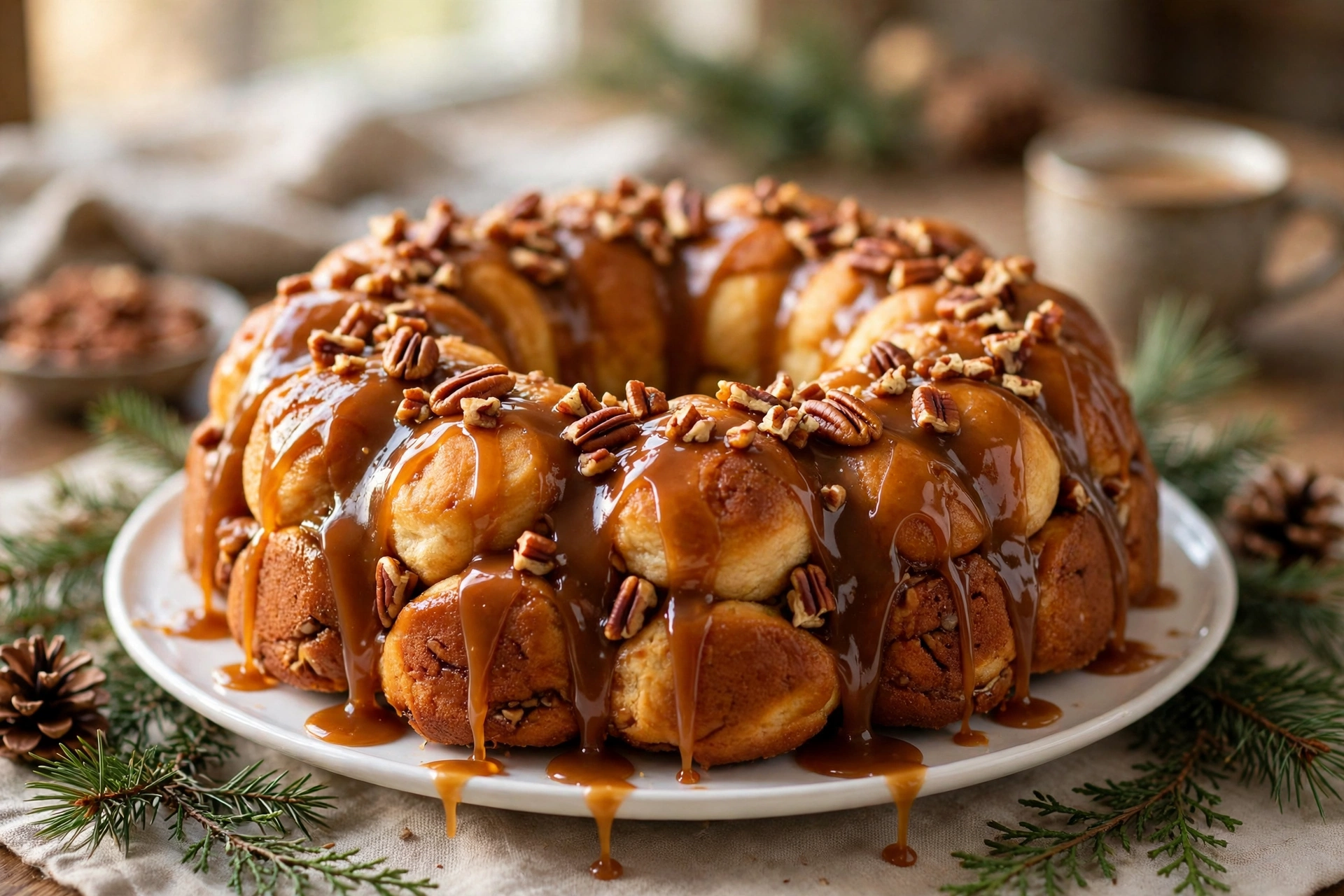
Dessert minded guests will drift toward eggnog French toast casserole, and nobody has ever been sad to see Christmas monkey bread next to the coffee pot either.
Whole Wheat, Dairy Free and Other Honest Adaptations
Whole wheat flour works if you swap only half the flour. All whole wheat makes the spice taste dusty and the crumb heavy; half keeps the nutrition gain and the pancakes stay tall.
For dairy free pancakes, use a plant milk soured with a tablespoon of lemon juice in place of the buttermilk, and a neutral oil instead of butter. The acid still matters, because the soda needs it.
Gluten free flour blends that are built for one to one swapping behave well here, thanks to the rest. Add one extra tablespoon of blend if the batter pours thinner than thick cream.
Less sweet is easy: cut the brown sugar to one tablespoon. The molasses carries the flavor on its own, and many brunch tables prefer the pancakes as a vehicle for syrup anyway.
The spice level is adjustable in one direction only. Double the ginger for a real snap if your family likes heat, but never double the cloves; cloves go medicinal fast and cannot be undone.
Freeze the Stack, Reheat Like Fresh
These pancakes freeze better than almost any Christmas breakfast, which makes them a gift to December. Cook the full batch on a quiet weekend and freeze them before the holiday week arrives.
Cool the pancakes completely on a rack first. Warm pancakes stacked into a bag steam each other soft, and the texture you worked for is the first thing the steam takes.
Flash freeze them in a single layer on a sheet pan for 30 minutes, then bag them with parchment between layers. They keep for up to two months without picking up freezer flavors.
Reheat from frozen in a toaster or a 350 degree F oven for about five minutes. The microwave works in a pinch, thirty seconds at a time, but the edges will never crisp there.
Leftovers also keep three days in the fridge, and a minute in a dry skillet brings back most of the griddle finish. A warm spiced stack on December 27 might be the best argument for making twelve.
Toppings That Belong on a Spiced Pancake
Butter and warm maple syrup are the classic finish and the right default. The maple echoes the molasses, the butter melts into the spice, and nothing on the table competes with the main flavor.
Whipped cream suits a dessert leaning brunch, especially with a dusting of cinnamon over the top. Keep it unsweetened or barely sweet; the pancakes and syrup already bring plenty.
For crunch, candied pecans or plain toasted walnuts scattered over the stack give the soft crumb something to push against. Add them at the table so they stay crisp.
Cooked apples are the sleeper topping. Warm diced apples with butter and cinnamon turn the plate into something between breakfast and dessert, in the best way.
If your brunch table runs to bakes, a plate of gingerbread cinnamon rolls next to the pancakes lets the gingerbread fans compare formats, and they will.
Your Gingerbread Pancake Questions, Answered
Can I use blackstrap molasses?
Not as a straight swap. Blackstrap is concentrated and bitter, and a third of a cup will take over the batch. If it is all you have, use two tablespoons of blackstrap plus two tablespoons of honey, and expect a deeper, darker flavor.
Why did my pancakes come out flat?
Three causes cover almost every case: the batter was overmixed, the rest was skipped, or the baking powder is old. Fold just until the flour disappears, rest the full ten minutes, and test your baking powder in hot water if it has been open for months.
Can I mix the batter the night before?
Mix the dry bowl and the wet bowl separately the night before, but do not combine them. Combined batter spends its lift overnight. In the morning, fold the two together, rest ten minutes, and cook as written.
Why did the first batch burn?
Molasses and brown sugar caramelize faster than plain batter, and most griddles run hotter than their dial claims. Start at medium low, treat the first pancake as a test, and lower the heat before the second batch rather than after the third.
Can this batter go in a waffle iron?
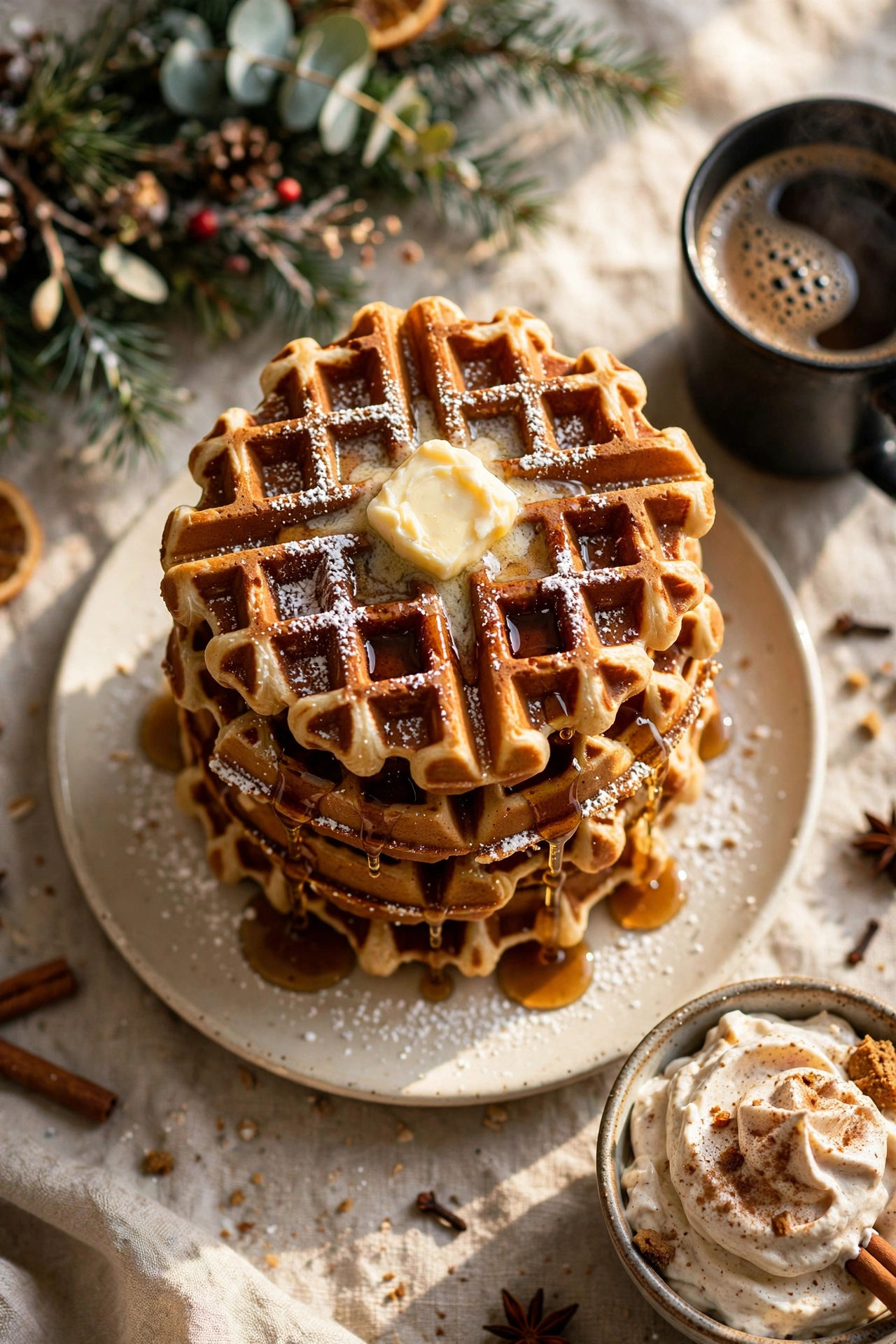
Yes, with two changes: add two extra tablespoons of flour for a thicker batter and an extra tablespoon of melted butter so the waffles release cleanly. Cook until the steam slows, about one minute longer than plain waffles.
How do I keep pancakes warm without drying them out?
Hold them in a single layer on a sheet pan in a 200 degree F oven, covered loosely with foil. Stacking them in a deep pile steams the bottom layer, so spread them out and stack only at the table.
Christmas Morning, One Warm Stack at a Time
Gingerbread pancakes earn their place on the Christmas table because the method respects the morning. Ten minutes of rest, a patient griddle, and the whole thing is cooked before the house is fully awake.
The flavor is the deep, honest kind: molasses you can taste, ginger with a little warmth behind it, and edges that crisp just enough to contrast the soft centers.
Make the full batch even for a small table. The frozen leftovers reheat like fresh, and a spiced pancake in January is a small, planned pleasure.
Nutrition per serving, estimated for 6 servings of 2 pancakes, without syrup: Calories 310, Total Fat 9 g, Saturated Fat 5 g, Unsaturated Fat 3 g, Trans Fat 0 g, Carbohydrates 50 g, Fiber 2 g, Sugar 15 g, Protein 9 g, Sodium 450 mg, Cholesterol 75 mg. Ingredient values are informed by USDA FoodData Central.
Print
Gingerbread Pancakes, Tall, Fluffy and Built for Christmas Morning
Tall, fluffy gingerbread pancakes with molasses, buttermilk and the full gingerbread spice set. The batter rests 10 minutes while the griddle heats, and the recipe includes a Christmas morning timeline plus freezing and reheating instructions.
- Total Time: 40 minutes
- Yield: 12 pancakes 1x
Ingredients
- 2 1/4 cups (270 g) all purpose flour
- 2 tablespoons (25 g) dark brown sugar
- 2 teaspoons baking powder
- 1/2 teaspoon baking soda
- 1 teaspoon ground ginger
- 1 teaspoon ground cinnamon
- 1/4 teaspoon ground nutmeg
- 1/4 teaspoon ground cloves
- 1/2 teaspoon fine salt
- 1 1/2 cups (360 ml) buttermilk, at room temperature
- 2 large eggs, at room temperature
- 1/3 cup (110 g) unsulphured molasses
- 3 tablespoons unsalted butter, melted, plus more for the griddle
- 1 teaspoon vanilla extract
- Warm maple syrup and soft butter, for serving
Instructions
- Whisk the flour, brown sugar, baking powder, baking soda, ginger, cinnamon, nutmeg, cloves and salt together in a large bowl.
- In a second bowl, whisk the buttermilk, eggs, molasses, melted butter and vanilla until the mixture is one deep, even caramel color with no molasses streaks.
- Pour the wet ingredients over the dry and fold with a spatula just until no dry flour shows. The batter should look thick and slightly lumpy.
- Rest the batter for 10 minutes while you heat a griddle or large skillet over medium low heat.
- Lightly butter the griddle. Drop the batter by 1/3 cup, leaving room to spread. Cook for 2 to 3 minutes, until the edges look set and matte and the bubbles on the surface stay open.
- Flip each pancake once and cook 1 to 2 minutes more, until the second side is deep golden and the center springs back when pressed lightly.
- Hold finished pancakes in a single layer on a sheet pan in a 200 degree F oven while you cook the rest, lowering the heat a notch after the first batch if the surfaces darken too fast.
- Serve in warm stacks with soft butter and warm maple syrup.
- Prep Time: 15 minutes
- Cook Time: 25 minutes
Nutrition
- Serving Size: 2
- Calories: 310
- Sugar: 15
- Sodium: 450
- Fat: 9
- Saturated Fat: 5
- Unsaturated Fat: 3
- Trans Fat: 0
- Carbohydrates: 50
- Fiber: 2
- Protein: 9
- Cholesterol: 75