

Dry Brined Herb Butter Turkey Breast With Crisp Golden Skin
In this article:
- The salt ratio and the uncovered rule
- Choosing a bone in breast that roasts evenly
- Ingredients
- Salting the day before and roasting the day of
- The herb butter, under the skin where it belongs
- Temperature, timing and pale skin troubleshooting
- Carving and serving the breast
- The Thanksgiving timeline, Wednesday to Thursday
- Size, herb and leftover swaps
- Your turkey breast questions, answered
- The small table main that eats like the whole bird
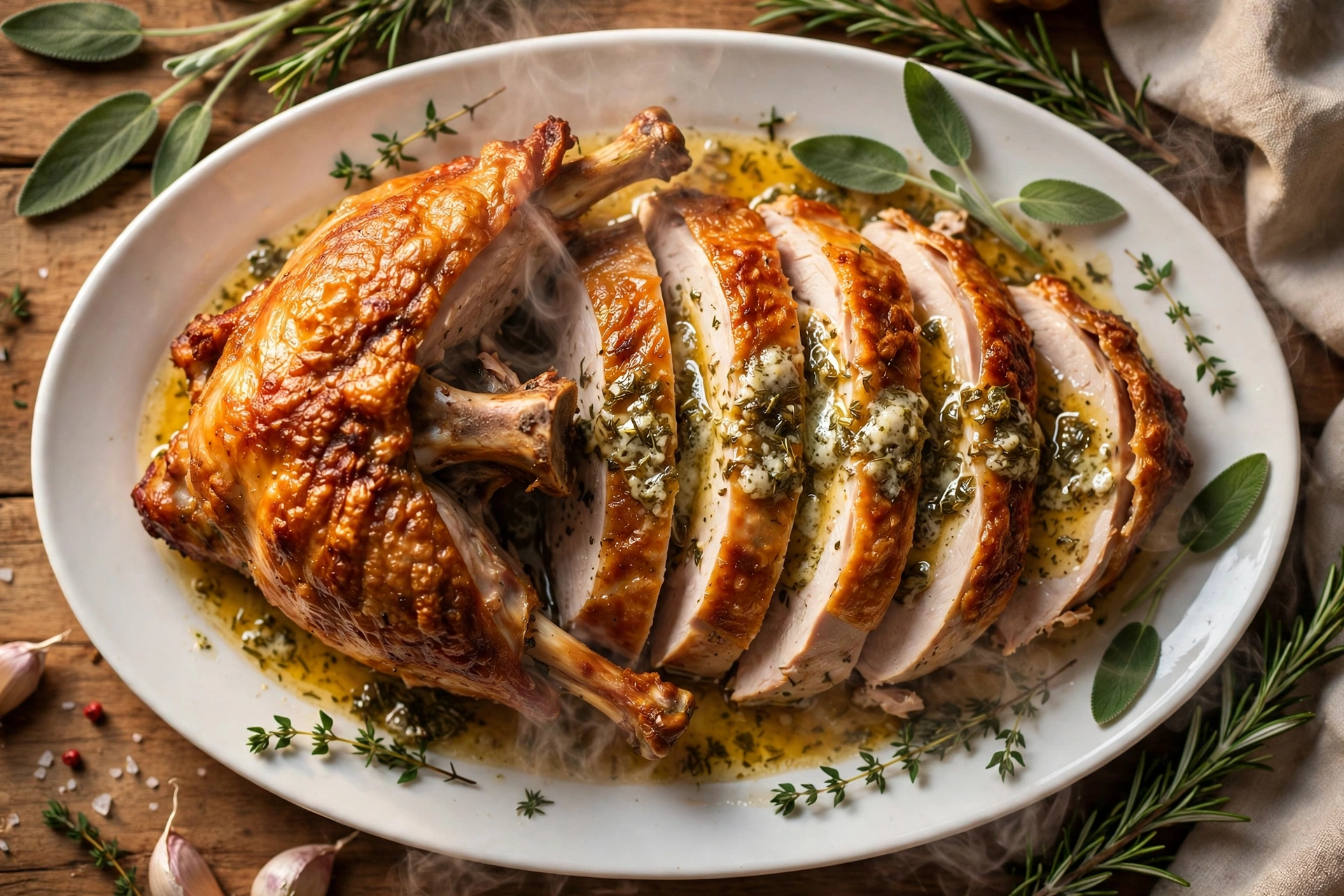
A dry brined turkey breast is the answer for every cook who wants the whole Thanksgiving ritual without a whole bird. One breast, salted the day before, roasted in under two hours, and carved into thick, juicy slices.
The contrast is the promise. Skin that crackles and tastes deeply savory, meat that slices clean and stays moist to the last piece, and an herb butter perfume of sage, thyme and rosemary running through every bite.
Most turkey breast recipes fail on vagueness. A spoonful of salt, a hot oven, a prayer. This one is built on a ratio and a thermometer, and it explains both, because a breast is lean and forgiving only when the numbers are right.
Everything else is calm. The fridge does the seasoning work overnight, the butter takes five minutes, and the oven does the rest while the sides come together.
Why This Dry Brined Turkey Breast Works: the Salt Ratio and the Uncovered Rule
A dry brined turkey breast works because salt does two jobs at once when it is given time. Rubbed on a full day ahead, it seasons the meat to the bone instead of only the surface, and it relaxes the proteins so the breast holds on to its juices in the oven.
The ratio is the part the ranked recipes never give you. Use 1 teaspoon of fine sea salt per pound of bone in breast, which for a 6 to 7 pound breast is 2 tablespoons, plus 1 tablespoon of brown sugar to help the skin brown and round out the salt.
The second rule is uncovered. The breast rests on a rack in the fridge with nothing over it, so the cold dry air pulls moisture off the skin for 18 to 24 hours. Dry skin is crisp skin, and no amount of oven heat crisps a surface that starts wet.
A wet brine cannot do any of this. It needs a container, a gallon of water and fridge space nobody has in November, and it plumps the meat with water instead of seasoning it. The dry brine is smaller, calmer and better tasting.
The herb butter then goes under the skin, not just on it. Butter on the surface mostly runs off into the pan, while butter under the skin bastes the meat directly and carries the sage, thyme and rosemary into every slice.
Choosing a Bone In Breast That Roasts Evenly
Buy a bone in, skin on turkey breast of 6 to 7 pounds for eight servings. The bone is not a nuisance, it is the insurance policy, because it slows the cooking at the center and keeps the meat juicy while the skin crisps.
Look for a breast with the skin intact across the top, with no tears or bare patches. The herb butter needs that cover, and torn skin means dry stripes on the finished slices.
Fresh or frozen both work, but the planning differs. A frozen breast needs about 24 hours of thawing in the fridge for every 4 to 5 pounds, and the dry brine day comes after the thaw, never during it.
Skip any breast sold as pre brined or self basting. Those are already salted by the packer, and adding the full ratio on top makes the meat harsh. If that is all you can find, cut the salt in half and keep the rest of the method.
One breast feeds eight people generously with leftovers for sandwiches. Two smaller breasts beat one giant one if you are feeding more, because they roast more evenly and carve more neatly.
Ingredients
- 1 bone in turkey breast with skin, 6 to 7 pounds
- 2 tablespoons fine sea salt
- 1 tablespoon light brown sugar
- 1 teaspoon black pepper, divided
- 6 tablespoons unsalted butter, softened
- 2 tablespoons chopped fresh sage leaves
- 1 tablespoon chopped fresh thyme leaves
- 1 tablespoon chopped fresh rosemary leaves
- 2 cloves garlic, grated
- 1 teaspoon lemon zest
- 1 yellow onion, quartered
- 1 cup low sodium chicken broth
Fine sea salt matters here. Its small crystals spread evenly and dissolve into the surface, while coarse crystals fall off and leave salty and bland patches side by side.
Salting the Day Before and Roasting the Day Of
- The day before roasting, pat the turkey breast very dry with paper towels. Set it on a rack over a rimmed sheet pan.
- Stir the salt, brown sugar and 1/2 teaspoon of the pepper together. Rub the mix all over the breast, on the skin, under the skin where it lifts easily, and inside the cavity.
- Refrigerate the breast uncovered on the rack for 18 to 24 hours. The skin should look dry and slightly tight when it comes out.
- Take the breast out of the fridge 45 minutes before roasting. Pat the skin dry again. Do not rinse the brine off.
- Heat the oven to 450 degrees F with a rack in the lower third. Mash the softened butter with the sage, thyme, rosemary, garlic, lemon zest and the remaining 1/2 teaspoon pepper.
- Loosen the skin over the breast with your fingertips. Spread two thirds of the herb butter under the skin in an even layer, then spread the rest over the skin.
- Scatter the onion quarters in a roasting pan and pour in the broth. Set the breast on a rack in the pan, skin side up.
- Roast at 450 degrees F for 20 minutes, until the skin starts to color. Reduce the heat to 325 degrees F and roast for 1 hour 10 minutes to 1 hour 25 minutes more.
- The breast is ready when a thermometer in the thickest part, away from the bone, reads 160 degrees F. If the skin browns too fast at the 45 minute check, tent it loosely with foil.
- Rest the breast on a board, tented with foil, for 20 minutes. The temperature will coast to 165 degrees F and the juices will settle.
- Carve the meat off the bone in one piece per side, then slice across the grain into thick slices. Spoon the warm pan juices over the top and serve.
The Herb Butter, Under the Skin Where It Belongs
Sage is the lead herb because it is the flavor of Thanksgiving stuffing, and the breast sits next to the dressing on the plate. Two tablespoons, chopped fine, is enough to perfume the meat without turning it medicinal.
Thyme and rosemary support in smaller amounts. Thyme brings a soft, savory depth, and rosemary brings the pine note that makes roasted turkey taste like a holiday instead of a weeknight.
Garlic goes in grated, not minced, so it melts into the butter and spreads in an even film. Lemon zest is the brightener, one teaspoon that keeps the rich butter from tasting heavy.
The butter must be soft, not melted. Melted butter slides off and pools, while soft butter spreads under the skin like a paste and stays where you put it, basting the meat for the full roast.
Work gently when you loosen the skin. Slide your fingertips in from the neck end, keep your nails away from the surface, and stop an inch from the edges so the butter stays sealed inside as it melts.
Temperature, Timing and Pale Skin Troubleshooting
The thermometer is not optional with a breast this size. Color lies, juices lie, and the wiggle test lies, because a bone in breast can look done at the skin while the center near the bone is still under.
Pull the breast at 160 degrees F in the thickest part, away from the bone, and rest it 20 minutes. Carryover heat takes it to 165 degrees F, which is the USDA safe temperature for turkey, and the rest is also what keeps the slices juicy instead of leaking onto the board. The USDA FSIS guidance on roasting turkey and safe temperatures is at fsis.usda.gov.
Pale skin means the surface was still damp or the oven ran cool. Pat the breast dry a second time after the brine, and give it the full 20 minutes at 450 degrees F before you reduce the heat. That opening blast is where the color is set.
Skin racing ahead of the meat is the opposite problem, and foil is the fix. Tent loosely at the 45 minute check, shiny side up, and the center catches up while the skin holds its color.
Salty edges mean the brine ran long. Past 36 hours the outer half inch firms up and tastes cured, so treat 24 hours as the target and 30 hours as the outer limit for a breast of this size.
Carving and Serving the Breast
Carve the breast the way a deli would, not the way a whole bird is carved at the table. Run the knife along one side of the breastbone and lift the whole half off in one piece, then slice it across the grain into thick slices that fan beautifully on a platter.
Serve it beside southern cornbread dressing and cauliflower gratin and the plate covers every texture a Thanksgiving table wants: crumbly, creamy and crisp skinned.
The pan juices are mild and oniony, a good spooning sauce on their own. For a full gravy, the method in turkey gravy from drippings works with these drippings exactly as written.
If your table prefers a sweet main, the maple glazed roast turkey breast is the Cookaza alternative. This dry brined breast is the savory one, and the two recipes share the same sides happily.
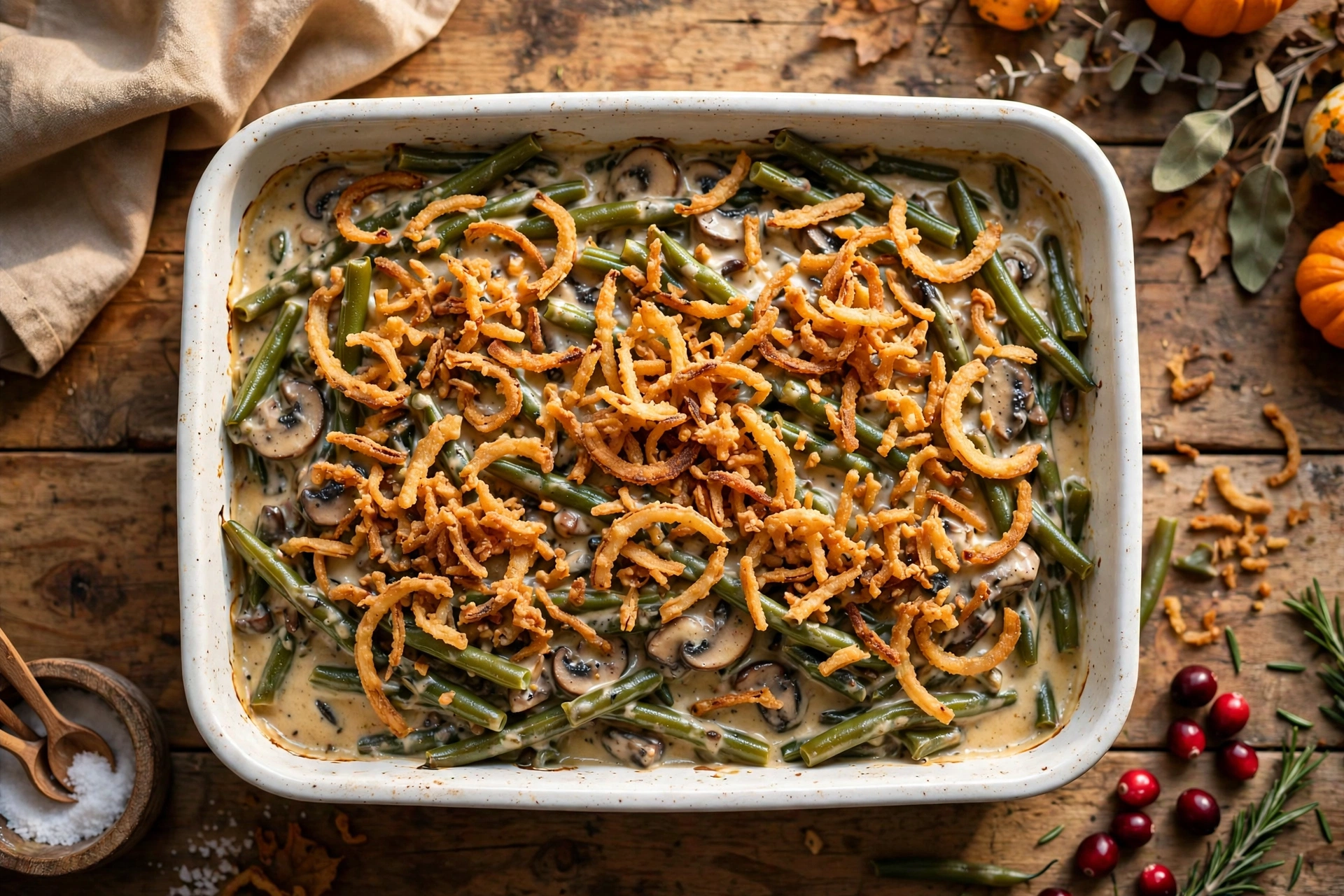
Add green bean casserole for the classic crunch and the table is complete. Warm the platter before the slices go on it, a small step that keeps the last serving as warm as the first.
The Thanksgiving Timeline, Wednesday to Thursday
Wednesday morning, or Tuesday night if your fridge is crowded, the breast gets salted and goes in uncovered. That is the whole of Wednesday’s work, five minutes of rubbing and a clear rack.
Thursday starts gently. The breast comes out of the fridge 45 minutes before the oven, gets its herb butter, and roasts for about an hour and 40 minutes in total, most of it at a moderate 325 degrees F.
That moderate second hour is the gift. The oven is free in temperature, if not in space, for sides that bake at 325 to 350 degrees F, and the dressing and gratin both fit that window.
Rest the breast a full 20 minutes before carving. A rested breast slices instead of shredding, and the pause is exactly when the gravy gets made and the table gets set.
Leftovers keep four days in the fridge, sliced and stored in their juices. A splash of broth in the container is the difference between dry sandwich meat and the leftovers everyone fights over.
Size, Herb and Leftover Swaps
For a smaller table, a 3 to 4 pound breast follows the same recipe with half the salt mix by the ratio, about 1 tablespoon, and a shorter roast. Start checking the temperature at 50 minutes after the heat is reduced.
For a boneless breast, keep the brine and butter, tie the breast into an even roll with kitchen twine, and expect it to finish 15 to 20 minutes sooner. The thermometer matters even more without the bone to slow the center.
Dried herbs work in a pinch at one third of the fresh amounts, rubbed into the butter rather than sprinkled. Fresh is better here because the butter carries their oils straight into the meat.
Swap the herb profile toward lemon and thyme only for a brighter breast, or add 1/2 teaspoon of smoked paprika to the brine rub for a deeper color and a gentle smoke note without a smoker.
Leftover slices freeze well for a month, packed flat with a little broth. Thaw in the fridge and warm gently, covered, so the meat reheats in steam instead of drying in open oven air.
Your Turkey Breast Questions, Answered
How long should I dry brine a turkey breast?
Eighteen to 24 hours is the sweet spot for a 6 to 7 pound bone in breast. At 12 hours the seasoning is good but shallower, and past 36 hours the outer meat firms up and tastes cured. Plan the salt for the day before and you are inside the window.
Do I rinse the dry brine off before roasting?
No. The salt has dissolved and worked into the meat, and what remains on the skin is seasoning, not excess. Rinsing re wets the skin you spent a day drying and costs you the crisp finish, so pat dry and roast.
Can I dry brine a frozen breast?
Not while it is frozen, because salt cannot move through ice. Thaw the breast fully in the fridge first, about 24 hours for every 4 to 5 pounds, then salt it and give it its 18 to 24 hours uncovered.
Does the butter go under the skin or on top?
Both, in a two to one split. Two thirds goes under the skin, where it bastes the meat directly and carries the herbs into the slices. The last third goes over the skin to help it brown and crisp.
Why did my turkey breast come out dry?
Almost always the temperature, not the time. A lean breast cooked past 165 degrees F at the center squeezes out its juices no matter how well it was brined. Pull at 160 degrees F, rest 20 minutes, and let carryover finish the job.
How do I keep leftover slices moist?
Store the slices in their pan juices or with a splash of broth, and reheat them covered at a gentle heat. Slices warmed uncovered in a hot oven dry at the edges before the centers are warm.
The Small Table Main That Eats Like the Whole Bird
A dry brined turkey breast asks for a rack, a ratio and a thermometer, and it pays back with the deepest flavor and the crispest skin a Thanksgiving main can offer a small table. That is a fair trade, and it repeats every year.
The method is honest about its pressure points: salt by weight, uncovered in the fridge, butter under the skin, pull at 160 degrees F. Master those four and the recipe stops being a project and becomes your default.
Serve it once with the dressing and the gravy and watch the table. Nobody asks where the rest of the bird went, because the breast was always the part everyone wanted.
Nutrition per serving, estimated for 8 servings: Calories 380, Total Fat 17 g, Saturated Fat 7 g, Unsaturated Fat 8 g, Trans Fat 0 g, Carbohydrates 2 g, Fiber 0 g, Sugar 1 g, Protein 52 g, Sodium 890 mg, Cholesterol 165 mg. Ingredient values are informed by USDA FoodData Central.
Print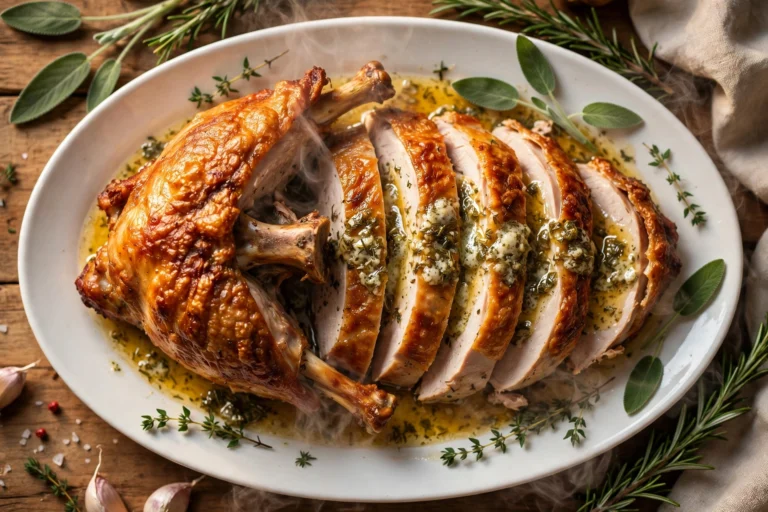
Dry Brined Herb Butter Turkey Breast With Crisp Golden Skin
A bone in turkey breast dry brined for 18 to 24 hours with a measured salt ratio, roasted under and over the skin with sage, thyme and rosemary butter, and rested for clean, juicy slices. Prep and cook times are hands on and roasting only; the brining is hands off in the fridge.
- Total Time: 2 hours 5 minutes
- Yield: 8 servings 1x
Ingredients
- 1 bone in turkey breast with skin, 6 to 7 pounds
- 2 tablespoons fine sea salt
- 1 tablespoon light brown sugar
- 1 teaspoon black pepper, divided
- 6 tablespoons unsalted butter, softened
- 2 tablespoons chopped fresh sage leaves
- 1 tablespoon chopped fresh thyme leaves
- 1 tablespoon chopped fresh rosemary leaves
- 2 cloves garlic, grated
- 1 teaspoon lemon zest
- 1 yellow onion, quartered
- 1 cup low sodium chicken broth
Instructions
- The day before roasting, pat the turkey breast very dry with paper towels. Set it on a rack over a rimmed sheet pan.
- Stir the salt, brown sugar and 1/2 teaspoon of the pepper together. Rub the mix all over the breast, on the skin, under the skin where it lifts easily, and inside the cavity.
- Refrigerate the breast uncovered on the rack for 18 to 24 hours. The skin should look dry and slightly tight when it comes out.
- Take the breast out of the fridge 45 minutes before roasting. Pat the skin dry again. Do not rinse the brine off.
- Heat the oven to 450 degrees F with a rack in the lower third. Mash the softened butter with the sage, thyme, rosemary, garlic, lemon zest and the remaining 1/2 teaspoon pepper.
- Loosen the skin over the breast with your fingertips. Spread two thirds of the herb butter under the skin in an even layer, then spread the rest over the skin.
- Scatter the onion quarters in a roasting pan and pour in the broth. Set the breast on a rack in the pan, skin side up.
- Roast at 450 degrees F for 20 minutes, until the skin starts to color. Reduce the heat to 325 degrees F and roast for 1 hour 10 minutes to 1 hour 25 minutes more.
- The breast is ready when a thermometer in the thickest part, away from the bone, reads 160 degrees F. If the skin browns too fast at the 45 minute check, tent it loosely with foil.
- Rest the breast on a board, tented with foil, for 20 minutes. The temperature will coast to 165 degrees F and the juices will settle.
- Carve the meat off the bone in one piece per side, then slice across the grain into thick slices. Spoon the warm pan juices over the top and serve.
- Prep Time: 25 minutes
- Cook Time: 1 hour 40 minutes
Nutrition
- Serving Size: 6
- Calories: 380
- Sugar: 1
- Sodium: 890
- Fat: 17
- Saturated Fat: 7
- Unsaturated Fat: 8
- Trans Fat: 0
- Carbohydrates: 2
- Fiber: 0
- Protein: 52
- Cholesterol: 165
1 thought on “Dry Brined Herb Butter Turkey Breast With Crisp Golden Skin”