In this article:
- What Makes This Southern Cornbread Dressing Recipe Special
- Flavor Notes and Texture Contrast
- Why It Fits Your Schedule
- Diet Conscious Twists
- Ingredients
- Step by Step Instructions
- Secrets for Foolproof Southern Cornbread Dressing Success
- Variations to Try Next Time
- Keeping It Fresh: Storage Guide
- Conclusion
- FAQ
What Makes This Southern Cornbread Dressing Recipe Special
This southern cornbread dressing works because it respects the two rules Southern cooks actually argue about. First, the cornbread is savory, not sweet, so the dressing tastes like Thanksgiving instead of dessert. Second, the crumb stales for a full day before it ever meets broth, which lets it drink up flavor without turning to mush.
The texture comes from contrast on purpose. Crumbled cornbread gives a tender, spoonable base, while torn bits of toasted white bread add structure that holds a clean scoop. Sautéed onion and celery melt into the background, and rubbed sage perfumes everything without shouting. Four eggs bind it all into a custardy center with crisp, golden edges.
Broth is where most dressings fail, and this recipe treats it as a technique rather than an ingredient. You add it gradually and judge by look, stopping when the mixture glistens and looks almost too wet. That extra moisture is exactly what the oven transforms into tenderness. Dry dressing is almost always under-brothed dressing, not overbaked dressing.
It also settles the dressing versus stuffing debate the practical way. Stuffing cooks inside the bird, dressing bakes in a pan, and this is dressing through and through. Baking it separately means the top crisps beautifully and nobody waits on the turkey’s internal temperature. If you want the full holiday plate, our maple glazed roast turkey breast and slow cooker mashed potatoes were built to sit right beside it.
This southern cornbread dressing starts two days before anyone sits down to eat. Bake a simple savory cornbread, let it cool completely, then crumble it into big pieces and leave them out to stale. Stale crumb is thirsty crumb, and thirsty crumb is what carries sage and onion flavor into every bite. Fresh, soft cornbread would collapse into paste under the same treatment.
On assembly day, butter softens a mountain of diced onion and celery until sweet and translucent. The vegetables join the crumbled cornbread along with toasted bread cubes, sage, poultry seasoning, and black pepper. Beaten eggs go in only after the mixture cools slightly, because hot crumb scrambles eggs on contact. Then the broth goes in slowly, a cup at a time, until the whole bowl shines.
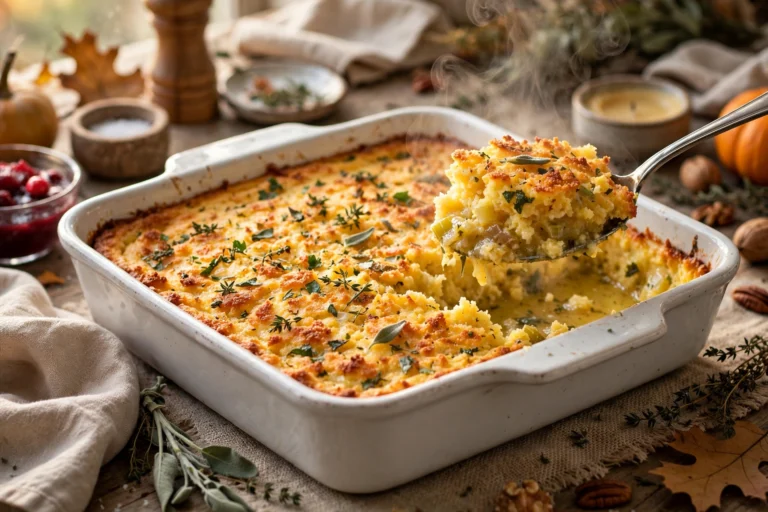
The pan matters more than people expect. A 9×13 baking dish gives the ideal ratio of crispy top to custardy middle. Too deep and the center steams, too shallow and it dries out. Fifty minutes at 375°F sets the middle and bronzes the top. Rest it ten minutes before scooping so the slices hold together.
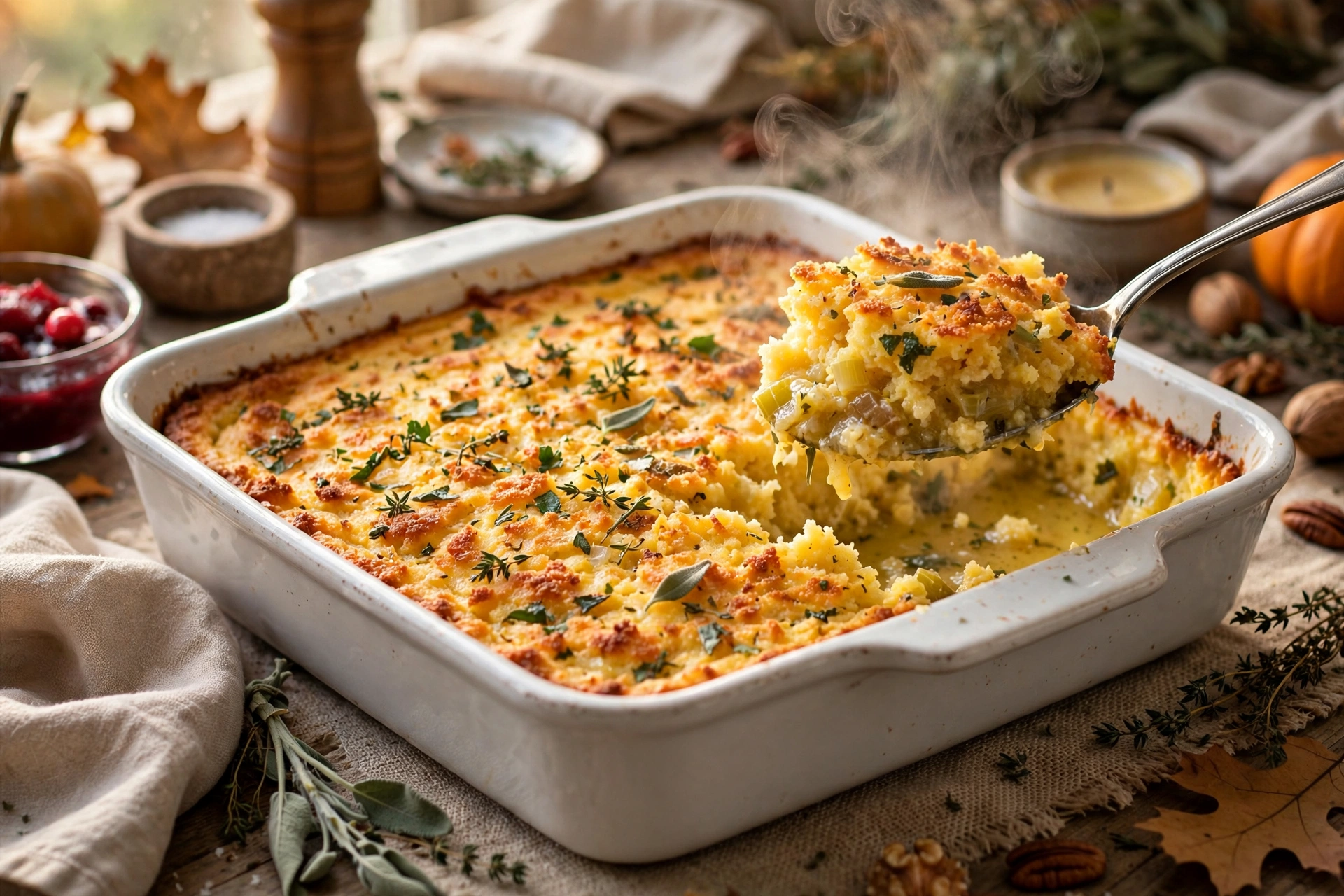
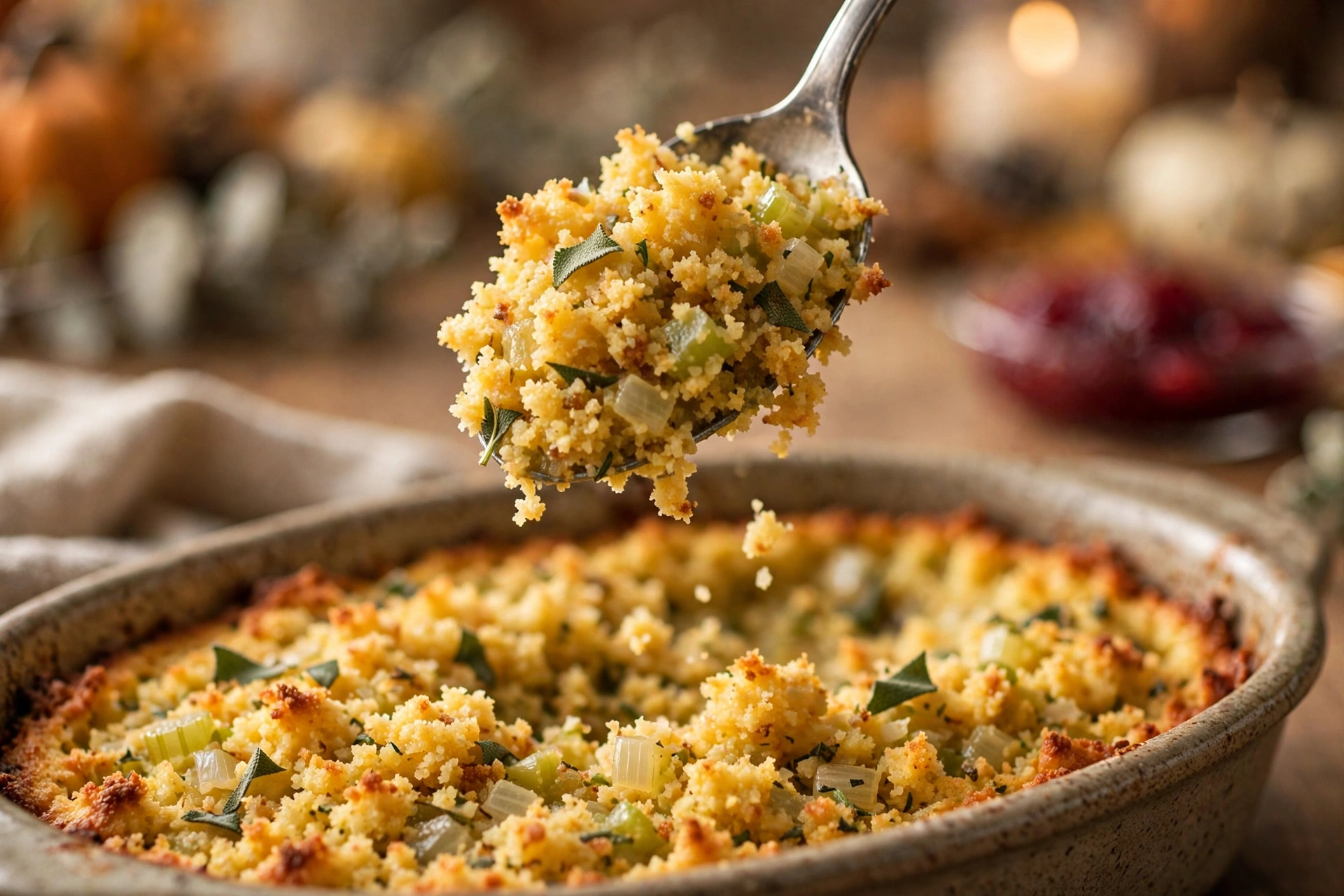
What arrives at the table is deeply savory comfort food. Golden and crackling on top, soft and steaming inside, fragrant with sage the moment the spoon breaks through. It tastes like somebody’s grandmother is still in charge of the holidays, which is the highest compliment this dish can earn.
Flavor Notes and Texture Contrast
Sage leads the flavor, earthy and piney, unmistakably Thanksgiving. Poultry seasoning backs it up with thyme and marjoram notes that read as savory depth. Onion and celery, cooked down in butter, contribute sweetness that balances the herbs. Black pepper adds a gentle bite at the finish that keeps each spoonful interesting.
The cornbread itself brings a toasty corn flavor that wheat bread dressings never have. Because this cornbread is savory, that corn taste stays in the savory lane. Chicken broth deepens everything with meaty richness, soaking into the crumb. Butter, used twice, rounds every edge with dairy smoothness.
Texture is a three-part story. The top bakes into a golden crust with real crunch at the corners. Just below, a thin layer turns chewy and caramelized where broth met direct heat. The center stays soft and custardy, spoonable like a savory bread pudding. One pan, three textures, no special equipment.
Temperature serving matters here. Piping hot, the aromas are at their peak and the center is at its creamiest. After twenty minutes on the table, it firms up and scoops into neat squares. Both are correct, so serve it when the turkey is ready and never apologize. A spoonful of gravy over the top is traditional and encouraged.
Visually, good dressing looks rustic rather than refined, and that is its charm. Golden brown top with darker crispy bits, visible flecks of green herbs, steam rising when the spoon digs in. It photographs like comfort, which is why it anchors every Thanksgiving table picture. No garnish needed, though fresh sage leaves never hurt.
Why It Fits Your Schedule
Thanksgiving cooking is a logistics puzzle, and this southern cornbread dressing solves more of it than any other side. The cornbread bakes two days ahead in under thirty minutes. Assembly happens the day before in about twenty minutes of actual work. On the big day, it just needs oven time while the turkey rests.
That resting window is the secret to a calm holiday. The turkey needs thirty to forty minutes of rest after roasting anyway, and the oven sits empty and hot. Slide the dressing in the moment the bird comes out. Everything finishes together, nothing gets cold, and the cook actually sits down.
The ingredient list is short and forgiving, built from pantry staples plus fresh aromatics. Cornmeal, flour, eggs, butter, onion, celery, sage, and broth cover the whole recipe. Nothing requires a specialty store or precise timing. If you can make cornbread, you are already eighty percent done.
It also scales without drama, which matters when the guest list grows. Double everything into two 9×13 pans rather than one deep pan, because depth is the enemy of even baking. The method stays identical, only the dish count changes. Our honey butter dinner rolls follow the same make-ahead logic and round out the bread basket.
Diet Conscious Twists
A vegetarian version is straightforward and just as satisfying. Swap the chicken broth for a rich vegetable broth, ideally one with mushroom notes for depth. Everything else stays the same, since the recipe has no meat beyond the broth. Many families prefer it this way even when turkey is on the table.
For gluten-free guests, the path takes more planning but works. Bake the cornbread with a cup-for-cup gluten-free flour blend, and use gluten-free white bread for the cubes. Check that your broth is certified gluten-free, since some brands hide wheat. The texture will be slightly more delicate, so handle the crumb gently.
Cutting fat is possible without ruining the dish. Halve the butter used for sautéing and use a nonstick skillet, then choose a low-sodium broth to control salt. The dressing will be a touch less rich but still moist and flavorful. Do not skip the eggs, because they are structural, not just richness.
Ingredients
This recipe builds in two stages, the savory cornbread first and the dressing assembly second. Bake the cornbread up to two days ahead and let it stale uncovered. Everything else comes together in one big bowl on assembly day.
- 2 cups (240 g) yellow cornmeal
- 1 cup (125 g) all-purpose flour
- 1 tablespoon baking powder
- 1 teaspoon fine sea salt
- 2 large eggs, at room temperature
- 1 1/2 cups whole milk
- 1/3 cup (75 g) unsalted butter, melted, plus more for the pan
- 8 cups crumbled day-old savory cornbread (from above)
- 3 cups toasted white bread cubes (about 5 slices)
- 1/2 cup (115 g) unsalted butter
- 1 large yellow onion, diced (about 2 cups)
- 3 celery ribs, diced (about 1 1/2 cups)
- 1 tablespoon rubbed sage, plus more to taste
- 2 teaspoons poultry seasoning
- 1 teaspoon freshly ground black pepper
- 1 teaspoon fine sea salt, plus more to taste
- 4 large eggs, lightly beaten
- 4 to 5 cups low-sodium chicken or turkey broth, warmed
Step by Step Instructions
- Bake the cornbread: heat the oven to 400°F (200°C) and butter a 9-inch square pan. Whisk the cornmeal, flour, baking powder, and salt. In a second bowl, whisk the eggs, milk, and melted butter. Combine until just mixed, spread in the pan, and bake 20 to 22 minutes until golden. Cool completely.
- Crumble the cooled cornbread into large pieces in a very large bowl. Add the toasted bread cubes. Leave uncovered at room temperature for 1 to 2 days to stale, or speed it up with 10 minutes in a 300°F oven.
- Melt the butter in a large skillet over medium heat. Add the onion and celery with a pinch of salt and cook 8 to 10 minutes, stirring, until soft and translucent but not browned.
- Stir the sage, poultry seasoning, pepper, and salt into the vegetables and cook 1 minute more until fragrant. Scrape everything into the bowl with the crumbled cornbread.
- Toss the mixture well and let it cool 10 minutes. Pour in the beaten eggs and toss again until evenly distributed.
- Add 4 cups of warm broth one cup at a time, folding gently. Stop when the mixture looks very moist and almost too wet, with no dry crumb remaining. Add the fifth cup only if dry spots persist.
- Heat the oven to 375°F (190°C). Butter a 9×13 inch baking dish and spread the mixture evenly. Cover with foil and bake 30 minutes.
- Remove the foil and bake 20 to 25 minutes more, until the top is deep golden and the center reaches 165°F on an instant-read thermometer. Rest 10 minutes before serving.
Secrets for Foolproof Southern Cornbread Dressing Success
The broth test is the whole recipe in one moment, so learn to read it. After folding, the mixture should look wetter than you think is right, glistening with visible liquid in the bottom of the bowl. The oven drives off a surprising amount of moisture. If it looks merely damp going in, it comes out dry.
Cool the crumb before the eggs go in, every single time. Hot cornbread plus beaten eggs equals tiny bits of scrambled egg through the dressing. Ten minutes of patience prevents it completely. The USDA food safety guidelines also remind us that the finished dressing must reach 165°F internally, so verify with a thermometer rather than guessing.
Do not use sweet cornbread, and this is the hill Southern cooks will die on. Sugar in the cornbread pushes the whole dish toward dessert territory and fights the sage. If your favorite cornbread recipe includes sugar, make a separate savory batch for this. The dressing will thank you.
Toast the white bread cubes until truly golden, not just warm. Pale bread cubes turn gummy in the broth, while toasted ones hold their shape and add structure. A 350°F oven for 10 minutes does the job. This small step is the difference between dressing that scoops cleanly and dressing that slumps.
Season boldly before baking, because the eggs and broth dilute everything. Taste a tiny bit of the raw mixture (before the eggs go in, for safety) and adjust salt and sage. It should taste slightly over-seasoned at this stage. The oven mellows it to exactly right.
Variations to Try Next Time
Chestnuts turn this into a holiday showpiece. Fold in 1 cup of roasted, chopped chestnuts with the vegetables. They add sweet, buttery pockets that feel luxurious. This is the version for Christmas dinner when you want the side dish to get compliments.
Mushroom lovers can go deep and earthy. Sauté 8 ounces of sliced cremini mushrooms with the onion and celery until well browned. Their umami replaces some of the richness lost if you use vegetable broth. A splash of soy sauce in the broth boosts the savory depth even further.
For a spicy Southern kick, add one finely diced jalapeño with the vegetables and a pinch of cayenne. The heat stays in the background, warming rather than burning. This version pairs brilliantly with fried turkey. Keep the sage, since it bridges the spice beautifully.
Oyster dressing is the old Gulf Coast tradition worth knowing. Fold in a pint of drained oysters with the broth, and reduce the broth by one cup. They melt into briny richness during baking. It sounds unusual until you taste it, then it makes perfect sense. Our green bean casserole makes the classic companion for any of these versions.
Keeping It Fresh: Storage Guide
Assemble the dressing completely the day before, cover tightly, and refrigerate unbaked for up to 24 hours. This rest actually improves the texture, as the crumb hydrates evenly. Add 10 minutes to the covered baking time when starting from cold. Thanksgiving morning stays calm because the work is already done.
Baked leftovers keep 4 days in the refrigerator in an airtight container. Reheat covered at 350°F with a splash of broth sprinkled over, which restores the moisture. The microwave works for single servings but softens the crispy top. A hot skillet crisps leftover scoops beautifully for breakfast.
Freeze baked dressing for up to 3 months, wrapped tightly in two layers. Thaw overnight in the refrigerator before reheating. You can also freeze the unbaked assembled mixture, though the texture is slightly better when frozen after baking. Label everything, because frozen dressing looks mysterious.
Conclusion
This southern cornbread dressing earns its place at the center of the table, right next to the turkey. Savory cornbread, patient staling, and a generous hand with the broth produce the contrast every Southerner expects: crisp top, custardy middle, sage in every bite.
Make the cornbread this weekend and taste what the fuss is about. Some recipes are traditions because they are old, and some because they are perfect. This one is both.
FAQ
What is the difference between southern cornbread dressing and stuffing?
Dressing bakes in a pan, stuffing cooks inside the turkey cavity. Southern cornbread dressing is always baked separately, which gives it a crispy golden top that stuffing never develops. The terms get mixed up at Northern tables, but in the South the pan makes it dressing, period.
My dressing came out dry and crumbly. What did I do wrong?
Almost certainly too little broth. The mixture should look almost too wet before baking, glistening with visible liquid. Add broth gradually until no dry crumb remains, then add a splash more. Covering with foil for the first 30 minutes also traps the steam that keeps it moist.
Can I make southern cornbread dressing without eggs?
You can, but the texture changes. Replace each egg with 3 tablespoons of aquafaba or a commercial egg replacer, and expect a slightly looser set. The dressing will still taste right, it just scoops less cleanly. Do not simply omit them without a binder.
Should the cornbread for dressing be sweet or savory?
Savory, without question, if you want the traditional Southern result. Sweet cornbread pushes the whole dish toward dessert and clashes with the sage. If your usual cornbread recipe has sugar, bake a separate unsweetened batch just for the dressing.
Can I freeze cornbread dressing before or after baking?
Both work, but after baking gives the better texture. Wrap the baked, cooled dressing in two layers and freeze up to 3 months, then thaw overnight and reheat covered with a splash of broth. Freezing the unbaked mixture is fine too, just add 10 minutes to the covered bake time.
Southern Cornbread Dressing
Classic southern cornbread dressing with savory homemade cornbread, sage, onion, and celery. Crisp golden top, custardy center, and a full make-ahead timeline for Thanksgiving.
- Total Time: 1 hour 25 minutes
- Yield: 12 servings 1x
Ingredients
- 2 cups (240 g) yellow cornmeal
- 1 cup (125 g) all-purpose flour
- 1 tablespoon baking powder
- 1 teaspoon fine sea salt
- 2 large eggs, at room temperature
- 1 1/2 cups whole milk
- 1/3 cup (75 g) unsalted butter, melted, plus more for the pan
- 8 cups crumbled day-old savory cornbread (from above)
- 3 cups toasted white bread cubes (about 5 slices)
- 1/2 cup (115 g) unsalted butter
- 1 large yellow onion, diced (about 2 cups)
- 3 celery ribs, diced (about 1 1/2 cups)
- 1 tablespoon rubbed sage, plus more to taste
- 2 teaspoons poultry seasoning
- 1 teaspoon freshly ground black pepper
- 1 teaspoon fine sea salt, plus more to taste
- 4 large eggs, lightly beaten
- 4 to 5 cups low-sodium chicken or turkey broth, warmed
Instructions
- Bake the cornbread: heat the oven to 400F (200C) and butter a 9-inch square pan. Whisk the cornmeal, flour, baking powder, and salt; in a second bowl whisk the eggs, milk, and melted butter. Combine until just mixed, spread in the pan, and bake 20 to 22 minutes until golden. Cool completely.
- Crumble the cooled cornbread into large pieces in a very large bowl. Add the toasted bread cubes. Leave uncovered 1 to 2 days to stale, or dry 10 minutes in a 300F oven.
- Melt the butter in a large skillet over medium heat. Add the onion and celery with a pinch of salt and cook 8 to 10 minutes until soft and translucent.
- Stir the sage, poultry seasoning, pepper, and salt into the vegetables and cook 1 minute more until fragrant. Scrape into the bowl with the crumb.
- Toss well and cool 10 minutes. Pour in the beaten eggs and toss until evenly distributed.
- Add 4 cups of warm broth one cup at a time, folding gently, until the mixture looks very moist with no dry crumb. Add the fifth cup only if dry spots persist.
- Heat the oven to 375F (190C). Butter a 9×13 inch dish, spread the mixture evenly, cover with foil, and bake 30 minutes.
- Remove the foil and bake 20 to 25 minutes more, until deep golden and the center reaches 165F. Rest 10 minutes before serving.
- Prep Time: 30 minutes
- Cook Time: 55 minutes