Overnight Cinnamon Roll Casserole
In this article:
- Why the Custard Makes This Cinnamon Roll Casserole Work
- The Rolls, the Pan and Those Little Icing Cups
- Ingredients
- Cutting the Rolls and Pouring the Custard
- The Overnight Window: 8 to 12 Hours, No Longer
- Baking Until the Center Passes the Jiggle Test
- Icing Goes On Warm, Not Hot
- Half Batch and Smaller Pans for Small Tables
- Leftovers, Reheating and the Three Day Rule
- Your Cinnamon Roll Casserole Questions, Answered
- Christmas Morning, Handled the Night Before
Cinnamon roll casserole is the Christmas morning breakfast that asks almost nothing of the cook: ten minutes of assembly the night before, one dish in the oven while the coffee brews, and a pan of warm, gooey cinnamon swirls by the time the first gift is opened.
The trick is that the work happens on December 24, when you still have patience for it. Quartered cinnamon rolls soak overnight in a maple vanilla custard, and the oven does the rest while the house is still quiet. No dough from scratch, no stand mixer at dawn, no pile of pans.
This version fixes the three things that go wrong with most pans of it: a center that stays wet, icing that melts straight off, and a soak that runs too long and turns gummy. Each gets its own short section below. If your crew leans savory, the christmas breakfast strata is the partner dish we serve beside it.
Why the Custard Makes This Cinnamon Roll Casserole Work
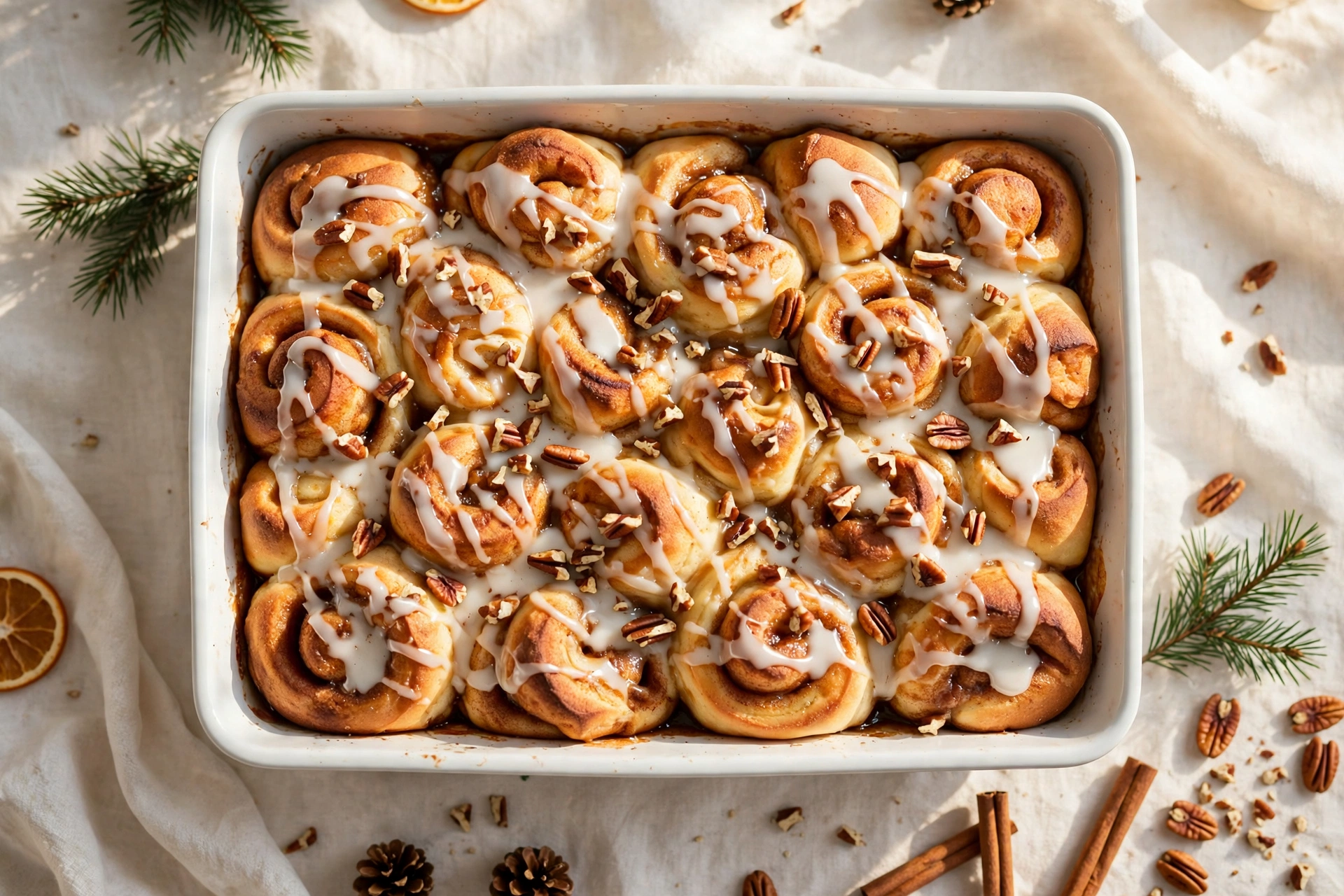
This cinnamon roll casserole works because the custard does a job plain cream cannot: eggs set as they bake, wrapping every piece of dough in a soft, sliceable structure instead of a puddle. The result eats like bread pudding built from cinnamon rolls, tender in the middle with caramelized edges.
Maple syrup is the sweetener in the custard on purpose. It dissolves completely, flavors the whole pan evenly, and reads as Christmas morning in a way plain sugar does not. Vanilla and a full teaspoon of cinnamon back it up, because the dough’s own spice gets diluted across a whole dish.
The brown sugar butter drizzle is the third working piece. It sinks between the top pieces as it bakes and caramelizes the raised edges, so the top of the pan has crisp, dark, toffee like corners against the soft center. That contrast is the whole dish.
The Rolls, the Pan and Those Little Icing Cups
You need two standard tubes of refrigerated cinnamon rolls, the 12.4 ounce size with 8 rolls in each tube, any maker. Sixteen rolls quarter into 64 pieces, which is exactly what a 9 by 13 inch dish wants: one loose layer, pieces touching but not packed.
Resist packing them down to fit. The custard needs paths between the pieces, and the pieces need room to puff. A crowded pan is the first step toward a raw center, because the middle pieces steam instead of bake.
The icing cups that come with the rolls are the topping, and they have one job: stay out of the oven. Set them on the counter when you assemble the dish, so they are at room temperature and drizzle smoothly in the morning. Icing baked on from the start turns dull and soaks in invisibly.
Kitchen scissors are the right tool for cutting the rolls. A knife drags through the spiral and smears the cinnamon filling; scissors snip clean quarters and keep the swirl intact.
One more small thing that pays off: bring the eggs and milk to room temperature while you assemble, or whisk the custard in a bowl set over warm water for a minute. Cold custard straight from the fridge pours unevenly and can leave the first pieces soaked and the last ones nearly dry.
Ingredients
- 2 tubes refrigerated cinnamon rolls with icing, 12.4 ounces each, icing cups reserved
- 4 tablespoons unsalted butter, melted
- 4 large eggs
- 3/4 cup whole milk
- 1/4 cup heavy cream
- 1/4 cup pure maple syrup
- 2 teaspoons vanilla extract
- 1 teaspoon ground cinnamon
- 1/4 teaspoon fine sea salt
- 1/3 cup packed light brown sugar
- 1/2 cup chopped pecans (optional)
Use real maple syrup, not pancake syrup. The custard is a short ingredient list and the maple is its main flavor; the imitation bottles are mostly corn syrup and will read flat against the cinnamon.
Cutting the Rolls and Pouring the Custard
- Grease a 9 by 13 inch baking dish with butter or cooking spray. Set the icing cups aside at room temperature.
- Cut each cinnamon roll into quarters with kitchen scissors and scatter the pieces in the dish in one even layer.
- Whisk the eggs, milk, cream, maple syrup, vanilla, cinnamon and salt in a large bowl until completely smooth, with no streaks of egg white.
- Pour the custard slowly over the pieces, tilting the dish so it reaches every corner. Press the top pieces down gently so they all drink.
- Stir the melted butter and brown sugar together and drizzle over the whole surface.
- For the overnight version, cover the dish tightly and refrigerate it for 8 to 12 hours. To bake right away, heat the oven to 350 degrees F while you assemble.
- In the morning, set the dish on the counter for 30 minutes while the oven heats to 350 degrees F.
- Bake for 40 to 45 minutes, 5 to 10 minutes longer from cold, until puffed and deep golden and the center passes the test in the next section but one.
- Rest the dish for 10 minutes. Warm the icing cups in the microwave for 10 seconds, drizzle the icing over the top, and scatter the pecans.
- Serve warm, cut in squares, straight from the dish.
The Overnight Window: 8 to 12 Hours, No Longer
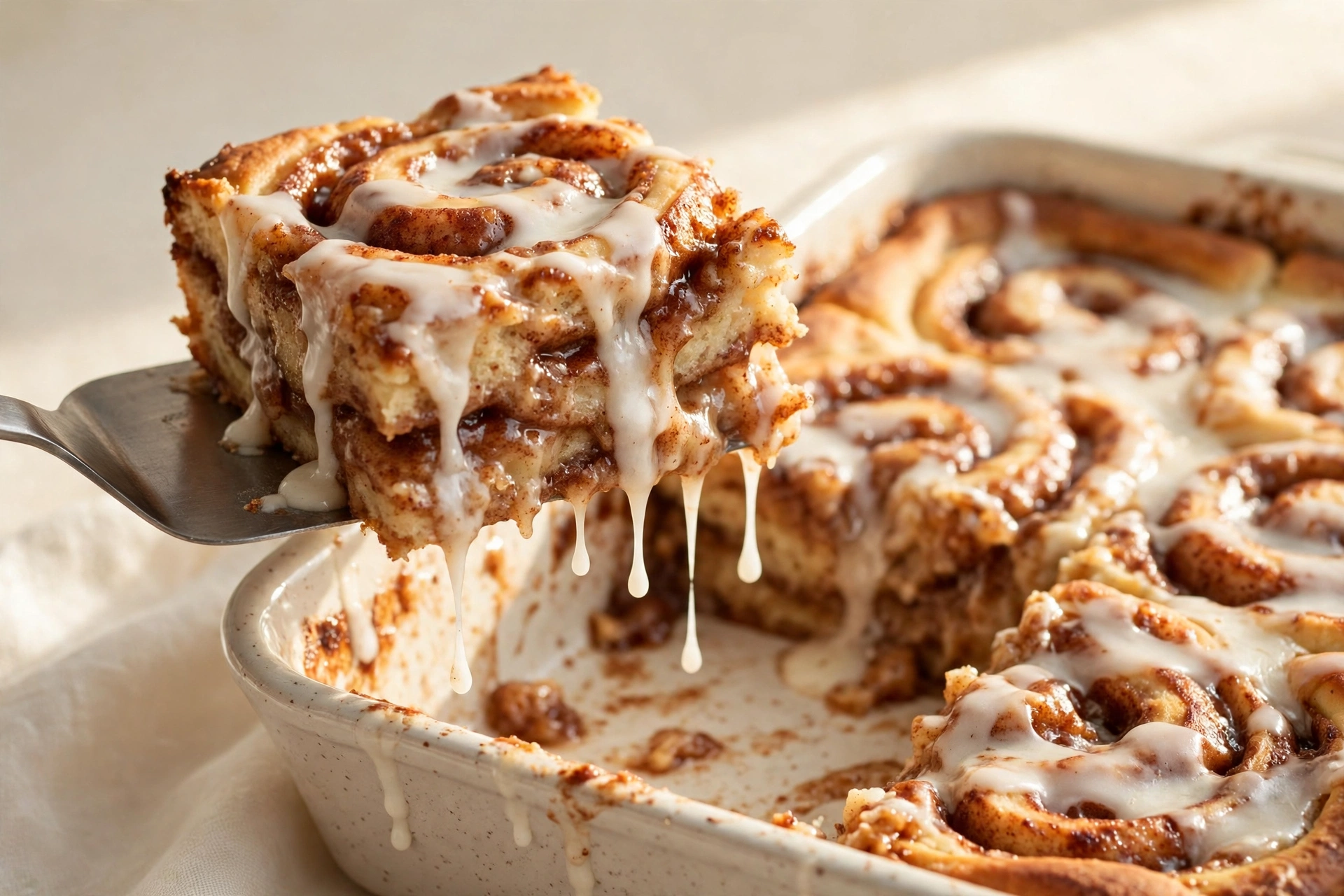
The overnight rest is what lets the custard reach the center of every piece, and 8 to 12 hours is its working window. December 24 at 9 in the evening to Christmas morning at 7 is nearly perfect.
Past 12 hours the dough starts to lose. The pieces drink past saturation, slump into each other, and bake up gummy at the bottom no matter how long the dish stays in the oven. A full 24 hour soak, which some recipes cheerfully suggest, is where this casserole goes wrong.
If your schedule slips, bake the dish in the evening and reheat it in the morning instead of stretching the soak. A baked casserole reheats beautifully; an oversoaked one never recovers.
Keep the dish on a middle fridge shelf, not the door, so the temperature stays steady, and keep it covered tightly. Raw egg custard picks up fridge odors fast, and onion flavored cinnamon rolls are nobody’s Christmas wish.
The schedule, written out: assemble at 9 in the evening on December 24 and cover the dish. On Christmas morning, take it out at 6:30 while the oven heats, bake at 7, rest and ice at 7:45, and serve at 8 with the coffee. Ninety minutes, almost none of it working time.
Baking Until the Center Passes the Jiggle Test
The edges of this casserole will look done long before the center is, which is why so many pans come out wet in the middle. Judge the dish at its center, never at its corners.
Shake the dish gently with an oven mitt. The center should move as one soft piece, like set gelatin. If it sloshes or ripples in waves, it is still liquid inside: give it 5 more minutes and test again.
For certainty, slide an instant read thermometer into the center. The custard is set at 195 degrees F. That single number has ended more soggy centers than any timer, and it takes two seconds.
If the top is browning faster than the center sets, lay a sheet of foil loosely over the dish for the last 10 minutes. The tops of the rolls are sugared and color quickly; the foil buys the center its time without burning the prize.
Rack position matters more than it gets credit for. Bake in the center of the oven, where the heat reaches the bottom of the dish evenly. A dish parked on the lowest rack scorches its base before the custard sets; a dish up high browns its sugar before the middle even warms through.
Icing Goes On Warm, Not Hot
Icing drizzled over a casserole straight from the oven melts into a glaze and slides off into the pan. It still tastes fine, but you lose the white ribbons that make the dish look like Christmas. Ten minutes of rest is the fix.
After 10 minutes the surface is warm, not searing. Warm the icing cups for 10 seconds in the microwave so the icing pours, then drizzle it back and forth in stripes. It will soften and settle into the swirls without disappearing.
The pecans go on after the icing, never before. Nuts baked on top for 45 minutes darken past pleasant, and nuts under icing lose their crunch. Scattered over the warm icing, they stay crisp and stick exactly where they land.
Half Batch and Smaller Pans for Small Tables
For a small household, halve everything: 1 tube of rolls, 2 eggs, a scant 1/2 cup of milk and cream combined, 2 tablespoons of maple syrup, and the same vanilla, cinnamon and salt amounts slightly reduced. Bake it in an 8 by 8 inch dish for 30 to 35 minutes, with the same center test.
What does not work is doubling the recipe in the same 9 by 13 dish. A double layer bakes like a deep pan: burned top, raw middle. Two separate dishes, side by side in the oven, are the correct way to feed a crowd.
For a from scratch weekend later in the season, the gingerbread cinnamon rolls take this same flavor profile into proper rolled dough, and the eggnog french toast casserole covers the other great make ahead Christmas bake on the site.
Leftovers, Reheating and the Three Day Rule
Cover the dish and refrigerate leftovers within 2 hours of baking. This is an egg custard bake, so the counter is not storage, whatever older recipes claim. Refrigerated, the casserole keeps 3 days.
Reheat a square in a 350 degree F oven for 10 minutes and the edges crisp back up. The microwave works for a weekday slice, 45 to 60 seconds, but softens the top. A few drops of water on the square before microwaving keeps it from drying at the corners.
Baked squares also freeze well for 2 months, wrapped individually. Thaw one overnight in the fridge and reheat as above. Freeze them without the pecans if you can; nuts go soft in the freezer and are better scattered fresh.
Your Cinnamon Roll Casserole Questions, Answered
How long can the assembled casserole sit in the fridge before baking?
Eight to 12 hours is the window. Assemble it after dinner on December 24 and bake it the next morning and you are in the sweet spot. Past 12 hours the dough oversoaks and the bottom bakes up gummy, even in a fully cooked pan.
Can I bake it right away without the overnight rest?
Yes. The casserole bakes in the same 40 to 45 minutes and tastes wonderful, with a slightly less custardy center where the pieces drank less deeply. If you have 30 spare minutes, even a short counter soak helps before the dish goes in.
Why is the center of my casserole soggy?
Almost always one of three causes: a soak that ran past 12 hours, a pan packed too deep, or a dish pulled when the edges looked done but the center still sloshed. Rescue an underbaked pan with 5 to 8 more minutes and the 195 degree center check next time.
My icing melted right off. What happened?
The casserole was too hot. Icing on a dish straight from the oven turns to syrup and slides into the pan. Rest the dish 10 minutes first, warm the icing cups for 10 seconds so they pour, and the ribbons will stay where you put them.
Can I use cinnamon rolls that are past their date or frozen tubes?
Thaw frozen tubes fully in the fridge first and blot any condensation off the dough; baking from frozen solid throws the timing and the custard off at once. For dough past its printed date, use your judgment as you would with any refrigerated dough, and when in doubt, buy fresh tubes for a holiday dish.
Can I add fruit to the casserole?
Yes, sturdy fruit only. A cup of diced apple or fresh cranberries tucked between the pieces before the custard goes over works beautifully. Skip juicy berries and canned fillings, which release water into the custard and bring back the soggy center you just fixed.
Christmas Morning, Handled the Night Before
A cinnamon roll casserole like this one turns Christmas morning from a shift in the kitchen into a seat by the tree. The dish is assembled, the icing is waiting, the oven does the morning’s only real work, and the cook gets to watch the first gifts open with everyone else.
Make it once and it tends to become the house rule: someone asks in mid December whether the casserole is happening again this year. That is the whole review it needs.
For the rest of the holiday brunch table, the cinnamon roll pancakes keep the same flavors on a griddle morning, any weekend of the year.
Nutrition per serving, estimated for 8 servings: Calories 430, Total Fat 18 g, Saturated Fat 7 g, Unsaturated Fat 9 g, Trans Fat 0 g, Carbohydrates 58 g, Fiber 2 g, Sugar 32 g, Protein 7 g, Sodium 560 mg, Cholesterol 115 mg. Ingredient values are informed by USDA FoodData Central.
Print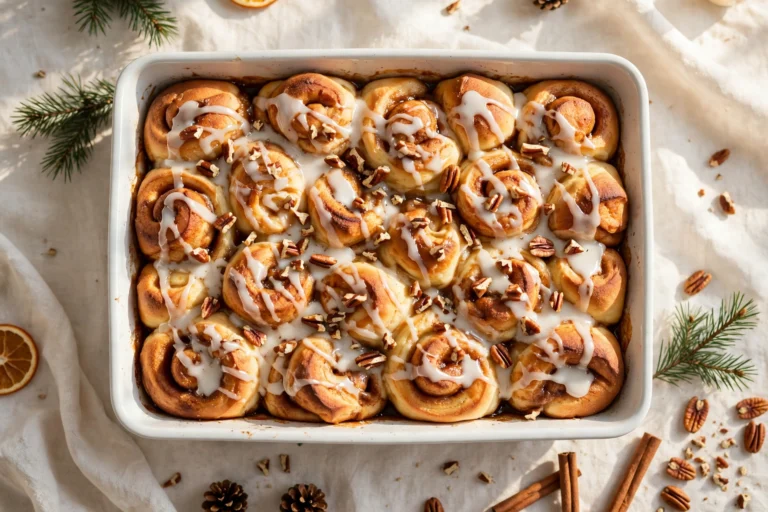
Overnight Cinnamon Roll Casserole
Quartered refrigerated cinnamon rolls soaked in a maple vanilla egg custard, drizzled with brown sugar butter and baked until the center sets, then finished with the reserved icing and pecans. Assemble it the night before and bake it in the morning; the overnight window is 8 to 12 hours.
- Total Time: 1 hour
- Yield: 8 servings 1x
Ingredients
- 2 tubes refrigerated cinnamon rolls with icing, 12.4 ounces each, icing cups reserved
- 4 tablespoons unsalted butter, melted
- 4 large eggs
- 3/4 cup whole milk
- 1/4 cup heavy cream
- 1/4 cup pure maple syrup
- 2 teaspoons vanilla extract
- 1 teaspoon ground cinnamon
- 1/4 teaspoon fine sea salt
- 1/3 cup packed light brown sugar
- 1/2 cup chopped pecans (optional)
Instructions
- Grease a 9 by 13 inch baking dish with butter or cooking spray. Set the icing cups aside at room temperature.
- Cut each cinnamon roll into quarters with kitchen scissors and scatter the pieces in the dish in one even layer.
- Whisk the eggs, milk, cream, maple syrup, vanilla, cinnamon and salt in a large bowl until completely smooth.
- Pour the custard slowly over the pieces, tilting the dish so it reaches every corner. Press the top pieces down gently so they all drink.
- Stir the melted butter and brown sugar together and drizzle over the whole surface.
- Cover the dish tightly and refrigerate for 8 to 12 hours, or bake right away.
- Set the dish on the counter for 30 minutes while the oven heats to 350 degrees F.
- Bake for 40 to 45 minutes, 5 to 10 minutes longer from cold, until puffed and deep golden and the center is set, 195 degrees F in the middle.
- Rest the dish for 10 minutes. Warm the icing cups in the microwave for 10 seconds, drizzle the icing over the top, and scatter the pecans. Serve warm, cut in squares.
- Prep Time: 15 minutes
- Cook Time: 45 minutes
Nutrition
- Serving Size: 1
- Calories: 430
- Sugar: 32
- Sodium: 560
- Fat: 18
- Saturated Fat: 7
- Unsaturated Fat: 9
- Trans Fat: 0
- Carbohydrates: 58
- Fiber: 2
- Protein: 7
- Cholesterol: 115