Snickerdoodle Cookies, Thick and Soft With Crackly Cinnamon Tops
In this article:
- The Crackle Starts Long Before the Oven
- Cream of Tartar, the Quiet Signature
- Ingredients for Snickerdoodle Cookies
- Baking Snickerdoodle Cookies, Step by Step
- Three Signs a Snickerdoodle Is Done
- Filling a Christmas Tin That Still Tastes Fresh on Day Four
- Swaps That Keep the Cookie Itself
- Soft Centers on Friday From a Monday Batch
- The Tin Everyone Opens Twice
- FAQ
The Crackle Starts Long Before the Oven
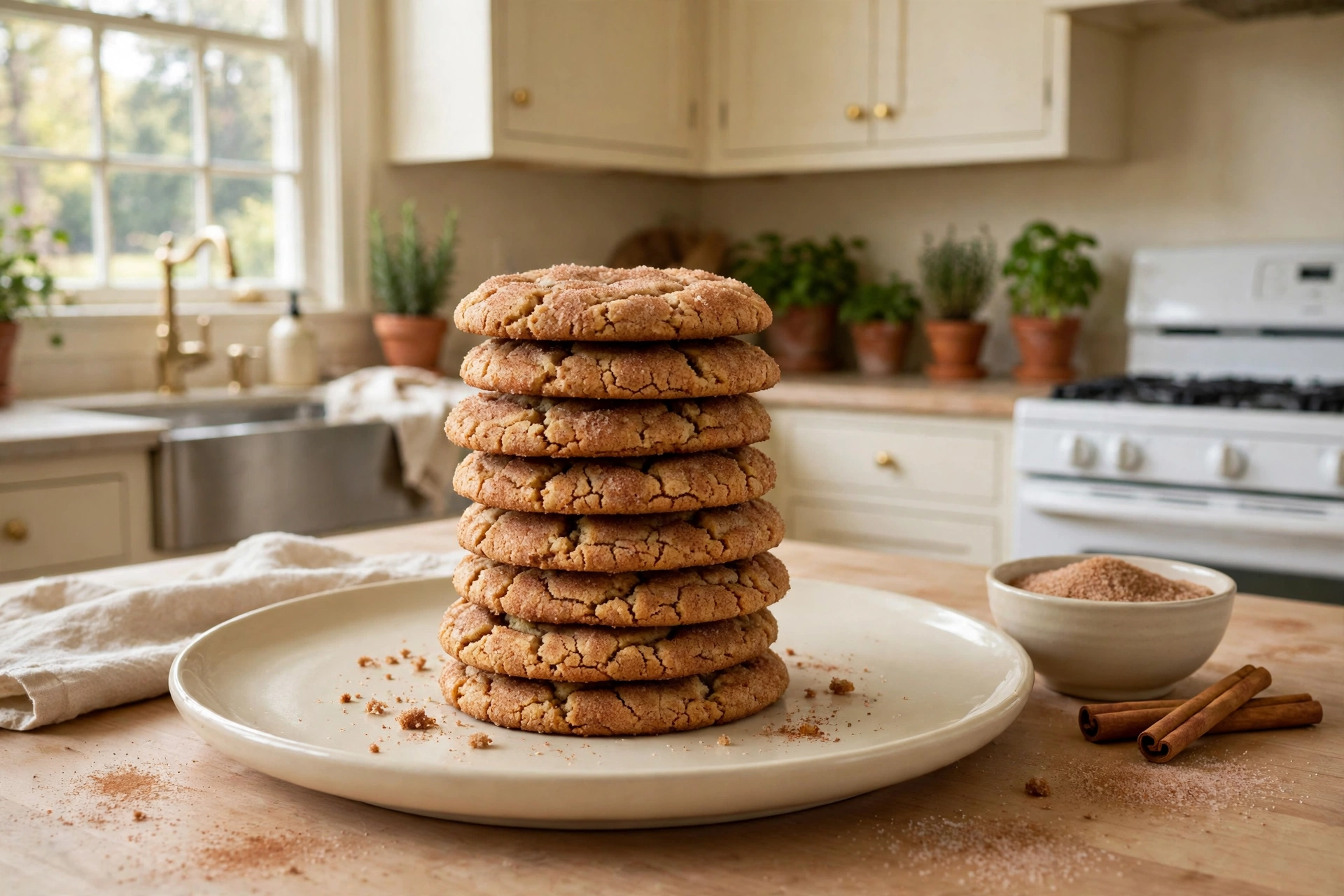
Snickerdoodle cookies announce themselves before the first bite: a sugar crust split into a dozen fine cracks, cinnamon dark in every fissure. That crackle is not luck. It is built from a stiff, well creamed dough, a double roll through cinnamon sugar, and an oven hot enough to set the edges before the center gives up its moisture.
The texture underneath the crust is the reason this cookie has survived a century of cookie tins. The center stays thick and soft, almost cake-like, while the rim firms into a delicate chew. A snickerdoodle that bakes up crisp all the way through is simply a sugar cookie wearing the wrong coat.
Most recipes get the broad strokes right and lose the details that matter. The dough here carries a pinch of cinnamon inside as well as outside, so the flavor runs through the whole cookie instead of sitting on the surface. Brown sugar joins the white, bringing moisture that keeps the centers tender on day three, not just day one.
Portioning is by weight, 30 grams a ball, because cookie size is a baking variable in disguise. Balls that match within a gram or two finish at the same minute, so one tray comes out of the oven evenly crackled instead of half pale, half dark.
And because December is coming, this batch is sized for real life: 30 cookies, enough for a full gift tin, a plate for the neighbors, and the four that never survive the cooling rack.
Cream of Tartar, the Quiet Signature
A snickerdoodle without cream of tartar is a pleasant cinnamon sugar cookie. With it, the cookie gains its signature: a faint tang at the back of the tongue that keeps the sweetness from flattening out. It is a small flavor, but it is the one people are actually remembering.
Cream of tartar also works on texture. Paired with baking soda, it gives a quick, gentle lift that puffs the balls before they spread, which is how the centers stay thick. The acid slows the browning of the crust slightly, so the crackle reads pale gold and cinnamon dark instead of tan all over.
If your jar is empty, the swap is exact, and it is the one most recipes refuse to print: replace both the cream of tartar and the baking soda with 2 teaspoons of baking powder. The cookies rise the same and crackle the same. What changes is the tang; they taste rounder and sweeter, closer to a classic sugar cookie.
Do not try to fake the tang with lemon juice or vinegar. The amounts needed to register would wet the dough and spread the cookies thin. Bake the baking powder version proudly, or put cream of tartar on the shopping list and wait a day.
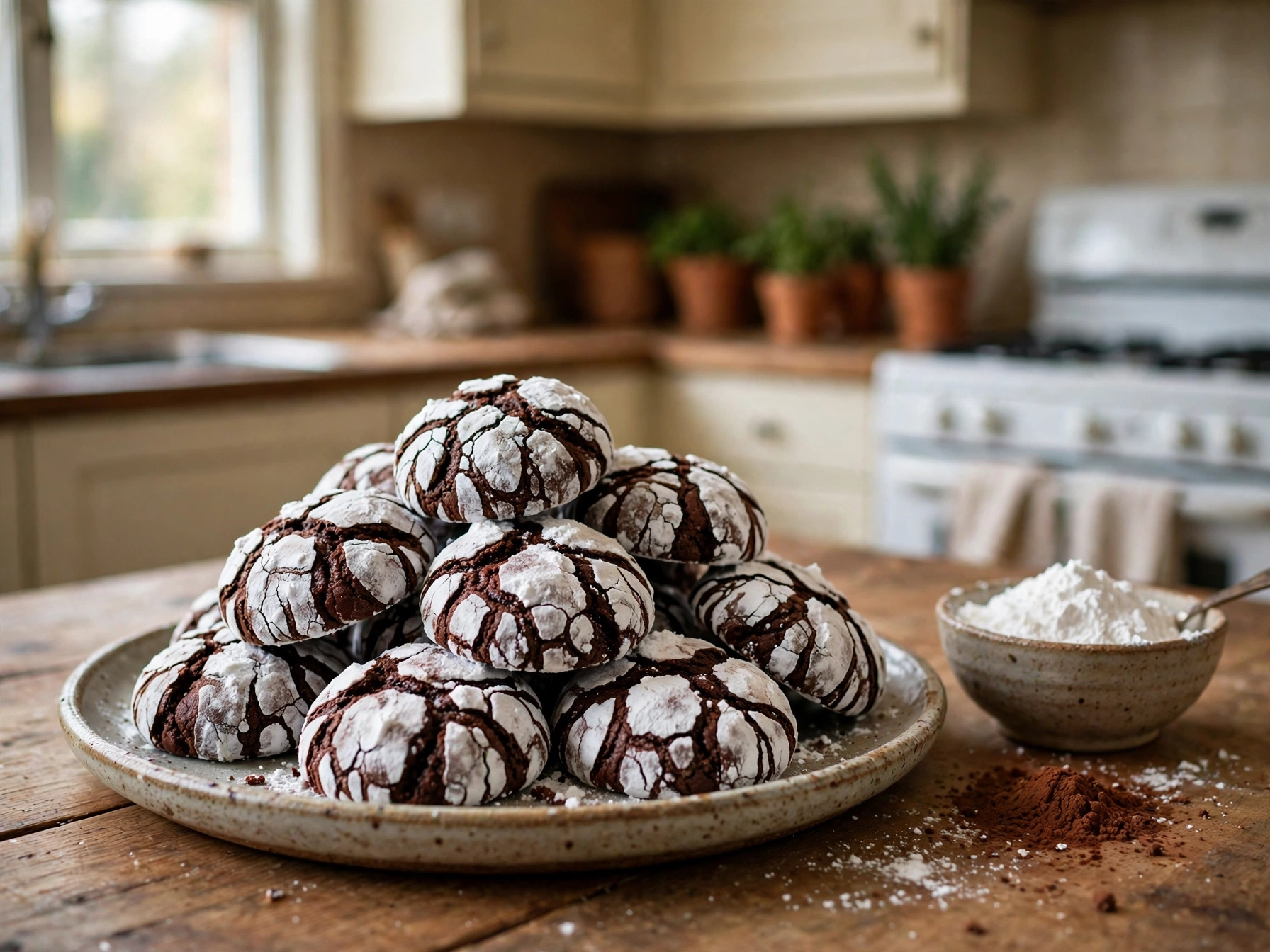
One more quiet detail: the cinnamon sugar ratio. Three parts sugar to one part cinnamon, rolled twice, gives a coat thick enough to crack into plates as the cookie expands. A single roll makes a dusting, and a dusting never crackles. Browse the cookie tray veterans on this site, from chocolate crinkle cookies to the thumbprints below, and the same rule shows up everywhere: the coating is an ingredient, not a garnish.
Ingredients for Snickerdoodle Cookies
- 2 3/4 cups (345 g) all-purpose flour
- 2 teaspoons cream of tartar
- 1 teaspoon baking soda
- 1/2 teaspoon fine sea salt
- 1/2 teaspoon ground cinnamon, for the dough
- 1 cup (225 g) unsalted butter, softened but still cool
- 1 cup (200 g) granulated sugar
- 1/3 cup (65 g) packed light brown sugar
- 1 large egg plus 1 large egg yolk, at room temperature
- 2 teaspoons vanilla extract
- For the coating: 1/4 cup (50 g) granulated sugar mixed with 1 tablespoon ground cinnamon
The extra yolk is doing quiet work. It adds richness and emulsifiers that hold moisture in the crumb, which is part of why these centers stay soft. The second white would push the cookie toward cake; one yolk pushes it toward chew.
Butter temperature matters more than butter brand. It should dent under a finger and hold its shape, around 65 degrees F. Butter that has gone soft and glossy creams into grease, and greasy dough spreads into thin, crisp disks no matter what the recipe promises.
Baking Snickerdoodle Cookies, Step by Step
- Whisk the flour, cream of tartar, baking soda, salt and the 1/2 teaspoon of cinnamon for the dough in a medium bowl until evenly combined.
- Beat the butter, granulated sugar and brown sugar together for 2 to 3 minutes, until pale, fluffy and visibly lighter. This creaming builds the air that lifts the centers.
- Beat in the egg, the yolk and the vanilla until smooth, scraping the bowl once so no butter hides at the bottom.
- Add the dry ingredients in two additions and mix on low just until the last streaks of flour disappear. Overmixing from here develops chew of the wrong kind: tough instead of tender.
- Cover and chill the dough for 30 minutes. It should feel firm and scoopable, like playdough, not sticky.
- Heat the oven to 350 degrees F and line two baking sheets with parchment. Stir the coating sugar and cinnamon together in a shallow bowl.
- Scoop the dough into 30 balls of about 30 g each. Roll each ball in the cinnamon sugar, let it sit for a breath, then roll it a second time for a thick, even coat.
- Arrange the balls 2 inches apart on the prepared sheets. Bake one sheet at a time for 9 to 11 minutes, until the edges are set, the tops are crackled and the centers still look pale, puffy and slightly soft.
- Leave the cookies on the hot sheet for exactly 5 minutes; they finish setting there. Then move them to a rack to cool completely.
Three Signs a Snickerdoodle Is Done
The baking window on the first page of search results for this cookie runs from 8 to 13 minutes and from 325 to 375 degrees F, which helps nobody. This recipe settles at 350 degrees F, and it judges doneness by three signs instead of the clock alone.
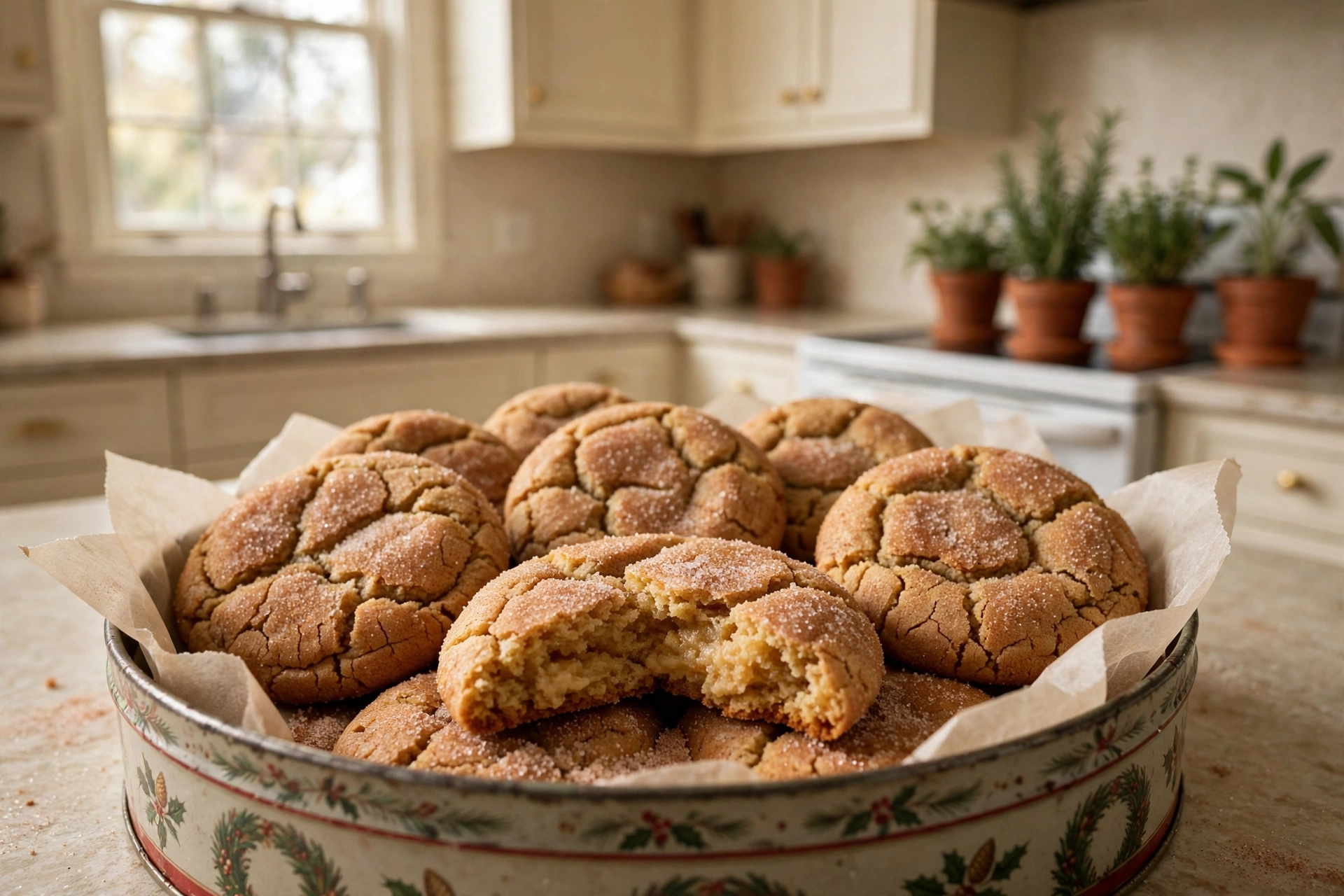
First, the edges. They should look set and matte, holding their round shape when the sheet moves. If the rim still shines like wet dough, the tray needs one more minute.
Second, the crackle. The top should be split into a web of cracks with cinnamon showing dark in the lines, while the raised islands between the cracks still look pale. A top that has browned evenly all over has gone past soft into crisp.
Third, the center. It should look puffy and slightly underdone, the way the middle of a pancake looks just before the flip. That puff settles during the 5 minutes on the hot sheet, and what remains is the thick, soft middle this cookie exists for.
The United States Department of Agriculture publishes seasonal baking guidance worth skimming in December, including safe handling for eggs and dough. Raw dough is never a snack here; the cook’s reward is the first warm cookie, fully baked.
Filling a Christmas Tin That Still Tastes Fresh on Day Four
Snickerdoodles are natural travelers. The cinnamon crust protects the soft center, there is no glaze to smear, and the flavor deepens a day after baking as the cinnamon settles in. For a cookie exchange, this recipe doubles cleanly; mix it in two batches rather than one giant one so the creaming stays effective.
The smartest December move is freezing the dough, not the cookies. Scoop and roll the balls, freeze them solid on a tray, then bag them for up to 2 months. Roll the frozen balls in cinnamon sugar and bake them straight from the freezer at the same temperature, adding 1 minute. A tin filled on December 23rd can hold cookies baked that morning.
For tins that ship, pack the cookies snugly in parchment layers with no air pockets; movement breaks more cookies than time does. Side by side with spritz cookies and a few darker spiced rounds, the pale crackled tops of snickerdoodles are what make a mixed tin look generous.
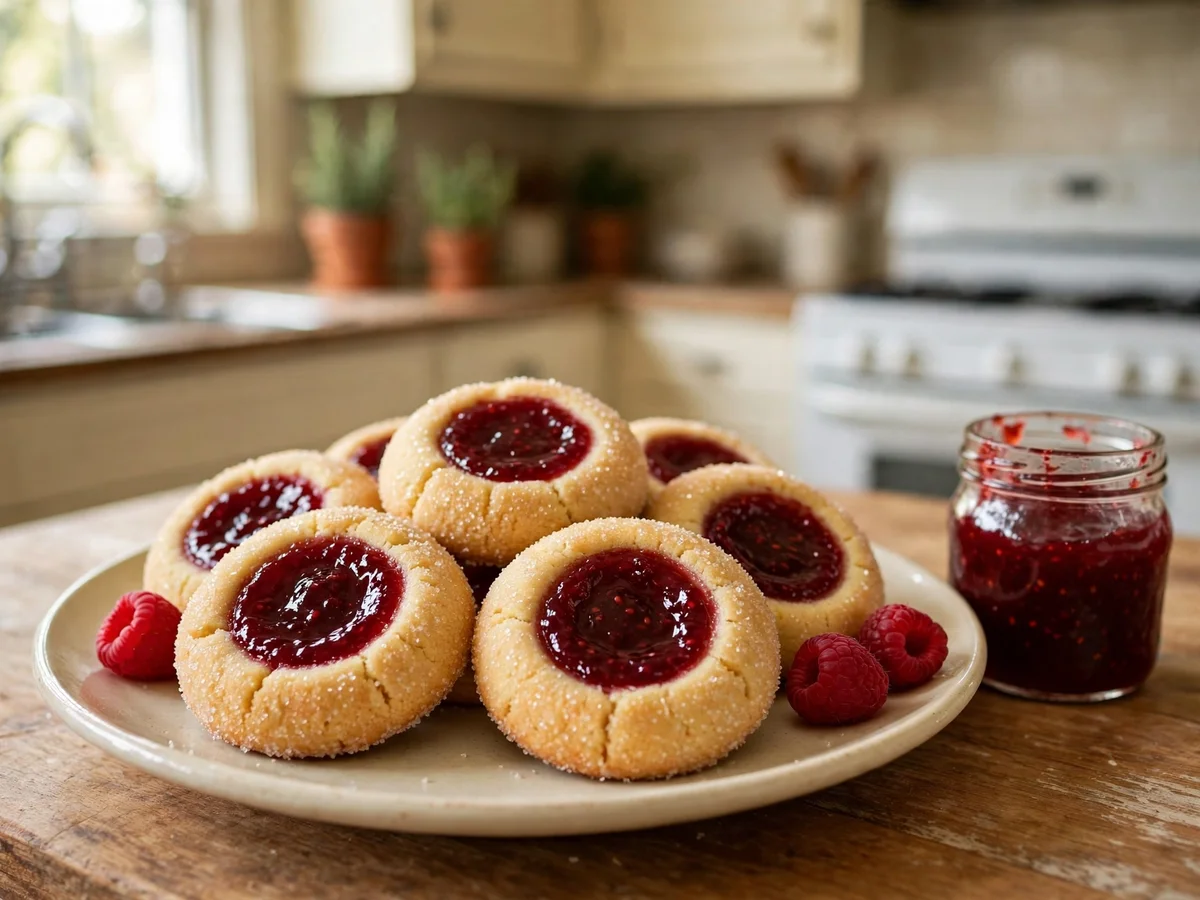
Keep one rule for the box: snickerdoodles travel alone or with sturdy neighbors. Next to delicate meringues they will scent everything with cinnamon, which some bakers call a feature. The tin below pairs them with raspberry thumbprint cookies, whose jam centers hold their own.
Swaps That Keep the Cookie Itself
Brown butter is the swap worth trying once the classic is yours. Brown half the butter, cool it until just warm, and cream it with the rest. The cookies gain a toasty depth that leans into the cinnamon, though the dough will need the full 30 minute chill since browned butter starts softer.
A chai leaning version replaces the cinnamon in the coating with 2 teaspoons of cinnamon plus a pinch each of cardamom, ginger and black pepper. Keep the dough plain in that case, so the spice stays a crust note. It is a January cookie wearing December clothes, and exchanges love it.
For a gluten free batch, a one to one gluten free flour blend with xanthan gum already included works at the same weights. The crackle forms a little less dramatically, and the chill should stretch to 45 minutes so the balls hold their height.
What not to swap: the leavening logic. Baking soda alone, with no acid, leaves a soapy edge and a flat spread, the most common failure in the comment sections of lesser recipes. If you change one thing from the formula, change the spices, never the chemistry.
Soft Centers on Friday From a Monday Batch
Baked cookies keep their soft centers for up to 4 days in an airtight container at room temperature, stored with a plain slice of sandwich bread sharing the box. The cookies take moisture from the bread slowly and evenly; change the slice when it goes stiff.
On day five and beyond, a 10 second pass through the microwave restores most of the fresh baked softness. Let the cookie stand for a minute afterward; microwaved sugar crusts burn mouths that patience would have spared.
Freeze baked cookies for up to 2 months, layered with parchment in a hard container so the crackled tops survive. Thaw them in the closed container on the counter, which keeps condensation off the crust, and they come back remarkably close to fresh.
The same storage logic keeps the rest of the December tray honest, from shortbread to gingerbread crinkle cookies: airtight, cool, and never refrigerated. Cold air dries cookies faster than the counter ever will.
The Tin Everyone Opens Twice
Snickerdoodle cookies succeed on three small disciplines: a double roll of cinnamon sugar, a center pulled from the oven while it still looks shy, and a dough cold enough to hold its height. None of them is hard. Together, they are the whole difference between a crackled, tangy, soft centered classic and a plain sugar cookie in costume.
Bake a tray this week to learn the doneness signs, then freeze a bag of dough balls for December. Your future self, filling a tin on a busy evening, will be grateful.
FAQ
What can I use instead of cream of tartar in snickerdoodle cookies?
Replace both the cream of tartar and the baking soda with 2 teaspoons of baking powder, and leave every other ingredient unchanged. The cookies rise and crackle the same way, but they lose the faint tang that makes a snickerdoodle taste like itself, finishing rounder and sweeter, closer to a sugar cookie.
Why did my snickerdoodle cookies spread flat?
Flat snickerdoodles almost always trace back to warm butter or skipped chilling. Butter that looks glossy has already melted into the sugar, and the dough spreads before the edges can set. Cream butter that dents but holds its shape, chill the mixed dough for the full 30 minutes, and bake one sheet at a time.
Can I freeze snickerdoodle dough balls for Christmas baking?
Yes, and it is the best way to bake them fresh in December. Scoop and roll the balls, freeze them solid on a tray, then bag them for up to 2 months. Roll the frozen balls in cinnamon sugar and bake straight from the freezer at 350 degrees F, adding about 1 minute to the baking time.
Why did the tops of my snickerdoodles not crackle?
The crackle needs a thick sugar coat and a dough firm enough to expand against it. Roll each ball in the cinnamon sugar twice, and do not skip the chill; warm, sticky dough absorbs the coating instead of splitting it. A top that stays smooth usually means the coat was a single light dusting.
How do I keep snickerdoodle cookies soft in a gift tin?
Cool the cookies completely before the lid goes on, pack them snugly in parchment layers, and add a plain slice of sandwich bread to the tin. Stored that way they stay soft for up to 4 days. Replace the bread slice when it turns stiff, and never refrigerate the tin, since cold air dries the centers.

Snickerdoodle Cookies
Thick, soft snickerdoodle cookies with the classic cream of tartar tang, a pinch of cinnamon inside the dough and a double roll of cinnamon sugar outside, so the tops bake up deeply crackled. The dough balls freeze for up to 2 months for fresh Christmas baking.
- Total Time: 1 hour 10 minutes
- Yield: 30 cookies 1x
Ingredients
- 2 3/4 cups (345 g) all-purpose flour
- 2 teaspoons cream of tartar
- 1 teaspoon baking soda
- 1/2 teaspoon fine sea salt
- 1/2 teaspoon ground cinnamon, for the dough
- 1 cup (225 g) unsalted butter, softened but still cool
- 1 cup (200 g) granulated sugar
- 1/3 cup (65 g) packed light brown sugar
- 1 large egg plus 1 large egg yolk, at room temperature
- 2 teaspoons vanilla extract
- 1/4 cup (50 g) granulated sugar, for the coating
- 1 tablespoon ground cinnamon, for the coating
Instructions
- Whisk the flour, cream of tartar, baking soda, salt and the 1/2 teaspoon of cinnamon for the dough in a medium bowl until evenly combined.
- Beat the butter, granulated sugar and brown sugar for 2 to 3 minutes, until pale and fluffy. Beat in the egg, the yolk and the vanilla until smooth, scraping the bowl once.
- Add the dry ingredients in two additions and mix on low just until the last streaks of flour disappear. Cover and chill the dough for 30 minutes, until firm and scoopable.
- Heat the oven to 350 degrees F and line two baking sheets with parchment. Stir the coating sugar and cinnamon together in a shallow bowl.
- Scoop the dough into 30 balls of about 30 g each. Roll each ball in the cinnamon sugar, pause, then roll it a second time for a thick, even coat.
- Arrange the balls 2 inches apart on the prepared sheets and bake one sheet at a time for 9 to 11 minutes, until the edges are set, the tops are crackled and the centers still look pale, puffy and slightly soft.
- Leave the cookies on the hot sheet for 5 minutes to finish setting, then move them to a rack to cool completely.
Notes
Nutrition is an estimate based on the ingredients and cooking methods used.
- Prep Time: 20 minutes
- Cook Time: 10 minutes
Nutrition
- Serving Size: 1 cookie
- Calories: 130
- Sugar: 11
- Sodium: 115
- Fat: 6
- Saturated Fat: 4
- Unsaturated Fat: 2
- Trans Fat: 0
- Carbohydrates: 19
- Fiber: 0
- Protein: 1
- Cholesterol: 30