

Chocolate Truffles, Silky Ganache Rolled in Cocoa
In this article:
- Why These Chocolate Truffles Set With Two Ingredients and One Ratio
- Dark, Dense and Slow Melting
- Bar Chocolate, Not Chips: Choosing What Melts Clean
- Ingredients for Chocolate Truffles
- How to Make Chocolate Truffles, Step by Step
- Split, Soft or Stubborn: Ganache Troubleshooting
- Five Clean Flavors, All Without a Drop of Alcohol
- Rolling Without Melting: Cold Hands, Small Scoops, a Second Chill
- The Christmas Gift Plan: Boxes, Freezing and Serving Temperature
- A Small Box That Carries the Whole Season
- FAQ
Why These Chocolate Truffles Set With Two Ingredients and One Ratio
Chocolate truffles are nothing but ganache with a job to do. Ganache is chocolate and cream stirred into an emulsion, and whether that emulsion rolls into firm little balls or stays a glossy puddle depends on a single decision: the ratio between the two.
This recipe uses 12 ounces of chocolate to 3/4 cup of cream, roughly two parts chocolate to one part cream by weight. That proportion gives a ganache that chills firm enough to scoop and roll, then softens on the tongue at body temperature, which is the entire pleasure of a truffle.
The ratio is not a law, it is a dial, and the dial moves with your chocolate. A bar at 70 percent cacao carries more cocoa butter and less sugar, so it sets firmer in the same proportion. A bar at 60 percent sets softer, and wants either a spoonful less cream or an extra ounce of chocolate to land in the same place.
Everything else in the method protects that emulsion: chocolate chopped fine so it melts evenly, cream heated to steaming and never boiled, a full minute of patience before stirring, and stirring that starts in the center of the bowl and widens slowly. Get those four things right and the recipe is nearly impossible to break.
Dark, Dense and Slow Melting
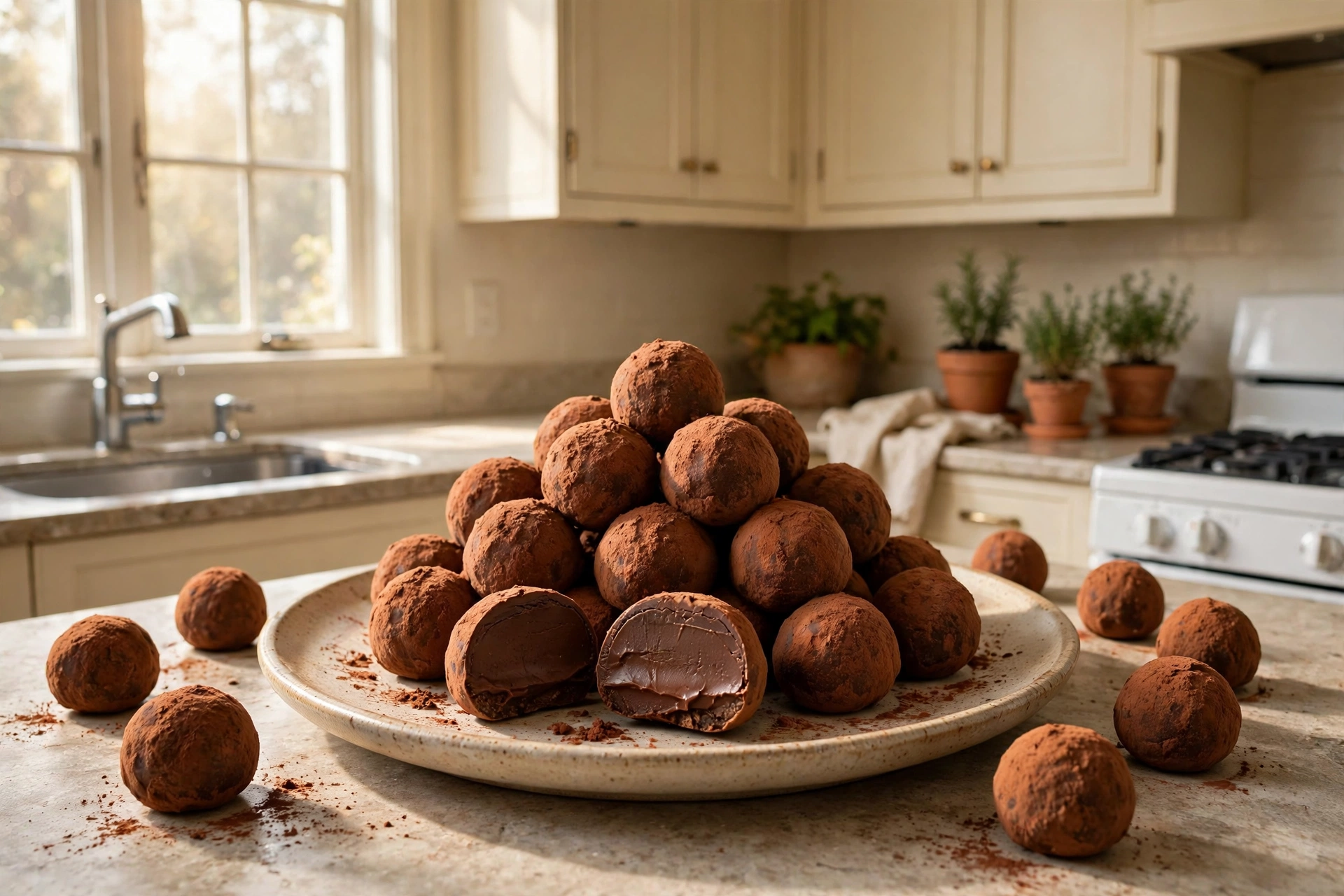
A good truffle does not snap or chew; it yields, then melts at exactly the speed of warmth in your mouth. The center should feel cool for one second and then turn liquid, leaving the flavor behind in a slow wave rather than a sugary flash.
That is why the chocolate itself is the flavor here, not a supporting player. With two main ingredients there is nowhere for a mediocre bar to hide. Choose a chocolate you would happily eat plain, at 60 to 70 percent cacao, with a taste that is deep and round rather than sharp.
Butter, just three tablespoons, is the quiet third ingredient. It adds a softness to the set and a shine to the cut surface, the difference between a truffle that looks rustic and one that looks like it came from a chocolatier’s case.
The classic coating, a plain roll in cocoa powder, is bitterness by design. It keeps the sweetness in check, keeps your fingers clean for the first second, and gives the truffle its traditional, slightly dusty elegance. The fancier coatings are lovely, but the cocoa one is the benchmark.
Bar Chocolate, Not Chips: Choosing What Melts Clean
Chocolate chips are engineered to hold their shape in a hot oven, which makes them exactly wrong for ganache. They carry stabilizers and less cocoa butter than bar chocolate, and a ganache made from chips can set grainy, taste waxy and refuse to melt smoothly no matter how carefully you stir.
Bar chocolate is made to melt. Chop it fine, into pieces no bigger than a pea, and the hot cream will take it the rest of the way without any direct heat. Uneven chunks are the main reason a ganache ends up with stubborn flecks of unmelted chocolate in it.
The percentage on the wrapper is your firmness forecast. At 70 percent, expect a firm, intense truffle that rolls easily and keeps a clean edge. At 60 percent, expect a softer, sweeter center that needs its full chill and gentle hands. Both are correct; they are simply two different candies.
Salt deserves its quarter teaspoon. It does not make the truffles taste salty; it makes the chocolate taste more like chocolate, the same way it sharpens a caramel or a cookie. Leave it out and the whole batch tastes strangely flat, although nobody can say why.
Ingredients for Chocolate Truffles
- 12 ounces dark chocolate, 60 to 70 percent cacao, finely chopped, about 2 cups
- 3/4 cup heavy cream
- 3 tablespoons unsalted butter, at room temperature
- 1 teaspoon vanilla extract
- 1/4 teaspoon fine sea salt
- 1/3 cup unsweetened cocoa powder, for rolling
- Optional coatings: 1/2 cup finely chopped pistachios, 1/2 cup finely shredded coconut, or 1/2 cup crushed peppermint candy
How to Make Chocolate Truffles, Step by Step
- Chop the chocolate finely, into pieces no bigger than a pea, and put it in a medium heatproof bowl with the butter and the salt. Small, even pieces melt at the same speed, which is what keeps the ganache smooth.
- Pour the cream into a small saucepan and heat it over medium heat until it steams and small bubbles form around the edges, about 3 to 4 minutes. Do not let it boil; boiling cream can make the finished ganache taste cooked and can break the emulsion.
- Pour the hot cream over the chocolate all at once. Let the bowl sit undisturbed for 1 full minute. This patience lets the chocolate melt from the inside before you touch it, and it is the step most people rush.
- Stir slowly with a spatula, starting with small circles in the very center of the bowl and widening gradually as the center turns glossy. Keep going until the ganache is completely smooth and shiny, then stir in the vanilla extract.
- Pour the ganache into a shallow dish so it chills evenly. Press a piece of plastic wrap directly onto the surface to keep condensation off, and refrigerate for at least 2 hours, until firm enough to hold the mark of a spoon.
- Line a baking sheet with parchment paper. Scoop the ganache with a small cookie scoop or a teaspoon into portions of about 2 teaspoons each, and set them on the sheet without rolling yet.
- Chill the scoops for 15 minutes. Then, with cool hands, roll each portion quickly between your palms into a ball, working fast because ganache melts at body temperature. Return the balls to the sheet as you go.
- Roll each ball in cocoa powder, or in the coating of your choice, until covered. Chill the finished truffles for at least 30 minutes more, then move them to a covered container in the refrigerator until serving.

Split, Soft or Stubborn: Ganache Troubleshooting
A split ganache looks greasy and separated, with fat beading on the surface. It usually means the cream was boiling hot or the mixture was stirred too hard while it was still very warm. The rescue is warmth and patience: stir in warm milk one tablespoon at a time, slowly, until the emulsion comes back together and turns glossy again.
A ganache that stays soft after a full chill is a ratio problem, not a patience problem. Either the chocolate was milder than 60 percent or a little extra cream slipped in. Melt the whole batch gently, stir in 2 more ounces of finely chopped chocolate, and chill it again. It will set on the second round.
A ganache that turns too firm to scoop has simply gone too cold, which is the easiest problem of the three. Leave the dish on the counter for 20 to 30 minutes and test it again. You want it to yield to a spoon with slight resistance, like cold butter, not like fudge.
Graininess almost always comes from undissolved chocolate or from water. A single drop of water in the bowl can seize the surface, and chunks that never melted stay as grit. Chop finer next time, let the bowl rest its full minute, and keep every tool bone dry from the start.
Five Clean Flavors, All Without a Drop of Alcohol
Many classic truffle recipes lean on liqueurs for their flavor, and it leaves a real gap at the table for anyone who does not drink. The good news is that ganache takes flavor beautifully from ingredients with no alcohol at all, and several of them taste brighter than the traditional versions.
Vanilla is the base recipe here, doubled if you want it forward. Espresso is the strongest partner chocolate has: stir 2 teaspoons of instant espresso powder into the hot cream and the chocolate flavor deepens without tasting of coffee. Peppermint takes just 1/2 teaspoon of peppermint extract, added with the vanilla, and wants the crushed candy coating.
Orange is the elegant one: add 2 teaspoons of finely grated orange zest to the cream before heating, and strain the cream over the chocolate so the zest stays behind and only the perfume goes through. Warm spice, meaning 1/2 teaspoon of cinnamon and a pinch of cardamom whisked into the chopped chocolate, turns the same batch toward winter.
Flavor the ganache while it is warm, always, and taste before it chills. Cold dulls flavor, so season the warm ganache a touch bolder than your target, the same way you salt mashed potatoes before the refrigerator gets to them.
Rolling Without Melting: Cold Hands, Small Scoops, a Second Chill
Ganache melts at body temperature, which means your palms are both the tool and the problem. Run cold water over your hands and dry them well before you start, and repeat whenever the chocolate starts to smear instead of roll. Cool hands buy you about twice the working time.
Portion first, roll second. Scooping the whole batch into rough portions and chilling them for 15 minutes means each ball needs only three or four seconds of rolling to turn round. Trying to scoop and roll a melting scoop in one motion is where most of the mess comes from.
If the batch warms up and the balls start to slump, stop. Put the whole tray back in the refrigerator for 15 minutes and make tea. Ganache is patient, and a second chill costs nothing but time, while forcing warm ganache costs you the texture of every truffle that follows.
Coat immediately after rolling, while the surface is at its most receptive, and sift the cocoa powder rather than dumping it. A light, even dusting looks like velvet; a heavy one tastes dusty and hides the truffle completely.
The Christmas Gift Plan: Boxes, Freezing and Serving Temperature
Truffles are the rare Christmas gift that improves with planning. The ganache can be made on a Sunday, rolled on Monday, and boxed through the week, and a batch of 36 fills three boxes of 12 or six boxes of 6, which covers a respectable gift list from one quiet afternoon.
In the refrigerator, finished truffles keep for up to 2 weeks in a covered container, separated by parchment so the coatings stay clean. For anything longer, freeze them on a tray until solid, then bag them for up to 3 months. Thaw them overnight in the refrigerator, still covered, so condensation lands on the container and not on the cocoa.
Serve them cool, not cold. Thirty minutes out of the refrigerator is the sweet spot: the coating stays neat, the center softens to its melting point, and the flavor opens up. Straight from the fridge they taste muted and firm; an hour too long on a warm counter and they start to slump.
For storage times on cream based foods generally, the USDA cold storage chart is the plain, reliable reference, and it is worth a look before any homemade candy changes hands at the holidays.
A Small Box That Carries the Whole Season
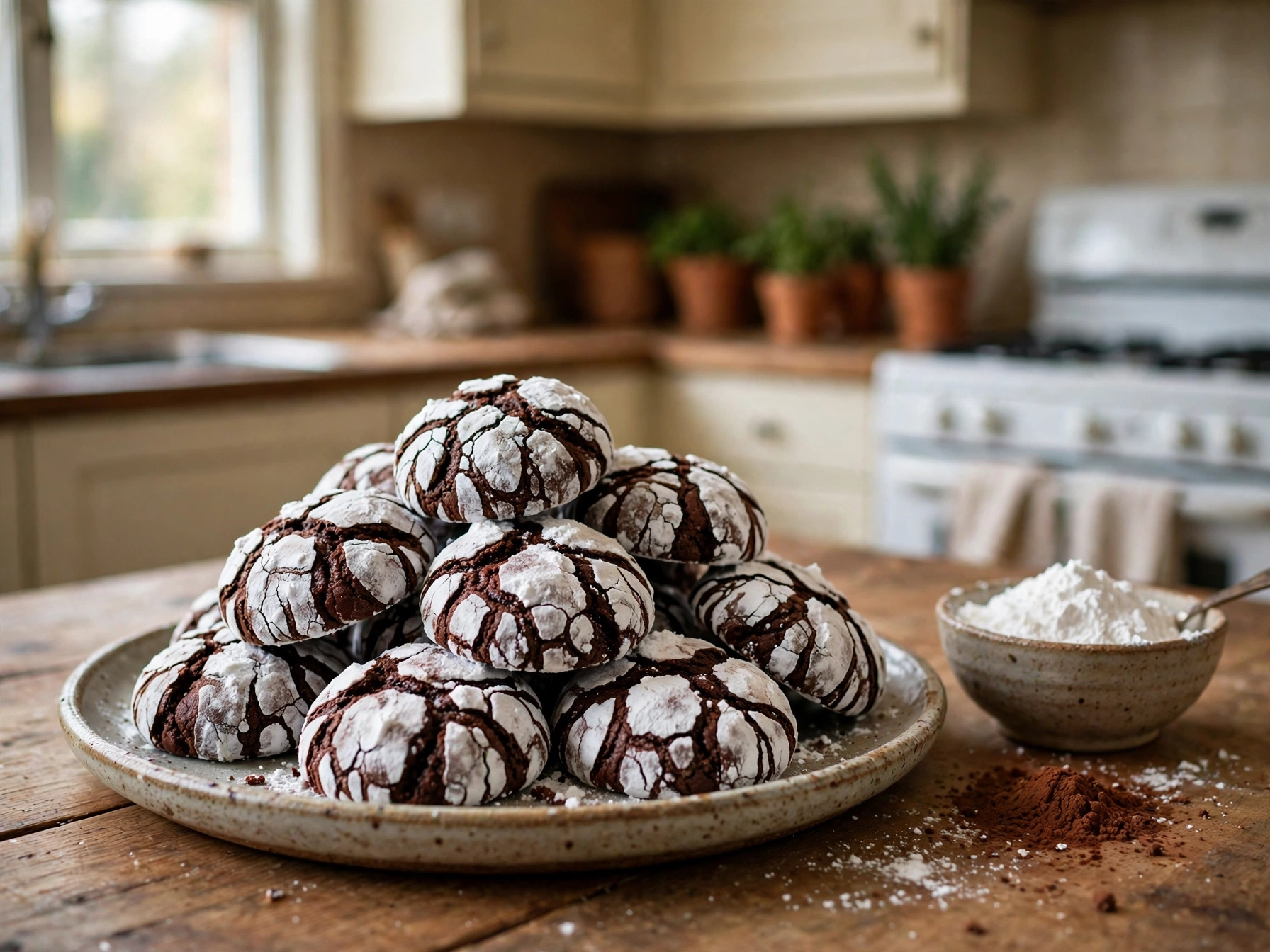
A box of these truffles holds its own next to the whole Cookaza Christmas collection. Set them out with our chocolate crinkle cookies and a slice of christmas stollen, add a plate of our hot chocolate cookies beside them, and the cookie box is suddenly a dessert table.
They also finish the season’s other candy properly. Our peppermint white chocolate fudge is sweet and bright; these truffles are its dark, quiet counterpart, and a gift box that holds both looks like it was planned by someone who thinks in pairs.
Make one batch with the ratio respected, the hands cold and the flavors clean, and you will understand why chocolatiers build whole shops on two ingredients. The simplest candy of the season is also the one people remember in January.
FAQ
Can I make chocolate truffles with chocolate chips instead of a bar?
You can, but the texture suffers. Chips contain stabilizers that help them hold their shape in the oven, and a ganache made from them can set grainy and taste waxy. Bar chocolate at 60 to 70 percent cacao melts clean and gives the smooth, slow melting center a truffle is supposed to have.
My ganache split and looks greasy. Can it be saved?
Almost always, yes. Warm the bowl slightly and stir in warm milk one tablespoon at a time, slowly and gently, until the mixture comes back together and turns glossy. Splitting usually comes from boiling cream or hard stirring while the ganache was very hot, so keep the cream at a steam and the stirring slow next time.
The ganache is still too soft to roll after chilling overnight. What went wrong?
The ratio shifted, usually because the chocolate was milder than 60 percent or a little extra cream went in. Melt the ganache gently, stir in 2 more ounces of finely chopped chocolate, and chill it again for at least 2 hours. It sets firmly on the second chill.
How do I keep the truffles from melting in my hands while I roll them?
Run cold water over your hands and dry them well before starting, and scoop all the portions first, then chill them for 15 minutes so each ball needs only a few seconds of rolling. If the batch warms up and starts to smear, put the whole tray back in the refrigerator for 15 minutes instead of pushing on.
How long do homemade chocolate truffles keep, and can I freeze them?
In a covered container in the refrigerator they keep for up to 2 weeks. For longer storage, freeze them solid on a tray, then bag them for up to 3 months, and thaw them overnight in the refrigerator, still covered. Let them stand at room temperature for 30 minutes before serving so the centers soften.

Chocolate Truffles
Finely chopped dark chocolate and hot cream stirred into a glossy ganache with butter, vanilla and a pinch of salt, chilled until firm, then scooped, rolled with cold hands and dusted in cocoa. The ratio keeps the centers firm enough to roll and soft enough to melt on the tongue, and every flavor in the batch is alcohol free.
- Total Time: 2 hours 30 minutes
- Yield: 36 truffles 1x
Ingredients
- 12 ounces dark chocolate, 60 to 70 percent cacao, finely chopped, about 2 cups
- 3/4 cup heavy cream
- 3 tablespoons unsalted butter, at room temperature
- 1 teaspoon vanilla extract
- 1/4 teaspoon fine sea salt
- 1/3 cup unsweetened cocoa powder, for rolling
- Optional coatings: 1/2 cup finely chopped pistachios, 1/2 cup finely shredded coconut, or 1/2 cup crushed peppermint candy
Instructions
- Chop the chocolate finely, into pieces no bigger than a pea, and put it in a medium heatproof bowl with the butter and the salt. Small, even pieces melt at the same speed, which is what keeps the ganache smooth.
- Pour the cream into a small saucepan and heat it over medium heat until it steams and small bubbles form around the edges, about 3 to 4 minutes. Do not let it boil; boiling cream can make the finished ganache taste cooked and can break the emulsion.
- Pour the hot cream over the chocolate all at once. Let the bowl sit undisturbed for 1 full minute. This patience lets the chocolate melt from the inside before you touch it, and it is the step most people rush.
- Stir slowly with a spatula, starting with small circles in the very center of the bowl and widening gradually as the center turns glossy. Keep going until the ganache is completely smooth and shiny, then stir in the vanilla extract.
- Pour the ganache into a shallow dish so it chills evenly. Press a piece of plastic wrap directly onto the surface to keep condensation off, and refrigerate for at least 2 hours, until firm enough to hold the mark of a spoon.
- Line a baking sheet with parchment paper. Scoop the ganache with a small cookie scoop or a teaspoon into portions of about 2 teaspoons each, and set them on the sheet without rolling yet.
- Chill the scoops for 15 minutes. Then, with cool hands, roll each portion quickly between your palms into a ball, working fast because ganache melts at body temperature. Return the balls to the sheet as you go.
- Roll each ball in cocoa powder, or in the coating of your choice, until covered. Chill the finished truffles for at least 30 minutes more, then move them to a covered container in the refrigerator until serving.
Notes
Nutrition is an estimate based on the ingredients and cooking methods used.
- Prep Time: 25 minutes
- Cook Time: 5 minutes
Nutrition
- Serving Size: 1 truffle
- Calories: 78
- Sugar: 5
- Sodium: 12
- Fat: 6
- Saturated Fat: 4
- Unsaturated Fat: 2
- Trans Fat: 0
- Carbohydrates: 6
- Fiber: 1
- Protein: 1
- Cholesterol: 8
1 thought on “Chocolate Truffles, Silky Ganache Rolled in Cocoa”