Beef Tenderloin With Garlic Herb Butter, Roasted to a Pink Center
In this article:
- Why Salting the Beef Tenderloin a Day Ahead Changes Everything
- Center Cut or Whole: What to Ask the Butcher
- Ingredients for the Roast, the Horseradish Cream and the Mushroom Pan Sauce
- How to Roast Beef Tenderloin, Step by Step
- The Temperature Table: Pull Temps, Resting Rise and Final Numbers
- Horseradish Cream and Mushroom Pan Sauce, Two Finishes Built for This Roast
- Christmas Day Timing: Out of the Fridge at Noon, Sliced When the Sides Reheat
- Grey Band, Dry Tail, Pale Crust: Tenderloin Fixes
- The Day After the Roast: Cold Slices, a Quick Sear and the Sandwich Plan
- A Centerpiece That Lets the Cook Sit Down Too
- FAQ
Beef tenderloin is the Christmas roast that behaves. It cooks in about half an hour, slices like butter, and needs no carving heroics at the table. The meat itself does the impressing; the cook only has to protect it from the one mistake it cannot forgive, overcooking.
This version leans on three habits: salt a full day ahead, a hard sear before the oven, and a thermometer trusted over any clock. The result is a deep brown crust, a pink center from end to end, and slices that stay juicy under a spoonful of horseradish cream.
It is also calmer than it looks. The butter, the sauce components and the tying all happen before guests arrive, and the timeline further down runs the whole roast from fridge to platter without a single decision left to Christmas Day.
Why Salting the Beef Tenderloin a Day Ahead Changes Everything
Beef tenderloin is the tenderest cut on the animal and one of the leanest, which makes it a poor candidate for guesswork. Salt applied 24 hours ahead seasons it to the center instead of just the surface, and that depth is the difference between good meat and memorable meat.
The uncovered rest in the refrigerator does a second job. The surface dries until it feels tacky, and a dry surface is what sears. Wet meat steams in the pan for the first minutes, and steaming is how expensive roasts end up grey.
The third habit is restraint in the oven. This cut carries almost no internal fat or connective tissue to protect it, so it rewards a thermometer and punishes a timer. Pull it at the right number and the roast is silky; ten degrees past and no sauce can save it.
The garlic herb butter earns its place twice. Half goes under the roast before searing for insurance, and half melts over the slices at serving, carrying the rosemary and thyme through every bite instead of leaving them stranded on the crust.
Center Cut or Whole: What to Ask the Butcher
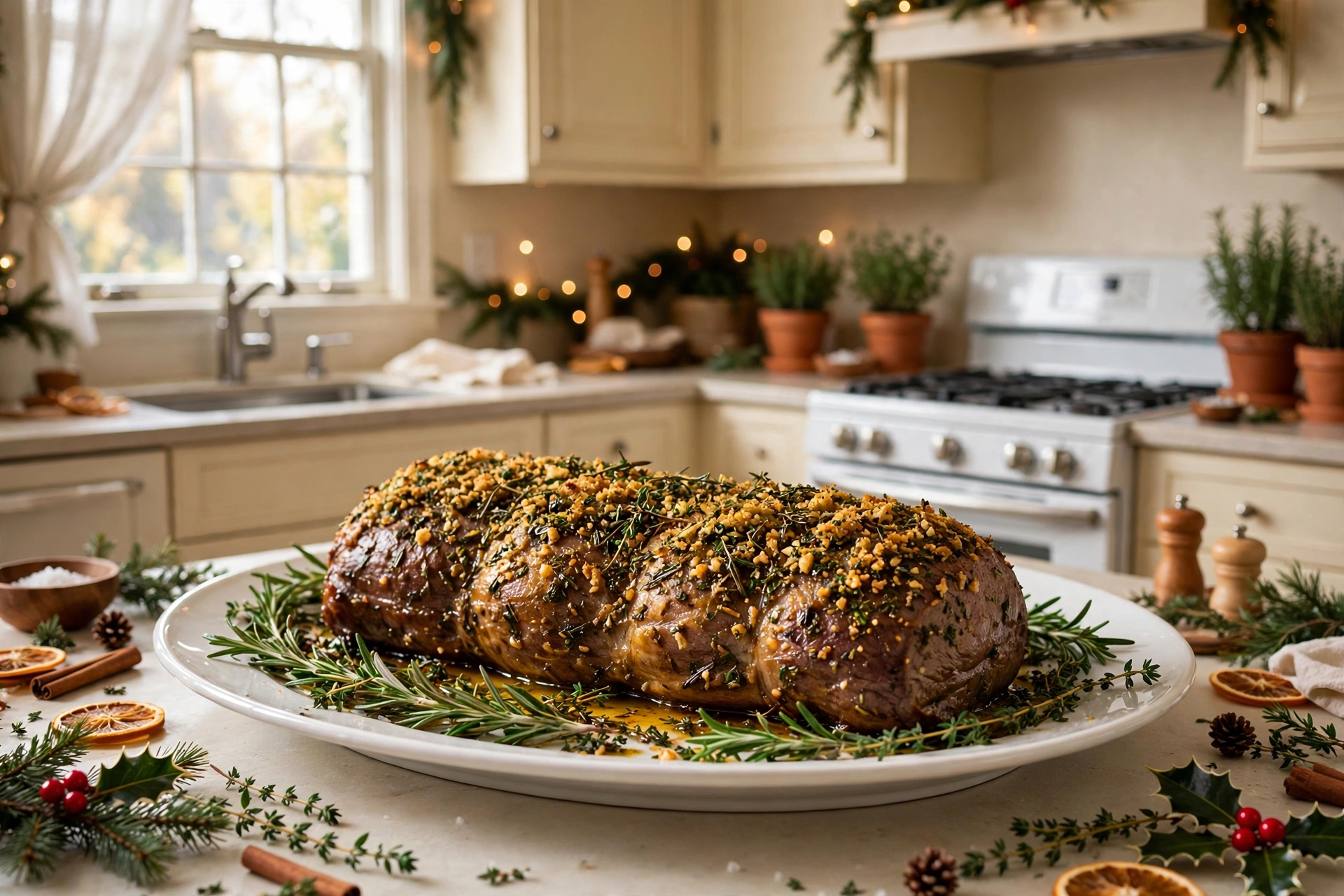
Ask for a center cut tenderloin roast, trimmed, with the silver skin removed and the tail tucked and tied. The center cut is the even, thick middle of the muscle, and even thickness is what cooks evenly. A whole tenderloin tapers, and the thin end always finishes first.
The silver skin matters more than it looks. That pale membrane does not render, and left in place it tightens in the heat and curls the roast. A butcher removes it in under a minute with a thin knife, and the request is completely standard.
Plan on about 8 ounces of raw tenderloin per adult. A 4 pound center cut serves 8 people generously, with a slice or two left for the next day, which this recipe considers a feature rather than an accident.
Buying two days ahead suits the method perfectly. The first day is for salting, so a roast bought on December 23 and salted that evening is on schedule for Christmas dinner without any special trip.
Ingredients for the Roast, the Horseradish Cream and the Mushroom Pan Sauce
- 1 center cut beef tenderloin roast, 4 pounds, trimmed and tied
- 2 tablespoons kosher salt
- 2 teaspoons coarsely ground black pepper
- 2 tablespoons neutral oil with a high smoke point
- 6 tablespoons unsalted butter, softened
- 3 garlic cloves, grated to a paste
- 1 tablespoon finely chopped fresh rosemary
- 1 tablespoon fresh thyme leaves
- 1 cup sour cream
- 3 tablespoons prepared horseradish, drained
- 1 teaspoon Dijon mustard
- 1 teaspoon lemon juice
- 2 tablespoons finely snipped fresh chives
- 8 ounces cremini mushrooms, sliced
- 1 small shallot, finely minced
- 1 cup low-sodium beef broth
- 1 teaspoon cornstarch stirred into 1 tablespoon cold water
- 2 tablespoons unsalted butter, cold
The pepper goes on just before searing, not with the salt the day before. Pepper left sitting overnight dulls, while fresh pepper blooms in the hot pan and perfumes the crust.
Prepared horseradish varies widely in strength from jar to jar. Taste the cream before serving and add a fourth tablespoon if yours is mild; the sauce should clear the sinuses gently, not announce itself across the room.
How to Roast Beef Tenderloin, Step by Step
- The day before: pat the roast completely dry, rub it all over with the kosher salt, and set it on a rack over a plate in the refrigerator, uncovered, for 24 hours.
- One hour before cooking, take the roast out of the refrigerator. Mash the softened butter with the garlic, rosemary and thyme. Smear a third of it over the bottom of the roast and season the whole surface with the black pepper.
- Heat the oven to 425 degrees F. Heat the oil in a large cast iron skillet over high heat until it just begins to smoke.
- Sear the roast for 2 to 3 minutes per side, including the ends, until a deep brown crust forms all over, about 10 minutes in total. Work in a calm rhythm and let each side sit undisturbed before turning.
- Transfer the skillet to the oven with a probe thermometer in the thickest part of the roast. Roast until the thermometer reads 125 degrees F, about 25 to 30 minutes for a 4 pound center cut.
- Move the roast to a warm platter, tent loosely with foil and rest for 20 minutes. The temperature will climb to about 135 degrees F as it rests.
- While the roast rests, make the mushroom pan sauce in the same skillet (recipe below) and stir the horseradish cream together in a small bowl.
- Slice the roast into pieces a half inch thick, removing the twine as you go. Spoon the remaining herb butter over the hot slices and serve with both sauces.
The Temperature Table: Pull Temps, Resting Rise and Final Numbers
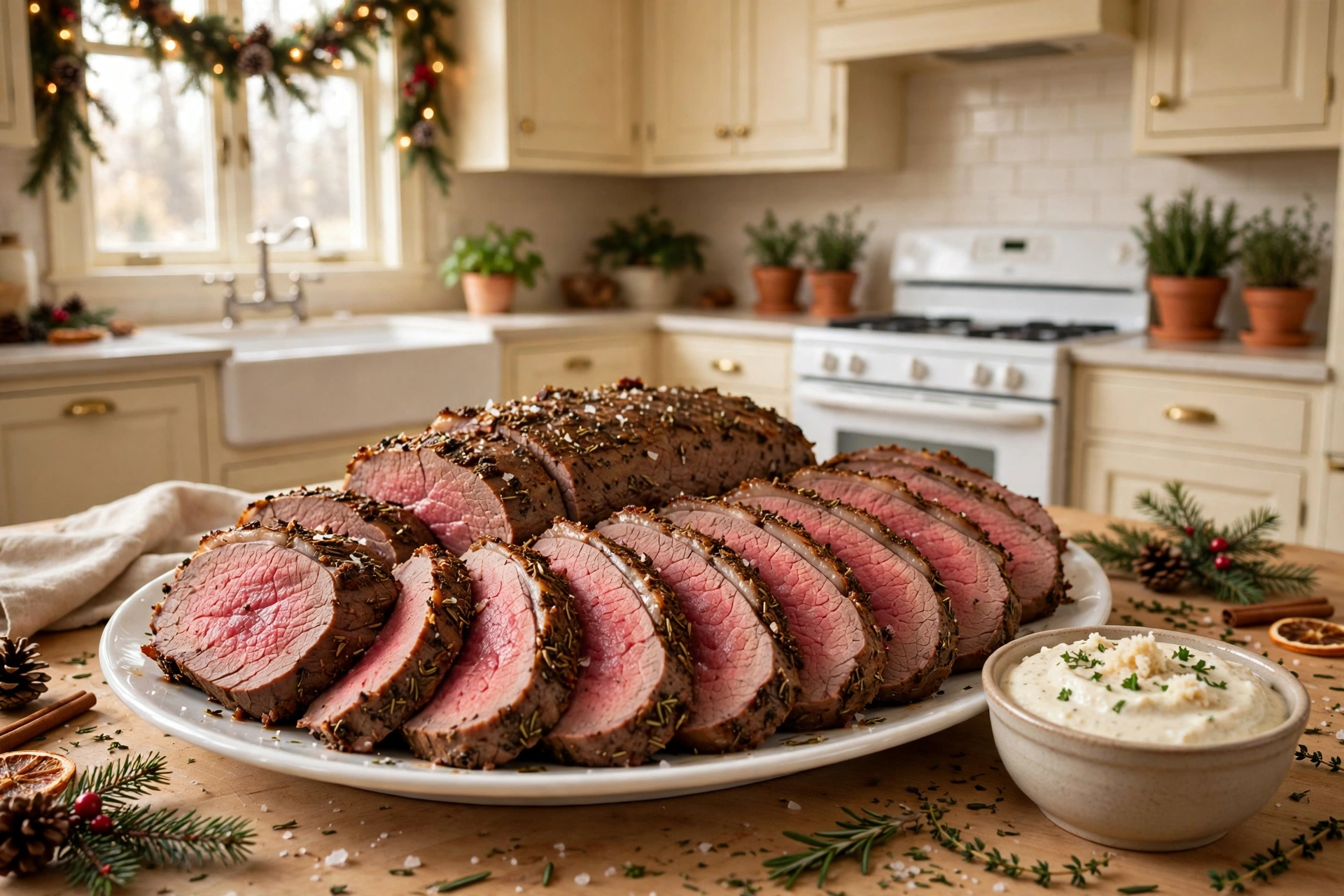
A rested roast climbs 5 to 10 degrees F after it leaves the oven, carried by its own heat. That rise is planned, not accidental: always pull the tenderloin below your target and let the rest close the gap.
For rare, pull at 115 to 120 degrees F and serve near 125. For medium rare, the sweet spot of this cut, pull at 125 and serve near 135. For medium, pull at 135 and serve near 145. Beyond that, the lean center dries quickly.
FoodSafety.gov lists 145 degrees F with a 3 minute rest as the safe minimum for fresh beef steaks and roasts. Home cooks who prefer the traditional pink center should know the number, make their choice with open eyes and never serve pink meat to anyone who did not choose it.
Size changes the clock more than the temperature. A 3 pound roast serves 6 and takes about 20 to 25 minutes after searing. A 5 pound roast serves 10 and needs 35 to 45 minutes. The pull temperatures stay identical at every size.
Horseradish Cream and Mushroom Pan Sauce, Two Finishes Built for This Roast
The horseradish cream takes five minutes and no heat: stir the sour cream, horseradish, mustard, lemon juice and a pinch of salt, then fold in the chives. Made an hour ahead, it firms up in the refrigerator and its bite softens into the cream.
The mushroom pan sauce uses the skillet the roast just left. Cook the mushrooms in the drippings over medium high heat until browned, about 6 minutes, then the shallot for 1 minute more. Pour in the beef broth and scrape every browned bit off the bottom.
Simmer the broth for 3 minutes to concentrate it, stir in the cornstarch slurry and cook 1 minute until it turns glossy. Off the heat, swirl in the cold butter until the sauce shines. It should coat a spoon, not pool like soup.
Serve both and let the table choose. The cream cuts the richness with cold brightness; the mushroom sauce doubles down on the savory crust. Between them, not a slice on the platter goes unsauced.
Christmas Day Timing: Out of the Fridge at Noon, Sliced When the Sides Reheat
Work backward from the table. For a 6 o’clock dinner, the roast leaves the refrigerator at 4:00 to lose its chill, sears at 5:00 and roasts until about 5:35. Twenty minutes of rest brings it to the board right at 6:00, sliced as the guests sit down.
The resting window is your gift, not dead time. While the roast rests for 20 minutes, the sides go back into the hot oven to reheat and crisp, and the mushroom sauce gets built in the searing pan. Everything converges on the platter at once.
Our sides for this menu run to rosemary garlic mashed potatoes and the same pan logic we use for our turkey gravy from drippings at Thanksgiving, proof that a resting roast and a hot side dish are natural partners.
If your table prefers a beef roast with a different silhouette, our garlic herb prime rib covers the bone in celebration cut. The tenderloin remains the calmer of the two, and calm is a real ingredient on Christmas Day.
Grey Band, Dry Tail, Pale Crust: Tenderloin Fixes
A grey band under the crust means the roast sat too long over high heat or went in cold. The fixes are the hour at room temperature before searing and a confident, shorter sear. The oven, not the pan, should do most of the cooking.
A dry, overdone tail happens when the thin end is left untucked on a whole tenderloin. Tucking it under and tying it to match the thickness of the center solves the geometry, which is why this recipe starts with a center cut and asks the butcher to tie it.
A pale crust points to a wet surface or a crowded, timid pan. The 24 hour uncovered rest is the main cure. On the day, pat the roast once more before it meets the oil, and let the skillet get properly hot before the meat goes in.
If the center overshoots anyway, slice the roast a little thinner and lean on the mushroom sauce, serving the end pieces to the guests who prefer their beef cooked through. Every roast has those guests, and the ends were always destined for them.
The Day After the Roast: Cold Slices, a Quick Sear and the Sandwich Plan
Leftover tenderloin is a prize, not a problem. Wrapped tightly, the slices keep in the refrigerator for 3 to 4 days, following the standard USDA window for cooked beef, and the horseradish cream keeps just as long in its own container.
Cold is the first serving: thin slices on a sandwich with the horseradish cream, sharp greens and good bread need nothing else. It is the lunch the cook quietly looks forward to all through Christmas dinner.
To serve it warm again, sear slices in a hot, lightly oiled skillet for 30 seconds per side and no more. The goal is warm edges around a still pink middle. A microwave, by contrast, cooks the slice through and wastes the best quality of the meat.
Anything beyond sandwiches becomes a cook’s bonus: diced into a hash with leftover potatoes, or laid over a green salad with the mushroom sauce warmed as a dressing. Nothing about this roast should end up as an afterthought.
A Centerpiece That Lets the Cook Sit Down Too
Beef tenderloin is the rare celebration roast that returns the cook to the table. Thirty minutes of oven time, twenty of rest, and the most expensive cut of the year turns out to be the least demanding guest at its own dinner.
Salted a day ahead and sliced over its own herb butter, it tastes like far more effort than it took. That gap between effort and result is exactly what a Christmas kitchen needs.
Set the platter down, pass the two sauces, and sit. The roast has done its work, and for once, so have you, on schedule.
FAQ
How long should beef tenderloin rest before slicing?
Twenty minutes, tented loosely with foil. The rest lets the juices settle back into the meat and carries the internal temperature up the final 5 to 10 degrees F. Slicing at 5 minutes floods the board with juice that belongs in the meat.
Can I roast beef tenderloin without a meat thermometer?
You can try the touch test, but this lean, expensive cut is the worst candidate for guessing. A probe thermometer costs less than a single pound of tenderloin and is the only reliable way to land the pull temperature at 125 degrees F for medium rare.
Why is the thin end of my tenderloin always overcooked?
The tail is half the thickness of the center, so it cooks in about half the time. Buy a center cut roast, or tuck the tail under the roast and tie it so the whole piece is one even thickness from end to end.
Should I sear beef tenderloin before or after roasting?
Before, for this method. The sear builds the crust while the meat is cool enough inside to tolerate the pan heat, and the oven then finishes it gently to the pull temperature. A dry surface from the overnight salt rest is what makes the sear fast and deep.
How do I reheat leftover beef tenderloin without drying it out?
Sear cold slices in a hot, lightly oiled skillet for 30 seconds per side, just until warmed at the edges with the center still pink. Avoid the microwave, which cooks the slice all the way through and turns the tenderest cut of beef firm and grey.
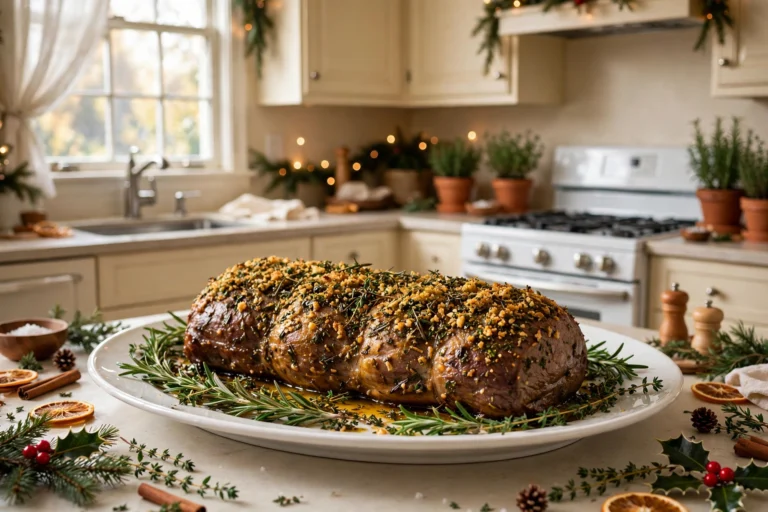
Beef Tenderloin
A center cut beef tenderloin salted 24 hours ahead for deep seasoning and a dry surface that sears fast, rubbed with garlic herb butter, roasted at 425 degrees F to a 125 degree pull and rested to a pink center. Served with a five minute horseradish cream and a mushroom pan sauce built in the searing skillet with beef broth.
- Total Time: 2 hours 20 minutes
- Yield: One 4 pound roast, 8 servings 1x
Ingredients
- 1 center cut beef tenderloin roast, 4 pounds, trimmed and tied
- 2 tablespoons kosher salt
- 2 teaspoons coarsely ground black pepper
- 2 tablespoons neutral oil with a high smoke point
- 6 tablespoons unsalted butter, softened
- 3 garlic cloves, grated to a paste
- 1 tablespoon finely chopped fresh rosemary
- 1 tablespoon fresh thyme leaves
- 1 cup sour cream
- 3 tablespoons prepared horseradish, drained
- 1 teaspoon Dijon mustard
- 1 teaspoon lemon juice
- 2 tablespoons finely snipped fresh chives
- 8 ounces cremini mushrooms, sliced
- 1 small shallot, finely minced
- 1 cup low-sodium beef broth
- 1 teaspoon cornstarch stirred into 1 tablespoon cold water
- 2 tablespoons unsalted butter, cold
Instructions
- The day before, pat the roast dry, rub it all over with the kosher salt, and refrigerate uncovered on a rack for 24 hours.
- One hour before cooking, bring the roast out. Mash the softened butter with the garlic, rosemary and thyme; smear a third under the roast and season the surface with the black pepper.
- Heat the oven to 425 degrees F. Heat the oil in a large cast iron skillet over high heat until it just begins to smoke.
- Sear the roast 2 to 3 minutes per side, including the ends, until a deep brown crust forms all over, about 10 minutes total.
- Transfer the skillet to the oven with a probe thermometer in the thickest part. Roast until the thermometer reads 125 degrees F, about 25 to 30 minutes.
- Rest the roast on a warm platter, tented with foil, for 20 minutes, until it reaches about 135 degrees F.
- For the mushroom sauce, brown the mushrooms in the skillet drippings for 6 minutes, add the shallot for 1 minute, then the broth, scraping up the browned bits. Simmer 3 minutes, stir in the cornstarch slurry for 1 minute, and swirl in the cold butter off the heat.
- For the horseradish cream, stir the sour cream, horseradish, mustard, lemon juice and a pinch of salt, then fold in the chives.
- Slice the roast a half inch thick, removing the twine as you go. Spoon the remaining herb butter over the hot slices and serve with both sauces.
Notes
Nutrition is an estimate based on the ingredients and cooking methods used.
- Prep Time: 20 minutes
- Cook Time: 35 minutes
Nutrition
- Serving Size: 6 ounces cooked beef with sauce
- Calories: 480
- Sugar: 1
- Sodium: 640
- Fat: 31
- Saturated Fat: 14
- Unsaturated Fat: 15
- Trans Fat: 0
- Carbohydrates: 3
- Fiber: 0
- Protein: 46
- Cholesterol: 165