Garlic Herb Prime Rib, Reverse Seared for Edge to Edge Pink
In this article:
- Buying the Roast: Bones, Grades and How Much per Person
- The Overnight Salt Cure, Done in the Fridge
- Ingredients
- Reverse Searing the Prime Rib, Step by Step
- One Doneness Chart, with Pull Temperatures
- Au Jus Without Wine, and Horseradish Cream
- Carving: Bones Off in One Slab, Then Slices
- Christmas Day Timeline: the Roast Rests While the Sides Bake
- Your Prime Rib Questions, Answered
- A Centerpiece That Earns Its Quiet
Prime rib is the Christmas roast that makes a table go quiet, and it is also the one home cooks fear most, because the meat is expensive and the margin for error feels thin. This method removes the fear: an overnight salt cure in the fridge, a slow roast at 250 degrees F, a long rest, and a final blast of heat that builds the crust at the very end.
The result is the thing restaurants charge a premium for: a seasoned, garlicky crust and a center that stays the same rosy pink from the first slice to the last, with no gray ring around the edge. The reverse sear is what does it. Cooking low first and searing last means the temperature climbs gently and evenly, instead of racing at the surface while the middle lags behind.
If your family is still choosing between beef and bird this year, our classic roast turkey is the other centerpiece we cook. But when the vote goes to beef, this is the roast that comes out of my oven, every time.
Buying the Roast: Bones, Grades and How Much per Person
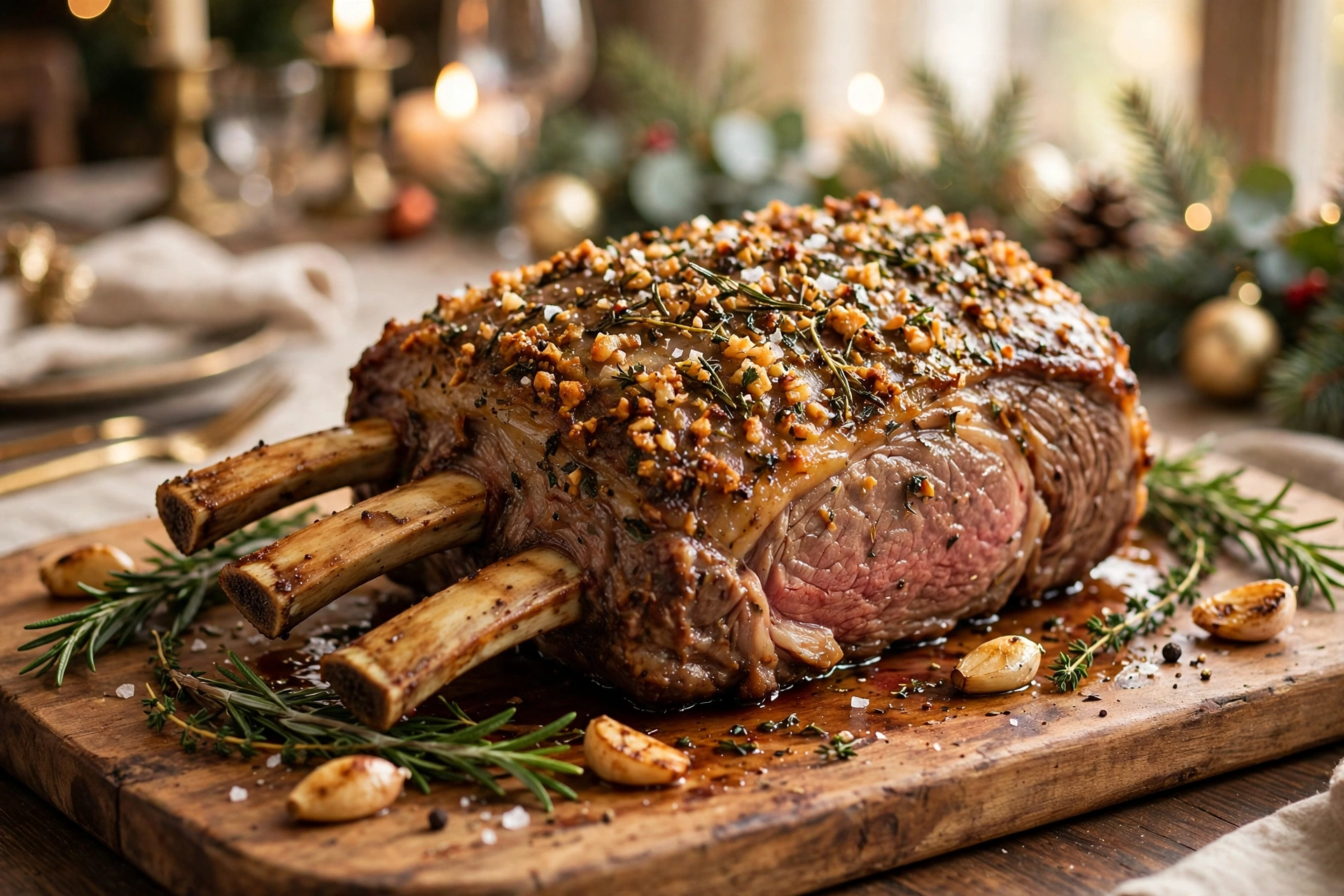
Buy bone in, always. The bones insulate the meat from the heat of the pan, they give you a built in roasting rack, and they are the best cook’s treat in the house once the slices are served. This recipe is built on a 3 bone roast, about 7 pounds, which serves 8 people generously.
The math at the counter is simple: one rib serves two people, and a bone in roast gives you roughly 1 pound of raw weight per person. Two ribs feed four, three ribs feed six to eight, and a full seven rib roast is a party of twelve or more. When in doubt, round up: leftover prime rib is never a problem anyone complains about.
Ask the butcher for two things by name. First, the chine bone removed, which is what lets you carve clean slices instead of sawing. Second, the bones cut away and tied back on: the roast cooks as one piece, but at carving time you snip the strings and lift the whole bone slab off in seconds.
About grades: a roast labeled prime grade has the heaviest marbling and the price to match, but a well chosen choice grade roast cooks up beautifully with this method, because the low temperature is kind to leaner meat. Look for bright red color, firm white fat and fine marbling threaded through the eye, whichever grade you buy.
The Overnight Salt Cure, Done in the Fridge
Salt the roast 24 to 48 hours before it cooks, at about 1/2 teaspoon of kosher salt per pound, rubbed over every surface including the cut ends. Set it on a rack over a tray, uncovered, in the refrigerator. That is the entire cure, and it does three jobs at once.
First, the salt seasons the meat all the way to the center, which a rub applied an hour before roasting can never do. Second, the cold dry fridge air dries the surface, and a dry surface is what turns into a deep, crisp crust during the final sear. Third, the salt relaxes the meat’s proteins so they hold on to their juices through the roast.
Notice where this curing happens: in the fridge, not on the counter. Several popular recipes park a raw roast at room temperature for two to four hours before cooking, which sits squarely against food safety guidance from the USDA Food Safety and Inspection Service. A salted roast that comes straight from the fridge into a low oven cooks evenly anyway, because the temperature climbs so gently. The counter step buys nothing and risks plenty.
On roasting day, the garlic herb butter goes on cold meat without ceremony. Softened butter, grated garlic, rosemary, thyme, black pepper and a little Dijon mustard, spread over the whole surface like you are frosting a cake. It melts slowly in the low oven and bastes the roast for hours.
Ingredients
- 1 bone in prime rib roast, 3 bones, about 7 pounds, chine bone removed, bones cut and tied back on
- 1 tablespoon plus 1 teaspoon kosher salt
- 1/2 cup unsalted butter, softened
- 6 cloves garlic, grated or finely minced
- 2 tablespoons chopped fresh rosemary
- 1 tablespoon fresh thyme leaves
- 2 teaspoons coarsely ground black pepper
- 1 teaspoon Dijon mustard
- 1 yellow onion, quartered
- 2 cups low sodium beef broth, for the au jus
- 1/2 cup sour cream, for the horseradish cream
- 2 tablespoons prepared horseradish, drained
- 1 teaspoon lemon juice
- Pinch of fine sea salt
The butter should be soft enough to spread but not melted: leave it on the counter for 30 minutes, no more. Melted butter runs off a cold roast and pools in the pan, while soft butter stays where you put it and carries the garlic and herbs with it.
Prepared horseradish varies wildly in heat from jar to jar. Start with 2 tablespoons in the cream, taste, and add more if yours is mild. The cream should be cool and sharp against the rich meat, not a dare.
Reverse Searing the Prime Rib, Step by Step
- One to two days ahead, rub the salt over the whole roast. Set it on a rack over a rimmed tray, uncovered, in the refrigerator for 24 to 48 hours.
- On roasting day, heat the oven to 250 degrees F. Mash the softened butter with the garlic, rosemary, thyme, pepper and Dijon mustard. Spread it over the entire surface of the cold roast.
- Scatter the onion quarters in a roasting pan and set the roast on them, bone side down, fat side up. Insert a probe thermometer into the thickest part of the eye, away from bone and fat.
- Roast until the center reads 118 degrees F for medium rare, about 3 to 3 1/2 hours for a 7 pound roast. Start watching at 2 1/2 hours; the chart below gives the pull temperatures for every doneness.
- Move the roast to a carving board and tent it loosely with foil. Rest for 30 to 40 minutes. The temperature will hold and the juices will settle back into the meat.
- While the roast rests, pour the pan drippings through a strainer into a small saucepan. Skim off most of the fat, add the beef broth, and simmer for 5 minutes to make the au jus. Keep it warm.
- Stir the sour cream, horseradish, lemon juice and pinch of salt together and refrigerate the horseradish cream until serving.
- Heat the oven to 500 degrees F. Return the rested roast to the hot oven, uncovered, for 8 to 10 minutes, until the crust is deep golden and sizzling.
- Move the roast back to the board and rest it 10 more minutes. Snip the strings, lift off the bone slab, and slice the roast 1/2 inch thick against the grain. Serve with warm au jus and the horseradish cream.
One Doneness Chart, with Pull Temperatures
Cook this roast to temperature, never to the clock. Every oven runs a little hot or cold, every roast is a slightly different shape, and the thermometer is the only witness that was inside the meat. These are the numbers this recipe is calibrated to, after testing roasts that came out both ways.
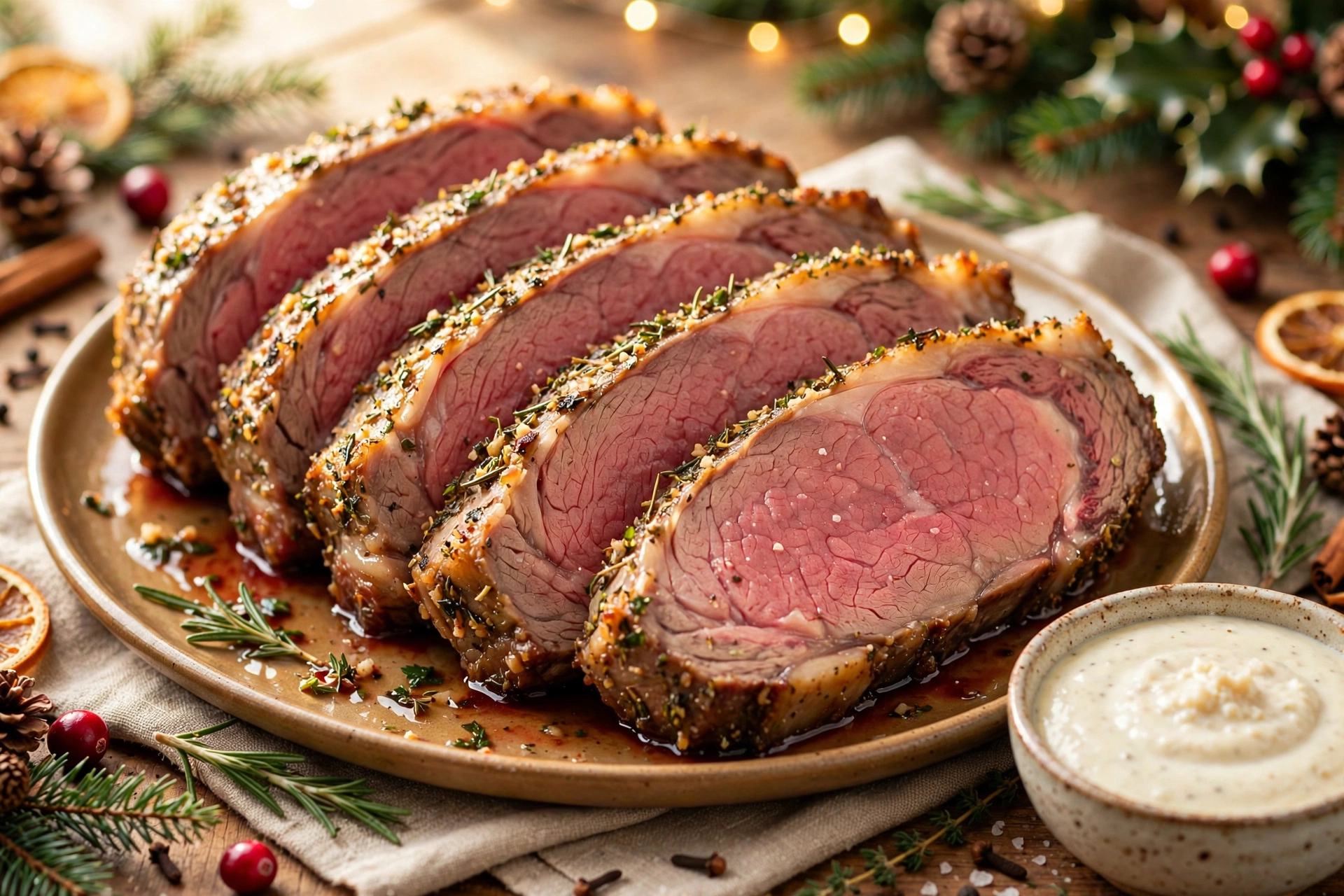
For rare, pull the roast at 110 to 112 degrees F; it serves at about 120 after the sear. For medium rare, pull at 115 to 120; it serves at 125 to 130, pink and warm all the way through. For medium, pull at 125; it serves at about 135. For medium well, pull at 130; it serves near 140, with just a blush at the center.
Understand what the rest and the sear each add. The rest itself adds almost nothing once the roast leaves a low oven, which is exactly why the reverse sear is so predictable. The 500 degree blast adds about 5 degrees at the center while it builds the crust. Pages that promise a 15 degree rise are describing roasts pulled from a hot oven, not this gentle method.
If you have no probe thermometer, a quick instant read check every 20 minutes near the end is an acceptable second choice. What you cannot do is rescue an overcooked roast, so check early and check often in the last hour. The end slices will always cook further than the center, which conveniently covers the relative who wants theirs well done.
Au Jus Without Wine, and Horseradish Cream
Nearly every prime rib recipe on the internet builds its au jus on red wine, which leaves a lot of tables out. This one does not need it. The drippings from a garlic herb butter roast are already deep and savory; simmered with beef broth and skimmed of their fat, they make a clean, beefy jus that tastes like the roast itself.
Two details keep the jus bright instead of greasy. Skim thoroughly, because butter fat floats and coats the tongue, muting everything. And simmer it for a full 5 minutes with the strained onion left behind in the pan juices, which sweetens the jus the way wine was supposed to.
The horseradish cream is the cold contrast. Stir it together before the sear so it is fully chilled at the table, and serve it in a small bowl passed separately. A spoonful on a hot slice melts into a sauce with real bite, the classic steakhouse pairing, without a drop of alcohol anywhere in the meal.
Carving: Bones Off in One Slab, Then Slices
Carving is where a beautiful roast can still go wrong, so work in order. Set the roast on its side with the bones toward your non cutting hand, slice along the contour of the bones to release any meat the butcher’s strings were holding, then snip the strings and lift the entire bone slab away in one piece.
Stand the roast on the flat surface you just exposed. Slice straight down, against the grain, in even 1/2 inch slices for serving, or 3/4 inch if your table likes a steakhouse cut. A long, sharp carving knife and a sawing motion with almost no downward pressure keeps the crust intact on every slice.
Save the bones. Wrapped and refrigerated, they keep 4 days, and they are the cook’s reward: gnawed standing at the counter, or simmered into a small pot of beef broth for soup later in the week. The slices themselves should go to the table on a warm platter with a ladle of hot au jus spooned over, next to the sides the oven was free to bake during the rest, like our slow cooker mashed potatoes and honey glazed roasted carrots.
Leftover slices reheat gently: lay them in a shallow dish with a few spoonfuls of au jus, cover with foil, and warm at 250 degrees F for 10 minutes. The microwave turns prime rib gray and tough in under a minute; the low oven keeps it pink.
Christmas Day Timeline: the Roast Rests While the Sides Bake
The hidden gift of the reverse sear is the schedule. A roast that rests for 30 to 40 minutes before its final sear hands you a free oven at exactly the moment every casserole and roll needs one. Worked backward from a 6 o’clock dinner, the day looks like this.
At 1:30, the salted roast comes out of the fridge and gets its garlic herb butter. At 2:00 it goes into the 250 degree oven. Around 5:15 to 5:30 it reaches temperature and comes out to rest, tented, and the oven is yours: rolls, casseroles and roasted vegetables all bake while the roast sits quietly on the counter, losing nothing.
At 5:50 the roast goes back in at 500 degrees for its sear. At 6:00 it rests its final 10 minutes while the sides hit the table, and at 6:10 you carve. One oven, no collisions, and the cook is not trapped in the kitchen while everyone else is in the living room. If your family’s other tradition is a make ahead breakfast, the garlic herb mashed potatoes method we use for Salisbury steak meatballs is the same mash that belongs under these slices.
Your Prime Rib Questions, Answered
Does a boneless roast cook the same way?
Almost. A boneless roast of the same weight usually finishes 20 to 30 minutes sooner, and it benefits from being tied into a tight cylinder so it cooks evenly. The pull temperatures do not change. You lose the bones as a rack and as a treat, which is why this recipe starts bone in.
How far ahead can I salt the roast?
Twenty four hours is the sweet spot and 48 hours is the safe ceiling. Past two days the surface texture starts to cure like deli meat at the very edges. If your plans slip, freeze the salted roast instead of holding it a third day.
Can I skip the thermometer and use minutes per pound?
You can, at about 22 to 25 minutes per pound at 250 degrees F to reach medium rare, but treat that as a guess with an expensive downside. Roasts vary too much in shape and starting temperature. A basic instant read thermometer costs less than a single pound of this meat.
My roast rested too long and cooled down. What now?
Slice it, lay the slices in the warm au jus in a shallow pan, cover, and hold at 200 degrees F for 10 minutes. The jus brings the slices back to serving temperature without cooking them further, as long as you do not let the pan simmer.
What should I do with the leftover bones and slices?
The bones make a small, rich broth: cover with water, simmer 2 hours with an onion and a carrot, and strain. The slices are at their best in sandwiches the next day, warmed in jus and piled on rolls with the leftover horseradish cream.
A Centerpiece That Earns Its Quiet
A prime rib asks for patience more than skill: salt it early, roast it low, let it rest, and finish it hot. Follow the temperatures and the roast does the impressive part on its own.
The first year I cooked this for Christmas, the table went silent at the first slice, the way it used to for my grandmother’s turkey. That quiet is the whole point of the roast. Everything else is just keeping the oven free and the au jus warm.
Print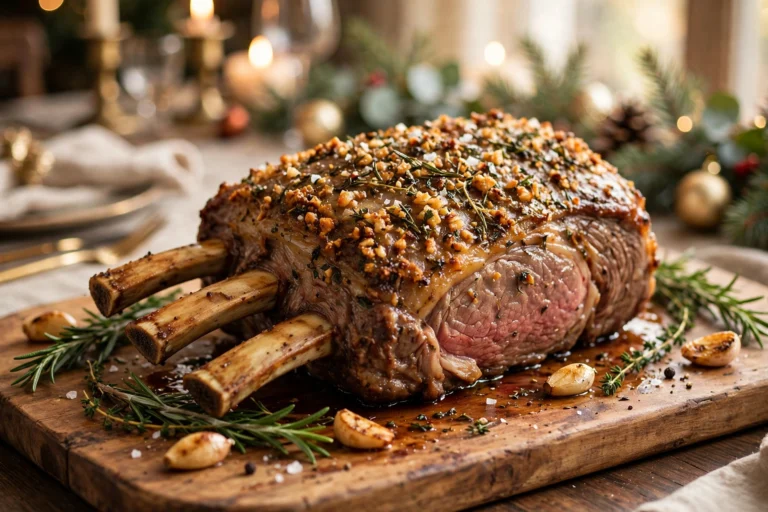
Garlic Herb Prime Rib
A 3 bone prime rib salted 24 to 48 hours ahead in the fridge, coated in garlic herb butter and reverse seared: a slow roast at 250 degrees F to 118 degrees in the center, a 30 to 40 minute rest, then a 500 degree blast for the crust. Served with a wine free au jus and horseradish cream. Prep time excludes the overnight salting and the rests.
- Total Time: 4 hours
- Yield: 8 servings 1x
Ingredients
- 1 bone in prime rib roast, 3 bones, about 7 pounds, chine bone removed, bones cut and tied back on
- 1 tablespoon plus 1 teaspoon kosher salt
- 1/2 cup unsalted butter, softened
- 6 cloves garlic, grated or finely minced
- 2 tablespoons chopped fresh rosemary
- 1 tablespoon fresh thyme leaves
- 2 teaspoons coarsely ground black pepper
- 1 teaspoon Dijon mustard
- 1 yellow onion, quartered
- 2 cups low sodium beef broth, for the au jus
- 1/2 cup sour cream, for the horseradish cream
- 2 tablespoons prepared horseradish, drained
- 1 teaspoon lemon juice
- Pinch of fine sea salt
Instructions
- One to two days ahead, rub the kosher salt over the whole roast. Set it on a rack over a rimmed tray, uncovered, in the refrigerator for 24 to 48 hours.
- On roasting day, heat the oven to 250 degrees F. Mash the softened butter with the garlic, rosemary, thyme, pepper and Dijon mustard. Spread it over the entire surface of the cold roast.
- Scatter the onion quarters in a roasting pan and set the roast on them, bone side down, fat side up. Insert a probe thermometer into the thickest part of the eye, away from bone and fat.
- Roast until the center reads 118 degrees F for medium rare, about 3 to 3 1/2 hours for a 7 pound roast. Start checking at 2 1/2 hours.
- Move the roast to a carving board and tent it loosely with foil. Rest for 30 to 40 minutes.
- While the roast rests, pour the pan drippings through a strainer into a small saucepan. Skim off most of the fat, add the beef broth, and simmer for 5 minutes to make the au jus. Keep it warm.
- Stir the sour cream, horseradish, lemon juice and pinch of salt together and refrigerate the horseradish cream until serving.
- Heat the oven to 500 degrees F. Return the rested roast to the hot oven, uncovered, for 8 to 10 minutes, until the crust is deep golden and sizzling.
- Rest the roast 10 more minutes. Snip the strings, lift off the bone slab in one piece, and slice the roast 1/2 inch thick against the grain. Serve with warm au jus and the horseradish cream.
- Prep Time: 20 minutes
- Cook Time: 3 hours 40 minutes
Nutrition
- Serving Size: 8
- Calories: 690
- Sugar: 0
- Sodium: 640
- Fat: 52
- Saturated Fat: 22
- Unsaturated Fat: 24
- Trans Fat: 1
- Carbohydrates: 1
- Fiber: 0
- Protein: 52
- Cholesterol: 165