In this article:
Gingerbread Layer Cake | Warm, Spiced and Cloud-Soft
What Makes This Recipe Special
Gingerbread layer cake is the holiday dessert that turns a humble spice cake into a true celebration centerpiece. The secret is hot water bloomed with molasses, which deepens the caramel notes and keeps the crumb unbelievably moist for days.
Brown sugar and butter get creamed until fluffy, so the layers bake up tender rather than dense. That creaming step steers clear of the heavy, flat crumb that plagues old fashioned gingerbread cakes.
A full tablespoon of ground ginger plus cinnamon, cloves, and nutmeg brings warmth without harshness, balanced by the gentle tang of buttermilk. The cream cheese frosting is whipped light rather than heavy, so it cuts the richness of the spiced layers instead of adding to it.
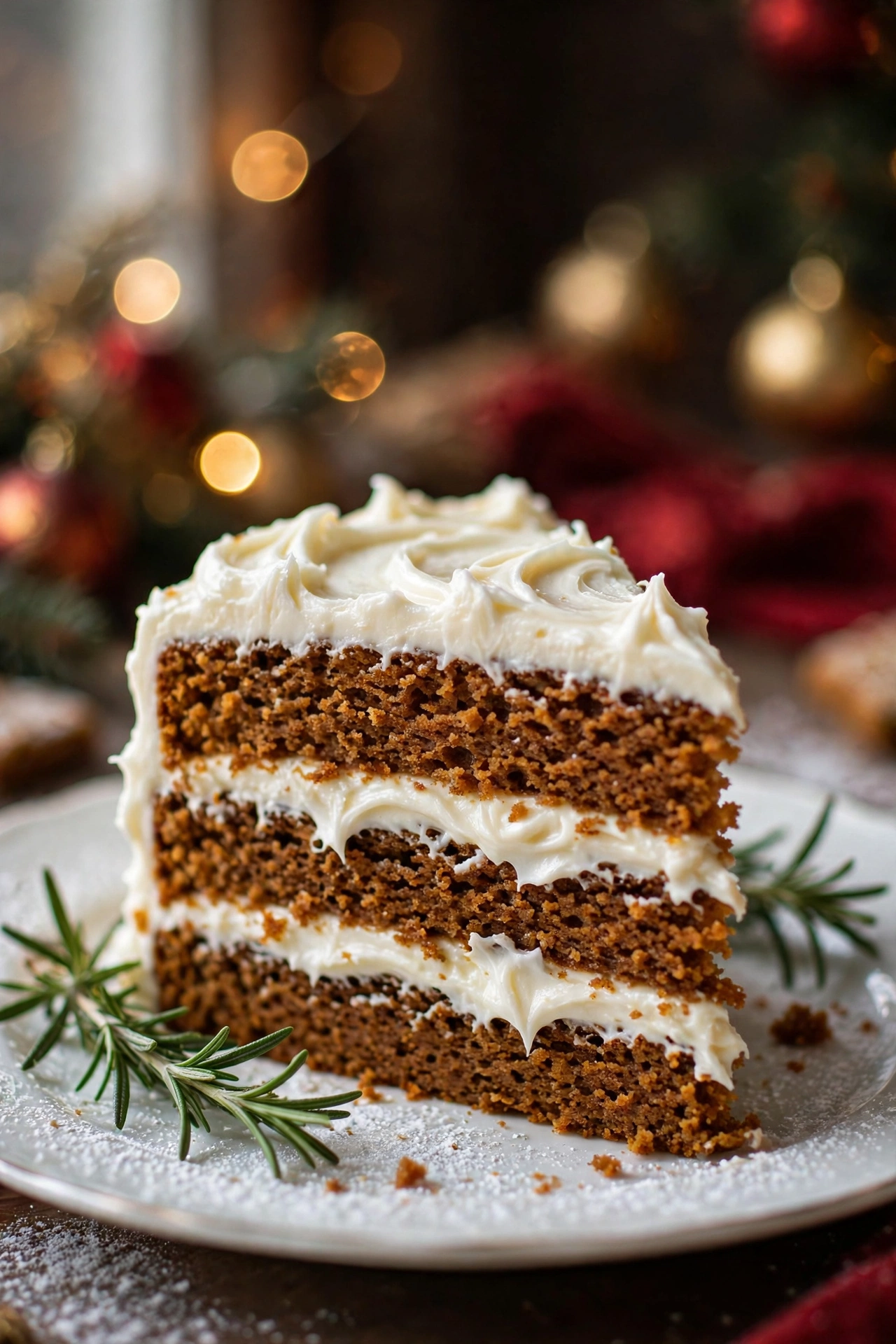
Every slice reveals three distinct stripes of dark, fragrant cake against snowy frosting. It is pure Christmas on a plate, the kind of slice guests photograph before tasting.
It looks like a bakery showpiece but follows one bowl logic and uses pantry spices you already own. No alcohol, no fussy decorating skills, no specialty equipment beyond three standard cake pans.
This gingerbread layer cake tastes like December feels: warm, glowing, and a little bit magical. The first forkful delivers soft, springy crumb laced with ginger and molasses, then the cool tang of cream cheese frosting melts across it.
It is the kind of dessert that perfumes the whole house while it bakes, drawing everyone into the kitchen before dinner is even served. Expect curious faces in the doorway long before the timer rings.
I developed this recipe after years of dry, heavy gingerbread disappointments, and the fix turned out to be simple: more moisture, less bravado with the spices. Three slim layers mean more frosting in every bite and a tall, dramatic slice that needs no decoration beyond sugared cranberries.
Whether it crowns your Christmas dinner or stars at a holiday party, this cake earns its place as the most requested bake of the season. Make it once and you will understand why the requests never stop.
If your holiday calendar is already bursting, take comfort in this: the layers can be baked days ahead and the whole cake assembles in twenty minutes. By the end of this guide you will know exactly how to nail the crumb coat, choose the right molasses, and plan the whole thing around your Christmas schedule.
Flavor Notes and Texture Contrast
The dominant flavor is deep, rounded ginger warmth, the kind that blooms slowly instead of biting. Molasses brings dark caramel and a whisper of bitterness that keeps the sweetness firmly in check. Cinnamon and nutmeg hum underneath, while cloves add a faint peppery lift at the finish.
Buttermilk keeps the crumb tender and contributes a gentle tang that brightens all that dark spice. The texture is the real surprise: springy and plush, closer to a chiffon than to the dense gingerbreads of old. Each layer stays moist edge to edge, with no dry rim and no gummy center.
Against that softness, the cream cheese frosting is cool and silky, with a clean dairy tang that resets your palate. A dusting of cinnamon over the top adds aroma before the first bite even lands. Sugared cranberries bring jewel like color and a tart pop that cuts through the richness.
Served slightly cool, the contrast sharpens: cold frosting, room temperature crumb, warm spice. This balance is what makes the gingerbread layer cake so hard to stop eating after a single slice. For a second spiced showstopper on your holiday table, our eggnog cream pie brings the same festive warmth in chilled, creamy form.
Every element was tuned to support the others, never to shout over them. It is a confident, grown up holiday cake that still makes kids ask for seconds.
Why It Fits Your Schedule
Christmas baking always collides with real life, which is why this recipe was designed around a baker’s actual December. The batter comes together in about thirty minutes with one mixer and two bowls, and there is not a single finicky step. While the layers bake, you can whip the frosting, so the whole active project fits inside one hour.
Better still, the layers improve with a rest: bake them up to two days ahead, wrap tightly, and refrigerate. Assemble the morning of your event in under twenty minutes, then let the finished cake chill until serving. That make ahead friendliness is gold during the holidays, when oven space and spare time are both rationed.
The finished cake also travels beautifully, since the chilled frosting sets firm and the layers are sturdy. Bring it to the office party or the family gathering without fear of slides or smears. Few layer cakes deliver this much drama per minute of effort, which is exactly why it deserves a permanent spot in your December rotation.
Even the cleanup respects your evening: one mixer bowl, one whisked dry bowl, and three pans, all of which rinse clean while the layers cool. There is no candy thermometer to babysit and no fussy piping to redo. That simplicity is the whole point: a showpiece cake that behaves like a weeknight bake.
Diet Conscious Twists
A gluten free version works beautifully with a good 1:1 gluten free flour blend swapped cup for cup. Add one extra tablespoon of molasses to compensate for the slightly drier crumb that gluten free flours can produce. For a dairy free cake, use vegan butter sticks in both the layers and the frosting, plus a vegan cream cheese style spread.
The dairy free frosting will be a touch softer, so chill the assembled cake a full two hours before slicing. To trim the sugar, reduce the granulated sugar to one third cup; the molasses and brown sugar carry plenty of sweetness on their own.
An egg free version is possible with flax eggs, though the layers turn out slightly denser. Serve them the same day for the best texture, since flax-bound crumb dries faster.
Whatever adaptation you choose, keep the spice blend exactly as written, since it defines the cake. The structure is forgiving, so most swaps succeed without drama.
Curious about the numbers? The USDA FoodData Central database lists the mineral content of different molasses grades, which surprises many bakers. It will not turn cake into health food, but it is one more reason to bake from scratch.
Ingredients
- 3 cups (375 g) all-purpose flour, spooned and leveled
- 2 teaspoons baking soda
- 1 tablespoon ground ginger
- 2 teaspoons ground cinnamon
- 1/2 teaspoon ground cloves
- 1/2 teaspoon ground nutmeg
- 1/2 teaspoon fine sea salt
- 1 cup (2 sticks) unsalted butter, softened to room temperature
- 1 cup packed dark brown sugar
- 1/2 cup granulated sugar
- 4 large eggs, at room temperature
- 1 cup unsulphured molasses (not blackstrap)
- 1 tablespoon pure vanilla extract
- 1 cup buttermilk, at room temperature
- 1/2 cup hot water
- 16 ounces cream cheese, softened to room temperature
- 1 cup (2 sticks) unsalted butter, softened to room temperature
- 4 cups powdered sugar, sifted
- 2 teaspoons pure vanilla extract
- 1/4 teaspoon fine sea salt
- 1 teaspoon ground cinnamon, plus more for dusting
- 1 cup fresh cranberries, sugared (see Tips)
- Fresh rosemary sprigs
Step by Step Instructions
- Heat the oven to 350°F (175°C). Grease three 8-inch round cake pans, line the bottoms with parchment paper, then grease the parchment. This triple protection guarantees the layers release cleanly.
- Whisk the flour, baking soda, ginger, cinnamon, cloves, nutmeg, and salt together in a large bowl until evenly combined. Set aside.
- Beat the butter, brown sugar, and granulated sugar on medium-high speed until pale and fluffy, about 3 minutes. Scrape down the bowl once halfway through.
- Add the eggs one at a time, beating well after each addition. Beat in the molasses and vanilla until the mixture looks smooth and glossy.
- With the mixer on low, add the flour mixture in three additions, alternating with the buttermilk, starting and ending with the flour. Mix just until combined; a few small lumps are fine.
- Pour in the hot water and stir gently with a spatula until the thin batter is smooth. It will look alarmingly liquid, which is exactly right.
- Divide the batter evenly among the prepared pans, about 2 cups per pan, and smooth the tops with the spatula.
- Bake 28 to 32 minutes, until a toothpick inserted in the center comes out with a few moist crumbs clinging to it. The tops will spring back lightly when touched.
- Cool the layers in their pans for 15 minutes, then run a thin knife around the edges and turn out onto wire racks. Peel off the parchment and cool completely, about 1 hour.
- Make the frosting: beat the cream cheese and butter on medium speed until completely smooth, about 2 minutes. Add the powdered sugar one cup at a time on low speed, then beat in the vanilla, salt, and cinnamon. Whip on medium-high for 2 minutes until light and fluffy.
- Level any domed tops with a serrated knife. Place one layer on a serving plate and spread 3/4 cup of frosting evenly to the edges. Repeat with the second layer, then set the third layer on top.
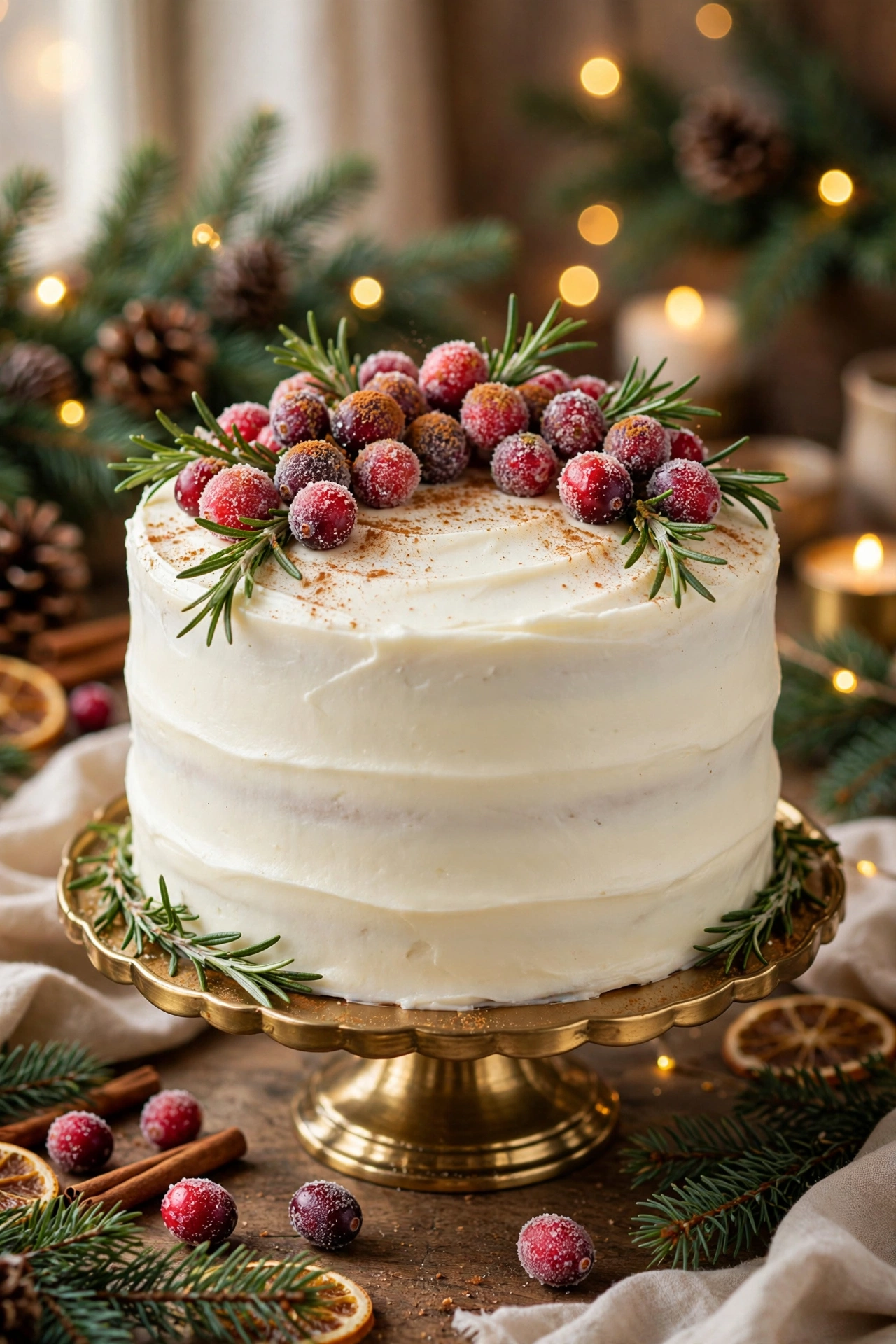
- Spread a thin crumb coat over the entire cake and refrigerate 30 minutes until firm. Cover with the remaining frosting in generous swoops, dust lightly with cinnamon, and decorate with sugared cranberries and rosemary sprigs. Chill at least 1 hour before slicing for the cleanest cuts.
Secrets for Foolproof Success
Domed layers are the number one frustration with layer cakes, and the fix is simple: bake at a true 350°F, verified with an oven thermometer. An oven running hot sets the edges before the center finishes rising, which builds the dome. If a dome still forms, just level it with a serrated knife; the scraps make an excellent trifle base.
Dark gingerbread crumbs are unforgiving under pale frosting, so never skip the crumb coat. A whisper thin layer of frosting, chilled for thirty minutes until firm, traps every stray crumb before the final coat goes on. Freeze the baked layers for thirty minutes before assembling and they will be far easier to handle and frost.
Choose unsulphured molasses and never blackstrap, which turns bitter in the oven; the bakers at King Arthur Baking break down the differences between molasses types if your pantry holds more than one bottle. Room temperature eggs and buttermilk are non-negotiable, since cold dairy can curdle the batter.
Follow these habits and your gingerbread layer cake will slice cleanly and stand tall. The result looks straight out of a bakery window, with layers worth showing off.
Variations to Try Next Time
Swap the cream cheese frosting for a brown butter buttercream to lean into nutty, caramel notes. Brown the butter until it smells like hazelnuts, cool it until solid again, then whip with powdered sugar and a splash of milk. For a brighter profile, spread a thin layer of orange marmalade between the cake layers under the frosting.
Chocolate lovers can replace half a cup of the flour with half a cup of cocoa powder for a dark gingerbread chocolate hybrid. Mini versions bake beautifully in a muffin tin: fill the cups two thirds full and bake 18 to 20 minutes.
A chai spice blend can replace the individual spices measure for measure if that is what your pantry holds. The cardamom in the blend adds a lovely floral note to the crumb.
For the prettiest holiday gift, bake the batter in two loaf pans, glaze the cooled loaves with thinned frosting, and wrap in parchment tied with ribbon. Serve a slice alongside our white chocolate raspberry tiramisu at a dessert buffet and watch both plates empty first.
However you riff on it, keep the molasses front and center; it is the soul of the recipe. Without it, the cake loses the depth that makes it unmistakably gingerbread.
Keeping It Fresh: Storage Guide
The frosted cake keeps beautifully in the refrigerator for up to four days; cover it with a cake dome or loosely tented foil so the frosting does not pick up fridge odors. Bring slices to room temperature for twenty minutes before serving so the frosting softens and the spice blooms.
Unfrosted layers wrap tightly in plastic, then foil, and freeze for up to two months with no loss of moisture. Thaw them overnight in the refrigerator before frosting and serving.
Thaw frozen layers overnight in the refrigerator, still wrapped, so condensation does not make them gummy. The fully assembled cake also freezes well: chill until firm, wrap in two layers of plastic, and freeze for up to one month. Thaw overnight in the fridge, then refresh the top with a light dusting of cinnamon before serving.
For Christmas planning, bake the layers on the 23rd, assemble on the 24th, and serve on the 25th at absolute peak freshness. Few holiday cakes reward advance planning this generously.
Conclusion
Gingerbread layer cake is the rare holiday bake that looks spectacular, tastes even better, and asks for nothing fussy in return. It carries the whole season in a single slice: dark spice, cool frosting, and that unmistakable molasses depth. Bake it once for your family and it will become the cake people request by name every December.
For more holiday baking inspiration, browse our cranberry bliss bars and salted honey pistachio cookies to round out your dessert table. From my kitchen to yours, happy holidays and happy baking.
FAQ
Can I use blackstrap molasses in this gingerbread layer cake?
No, blackstrap molasses is a poor choice here. It is much more bitter and less sweet than light or dark unsulphured molasses, and that bitterness intensifies in the oven. Stick with unsulphured light or dark molasses for the warm, caramel flavor this cake needs.
My cake layers domed in the oven. How do I fix them?
First verify your oven temperature with a thermometer, since an oven running hot is the most common cause of doming. For the current layers, simply level the domes with a long serrated knife using a gentle sawing motion. Save the scraps for trifles. For next time, consider baking strips around the pans for perfectly flat layers.
How do I keep dark crumbs from showing through the white frosting?
Always apply a crumb coat: a very thin layer of frosting spread over the whole cake, then chilled for 30 minutes until firm. This traps every crumb. Freezing the layers for 30 minutes before assembling also firms them up and dramatically reduces crumbing during frosting.
Can I bake the layers ahead and freeze them for Christmas?
Absolutely, and they freeze beautifully for up to two months. Cool completely, wrap each layer tightly in plastic wrap, then in foil, and freeze. Thaw overnight in the refrigerator while still wrapped so condensation forms on the wrapping, not on the cake.
Why did my cream cheese frosting turn runny?
Runny frosting almost always means the cream cheese or butter was too warm, or the mixture was overbeaten. Start with cool room temperature dairy, not soft and melty, and stop whipping once it looks fluffy. If it still loosens, chill the bowl for 20 minutes, then beat in more sifted powdered sugar a quarter cup at a time.
SEO_TITLE: Gingerbread Layer Cake: Warm, Spiced & Cloud-Soft
META_DESCRIPTION: Moist gingerbread layer cake with tangy cream cheese frosting and warm holiday spices. Make-ahead friendly, the perfect Christmas centerpiece dessert.
SLUG: gingerbread-layer-cake
This gingerbread layer cake is truly the ultimate holiday dessert. Every bite of this moist gingerbread layer cake delivers warm spices and creamy frosting. Make this gingerbread layer cake for your Christmas celebration and watch it disappear!