In this article:
Why These Snowballs Work
Snowball cookies work because there is almost nothing in them that can hide. The dough is butter, a whisper of powdered sugar, flour, salt, vanilla, and finely ground toasted pecans, so every ingredient has to pull its weight. Toasting the nuts first is the move that separates a memorable batch from a bland one, because raw pecans taste dusty while toasted pecans taste like warm caramel.
The second reason is structural. There is no egg, no baking powder, and no baking soda in this dough, which means the cookies cannot puff, spread, or turn cakey. They bake exactly the way they went into the oven: tall, round, and dense, with a crumb that dissolves instead of crumbling apart in your hand.
The third reason is the coating, and it is a matter of timing rather than quantity. A first roll in powdered sugar while the cookies are still warm melts into a thin, tacky glaze that grips the surface. A second roll once they are fully cool sits on top of that glaze as loose, dry snow, and that is what keeps them white for days.
Finally, the chill does quiet but essential work. Cold dough holds its ball shape in the heat, so the bottoms stay small and the cookies keep their snowball silhouette. The rest also lets the flour hydrate fully, which is why the centers taste tender rather than raw or gritty. If your tray needs one more old fashioned favorite, our gingerbread crinkle cookies share the same snowy look with a very different spice.
A Bite of Pure Christmas
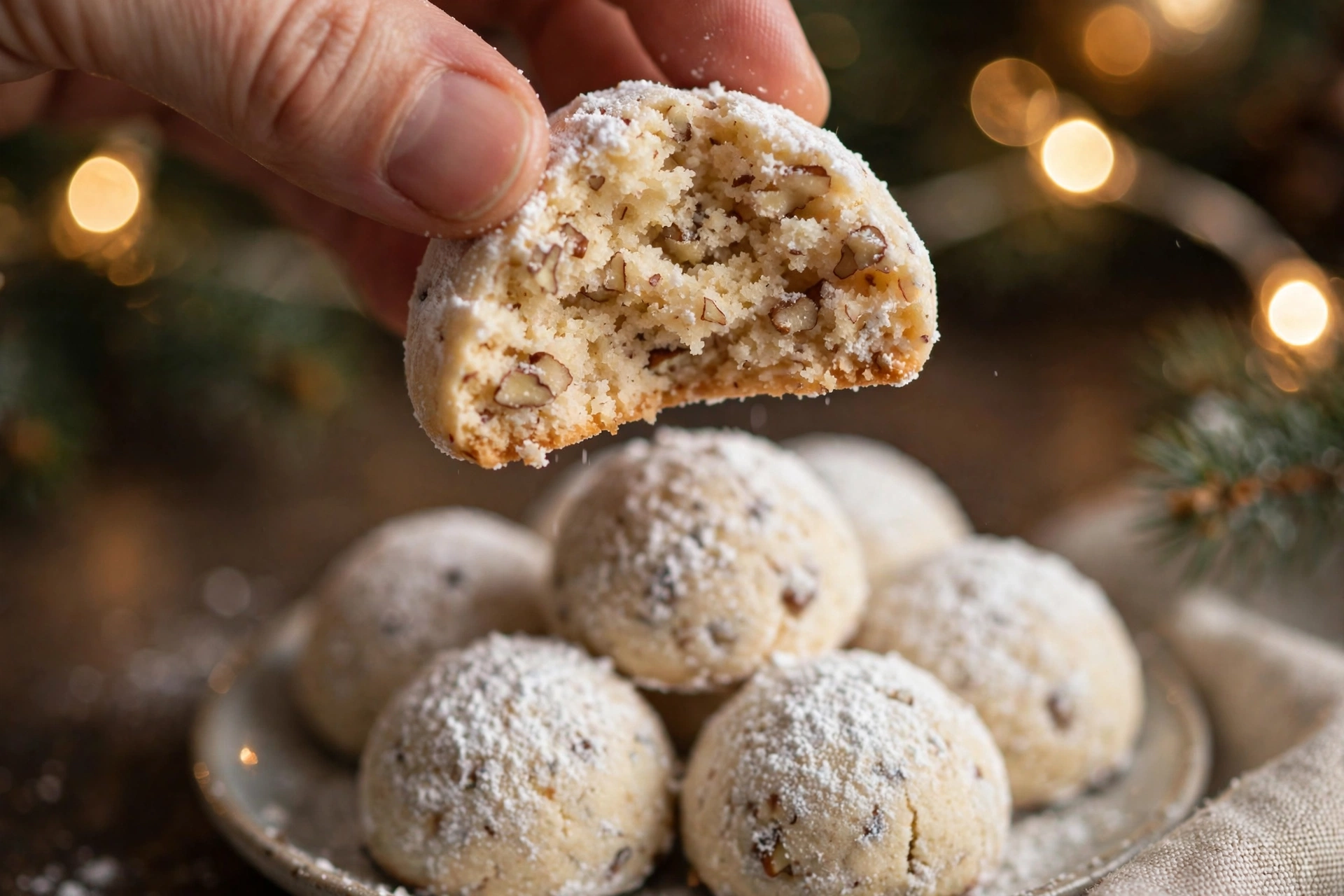
The first bite is all contrast. Your teeth pass through a soft cushion of dry powdered sugar, then the crumb gives way in a slow, buttery collapse. There is no crunch and no chew, just a fine, sandy melt that coats your tongue with butter and toasted nut before it disappears.
Pecans are doing the heavy lifting in the flavor department. Toasted and ground fine, they perfume the whole crumb rather than sitting in it as chunks, so every bite tastes nutty from edge to center. Vanilla rounds the edges, and a measured hand with the salt keeps the sweetness from tasting flat.
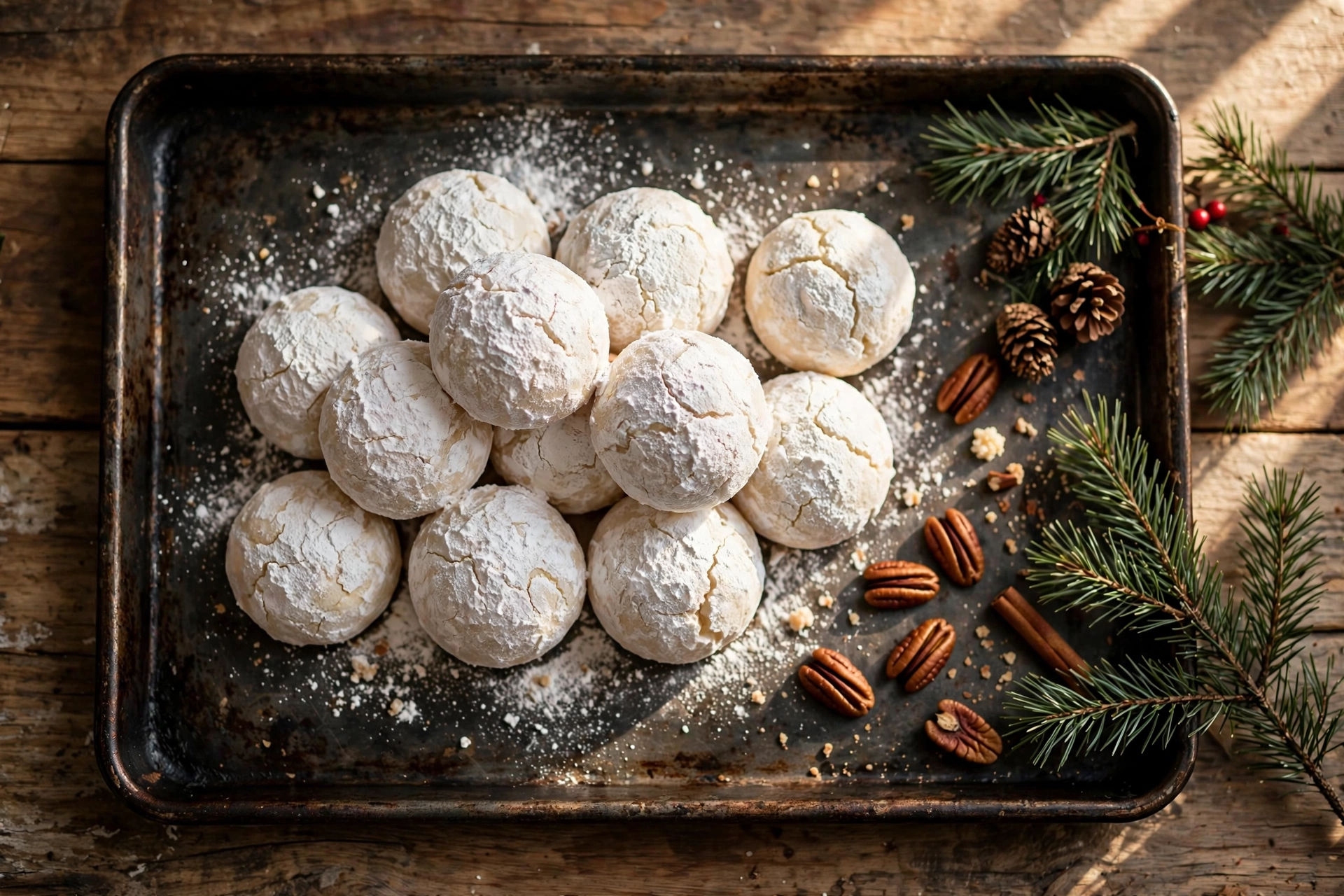
The look is half the pleasure. A tray of these is a tray of small white moons, matte and snowy, with the occasional crack showing a pale golden seam underneath. Next to frosted cutouts and dark chocolate cookies, they read as the quiet, elegant ones, and on a dessert table full of color they are always the first plate emptied.
They also improve with a night of rest, which is unusual for such a simple cookie. The nut flavor settles into the butter, the crumb firms just a touch, and the coating stays bright if the tin is truly airtight. Day two is when most bakers quietly admit they like them best.
The Two-Roll Coating Clock
Most snowball cookie recipes tell you to roll the cookies twice, but almost none tell you why the clock matters. Roll them straight out of the oven and the sugar melts into a sticky paste that turns gray as it cools. Wait half an hour, as some recipes insist, and the cookies are too cold for the sugar to grip at all, so the coating slides off in the tin.
The working window is about five minutes. The cookies should be warm enough that your fingertips feel real heat through the crumb, but set enough to hold their shape when you lift them. At that point the first roll behaves like glue: the sugar melts on contact, wets the surface, and hardens into a thin shell as the cookies finish cooling.
That shell is the whole secret. The second roll, done once the cookies are completely cool, lands on a dry, sealed surface instead of a buttery one, so it stays loose, bright, and powdery. You get the look of fresh snowfall instead of a damp sugar crust.
One more detail: sift the coating sugar. Powdered sugar straight from the bag carries small lumps that print onto the cookies as bald spots and speckles. Thirty seconds through a sieve gives you an even snowfall and a coating that reads as one clean layer.
Ingredients for Snowball Cookies
- 1 cup (120 g) pecan halves
- 1 cup (226 g) unsalted butter, softened to cool room temperature
- 1/2 cup (60 g) powdered sugar, plus 1 1/2 cups (180 g) more for coating
- 2 teaspoons pure vanilla extract
- 1/4 teaspoon fine salt
- 2 1/4 cups (280 g) all-purpose flour, spooned and leveled
Six ingredients, and each one is load bearing. The butter should be soft enough to leave a fingerprint but never glossy or melted, because warm butter is the first step toward flat cookies. According to USDA FoodData Central, pecans bring natural richness and healthy fats to the dough, which is why a short ingredient list still tastes complete. Measure the flour by spooning it into the cup rather than scooping, since a packed cup can add two extra tablespoons and dry the crumb out.
How to Shape, Bake and Coat
- Spread the pecans on a small baking sheet and toast at 350°F (175°C) for 7 to 9 minutes, until fragrant and a shade darker. Cool completely, at least 15 minutes, or they will melt the butter later.
- Pulse the cooled pecans in a food processor with 2 tablespoons of the flour until they look like coarse sand. Stop before they clump: warm nut oils turn ground pecans into paste faster than you expect.
- Beat the butter with the 1/2 cup powdered sugar for about 2 minutes, until pale and smooth. Beat in the vanilla and salt.
- Add the remaining flour and the ground pecan mixture. Mix on low just until a soft, even dough forms and no dry flour remains at the bottom of the bowl.
- Press the dough into a flat disc, wrap it, and refrigerate for at least 1 hour and up to 2 days. Cold dough is what keeps the balls round.
- Heat the oven to 325°F (165°C). Line two baking sheets with parchment paper. Scoop the dough into balls of about 1 tablespoon each (roughly 20 g), roll them smooth, and pinch the top of each ball very slightly so it stands a little taller.
- Arrange the balls 1 inch apart on the prepared sheets. Bake one sheet at a time for 13 to 15 minutes, until the bottoms are just turning pale gold and the tops still look matte and light. Do not wait for browning on top.
- Rest the sheet on a rack for exactly 5 minutes. Sift 3/4 cup of the coating sugar into a wide bowl and roll each warm cookie gently until covered. Move them to a wire rack.
- Once the cookies are completely cool, at least 45 minutes, roll them a second time in the remaining sifted sugar, pressing nothing, just turning them until they look freshly snowed on.
When Snowballs Go Wrong
Flat snowballs are a temperature story, almost every time. Butter that was too soft at mixing, a skipped chill, or a warm kitchen while shaping will each flatten the batch. The fix is unglamorous: rechill the shaped balls for 15 minutes before baking and keep the second sheet in the fridge while the first one bakes.
A coating that vanishes overnight is the second common complaint. That happens when the first roll went on too hot, so the sugar melted fully into the crumb and left nothing for the second roll to sit on. Respect the five minute rest and the problem disappears for good.
A pasty, heavy crumb points at the nuts. Over processed pecans release their oil and turn the dough dense and greasy, so pulse in short bursts and stop at sand. If the crumb tastes floury instead, the cookies were simply underbaked: give them the full time and judge by the bottoms, never by the pale tops.
Shaped like our homemade peppermint bark in spirit, these are a make once, master forever cookie. Keep a small test ball back, bake it alone, and taste it cool before committing the whole tray. Two minutes of caution saves a full batch.
A Short Field Guide to the Nuts
Pecans are the classic choice for a reason: they are soft enough to grind fine, sweet enough to taste like dessert, and their flavor deepens dramatically with toasting. If your household leans traditional, start here and change nothing. Walnuts run a close second, slightly more assertive and a little bitter at the finish, which many bakers prefer against the sugar coating.
Almonds give the cleanest, most delicate result, closer to a tea cake, especially with a drop of almond extract added to the dough. Hazelnuts are the luxurious option: toast them, rub off the skins, and the cookies taste faintly of praline. Pistachios work too, ground with a pinch of cardamom, and they tint the crumb the softest green.
For a nut free tray, replace the pecans with an equal weight of rolled oats pulsed to a coarse flour, plus one extra tablespoon of butter. The crumb will be plainer, so add the seeds of a vanilla bean or a little extra vanilla to compensate. The shape, the chill, and the two roll coating stay exactly the same.
Whatever nut you choose, buy it fresh and taste one before you start. Nuts carry a lot of fat, and a rancid bag will flavor the entire batch no matter how good your technique is. Store opened nuts in the freezer and the problem mostly solves itself; it is the same instinct that keeps our cranberry pistachio biscotti tasting bright instead of stale.
Lighter Trays and Dietary Tweaks
These cookies are naturally egg free, which makes them friendly to more guests than most of the Christmas tray. For a gluten free batch, a one to one gluten free flour blend with xanthan gum swaps in cleanly; chill the dough a full 2 hours, because gluten free dough spreads a little more readily.
A dairy free version works with a firm, stick style plant butter, not the soft tub kind, which carries extra water and flattens the balls. Keep everything else identical and add 10 minutes to the chill. The flavor shifts lighter, so lean on the toasted nuts and vanilla a touch harder.
To trim the sweetness without losing the look, cut the sugar in the dough to 1/3 cup and keep the coating full strength. The coating is where the eye reads sweetness anyway, and most tasters never notice the difference in the crumb. Each cookie lands around 105 calories with 7 grams of fat, modest for the tray.
For a warmer spice profile, whisk 1/2 teaspoon of ground cinnamon into the flour. It nudges the cookies toward the Mexican wedding cookie end of the family and pairs beautifully with coffee. A pinch of nutmeg in the coating sugar is the quieter version of the same idea.
Freezer First, Storage Second
This is one of the best freezer cookies in the entire holiday repertoire. Shape the balls, freeze them solid on a tray, then bag them for up to 3 months. Bake from frozen at the same temperature, adding 2 to 3 minutes, and coat as usual. A bag of frozen snowball dough in December is a gift you give your future self.
Baked cookies keep for a full week in an airtight tin at room temperature, layered between sheets of parchment so the coatings do not rub off each other. If the snow dulls after a few days, a fresh tumble in sifted sugar right before serving restores the look in seconds.
Freeze baked cookies only if you must, and know the coating suffers: thawing brings condensation, and condensation melts snow. If you do freeze them, thaw them uncovered on a rack so the surface dries as it warms. For gifting, pack them snugly so they cannot roll, and save a few plain ones for the cook.
Do ahead bakers can also mix the dough on the weekend and bake on a weeknight, since the wrapped disc keeps 2 days in the fridge without losing flavor. Like our Christmas sugar cookies, these reward planning far more than they reward rushing.
Conclusion
Snowball cookies ask for so little and give back so much: six ingredients, one bowl, and a coating trick measured in minutes rather than technique. Toast the nuts, chill the dough, and respect the two roll clock, and the batch comes out snowy, tender, and quietly elegant.
Make them once the classic way, with pecans, and you will understand why this cookie has survived a century of Christmas trays under half a dozen names. Then make them yours: walnuts and cinnamon, hazelnuts, or a pistachio batch for the green at heart. Either way, hide a few before the tin goes out. They go fast.
FAQ
Why does the powdered sugar coating disappear from my snowball cookies?
The first roll went on while the cookies were too hot, so the sugar melted completely into the crumb instead of forming a base shell. Rest the tray for 5 minutes before the first roll, then roll a second time once the cookies are fully cool. The melted first layer grips, and the second layer stays on as visible snow.
Should I freeze snowball cookie dough before or after baking?
Freeze it before baking, shaped into balls and uncoated. Frozen dough keeps 3 months and bakes from frozen with 2 to 3 extra minutes. Baked cookies freeze poorly by comparison, because thawing condensation melts the powdered sugar coating and leaves the cookies looking damp.
Can I make snowball cookies without nuts?
Yes. Replace the pecans with the same weight of rolled oats pulsed into a coarse flour, and add 1 extra tablespoon of butter. The crumb is plainer, so double down on vanilla or add a little cinnamon. Shape, chilling, and the two roll coating all stay the same.
Why did my snowball cookies spread flat instead of staying round?
The dough was too warm at some point: soft butter at mixing, a skipped chill, or shaped balls waiting in a hot kitchen. Chill the mixed dough for a full hour, and refrigerate the shaped balls for 15 minutes if the kitchen is warm. Cold dough barely spreads, which is what keeps the snowball shape.
Do snowball cookies need to brown on top?
No, and they should not. Browning on top means they have gone too far and will taste dry. Judge by the bottoms, which should be just turning pale gold at 13 to 15 minutes in a 325°F oven. The tops stay matte and pale under their sugar coat.
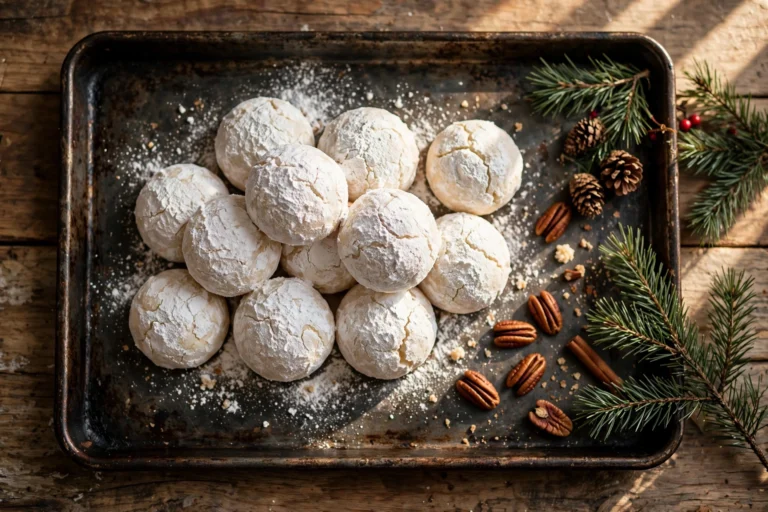
Snowball Cookies
Snowball cookies with toasted pecans ground into the dough and a two roll powdered sugar coating that stays snowy for days. Six ingredients, no eggs, and the dough freezes beautifully for holiday baking.
- Total Time: 1 hour 34 minutes
- Yield: 36 cookies 1x
Ingredients
- 1 cup (120 g) pecan halves
- 1 cup (226 g) unsalted butter, softened to cool room temperature
- 1/2 cup (60 g) powdered sugar, plus 1 1/2 cups (180 g) more for coating
- 2 teaspoons pure vanilla extract
- 1/4 teaspoon fine salt
- 2 1/4 cups (280 g) all-purpose flour, spooned and leveled
Instructions
- Spread the pecans on a small baking sheet and toast at 350°F (175°C) for 7 to 9 minutes, until fragrant and a shade darker. Cool completely, at least 15 minutes.
- Pulse the cooled pecans in a food processor with 2 tablespoons of the flour until they look like coarse sand. Stop before they clump into a paste.
- Beat the butter with the 1/2 cup powdered sugar for about 2 minutes, until pale and smooth. Beat in the vanilla and salt.
- Add the remaining flour and the ground pecan mixture. Mix on low just until a soft, even dough forms and no dry flour remains.
- Press the dough into a flat disc, wrap it, and refrigerate for at least 1 hour and up to 2 days.
- Heat the oven to 325°F (165°C). Line two baking sheets with parchment paper. Scoop the dough into balls of about 1 tablespoon each (roughly 20 g), roll smooth, and pinch the top of each ball slightly so it stands taller.
- Arrange the balls 1 inch apart. Bake one sheet at a time for 13 to 15 minutes, until the bottoms are just turning pale gold and the tops still look matte and light.
- Rest the sheet on a rack for exactly 5 minutes. Sift 3/4 cup of the coating sugar into a wide bowl and roll each warm cookie gently until covered. Move to a wire rack.
- Once the cookies are completely cool, at least 45 minutes, roll them a second time in the remaining sifted sugar until they look freshly snowed on.
- Prep Time: 1 hour 20 minutes
- Cook Time: 14 minutes