Sweet Potato Pie with Brown Butter, Silky and Warmly Spiced
In this article:
- Why Brown Butter Changes This Sweet Potato Pie
- Roast the Sweet Potatoes, Never Boil Them
- Ingredients
- Making the Sweet Potato Pie, Step by Step
- The Jiggle Test: How to Know the Pie Is Done
- A Thanksgiving Week Schedule for This Pie
- Slices That Hold: Cooling, Chilling and Freezing
- Your Sweet Potato Pie Questions, Answered
- The Last Slice Is for the Cook
Sweet potato pie is the dessert my family asks about in October, long before anyone mentions the turkey. This version leans on three quiet upgrades: sweet potatoes roasted until they collapse, butter browned until it smells like toasted nuts, and a filling passed through a sieve so every slice cuts like silk.
Nothing here is fussy. The ingredient list is the classic Southern one, the spices are the ones already in your cabinet, and the pie bakes in a plain 9 inch dish. What changes is the order of operations, and that order is the whole difference between a good pie and the one people talk about on the drive home.
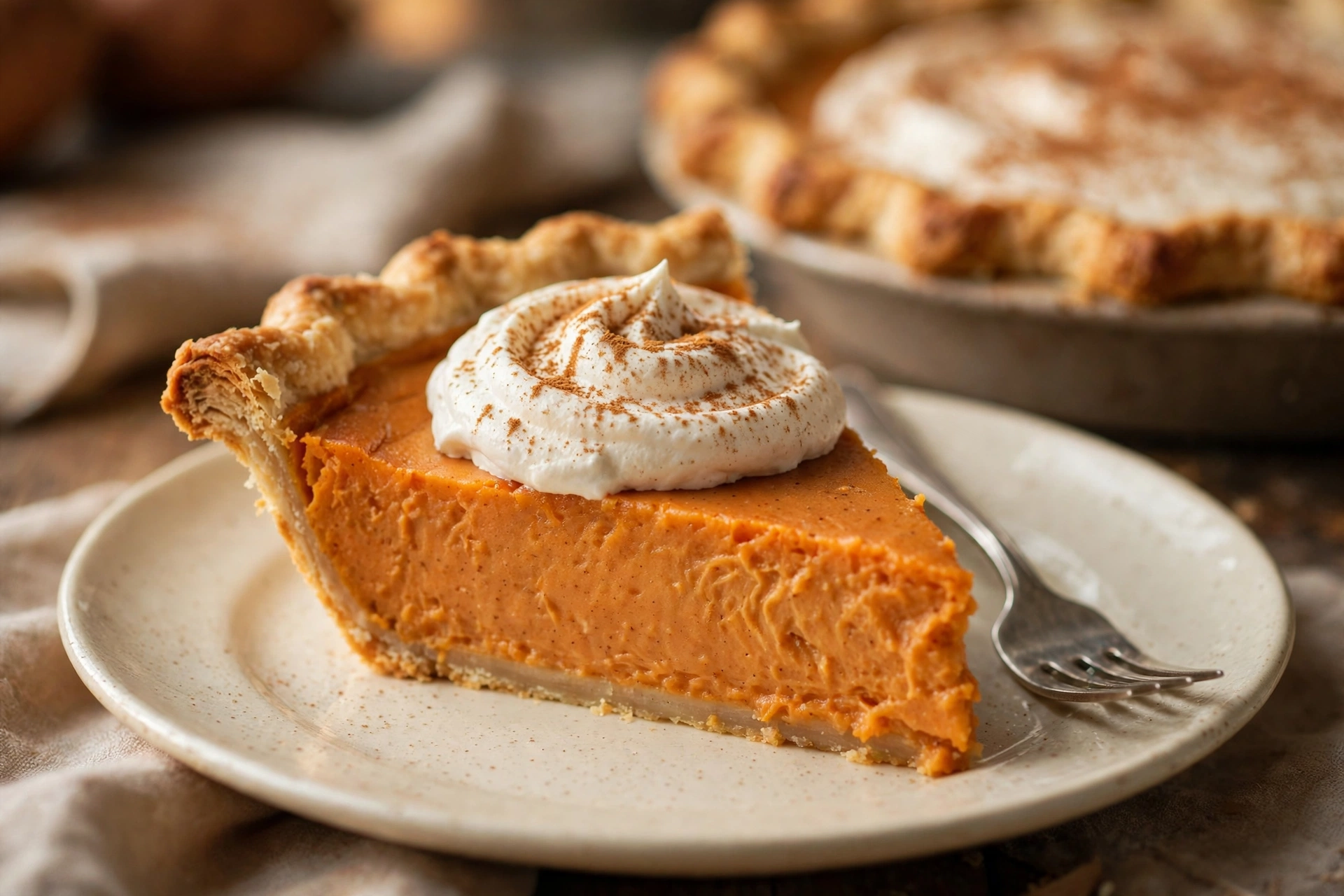
Serve it at room temperature or barely chilled, with whipped cream you sweeten just a little. If your table already has a classic pumpkin pie planned, bake this one anyway: side by side, the sweet potato pie is the deeper, warmer slice, and it is always the first plate emptied.
Why Brown Butter Changes This Sweet Potato Pie
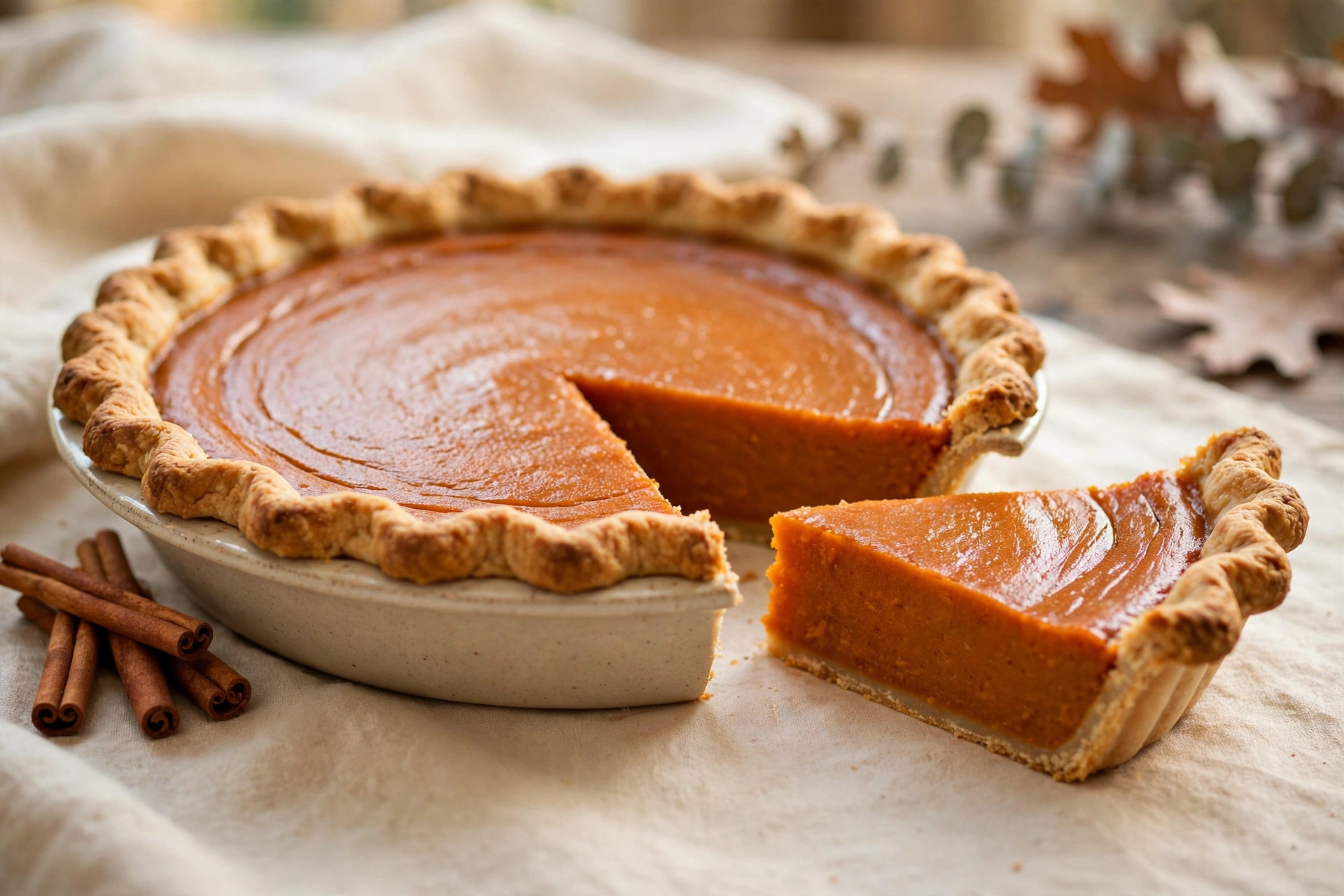
This sweet potato pie works because each step removes a problem before it can happen. Roasting concentrates the potatoes instead of watering them down, brown butter replaces flat sweetness with a toasted, almost caramel depth, and the sieve takes out the strings that ruin the texture of so many homemade pies.
Brown butter is not a garnish here, it is the fat of the filling. As the milk solids toast, the butter picks up the same warm notes as the cinnamon and nutmeg, so the spice tastes baked in rather than sprinkled on. The filling reads richer without a single extra ingredient.
The sugar is measured against the potatoes, not against habit. Roasted sweet potatoes are genuinely sweet, so 1 1/4 cups of total sugar is plenty, split between brown sugar for depth and granulated for a clean finish. Compare that with versions carrying 2 full cups plus a can of condensed milk, and you will taste fruit and spice here instead of syrup.
Evaporated milk does the quiet work of structure. It is concentrated enough to set the custard firmly at a lower temperature than fresh milk, which is how the center stays silky instead of turning grainy or weeping into the crust.
The spice blend is balanced on purpose: cinnamon up front, nutmeg for warmth and a measured half teaspoon of ginger at the back of the palate. Skip the ginger and the pie tastes flat by the second bite; double it and the ginger takes the microphone. This is the ratio that lets the sweet potato stay the headline.
Roast the Sweet Potatoes, Never Boil Them
Boiling is the original sin of sweet potato pie. A boiled potato drinks water the whole time it cooks, and that water ends up in your filling, where it steams, loosens the custard and dulls the flavor you actually want.
Roasting does the opposite. An hour at 400 degrees F drives off moisture, collapses the flesh and caramelizes the natural sugars along the skin. The mashed result is dense, dark orange and sweet enough that you can hold the sugar back with confidence.
Choose potatoes that feel heavy and firm, with tight skin and no soft spots. Long, evenly thick potatoes roast at the same pace; a mix of one giant and two small ones means one is scorched while another is still hard at the core. Three medium potatoes, about 2 1/2 pounds total, give you the 2 1/2 cups of mash this recipe is built on, with a little spare for tasting.
Measure the mash, do not guess it. Too little potato and the pie sets thin and sweet; too much and it bakes up heavy and cracks. Two and a half cups, packed lightly, is the number every test pie in my kitchen agreed on.
Buy the orange fleshed varieties, the ones labeled garnet or jewel at most markets. White and Japanese sweet potatoes bake up drier and paler, closer to chestnut than custard, and they make a filling that tastes like something is missing. The deep orange flesh is also what gives the finished pie its color, with no food coloring anywhere near it.
Ingredients
- 2 1/2 pounds sweet potatoes, about 3 medium, scrubbed
- 1 unbaked 9 inch pie crust, homemade or store bought
- 1/2 cup unsalted butter
- 3/4 cup packed light brown sugar
- 1/2 cup granulated sugar
- 3/4 cup evaporated milk
- 2 large eggs, at room temperature
- 2 teaspoons vanilla extract
- 1 teaspoon ground cinnamon
- 1/2 teaspoon freshly grated nutmeg
- 1/2 teaspoon ground ginger
- 1/4 teaspoon fine sea salt
- Lightly sweetened whipped cream, for serving
The evaporated milk is not interchangeable with sweetened condensed milk here. Condensed milk brings its own cup of sugar to the party, which throws off the balance this filling is built on. If evaporated milk is truly unavailable, use half and half and accept a slightly softer set.
Freshly grated nutmeg matters more than it should. Pre ground nutmeg loses its top notes within weeks of opening, while a whole nut grated over the bowl smells like the pie itself. It takes ten seconds and it is the spice people notice without being able to name.
Making the Sweet Potato Pie, Step by Step
- Heat the oven to 400 degrees F. Prick the sweet potatoes several times with a fork, set them on a foil lined baking sheet, and roast for 55 to 65 minutes, until they slump and a knife slides in with no resistance.
- Cool the potatoes just until you can handle them, about 15 minutes. Split them open and scoop the flesh into a bowl, discarding the skins. Measure out 2 1/2 cups of flesh.
- Beat the warm flesh with a hand mixer for 1 full minute. The fibers will wrap around the beaters; lift them off and discard them. Then press the mash through a medium mesh sieve with a spatula. This is the silky step, and it takes about 3 minutes.
- Melt the butter in a small light colored pan over medium heat. Keep cooking, swirling often, until the foam settles, the milk solids turn amber and it smells nutty, 4 to 5 minutes. Pour it over the warm mash, scraping in every brown bit, and beat until glossy.
- Whisk in the brown sugar, granulated sugar and salt. Add the eggs one at a time, then the evaporated milk, vanilla, cinnamon, nutmeg and ginger. Whisk just until smooth and pourable.
- Lower the oven to 375 degrees F. Fit the crust into a 9 inch pie dish, crimp the edge, line it with parchment and fill with pie weights or dry beans. Blind bake for 10 minutes, then lift out the parchment and weights.
- Pour the filling into the warm crust and smooth the top. Lower the oven to 350 degrees F and bake for 50 to 60 minutes, until the edges are set and puffed slightly and the center still jiggles as one piece.
- Check the center with an instant read thermometer: you want 175 to 180 degrees F. Pull the pie at that point even if the middle looks soft. It finishes setting as it cools.
- Cool the pie on a rack for at least 2 hours. Serve at room temperature, or chill it for cleaner slices. Top each slice with whipped cream.
The Jiggle Test: How to Know the Pie Is Done
More sweet potato pies are ruined in the last ten minutes than in the whole rest of the recipe, because the standard advice is wrong. A toothpick in the center should never come out clean. Clean means the custard has gone past set into dry, and the top will crack as it cools to prove it.
Watch the jiggle instead. Nudge the oven rack gently: the outer two inches of the pie should look set and matte, while the center moves like set gelatin, one slow wobble rather than a ripple. A ripple means liquid; give it 5 more minutes and look again.
The thermometer settles every argument. Custard pies set between 175 and 180 degrees F in the center, and carryover heat adds a few degrees on the counter. Pull at 178 and the slice will hold its edge while staying creamy. Pull at 190 and you are serving sweet potato cake.
If the crust edge races ahead of the filling, shield it with a ring of foil for the last 15 minutes. The filling needs its full time at 350; a dark edge is a small price, but there is no reason to pay it.
A Thanksgiving Week Schedule for This Pie
This pie is built to be made ahead, and spreading the work across the week is how it stays a pleasure instead of one more Thursday task. Sunday or Monday, roast the sweet potatoes, mash and sieve the flesh, and refrigerate it in a covered container for up to 3 days.
Tuesday, blind bake the crust in the morning, then mix and bake the whole pie in the afternoon. A baked sweet potato pie keeps, covered and refrigerated, for 4 days, and its flavor genuinely improves on day two as the spices settle into the filling.
On Thursday, the pie only needs to come out of the fridge an hour before dessert so it loses its chill. Whip the cream while the coffee brews. If a sweet potato casserole with pecan streusel is also on your menu, serve the casserole hot with dinner and keep the pie as the sweet potato voice at dessert; the two never fight.
Taking the pie to another house? Bake it in the dish, cool it completely, then wrap the whole dish in two layers of plastic wrap. It travels flat in a cold car better than almost any other dessert on the table.
Slices That Hold: Cooling, Chilling and Freezing
Give the pie its full 2 hours on the rack. Cutting early is the one mistake that cannot be undone: the center is still finishing its set, and a warm slice slumps on the plate no matter how well the pie was baked.
For the cleanest slices, chill the cooled pie for 2 hours, then cut with a long knife wiped clean between slices. The filling firms to a custard edge and the crust stays distinct, the way the classic homemade pecan pie on our table behaves after its own rest.
Leftovers keep, covered, in the refrigerator for 4 days. The whipped cream should always be added per slice, never to the whole pie, or it weeps into the surface overnight.
To freeze, bake and cool the pie completely, chill it, then wrap the whole pie tightly and freeze for up to 3 months. Thaw overnight in the fridge. The texture survives freezing better than pumpkin pie does, which makes this the pie to bake during a quiet week in early November. For a second custard pie on the table, our eggnog cream pie covers the no bake slot.
Your Sweet Potato Pie Questions, Answered
Can I use canned sweet potato instead of roasting fresh ones?
Yes, with one adjustment. Drain the canned potatoes very well, then spread them on a sheet pan and roast at 400 degrees F for 15 minutes to dry them out. Canned flesh holds packing liquid, and skipping the drying step gives you a loose, pale filling.
Why did my filling come out stringy?
The fibers run lengthwise through the potato and survive mashing. Beating the warm flesh wraps them around the beaters so you can lift them away, and the sieve catches the rest. Boiled potatoes hide their strings better but pay for it with a watery filling.
The top of my pie cracked. Can I fix it?
A crack means the pie baked a few minutes too long or cooled in a draft. It is cosmetic only. A full layer of whipped cream covers it completely, and small cracks close noticeably if the pie chills slowly in the fridge rather than on a cold counter.
Can I freeze the baked pie?
Yes, and it freezes beautifully. Cool it, chill it, wrap it tightly in two layers and freeze up to 3 months. Thaw in the refrigerator overnight and let it stand at room temperature for an hour before serving.
Does a deep dish pan change the bake?
It does. A deep dish holds the same filling thicker, so add 8 to 10 minutes and judge by the jiggle and the 175 to 180 degree reading, not the clock. Never pour leftover filling into a second small pie and bake both at once; the small one overbakes.
The Last Slice Is for the Cook
A good sweet potato pie tastes like the cook took her time, even when most of that time was the oven’s. Roast the potatoes, brown the butter, sieve the filling, and this pie does the rest itself.
Bake it once this season, exactly as written, and you will understand why the last slice in my house never makes it to the fridge. It goes on a small plate, with the coffee, after the kitchen is clean.
Print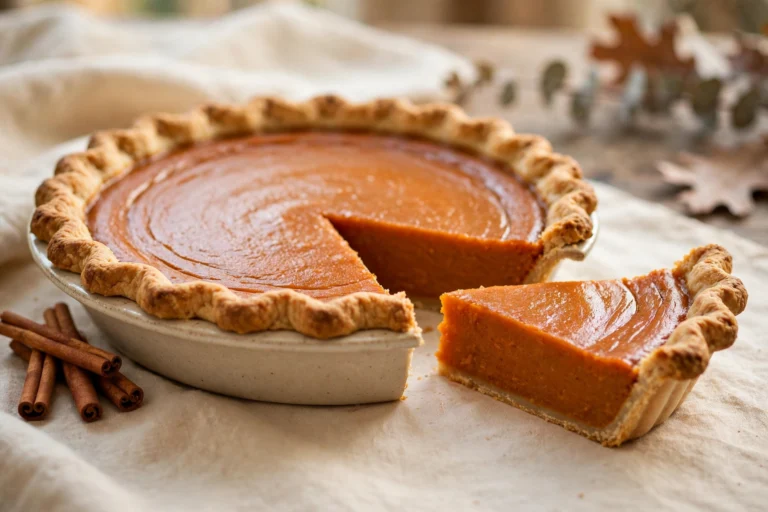
Sweet Potato Pie with Brown Butter
A Southern sweet potato pie built on roasted (never boiled) sweet potatoes, brown butter and a filling pressed through a sieve for a truly silky slice. The crust is blind baked for 10 minutes so the bottom stays crisp, and doneness is judged by the jiggle plus a 175 to 180 degree center reading. Prep time excludes the 2 hour cooling.
- Total Time: 2 hours 30 minutes
- Yield: 1 pie, 8 slices 1x
Ingredients
- 2 1/2 pounds sweet potatoes, about 3 medium, scrubbed
- 1 unbaked 9 inch pie crust, homemade or store bought
- 1/2 cup unsalted butter
- 3/4 cup packed light brown sugar
- 1/2 cup granulated sugar
- 3/4 cup evaporated milk
- 2 large eggs, at room temperature
- 2 teaspoons vanilla extract
- 1 teaspoon ground cinnamon
- 1/2 teaspoon freshly grated nutmeg
- 1/2 teaspoon ground ginger
- 1/4 teaspoon fine sea salt
- Lightly sweetened whipped cream, for serving
Instructions
- Heat the oven to 400 degrees F. Prick the sweet potatoes several times with a fork, set them on a foil lined baking sheet, and roast for 55 to 65 minutes, until they slump and a knife slides in with no resistance.
- Cool the potatoes just until you can handle them, about 15 minutes. Split them open and scoop the flesh into a bowl, discarding the skins. Measure out 2 1/2 cups of flesh.
- Beat the warm flesh with a hand mixer for 1 full minute. Lift off and discard the fibers that wrap around the beaters, then press the mash through a medium mesh sieve with a spatula.
- Melt the butter in a small light colored pan over medium heat. Keep cooking, swirling often, until the foam settles, the milk solids turn amber and it smells nutty, 4 to 5 minutes. Pour it over the warm mash, scraping in every brown bit, and beat until glossy.
- Whisk in the brown sugar, granulated sugar and salt. Add the eggs one at a time, then the evaporated milk, vanilla, cinnamon, nutmeg and ginger. Whisk just until smooth and pourable.
- Lower the oven to 375 degrees F. Fit the crust into a 9 inch pie dish, crimp the edge, line it with parchment and fill with pie weights or dry beans. Blind bake for 10 minutes, then lift out the parchment and weights.
- Pour the filling into the warm crust and smooth the top. Lower the oven to 350 degrees F and bake for 50 to 60 minutes, until the edges are set and the center still jiggles as one piece and reads 175 to 180 degrees F in the center.
- Cool the pie on a rack for at least 2 hours. Serve at room temperature, or chill it for cleaner slices. Top each slice with whipped cream.
- Prep Time: 25 minutes
- Cook Time: 2 hours 5 minutes
Nutrition
- Serving Size: 1
- Calories: 470
- Sugar: 44
- Sodium: 290
- Fat: 21
- Saturated Fat: 11
- Unsaturated Fat: 8
- Trans Fat: 0
- Carbohydrates: 68
- Fiber: 3
- Protein: 5
- Cholesterol: 95