

Chocolate Crinkle Cookies, Fudgy Centers Under a Snowy Crackle
In this article:
- Why These Chocolate Crinkle Cookies Crack So Boldly
- A Brownie in Cookie Clothing
- The Chill Is Not Optional, and Here Is Why
- The Double Sugar Roll, Coat by Coat
- Ingredients for Chocolate Crinkle Cookies
- How to Make Chocolate Crinkle Cookies, Step by Step
- Fixes for Pale Cracks and Flat Cookies
- Peppermint, Orange and Other Holiday Variations
- Cookie Box Storage, Freezing and Stacking
- The First Cookie to Vanish From the Box
- FAQ
Why These Chocolate Crinkle Cookies Crack So Boldly
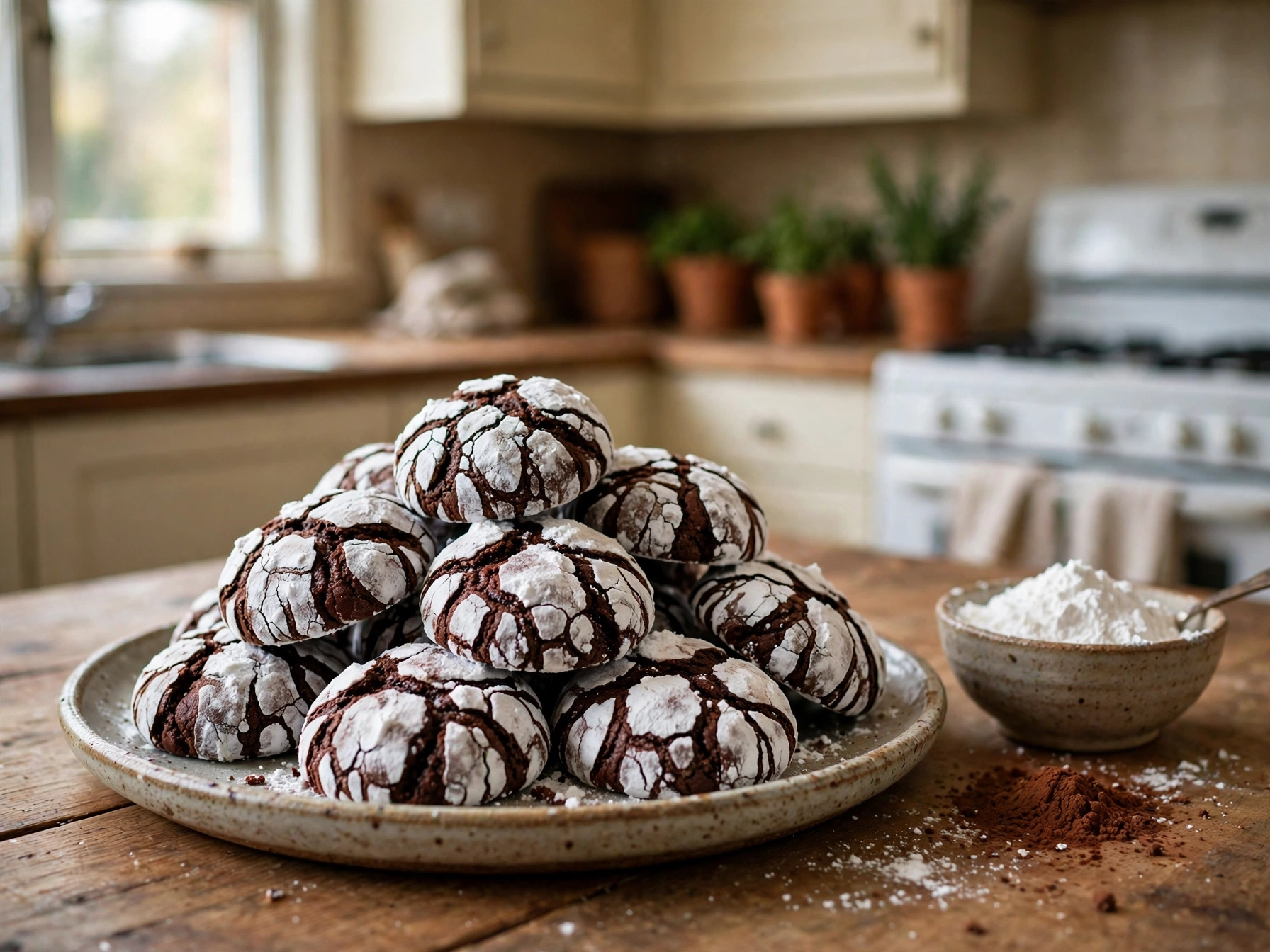
Chocolate crinkle cookies succeed or fail on one picture: a dark cookie split by wide, white cracks. That picture is not decoration applied at the end, it is physics. The sugar crust dries in the oven while the center of the cookie is still rising, and the expanding dough splits the crust open along bright white seams.
Everything in this recipe protects that split. The dough is chilled until firm, so it spreads slowly and gives the crust time to set before the cookie widens. The coating is doubled, a thin layer of granulated sugar under a thick blanket of powdered sugar, so no moisture from the dough can soak through and turn the white coat beige.
The base is melted butter whisked with two sugars and cocoa, closer to brownie batter than to a creamed cookie dough. That is deliberate. A brownie base bakes into a soft, dense, fudgy center, and the crinkle cookie is really a brownie that learned to wear a sugar coat.
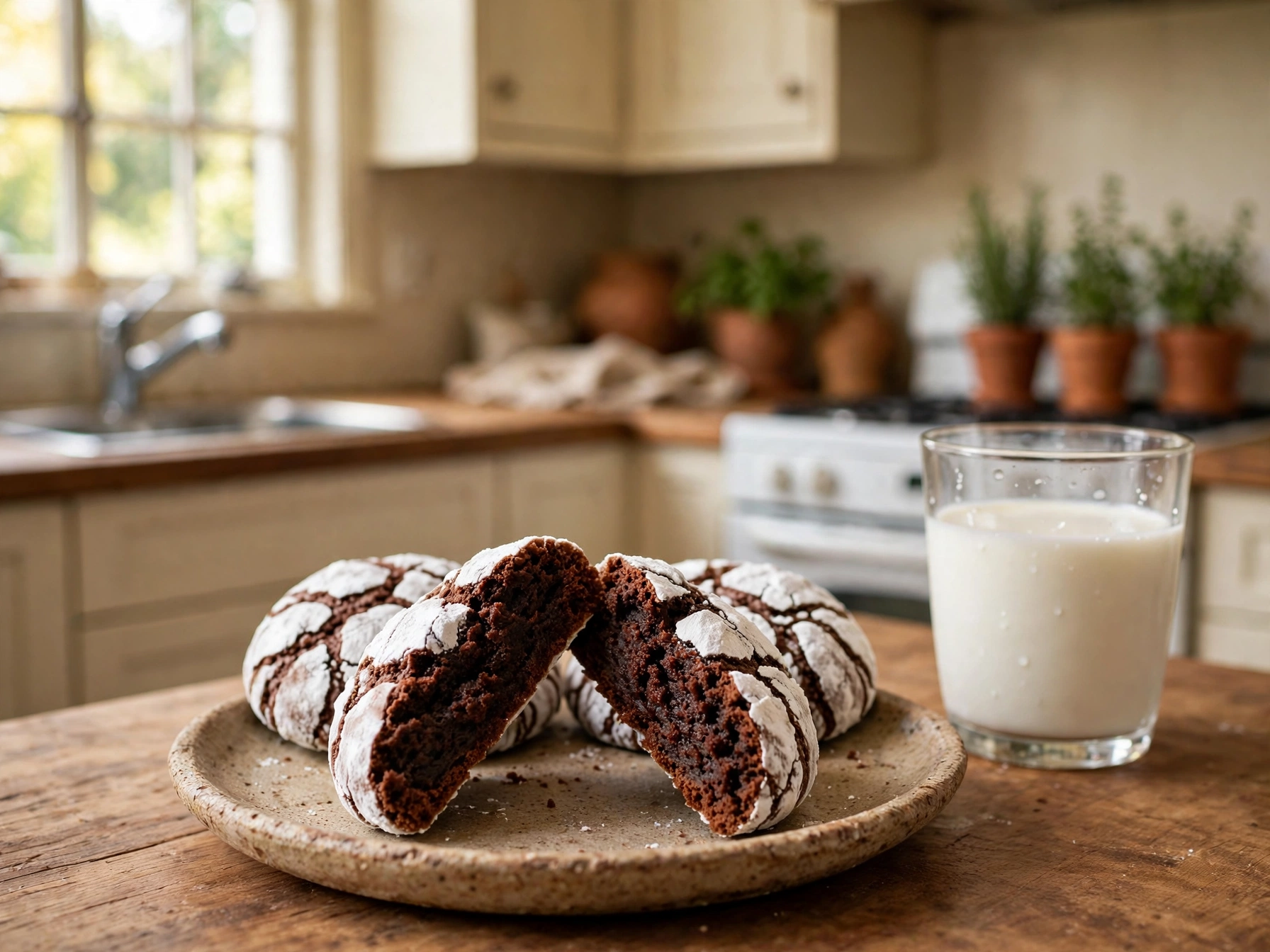
The bake is short and the judgment call is clear: out of the oven while the centers still look soft. The cookies finish setting on the hot pan, and that last, gentle carryover is what keeps the middle fudgy instead of cakey and dry.
A Brownie in Cookie Clothing
The first bite breaks through a delicate sugar crust into a center that eats like the middle of a brownie pan. It is dense without being heavy, soft without falling apart, and deeply chocolate in a way that cocoa alone rarely manages.
Dutch process cocoa is doing quiet work here. Its mellow, dark flavor reads as more chocolate, less sharpness, and its color gives the cracks their dramatic contrast. Against the white sugar, the cookie looks almost black, which is exactly the drama a Christmas tray wants. Cocoa is concentrated stuff, as the USDA FoodData Central entry for unsweetened cocoa shows: a deep flavor return for a very small spoonful.
Brown sugar adds chew and a faint caramel note under the chocolate. Granulated sugar keeps the structure and the sweetness clean. Together they give the crumb a soft pull at the edges, the texture people describe as fudgy without quite knowing why.
The optional teaspoon of espresso powder deserves a word, because it scares people off for the wrong reason. At this dose it does not make the cookies taste like coffee. It deepens the chocolate the way a pinch of salt deepens caramel, invisibly, and most tasters simply say the cookies taste more intense.
Served slightly warm, the centers go almost molten at the edges. Served cold from the tin the next day, they firm into something closer to fudge. Both versions have their loyalists, and the argument is a pleasant one to have.
The Chill Is Not Optional, and Here Is Why
Recipes argue about chill time for these cookies, from thirty minutes to overnight, and the disagreement hides the real point. The chill is not about convenience or flavor alone. Cold dough is the mechanism that makes the cracks white, thick and dramatic instead of thin and gray.
Here is the chain of events. Warm, soft dough spreads fast in the oven, and as it spreads it stretches and thins the sugar coat until the coat cracks into a faint web and drinks in moisture from the dough. The result is the pale, patchy cookie in every disappointed comment section.
Firm, cold dough spreads slowly. The surface dries and sets while the cookie is still domed, then the rising center pushes outward and splits that set crust into wide, clean cracks. The powdered sugar stays on the surface, dry and white, because the dough beneath it never had time to soak it.
Two hours is the working minimum in my kitchen, and overnight is even better if the baking is spread across a weekend. The dough also scoops cleanly when it is cold, which makes the rolling step faster and far less sticky.
The Double Sugar Roll, Coat by Coat
The first coat is granulated sugar, and its job is protection. Rolled over the ball of dough, it forms a thin, dry barrier between the moist dough and the powdered sugar. Moisture that reaches powdered sugar dissolves it, and dissolved powdered sugar bakes up beige and blotchy.
The second coat is the visible one, and it should be generous to the point of excess. Roll the ball in sifted powdered sugar until it looks like a snowball, with no dark dough showing anywhere. Thin spots become dark spots; the crack pattern can only be as bold as the coat you gave it.
Two handling rules finish the job. First, never flatten the balls: a dome cracks dramatically, a disc just spreads. Second, bake promptly once the tray is coated, because a coated ball sitting on the counter is quietly drinking moisture the whole time.
Work in small batches if your kitchen is warm, coating one tray at a time and keeping the rest of the dough in the refrigerator. It feels fussy for exactly one tray, and then the first batch comes out of the oven and it stops feeling fussy.
Ingredients for Chocolate Crinkle Cookies
- 1/2 cup unsalted butter, melted and cooled slightly
- 1 cup granulated sugar, plus 1/3 cup for rolling
- 1/2 cup packed light brown sugar
- 2 large eggs, at room temperature
- 2 teaspoons vanilla extract
- 3/4 cup Dutch process cocoa powder, sifted
- 1 teaspoon instant espresso powder, optional
- 1 1/4 cups all-purpose flour, spooned and leveled
- 1 teaspoon baking powder
- 1/2 teaspoon fine sea salt
- 1 cup powdered sugar, sifted, for rolling
How to Make Chocolate Crinkle Cookies, Step by Step
- Whisk the melted butter with the 1 cup of granulated sugar and the brown sugar in a large bowl for about 1 minute, until glossy and combined.
- Whisk in the eggs one at a time, then the vanilla and the espresso powder if using, until the mixture is smooth and shiny.
- Sift the cocoa powder over the bowl and whisk until no dry streaks remain. The mixture will be thick and dark, like brownie batter.
- Fold in the flour, baking powder and salt with a spatula until a soft, sticky dough forms. Stop as soon as the last flour disappears; overmixing makes the cookies tough.
- Cover the bowl and refrigerate the dough for at least 2 hours and up to overnight. Cold dough is what keeps the sugar coat white and the cookies thick.
- Heat the oven to 350°F and line 2 large sheet pans with parchment paper. Put the 1/3 cup of granulated sugar in one shallow bowl and the powdered sugar in another.
- Scoop portions of about 1 1/2 tablespoons and roll them into balls with cool, dry hands. Roll each ball first in the granulated sugar, then roll it generously in the powdered sugar until it is thickly white all over, with no dark dough showing.
- Set the balls on the prepared pans about 2 inches apart and do not flatten them. Bake one pan at a time for 10 to 12 minutes, until the edges are set, the tops are boldly cracked and the centers still look soft and slightly underdone.
- Rest the cookies on the hot pan for 5 minutes, where they finish setting, then move them to a rack to cool completely.
Fixes for Pale Cracks and Flat Cookies
Pale, beige cracks almost always trace back to the coat, not the dough. Either the powdered sugar layer was too thin, or the dough was warm enough to soak it before the crust set. The double roll and a full chill solve both causes at once, which is why this recipe insists on them.
Flat cookies point at temperature or measurement. Dough that waited on the counter while the oven heated, butter that went in hot enough to melt the sugars into syrup, or flour scooped from the bag instead of spooned and leveled all end in spread. Spoon and level the flour; it is the quiet difference between a dome and a puddle.
Cakey, dry centers mean the bake ran long. These cookies should look slightly underdone in the middle when the pan comes out, because the hot pan keeps cooking them for five more minutes. If your oven runs hot, pull them at the early edge of the time range and let the pan do the rest.
One more small thing: sift the powdered sugar. Lumpy sugar coats unevenly, and the thin spots between lumps are exactly where the dark dough will peek through and break the pattern. Thirty seconds with a sieve buys a cleaner crack on every single cookie.
Peppermint, Orange and Other Holiday Variations
Peppermint is the natural Christmas variation: replace half the vanilla with peppermint extract and press a pinch of finely crushed candy cane into the top of each cookie the moment it leaves the oven. The red flecks against the white cracks make the tray look decorated without any decorating.
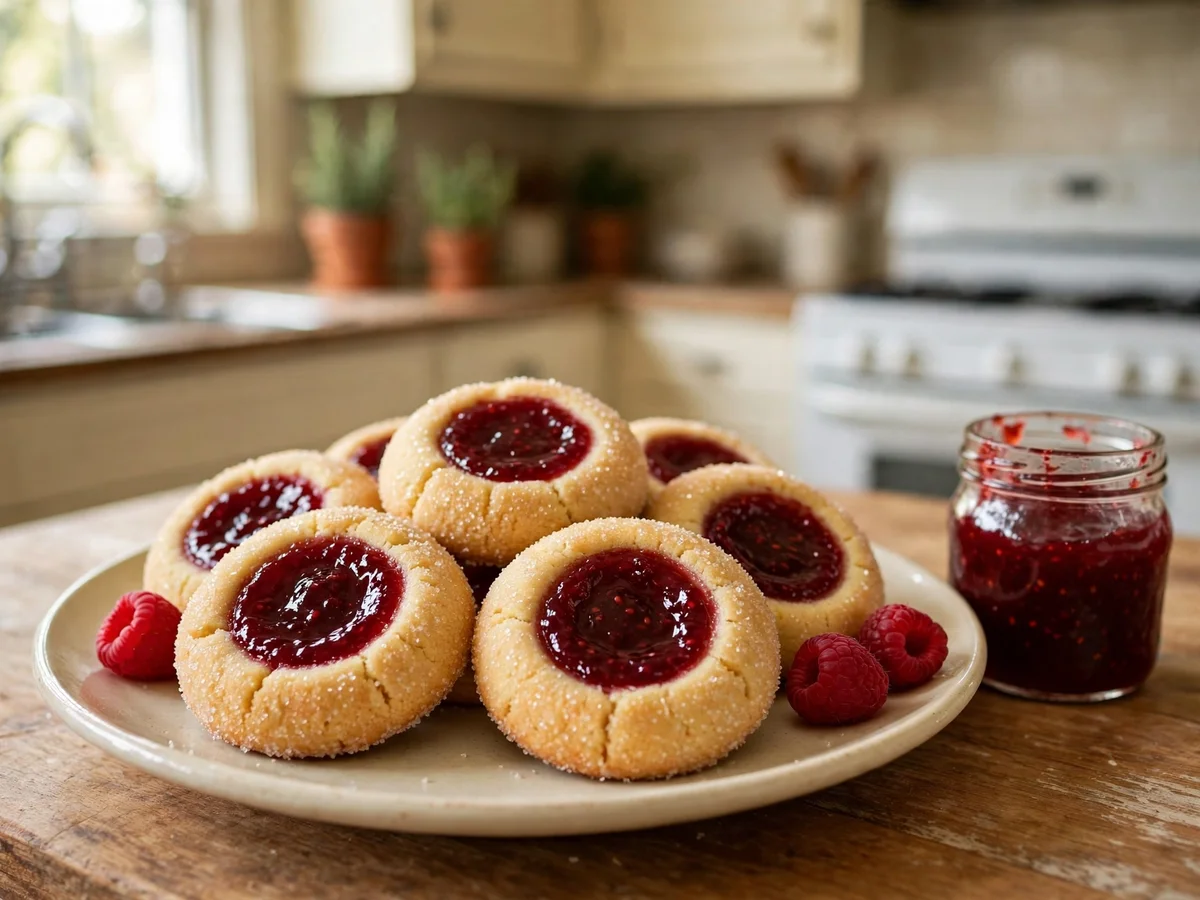
An orange version swaps the espresso powder for a teaspoon of finely grated orange zest whisked in with the eggs. Chocolate and orange is an old, confident pairing, and the zest perfumes the whole tin. It sits beautifully beside the chocolate raspberry crinkle cookies in a mixed box.
For a spiced, warmer profile, add half a teaspoon of cinnamon and a pinch of cayenne to the flour. The heat arrives late and gently, more warmth than fire, and it makes these the cookies adults reach for after the children have gone to bed.
The crinkle family is worth exploring once the base is yours. Our red velvet crinkle cookies bring the color, the gingerbread crinkle cookies bring the spice, and this dark chocolate original remains the one the other two are measured against.
Cookie Box Storage, Freezing and Stacking
Baked cookies keep in a metal tin at room temperature for up to a week, layered between sheets of parchment so the sugar coats stay clean. The cracks stay white for days; what fades first is the softness of the center, which a ten second warm through in a low oven restores.
The dough freezes beautifully, which makes these a genuine make ahead cookie for December. Scoop and roll the balls, freeze them solid on a tray, then store them in a bag for up to 2 months. Coat them in both sugars straight from the freezer, add a minute to the bake, and nobody will know.
For a gift box, pack crinkles with sturdy neighbors and a little distance from strong flavors, since cocoa and butter pick up neighboring scents. A box built around these, our hot chocolate cookies and a loaf of christmas stollen covers every kind of sweet tooth on the list.
If you ship cookies, crinkles travel well: firm edges, no frosting to smear, no filling to leak. Pack them snug so they cannot rattle, in the tin they were stored in if it fits the box, and they arrive looking like the photograph.
The First Cookie to Vanish From the Box
Every cookie tray has a hierarchy, and it is never the fanciest cookie that disappears first. It is the one that looks like winter and eats like a brownie, the one with the dramatic cracks that make people reach before the coffee is even poured.
Chocolate crinkle cookies hold that title because they deliver on the look. The contrast promises intensity, and the fudgy center pays the promise off. That is a rare and valuable thing in holiday baking, where plenty of beautiful cookies are quietly disappointing.
Make them once with the real chill and the double roll, and the technique becomes part of your December. The dough waits in the freezer, the tin fills the house with chocolate, and the box that leaves your kitchen is the one people talk about in January.
FAQ
Why did my chocolate crinkle cookies not crack?
The usual cause is dough that was too warm or coated balls that waited too long before baking, so the surface never dried and set. Chill the dough the full 2 hours, coat one tray at a time and bake it immediately. A domed, cold ball with a thick sugar coat cracks as it rises.
Why did the powdered sugar turn beige and blotchy on my crinkles?
Moisture from the dough soaked into the sugar before the crust set. The granulated sugar first coat is the fix: it works as a dry barrier under the powdered sugar. Also sift the powdered sugar and coat thickly, until no dark dough shows anywhere on the ball.
Can I make chocolate crinkle cookie dough without the overnight chill?
Two hours is the real minimum for bold cracks and thick cookies, though the dough technically bakes after 1 hour with paler results. If you are truly pressed, scoop the balls first and chill them on the tray for 45 minutes; small pieces of dough firm up faster than the whole bowl.
Can I use natural cocoa powder instead of Dutch process in crinkle cookies?
Yes, the recipe works with natural cocoa because the leavening is baking powder, which does not depend on cocoa acidity. The cookies will taste a little sharper and look a shade lighter, so the cracks read slightly less dramatic. Dutch process gives the darkest color and the mellowest flavor.
How do I know when crinkle cookies are done if the centers look raw?
Look at the edges and the cracks, not the very center. Done cookies have set, matte edges and wide cracks, with a center that still looks soft and slightly glossy. They finish setting during the 5 minute rest on the hot pan; if the center already looks dry in the oven, they will cool cakey.

Chocolate Crinkle Cookies
A soft, sticky cocoa dough built on melted butter, chilled until firm, then rolled twice, first in granulated sugar as a moisture barrier and again in a thick coat of powdered sugar, so every cookie bakes up with a fudgy brownie center and bold snowy cracks that stay white in the cookie box.
- Total Time: 2 hours 45 minutes
- Yield: 30 cookies 1x
Ingredients
- 1/2 cup unsalted butter, melted and cooled slightly
- 1 cup granulated sugar, plus 1/3 cup for rolling
- 1/2 cup packed light brown sugar
- 2 large eggs, at room temperature
- 2 teaspoons vanilla extract
- 3/4 cup Dutch process cocoa powder, sifted
- 1 teaspoon instant espresso powder, optional
- 1 1/4 cups all-purpose flour, spooned and leveled
- 1 teaspoon baking powder
- 1/2 teaspoon fine sea salt
- 1 cup powdered sugar, sifted, for rolling
Instructions
- Whisk the melted butter with the 1 cup of granulated sugar and the brown sugar in a large bowl for about 1 minute, until glossy and combined.
- Whisk in the eggs one at a time, then the vanilla and the espresso powder if using, until the mixture is smooth and shiny.
- Sift the cocoa powder over the bowl and whisk until no dry streaks remain. The mixture will be thick and dark, like brownie batter.
- Fold in the flour, baking powder and salt with a spatula until a soft, sticky dough forms. Stop as soon as the last flour disappears; overmixing makes the cookies tough.
- Cover the bowl and refrigerate the dough for at least 2 hours and up to overnight. Cold dough is what keeps the sugar coat white and the cookies thick.
- Heat the oven to 350°F and line 2 large sheet pans with parchment paper. Put the 1/3 cup of granulated sugar in one shallow bowl and the powdered sugar in another.
- Scoop portions of about 1 1/2 tablespoons and roll them into balls with cool, dry hands. Roll each ball first in the granulated sugar, then roll it generously in the powdered sugar until it is thickly white all over, with no dark dough showing.
- Set the balls on the prepared pans about 2 inches apart and do not flatten them. Bake one pan at a time for 10 to 12 minutes, until the edges are set, the tops are boldly cracked and the centers still look soft and slightly underdone.
- Rest the cookies on the hot pan for 5 minutes, where they finish setting, then move them to a rack to cool completely.
- Prep Time: 20 minutes
- Cook Time: 11 minutes
Nutrition
- Serving Size: 1
- Calories: 110
- Sugar: 14
- Sodium: 55
- Fat: 4
- Saturated Fat: 3
- Unsaturated Fat: 1
- Trans Fat: 0
- Carbohydrates: 19
- Fiber: 1
- Protein: 1
- Cholesterol: 20
2 thoughts on “Chocolate Crinkle Cookies, Fudgy Centers Under a Snowy Crackle”