Homemade Eggnog, Cooked Silky and Ready for Every Guest
In this article:
- Why This Homemade Eggnog Cooks to 160 Degrees and Stays Silky
- Ingredients for a Pitcher of Homemade Eggnog
- How to Make Homemade Eggnog, Step by Step
- Tempering the Yolks, One Spoonful at a Time
- Too Thick, Too Thin: Eggnog Fixes With a Spoon and a Thermometer
- Fresh Nutmeg and the Overnight Meld
- Serving Eggnog to a Christmas Crowd
- Storage and Safety: Four Days in the Fridge, No Raw Eggs Anywhere
- A Pitcher That Belongs Next to the Tree
- FAQ
Homemade Eggnog, made properly on the stove, tastes nothing like the carton. It is a thin, silky custard you drink cold, sweet and warm with nutmeg, rich without sitting heavy. The first glass usually ends with the same sentence: I did not know it was supposed to taste like this.
This version is cooked to a measured 160 degrees F, so every guest at the table can drink it without a second thought, children included. There are no raw eggs in any direction, and nothing in the pitcher needs an apology or an explanation.
It also asks for almost nothing exotic: yolks, milk, cream, sugar and spice, one saucepan and one thermometer. Make it on December 23 and it is at its best on Christmas Eve and Christmas Day, when the flavors have had a night to settle into each other.
Why This Homemade Eggnog Cooks to 160 Degrees and Stays Silky
Homemade Eggnog is a custard that happens to be drinkable, and it works when the custard is cooked with precision instead of hope. Egg yolks thicken as they warm, turning milk and cream into something with body. Push the heat too far and they seize into sweet scrambled eggs; stop too early and the drink stays thin and raw tasting.
The target is exact: 160 degrees F, the temperature at which the yolks are cooked through and the mixture coats the back of a spoon. A thermometer removes the guessing. At that number the base is smooth, safe and stable, and it will not break when the cold cream folds in later.
The second reason this works is restraint with the dairy. All of the milk and part of the cream cook into the base, while the rest of the cream is whipped and folded in cold at the end. That last addition gives the drink its lift, a soft lightness that a fully cooked, fully heavy eggnog never has.
The third reason is time. An overnight chill is not storage here, it is an ingredient. The nutmeg blooms, the vanilla rounds out, and the slight eggy edge of a fresh custard disappears completely. Eggnog made at noon tastes fine; eggnog made yesterday tastes finished.
Ingredients for a Pitcher of Homemade Eggnog
- 6 large egg yolks
- 1/2 cup granulated sugar
- 2 cups whole milk
- 1 1/2 cups heavy cream, divided
- 1/4 teaspoon ground cinnamon
- 1/8 teaspoon fine sea salt
- 1 teaspoon vanilla extract
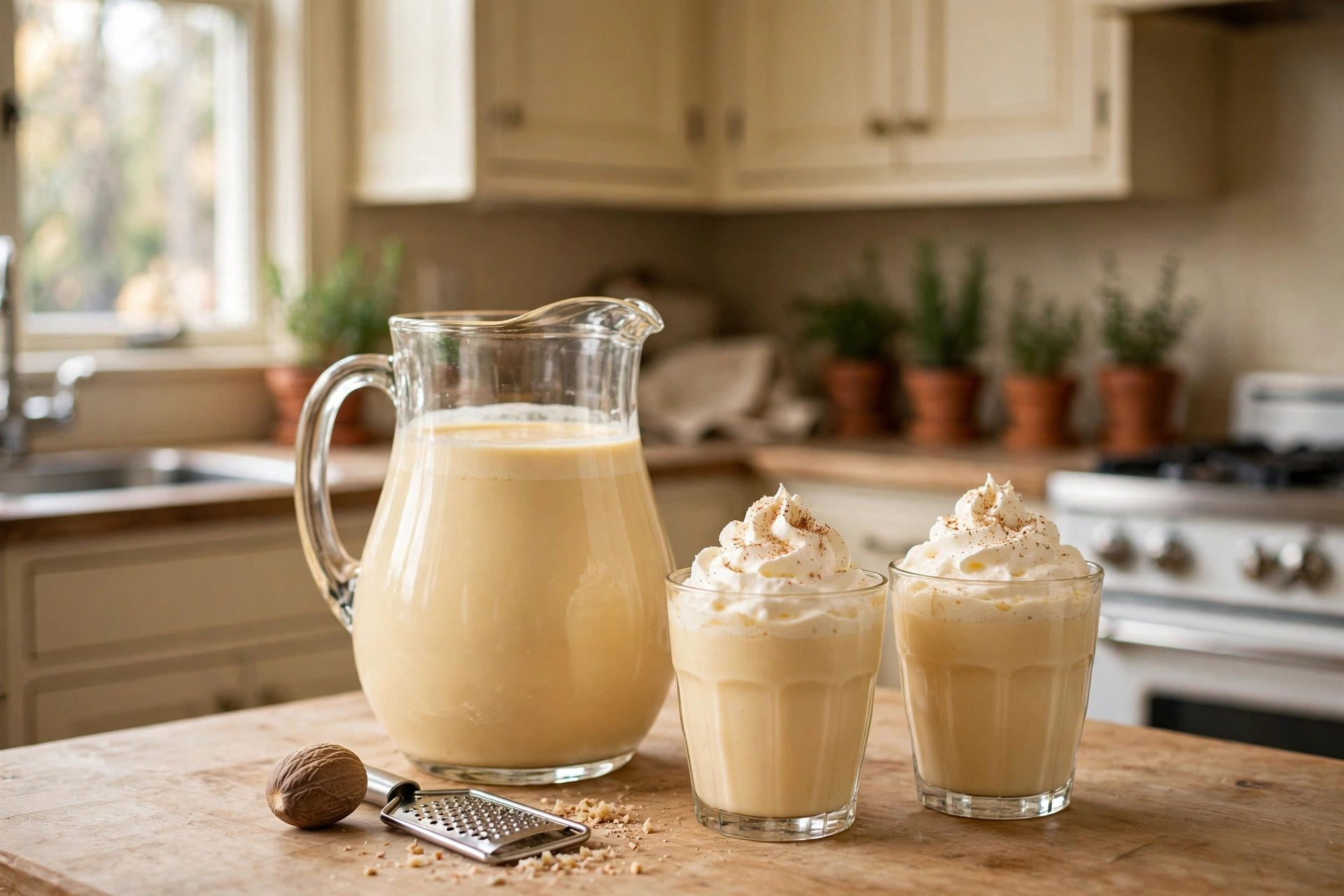
- 1/2 teaspoon freshly grated nutmeg, plus more for serving
The yolks carry the recipe, so use fresh eggs from a cold case and keep them refrigerated until the moment you separate them. Save the whites for another baking day; nothing raw goes into this pitcher, including whipped whites.
Fresh nutmeg matters more than any other choice on this list. A whole nutmeg grated over the finished base perfumes the whole pitcher, while pre ground nutmeg from an old jar tastes dusty by comparison. One nutmeg lasts for many holidays, so it is a small purchase with a long memory.
How to Make Homemade Eggnog, Step by Step
- Whisk the egg yolks and sugar in a medium heatproof bowl until the mixture turns pale yellow and thick enough to fall in a slow ribbon, about 2 minutes by hand. This base should look like soft custard before any heat touches it.
- Pour the milk, 1 cup of the heavy cream, the cinnamon and the salt into a heavy saucepan. Warm over medium heat, stirring now and then, until the surface steams and small bubbles gather at the edges, about 150 degrees F. Do not let it boil.
- Temper the yolks: ladle the hot milk into the yolk bowl one spoonful at a time for the first quarter cup, whisking constantly, then pour the rest in a thin stream until about half the milk is in. The yolks should now feel warm, never hot, to a clean fingertip.
- Pour everything back into the saucepan and cook over medium low heat, stirring constantly with a spatula and scraping the bottom and corners. Cook until the mixture reaches 160 degrees F and coats the back of a spoon, holding a clean line when you run a finger through it, 4 to 6 minutes. Never let it boil.
- Take the pan off the heat at once and pour the custard through a fine mesh strainer into a clean bowl set over a larger bowl of ice. Stir until the steam fades, about 5 minutes. This stops the cooking cold, so the texture stays silky instead of creeping toward pudding.
- Stir in the vanilla and the freshly grated nutmeg. Cover the bowl and refrigerate until fully cold, at least 4 hours and better overnight.
- Whip the remaining 1/2 cup of heavy cream to soft peaks, the kind that curl over gently when you lift the whisk. Fold it into the cold eggnog in two additions, keeping as much air as you can.
- Pour into small glasses, grate fresh nutmeg over each one, and serve cold. The pitcher goes back into the refrigerator between rounds, not onto the counter for the evening.
Tempering the Yolks, One Spoonful at a Time
Tempering is the step that decides whether your eggnog is silk or soup with lumps, and it rewards patience out of all proportion to its effort. Cold yolks hit with a flood of hot milk cook on contact, in tiny curds that no straining fully forgives. The same yolks, warmed gradually, melt into the milk without a trace.
The spoonful stage is the whole secret. For the first quarter cup of hot milk, add it literally a spoonful at a time and whisk without stopping. After that the yolks are warm enough to accept a thin stream, and the rest is easy. Rushing the first spoonfuls is the only way this step fails.
If you do see a few small cooked flecks, do not panic and do not start over. The strainer in the recipe exists for exactly this. Pour slowly, let the strainer catch them, and the finished drink will still be smooth. Next time, one more spoonful of patience at the start.
Too Thick, Too Thin: Eggnog Fixes With a Spoon and a Thermometer
Eggnog that pours like pudding was cooked past its number, usually toward 175 degrees F, where the yolks tighten hard. The fix is mechanical, not chemical: whisk in cold milk a tablespoon at a time until the drink pours in a ribbon again, then fold in a little extra whipped cream to restore the lightness.
Eggnog that tastes thin and sweet was pulled too early, before the yolks had done their work. If it is still in the pan, keep cooking and stirring to a true 160 degrees F.
If it is already chilled, whisk 1 teaspoon of cornstarch with 2 tablespoons of cold milk, stir it into the base, and warm the whole batch back to 160 degrees F, stirring until it just thickens.
Judge thickness cold, always. A custard base looks deceptively loose while warm and sets up as it chills. The spoon test in the pan, a coating that holds a finger line, is the only warm judgment to trust; the glass test happens the next day.
Fresh Nutmeg and the Overnight Meld
Nutmeg is not a garnish in this recipe, it is the signature. Half a teaspoon grated into the warm base seasons the whole pitcher, and a second, lighter grating over each glass at serving brings the scent up to the nose before the first sip. Warm spice in the drink, fresh spice on the drink: the two layers read as one flavor.
Cinnamon stays in the background on purpose, a quarter teaspoon cooked into the milk, there to deepen the nutmeg rather than announce itself. If your household loves cinnamon, add a cinnamon stick to the pitcher for the overnight chill and remove it before serving; the flavor stays round instead of dusty.
And give the pitcher its night. Fresh eggnog has a faint cooked egg note that bothers some drinkers, and it vanishes completely after 12 hours in the cold as the vanilla and spices settle in. December 23 is the day to make it, and the recipe is written with exactly that plan in mind.
Serving Eggnog to a Christmas Crowd
For a party, double the recipe in the same pan rather than making two batches; the method does not change, only the stirring time grows by a few minutes. Chill the full pitcher, then set it in a wide bowl of ice on the table so the last glass of the evening is as cold as the first.
Serve in small glasses, 3/4 cup at a time. Eggnog is rich, and small pours stay cold and inviting while a large mug warms and cloys. Keep the nutmeg and the grater beside the pitcher and grate over each glass to order; the scent is half the serving.
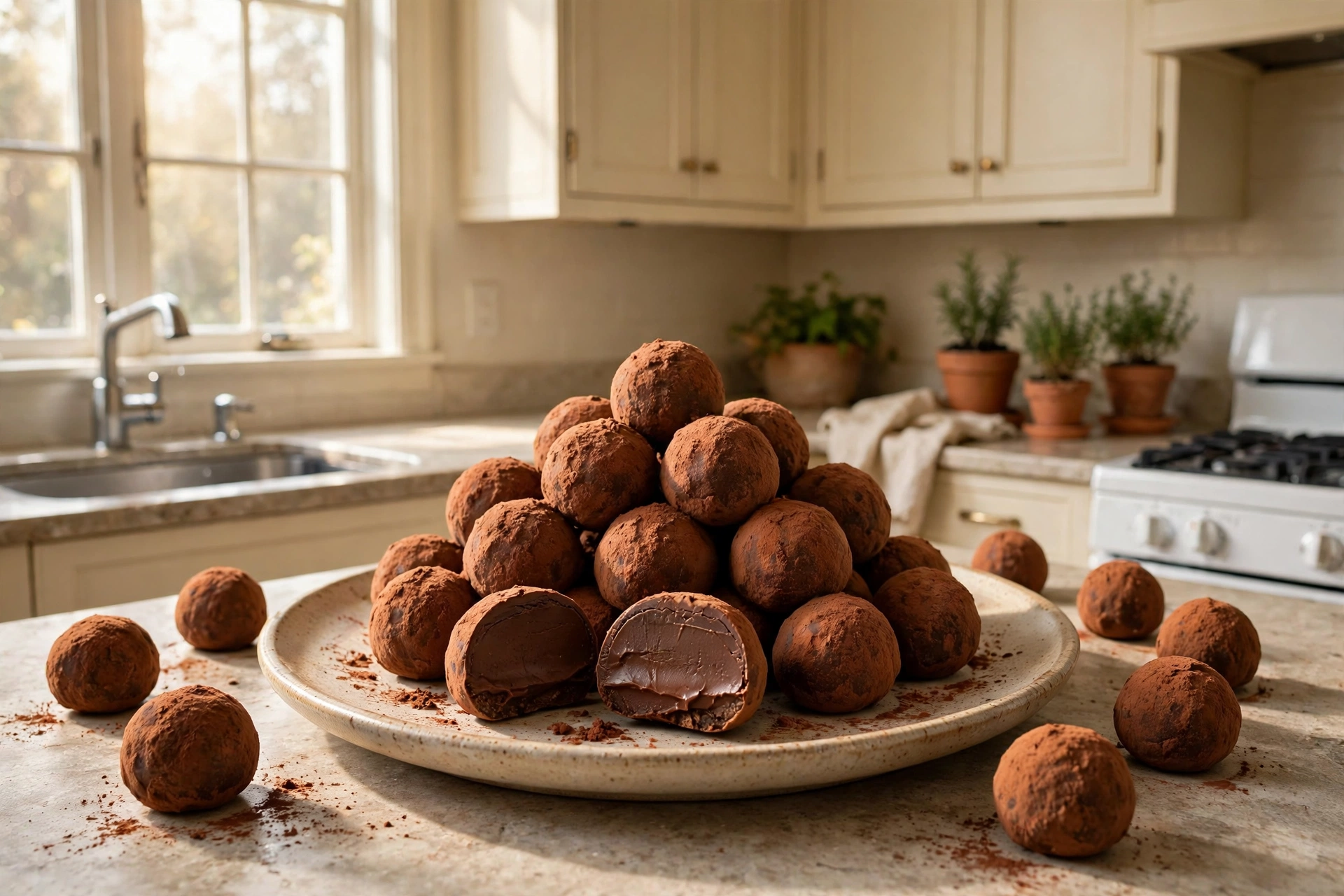
On the dessert table, the pitcher sits happily next to the chocolate truffles from this season’s baking, and whatever eggnog survives the night has a second job waiting: it is the custard base of an eggnog french toast casserole the next morning, so nothing rich goes to waste in Christmas week.
For younger guests, pour smaller glasses still, with a bigger cloud of whipped cream and an extra grating of nutmeg on top. A pitcher that includes everyone at the table, without a separate children’s drink to manage, is one of the quiet pleasures of making this recipe your house standard.
Storage and Safety: Four Days in the Fridge, No Raw Eggs Anywhere
Store the eggnog in a covered pitcher or a jar in the coldest part of the refrigerator, at 40 degrees F or below, and drink it within 3 to 4 days. The FDA egg safety guidance gives cooked egg dishes the same 3 to 4 day window, and this drink follows it exactly, whatever older recipes may claim.
The cooked base is the reason this pitcher can serve everyone. Because the yolks reach 160 degrees F, there is no raw egg anywhere in the recipe: no raw yolks in the base and no raw whites folded in for foam. The whipped cream does the foaming instead, and it does it safely.
On a buffet, treat the pitcher like any cold egg dish and keep it under 2 hours at room temperature, nested in ice. To freeze leftovers, pour them into small containers for up to 1 month; thaw overnight in the fridge and whisk hard before serving, since the cream separates a little as it defrosts.
A Pitcher That Belongs Next to the Tree
Homemade Eggnog is twenty minutes of stirring for the drink your family will start requesting by name. Once you have served the cooked, silky version, the carton loses its place in the cart for good.
If the flavor becomes a household favorite, it travels well: the same nutmeg and custard notes carry our eggnog cheesecake later in the season. Start with the pitcher this Christmas. The tree, a small glass and a grating of fresh nutmeg will do the rest.
FAQ
Is homemade eggnog safe to drink with eggs in it?
Yes, when it is cooked like this one. The yolk base is heated to 160 degrees F, the temperature the FDA uses for cooked egg dishes, and there are no raw whites folded in afterward. Chilled promptly and kept at 40 degrees F or below, it is safe for the whole table.
How long does homemade eggnog keep in the refrigerator?
Three to four days, covered, in the coldest part of the fridge. That matches the FDA window for cooked egg dishes and leftovers. The flavor is best on days one and two, after the overnight meld, so a December 23 batch is perfectly timed for Christmas.
Why did my eggnog turn out thick like pudding?
It cooked past 160 degrees F, most likely toward 175, where the yolks tighten. Whisk in cold milk a tablespoon at a time until it pours again, then fold in extra whipped cream. Next batch, trust the thermometer over the clock and pull the pan the moment it reads 160.
Can I make eggnog without a thermometer?
You can, using the spoon test: the base is ready when it coats the back of a spoon and holds a clean line through it. But the window between silky and scrambled is narrow, and a basic instant read thermometer costs little and removes the guesswork entirely. It is the one tool this recipe insists on.
What can I do with leftover eggnog after Christmas?
Use it within its 3 to 4 day window. It makes an excellent custard soak for a french toast casserole, a rich base for morning oatmeal, or a coffee creamer with real body. Freeze any extra in small containers for up to 1 month and whisk it well after thawing.

Homemade Eggnog
A cooked custard eggnog made on the stove: yolks whisked with sugar, tempered with warm spiced milk and cooked to exactly 160 degrees F, strained, chilled overnight and finished with softly whipped cream folded in. Silky, safe for every guest and at its best the day after it is made.
- Total Time: 4 hours 25 minutes
- Yield: About 6 cups 1x
Ingredients
- 6 large egg yolks
- 1/2 cup granulated sugar
- 2 cups whole milk
- 1 1/2 cups heavy cream, divided
- 1/4 teaspoon ground cinnamon
- 1/8 teaspoon fine sea salt
- 1 teaspoon vanilla extract
- 1/2 teaspoon freshly grated nutmeg, plus more for serving
Instructions
- Whisk the egg yolks and sugar in a heatproof bowl until pale yellow and thick enough to fall in a slow ribbon, about 2 minutes.
- Warm the milk, 1 cup of the heavy cream, the cinnamon and the salt in a heavy saucepan over medium heat until steaming with small bubbles at the edges, about 150 degrees F. Do not boil.
- Temper the yolks: ladle the hot milk into the yolk bowl one spoonful at a time for the first quarter cup, whisking constantly, then continue in a thin stream until about half the milk is in.
- Pour the mixture back into the saucepan and cook over medium low heat, stirring constantly and scraping the bottom, until it reaches 160 degrees F and coats the back of a spoon, 4 to 6 minutes. Never let it boil.
- Strain the custard through a fine mesh strainer into a clean bowl set over a bowl of ice and stir until the steam fades, about 5 minutes.
- Stir in the vanilla and the freshly grated nutmeg. Cover and refrigerate until fully cold, at least 4 hours or overnight.
- Whip the remaining 1/2 cup of heavy cream to soft peaks and fold it into the cold eggnog in two additions.
- Pour into small glasses, grate fresh nutmeg over each serving, and keep the pitcher refrigerated between rounds.
Notes
Nutrition is an estimate based on the ingredients and cooking methods used.
- Prep Time: 10 minutes
- Cook Time: 15 minutes
Nutrition
- Serving Size: 3/4 cup
- Calories: 262
- Sugar: 18
- Sodium: 88
- Fat: 19
- Saturated Fat: 11
- Unsaturated Fat: 7
- Trans Fat: 0
- Carbohydrates: 19
- Fiber: 0
- Protein: 6
- Cholesterol: 232