In this article:
Why This Recipe Works
These honey glazed roasted carrots work because they refuse to hide behind a long spice list. Five ingredients is the entire formula: carrots, honey, olive oil, salt, and pepper. High heat does the flavor work that a dozen seasonings only pretend to do, caramelizing the natural sugars in the carrots until the edges turn golden and crisp. The honey goes on as a glaze, not a marinade, so it lacquers the surface instead of burning in the oven.
The technique is the recipe. Carrots are patted completely dry before they meet the oil, because surface moisture is the difference between roasting and steaming. They are spread in a single layer with real space between pieces, so hot air circulates instead of trapped steam softening everything. A 425°F oven then does in twenty-five minutes what a crowded pan at 375°F cannot do in forty.
Timing the honey is the quiet reliability trick. It gets tossed with the carrots from the start in a thin coating, just enough to promote browning without scorching, and then a final drizzle goes on the hot carrots the moment they leave the oven. The residual heat melts that last spoonful into a glossy finish. Two small additions of honey beat one large one every time.
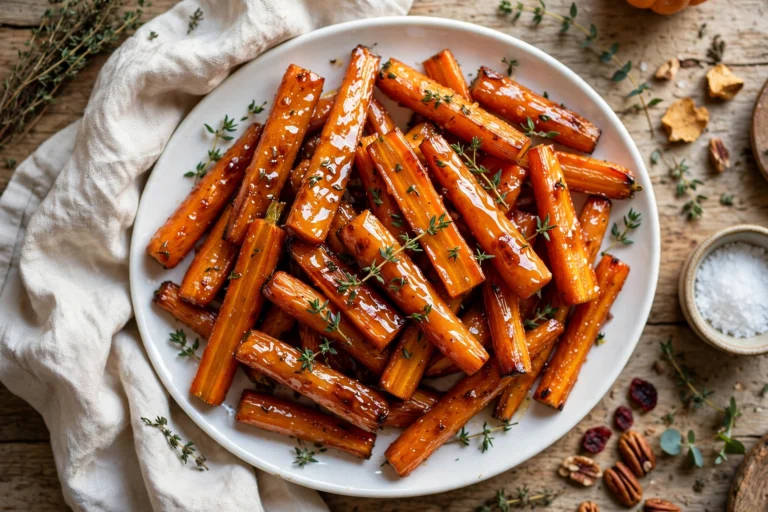
What you get is the side dish that quietly steals the Thanksgiving table. The carrots emerge tender inside with deeply caramelized edges, sweet and savory at once, glossy enough to look deliberate. If you are building the full holiday spread, our maple glazed roast turkey breast shares the same sweet-savory logic and the two belong on the same table.
Taste and Texture Profile
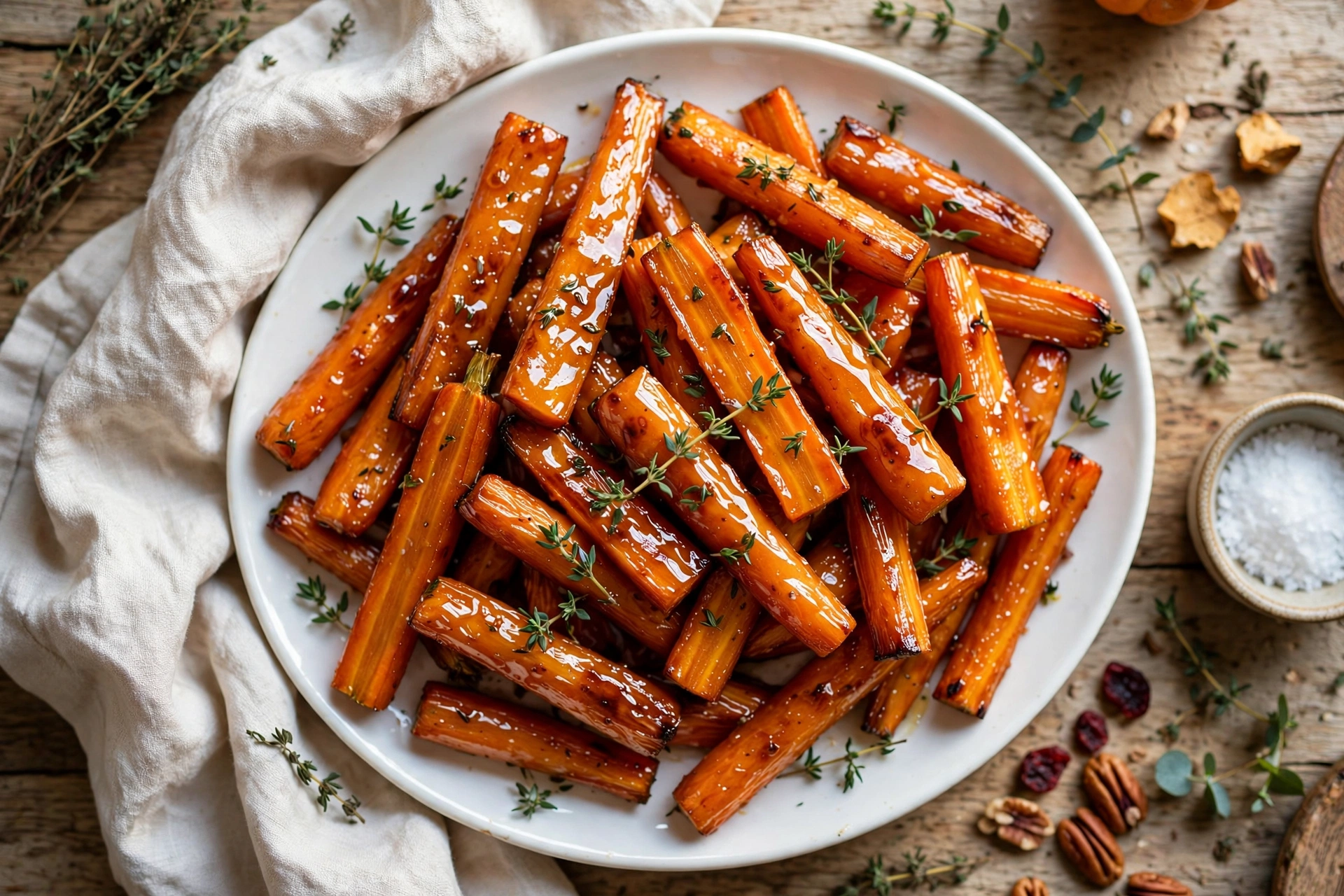
The first bite delivers the contrast that makes roasted vegetables addictive. The exterior carries deep caramelized notes, almost toasty, with the honey reduced to a lacquered sweetness. Inside, the carrot stays tender and juicy, its natural earthy sweetness concentrated by the high heat. Salt and pepper keep the whole thing firmly in savory territory rather than dessert.
Honey behaves differently from sugar in a hot oven, and that difference is the point. Its fructose caramelizes faster and at lower temperatures than table sugar, which is why the glaze turns glossy and golden instead of gritty. The flavor it leaves behind is floral and complex, not just sweet. A mild honey like clover or wildflower works best; buckwheat honey is delicious but its strong flavor can dominate the carrots.
Texture is where this method separates itself from boiled or steamed carrots. Properly roasted carrots offer slight resistance when bitten, then yield to a creamy interior. The cut edges develop the deepest browning, which is why diagonal cuts are worth the extra thirty seconds: more surface area means more caramelization. Mushy, pale carrots are a spacing problem, never a carrot problem.
The optional thyme garnish is more than decoration. Its woodsy aroma hits before the first bite and primes the palate for the savory side of the dish. Strip the leaves from fresh sprigs and scatter them over the hot carrots so the heat releases their oils. Dried thyme works in a pinch, but fresh thyme against honey-glazed carrots is one of those combinations that tastes like it was always meant to be.
Quick and Easy Preparation
Ten minutes of prep and one baking sheet is the entire commitment. Peeling and cutting the carrots takes most of that time, and the glaze is three ingredients whisked in a small bowl. There is no parboiling, no blanching, no multi-pot juggling. On Thanksgiving day, when every burner is claimed and the oven is a battlefield, that simplicity is strategic.
This is the side dish that solves the Thanksgiving oven problem. It roasts at 425°F, which matches the temperature most turkey recipes want for their final browning stretch, so the carrots can share the oven during the turkey’s rest. Slide them in the moment the bird comes out, and they are done by the time carving finishes. Twenty-five minutes of roasting fits perfectly inside a standard turkey resting window.
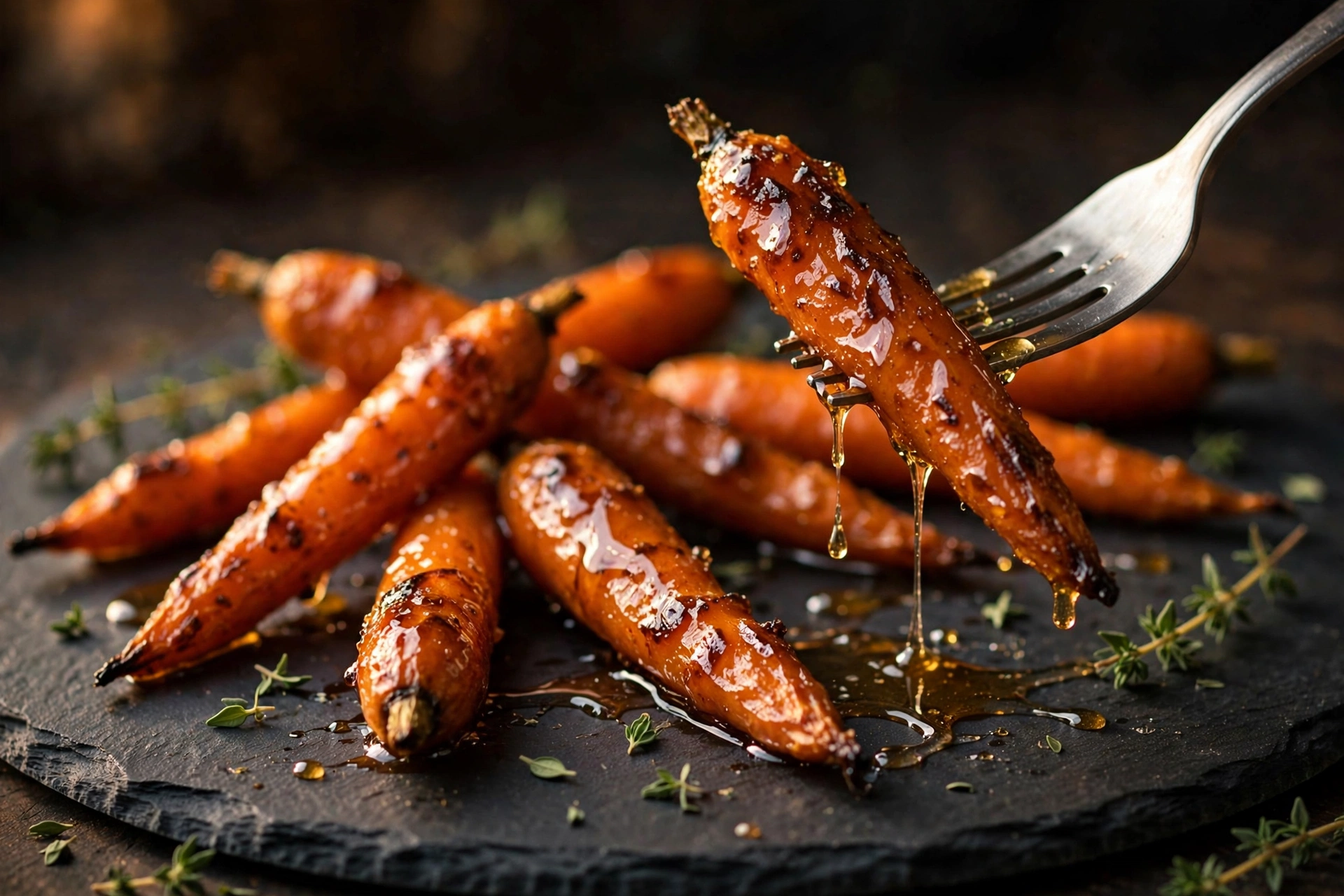
Beginners succeed because the doneness cues are visual and tactile. The carrots are ready when the edges show deep golden-brown caramelization and a fork slides in with slight resistance. If they look pale, they need more time or more space on the pan. There is no internal temperature to hit and no sauce to reduce, just color and feel.
Cleanup is a single sheet pan lined with parchment, which matters when the sink is already full of roasting pans. The parchment catches the honey drips that would otherwise cement themselves to the metal. For another low-effort holiday side that practically makes itself, our slow cooker mashed potatoes free up the oven entirely.
Lighter and Diet Adaptations
As side dishes go, this one is already on the lighter end. Two tablespoons of olive oil and three tablespoons of honey stretch across two pounds of carrots and six servings, so each portion carries modest fat and sugar. The roasting method adds no breading, no cream, and no cheese, which is more than most Thanksgiving sides can claim.
A vegan version swaps the honey for an equal amount of pure maple syrup. The flavor shifts from floral to woodsy, which suits the carrots beautifully, and the caramelization works the same way. Everything else stays identical. Maple-glazed carrots have their own devoted following, and nobody at the table will feel they got the consolation version.
For a lower-sugar approach, cut the honey to two tablespoons and let the carrots’ own sugars do more of the work. Choose the sweetest carrots you can find, smaller and deeply orange, and roast them a few minutes longer for extra caramelization. The glaze will be thinner but the flavor stays satisfying, especially with the full measure of salt keeping the savory balance.
Ingredients
Five ingredients is the whole list, so each one has to earn its place. Buy carrots that feel firm and heavy for their size, with bright color and no soft spots. A mild honey lets the carrot flavor shine; save the fancy single-origin jars for drizzling at the table. Kosher salt distributes more evenly than table salt over the oiled surfaces.
- 2 pounds (900 g) carrots, peeled
- 3 tablespoons honey, plus 1 teaspoon for finishing
- 2 tablespoons extra-virgin olive oil
- 1 teaspoon kosher salt
- 1/2 teaspoon freshly ground black pepper
- Fresh thyme leaves, for serving (optional)
These honey glazed roasted carrots start with the carrots themselves, and size matters more than variety. Choose carrots of similar thickness so they cook at the same rate, or cut larger ones lengthwise to match the smaller ones. Two-inch diagonal pieces are the target: big enough to stay juicy inside, with enough cut surface to caramelize beautifully.
The honey does two jobs at two different moments, which is why the recipe splits it. Three tablespoons coat the raw carrots and promote browning in the oven’s heat. The final teaspoon goes onto the hot roasted carrots, where it melts into a fresh glossy glaze without any risk of scorching. Using it in two stages is the difference between lacquered and burnt.
Olive oil is the right fat here because its flavor complements rather than competes. It coats evenly, handles 425°F without smoking, and its faint fruitiness flatters the honey. Butter is delicious but browns faster and can burn at this temperature over twenty-five minutes; if you love the butter flavor, add a tablespoon of melted butter to the finishing drizzle instead, in the spirit of the browned butter approach that makes carrots taste almost candied.
Step by Step Instructions
Read through once so the oven logistics feel obvious. The only real work is cutting; everything after that is tossing and waiting. Have your largest rimmed baking sheet ready, because pan size is the variable that matters most.
- Position a rack in the center of the oven and heat to 425°F (220°C). Line a large rimmed baking sheet with parchment paper.
- Peel the carrots and cut them on a sharp diagonal into pieces about 2 inches long and similar in thickness. Halve any thick carrots lengthwise so all pieces match.
- Spread the cut carrots on a clean kitchen towel and pat them completely dry. This step is non-negotiable: surface moisture steams instead of roasts.
- In a large bowl, whisk together the 3 tablespoons of honey, the olive oil, salt, and pepper until smooth.
- Add the dry carrots to the bowl and toss thoroughly until every piece is evenly coated with the glaze.
- Spread the carrots on the prepared baking sheet in a single layer with space between the pieces. Do not crowd the pan: use two pans rather than one packed pan.
- Roast for 12 minutes, then flip and stir the carrots with a spatula for even browning.
- Continue roasting 10 to 13 minutes more, until the edges are deeply caramelized and a fork meets slight resistance in the thickest piece.
- Transfer the hot carrots to a serving platter. Drizzle with the remaining teaspoon of honey and toss gently so the heat melts it into a glossy coat.
- Scatter fresh thyme leaves over the top if using, and serve immediately while hot and glossy.
The single layer is the step people skip and the step that matters most. Carrots packed shoulder to shoulder trap steam, and steamed carrots turn pale and soft no matter how hot the oven runs. If your baking sheet looks full, split the batch across two sheets. An extra pan is cheap; a pan of steamed carrots on Thanksgiving is a quiet tragedy.
Pro Tips for Perfect Results
Dry the carrots like you mean it. After cutting, roll them in a clean kitchen towel and press gently until no visible moisture remains. Water on the surface has to boil off before browning can begin, and those lost minutes are the difference between caramelized edges and merely cooked carrots. This single habit improves every roasted vegetable you will ever make.
Cut on the diagonal and keep pieces uniform. The diagonal cut exposes more surface area than straight rounds, and more surface area means more caramelization. Uniform thickness matters even more: a thin piece finishes while a thick piece is still raw inside, and no glaze can fix uneven cooking. When in doubt, halve the thick ones.
Do not stir too often. One flip at the halfway mark is enough. Every time you open the oven, the temperature drops and the carrots sit in their own steam while it recovers. Let them sit undisturbed against the hot pan, because sustained contact with the metal is what builds the deep golden crust. Patience browns; fussing steams.
Serve them hot and do not hold them. Roasted carrots are at their peak in the first twenty minutes out of the oven, glossy and crisp-edged. Holding them in a warm oven softens the caramelized edges as trapped steam works its way back in. Time them to finish as guests sit down, which the turkey-resting window makes easy.
Easy Swaps and Tasty Variations
Go rainbow for the visual showpiece. Rainbow carrots roast exactly like orange ones and turn the platter into a conversation piece, with purple, yellow, and orange pieces glistening under the honey glaze. The flavor differences are subtle, with purple carrots slightly earthier. Scrub instead of peeling the delicate skins, and expect the purple ones to tint their neighbors if crowded together.
Add parsnips for a two-root roast. Cut one pound of parsnips exactly like the carrots and toss them in the same glaze; they need the same time and temperature. Parsnips bring a sweet, almost spicy note that deepens the whole dish. This is the easiest way to make the side feel more generous without changing the method at all.
Try the maple version for a woodsy twist. Replace the honey with an equal amount of pure maple syrup and add a pinch of cinnamon to the glaze. The flavor profile shifts toward autumn baking spices, which suits a Thanksgiving table beautifully. The technique is identical, and the maple caramelizes just as gorgeously at 425°F.
Finish with toasted nuts for crunch. A handful of chopped toasted pecans or walnuts scattered over the hot carrots adds a rich, buttery contrast to the tender roots. Toast the nuts in a dry skillet while the carrots roast, and add them at the very end so they stay crisp. For another sweet-savory Thanksgiving classic, our southern cornbread dressing brings the same comforting energy in stuffing form.
How to Store and Make Ahead
Store leftovers in an airtight container in the refrigerator for up to four days. The glaze keeps them from drying out, and they reheat well. Warm them in a 375°F oven for about ten minutes rather than the microwave, because the dry oven heat re-crisps the edges while the microwave steams them soft.
The Thanksgiving game plan starts the night before. Peel and cut the carrots, dry them, and store them in a zip-top bag with a dry paper towel in the refrigerator. Whisk the glaze ingredients and keep them in a small covered bowl. On the day, tossing and roasting takes thirty-five minutes start to finish, and the oven work fits inside the turkey’s resting time.
You can also roast them fully two hours ahead and hold them at room temperature, then flash them in a hot oven for five minutes before serving. The edges re-crisp beautifully and the glaze turns glossy again. Do not hold them longer than two hours, and never hold them covered: trapped steam is the enemy of everything this recipe achieves. These honey glazed roasted carrots deserve to arrive at the table at their peak, and the plan above makes that easy even on the busiest cooking day of the year. Round out the vegetable sides with our green bean casserole for a table that covers every craving.
Conclusion
These honey glazed roasted carrots prove that the simplest side dish is often the smartest one. Five ingredients, one pan, and twenty-five minutes in a hot oven produce something that tastes deliberate and looks stunning. The technique does the heavy lifting: dry carrots, real spacing, high heat, and honey added in two stages.
Put them on your Thanksgiving menu this year and watch the vegetable dish become the surprise favorite. Make the glaze the night before, cut the carrots while the turkey rests, and let the oven do the rest. When guests ask what makes them so good, you can tell them the secret is simply giving each carrot its personal space. Some recipes earn their place through complexity, and some earn it through confidence.
FAQ
Why are my honey glazed roasted carrots soft instead of caramelized?
Soft, pale carrots mean the pan was overcrowded or the carrots were wet going in. Spread them in a single layer with space between pieces so hot air circulates, and pat them completely dry with a towel before tossing with the glaze. Crowded carrots steam; spaced carrots roast. Use two pans rather than one packed pan.
Can I prepare honey glazed roasted carrots ahead for Thanksgiving?
Yes. Peel and cut the carrots the night before and refrigerate them in a zip-top bag with a dry paper towel. Whisk the glaze ahead too. On Thanksgiving day, toss and roast for 25 minutes, ideally during the turkey’s resting time. You can also roast fully 2 hours ahead and re-crisp in a hot oven for 5 minutes before serving.
Can I use baby carrots instead of whole carrots?
You can, but whole carrots give better results. Baby carrots are often cut from larger carrots and their surfaces are wetter, which works against caramelization. If using them, pat them extra dry and expect slightly less browning. Whole carrots cut on the diagonal give the best flavor and texture.
Why did my honey burn in the oven?
Honey burns when it pools in thick spots or the oven runs hotter than set. Toss the carrots so the coating is thin and even, keep the temperature at 425°F, and save the final teaspoon of honey for drizzling over the hot carrots after roasting. That finishing drizzle gives glossy sweetness with zero burn risk.
Can I freeze honey glazed roasted carrots?
Freezing is not recommended. Thawed roasted carrots turn soft and watery, and the caramelized edges never recover their texture. Refrigerate leftovers for up to 4 days and reheat in a 375°F oven for 10 minutes instead. For Thanksgiving planning, the overnight prep method beats freezing every time.
Honey Glazed Roasted Carrots
Honey glazed roasted carrots with just 5 ingredients: caramelized edges, tender centers, glossy honey finish. The easy Thanksgiving side dish.
- Total Time: 35 minutes
- Yield: 6 servings 1x
Ingredients
- 2 pounds (900 g) carrots, peeled
- 3 tablespoons honey, plus 1 teaspoon for finishing
- 2 tablespoons extra-virgin olive oil
- 1 teaspoon kosher salt
- 1/2 teaspoon freshly ground black pepper
- Fresh thyme leaves, for serving (optional)
Instructions
- Position a rack in the center of the oven and heat to 425°F (220°C). Line a large rimmed baking sheet with parchment paper.
- Peel the carrots and cut them on a sharp diagonal into pieces about 2 inches long and similar in thickness. Halve any thick carrots lengthwise.
- Spread the cut carrots on a clean kitchen towel and pat them completely dry.
- In a large bowl, whisk together the 3 tablespoons of honey, the olive oil, salt, and pepper until smooth.
- Add the dry carrots to the bowl and toss thoroughly until every piece is evenly coated.
- Spread the carrots on the prepared baking sheet in a single layer with space between the pieces. Do not crowd the pan.
- Roast for 12 minutes, then flip and stir the carrots with a spatula for even browning.
- Continue roasting 10 to 13 minutes more, until the edges are deeply caramelized and a fork meets slight resistance in the thickest piece.
- Transfer the hot carrots to a serving platter. Drizzle with the remaining teaspoon of honey and toss gently.
- Scatter fresh thyme leaves over the top if using, and serve immediately while hot and glossy.
- Prep Time: 10 minutes
- Cook Time: 25 minutes