

In this article:
Why This Chewy Gingersnap Cookies Recipe Works
These chewy gingersnap cookies work because every choice in the recipe serves softness. An extra egg yolk adds richness without extra white, which would dry the crumb. A full hour of chilling firms the butter so the cookies spread slowly and stay thick. Pulling them from the oven while the centers still look soft is the real secret, since carryover heat finishes the job on the pan.
The spice blend is built for depth rather than heat. Ground ginger leads, cinnamon rounds the edges, and small amounts of cloves and nutmeg add warmth underneath. Dark brown sugar and molasses do double duty, feeding the chew and painting the flavor with caramel notes. Rolling each ball in granulated sugar is not decoration, because that coating cracks into the signature sparkle as the cookie spreads.
Most gingersnap recipes fail in one of two ways, and this one guards against both. Too little chill time gives thin, crisp wafers instead of chewy centers. Too much flour gives dry, cakey pucks instead of dense, bendable cookies. Weighing the flour or spooning it lightly into the cup keeps the ratio honest. If you love spiced holiday baking, our gingerbread layer cake uses the same warm spice logic on a bigger stage.
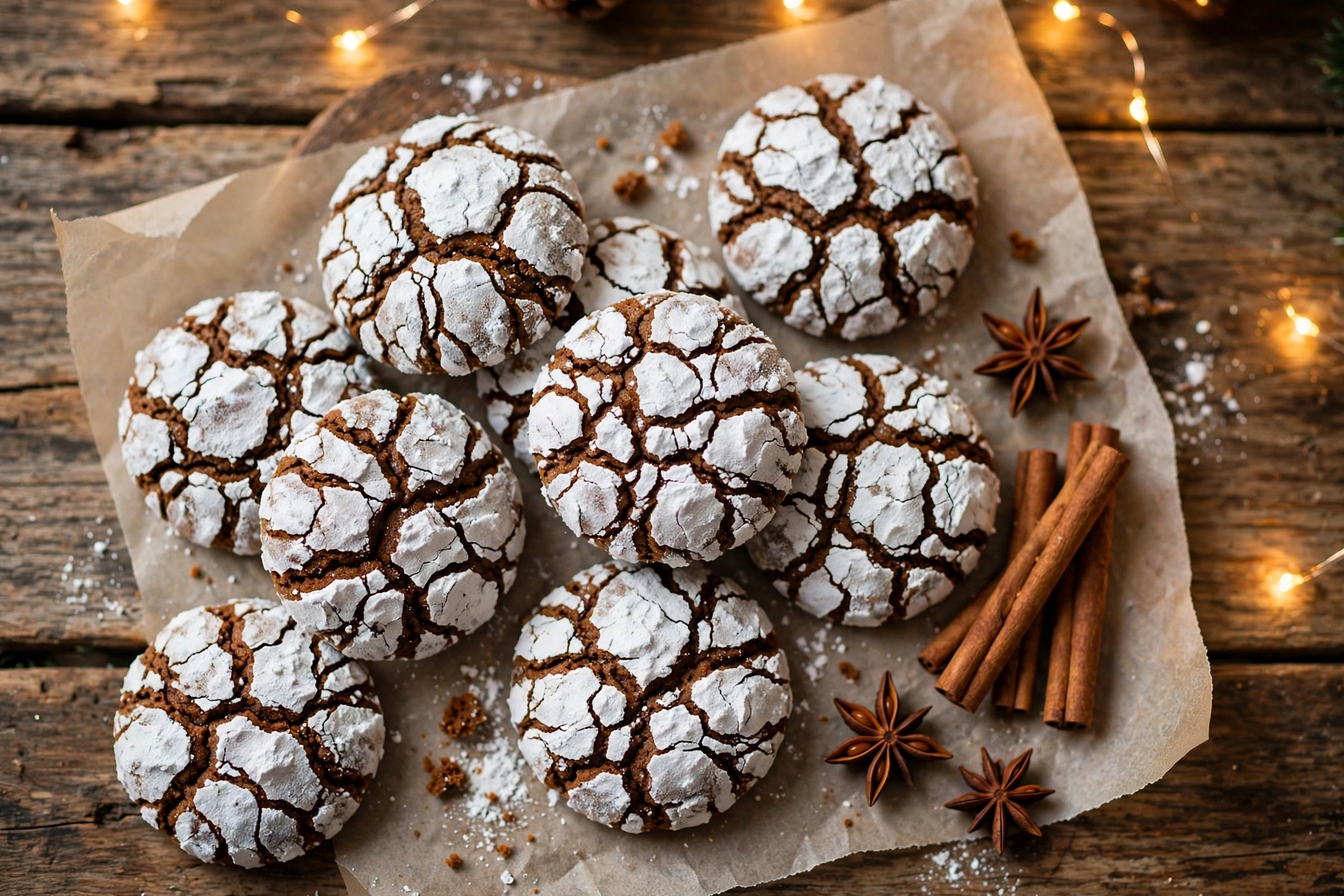
What you get is a cookie with real contrast: crackled sugar shell outside, soft and slightly sticky center inside. The chew lasts for days, which is rare among homemade cookies. They taste like December, even in October, and they make the whole house smell like a bakery.
These chewy gingersnap cookies begin with creamed butter and dark brown sugar beaten until fluffy and pale. That creaming step whips tiny air pockets into the fat, which later expand in the oven heat. The molasses goes in next, turning the mixture glossy and deep amber. One whole egg plus one yolk follows, and the dough comes together thick enough to scoop cleanly.
The dry ingredients are whisked separately so the leavening and spices distribute evenly. Baking soda needs that even spread to lift each cookie the same amount. When the two bowls meet, mix only until no flour streaks remain, because overmixing develops gluten and toughens the chew. The dough rests in the refrigerator for at least one hour, and that rest is non-negotiable for thickness.
Chilled dough scoops into neat balls that roll easily through granulated sugar. The sugar coat does two jobs at once, adding crunch and forcing the surface to crack as the interior expands. Two inches of space between balls gives each cookie room to spread into its round, crackled shape. Bake at 350°F for 10 to 12 minutes, watching for set edges and soft centers.
Cooling happens in two stages, and both matter. Five minutes on the hot pan lets the centers finish setting without overbaking. A move to the wire rack stops the bottoms from steaming soft. The result is a cookie that bends slightly before it breaks, exactly what chewy means.
Flavor and Texture
The first bite hits with molasses, dark and almost smoky, before the spices bloom. Ground ginger brings clean heat that warms the back of the throat. Cinnamon softens that heat into something round and sweet. Cloves and nutmeg sit underneath, noticeable only when you look for them, which is exactly how background spices should behave.
Dark brown sugar adds its own molasses echo, doubling down on the caramel depth. The butter comes through as richness rather than flavor, a quiet foundation under the spice. Vanilla bridges everything, smoothing the sharper edges of ginger and clove. Nothing tastes raw or harsh, because the oven heat mellows each spice into the crumb.
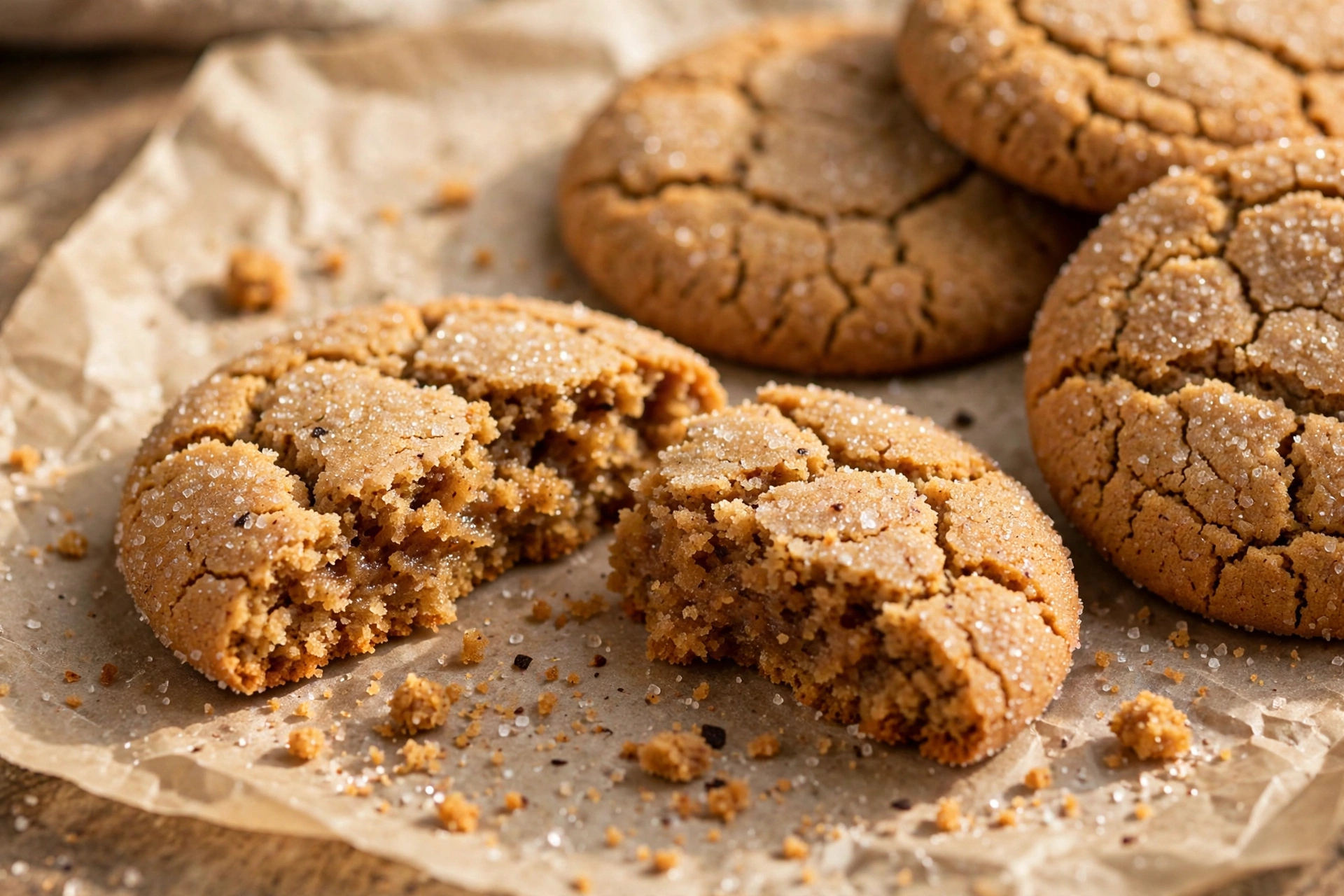
Texture is where these cookies earn their name. The exterior shatters lightly under your teeth, thanks to the sugar roll that baked into a thin crackled shell. Inside, the crumb is dense and moist, bending before it tears. That chew comes from the yolk, the molasses sugars, and the slight underbake working together.
Temperature changes the experience in the best way. Warm from the oven, the centers are almost gooey and the spices taste brighter. At room temperature the next day, the chew deepens and the molasses flavor grows more pronounced. A cold cookie straight from the fridge eats like fudge, dense and intensely spiced.
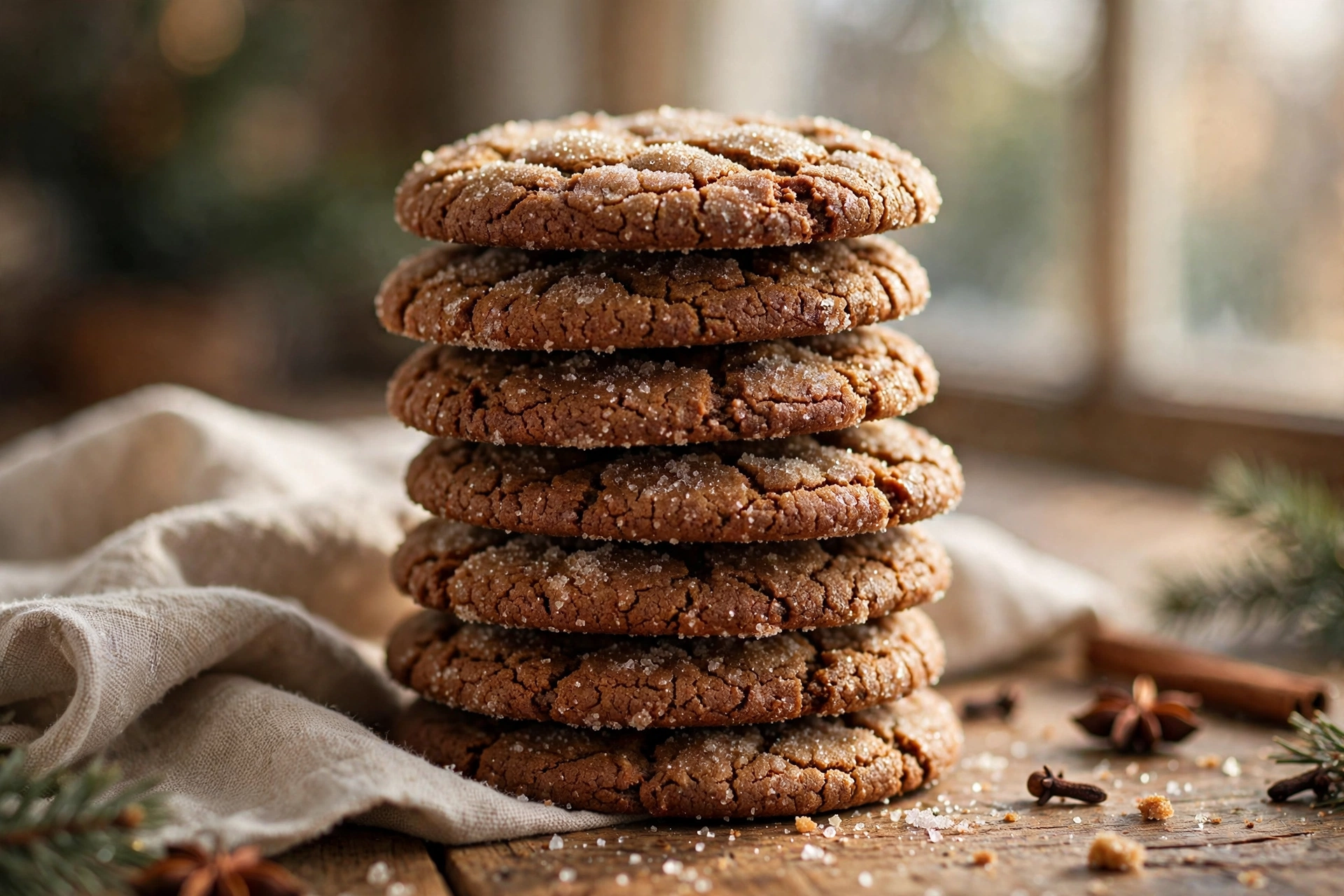
Visually, these are the cookies people photograph. Deep mahogany brown with pale crackled veins where the sugar split. Slightly domed, never flat, with edges that browned just a shade darker than the centers. A stack of them on a plate looks like the holidays arrived early, no styling needed.
The aroma while they bake deserves its own mention. Ginger and molasses fill the kitchen within minutes, warm and sweet with a peppery edge. It is the kind of smell that pulls people out of other rooms. If you bake these for a party, expect guests to gather near the oven before the timer rings.
Convenience and Time
These chewy gingersnap cookies ask for twenty minutes of active work, and the refrigerator handles the rest. Creaming, mixing, and scooping all happen in one continuous flow. The hour of chilling is hands-off, perfect for cleaning up or preheating the oven late. Actual baking takes barely ten minutes per batch.
Cookie exchanges and holiday tins are where this recipe shines brightest. One batch makes twenty-four generous cookies, enough for gifting and keeping. The dough holds in the refrigerator for three days, so you can scoop and bake fresh cookies across multiple evenings. Few recipes stretch that gracefully across a busy December week.
Beginners succeed here because the visual cues are forgiving. Set edges and soft centers are easy to read, even on a first bake. There is no piping, no decorating, no fussy shaping beyond rolling balls. If you can operate a mixer, you can make these cookies.
The ingredient list is short and pantry-friendly, with nothing that requires a special trip. Molasses is the only item some kitchens lack, and one jar covers dozens of batches. Everything else is standard baking stock. For another make-ahead holiday win, our peppermint white chocolate fudge sets up in the fridge with even less effort.
Diet Friendly Options
A dairy-free version keeps its chew with a few careful swaps. Use a high-quality vegan butter substitute in stick form, since tub margarine holds too much water. The structure stays intact because the yolk and molasses do the heavy lifting. Chill the dough a little longer, as vegan butter softens faster at room temperature.
For gluten-free bakers, a cup-for-cup gluten-free flour blend works well here. Choose one with xanthan gum already included, which mimics the binding gluten normally provides. The cookies spread slightly less, so press each ball gently before baking. The spice level carries the recipe, and nobody misses the wheat.
Cutting sugar is trickier in a cookie built on molasses, but modest reductions work. Drop the brown sugar by a quarter cup and keep the molasses, since molasses brings more flavor per gram. The cookies will be less chewy and a touch cakier, still delicious but different. Do not use liquid sweeteners as a one-to-one swap, because the dough hydration changes completely.
Ingredients
Measure everything before the mixer starts, because this dough comes together fast once the butter is creamed. Room temperature butter and egg blend smoother and trap more air. Dark molasses gives deeper flavor than light, so reach for the dark bottle if you have both.
- 2 1/4 cups (280 g) all-purpose flour, spooned and leveled
- 2 teaspoons baking soda
- 2 teaspoons ground ginger
- 1 1/2 teaspoons ground cinnamon
- 1/2 teaspoon ground cloves
- 1/4 teaspoon ground nutmeg
- 1/2 teaspoon fine sea salt
- 3/4 cup (170 g) unsalted butter, at room temperature
- 1 cup (200 g) packed dark brown sugar
- 1/4 cup (85 g) dark molasses, not blackstrap
- 1 large egg plus 1 large egg yolk, at room temperature
- 2 teaspoons pure vanilla extract
- 1/3 cup (65 g) granulated sugar, for rolling
Step by Step Instructions
- Whisk the flour, baking soda, ginger, cinnamon, cloves, nutmeg, and salt in a medium bowl until evenly combined. Set aside.
- Beat the butter and dark brown sugar in a large bowl with a hand or stand mixer on medium-high for 2 to 3 minutes, until pale and fluffy. Scrape the bowl halfway through.
- Beat in the molasses until glossy, then add the egg, yolk, and vanilla. Mix on medium until smooth, about 1 minute.
- Add the dry ingredients all at once and mix on low just until no flour streaks remain. Do not overmix.
- Cover the bowl and refrigerate the dough for at least 1 hour, or up to 3 days.
- Heat the oven to 350°F (175°C). Line two baking sheets with parchment paper. Place the granulated sugar in a shallow bowl.
- Scoop 1 1/2 tablespoon portions of cold dough and roll into smooth balls. Roll each ball in the granulated sugar until fully coated.
- Arrange the balls 2 inches apart on the prepared sheets. Bake 10 to 12 minutes, until the edges are set and the centers look slightly soft.
- Cool on the baking sheets for 5 minutes, then transfer to a wire rack to cool completely.
Tips and Tricks for Success
The single biggest factor in chewiness is bake time, so set a timer and trust it. At 10 minutes the centers look underdone, and that is correct. They firm up on the hot pan as they cool. An extra two minutes in the oven is the difference between chewy and crisp, so err on the early side.
Chilling is the second lever, and skipping it is the most common mistake. Warm dough spreads fast, giving thin cookies with no center to stay soft. Cold dough holds its shape longer, which builds thickness. If your kitchen is warm, chill the scooped balls for 15 minutes right on the tray.
Measure flour by spooning it into the cup and leveling, never by scooping from the bag. A scooped cup can hold 30 percent more flour, and that excess dries the crumb. A kitchen scale removes all doubt at 280 grams. Consistent measuring is what makes the recipe repeatable batch after batch.
Use dark molasses, not blackstrap, unless you love bitter edges. Blackstrap is much stronger and less sweet, and it will dominate the spice. Light molasses works but gives a milder cookie. The King Arthur Baking guide to molasses varieties explains the differences clearly if you are choosing at the store.
Rotate the pans halfway through if your oven has hot spots, since uneven heat browns one tray faster. All ovens lie a little about temperature, so an oven thermometer is a cheap upgrade. These small habits separate good bakers from frustrated ones, and they cost nothing.
Ingredient Swaps and Variations
For a chocolate version, replace 1/4 cup of the flour with unsweetened cocoa powder. The cocoa deepens the color to near-black and adds a brownie-like note under the spice. Keep everything else the same, including the bake time. These taste like the holidays met a chocolate shop.
Candied ginger folded into the dough adds bright, chewy bursts against the soft crumb. Chop 1/3 cup finely so the pieces distribute evenly. Reduce the ground ginger slightly if you want balance, or keep it full for maximum warmth. This variation wins every taste test at cookie swaps.
Turbinado sugar instead of granulated gives a crunchier, more rustic coating. The larger crystals catch the light beautifully and add textural contrast. Roll the same way and bake as directed. They look like bakery cookies from a fancy shop.
A citrus twist works surprisingly well with ginger. Add 1 tablespoon of finely grated orange zest to the creamed butter. The brightness lifts the molasses without fighting it. These pair beautifully with tea, and they stand out on a crowded cookie tray. For another citrus-spiced holiday bake, our cranberry orange bundt cake hits the same bright notes.
Storage and Make Ahead
Baked cookies keep at room temperature in an airtight container for up to 5 days. Slip a slice of plain bread into the container, since the cookies absorb its moisture and stay soft. Replace the bread slice every two days. They also freeze beautifully for 3 months in a zip-top bag with the air pressed out.
The raw dough is a make-ahead champion. Refrigerate the covered bowl for up to 3 days and bake straight from cold, adding 1 minute. For longer storage, scoop and sugar-roll the balls, freeze them solid on a tray, then bag them. Bake from frozen at 350°F for 12 to 14 minutes with no thawing needed.
Always cool cookies completely before storing, because trapped steam turns crisp edges soggy. Layer them between sheets of parchment if you must stack. Never refrigerate baked cookies, since the cold dulls the spice and firms the chew. Room temperature is their happy place.
Conclusion
These chewy gingersnap cookies prove that texture is a recipe, not an accident. The extra yolk, the chill, and the early pull from the oven all serve one goal: a cookie that bends instead of snapping. Molasses and warm spice do the rest, filling your kitchen with the smell of the season.
Bake a batch this week and hide a few for yourself before the tin goes out the door. Some recipes earn a permanent spot in the holiday rotation, and this is one of them. Your cookie exchange competitors have been warned.
FAQ
Why did my chewy gingersnap cookies turn out flat and crisp instead of thick and chewy?
Flat cookies almost always mean the dough was too warm going into the oven. Chill the dough a full hour and make sure your butter was at room temperature, not melted or shiny. Too little flour from mis-measuring has the same effect, so spoon and level or weigh it.
Can I use blackstrap molasses in these gingersnap cookies?
You can, but the flavor will be much stronger and slightly bitter. Blackstrap has less sugar and more minerals than dark molasses, so the cookies taste intense rather than sweetly spiced. For the classic chewy gingersnap flavor, stick with dark (not blackstrap) molasses.
How do I keep the crackled sugar tops from disappearing as the cookies cool?
Roll the dough balls generously so the coating is thick, and bake just until the edges set. A thin sugar dusting melts into the surface instead of cracking. Chilled dough also cracks better because it spreads more slowly, giving the shell time to split.
Can I freeze the cookie dough balls and bake them later?
Yes, this dough freezes perfectly for up to 3 months. Scoop, roll in sugar, freeze solid on a tray, then transfer to a freezer bag. Bake straight from frozen at 350°F for 12 to 14 minutes with no thawing, and they taste freshly made.
Why do my cookies taste great on day one but dry out by day three?
Cookies lose moisture to the air, and low-fat or overbaked batches dry fastest. Store them airtight with a slice of plain bread, which the cookies absorb moisture from. Pulling them from the oven while centers look soft also builds in a moisture buffer for later days.
Chewy Gingersnap Cookies
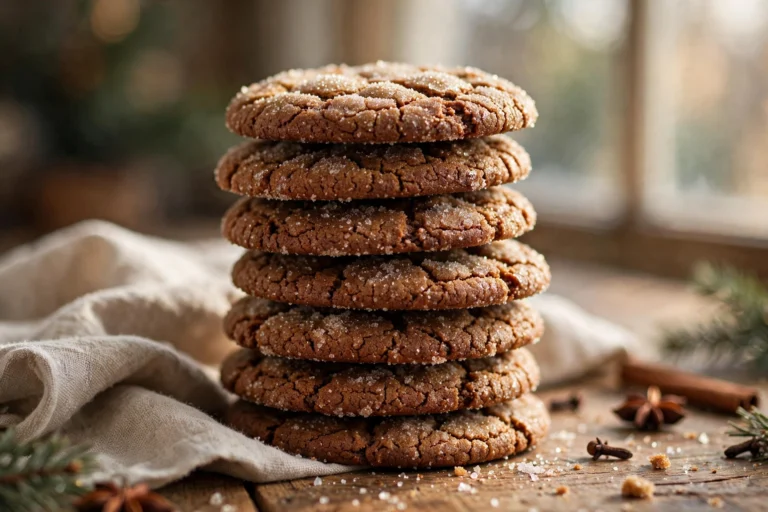
Soft, chewy gingersnap cookies with crackled sugar tops, dark molasses and warm spices. An extra yolk and a full chill keep the centers thick and bendable.
- Total Time: 1 hour 32 minutes
- Yield: 24 cookies 1x
Ingredients
- 2 1/4 cups (280 g) all-purpose flour, spooned and leveled
- 2 teaspoons baking soda
- 2 teaspoons ground ginger
- 1 1/2 teaspoons ground cinnamon
- 1/2 teaspoon ground cloves
- 1/4 teaspoon ground nutmeg
- 1/2 teaspoon fine sea salt
- 3/4 cup (170 g) unsalted butter, at room temperature
- 1 cup (200 g) packed dark brown sugar
- 1/4 cup (85 g) dark molasses, not blackstrap
- 1 large egg plus 1 large egg yolk, at room temperature
- 2 teaspoons pure vanilla extract
- 1/3 cup (65 g) granulated sugar, for rolling
Instructions
- Whisk the flour, baking soda, ginger, cinnamon, cloves, nutmeg, and salt in a medium bowl until evenly combined. Set aside.
- Beat the butter and dark brown sugar on medium-high for 2 to 3 minutes until pale and fluffy, scraping the bowl halfway through.
- Beat in the molasses until glossy, then add the egg, yolk, and vanilla. Mix on medium until smooth, about 1 minute.
- Add the dry ingredients all at once and mix on low just until no flour streaks remain. Do not overmix.
- Cover and refrigerate the dough for at least 1 hour, or up to 3 days.
- Heat the oven to 350F (175C). Line two baking sheets with parchment paper and place the granulated sugar in a shallow bowl.
- Scoop 1 1/2 tablespoon portions of cold dough, roll into smooth balls, and roll each in the granulated sugar until fully coated.
- Arrange 2 inches apart on the prepared sheets. Bake 10 to 12 minutes, until edges are set and centers look slightly soft.
- Cool on the baking sheets for 5 minutes, then transfer to a wire rack to cool completely.
- Prep Time: 20 minutes
- Cook Time: 12 minutes
1 thought on “Chewy Gingersnap Cookies, Soft, Spiced and Crackled”