

In this article:
Why This Recipe Works
These gingerbread crinkle cookies work because the coating is treated as part of the recipe, not as decoration. Each dough ball is rolled first in granulated sugar, then generously in powdered sugar. The granulated layer acts like a shield: it absorbs surface moisture from the dough, so the powdered sugar on top stays dry, white, and dramatic instead of melting into a dull gray film.
The flavor base is built for depth, not just sweetness. Dark brown sugar and a full quarter cup of molasses give the crumb its dark, almost caramel backbone, while the spice blend leans hard on ginger with cinnamon, cloves, and nutmeg in support. The result tastes like real gingerbread, warm and bold, rather than a vaguely spiced sugar cookie wearing a Christmas costume.
The chill is non-negotiable, and it does three jobs at once. Cold dough spreads slowly in the oven, which is exactly what pulls the coating apart into deep cracks. The rest also hydrates the flour, so the centers bake up soft and dense instead of cakey. Finally, the spices bloom overnight in the fat, so a dough mixed on Sunday tastes noticeably warmer by Monday.
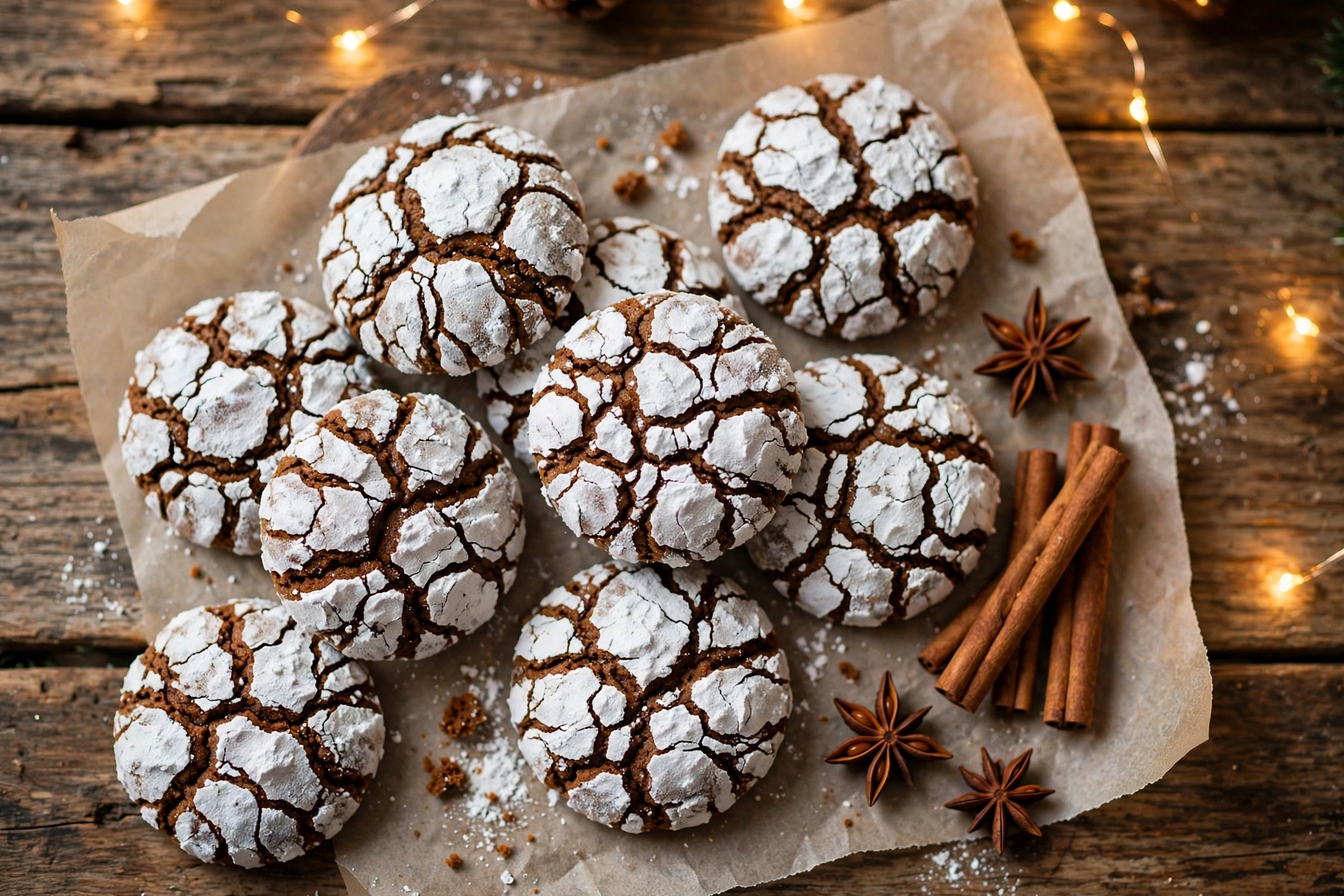
What you get is a cookie that looks like it rolled through fresh snow and eats like the center of a gingerbread cake. The tops crack into bold white fissures, the edges set just enough to hold, and the middle stays soft for days. If you like your Christmas cookies chewy and spice-forward, our chewy gingersnap cookies belong in the same cookie box.
Taste and Texture Profile
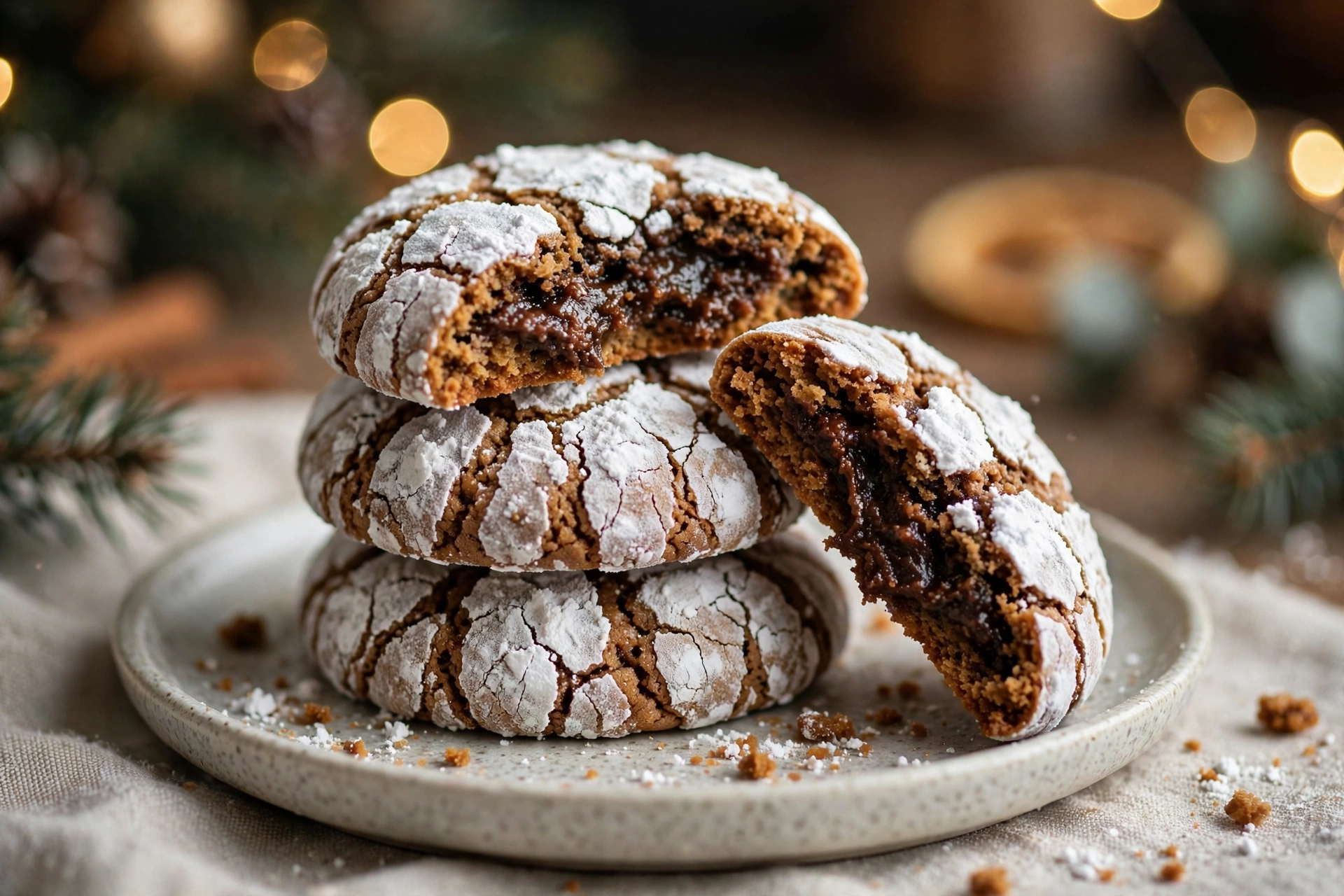
The first bite breaks through a delicate, crisp shell of sugar into a center that is soft, dense, and almost fudgy. That contrast is the whole point of a crinkle cookie: shattering snow on the outside, warm molasses chew on the inside. The edges firm up just enough to give the cookie structure without ever turning crunchy or dry.
Flavor arrives in layers. Ginger heat lands first, bright and warming, followed by the deep, slightly smoky sweetness of molasses and dark brown sugar. Cinnamon rounds out the middle, and the cloves and nutmeg leave a gentle holiday warmth that lingers after the bite is gone. A small pinch of salt keeps all that sweetness in check.
These gingerbread crinkle cookies also age gracefully, which is rare for a soft cookie. On day two the spices meld and the centers settle into an even chewier texture, a bit like a well-rested gingerbread loaf. Serve them slightly warm and the molasses notes deepen further, especially next to a cup of coffee or hot cocoa.
The look deserves its own mention, because these are the cookies people photograph before they taste. The white cracks widen into something that honestly resembles fresh snow splitting over dark earth. On a crowded cookie tray of pale shortbreads and frosted cutouts, that black and white contrast pulls every eye first.
Quick and Easy Preparation
The active work here is genuinely short: about twenty minutes of mixing, scooping, and rolling. There is no stand mixer requirement, no frosting to pipe, and no decorating step waiting at the end. The oven time is eleven minutes per tray, and the recipe doubles cleanly if your cookie exchange list is long.
The chill is what makes the schedule flexible instead of demanding. Mix the dough in the morning and bake after dinner, or mix it three days ahead and bake the morning of your party. Because the dough balls are scooped from cold dough, portioning is tidy and fast, with none of the sticky wrestling a room-temperature dough puts you through.
It is the same low-effort logic that makes our gingerbread layer cake a December favorite: the spices need a little time to become themselves. Here, the resting happens in the fridge instead of the finished cake, and the payoff is a cookie that tastes like it took all day when it took you twenty minutes.
Lighter and Diet Adaptations
For a gluten-free batch, swap the all-purpose flour for a one-to-one gluten-free baking blend that contains xanthan gum. The dough will feel slightly softer, so give it the full hour of chilling, and consider adding fifteen minutes more. The crinkles form exactly the same way, and the texture stays soft and chewy.
For a dairy-free version, use a firm plant-based butter stick in place of the dairy butter, measured the same way. Avoid soft tub spreads, which carry extra water and make the dough spread before the coating can crack. Coconut oil works too, but it must be solid and cool, and it softens the spice flavor slightly.
To trim the sugar a little, you can reduce the granulated sugar in the dough to one third of a cup without hurting the structure. Do not reduce the coating sugars, though: the double layer is what builds the crackle. The molasses and dark brown sugar carry enough depth that a modest cut inside the dough barely registers.
Ingredients
Everything here is a pantry staple, which is part of the charm. Check that your ground ginger is fresh: if the jar has been open since last Christmas, replace it, because tired spices are the number one reason homemade gingerbread tastes flat. Use unsulfured molasses, the kind labeled mild or original, not blackstrap, which turns bitter in a cookie.
- 2 1/4 cups (280 g) all-purpose flour
- 2 teaspoons ground ginger
- 1 teaspoon ground cinnamon
- 1/4 teaspoon ground cloves
- 1/4 teaspoon ground nutmeg
- 1 teaspoon baking soda
- 1/2 teaspoon fine salt
- 3/4 cup (170 g) unsalted butter, softened to room temperature
- 1/2 cup (100 g) granulated sugar, plus 1/2 cup (100 g) more for rolling
- 1/2 cup (110 g) packed dark brown sugar
- 1 large egg, room temperature
- 1/4 cup (85 g) unsulfured molasses
- 1 teaspoon pure vanilla extract
- 3/4 cup (90 g) powdered sugar, sifted, for rolling
The two rolling sugars are listed with the dough ingredients because they are structural, not optional garnish. Sift the powdered sugar even if it looks fine: tiny lumps in the coating bake into spotty, uneven patches on the finished tops. A small bowl of each sugar, set up side by side, turns the coating step into a quick two-stop assembly line.
Step by Step Instructions
Read the coating steps twice before you start, because they move quickly once the dough is cold. Set up your two sugar bowls before the dough leaves the fridge. From that point on, your hands should always be cold and dry, which keeps the coating thick and the cracks bold.
- In a medium bowl, whisk together the flour, ground ginger, cinnamon, cloves, nutmeg, baking soda, and salt until the spices are evenly distributed and no streaks remain.
- In a large bowl, beat the softened butter with the granulated sugar and dark brown sugar for 2 to 3 minutes, until pale and fluffy. A hand mixer makes this easy, but a sturdy whisk and some patience work too.
- Beat in the egg until fully combined, then mix in the molasses and vanilla extract. The mixture will look dark and glossy, and it may appear slightly curdled at first; keep mixing and it will smooth out.
- Pour the dry ingredients into the wet mixture and stir with a spatula just until no flour streaks remain. The dough will be soft, dark, and slightly sticky, closer to a thick brownie batter than a firm cookie dough.
- Cover the bowl and refrigerate for at least 1 hour, or up to 3 days. Do not skip this step: warm dough spreads flat and the coating melts instead of cracking.
- When you are ready to bake, heat the oven to 350°F (175°C). Line two large baking sheets with parchment paper. Put the extra granulated sugar in one small bowl and the sifted powdered sugar in another.
- Scoop the cold dough into balls of about 1 1/2 tablespoons each (roughly 30 g). Roll each ball quickly between cold palms until smooth, working in batches of eight so the rest of the dough stays cold.
- Roll each ball first in the granulated sugar until lightly coated, then roll it generously in the powdered sugar, pressing gently so a thick, even white layer clings all over. Do not shake off the excess; a heavy coat is what cracks dramatically.
- Arrange the coated balls on the prepared sheets, 2 inches apart. Bake one sheet at a time for 10 to 12 minutes, until the cookies are puffed, deeply crackled, set at the edges, and still soft in the center.
- Cool the cookies on the baking sheet for 5 minutes, where they will settle slightly and firm up. Transfer to a wire rack to cool completely, and repeat the coating and baking with the remaining cold dough.
The centers should look slightly underdone when the tray comes out, almost glossy in the deepest cracks. That is exactly right. Residual heat finishes the job during the five-minute rest, and pulling the cookies a minute early is what keeps them soft on day three instead of firm on day one.
Pro Tips for Perfect Results
Never flatten the dough balls before baking. It is tempting to press them into neat discs, but a tall, round ball cracks wider and deeper as it slowly slumps in the oven. A flattened ball spreads too fast, the coating thins out, and you end up with pale, polite cookies instead of dramatic snowy fissures.
Coat twice if your powdered sugar looks thirsty. Some doughs, especially on humid days, drink the first coat within a minute of rolling. If the white layer looks patchy before the tray goes in, roll the ball in powdered sugar a second time. Bold crinkles need an almost excessive coat; when in doubt, add more.
Keep the dough cold between batches at all costs. Leave the unrolled dough in the fridge while the first tray bakes, and if your kitchen is warm, chill the coated tray for ten minutes before it goes into the oven. Warm dough is the single cause behind nearly every flat, crack-free crinkle cookie you have ever seen.
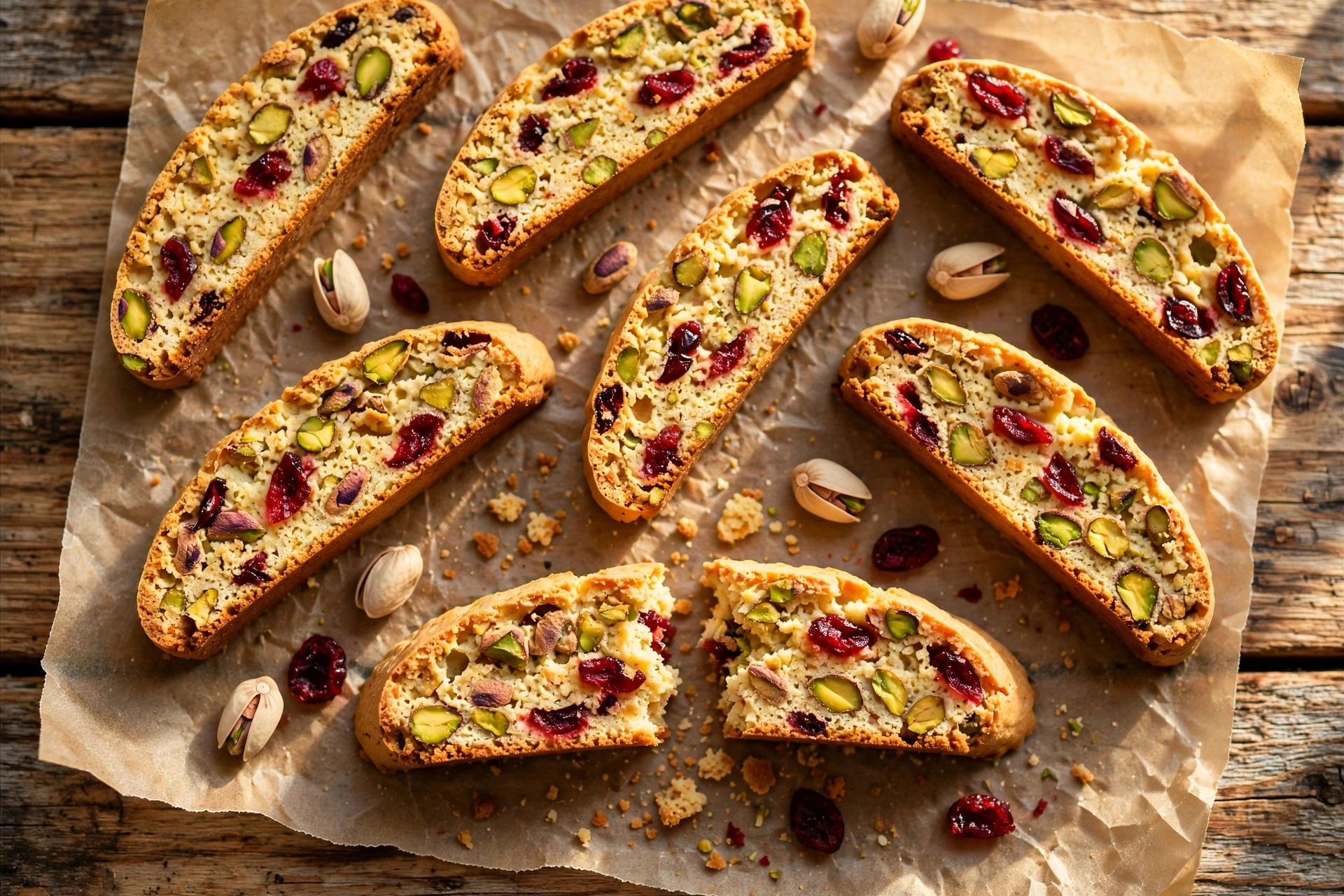
Weigh or scoop the dough for even baking. Balls that vary by ten grams bake at different speeds, so half the tray ends up crisp while the other half is perfect. A small cookie scoop pays for itself in one batch. For a full holiday spread, these sit beautifully next to our cranberry pistachio biscotti on the same platter.
Easy Swaps and Tasty Variations
For a spicier, more grown-up cookie, add a quarter teaspoon of finely ground black pepper and an extra half teaspoon of ginger to the dry ingredients. The pepper does not make the cookies taste savory; it sharpens the ginger heat and makes the finish warmer. Fresh grated ginger, one teaspoon finely grated, can replace half the ground ginger for a brighter bite.
For an orange twist, add one teaspoon of finely grated orange zest to the dough with the molasses. Citrus and gingerbread are natural partners, and the zest lifts the deep molasses flavor without changing the texture at all. Some bakers take this further with lemon zest and a pinch of cardamom; the version at Grandbaby Cakes shows how well that brighter profile works.
For sandwich cookies, bake the batch on the shorter side, cool completely, and spread half the cookies with a thin layer of cream cheese frosting before topping with the other half. The crackled tops stay visible and pretty, and the tangy filling cuts the sweetness beautifully. Use within a day, and store the sandwiches in the fridge.
How to Store and Make Ahead
Store the cooled gingerbread crinkle cookies in an airtight container at room temperature for up to 5 days. Layer them between sheets of parchment so the powdered tops do not rub off on each other. A small piece of white bread in the container keeps soft cookies soft for an extra day, an old baker trick that genuinely works here.
The dough is the real make-ahead hero of this recipe. Mixed dough keeps for up to 3 days in the fridge, and the flavor honestly improves as the spices bloom. For longer storage, freeze scooped dough balls solid on a tray, then bag them for up to 3 months.
Freeze the balls uncoated; sugars absorb moisture in the freezer and lose their crackle. When baking day comes, the coating goes on fresh, so the finished cookies look like they were mixed that morning.
To bake from frozen, let the balls sit at room temperature for about 15 minutes, just until the surface feels tacky enough to hold sugar. Coat them in both sugars exactly as written, then bake, adding 1 to 2 minutes to the time. Baked cookies also freeze well for up to 3 months, though the tops lose a little of their snowy brightness.
Conclusion
Gingerbread crinkle cookies earn their place on the Christmas tray by doing two things at once: they look like a snowstorm and taste like the best part of a gingerbread cake. The double sugar coating guarantees the dramatic cracks, the chill guarantees the soft centers, and neither step asks anything difficult of you.
Mix the dough this week, bake a tray when friends drop by, and freeze the rest of the balls for the next cookie emergency. Once you see those first white fissures split open in the oven, this recipe will never leave your December rotation. Happy baking, and may your cookie boxes always be full.
1 thought on “Gingerbread Crinkle Cookies, Soft, Spiced and Snowy”