In this article:
- Cut Side Down: the Whole Secret to Crispy Roasted Brussels Sprouts
- Caramel Edges, Tender Hearts
- Why the Maple Waits Until the End
- Ingredients for Roasted Brussels Sprouts
- Trim, Toss, Roast, Glaze
- Sizing the Sprouts So They Finish Together
- Burnt Leaves, Soggy Centers: Quick Fixes
- Air Fryer Nights and Other Variations
- Leftovers That Re-Crisp
- Conclusion
- FAQ
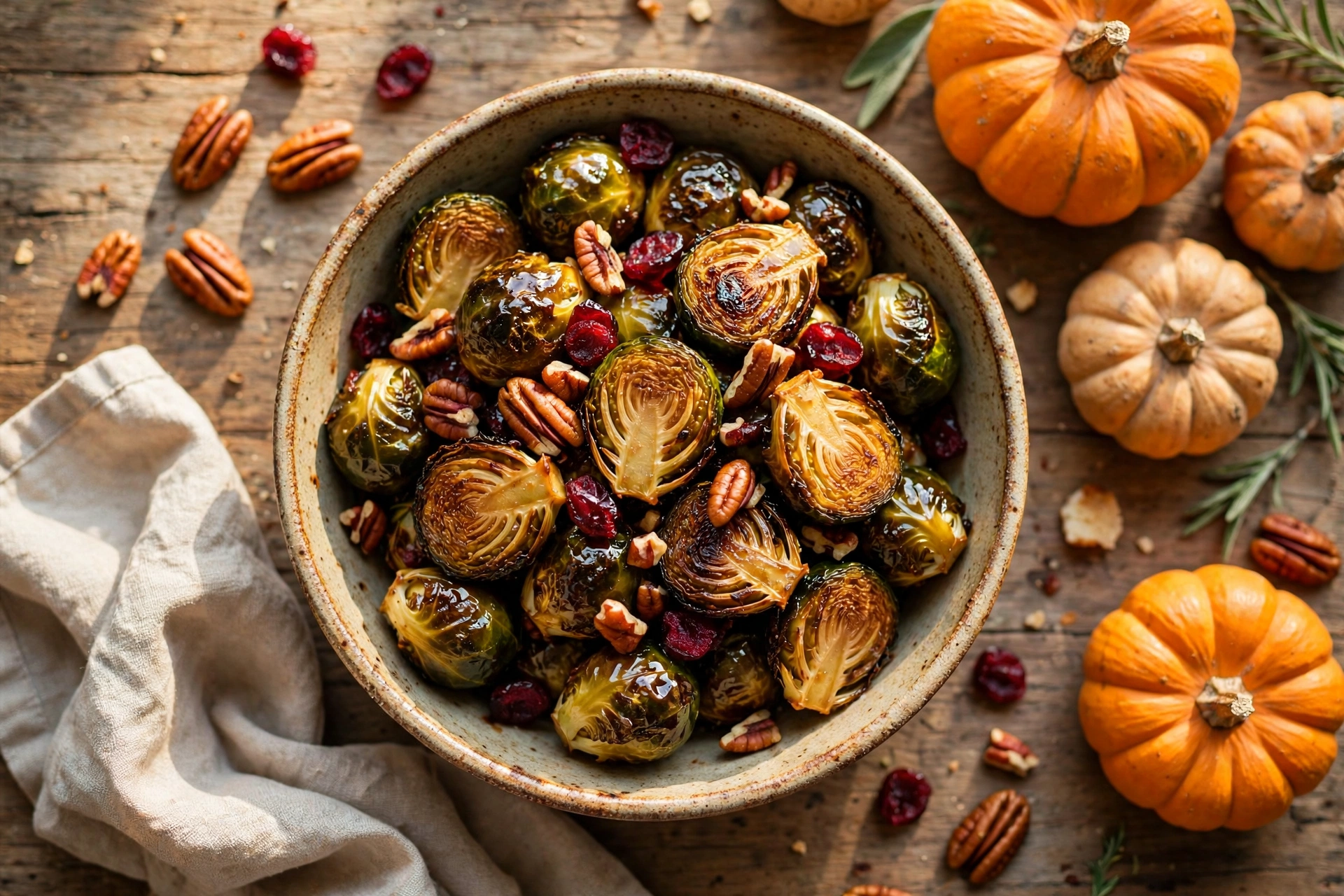
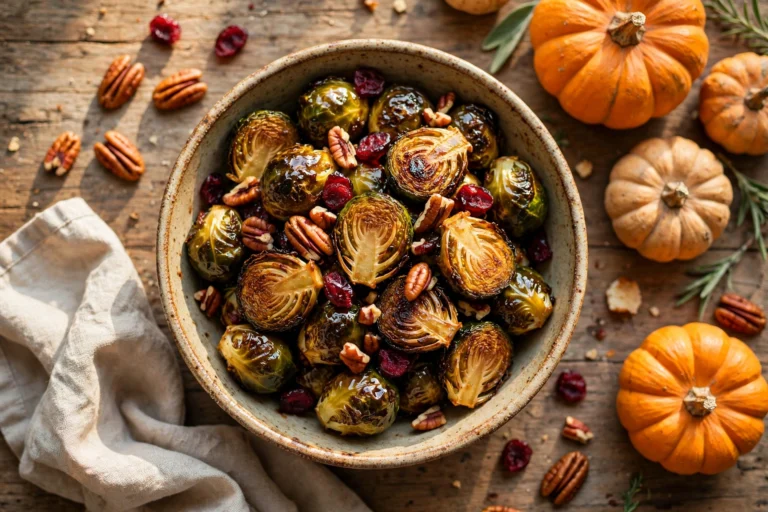
Roasted Brussels sprouts are the side dish that stage a comeback every November, and this batch explains why: cut sides caramelized to a deep amber on a screaming hot pan, a maple balsamic glaze that lands glossy instead of burnt, toasted pecans, and cranberries that pop like little rubies. Even the skeptics take seconds.
The transformation is mostly about what roasting does to a sprout. Raw, it is tight, green, and faintly bitter. Twenty minutes at high heat relaxes the leaves, sugars concentrate at the cut face, and the edges fry in their own oil until they taste almost like a vegetable candy with a savory backbone.
There is also a color argument, and on a Thanksgiving table it counts. So much of the classic spread lives in shades of gold and brown: turkey, gravy, stuffing, rolls, pie. A bowl of deep green sprouts with amber edges and red cranberries is the plate’s punctuation, the dish your eye finds first in every photograph of the table.
For Thanksgiving, the timing could not be kinder. The sprouts trim in minutes, the pan does the work in under half an hour, and the glaze goes on at the very end, which means the dish can wait for its moment while the turkey rests and still arrive at the table crackling.
Cut Side Down: the Whole Secret to Crispy Roasted Brussels Sprouts
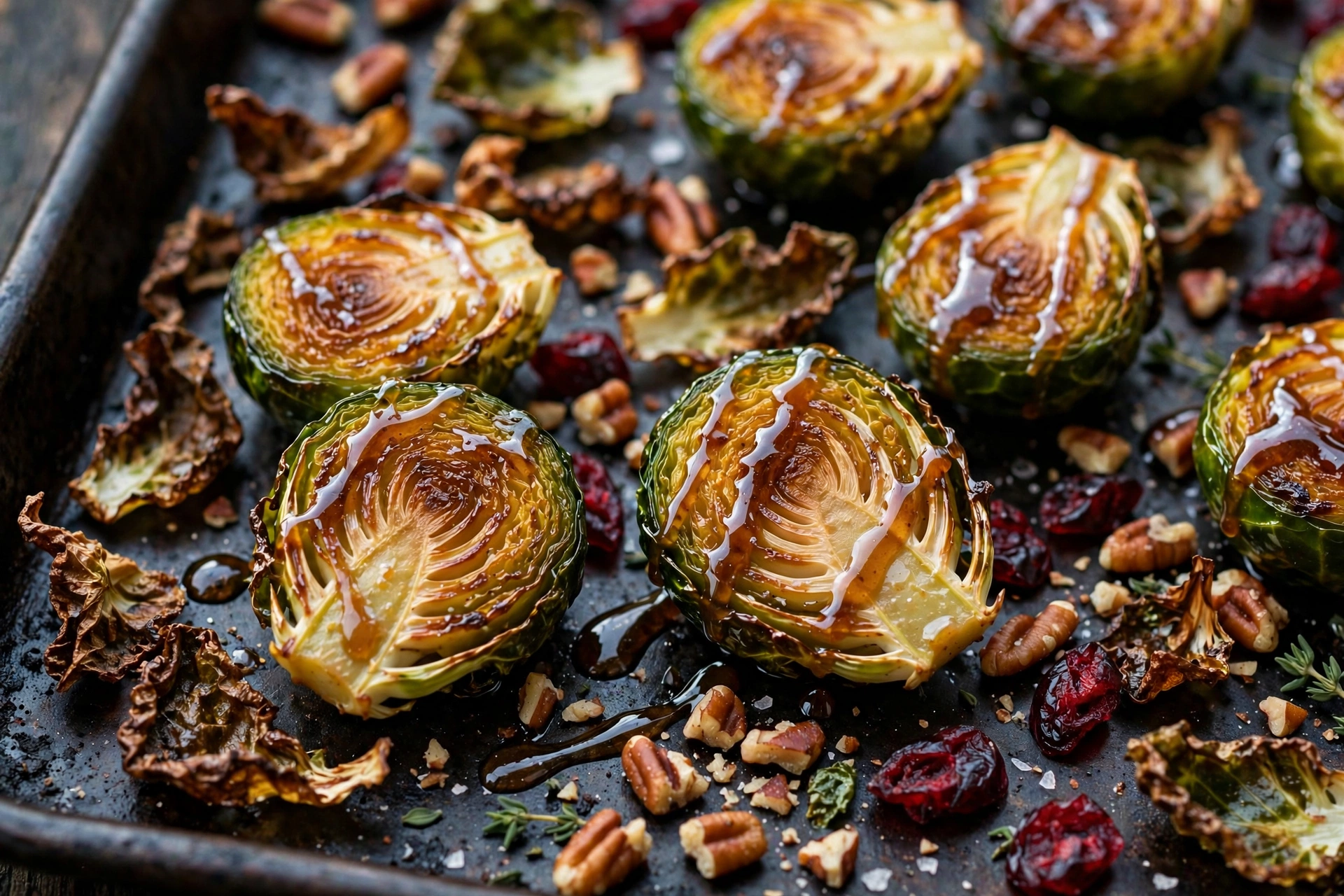
Roasted Brussels sprouts turn crispy for one main reason: uninterrupted contact between the flat cut face and very hot metal. This recipe preheats the sheet pan inside the oven, so the sprouts begin searing the second they land, the way a steak sears in a hot skillet instead of steaming in a cold one.
Placement matters as much as temperature. Every sprout goes cut side down, in a single layer, with a whisper of space around it. A crowded pan traps the moisture the sprouts release, and trapped moisture is steam, and steam is the sworn enemy of caramelization. Two pans beat one crowded pan every single time.
Then comes the discipline: do not stir. For the first eighteen minutes the sprouts stay exactly where you put them, building a crust the color of toasted hazelnuts. The loose leaves that scatter across the pan crisp into chips, and the cook gets to eat those straight off the tray as a fee.
The sprouts must also go in dry. Wash them early, spin or towel them thoroughly, and let them air on the counter while the oven heats. Water on the surface has to boil away before browning can begin, and by the time it does, the centers have overcooked into softness.
Caramel Edges, Tender Hearts
A perfect sprout eats in two acts. First the edges: shattering, salty, deeply browned, with the faint sweetness of a vegetable that has been allowed to truly roast. Then the heart: tender, almost creamy, green in a way that tastes fresh rather than raw, with none of the sulfur heaviness of a boiled sprout.
The glaze adds shine and contrast at the end. Maple brings round sweetness, balsamic brings a dark acidity that keeps the sweetness honest, and together they coat each sprout in something glossy that catches the light on the serving bowl. It looks lacquered, and it tastes like it was planned, because it was.
Pecans toast directly in that glaze for the final minutes, so they come out candied at the edges and warm through. The cranberries stay out of the oven entirely, added at the table moment, because their chew and tartness are the contrast the whole dish leans on. Heat would plump them, but it would also mute them.
A final pinch of flaky salt, scattered from a height so it lands unevenly the way it should, wakes everything up. Serve the sprouts straight from the pan if the table allows it. The sizzle is part of the presentation.
Why the Maple Waits Until the End
Maple syrup is sugar and water wearing a beautiful flavor, and sugar burns. Tossed with the sprouts from the start, the maple would spend twenty five minutes at 425°F, which is long enough to scorch it bitter against the pan while the sprouts are still firm in the middle.
Added in the last five minutes, the same syrup does everything you want. It bubbles, reduces slightly, and clings to the hot sprouts as a glaze instead of pooling and burning. The balsamic vinegar rides along, its acidity keeping the finish bright rather than candy sweet.
This timing has a second benefit: the pecans join the glaze for exactly those final minutes. Raw pecans need about five minutes of heat to toast and release their oils, which matches the glaze window perfectly. Nuts that went in at the start would be dark and bitter by the time the sprouts finished.
The balsamic deserves a word of its own. An everyday balsamic vinegar is exactly right here; the syrupy, expensive aged kind would be wasted at oven temperature and can turn harsh. What you want is clean acidity that reduces quickly and leaves a dark shine, not a precious condiment cooked into anonymity.
If your maple syrup is the very dark, robust grade, it carries a stronger flavor and burns a touch faster, so pull the pan at four minutes instead of five. Light amber syrup is more forgiving. Either way, watch the pan for the last two minutes the way you would watch toast, because you should.
Ingredients for Roasted Brussels Sprouts
- 2 lb (900 g) fresh Brussels sprouts, trimmed and halved, large ones quartered
- 3 tablespoons olive oil
- 1 teaspoon fine salt
- 1/2 teaspoon black pepper
- 1/2 teaspoon garlic powder
- 3 tablespoons pure maple syrup
- 1 tablespoon balsamic vinegar
- 3/4 cup (85 g) pecan halves, roughly chopped
- 1/2 cup (65 g) dried cranberries
- Flaky sea salt, for finishing
Trim, Toss, Roast, Glaze
- Heat the oven to 425°F (220°C) with a large rimmed sheet pan inside it. A hot pan is what sears the cut sides.
- Trim the stem ends of the sprouts, peel away any yellowed outer leaves, and halve them lengthwise. Quarter any sprout wider than a golf ball so everything finishes together. Dry them thoroughly.
- Toss the sprouts in a large bowl with the olive oil, fine salt, pepper, and garlic powder until every cut face looks glossy.
- Tip the sprouts onto the hot pan and turn them cut side down in a single layer, with space between them. Slide the pan back into the oven.
- Roast undisturbed for 18 to 20 minutes, until the cut sides are deeply golden and the loose leaves have crisped.
- Whisk the maple syrup and balsamic vinegar together. Drizzle the glaze over the sprouts, scatter the pecans across the pan, and toss everything right on the hot metal.
- Roast 4 to 5 minutes more, until the glaze bubbles and clings and the pecans smell toasted. Stay close; maple turns fast at the end.
- Remove the pan, scatter the dried cranberries over the sprouts, finish with a pinch of flaky salt, and serve immediately while the edges are crisp.
Sizing the Sprouts So They Finish Together
A bag of Brussels sprouts is never one size, and that is the quiet cause of most disappointing pans. The small ones burn at the edges while the big ones stay crunchy and raw at the core, and the cook blames the oven for what was really a sorting problem.
The fix takes one minute. Halve everything as a baseline, then quarter any sprout that dwarfs the rest, roughly anything wider than a golf ball. The goal is pieces with similar mass, so the heat reaches every center at about the same moment and the whole pan finishes as one.
Save the loose leaves that fall during trimming and roast them on the same pan. They crisp faster than the sprouts themselves and become the cook’s chips, the garnish that disappears before the bowl reaches the table. On our table they are currency, traded openly.
Buying matters too. Choose sprouts that feel heavy and tight, with leaves clamped close and no black spotting at the cut end. Small to medium sprouts are sweeter and cook faster; the giant late season ones carry more of the cabbage family toughness. If the market sells them still on the stalk, take the stalk: those sprouts stay fresher longer and look like a centerpiece doing double duty.
If your sprouts are truly enormous, the giants of late season, give the quarters a two minute head start before adding the halves. It sounds fussy, but one staggered addition is all that stands between a mixed pan and a perfect one.
Burnt Leaves, Soggy Centers: Quick Fixes
Soggy sprouts were steamed sprouts. The causes are always the same three: the sprouts went in wet, the pan was crowded, or the oven was not fully hot. Dry them like you mean it, use two pans without embarrassment, and let the oven and the pan inside it preheat completely before anything is tossed.
Centers that stay hard while the edges char usually mean the sprouts were too large for their time, or the pan sat on a low rack where the bottom heat blasted the cut faces. Move the pan to the center rack and quarter the giants next time. A splash of water and a foil cover for five minutes rescues an undercooked batch without shame.
Bitterness, the old Brussels complaint, is mostly a variety problem now, since modern sprouts are bred milder, and the rest is technique. Enough salt, enough fat, and genuine caramelization tame it. The maple glaze then rounds the edges. Underseasoned, underbrowned sprouts are the bitter ones, almost every time.
If the glaze slides off and pools, the sprouts were not hot enough when it landed, or the pan came out early. Return the pan to the oven for two minutes and toss again; the glaze thickens as it bubbles and will cling once it has reduced against the hot vegetables.
Air Fryer Nights and Other Variations
The air fryer makes an excellent small batch. Roast a pound of sprouts at 380°F for 12 to 14 minutes, shaking the basket once, then toss with the glaze and pecans and give them 2 final minutes. The edges come out remarkably crisp, and the cranberries still go on cold at the end.
For a weeknight variation with a different personality, try our garlic butter roasted Brussels sprouts, which skip the glaze entirely and lean savory. On the holiday table, though, the maple version is the one that disappears first, usually before the funeral potatoes have made their first round.
Swap the pecans for walnuts or candied pumpkin seeds, the cranberries for chopped dried cherries, or the balsamic for a squeeze of orange juice and a little zest. A crumble of goat cheese over the hot sprouts is lovely if the table leans that way. The structure stays: hot pan, cut side down, glaze at the end.
To round out the vegetable side of the menu, our honey glazed roasted carrots bring the same sweet savory logic in orange, and the full side dish collection covers the rest of the spread.
Leftovers That Re-Crisp
Leftover sprouts keep for three days in the refrigerator, and the reheating method decides whether they return as a side dish or as a reminder. Spread them on a sheet pan in a 425°F oven for 5 to 6 minutes, or into the air fryer for 3 to 4, and the edges come back to life.
The microwave is the one tool to avoid. It steams the sprouts from the inside, softens the caramelized faces, and turns the pecans leathery. If a single portion must be microwaved, thirty seconds is the ceiling, and lower your expectations with grace.
Reheated sprouts also make an outstanding hash the next morning. Chop them roughly, crisp them in a skillet with a little oil, and top with a fried egg and the last of the cranberries. Thanksgiving breakfast cooks itself if the sprouts were roasted properly the day before, which is one more argument for making a double batch.
Cold leftovers have a second career chopped into a grain bowl or folded into a frittata, where the glaze seasons everything around them. Freezing is possible but the texture softens on thawing; for make ahead freezing guidance on vegetables, the National Center for Home Food Preservation lays out blanching and storage times clearly. For Thanksgiving itself, a morning roast and a hot re-crisp beats the freezer every time.
Conclusion
Roasted Brussels sprouts ask for so little: a hot pan, a dry sprout, the patience to leave them alone, and a glaze that arrives at the end like it was always the plan. Give them that, and the most doubted vegetable on the Thanksgiving table becomes the bowl people reach across each other for. That is a comeback worth roasting.
FAQ
Why are my roasted Brussels sprouts soggy instead of crispy?
They steamed instead of roasting. Dry the sprouts thoroughly after washing, spread them in a single uncrowded layer (two pans if needed), and make sure the oven and the pan inside it are fully preheated to 425°F before the sprouts go in.
When should I add maple syrup to Brussels sprouts so it does not burn?
In the last 4 to 5 minutes of roasting. Maple syrup added at the start spends too long at high heat and scorches bitter. Added at the end, it bubbles, reduces, and clings to the hot sprouts as a glossy glaze.
Can I roast frozen Brussels sprouts the same way?
Almost. Thaw them completely and dry them very well, since frozen sprouts carry extra surface water. Roast at 425°F a few minutes longer than fresh, expect slightly softer centers, and keep the glaze timing exactly the same.
How do I keep Brussels sprouts from tasting bitter?
Season them properly with salt and oil, and roast them long enough for real caramelization, which converts the sharp edges into sweetness. The maple glaze helps too. Bitter sprouts are almost always underbrowned and underseasoned sprouts.
Can I make these sprouts ahead for Thanksgiving?
Yes. Roast them in the morning up to the glaze step, then reheat on a sheet pan at 425°F for 5 to 6 minutes, toss with the warm glaze and pecans, and finish as written. They come back crisp and nobody will know they waited.
Roasted Brussels Sprouts
Roasted Brussels sprouts with caramelized cut sides from a preheated pan, a maple balsamic glaze added only at the end so it shines instead of burning, toasted pecans, and dried cranberries. The Thanksgiving side that converts the skeptics.
- Total Time: 40 minutes
- Yield: 6 servings 1x
Ingredients
- 2 lb (900 g) fresh Brussels sprouts, trimmed and halved, large ones quartered
- 3 tablespoons olive oil
- 1 teaspoon fine salt
- 1/2 teaspoon black pepper
- 1/2 teaspoon garlic powder
- 3 tablespoons pure maple syrup
- 1 tablespoon balsamic vinegar
- 3/4 cup (85 g) pecan halves, roughly chopped
- 1/2 cup (65 g) dried cranberries
- Flaky sea salt, for finishing
Instructions
- Heat the oven to 425°F (220°C) with a large rimmed sheet pan inside it. A hot pan is what sears the cut sides.
- Toss the dry sprouts with the olive oil, fine salt, pepper, and garlic powder until every cut face is glossy.
- Tip the sprouts onto the hot pan and turn them cut side down in a single layer, with space between them. Crowded sprouts steam instead of roasting.
- Roast undisturbed for 18 to 20 minutes, until the cut sides are deeply golden and the loose leaves are crisp.
- Whisk the maple syrup and balsamic vinegar. Drizzle over the sprouts, add the pecans, and toss right on the pan.
- Roast 4 to 5 minutes more, until the glaze bubbles and clings and the pecans smell toasted. Watch closely: maple goes from glossy to burnt fast.
- Take the pan out, scatter the dried cranberries over the top, and finish with a pinch of flaky salt.
- Serve straight from the pan or in a warm bowl, while the edges are still crisp.
- Prep Time: 15 minutes
- Cook Time: 25 minutes