In this article:
- Why This Baked Mac and Cheese Uses a Custard, Not a Roux
- Three Cheeses, Three Different Jobs
- Two Rules Before Anything Touches the Dish
- Ingredients for the Baked Mac and Cheese
- Building and Baking the Mac and Cheese, Step by Step
- Thanksgiving Timing: Bake It While the Turkey Rests
- Grainy, Greasy or Dry: Mac and Cheese Fixes
- Storing and Reheating Without Losing the Silk
- Variations Worth Their Own Dish
- The Dish Everyone Asks About First
- Questions About This Baked Mac and Cheese, Answered
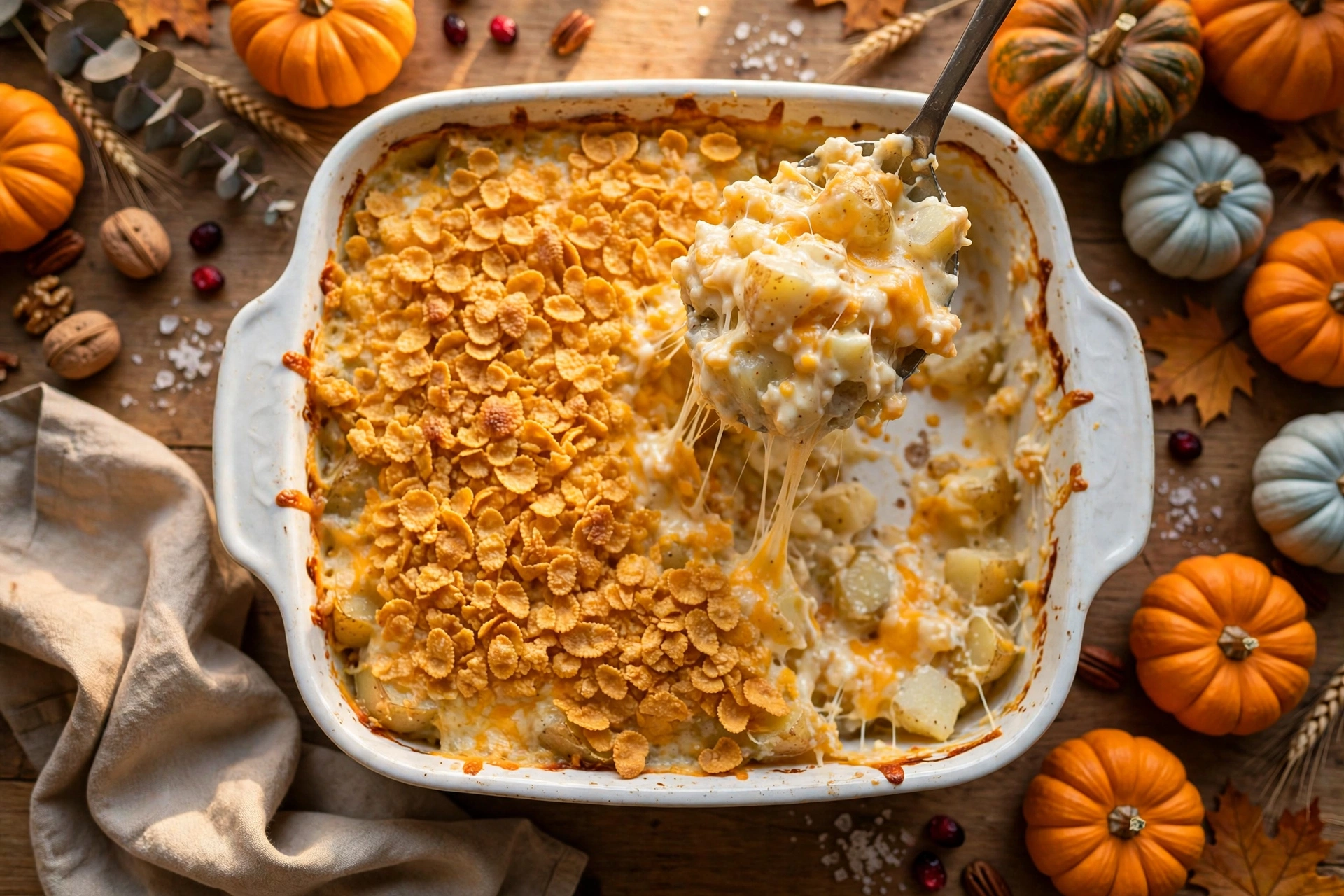
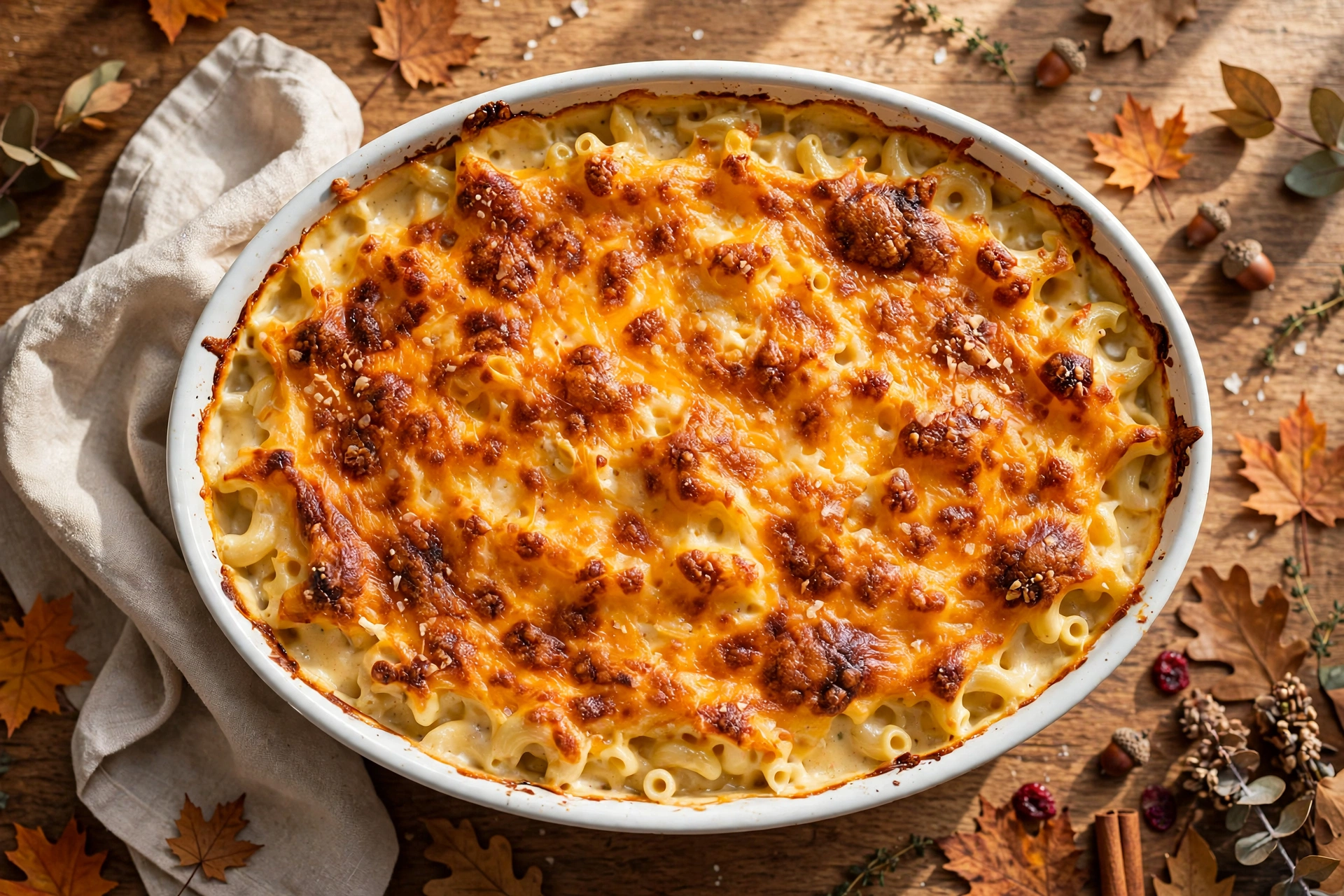
Baked mac and cheese is the Thanksgiving side that behaves like a main event: elbow macaroni folded into a seasoned egg custard with three cheeses, baked until the top turns deep gold and the edges bubble.
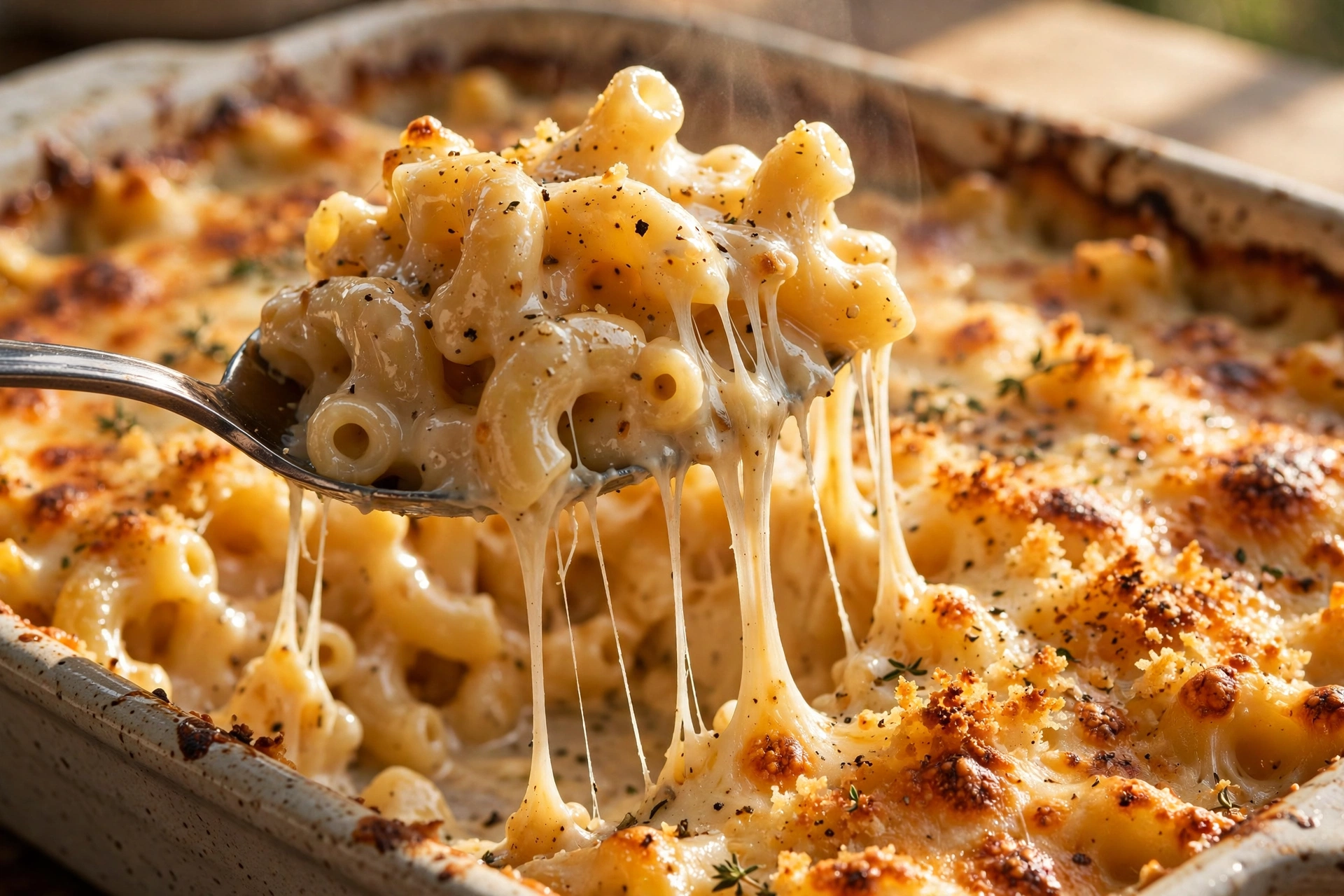
The texture is the argument. A spoon sinks through a crisp, bronzed crust into pasta that stays glossy and loose, each elbow coated in a sauce that clings instead of pooling. It slices like a casserole and eats like a cream sauce, both at once.
This is the Southern custard style, the kind that has anchored holiday tables for generations, and it is built for the day. The dish assembles the night before, bakes while the turkey rests, and reheats like it was never stored. Comfort food, engineered for a crowd.
Why This Baked Mac and Cheese Uses a Custard, Not a Roux
Baked mac and cheese comes from two traditions, and this recipe plants its flag in the custard camp. Instead of a flour thickened béchamel, eggs and evaporated milk set around the pasta as it bakes, giving a dish that holds a clean slice yet stays silky on the spoon.
The custard approach forgives what the roux approach punishes. A béchamel that is slightly undercooked tastes of flour, and one that boils can turn grainy; a custard simply needs gentle, even heat and it sets smooth every time. For a holiday kitchen running four dishes deep, that reliability is worth more than elegance.
Evaporated milk is the quiet technician here. Its proteins are concentrated and heat stable, so the sauce resists breaking in the oven and reheats without splitting. Whole milk alone can weep; the blend of evaporated and whole gives body without a trace of canned flavor.
The eggs also change how the dish ages. A roux based mac and cheese tightens into a solid block by the next day, while a custard based one stays supple and reheats to nearly its first day gloss. When leftovers are half the point of Thanksgiving, that difference decides the recipe.
Three Cheeses, Three Different Jobs
Sharp cheddar is the voice of the dish. It brings the tang and the deep orange gold color that tells the table exactly what this is before a bite is taken. Use a genuinely sharp block, aged enough to smell faintly nutty when you shred it.
Colby Jack is the melt. It is softer, milder, and more willing than cheddar, and it is what stretches from the spoon in long, glossy strands. Without a true melting cheese in the blend, even a perfect custard eats a little stiff, so this role is never skipped here.
Cream cheese is the insurance. Four ounces, melted into the warm pasta before the custard goes on, emulsifies the whole sauce and keeps it silk smooth through the bake and the reheat. You will never taste it as cream cheese; you will only notice that the sauce never turns greasy or thin.
The proportions matter more than the brands: roughly half cheddar for flavor, a third Colby Jack for pull, and a small share of cream cheese for texture. Keep that architecture and the blend tolerates swaps; lose it, and the dish drifts toward bland or rubbery.
Two Rules Before Anything Touches the Dish
Rule one: shred the cheese yourself. Bagged shredded cheese is coated with anti caking starches and cellulose so the strands stay separate in the bag, and those coatings melt into a sauce that feels grainy and dull. Block cheese, shredded on a box grater, melts clean and tastes like itself.
Rule two: undercook the pasta by two full minutes. Macaroni keeps drinking sauce in the oven, and pasta that starts perfectly cooked finishes bloated and soft, having stolen the moisture that should have stayed in the custard. Pasta that starts firm ends exactly right, with the sauce still glossy around it.
Two supporting habits ride along with the rules. Warm the milk before it meets the eggs so the custard pours smooth and even, and let the eggs come to room temperature while the pasta boils. A custard that starts cold in patches sets in patches, and even baking begins before the dish ever reaches the oven.
Finally, rest the finished dish for fifteen full minutes, longer than most recipes dare to say. The custard is still setting as it comes out, and cutting early lets the sauce run loose across the plate. Wait, and each serving holds together in a soft, steaming mound that keeps its shape.
Ingredients for the Baked Mac and Cheese
Buy the cheese in blocks, the macaroni in a full pound bag, and the evaporated milk in the baking aisle. Everything else is a pantry regular, which is part of why this dish survives every holiday shopping list.
- 1 pound (450 g) elbow macaroni
- 1 tablespoon salt, for the pasta water
- 4 tablespoons (55 g) unsalted butter, plus more for the dish
- 2 large eggs, at room temperature
- 1 can (12 ounces, 355 ml) evaporated milk
- 1 cup (240 ml) whole milk, warmed
- 4 ounces (115 g) cream cheese, softened and cut into small cubes
- 1 teaspoon fine salt
- 1/2 teaspoon black pepper
- 1/2 teaspoon garlic powder
- 1/2 teaspoon onion powder
- 1/2 teaspoon dry mustard
- 1/4 teaspoon smoked paprika, plus more for dusting the top
- 3 cups (340 g) shredded sharp cheddar cheese, divided
- 2 cups (225 g) shredded Colby Jack cheese, divided
Nutrition estimate per serving, based on ten side dish servings: about 545 calories, 24 g protein, 45 g carbohydrates, 30 g fat, 760 mg sodium. The values shift with the cheeses you choose; a reduced fat cheddar trims fat but melts noticeably less willingly.
Building and Baking the Mac and Cheese, Step by Step
The build is a single pot and a single dish. Read it once before you start, because the middle moves quickly once the pasta is drained.
- Heat the oven to 350°F (175°C). Butter a 9 by 13 inch baking dish and set it near the stove.
- Bring a large pot of water to a rolling boil, add the tablespoon of salt, and cook the macaroni 2 minutes less than the package directs for al dente, about 6 minutes. It should taste distinctly firm.
- Drain the pasta well and return it to the hot pot, off the heat. Add the butter and toss until melted and every elbow is glossy.
- Scatter the cream cheese cubes over the warm pasta and fold gently for about a minute, until mostly melted and the pasta looks creamy at the edges.
- In a large bowl, whisk the eggs, evaporated milk, warmed whole milk, fine salt, black pepper, garlic powder, onion powder, dry mustard, and smoked paprika until completely smooth.
- Pour the custard over the pasta. Add 2 1/2 cups of the cheddar and 1 1/2 cups of the Colby Jack, and fold until the cheese is evenly distributed and beginning to string.
- Tip the mixture into the buttered dish and level the top. Scatter the remaining cheddar and Colby Jack over the surface and dust lightly with extra smoked paprika.
- Bake 30 to 35 minutes, until the edges are bubbling steadily, the top is deep gold in spots, and the center jiggles slightly as one mass when the dish is nudged.
- Rest the full 15 minutes before serving. The custard finishes setting, the sauce turns silky, and servings hold a soft mound instead of spreading.
For the make ahead route, stop after step 7, cover the dish tightly, and refrigerate up to 24 hours. Bake from cold at the same temperature for 40 to 45 minutes, covering with foil for the first 15 so the top does not outrun the center.
Thanksgiving Timing: Bake It While the Turkey Rests
Thanksgiving runs on oven space, and this baked mac and cheese is scheduled around the bird. The turkey needs a rest of at least 30 minutes before carving, tented and unbothered, and that rest is exactly the window this dish wants.
The plan writes itself. The casserole goes into the oven the moment the turkey comes out, bakes for about 35 minutes, and rests on the counter while the carving and the gravy finish. It reaches the table at the same moment as everything else, wearing its best texture.
Assembly the night before removes the last friction. Butter the dish, cook the pasta, build the whole casserole on Wednesday evening, and refrigerate it covered. Thursday asks only for the bake. It sits comfortably beside the other make ahead players on the menu, like our green bean casserole and the Southern cornbread dressing, both built on the same do it early logic.
If the oven is shared with rolls at the last minute, the baked dish holds gracefully. Cover it and keep it in a low oven at 200°F for up to 30 minutes; the custard waits without drying, and the top keeps its color.
Serve it in the dish it baked in, set on a folded towel at the center of the table. A casserole this rich does not want a garnish beyond its own bronzed top and the steam rising off it, and passing the dish keeps every serving hot.
Grainy, Greasy or Dry: Mac and Cheese Fixes
A grainy sauce almost always means the cheese got too hot, too fast, or arrived pre shredded with its anti caking coat. Heat is the main lever: the cheese should meet warm pasta and a warm custard, never a boiling one. If a sauce does turn grainy, a splash of warm milk and gentle folding off the heat can pull it most of the way back.
A greasy slick on top points to cheese that broke under high heat or a blend with no stabilizer. The cream cheese in this recipe is the preventive; skipping it and doubling the cheddar invites exactly that puddle. A dish baked much past its set point can also weep fat, which is why the jiggle test matters more than the timer.
A dry dish the next day is not a failure, it is pasta physics: the elbows keep absorbing moisture as they sit. The fix is to reheat with a spoonful of milk per serving, covered, so the sauce loosens back to silk instead of tightening further.
A pale top with a perfect center is the easiest correction of all. Two minutes under the broiler, watched without blinking, bronzes the cheese without touching the custard beneath. Pull it the moment the spots turn deep gold; cheese crosses from bronzed to scorched in under a minute.
Storing and Reheating Without Losing the Silk
Leftovers keep four days in the refrigerator, well covered; the dish dries at the edges if it sits open to cold air. Portion the leftovers into shallow containers and they chill faster and reheat more evenly than one deep block.
The oven is the reheat that respects the recipe. Warm portions at 325°F, covered, with a spoonful of milk per serving, for 15 to 20 minutes. The custard relaxes, the cheese stretches again, and the top survives, which no microwave at full power can promise.
Freezing works best before baking. Assemble the casserole in a freezer safe dish, wrap it tightly, and freeze up to two months; thaw overnight in the refrigerator and bake as the make ahead route describes. A fully baked dish can also freeze, though the pasta softens a notch further on the second bake.
Prompt refrigeration is part of the recipe, not an afterthought: a dairy and egg dish like this baked mac and cheese belongs in the fridge within two hours of the meal, the same habit FoodSafety.gov recommends for cooked dishes generally. Future you, eating the leftovers, will be glad you bothered.
Variations Worth Their Own Dish
A breadcrumb top is the classic fork in the road. A cup of panko tossed with two tablespoons of melted butter and a quarter cup of the cheddar, scattered on before the bake, gives a shattering crust over the silk. It cannot be made ahead as gracefully, so save it for the same day version.
Heat is the variation this table asks for most. A teaspoon of hot sauce whisked into the custard or a finely diced jalapeño folded through the pasta warms the dish without changing its character. Smoked Gouda swapped for a cup of the cheddar leans it toward the fireplace.
Vegetables earn their place when they respect the sauce. A cup of thawed peas, folded in at serving so they stay bright, or small broccoli florets blanched and dried well, both work. Anything watery must be cooked and dried first, the same rule that governs our corn pudding and every custard based side on this site.
For a smaller table, halve the recipe in an 8 inch square dish and bake 25 to 28 minutes. The custard depth stays similar, the edges stay generous, and a household of two gets the full experience plus one perfect round of leftovers.
The Dish Everyone Asks About First
Baked mac and cheese earns its place on the Thanksgiving table by doing three jobs at once: it comforts, it feeds a crowd without drama, and it waits patiently for its moment in the oven. Three cheeses with three jobs, pasta pulled two minutes early, and a custard that forgives a busy kitchen. Make it once for the holiday, and it will be requested by name before the next one is even planned.
Jordan
Questions About This Baked Mac and Cheese, Answered
Can I use pre shredded cheese for baked mac and cheese?
You can, but the sauce will likely turn out grainy and a little dull. Bagged shreds carry anti caking starch and cellulose that interfere with melting. Shredding blocks of cheddar and Colby Jack on a box grater takes five minutes and is the single biggest upgrade this recipe offers.
Can I make this mac and cheese without eggs?
Yes, but it becomes a different dish: the custard will not set into slices, so expect a looser, spoonable result. Replace the eggs with 2 tablespoons of flour whisked into the milks and warmed until slightly thickened, and bake 5 minutes less. The flavor stays, the structure changes.
Why does the recipe use evaporated milk instead of all whole milk?
Evaporated milk is concentrated and heat stable, so the custard resists breaking in the oven and reheats without splitting or weeping. Whole milk alone gives a thinner sauce that can turn watery at the edges. The blend of the two keeps the body rich without any canned taste.
Can I assemble baked mac and cheese the day before Thanksgiving?
Yes, that is the recommended route. Assemble the full dish, cover tightly, and refrigerate up to 24 hours. Bake it straight from the fridge at 350°F for 40 to 45 minutes, covered with foil for the first 15 minutes, while the turkey rests. Rest it 15 minutes before serving.
How do I reheat leftover mac and cheese so it is creamy again?
Add a spoonful of milk per serving, cover the dish, and warm it in a 325°F oven for 15 to 20 minutes. The added milk replaces what the pasta absorbed overnight and loosens the custard back to silk. Stir once halfway through so the center heats as evenly as the edges.
Baked Mac and Cheese
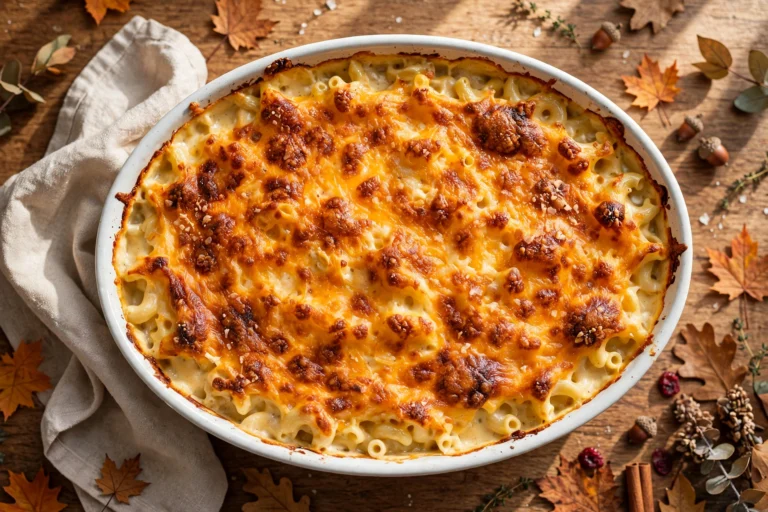
Baked mac and cheese in the Southern custard style: elbow macaroni pulled two minutes early, folded into a seasoned egg and evaporated milk custard with sharp cheddar for flavor, Colby Jack for the pull, and cream cheese for silk. Assembles the night before Thanksgiving and bakes while the turkey rests.
- Total Time: 1 hour 10 minutes
- Yield: 10 servings 1x
Ingredients
- 1 pound (450 g) elbow macaroni
- 1 tablespoon salt, for the pasta water
- 4 tablespoons (55 g) unsalted butter, plus more for the dish
- 2 large eggs, at room temperature
- 1 can (12 ounces, 355 ml) evaporated milk
- 1 cup (240 ml) whole milk, warmed
- 4 ounces (115 g) cream cheese, softened and cut into small cubes
- 1 teaspoon fine salt
- 1/2 teaspoon black pepper
- 1/2 teaspoon garlic powder
- 1/2 teaspoon onion powder
- 1/2 teaspoon dry mustard
- 1/4 teaspoon smoked paprika, plus more for dusting the top
- 3 cups (340 g) shredded sharp cheddar cheese, divided
- 2 cups (225 g) shredded Colby Jack cheese, divided
Instructions
- Heat the oven to 350°F (175°C). Butter a 9 by 13 inch baking dish.
- Boil the macaroni in well salted water for 2 minutes less than the package directs for al dente, about 6 minutes. Drain well and return to the hot pot, off the heat.
- Add the butter to the pasta and toss until melted and glossy. Scatter the cream cheese cubes over the top and fold gently for about a minute, until mostly melted.
- In a large bowl, whisk the eggs, evaporated milk, warmed whole milk, fine salt, black pepper, garlic powder, onion powder, dry mustard, and smoked paprika until completely smooth.
- Pour the custard over the pasta. Add 2 1/2 cups of the cheddar and 1 1/2 cups of the Colby Jack and fold until evenly distributed and beginning to string.
- Tip the mixture into the buttered dish and level the top. Scatter the remaining cheddar and Colby Jack over the surface and dust lightly with extra smoked paprika.
- Bake 30 to 35 minutes, until the edges bubble steadily, the top is deep gold in spots, and the center jiggles slightly as one mass when nudged.
- Rest the full 15 minutes before serving so the custard finishes setting and the sauce turns silky.
- Make ahead: assemble through step 6, cover tightly, and refrigerate up to 24 hours. Bake from cold for 40 to 45 minutes, covered with foil for the first 15 minutes.
- Prep Time: 20 minutes
- Cook Time: 35 minutes