In this article:
- Why these candied yams come out lacquered, not watery
- The syrup reduction finish that saves the glaze
- Yams, sweet potatoes and the grocery store label trick
- Ingredients
- Cooking the candied yams, step by step
- Three fixes for a glaze that stays thin
- The marshmallow question, answered separately
- Swaps for the syrup, the spice and the sweetener
- Wednesday night and Thursday morning: the make ahead plan
- Leftovers, reheating and the second day plate
- Questions I get about these candied yams
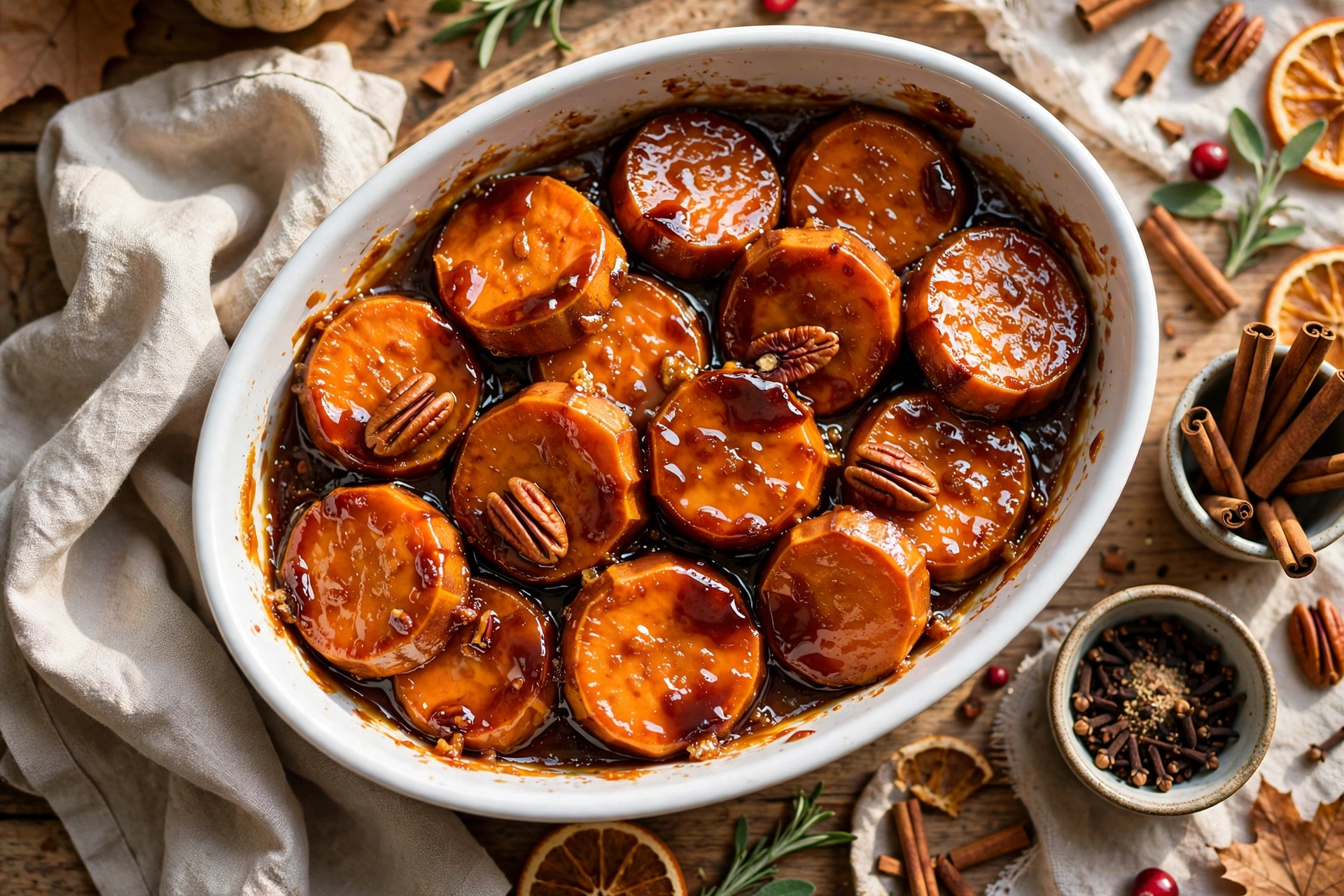
These candied yams are the dish that taught me the difference between a glaze and a puddle. The slices come out of the oven tender all the way through, coated in a brown sugar syrup so glossy it shines under the dining room light.
The flavor is deep and warm rather than simply sweet. Dark brown sugar brings a molasses edge, the spice blend stays in the background, and a little orange zest keeps the whole pan from tasting heavy.
What makes this version different is the last five minutes. Instead of hoping the syrup thickens on its own, we reduce it on the stove and pour it back, and that move guarantees the lacquered finish.
Why These Candied Yams Come Out Lacquered, Not Watery
These candied yams succeed or fail on one thing: water management. Sweet potatoes release a surprising amount of liquid as they bake, and that liquid dilutes the syrup in the dish, which is why so many pans come out swimming.
The covered first bake is for tenderness only. Foil traps the steam, the slices soften evenly, and nobody asks the glaze to do two jobs at once. The glaze gets its own stage later, uncovered and then reduced.
Slice thickness is the second lever. Rounds of a half inch give every piece two wide faces for the syrup to cling to, and they cook through at the same pace, so no slice is still firm while its neighbor collapses.
Salt matters more than most recipes admit. Three quarters of a teaspoon across the pan seasons the flesh itself and keeps the sweetness from reading flat. And at 375 degrees, the edges of the slices pick up real color in the final uncovered minutes; those caramelized rims are where the candy part of the dish actually lives.
The Syrup Reduction Finish That Saves the Glaze
Here is the move this recipe is built around. When the slices are tender, the pan holds a thin, pale syrup that tastes right but coats nothing. Poured into a small saucepan, it becomes something else entirely.
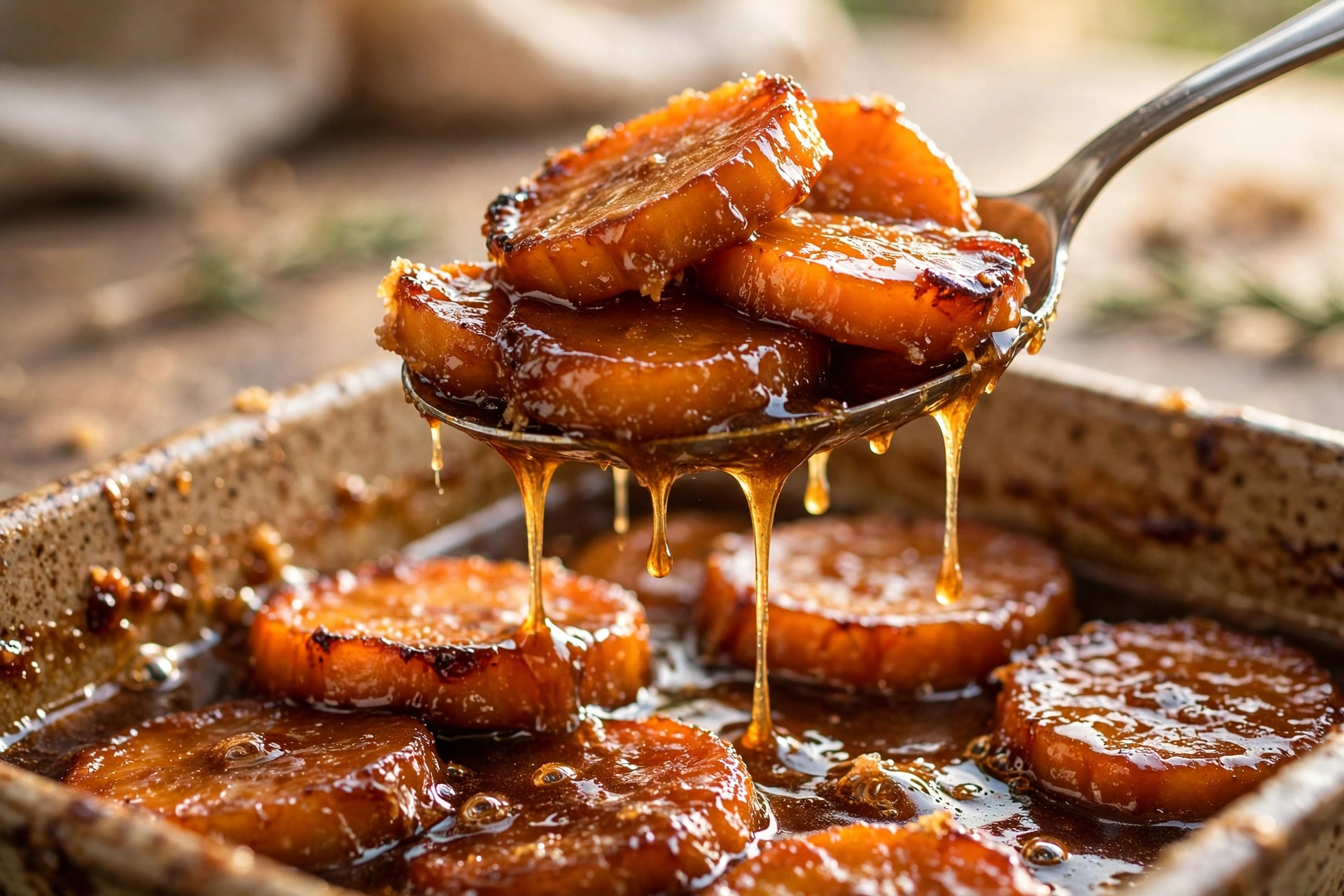
Three to four minutes of steady simmering drives off the water the potatoes gave up during baking. The syrup darkens a shade, turns viscous, and finally coats the back of a spoon in a slow, shiny sheet.
Poured back over the warm slices, that reduced syrup clings instead of pooling. It sets to a soft gloss as the dish rests, the way a good caramel sauce sets on a warm cake.
The step costs one small pan and five minutes, and it removes the only real gamble in the recipe. Basting only redistributes thin syrup; reduction actually changes its concentration. Bake the potatoes until tender, then make the glaze properly at the end: every failure I have ever served came from trying to do both at once.
Yams, Sweet Potatoes and the Grocery Store Label Trick
The first thing to know is that the orange vegetables labeled yams in most American supermarkets are sweet potatoes. True yams are a different plant entirely, with rough bark-like skin and starchy, barely sweet flesh, and they are rarely what a Thanksgiving recipe means.
For this dish, reach for the orange fleshed kind, usually sold as garnet or jewel, whether the sign says yam or sweet potato. Their flesh turns silky and sweet as it bakes, which is exactly the texture a candied glaze wants to coat.
Shape matters more than the label. Long, evenly thick potatoes slice into rounds of the same diameter, and rounds of the same diameter cook at the same speed, so the whole pan finishes together. Skip any with soft spots or dark bruises: damage under the skin travels in a covered dish.
Buy them up to five days ahead. Sweet potatoes keep in a cool, dark cupboard, never in the refrigerator, where cold air turns the centers hard and grainy.
Ingredients
For the yams: – 4 pounds (1.8 kg) orange sweet potatoes (garnet or jewel), about 5 medium, peeled and sliced into 1/2 inch rounds – 1 tablespoon unsalted butter, for the dish
For the brown sugar glaze: – 1/2 cup (115 g) unsalted butter – 3/4 cup (150 g) packed dark brown sugar – 1/4 cup (50 g) granulated sugar – 1/3 cup (80 ml) water – 1 teaspoon ground cinnamon – 1/2 teaspoon ground ginger – 1/4 teaspoon ground nutmeg – 1/8 teaspoon ground cloves – 3/4 teaspoon fine salt – 2 teaspoons vanilla extract – 1 teaspoon finely grated orange zest
Optional finishes: – 1 1/2 cups (75 g) mini marshmallows – 1/2 cup (55 g) pecan halves, toasted
Cooking the Candied Yams, Step by Step
- Heat the oven to 375°F (190°C). Butter a 9×13 inch baking dish. Peel the sweet potatoes and slice them into rounds a half inch thick, keeping the slices as even as you can so they finish together.
- Arrange the rounds in the dish in slightly overlapping rows, like fallen dominoes. A single crowded layer with light overlap is right; the slices settle as they soften.
- In a medium saucepan over medium heat, melt the butter. Add both sugars, the water, cinnamon, ginger, nutmeg, cloves and salt. Stir until the sugar dissolves, then simmer gently for 2 minutes, until glossy.
- Take the pan off the heat and stir in the vanilla and orange zest. Pour the hot syrup evenly over the potato rounds, then turn a few slices with a spoon so every face gets a first coating.
- Cover the dish tightly with foil and bake for 35 minutes. The slices should be softening and the syrup bubbling at the edges.
- Remove the foil. Spoon the pan syrup over the slices, turning any pale pieces face down. Bake uncovered for 15 minutes more, until a knife slides into the thickest slice with no resistance and the edges show light caramel color.
- Tilt the dish carefully and pour the pan syrup back into the saucepan. Simmer over medium heat for 3 to 4 minutes, until it thickens enough to coat the back of a spoon and leaves a clear trail when you draw a finger through it.
- Pour the reduced glaze back over the yams and let the dish rest for 10 minutes. The glaze will set to a shine as it cools slightly. Serve warm, with the toasted pecans scattered over if you like.
Three Fixes for a Glaze That Stays Thin
If your glaze has ever come out watery, the cause is almost always one of three things, and all three are fixable before the dish reaches the table.
The first is the potato choice. Pale, tan fleshed sweet potatoes release more water and carry less sugar than the orange garnet type, so the syrup starts thinner and finishes thinner.
The second is skipping the uncovered bake. Those 15 open minutes evaporate the first wave of potato water and start the edges caramelizing; a covered-only dish gets neither benefit.
The third is impatience at the reduction. The syrup should coat a spoon and move slowly, almost lazily, when the pan is tipped. If it runs like water, give it another minute; if it starts to smell like caramel, pull it at once, because sugar keeps cooking off the heat.
A word about basting: it helps color and flavor, but it cannot rescue a dilute syrup. Reduce first, and the order of operations does the heavy lifting. And if the slices feel firm while the clock says done, trust the knife, not the clock: ten extra covered minutes beats a beautiful glaze on an undercooked slice.
The Marshmallow Question, Answered Separately
Half the tables in America expect marshmallows on this dish, and the other half considers them an insult to a good glaze. This recipe is built for the second camp, with a clean path for the first.
The base dish carries no marshmallow because the reduced glaze is the point, and a blanket of white sugar hides the shine you just worked for. Served plain, with pecans, it reads as a composed side dish.
For the marshmallow version, finish through the reduction, pour the glaze back, scatter the mini marshmallows over the top and broil for 1 to 2 minutes, watching constantly, until the tops are deep golden in spots. Serve that version immediately: marshmallow softens and slumps into the glaze within half an hour.
What I would not do is bake the marshmallows from the start. Forty minutes of oven turns them into a tough, separated sugar crust, and no glaze underneath can save the texture.
Swaps for the Syrup, the Spice and the Sweetener
Dark brown sugar is the backbone here, but light brown sugar works with a slightly gentler molasses note. A full swap to maple syrup is possible too: replace both sugars with 3/4 cup maple syrup and drop the water to 2 tablespoons, since maple brings its own liquid.
Honey splits the difference, half honey and half brown sugar, and gives the glaze a floral edge that suits a smaller holiday table. Keep the reduction step either way, because every liquid sweetener needs concentrating after the potatoes give up their water.
On spice, the blend is deliberately warm rather than hot. Leave out the cloves if your table dislikes them, double the ginger for a brighter pan, or add a pinch of cayenne when the rest of the menu is rich and mild and needs one dish with a quiet spark.
Butter can be swapped for a good plant based baking stick at the same weight for a dairy free pan. The glaze will set a touch softer, which the reduction compensates for if you give it the full four minutes.
For a smaller household, halve everything and bake in an 8 inch square dish. The covered time stays the same, the uncovered time drops to about 10 minutes, and the reduction moves fast, so watch it closely. On a non holiday night, the same spiced syrup is lovely over the sweet potato casserole with pecan streusel topping instead of the streusel.
Wednesday Night and Thursday Morning: The Make Ahead Plan
This is a genuinely friendly make ahead dish, as long as you stop at the right place. Assemble everything through the covered bake on Wednesday evening, cool the dish, cover it and refrigerate it overnight.
Hold the reduction for Thursday. While the turkey gravy from drippings comes together, warm the dish uncovered at 375 degrees for 12 to 15 minutes, reduce the syrup while it heats, and pour the hot glaze over just before the dish goes to the table.
The glaze made fresh at serving time is not a compromise; it is actually better than a glaze reduced the day before, because it never sits in the fridge soaking back into the slices.
The syrup can also be made on its own up to three days early and kept in a jar in the fridge; warm it until it flows before pouring. One caution: do not slice the raw potatoes the night before and leave them in water. They bake up washed out and the glaze never quite clings.
Leftovers, Reheating and the Second Day Plate
Leftovers keep four days in the fridge, covered, in their glaze. The syrup will look thick and dull when cold, because butter sets; that is expected, and heat brings the shine straight back.
Reheat a portion in a small skillet over medium low heat with a spoonful of water, turning the slices once, until the glaze loosens and bubbles at the edges. A 350 degree oven for 12 to 15 minutes does the same job for a bigger batch.
Freezing is the one thing I advise against. The slices go soft and weepy after thawing, and the glaze separates into sweet water and butter. This dish is made to be finished within the week.
The second day plate is worth planning for, though. Warm slices crisped in a skillet make a fine base for a fried egg, and chopped leftovers fold into a hash with onions and peppers, or sit beside a reheated pan of honey glazed roasted carrots when the fridge offers both.
By the end of the weekend the pan is always empty at our house. These candied yams ask for one extra saucepan and five honest minutes at the stove, and they pay it back every single time someone drags a slice through the last of the glaze.
Questions I Get About These Candied Yams
Should the slices really be a half inch thick? Yes, and the thickness is doing two jobs. Thinner slices slump and break when you turn them, thicker ones stay firm in the center while the glaze overcooks. A half inch finishes tender in the time written and gives the syrup a wide face to coat.
My glaze came out thin even with the reduction. What happened? Most likely the potato variety. Pale fleshed sweet potatoes release far more water; the fix is another 2 minutes of reduction, and orange garnet potatoes next time.
Can I use the vegetables actually labeled yams at my store? At most American supermarkets, the bin labeled yams holds orange sweet potatoes, exactly right here. True yams, with dark rough skin and white starchy flesh, are not sweet enough for this glaze.
Can I assemble the whole dish the night before? Assemble through the covered bake, yes. Slice, sauce and bake covered on Wednesday, then refrigerate. On Thursday, reheat uncovered, reduce the syrup fresh and pour it over hot. The glaze made at serving time is the version that shines.
Do the marshmallows go on before or after the reduction? After, always. Scatter them over the finished, glazed dish and broil for 1 to 2 minutes until golden in spots. Baked from the start, they turn tough and separate; broiled at the end, they stay soft under a toasted top.
What main dishes sit well next to these? Anything savory and simply seasoned, so the sweet glaze has contrast. At our table they go beside the maple glazed roast turkey breast, whose savory maple note stays a cousin of the glaze rather than a copy of it.
Nutrition per serving (estimated, 8 servings): Calories 385, Total Fat 12 g, Saturated Fat 7 g, Unsaturated Fat 4 g, Trans Fat 0 g, Carbohydrates 68 g, Fiber 5 g, Sugar 40 g, Protein 3 g, Sodium 240 mg, Cholesterol 30 mg. Sweet potatoes are naturally rich in beta carotene and potassium; reference values for the raw vegetable follow USDA FoodData Central.
Prep Time: 20 minutes Cook Time: 55 minutes Total Time: 1 hour 15 minutes Yield: 8 servings
Print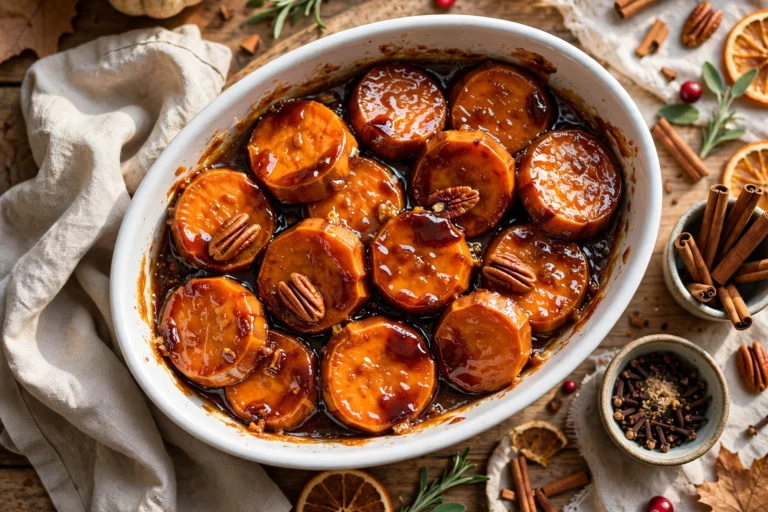
Candied Yams With a Brown Sugar Glaze
Orange sweet potato rounds baked in a spiced brown sugar butter syrup, finished with a stove top reduction that turns the pan juices into a glossy, lacquered glaze. Includes the three fixes for a thin glaze, a separate marshmallow finish, and a Wednesday to Thursday make ahead plan.
- Total Time: 1 hour 15 minutes
- Yield: 8 servings 1x
Ingredients
- 4 pounds (1.8 kg) orange sweet potatoes (garnet or jewel), about 5 medium, peeled and sliced into 1/2 inch rounds
- 1 tablespoon unsalted butter, for the dish
- 1/2 cup (115 g) unsalted butter
- 3/4 cup (150 g) packed dark brown sugar
- 1/4 cup (50 g) granulated sugar
- 1/3 cup (80 ml) water
- 1 teaspoon ground cinnamon
- 1/2 teaspoon ground ginger
- 1/4 teaspoon ground nutmeg
- 1/8 teaspoon ground cloves
- 3/4 teaspoon fine salt
- 2 teaspoons vanilla extract
- 1 teaspoon finely grated orange zest
- 1 1/2 cups (75 g) mini marshmallows (optional)
- 1/2 cup (55 g) pecan halves, toasted (optional)
Instructions
- Heat the oven to 375°F (190°C). Butter a 9×13 inch baking dish. Peel the sweet potatoes and slice them into rounds a half inch thick, keeping the slices as even as you can so they finish together.
- Arrange the rounds in the dish in slightly overlapping rows, like fallen dominoes. A single crowded layer with light overlap is right; the slices settle as they soften.
- In a medium saucepan over medium heat, melt the butter. Add both sugars, the water, cinnamon, ginger, nutmeg, cloves and salt. Stir until the sugar dissolves, then simmer gently for 2 minutes, until glossy.
- Take the pan off the heat and stir in the vanilla and orange zest. Pour the hot syrup evenly over the potato rounds, then turn a few slices with a spoon so every face gets a first coating.
- Cover the dish tightly with foil and bake for 35 minutes. The slices should be softening and the syrup bubbling at the edges.
- Remove the foil. Spoon the pan syrup over the slices, turning any pale pieces face down. Bake uncovered for 15 minutes more, until a knife slides into the thickest slice with no resistance and the edges show light caramel color.
- Tilt the dish carefully and pour the pan syrup back into the saucepan. Simmer over medium heat for 3 to 4 minutes, until it thickens enough to coat the back of a spoon and leaves a clear trail when you draw a finger through it.
- Pour the reduced glaze back over the yams and let the dish rest for 10 minutes. The glaze will set to a shine as it cools slightly. Serve warm, with the toasted pecans scattered over if you like. For the marshmallow version, scatter the mini marshmallows over the glazed dish and broil 1 to 2 minutes until golden in spots, then serve immediately.
- Prep Time: 20 minutes
- Cook Time: 55 minutes
Nutrition
- Serving Size: 1
- Calories: 385
- Sugar: 40
- Sodium: 240
- Fat: 12
- Saturated Fat: 7
- Unsaturated Fat: 4
- Trans Fat: 0
- Carbohydrates: 68
- Fiber: 5
- Protein: 3
- Cholesterol: 30