In this article:
- Why These Scalloped Potatoes Stay Creamy, Never Watery
- Yukon Golds Are the Potato for Layers That Hold
- The Cheese Sauce Gets Built on the Stove First
- Ingredients for the Cheesy Scalloped Potatoes
- Layering and Baking the Scalloped Potatoes, Step by Step
- An Oven Schedule That Fits Around the Turkey
- Split Sauce or Soggy Layers: Scalloped Potato Fixes
- Make It Ahead, and Hold It Warm Without Drying Out
- The Quiet Classic at the End of the Table
- Questions I Get About Scalloped Potatoes
Scalloped potatoes are the side dish I protect most fiercely on Thanksgiving, because a good pan delivers everything the table wants at once: tender layers, a sauce that stays silky, and a top that turns deep golden at the edges.
The version here starts on the stove, not in the oven. The cheese sauce is built in a saucepan, seasoned, and finished until smooth before it ever meets a single slice. By the time the dish goes in to bake, the hardest part is already solved.
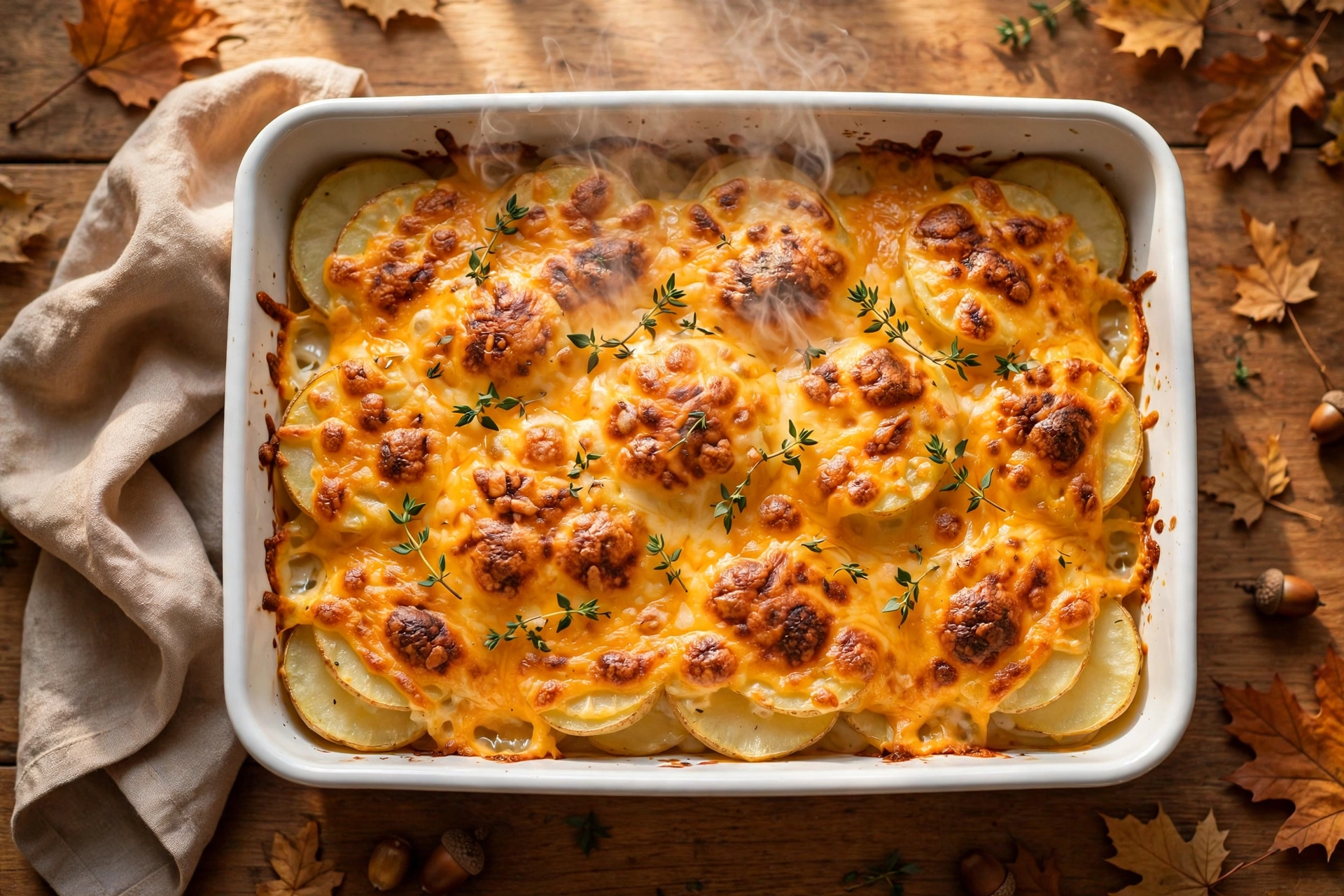
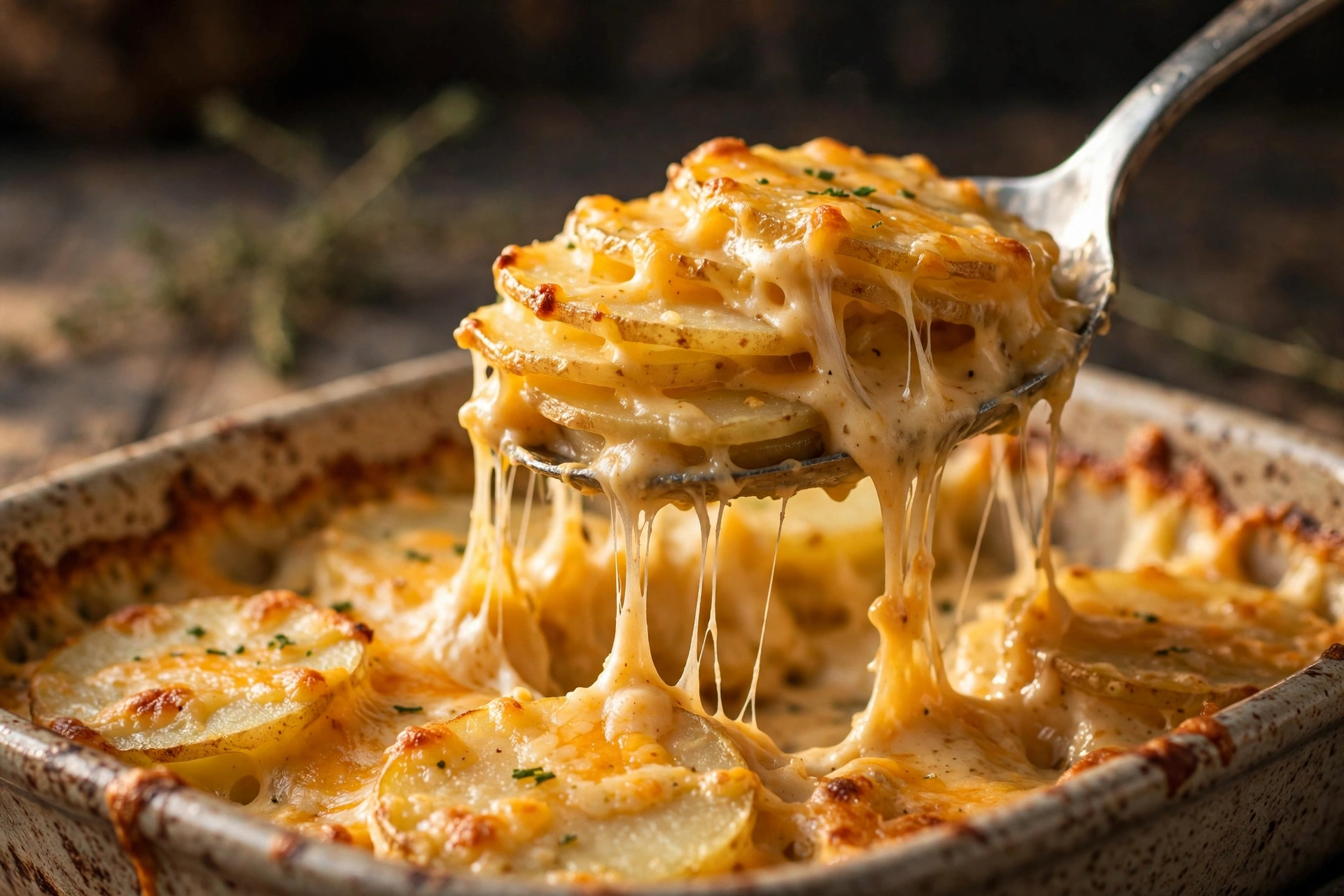
What you serve is calm and generous. Thin slices hold their shape in neat layers, the onion melts into the sauce, and thyme and nutmeg sit quietly in the background. It slices with a spoon, holds on the plate, and stays creamy to the last serving.
Why These Scalloped Potatoes Stay Creamy, Never Watery
Scalloped potatoes turn watery for one simple reason: raw slices release their liquid into a sauce that was never thick enough to hold it. Building the sauce first, and thickening it properly, gives that liquid somewhere to go and something rich to join.
The flour is the quiet insurance. Cooked for a full minute in butter and onion, it loses its raw taste and becomes a roux with real thickening power. When the milk and cream simmer through it, the sauce coats a spoon in a thick, steady layer.
Even slices matter just as much. A slice that is twice as thick as its neighbor cooks at half the speed, so one part of the dish stays firm while another part overcooks and weeps. Uniform thickness means the whole pan finishes at the same moment.
The final rest does work that baking cannot. Straight from the oven, the sauce looks looser than it really is, because heat keeps it fluid. Fifteen minutes on the counter lets it settle around the layers, so servings come out creamy instead of soupy.
Yukon Golds Are the Potato for Layers That Hold
Yukon Golds sit in the sweet spot between waxy and starchy, and that balance is exactly what layered dishes need. They soften into tenderness without falling apart, so each slice stays visible in the finished serving instead of melting into an indistinct mash.
Russets behave very differently in this kind of bake. Their high starch breaks down quickly, the edges dissolve, and the layers lose their definition long before the center is tender. The flavor is fine, but the structure that makes this dish special disappears.
Red potatoes hold their shape almost too well. Their low starch keeps slices firm and a little squeaky, even after a long bake, and the sauce slips off their waxy surfaces instead of clinging. Gold potatoes accept the sauce and still keep their edges.
Peeling gives the cleanest result here, because the skins can curl and separate during baking. If you enjoy a more rustic pan, like our funeral potatoes in their own way, you can leave the peels on, but expect softer definition between the layers.
The Cheese Sauce Gets Built on the Stove First
Many recipes pour plain milk or cream over raw slices and hope the oven sorts it out. Sometimes it does, and sometimes the cheese clumps, the liquid stays thin, and the top browns over a pan that never really came together as one dish.
The stovetop method removes the guessing. The onion cooks first until sweet, the garlic follows for just thirty seconds, and the flour toasts in the fat before any liquid arrives. Each step is short, visible, and easy to judge with your own eyes.
Cheese goes in off the heat, a handful at a time, and that detail protects the texture. Boiling a cheese sauce can turn it grainy and push the fat out in oily pools. Gentle residual heat melts cheddar and Gruyere into something completely smooth.
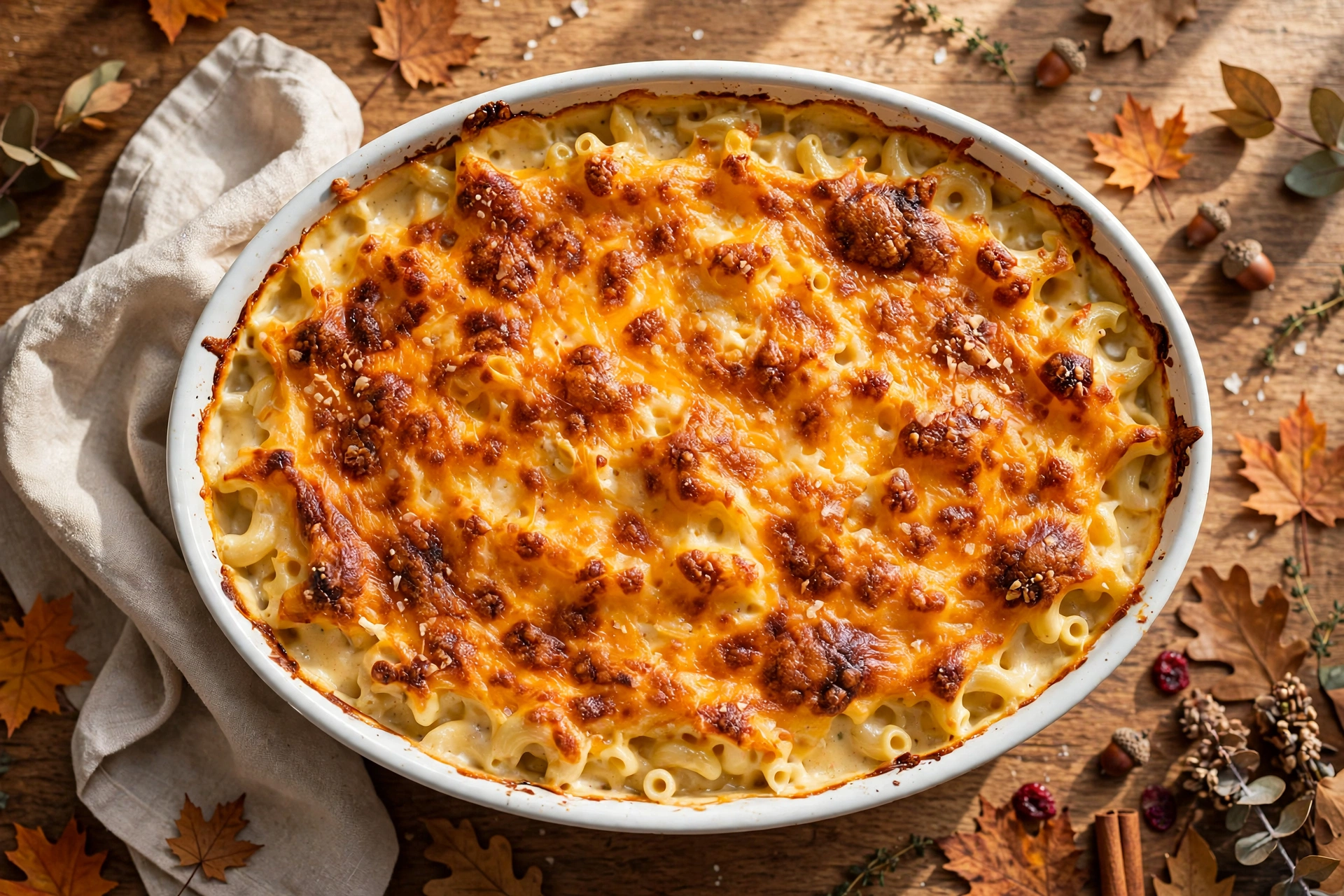
Sharp cheddar brings the familiar, tangy backbone, while Gruyere adds a nutty depth that keeps the sauce from tasting one note. Dijon and nutmeg sharpen everything quietly, the same balance that makes our baked mac and cheese taste seasoned rather than simply salty.
Ingredients for the Cheesy Scalloped Potatoes
Everything on this list is a regular grocery store stop in November. The two things worth care are the cheese, shredded from blocks so it melts without grit, and the potatoes, which should feel firm and heavy with no green patches or soft spots.
- 1 tablespoon unsalted butter, for the dish
- 3 pounds (1.4 kg) Yukon Gold potatoes, peeled and sliced 1/8 inch thick (about 8 medium potatoes)
- 2 tablespoons unsalted butter
- 1 medium yellow onion, finely diced (about 1 cup)
- 2 cloves garlic, minced
- 1/4 cup (30 g) all-purpose flour
- 2 cups (480 ml) whole milk, at room temperature
- 1 cup (240 ml) heavy cream
- 1 teaspoon Dijon mustard
- 1 teaspoon fine salt, plus more for seasoning the layers
- 1/2 teaspoon black pepper
- 1/4 teaspoon freshly grated nutmeg
- 1 teaspoon fresh thyme leaves, plus extra to serve
- 2 cups (230 g) shredded sharp cheddar cheese, divided
- 1/2 cup (55 g) shredded Gruyere cheese
- 2 tablespoons grated Parmesan, for the top
Milk at room temperature helps the sauce stay smooth, because a cold pour can shock the roux into lumps. Set the measuring jug on the counter while you slice, and by the time the onion is soft, the milk will be ready to use.
Layering and Baking the Scalloped Potatoes, Step by Step
The assembly follows a simple rhythm of thirds: a third of the slices, a third of the sauce, repeated until the dish is full. Working in thirds guarantees that every layer gets its share, so no dry pocket hides in the middle of the pan.
- Heat the oven to 375°F (190°C). Butter a 9 by 13 inch baking dish. Peel the potatoes and slice them 1/8 inch thick, ideally on a mandoline. Keep the slices in a bowl of cold water while you work so they do not brown.
- Melt the 2 tablespoons butter in a large saucepan over medium heat. Cook the onion with a pinch of the salt for 5 to 6 minutes, until soft and sweet. Add the garlic and cook 30 seconds more.
- Sprinkle the flour over the onion and stir for 1 minute to cook off the raw taste. Slowly pour in the milk, whisking constantly, then pour in the cream. Simmer gently for 3 to 4 minutes, whisking now and then, until the sauce thickly coats the back of a spoon.
- Take the pan off the heat. Stir in the Dijon mustard, the salt, the pepper, the nutmeg, and the thyme. Add 1 1/2 cups of the cheddar and all of the Gruyere, a handful at a time, stirring until melted and completely smooth.
- Drain the potato slices and pat them dry. Arrange one third of the slices in the dish, overlapping them slightly. Spoon over one third of the sauce. Repeat twice more, finishing with sauce.
- Sprinkle the remaining 1/2 cup cheddar and the Parmesan over the top. Cover the dish tightly with foil.
- Bake covered for 45 minutes. Remove the foil and bake 25 to 30 minutes more, until the top is deep golden in spots, the edges bubble slowly, and a knife slides into the center with no resistance.
- Rest at least 15 minutes before serving. The sauce thickens as it stands. Scatter a few thyme leaves over the top and serve warm.
That rhythm is why scalloped potatoes reward a calm cook: once the dish is covered and in the oven, there is nothing to stir, flip, or rescue. Your attention is free for the rest of the table until the foil comes off near the end.
An Oven Schedule That Fits Around the Turkey
Thanksgiving oven space is the real recipe problem, and this dish was planned around it. The pan bakes at 375°F, a forgiving temperature that sits comfortably beside most birds, and it can share the oven for part of its covered time without trouble.
My preferred order uses the turkey rest. When the bird comes out, the assembled dish goes in, covered, for its first forty five minutes. The turkey rests and gets carved in that window, and the potatoes finish uncovered while the table is being set.
If the oven is crowded earlier in the day, bake the dish in the morning instead. Cool it, refrigerate it, and reheat it covered at 325°F for twenty five to thirty minutes, then uncover for ten minutes so the top wakes back up.
Plan the neighbors on the plate with the same care. Our green bean casserole brings a crisp, fresh contrast, and our slow cooker mashed potatoes free up a burner for anyone who wants both styles of potato on the table.
Split Sauce or Soggy Layers: Scalloped Potato Fixes
A split sauce usually means the cheese met heat that was too high. If the sauce turns grainy on the stove, take the pan off the burner at once, whisk in a small splash of warm milk, and stir gently until it comes back together.
Soggy layers point to water that had nowhere to go. Slices that went into the dish dripping wet, or a sauce that never reached a proper simmer, will both leave liquid pooling at the bottom. Pat the slices dry and trust the spoon test.
A pale top after the full bake is the easiest fix of all. Give the uncovered dish five to eight more minutes and watch it closely, because cheese moves from golden to dark very quickly at the end. Deep golden spots are the goal, not an even tan.
Firm slices in an otherwise finished pan mean the cuts were uneven or the center was shielded too long. Cover the dish again and return it to the oven for ten minutes, then test the very center with a thin knife before serving.
Make It Ahead, and Hold It Warm Without Drying Out
Assembling scalloped potatoes the night before is the move I recommend most for a holiday. Build the dish completely, press a sheet of wrap against the surface, cover it tightly, and refrigerate it for up to twenty four hours before it goes into the oven.
A cold dish needs a little more time, so add ten to fifteen minutes to the covered bake and let the knife test, not the clock, decide when the foil comes off. The flavor after a night together is, if anything, deeper and more unified.
For holding, keep the baked dish covered in a low oven at 200°F for up to one hour. A small splash of warm milk around the edges before it goes in keeps the top layers supple, and the sauce stays at serving consistency.
Leftovers keep four days in the refrigerator and reheat best in a 325°F oven, covered, for twenty to twenty five minutes. For safe storage habits, the four steps at FoodSafety.gov are worth following every time you handle holiday leftovers.
Nutrition estimate per serving: about 385 calories, 13 g protein, 36 g carbohydrates, 22 g fat, 640 mg sodium, based on ten side dish servings.
The Quiet Classic at the End of the Table
Scalloped potatoes never shout for attention, and that is their strength: they sit at the end of the table making everything else taste better, rich beside the turkey, gentle beside the sharper sides, and always the first dish to come back empty.
Give them their fifteen minute rest, scatter the thyme, and carry the dish to the table as it is. A golden top, layers that hold, and a sauce that stayed creamy: that is the whole promise, kept with nothing more than a saucepan and a little patience.
Jordan
Questions I Get About Scalloped Potatoes
Why did my scalloped potatoes come out watery?
Watery results almost always come from slices that went in wet or a sauce that never thickened on the stove. Pat the slices dry after draining them, simmer the sauce until it thickly coats a spoon, and always give the baked dish its full fifteen minute rest so the sauce can settle.
What is the difference between scalloped potatoes and au gratin potatoes?
Traditionally, the scalloped version is baked in a cream sauce without cheese, while au gratin adds cheese and often a crisp crumb top. This recipe leans into the cheesy style most families expect, with cheddar and Gruyere melted into the sauce and Parmesan on top.
Can I assemble scalloped potatoes the night before Thanksgiving?
Yes, and it is the easiest way to protect your oven schedule. Assemble the dish completely, cover it tightly, and refrigerate it for up to twenty four hours. Add ten to fifteen minutes to the covered bake the next day, since the dish starts cold.
How do I know scalloped potatoes are done without a thermometer?
Slide a thin knife into the very center of the dish. If it goes in and comes out with no resistance, the slices are tender and the dish is done. The edges should also bubble slowly and the top should show deep golden spots.
Can I freeze scalloped potatoes?
You can, though the sauce is at its best fresh. Freeze the baked and cooled dish, wrapped tightly, for up to two months, then thaw it overnight in the refrigerator. Reheat it covered at 325°F until hot in the center, and uncover it for the last ten minutes.
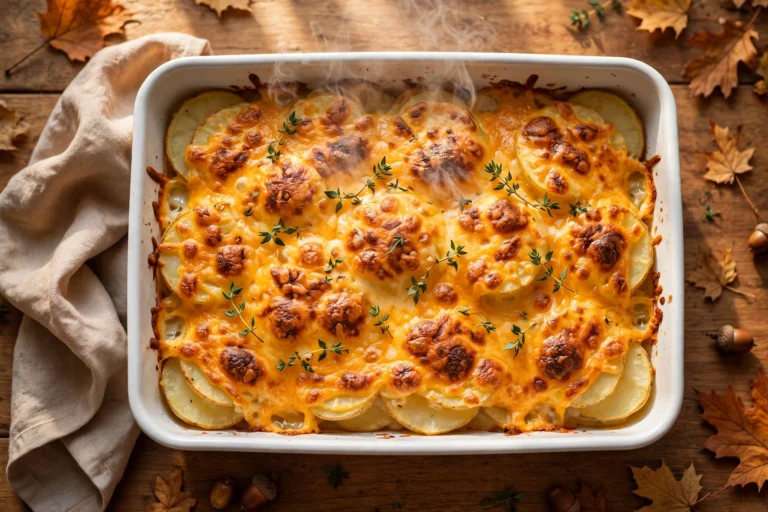
Cheesy Scalloped Potatoes
Cheesy scalloped potatoes built on a stovetop cheddar and Gruyere sauce that never splits: thin Yukon Gold slices layered with sweet onion, thyme, Dijon and nutmeg, baked covered then uncovered until the top is deep golden. Made for Thanksgiving, with layers that hold and a sauce that stays creamy to the last serving.
- Total Time: 1 hour 40 minutes
- Yield: 10 servings 1x
Ingredients
- 1 tablespoon unsalted butter, for the dish
- 3 pounds (1.4 kg) Yukon Gold potatoes, peeled and sliced 1/8 inch thick (about 8 medium potatoes)
- 2 tablespoons unsalted butter
- 1 medium yellow onion, finely diced (about 1 cup)
- 2 cloves garlic, minced
- 1/4 cup (30 g) all-purpose flour
- 2 cups (480 ml) whole milk, at room temperature
- 1 cup (240 ml) heavy cream
- 1 teaspoon Dijon mustard
- 1 teaspoon fine salt, plus more for seasoning the layers
- 1/2 teaspoon black pepper
- 1/4 teaspoon freshly grated nutmeg
- 1 teaspoon fresh thyme leaves, plus extra to serve
- 2 cups (230 g) shredded sharp cheddar cheese, divided
- 1/2 cup (55 g) shredded Gruyere cheese
- 2 tablespoons grated Parmesan, for the top
Instructions
- Heat the oven to 375°F (190°C). Butter a 9 by 13 inch baking dish. Peel the potatoes and slice them 1/8 inch thick, ideally on a mandoline. Keep the slices in a bowl of cold water while you work so they do not brown.
- Melt the 2 tablespoons butter in a large saucepan over medium heat. Cook the onion with a pinch of the salt for 5 to 6 minutes, until soft and sweet. Add the garlic and cook 30 seconds more.
- Sprinkle the flour over the onion and stir for 1 minute to cook off the raw taste. Slowly pour in the milk, whisking constantly, then pour in the cream. Simmer gently for 3 to 4 minutes, whisking now and then, until the sauce thickly coats the back of a spoon.
- Take the pan off the heat. Stir in the Dijon mustard, the salt, the pepper, the nutmeg, and the thyme. Add 1 1/2 cups of the cheddar and all of the Gruyere, a handful at a time, stirring until melted and completely smooth.
- Drain the potato slices and pat them dry. Arrange one third of the slices in the dish, overlapping them slightly. Spoon over one third of the sauce. Repeat twice more, finishing with sauce.
- Sprinkle the remaining 1/2 cup cheddar and the Parmesan over the top. Cover the dish tightly with foil.
- Bake covered for 45 minutes. Remove the foil and bake 25 to 30 minutes more, until the top is deep golden in spots, the edges bubble slowly, and a knife slides into the center with no resistance.
- Rest at least 15 minutes before serving. The sauce thickens as it stands. Scatter a few thyme leaves over the top and serve warm.
- Prep Time: 25 minutes
- Cook Time: 1 hour 15 minutes