In this article:
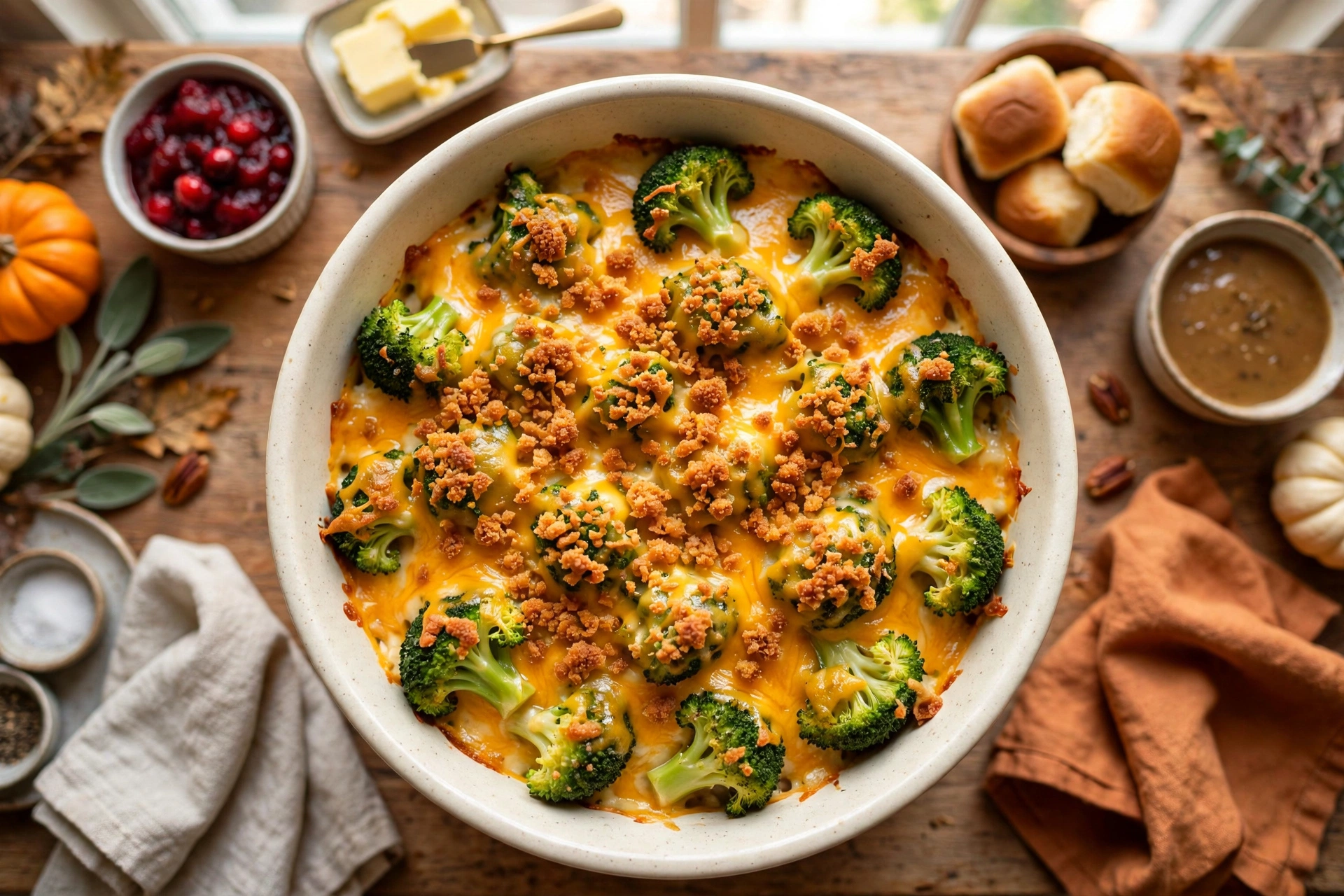
This cheesy broccoli casserole is the side dish that quietly empties first at Thanksgiving: bright green florets folded into a real cheddar sauce, baked under a buttery cracker crumb that shatters when the spoon goes in. There is no canned soup in the pan, and no puddle at the bottom of the dish.
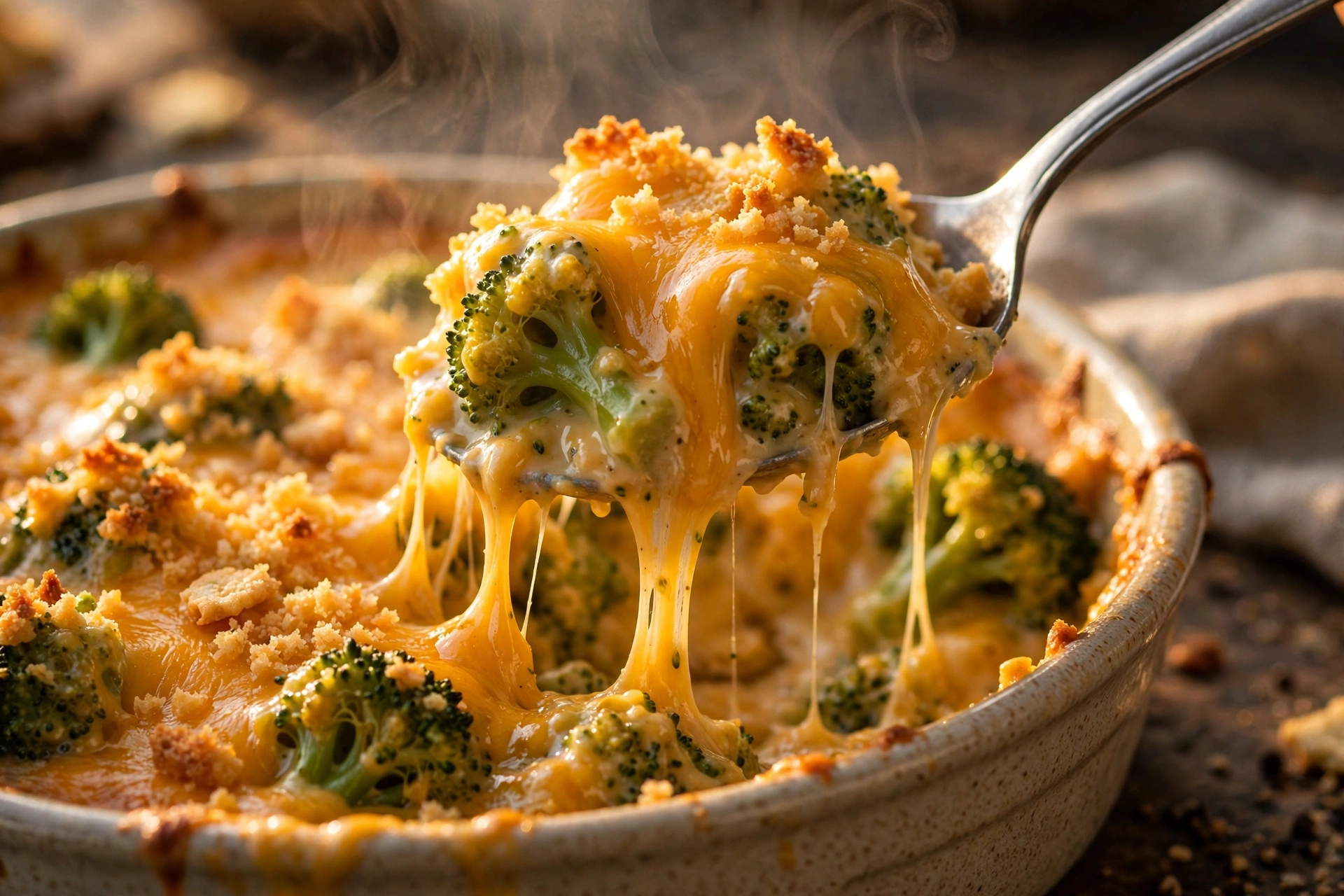
The texture is the whole point. The broccoli stays vivid and just tender, the sauce clings instead of running, and the top gives you two pleasures at once, the soft pull of melted cheddar and the crisp, salty crunch of the crumbs. A small spoonful carries the whole table with it.
I build this casserole the same week the turkey goes on the shopping list, because it behaves like a recipe that wants to help. It assembles the day before, it bakes while the bird rests, and it holds its place on a crowded table without going dull or soggy.
Why This Cheesy Broccoli Casserole Never Turns Watery
This cheesy broccoli casserole stays thick for one simple reason: the water is dealt with before the dish ever reaches the oven. Broccoli is mostly water, and a casserole fails when that water has nowhere to go except into the sauce.
A two minute blanch sets the color and starts the cooking, then the florets are drained and dried properly, spread on a clean towel rather than left steaming in a colander. Wet broccoli is the hidden cause of almost every soupy version of this dish.
The sauce is built to hold its side of the bargain. A light roux thickens the milk and cream on the stove, so the sauce goes into the dish already coating a spoon instead of relying on oven time and hope.
Sharp cheddar does more than flavor the sauce. Melted off the heat, in small handfuls, it stays smooth and glossy, and the Dijon and smoked paprika keep the richness from tasting flat. Nothing separates, nothing weeps.
The cracker crumb is the final safeguard. It goes on dry and buttery right before baking, drinks a little of the sauce’s steam at the surface, and comes out crisp instead of steaming into a soft lid.
Put together, each step answers the same problem from a different side. That is why the first scoop stands up in soft folds instead of sliding across the plate.
Fresh Broccoli, Frozen Broccoli, and the Water Problem
Fresh broccoli is my first choice here, cut into florets with a little stem attached, because it blanches evenly and keeps a gentle bite after baking. Two pounds of florets looks like a mountain in the bowl and cooks down to exactly the right fill for the dish.
Frozen broccoli works, and on Thanksgiving week it might be the smart choice. Skip the blanch, thaw it completely, then press it in a towel or a salad spinner until it gives up as much water as it will. Frozen florets release more liquid than fresh, so this pressing step is not optional.
What does not work is adding broccoli to the sauce still steaming and wet, then covering the dish for a long bake. Trapped steam thins the sauce from below while the top stays pale, which is how a promising casserole turns into soup with florets in it.
Cut size matters more than cooks expect. Florets the size of a walnut cook through in the bake and still hold their shape; tiny chopped bits vanish into the sauce, and giant florets brown at the tips before their stems soften. Aim for pieces you could eat in one bite without a knife.
If you are scaling the dish for a bigger table, keep the sauce ratio as written and bake in two smaller dishes rather than one deep one. A shallow layer heats evenly, bubbles at the edges sooner, and keeps the crumb crisp across the whole top.
Broccoli stems deserve a word, because throwing them away wastes the sweetest part. Peel the tough outer layer, slice the tender core into thin coins, and blanch them with the florets. They cook at the same pace and nobody at the table will ever spot them.
It is also worth remembering what the broccoli brings besides color. Per the USDA’s FoodData Central, a cup of broccoli delivers more vitamin C than half an orange, which is a useful thing to know about a dish nobody at Thanksgiving eats for virtue.
Ingredients for the Cheesy Broccoli Casserole
- 2 pounds (900 g) fresh broccoli, cut into bite-size florets (about 8 cups)
- 1 tablespoon fine salt, for the blanching water
- 3 tablespoons unsalted butter
- 1 small yellow onion, finely diced (about 3/4 cup)
- 2 cloves garlic, minced
- 3 tablespoons all-purpose flour
- 1 1/2 cups (360 ml) whole milk, at room temperature
- 1/2 cup (120 ml) heavy cream
- 1 teaspoon Dijon mustard
- 1/2 teaspoon fine salt
- 1/2 teaspoon black pepper
- 1/4 teaspoon smoked paprika
- 2 1/2 cups (280 g) shredded sharp cheddar cheese, divided
- 1/4 cup (25 g) grated Parmesan cheese
- 1 cup crushed buttery round crackers (about 22 crackers)
- 2 tablespoons unsalted butter, melted
Making the Cheesy Broccoli Casserole, Step by Step
- Heat the oven to 375°F (190°C). Butter a 9 by 13 inch baking dish. Bring a large pot of water to a boil and salt it with the tablespoon of salt.
- Add the broccoli florets and blanch for exactly 2 minutes, until bright green and just crisp tender. Drain at once, spread the florets on a clean kitchen towel, and pat them very dry.
- Melt the 3 tablespoons butter in a large saucepan over medium heat. Add the onion and cook for 4 minutes, until soft and sweet. Stir in the garlic for 30 seconds.
- Whisk in the flour and cook for 1 minute, whisking constantly, until it smells faintly nutty and coats the onion in a pale paste.
- Pour in the milk a splash at a time, whisking each addition smooth before adding more, then whisk in the cream. Simmer for 2 to 3 minutes, until the sauce thickly coats the back of a spoon.
- Take the pan off the heat. Stir in the Dijon mustard, salt, pepper and smoked paprika, then add 2 cups of the cheddar a handful at a time, stirring until each handful melts before adding the next.
- Fold the dried broccoli into the sauce until every floret is coated, then scrape the mixture into the prepared dish and smooth the top.
- Scatter the remaining 1/2 cup cheddar and the Parmesan over the surface. Toss the cracker crumbs with the melted butter and sprinkle them evenly over the cheese.
- Bake for 25 to 30 minutes, until the sauce bubbles at the edges and the crumbs are deep golden. Rest for 10 minutes before serving, so the sauce settles into soft folds.
An Oven Schedule That Slides In Beside the Turkey
Thanksgiving ovens run on negotiation, and this dish negotiates well. It wants 375°F for under half an hour, which is close enough to most turkey resting plans that it can slide in the moment the bird comes out.
Assemble the casserole in the morning, cover it, and refrigerate it while the turkey roasts. When the turkey leaves the oven to rest, the dish goes in, straight from the fridge, with five extra minutes added to the bake.
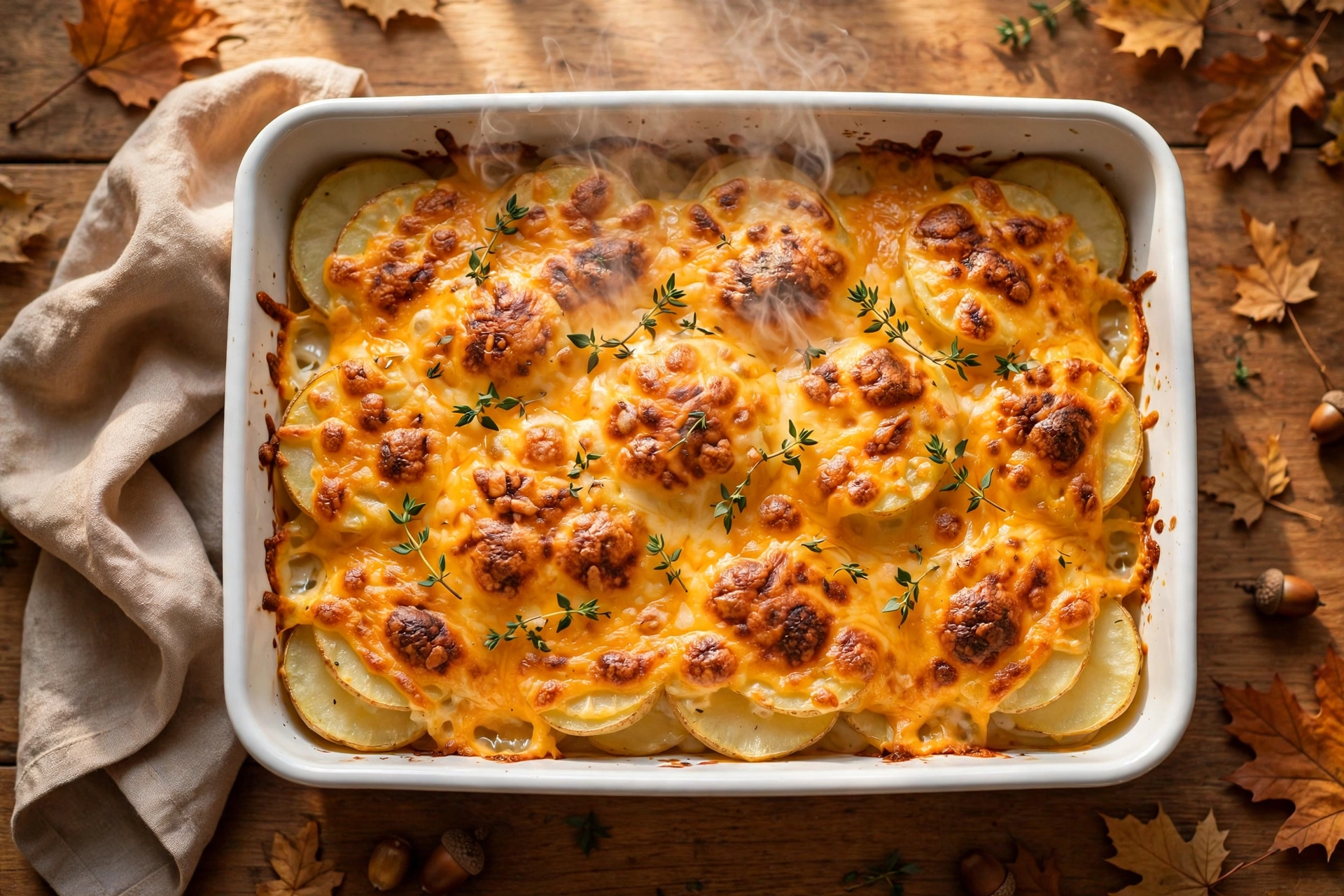
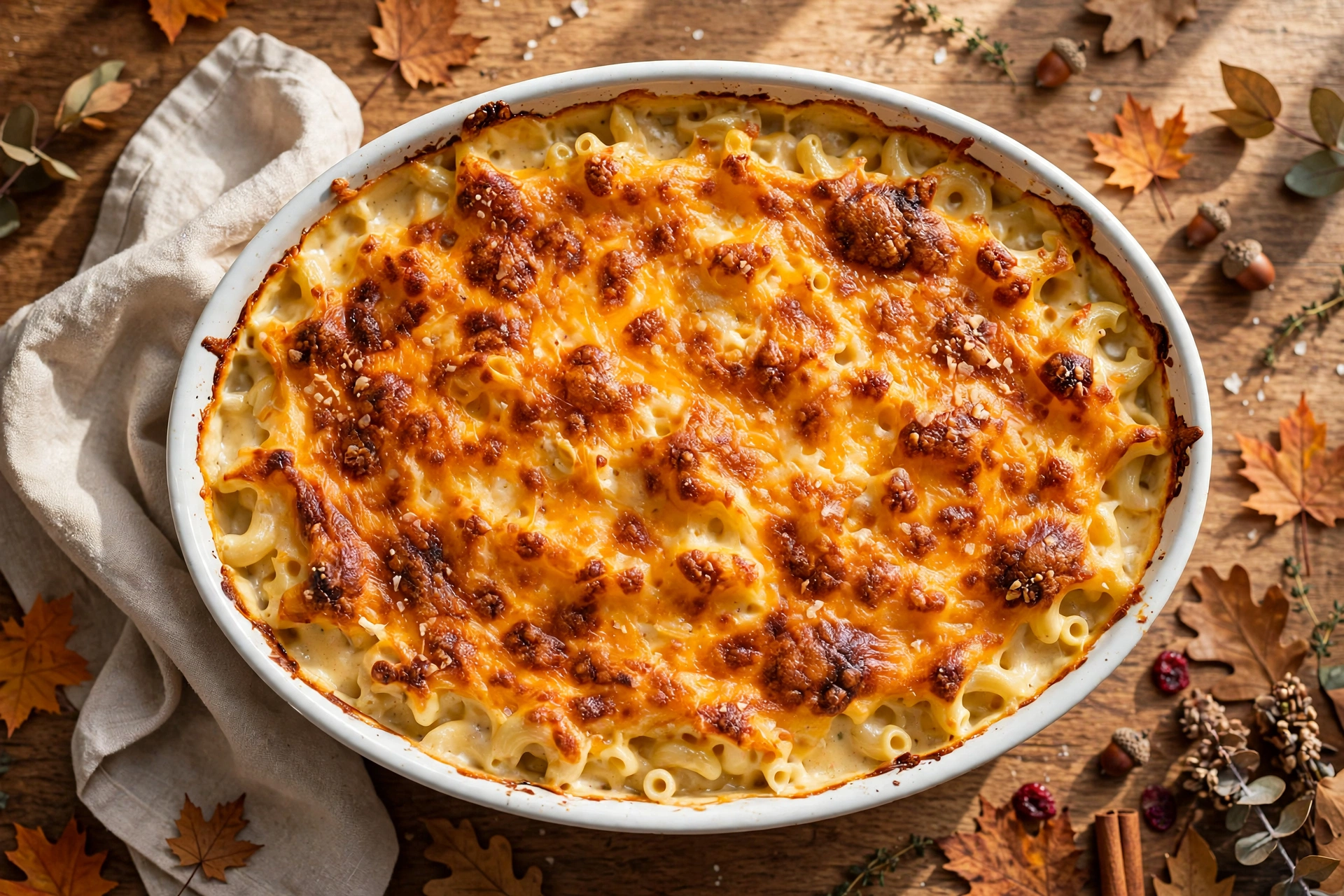
Alongside dishes like our cheesy scalloped potatoes and the baked mac and cheese, this casserole is the one reliable green thing on the table that everyone still takes twice. It earns that place by being rich enough to belong and fresh enough to cut the richness around it.
If your oven is spoken for until the last minute, bake the casserole earlier in the day, hold it covered in a low 200°F oven for up to 45 minutes, and expect the crumbs to stay respectably crisp. A quick two minutes under the broiler wakes them up again.
Choose the dish with the table in mind and serve the casserole straight from it. A white or cream baking dish shows off the green and gold best against a Thanksgiving spread, and one trip from oven to table keeps the top exactly as crisp as it left the oven.
Watery Sauce, Split Cheese: Broccoli Casserole Fixes
A split sauce almost always traces back to heat. Cheddar seized into grains means the sauce was boiling when the cheese went in, or the cheese went in all at once. Off the heat, in handfuls, is the whole discipline.
Pre-shredded cheese in a bag is the second quiet saboteur. The anti-caking starch on the shreds keeps them from melting into a smooth sauce; five minutes with a box grater buys you a sauce that pours like velvet.
If your casserole still comes out loose, check the blanching pot before you blame the sauce. Florets that simmered for five minutes instead of two have already given up their structure, and no sauce can fully rescue them.
A sauce that tastes rich but flat usually wants acid or heat, not more salt. The Dijon here is measured for exactly that lift, and the smoked paprika adds a low warmth that reads as depth rather than spice.
The cracker layer has its own failure mode: crumbs mixed with too little butter scorch at the edges before the center of the dish is bubbling. Every crumb should look lightly coated and feel like wet sand before it goes over the cheese.
If the top browns faster than the middle heats, tent the dish loosely with foil for the last ten minutes. The sauce needs its full bubbling time to thicken and settle, and sacrificing the center to save the crumbs means both lose.
Assemble It the Day Before, Bake It While the Turkey Rests
This cheesy broccoli casserole is at its best when the work is split across two days. Blanch, dry and saucing the broccoli on Wednesday means Thursday asks only for crumbs, heat, and a place at the table.
The one rule for the overnight version: keep the buttered crumbs off the dish until baking time. A night in the fridge turns them soft, and the crunch is half the reason this casserole gets requested.
Leftovers keep for three days in the fridge, covered. Reheat single portions in a 350°F oven for about 15 minutes, uncovered, so the top crisps again; the microwave works for speed but softens the crumbs.
Freezing is possible once baked. Cool the dish completely, wrap it well, and freeze for up to two months. Thaw overnight in the fridge and reheat at 350°F until bubbling, about 25 minutes, accepting that the broccoli will be softer than the day it was made.
For a smaller household, halve the recipe and bake it in an 8 inch square dish for about 20 minutes. The ratios hold, the edges bubble sooner, and the crumb-to-filling balance actually improves.
The Side Dish That Empties First
This cheesy broccoli casserole has become my answer to the Thanksgiving question nobody asks out loud: what green thing will people actually eat? The answer turns out to be the one with a real cheese sauce and a crunch on top.
It asks for nothing rare and forgives almost everything except wet broccoli. Build the sauce on the stove, dry the florets like you mean it, and keep the crumbs for the last minute.
Make it once for the holiday and it will start appearing at ordinary Sunday dinners, next to roast chicken in January and beside a pan of baked mac and cheese whenever the table needs something green and comforting at the same time.
Questions I Get About This Broccoli Casserole
Can I use frozen broccoli instead of fresh?
Yes. Thaw 2 pounds of frozen florets completely, then press them dry in a clean towel or salad spinner before folding them into the sauce. Skip the blanching step, and expect the finished broccoli to be a little softer than fresh.
Why did my cheese sauce turn grainy?
The sauce was too hot when the cheddar went in, or bagged pre-shredded cheese was used. Take the pan off the heat, add freshly grated cheddar a handful at a time, and let each handful melt before adding the next.
Can I assemble the whole casserole the night before?
You can assemble everything except the cracker crumbs. Cover and refrigerate the sauced broccoli, then add the buttered crumbs just before baking and add about 5 minutes to the bake time if it goes into the oven cold.
What can I use instead of cracker crumbs on top?
Buttered panko is the closest swap and bakes up just as crisp. Crushed plain potato chips work in a pinch, or skip the crumb and finish with extra Parmesan under the broiler for 2 minutes.
How do I know the casserole is done?
Look for sauce bubbling actively at the edges and crumbs that are deep golden, not pale. The center should look set and glossy rather than liquid, and a 10 minute rest finishes the job of thickening the sauce.
Print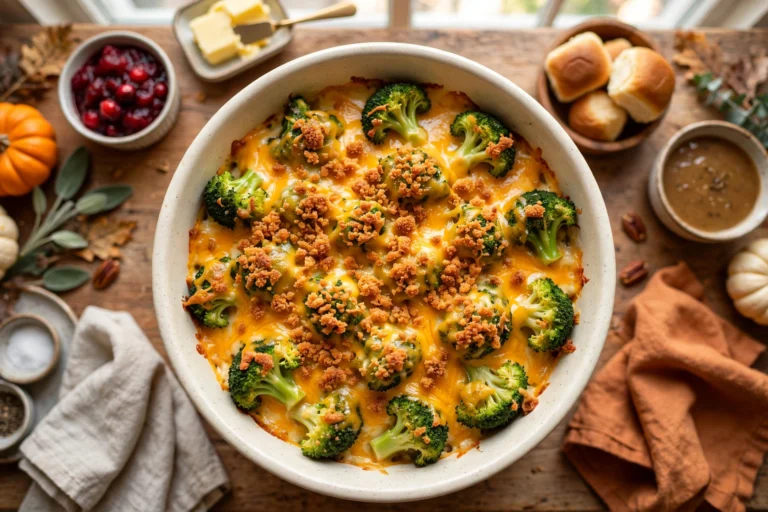
Cheesy Broccoli Casserole
Cheesy broccoli casserole with a from-scratch cheddar sauce built on the stove, blanched and well dried florets, and a buttery cracker crumb top that stays crisp. No canned soup, no watery sauce, and a make-ahead plan that bakes while the turkey rests.
- Total Time: 1 hour
- Yield: 8 servings 1x
Ingredients
- 2 pounds (900 g) fresh broccoli, cut into bite-size florets (about 8 cups)
- 1 tablespoon fine salt, for the blanching water
- 3 tablespoons unsalted butter
- 1 small yellow onion, finely diced (about 3/4 cup)
- 2 cloves garlic, minced
- 3 tablespoons all-purpose flour
- 1 1/2 cups (360 ml) whole milk, at room temperature
- 1/2 cup (120 ml) heavy cream
- 1 teaspoon Dijon mustard
- 1/2 teaspoon fine salt
- 1/2 teaspoon black pepper
- 1/4 teaspoon smoked paprika
- 2 1/2 cups (280 g) shredded sharp cheddar cheese, divided
- 1/4 cup (25 g) grated Parmesan cheese
- 1 cup crushed buttery round crackers (about 22 crackers)
- 2 tablespoons unsalted butter, melted
Instructions
- Heat the oven to 375°F (190°C). Butter a 9 by 13 inch baking dish. Bring a large pot of water to a boil and salt it with the tablespoon of salt.
- Add the broccoli florets and blanch for exactly 2 minutes, until bright green and just crisp tender. Drain at once, spread the florets on a clean kitchen towel, and pat them very dry.
- Melt the 3 tablespoons butter in a large saucepan over medium heat. Add the onion and cook for 4 minutes, until soft and sweet. Stir in the garlic for 30 seconds.
- Whisk in the flour and cook for 1 minute, whisking constantly, until it smells faintly nutty and coats the onion in a pale paste.
- Pour in the milk a splash at a time, whisking each addition smooth before adding more, then whisk in the cream. Simmer for 2 to 3 minutes, until the sauce thickly coats the back of a spoon.
- Take the pan off the heat. Stir in the Dijon mustard, salt, pepper and smoked paprika, then add 2 cups of the cheddar a handful at a time, stirring until each handful melts before adding the next.
- Fold the dried broccoli into the sauce until every floret is coated, then scrape the mixture into the prepared dish and smooth the top.
- Scatter the remaining 1/2 cup cheddar and the Parmesan over the surface. Toss the cracker crumbs with the melted butter and sprinkle them evenly over the cheese.
- Bake for 25 to 30 minutes, until the sauce bubbles at the edges and the crumbs are deep golden. Rest for 10 minutes before serving, so the sauce settles into soft folds.
- Prep Time: 20 minutes
- Cook Time: 40 minutes