Butternut Squash Casserole With Brown Butter, Sage and a Crisp Pecan Crumb
In this article:
- Why butternut squash casserole belongs beside the turkey
- Roasting first, the step that prevents a watery casserole
- Brown butter and sage, in the right order
- Ingredients
- From raw cubes to a casserole that scoops cleanly
- The crisp pecan crumb, added late on purpose
- A casserole that plays well with gravy, turkey and greens
- Wednesday prep, Thursday bake
- Nut free, lighter and extra cheesy swaps
- Questions about butternut squash casserole
- The orange dish that brightens the whole table
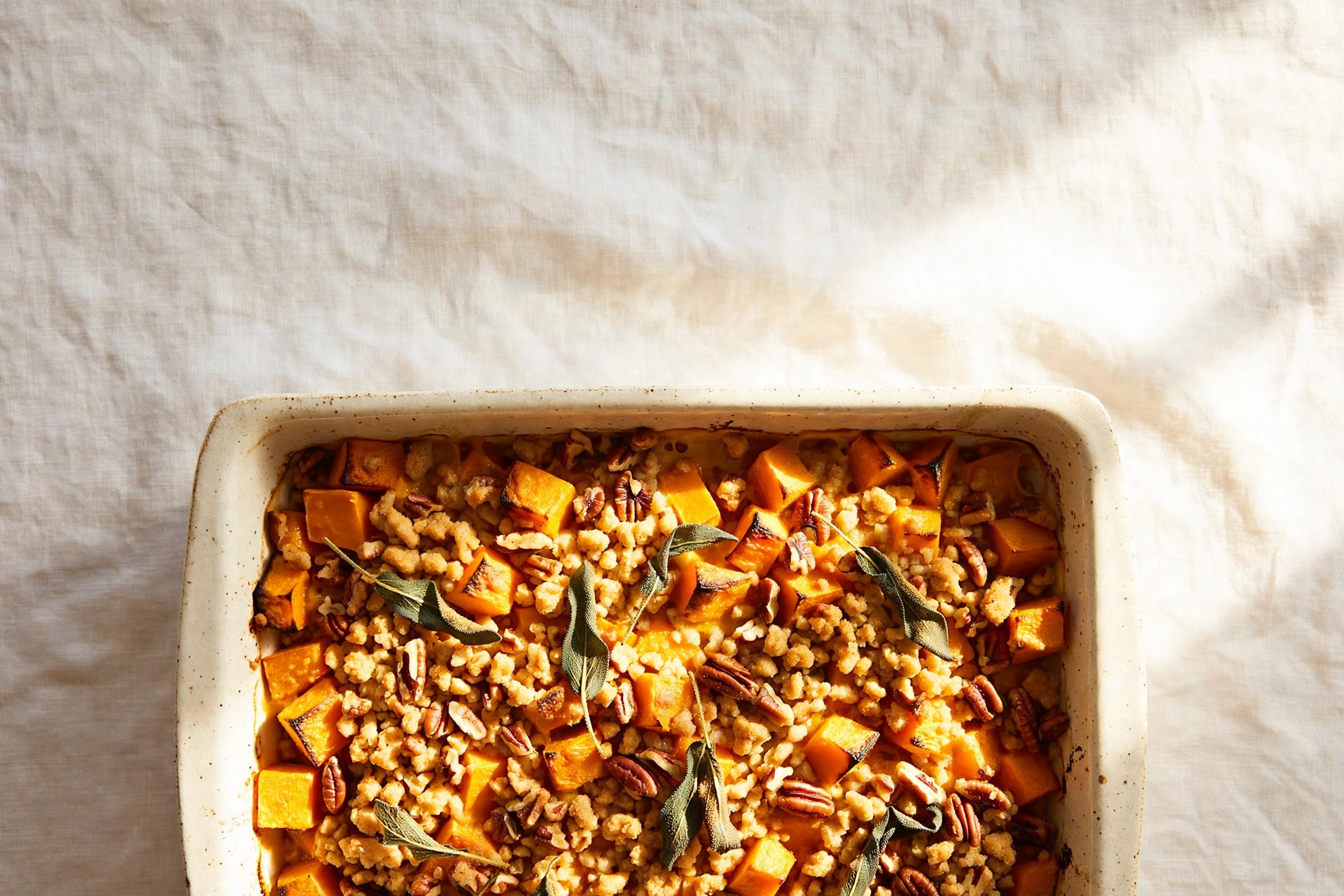
Butternut squash casserole is the Thanksgiving side that brings color back to a table full of beige. Tender orange cubes sit in a savory cream, brown butter perfumes the whole dish, and a pecan crumb gives every scoop a crisp first bite.
The familiar failure is a puddle. Raw squash releases water as it bakes, cream loosens, and a casserole that looked rich in the dish turns soupy on the plate. This recipe solves that problem before the dairy ever enters the picture.
The squash roasts on its own first. Its edges caramelize, its excess water evaporates, and its flavor concentrates. Only then does it meet caramelized onion, Gruyere, cream and eggs, so the finished center can set soft and clean.
Many squash casseroles lean sweet enough to compete with dessert. Here, one teaspoon of maple rounds the edges and nothing more. Sage, onion, pepper and cheese keep the dish firmly on the savory side of the menu.
Why Butternut Squash Casserole Belongs Beside the Turkey
Butternut squash casserole earns its place because it fills a gap that potatoes and dressing leave open. It is warm and rich like the classic sides, yet its flavor is lighter, its color is vivid, and its texture can stay distinct instead of turning into another soft scoop.
The squash itself carries natural sweetness, but it is a vegetable sweetness with depth. Roasting brings out a toasted note that plain boiling never reaches. That note pairs naturally with turkey skin, pan gravy and the herbal flavors already moving around a Thanksgiving kitchen.
Brown butter is the bridge. Its nutty aroma connects the squash to the pecans on top and to the browned foods elsewhere on the table. Sage adds a woodsy finish, so the casserole tastes like part of the holiday rather than a sweet garnish.
Guests also read the dish quickly. The orange cubes show exactly what it is, the crumb promises contrast, and the first spoonful delivers both cream and substance.
Roasting First: the Step That Prevents a Watery Casserole
The roast is not a decorative extra. Butternut squash holds a great deal of water, and a covered casserole traps that water under foil. Thirty minutes on a hot sheet pan lets steam escape into the oven instead of pooling under the cream.
Cut the cubes evenly, close to three quarters of an inch. Small pieces cook into mush before their edges color, while large pieces can stay firm at the center after the casserole bakes. A large rimmed pan matters too, because crowded squash steams against itself.
Roast until the edges show real color. Pale squash may be tender, but it has not yet given up enough water or built enough flavor. Look for amber corners, a few darker tips, and a knife that enters the largest cube without resistance.
Once roasted, mash only about one third of the squash. The mashed portion thickens the filling naturally, while the whole cubes keep the casserole interesting.
Brown Butter and Sage, in the Right Order
The onion cooks before the brown butter for a reason. It needs time to soften and sweeten in plain butter without rushing. Eight to ten minutes over medium heat turns its sharpness into a mellow base that disappears into the casserole and supports every other flavor.
After the onion leaves the skillet, the remaining butter gets the sage. The leaves sizzle, crisp at the edges and scent the fat as it turns amber. Watch the milk solids rather than the clock: pale gold is early, deep amber is ready, and dark brown is too far.
Most of that butter goes into the filling, but not all of it. Reserving a portion for the crumb means the topping tastes like part of the dish instead of a separate sweet sprinkle. The same sage and butter notes appear at the first bite and the last.
Gruyere and parmesan finish the savory balance. Gruyere melts smoothly and brings a gentle nuttiness, while parmesan sharpens the crumb and the filling. A little nutmeg stays in the background, warming the cream without announcing itself as a spice.
Ingredients
- 3 pounds butternut squash, peeled, seeded and cut into 3/4 inch cubes (about 8 cups)
- 2 tablespoons olive oil
- 1 1/4 teaspoons fine salt, divided
- 1/2 teaspoon black pepper, divided
- 8 tablespoons unsalted butter, divided
- 1 medium yellow onion, finely diced
- 2 garlic cloves, minced
- 12 fresh sage leaves, thinly sliced, plus 6 small leaves for the top
- 3/4 cup heavy cream
- 1/2 cup sour cream
- 2 large eggs
- 1 cup shredded Gruyere cheese
- 1/2 cup freshly grated parmesan cheese, divided
- 1 teaspoon pure maple syrup
- 1/4 teaspoon freshly grated nutmeg
- 3/4 cup panko breadcrumbs
- 1/2 cup finely chopped pecans
From Raw Cubes to a Casserole That Scoops Cleanly
- Heat the oven to 400 degrees F. Toss the squash cubes with the olive oil, 3/4 teaspoon of the salt and 1/4 teaspoon of the pepper on a large rimmed baking sheet. Spread them in one layer and roast for 25 to 30 minutes, turning once, until the edges caramelize and a knife slides in easily.
- While the squash roasts, melt 2 tablespoons of the butter in a skillet over medium heat. Add the onion and cook for 8 to 10 minutes, stirring often, until soft and golden at the edges. Stir in the garlic for 30 seconds, then scrape the mixture into a large mixing bowl.
- Melt the remaining 6 tablespoons of butter in the same skillet over medium heat. Add the sliced sage and cook, swirling the pan, for 2 to 3 minutes until the butter smells nutty and turns amber with brown flecks. Pour 4 tablespoons of this brown butter over the onions and reserve the rest in the pan.
- Whisk the heavy cream, sour cream, eggs, maple syrup, nutmeg, remaining 1/2 teaspoon salt and remaining 1/4 teaspoon pepper in a medium bowl until smooth. Stir in the Gruyere and half of the parmesan.
- Add the roasted squash to the onion bowl. Mash about one third of the cubes with a fork, leaving the rest whole. Pour the cream mixture over the squash and fold gently until every cube is coated.
- Transfer the mixture to a greased 9 by 13 inch baking dish and smooth the top. Stir the panko, pecans and remaining parmesan into the reserved brown butter in the skillet, then scatter the crumb evenly over the casserole. Arrange the whole sage leaves on top.
- Lower the oven to 375 degrees F. Bake for 28 to 32 minutes, until the crumb is deep golden, the edges bubble and the center has only a slight jiggle.
- Rest the casserole for 15 minutes before serving. The filling finishes setting as it stands, and the portions scoop cleanly with their crumb caps intact.
The Crisp Pecan Crumb, Added Late on Purpose
A crumb topping mixed at the beginning would sink into the wet filling and lose its point. Here it is stirred and scattered only when the casserole is ready for the oven. The panko stays dry enough to toast, and the pecans keep their snap.
Panko gives breadth, pecans give richness, and parmesan gives salt. Together they form a thin, savory crust rather than a streusel. Chop the pecans finely enough that they distribute across the whole surface instead of landing in isolated chunks.
The casserole is done when the edges bubble and the center barely moves. A hard jiggle means the eggs have not finished setting, while a completely rigid center after baking often turns firm and dry during the rest. The fifteen minute stand is part of the cooking.
If the crumb colors early, lay a loose sheet of foil over the dish for the final minutes without sealing it. Steam trapped under a tight cover would soften the top, and this dish depends on the contrast between crisp crumbs and a creamy center.
A Casserole That Plays Well With Gravy, Turkey and Greens
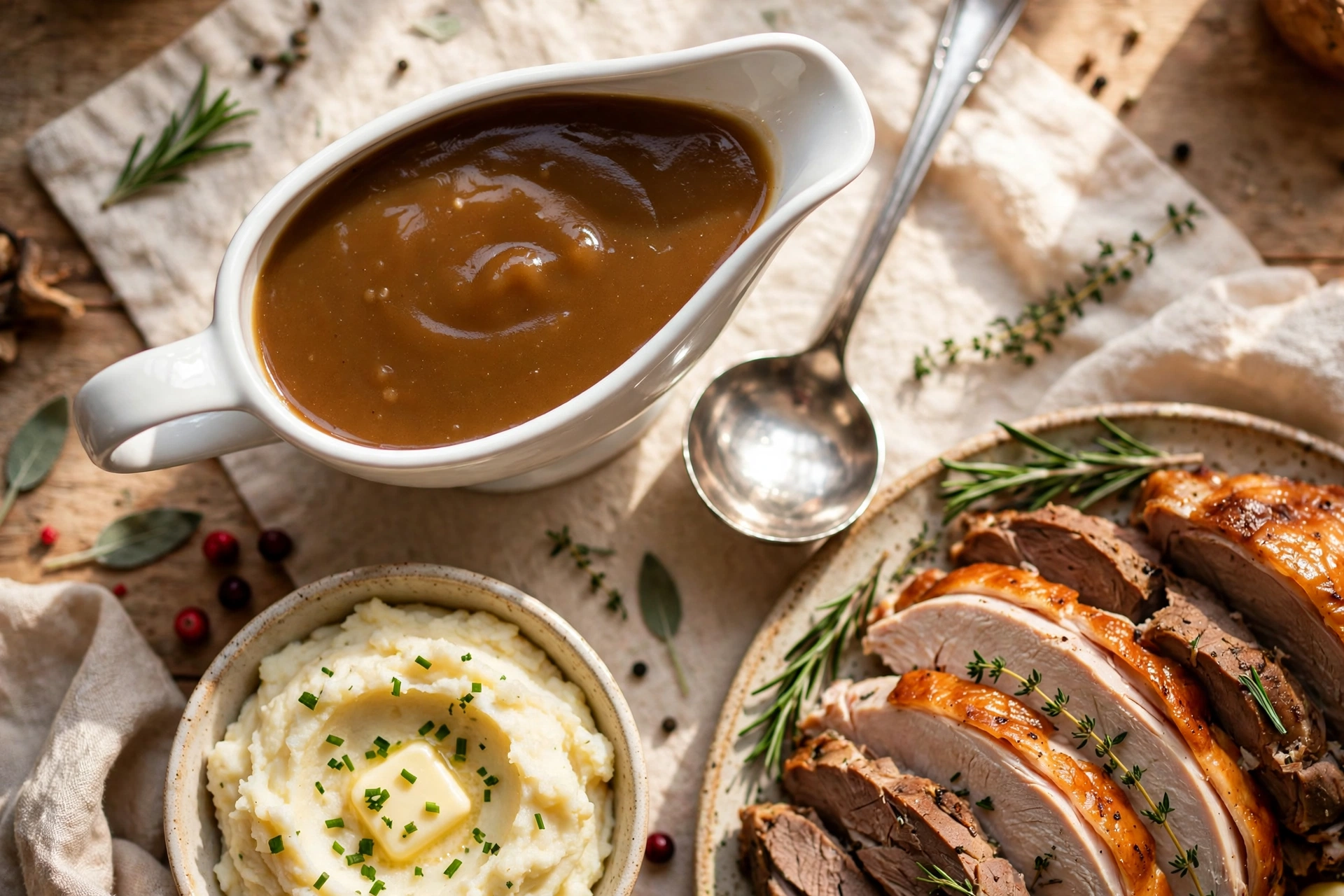
On the plate, this casserole sits comfortably beside sliced turkey and gravy. Its cream is gentle, so it does not fight the gravy for attention, and its orange color separates it visually from dressing and potatoes. A spoonful next to turkey makes a complete, balanced bite.
It also gives the menu a second creamy side with a different personality from our cheesy scalloped potatoes. The potatoes are layered and dense, while the squash stays lighter and more distinct. Serving both works when the rest of the table includes something green and crisp.
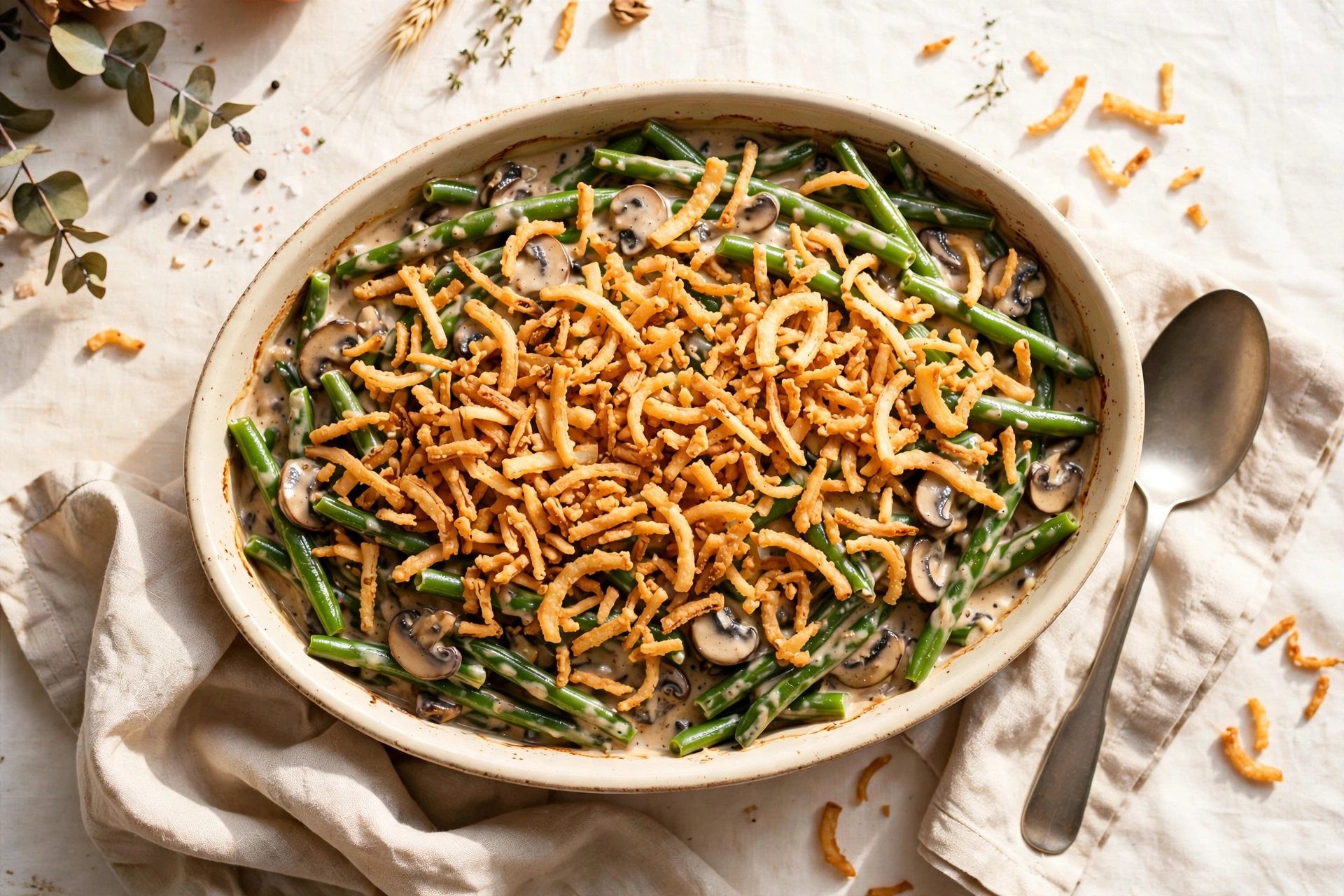
That green contrast can come from the green bean casserole, especially if its top is crunchy. Put the squash on the opposite side of the buffet so the two golden dishes do not blur together, and let guests build the contrast on their own plates.
At the center, the squash loves the savory juices from a maple glazed roast turkey breast. The shared maple note is subtle in both dishes, so they echo rather than duplicate each other. Add southern cornbread dressing and the plate has cream, crunch, herbs and roasted depth in every direction.
Wednesday Prep, Thursday Bake: the Holiday Schedule
On Wednesday morning, peel and cube the squash, dice the onion and shred the cheeses. Keep the squash in a covered container with a paper towel to absorb surface moisture. The crumb ingredients can be measured into a small jar but should not yet meet the butter.
On Wednesday evening, roast the squash and cook the onion. Cool both, combine them without the cream mixture, and refrigerate the covered bowl. Browning butter takes only minutes, yet doing that step early also helps because its flavor stays stable overnight.
On Thursday, whisk the cream mixture and fold the casserole together while the oven heats. Add the crumb at the last moment, then bake as written. A chilled assembled filling may need five extra minutes; judge by the bubbling edges and the slight center jiggle.
Leftovers keep for three days in the refrigerator. Reheat a full dish at 325 degrees F for about twenty minutes, covered for the first half and uncovered at the end. Single portions warm well in a skillet, where the bottom can regain a little texture.
Nut Free, Lighter and Extra Cheesy Swaps
For a nut free crumb, replace the pecans with extra panko plus two tablespoons of pumpkin seeds, or use only seasoned panko and parmesan if seeds are also a concern. The topping loses some richness but keeps the crisp cap that the filling needs.
For a lighter version, use half and half in place of heavy cream and choose plain Greek yogurt for half of the sour cream. The center will be a little less plush and a little brighter. Keep both eggs, because they are doing structural work, not just adding richness.
For an extra cheesy version, fold in one half cup of shredded white cheddar with the Gruyere and put a little more parmesan in the crumb. Do not double the cheese. Too much can split during baking and leave the casserole greasy instead of creamy.
Frozen cubed squash can stand in when fresh squash is out of reach. Thaw it, drain it very well, spread it on the hot sheet pan and roast until its wet surface looks dry and its edges color. That roast matters even more with frozen squash than with fresh.
Questions About Butternut Squash Casserole
Why did my butternut squash casserole turn out watery?
The squash probably went into the dish raw or under roasted. Butternut releases water as it cooks, and cream traps that liquid. Roast until the cubes are dry at the edges and caramelized, then rest the baked casserole for fifteen minutes before serving.
Can I use frozen butternut squash cubes?
Yes, with one adjustment. Thaw and drain them thoroughly, then roast them until the pan looks dry and the edges begin to color. Frozen cubes carry surface water, so skipping the full roast is the fastest route to a loose filling.
How do I know when the brown butter is ready?
The foam quiets, the milk solids turn amber and the butter smells like toasted nuts. Pull the pan off the heat as soon as that smell arrives. Brown butter moves from perfect to burnt quickly, especially in a thin skillet.
Can I assemble the whole casserole the night before?
You can roast the squash and cook the onion a day early, but keep the cream mixture and crumb separate. Fold everything together on baking day. That order protects the squash texture and keeps the topping crisp instead of damp.
What can replace pecans in the crumb?
Use extra panko with pumpkin seeds, sunflower seeds or finely crushed plain crackers. Keep the brown butter and parmesan, because they carry the savory flavor. The goal is a crisp, salty cap, not a specific nut.
Should the center be firm when it leaves the oven?
No. The center should have only a slight jiggle while the edges bubble. The eggs continue setting during the fifteen minute rest. Baking until the middle feels rigid usually gives a dry casserole by the time it reaches the table.
The Orange Dish That Brightens the Whole Table
Butternut squash casserole succeeds here because each part has a job. Roasting removes water and builds flavor, brown butter adds depth, the eggs set the cream, and the crumb restores the crunch that a baked vegetable dish often loses.
Make it once and the schedule becomes easy to repeat: roast early, keep the components apart, assemble calmly, and give it a real rest. The dish arrives hot, vivid and composed, even when the rest of Thanksgiving is moving fast.
Serve it where everyone can see the color. It is a comfort side, certainly, but it is also the plate that makes the turkey, dressing and gravy around it look and taste more complete.
Nutrition per serving, estimated for 10 servings: Calories 335, Total Fat 23 g, Saturated Fat 11 g, Unsaturated Fat 12 g, Trans Fat 0 g, Carbohydrates 24 g, Fiber 4 g, Sugar 6 g, Protein 8 g, Sodium 390 mg, Cholesterol 85 mg. Ingredient values are informed by USDA FoodData Central.
Print
Butternut Squash Casserole With Brown Butter and Sage
Roasted butternut squash folded with caramelized onion, brown butter sage, cream, sour cream and Gruyere, then finished with a crisp pecan crumb. The squash roasts before it meets the dairy, so the casserole sets creamy instead of watery.
- Total Time: 1 hour 25 minutes
- Yield: 10 servings 1x
Ingredients
- 3 pounds butternut squash, peeled, seeded and cut into 3/4 inch cubes (about 8 cups)
- 2 tablespoons olive oil
- 1 1/4 teaspoons fine salt, divided
- 1/2 teaspoon black pepper, divided
- 8 tablespoons unsalted butter, divided
- 1 medium yellow onion, finely diced
- 2 garlic cloves, minced
- 12 fresh sage leaves, thinly sliced, plus 6 small leaves for the top
- 3/4 cup heavy cream
- 1/2 cup sour cream
- 2 large eggs
- 1 cup shredded Gruyere cheese
- 1/2 cup freshly grated parmesan cheese, divided
- 1 teaspoon pure maple syrup
- 1/4 teaspoon freshly grated nutmeg
- 3/4 cup panko breadcrumbs
- 1/2 cup finely chopped pecans
Instructions
- Heat the oven to 400 degrees F. Toss the squash cubes with the olive oil, 3/4 teaspoon of the salt and 1/4 teaspoon of the pepper on a large rimmed baking sheet. Spread them in one layer and roast for 25 to 30 minutes, turning once, until the edges caramelize and a knife slides in easily.
- While the squash roasts, melt 2 tablespoons of the butter in a skillet over medium heat. Add the onion and cook for 8 to 10 minutes, stirring often, until soft and golden at the edges. Stir in the garlic for 30 seconds, then scrape the mixture into a large mixing bowl.
- Melt the remaining 6 tablespoons of butter in the same skillet over medium heat. Add the sliced sage and cook, swirling the pan, for 2 to 3 minutes until the butter smells nutty and turns amber with brown flecks. Pour 4 tablespoons of this brown butter over the onions and reserve the rest in the pan.
- Whisk the heavy cream, sour cream, eggs, maple syrup, nutmeg, remaining 1/2 teaspoon salt and remaining 1/4 teaspoon pepper in a medium bowl until smooth. Stir in the Gruyere and half of the parmesan.
- Add the roasted squash to the onion bowl. Mash about one third of the cubes with a fork, leaving the rest whole. Pour the cream mixture over the squash and fold gently until every cube is coated.
- Transfer the mixture to a greased 9 by 13 inch baking dish and smooth the top. Stir the panko, pecans and remaining parmesan into the reserved brown butter in the skillet, then scatter the crumb evenly over the casserole. Arrange the whole sage leaves on top.
- Lower the oven to 375 degrees F. Bake for 28 to 32 minutes, until the crumb is deep golden, the edges bubble and the center has only a slight jiggle.
- Rest the casserole for 15 minutes before serving. The filling finishes setting as it stands, and the portions scoop cleanly with their crumb caps intact.
- Prep Time: 30 minutes
- Cook Time: 55 minutes
Nutrition
- Serving Size: 1
- Calories: 335
- Sugar: 6
- Sodium: 390
- Fat: 23
- Saturated Fat: 11
- Unsaturated Fat: 12
- Trans Fat: 0
- Carbohydrates: 24
- Fiber: 4
- Protein: 8
- Cholesterol: 85