Buttermilk Biscuits, Tall, Flaky and Built for the Gravy Boat
In this article:
- Why Grated Frozen Butter Makes These Buttermilk Biscuits Rise
- Flavor and Texture: A Shatter Outside, a Cloud Inside
- The Square Cut: Nine Biscuits, Zero Scraps
- Ingredients
- Building the Biscuits, Fold by Fold
- The Thanksgiving Timing Plan: Freeze Now, Bake While the Turkey Rests
- When Biscuits Misbehave: A Short Rescue Guide
- Your Buttermilk Biscuit Questions, Answered
- The Basket That Empties First
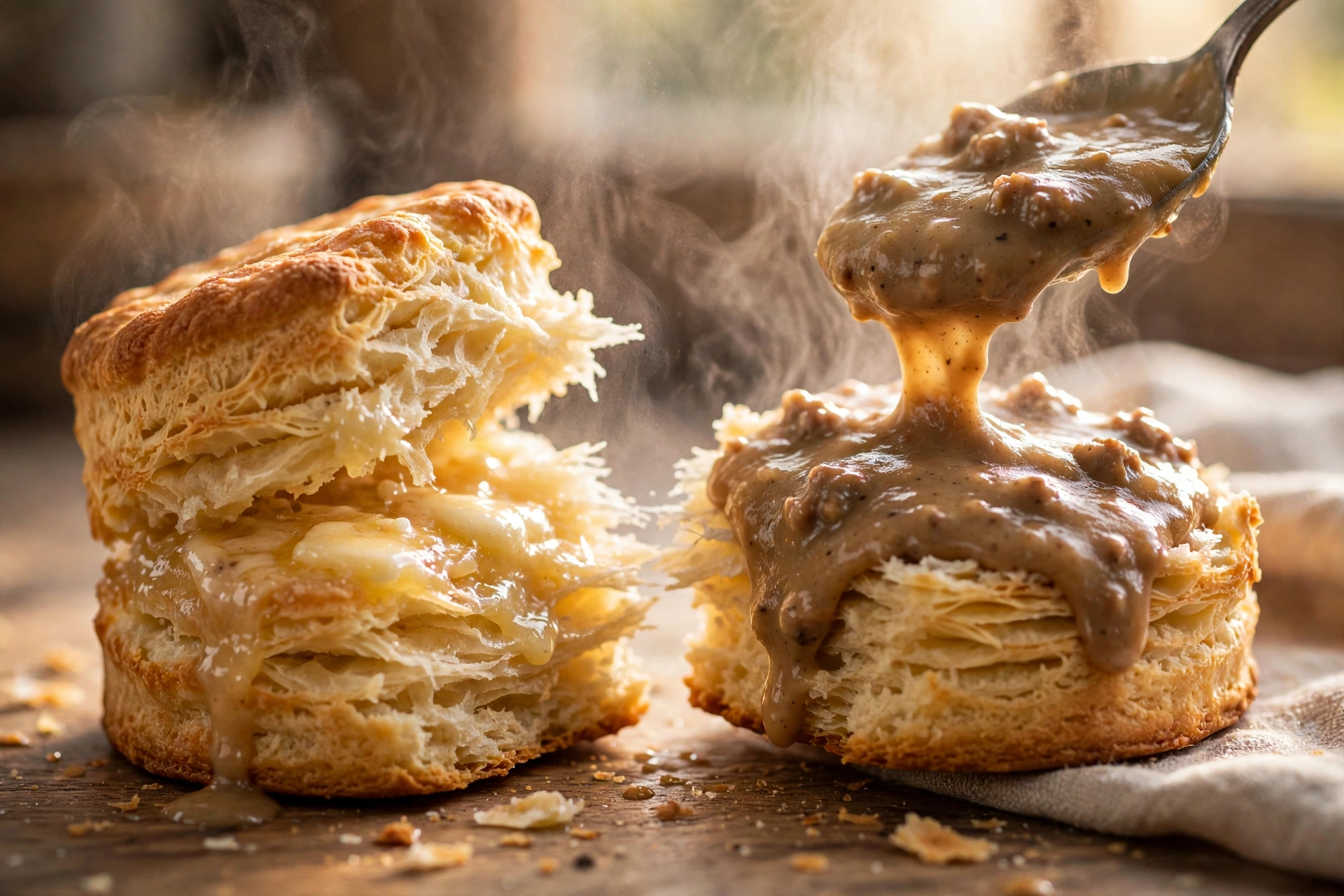
Buttermilk biscuits belong on the Thanksgiving table for one simple reason: no other bread is built to catch gravy the way they are. A tall biscuit splits into soft layers, and every layer is a small shelf waiting for a spoonful of turkey gravy.
These buttermilk biscuits are cut square, not round, so the whole batch comes from one sheet of dough with nothing rerolled and nothing wasted. All nine rise like they were cut from the first, best pass.
The butter is frozen and grated, which sounds like a trick and works like a law of physics. Cold butter shards hold their shape through mixing, then melt in a hot oven and leave steam behind, and that steam pries the layers apart.
Best of all for a holiday cook, the shaped biscuits freeze beautifully. You can cut them this weekend, freeze them solid, and bake them straight from the freezer on Thanksgiving while the turkey rests and the gravy comes together.

Why Grated Frozen Butter Makes These Buttermilk Biscuits Rise
Buttermilk biscuits rise from two engines working together: leavening in the dough, and steam from cold butter. The baking powder and soda lift the crumb, but the tall, separated layers everyone wants come from flat pieces of butter melting late, after the dough has already set around them.
Grating frozen butter on a box grater makes those pieces perfectly and fast. Every shard lands in the flour already thin, already cold, and already the right size. Cubed butter needs cutting in, and every second of cutting in warms it and smears it into the flour.
Smeared butter gives you a tender, cake like crumb, which is fine for a scone and wrong for a biscuit. Distinct butter pieces give you layers you can count. When you pull one of these biscuits apart, the layers separate in sheets because the butter stayed in sheets.
The folds multiply the effect. Three gentle letter folds turn one layer of butter shards into dozens of stacked strata. The oven does the rest: at 450 degrees the water in the butter flashes to steam before the fat fully melts, pushing each stratum up and away from its neighbor.
Buttermilk is the quiet partner in all this. Its acid reacts with the baking soda for extra lift, and it relaxes the dough so the crumb stays tender instead of chewy. Cold buttermilk also protects the butter, which is why everything in this recipe starts cold and stays cold.
Flavor and Texture: A Shatter Outside, a Cloud Inside
The first thing you notice is the sound. A good biscuit top crackles faintly when you press it, a thin golden shell over all that softness. Underneath, the crumb is pale, moist and layered, pulling apart in warm sheets rather than crumbling into dust.
The flavor is butter first, then the gentle tang of buttermilk, then a clean wheaty finish. A spoonful of sugar in the dough does not sweeten the biscuits so much as round them out, the way a pinch of sugar rounds out a tomato sauce.
Salt matters more than people think. Biscuits are simple food, and simple food shows its seasoning. Fine sea salt in the dough and a whisper of flaky salt on the buttered tops make the whole basket taste deliberate instead of plain.
Texture contrast is the real luxury here: crisp edges, a tender middle, and distinct layers that catch melted butter in every seam.
Served next to a roast turkey, the biscuit does a second job: it is the table’s built in sauce delivery system. The layers soak up gravy without falling apart, and the last bite of biscuit, dragged through the sauce on the plate, is the bite people remember. If your gravy needs a recipe, our turkey gravy from drippings is the one these biscuits were born to meet.
The Square Cut: Nine Biscuits, Zero Scraps
Round cutters are traditional, and tradition has a cost: scraps. Every round cut leaves a web of leftover dough, and that dough has to be gathered, pressed and cut again. The second pass is always tougher, shorter and less layered than the first, so a round batch bakes unevenly by design.
The square cut ends the problem. Pat the dough into one even slab, trim the four edges with a bench scraper, and cut the slab into nine clean squares. Every biscuit is a first cut biscuit, with the same folds, the same thickness and the same rise.
The thin trimmings are not waste either. Press them together into one small extra biscuit, the cook’s biscuit, and bake it on the corner of the tray. It is the one you eat standing at the counter, as quality control, while the rest go to the table.
Sharp edges are the second gift of the square cut. A bench scraper pressed straight down seals nothing and smears nothing, while a twisted round cutter glues the layers shut at the rim, and glued layers cannot rise.
Arrange the squares close together on the tray, almost touching. Nestled side by side, they support each other and climb up instead of spreading out; space them like cookies and they will slump sideways and lose height.
Ingredients
- 3 1/2 cups all-purpose flour, plus more for dusting
- 1 tablespoon baking powder
- 1/2 teaspoon baking soda
- 1 tablespoon granulated sugar
- 1 1/2 teaspoons fine sea salt
- 3/4 cup unsalted butter, frozen solid (1 1/2 sticks)
- 1 1/4 cups cold buttermilk, plus 1 to 2 tablespoons more if the dough looks dry
- 2 tablespoons unsalted butter, melted, for brushing
- Flaky sea salt, for sprinkling (optional)
A note on the flour: plain all-purpose flour is exactly right here. Bread flour makes biscuits chewy, and cake flour makes them fragile. If you keep a bag of soft winter wheat flour for Southern style baking, you can swap in half of it for an even tenderer crumb, but it is a luxury, not a requirement.
Check the date on your baking powder before you start. Baking powder loses its strength quietly in the cupboard, and tired leavening is the most common reason good dough bakes into flat biscuits. If it has been open for more than six months, replace it; the USDA FoodData Central listings are a useful reference for comparing flour and dairy basics while you plan the rest of the menu.
Building the Biscuits, Fold by Fold
- Heat the oven to 450°F (232°C). Line a rimmed baking sheet with parchment paper. Keep the butter in the freezer and the buttermilk in the fridge until the moment you need them.
- Whisk the flour, baking powder, baking soda, sugar and fine salt together in a large bowl. Grate the frozen butter on the large holes of a box grater directly into the flour, tossing the shards with the flour every few strokes so they stay separate and coated.
- Pour in the cold buttermilk and stir with a fork just until a shaggy dough forms and no dry flour remains at the bottom of the bowl. If the dough looks dusty, add the extra buttermilk a tablespoon at a time. Stop the moment it holds together; a rough dough is the goal.
- Turn the dough onto a lightly floured counter and pat it into a rectangle about 1 inch thick. Fold it in thirds like a letter, turn it 90 degrees, pat it back to 1 inch, and fold again. Repeat once more, for three folds in total, flouring lightly whenever the dough sticks.
- Pat the folded dough into a 7 by 7 inch square, a full inch thick. With a bench scraper or long knife, trim a thin strip from all four edges to expose the layers. Press the trimmings together into one small extra biscuit.
- Cut the square into 9 equal squares, pressing straight down and lifting straight up, never twisting or sawing. Move the biscuits to the prepared sheet, arranged close together so their sides almost touch.
- Freeze the tray for 15 minutes, until the biscuits are firm and cold through. If you are working ahead, freeze them solid, about 1 hour, then bag them for up to 1 month.
- Bake for 16 to 18 minutes, or 18 to 20 minutes from fully frozen, until the biscuits are tall and deep golden on top. Brush immediately with the melted butter, sprinkle with flaky salt if using, and serve warm.
The Thanksgiving Timing Plan: Freeze Now, Bake While the Turkey Rests
Thanksgiving oven space is a negotiation, and biscuits usually lose it. The turkey needs the oven for hours, the casseroles queue behind it, and fresh bread dough wants attention at exactly the moment the cook has none. Frozen biscuits end the negotiation by moving all the work to a quieter day.
Make the dough on the weekend before, or even two weekends before. Cut the squares, freeze them solid on the tray, and store them in a freezer bag with the air pressed out. They keep a full month without losing their rise, because everything that matters, the butter layers, is locked in place.
On the day, the plan runs itself. The turkey comes out to rest for 30 to 45 minutes, which every roast needs anyway; our classic roast turkey rests under foil while its juices settle. Straight into that hot, empty oven go the frozen biscuits, and 20 minutes later the basket is ready at the exact moment the gravy is.
Hold the baked biscuits in a towel lined basket for up to 30 minutes, or keep them in a 200°F oven while the sides finish. Sides that hold as patiently, like our best homemade stuffing and a pan of green bean casserole, make the whole table calmer.
One safety note for a long holiday table: baked biscuits are fine at room temperature, but the gravy and other perishable dishes beside them are not. The FoodSafety.gov two hour rule applies to the spread as a whole, so send leftovers to the fridge promptly and rewarm biscuits for the evening sandwich round instead of leaving them out all afternoon.
When Biscuits Misbehave: A Short Rescue Guide
If your biscuits spread instead of rising, the butter was warm. Either the dough sat out while the oven heated, or the kitchen was hot and the folds took too long. Next time, freeze the cut biscuits the full 15 minutes and work on a cool counter, away from the stove.
If the layers refuse to separate, the butter was probably cut too fine or the dough was overmixed. Grated shards should look like coarse confetti in the flour, not like sand. Stir the buttermilk in with a fork, briefly, and let the dough look shaggy; smooth dough is overworked dough.
If the bottoms brown too fast, your sheet is thin or dark. Slide a second sheet underneath as insulation, or bake on the upper middle rack. A pale, heavy gauge pan gives the most even result, which is why bakeries guard theirs so jealously.
If the crumb tastes gummy, the biscuits were underbaked or cut too thick. A full inch of dough needs its full time. When in doubt, sacrifice one biscuit and split it: the middle should be steamy and opaque, never translucent.
If the rise is simply sad, suspect the baking powder before you suspect yourself. Old leavening fails silently. Spoon a little into hot water; if it does not fizz with enthusiasm, it will not lift a biscuit either, and a fresh tin will fix the whole recipe.
And if there is no buttermilk in the house, you have options. Stir 1 tablespoon of lemon juice into a cup of milk and wait 10 minutes, or whisk plain yogurt with milk, half and half, until it pours like buttermilk. Buttermilk powder, reconstituted to the package directions, also works and keeps in the pantry for exactly this emergency.
Your Buttermilk Biscuit Questions, Answered
Can I freeze these buttermilk biscuits before baking?
Yes, and it is the best way to make them. Freeze the cut squares solid on the tray, bag them for up to 1 month, and bake from frozen at the same temperature, adding about 2 minutes. The rise is as good as fresh, often better.
Why do my biscuits lean to one side?
Leaning usually means the cut was angled, or the biscuits were spaced too far apart to support each other. Cut straight down with the scraper, and set the squares almost touching so they climb straight, shoulder to shoulder.
Can I make the dough in a food processor?
You can pulse the flour, leavening and frozen butter cubes briefly, but grating is better here because the shards stay flat and separate. If you use the processor, stop at coarse crumbs and finish the dough by hand with the fork.
What should I serve with biscuits besides gravy?
Salted butter and honey are the classics, and a spoonful of cranberry sauce turns one into a small holiday sandwich. For the table, they sit happily next to roasted vegetables; our honey glazed roasted carrots bring the sweetness that plays against the biscuit’s salt.
How long do baked biscuits keep?
One day at room temperature in a cloth or paper bag, three days in the fridge, and two months in the freezer. Rewarm in a 350°F oven for 5 to 7 minutes and they come back nearly to fresh, especially split and buttered.
Can I make these dairy free or gluten free?
A 1 to 1 gluten free flour blend works if you add 10 extra minutes of rest before cutting, so the flour hydrates. For dairy free, use a firm plant butter, frozen and grated the same way, and soured oat milk in place of buttermilk; the layers hold, the flavor shifts gently.
The Basket That Empties First
Buttermilk biscuits ask very little of a cook: cold butter, a gentle hand, a hot oven. What they give back is out of proportion, a basket of tall, golden, layered bread that makes the whole Thanksgiving table feel abundant before anyone has carved a thing.
Cut them square and the recipe gets simpler still. No scraps, no second class biscuits, no waste. Just nine even squares that freeze like a promise and bake like a plan coming together.
Make them ahead, bake them while the turkey rests, and carry the basket in warm. Then watch which dish empties first. In my kitchen it is never the turkey.
Print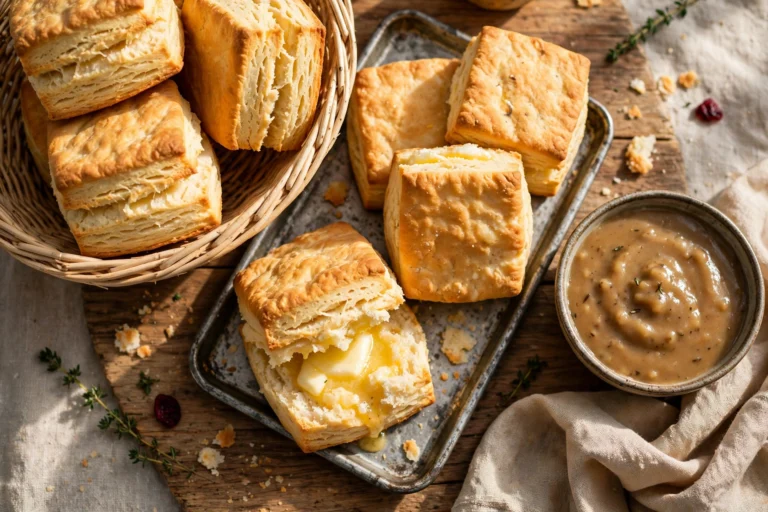
Buttermilk Biscuits, Tall, Flaky and Built for the Gravy Boat
Tall, flaky buttermilk biscuits cut square so there are no scraps and no second class biscuits: frozen butter grated straight into the flour, three gentle letter folds, and a tray of squares frozen solid before they bake. Made ahead and baked straight from the freezer while the turkey rests, so the basket lands on the Thanksgiving table at the exact moment the gravy does.
- Total Time: 1 hour
- Yield: 9 large square biscuits, plus 1 small cook’s biscuit from the trimmings 1x
Ingredients
- 3 1/2 cups all-purpose flour, plus more for dusting
- 1 tablespoon baking powder
- 1/2 teaspoon baking soda
- 1 tablespoon granulated sugar
- 1 1/2 teaspoons fine sea salt
- 3/4 cup unsalted butter, frozen solid (1 1/2 sticks)
- 1 1/4 cups cold buttermilk, plus 1 to 2 tablespoons more if the dough looks dry
- 2 tablespoons unsalted butter, melted, for brushing
- Flaky sea salt, for sprinkling (optional)
Instructions
- Heat the oven to 450°F (232°C). Line a rimmed baking sheet with parchment paper. Keep the butter in the freezer and the buttermilk in the fridge until the moment you need them.
- Whisk the flour, baking powder, baking soda, sugar and fine salt together in a large bowl. Grate the frozen butter on the large holes of a box grater directly into the flour, tossing the shards with the flour every few strokes so they stay separate and coated.
- Pour in the cold buttermilk and stir with a fork just until a shaggy dough forms and no dry flour remains at the bottom of the bowl. If the dough looks dusty, add the extra buttermilk a tablespoon at a time. Stop the moment it holds together; a rough dough is the goal.
- Turn the dough onto a lightly floured counter and pat it into a rectangle about 1 inch thick. Fold it in thirds like a letter, turn it 90 degrees, pat it back to 1 inch, and fold again. Repeat once more, for three folds in total, flouring lightly whenever the dough sticks.
- Pat the folded dough into a 7 by 7 inch square, a full inch thick. With a bench scraper or long knife, trim a thin strip from all four edges to expose the layers. Press the trimmings together into one small extra biscuit.
- Cut the square into 9 equal squares, pressing straight down and lifting straight up, never twisting or sawing. Move the biscuits to the prepared sheet, arranged close together so their sides almost touch.
- Freeze the tray for 15 minutes, until the biscuits are firm and cold through. If you are working ahead, freeze them solid, about 1 hour, then bag them for up to 1 month.
- Bake for 16 to 18 minutes, or 18 to 20 minutes from fully frozen, until the biscuits are tall and deep golden on top. Brush immediately with the melted butter, sprinkle with flaky salt if using, and serve warm.
- Prep Time: 25 minutes
- Cook Time: 18 minutes
Nutrition
- Serving Size: 1
- Calories: 340
- Sugar: 4
- Sodium: 480
- Fat: 17
- Saturated Fat: 10
- Unsaturated Fat: 6
- Trans Fat: 0
- Carbohydrates: 42
- Fiber: 1
- Protein: 6
- Cholesterol: 45