Wild Rice Pilaf with Cranberries and Pecans, One Pot and Deeply Toasted
In this article:
- Why One Pot Makes This Wild Rice Pilaf Work
- The Grain That Opens Like a Butterfly
- Ingredients
- Cooking the Wild Rice Pilaf, Step by Step
- Burner Math: Where This Pot Fits on Thanksgiving Day
- Swaps for Nuts, Fruit and Broth
- Made Yesterday, Better Today: Storage and Reheating
- Your Wild Rice Pilaf Questions, Answered
- The Side That Travels to Every Table
Wild rice pilaf is the side dish I make when the Thanksgiving table needs something hearty that is not another casserole. It eats like a stuffing’s wilder cousin: nutty dark grains, chewy cranberries, toasted pecans, and a soft background of onion and celery that makes the whole bowl taste like the holiday.
This version cooks in one pot, on one burner, with no second saucepan of white rice waiting to be folded in at the end. The grains simmer in broth until they split open, the cranberries plump in the steam while the pot rests, and the pecans go on at the table so they stay crisp.
Set it beside the bird and it holds its own against richer plates. It is the bowl I carry to potlucks in November because it travels well, reheats without sulking, and gives the turkey a rest from being the only thing people talk about.
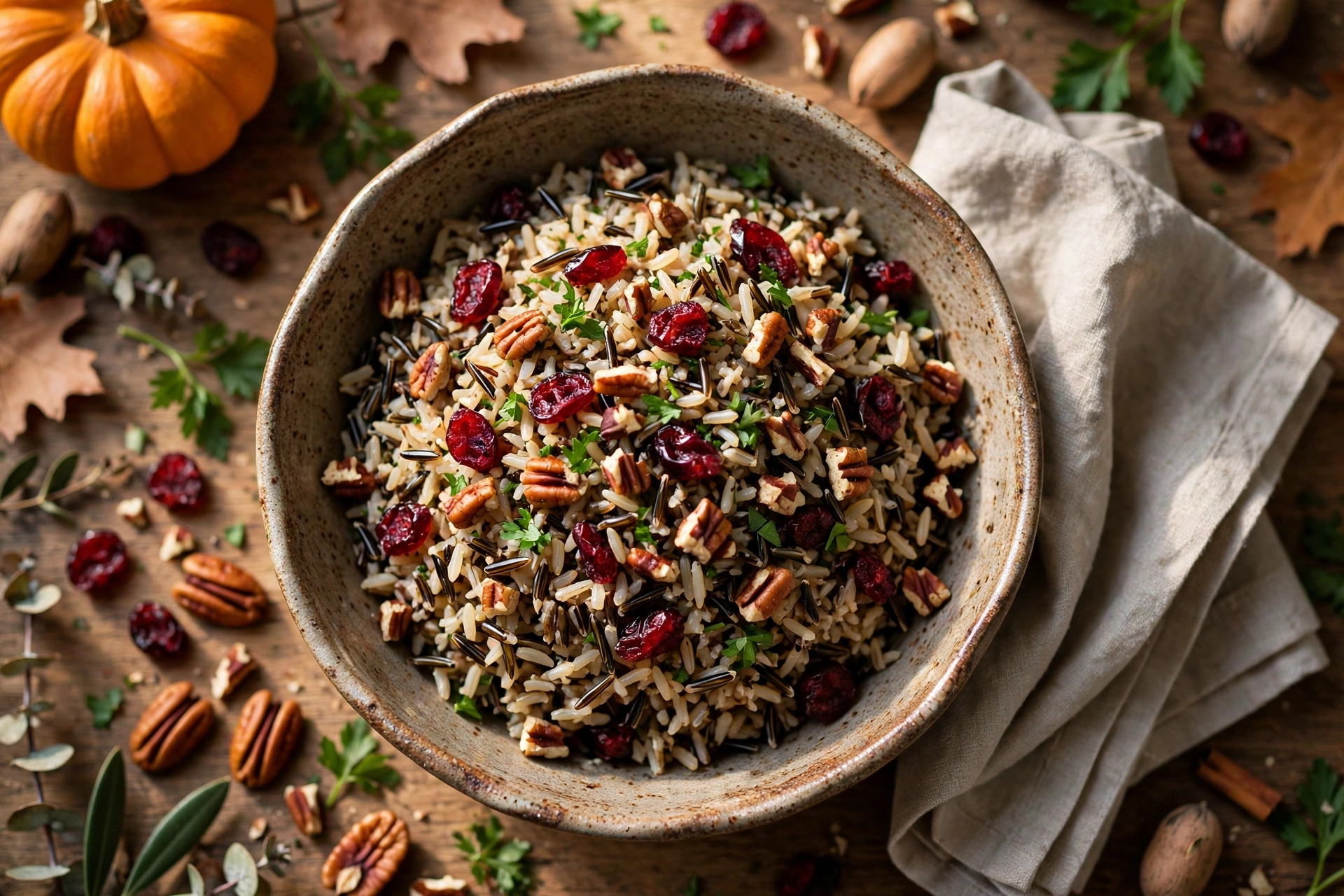
Serve it warm, never steaming hot, so the butter gloss stays on the grains instead of pooling under them. A wide, shallow bowl shows off the colors best: the near black grains, the red cranberries, the green herbs. It looks like confetti and tastes like a walk in the northern woods.
Why One Pot Makes This Wild Rice Pilaf Work
Wild rice pilaf works in a single pot because a good wild rice blend is milled to cook evenly, grain beside grain. Older recipes split the cooking into two pots because pure wild rice and white rice finish at very different times. The blend removes that problem, and rinsing it removes the dusty starch that turns pilaf gummy.
The onion and celery cook first, right in the pot, so their sweetness becomes the base of the broth instead of a garnish added later. Every grain drinks that flavored broth for forty five minutes. Nothing is drained away, which is where two pot versions quietly lose half their taste down the sink.
The rest off the heat is part of the recipe, not a pause. Steam finishes the last firm grains, and the cranberries laid on top plump in that steam instead of boiling into jam. One pot, one lid, and the pilaf comes out separate, glossy and tender.
Texture is the quiet triumph here. Each bite moves between chewy grain, soft onion, the small burst of a cranberry and the crunch of pecan that never simmered. Nothing turns to mush, nothing squeaks raw. That contrast is exactly what a table full of soft, rich casseroles is missing by the second helping.
The Grain That Opens Like a Butterfly
True wild rice is not rice at all. It is the seed of a North American grass that grows in shallow lakes, mostly around the Great Lakes, and it has been harvested there for centuries. The University of Minnesota Extension notes that the grains darken and firm up as they dry, which is why they need a longer simmer than any true rice in your pantry.
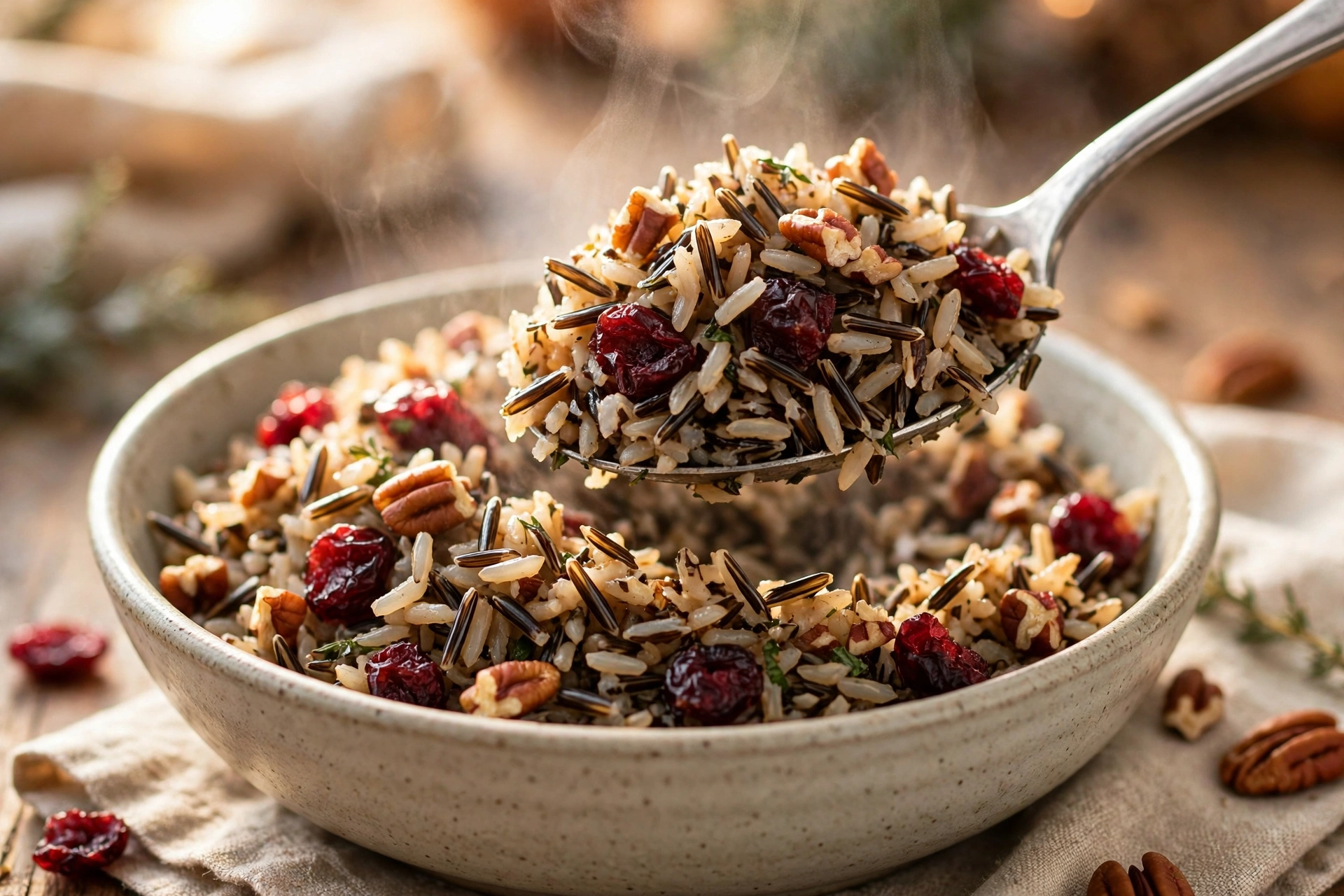
Raw, the grains look like thin dark needles. As they cook, the husk splits and curls back and the pale interior puffs out, a shape cooks call butterflying. That split is your doneness test: a butterflied grain is tender, a closed grain is still chewing gum in disguise.
Blends pair the wild rice with long grain white or brown rice so the bowl eats softer. Per the nutrient profiles in USDA FoodData Central, wild rice brings more protein and fiber than white rice cup for cup, which is why this pilaf satisfies like a main dish even though it sits in the side dish row.
Buying matters more than technique here. A blend that lists wild rice first cooks darker and nuttier; one built mostly on white rice eats softer and paler. Neither is wrong, but know which bowl you are aiming for before the pot goes on. Store the opened bag airtight and cool, and use it within a few months, because the natural oils in the dark grains stale faster than the oils in polished rice.
If your blend cooks unevenly one year, soak it in cold water for thirty minutes before cooking and shorten the simmer by about five minutes. The soak is optional insurance, not a rule. What is not optional is the rinse: thirty seconds under the tap, until the water runs mostly clear.
Ingredients
- 2 tablespoons unsalted butter
- 1 tablespoon olive oil
- 1 medium yellow onion, finely diced (about 1 1/4 cups)
- 2 celery stalks, finely diced (about 3/4 cup)
- 2 garlic cloves, minced
- 1 1/2 cups wild rice blend, rinsed and drained
- 3 1/4 cups low sodium chicken broth, plus more as needed
- 1 bay leaf
- 1 teaspoon fresh thyme leaves, or 1/2 teaspoon dried thyme
- 3/4 teaspoon fine sea salt, plus more to taste
- 1/2 teaspoon black pepper
- 3/4 cup dried cranberries
- 1 tablespoon fresh orange juice
- 1 teaspoon orange zest
- 3/4 cup pecan halves, toasted and coarsely chopped
- 1/4 cup chopped fresh parsley
- 2 scallions, thinly sliced
Cooking the Wild Rice Pilaf, Step by Step
- Rinse the rice blend in a fine mesh strainer under cold water until the water runs mostly clear, then drain well. Toast the pecans in a dry skillet over medium heat for 5 to 6 minutes, until fragrant and a shade darker. Chop coarsely and set aside.
- Melt the butter with the olive oil in a Dutch oven or heavy pot over medium heat. Add the onion and celery with a pinch of the salt and cook for 5 to 6 minutes, stirring now and then, until soft and sweet with no browning.
- Stir in the garlic and cook for 30 seconds, just until it smells warm. Add the rinsed rice and stir for 1 full minute, until every grain looks glossy and coated.
- Pour in the broth and add the bay leaf, thyme, salt and pepper. Bring to a boil, cover with a tight lid, and drop the heat to the lowest simmer your stove can hold.
- Simmer for 45 minutes without lifting the lid. Peek at one grain: it should be tender, with the dark husk split open. If the grains are still firm, add 1/4 cup hot broth, cover again, and give them 5 to 8 more minutes.
- Take the pot off the heat. Scatter the cranberries over the surface, drizzle with the orange juice and sprinkle the zest, then cover and rest for 10 minutes. The cranberries plump in the steam and the last grains finish gently.
- Remove the bay leaf. Fluff the pilaf with a fork, fold in half the pecans and all the parsley, and taste for salt. Spoon into a warm serving bowl and finish with the remaining pecans and the scallions.
Burner Math: Where This Pot Fits on Thanksgiving Day
Thanksgiving afternoon is a traffic problem, and this pilaf was designed to stay out of the way. It needs one back burner for forty five quiet minutes, no stirring, no draining, no last minute oven space. Start it when the turkey comes out to rest and it is ready when carving is done.
If your menu already runs a bread dressing like our southern cornbread dressing, serve both without worry. The dressing is soft, golden and bready; the pilaf is chewy, dark and nutty. They share a table the way two different songs share a playlist, and guests with no appetite for bread stuffing get a real option instead of a polite skip.
The pot also plays well with the rest of the classics. A spoonful next to classic roast turkey catches the juices on the plate, and a drizzle of turkey gravy from drippings turns leftovers into a second dinner. Plan on one cup per person, and make the full pot even for six people: the leftovers are the point.
If the meal runs late, the pilaf holds gracefully. Keep it covered on the turned off burner for up to forty minutes, or move the whole pot into a low oven at 200 degrees. Before serving, fluff once more and shower the top with the reserved pecans, which will have stayed crisp in their dry pan instead of steaming soft on the hot grains.
Swaps for Nuts, Fruit and Broth
Pecans are the Southern choice, but toasted walnuts swap in one for one and taste slightly more bitter, which suits the sweet cranberries. Pistachios make the bowl festive and green for December tables. For a nut free pot, use toasted pumpkin seeds and add them at the table like the nuts, never in the simmer.
Dried cherries trade evenly for the cranberries and lean the pilaf toward dessert’s neighborhood, in a good way. Golden raisins plus a pinch of cinnamon give it a warmer, older fashioned profile. Keep the orange juice either way; dried fruit needs that small acid wake up after a long simmer.
Vegetable broth makes the dish fully vegetarian with almost no loss, especially if you add a teaspoon of soy sauce for depth. Turkey stock, if you made it from last year’s frame, is the richest option of all. Readers who love our best homemade stuffing will recognize the same logic: the liquid is the seasoning, so choose one you would happily sip.
For a deeper, woodsier bowl, stir in a cup of sauteed mushrooms with the parsley at the end. Cremini or shiitake cooked hard in butter until their edges crisp echo the wild grains beautifully. Add them after the rest, never in the simmer, or they give up their chew and turn the broth gray.
Made Yesterday, Better Today: Storage and Reheating
This pilaf is one of the rare sides that improves overnight. The grains drink the seasoned broth as they sit, the onion melts further into the background, and the cranberries share their sweetness with everything nearby. Cook it the day before, cool it quickly, and refrigerate it in the pot or a sealed container for up to 3 days.
Reheat it covered in a 325 degree oven with 3 tablespoons of broth sprinkled over the top, about 20 minutes, then fluff and add the pecans fresh. Microwaving works for small portions: a splash of water, a loose cover, and short bursts with a stir between them. Hold back the parsley and scallions until serving so the green stays green.
Freeze leftovers in flat bags for up to 2 months. Thaw overnight in the fridge and reheat as above; the grains keep their chew better than white rice ever does. A handful of cold pilaf also disappears nicely into turkey soup on the weekend, no recipe required.
Your Wild Rice Pilaf Questions, Answered
Do I have to soak the wild rice blend first?
No. The rinse is required, the soak is optional. Soaking for 30 minutes in cold water shortens the simmer by about 5 minutes and helps if your blend has cooked unevenly before, but a well rinsed blend cooks tender in 45 minutes straight from the bag.
Why is my pilaf still crunchy after 45 minutes?
The lid lifted too often, the simmer ran too low, or the blend skews heavily toward pure wild rice. Add 1/4 cup hot broth, cover, and simmer 5 to 8 minutes more, then judge by the split grain test rather than the clock. Every stove holds a different lowest simmer.
Can I make it in a rice cooker?
Yes, with the same ratio. Saute the onion and celery on the stove first for flavor, then combine everything except the cranberries, pecans and herbs in the cooker and run a brown rice or long cycle. Rest, plump the cranberries on top, and finish exactly as written.
What can replace the cranberries for a less sweet bowl?
Use 1/2 cup finely diced tart apple added with the onion, and skip the orange juice. The apple softens into the grains and keeps a gentle tang. A tablespoon of our homemade cranberry sauce swirled over each serving also lets each guest set their own sweetness.
How much does this recipe make, and can I double it?
It makes about 8 cups, eight generous side servings. Doubling works in a large Dutch oven: keep the same broth ratio, add 5 minutes to the simmer, and rest the full 10 minutes before fluffing, since a deeper pot holds more steam.
The Side That Travels to Every Table
Wild rice pilaf has earned its place on my holiday table because it asks for one pot and gives back a bowl that tastes like someone planned ahead. Dark grains, bright cranberries, pecans that stay crisp, and broth in every bite.
Make it once this season and watch what happens at your table. It is the side people ask about on the way out the door, and the one whose leftovers never survive the weekend.
Print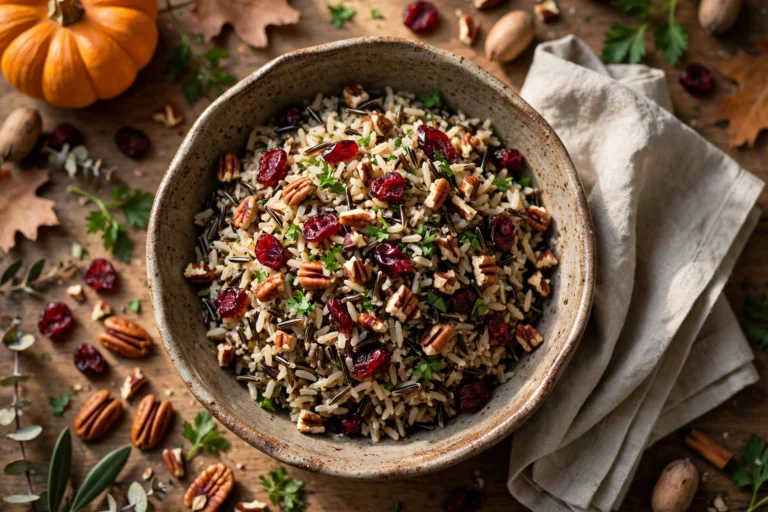
Wild Rice Pilaf with Cranberries and Pecans
A one pot Thanksgiving pilaf built on a wild rice blend simmered in seasoned broth until the dark grains split open. Dried cranberries plump in the steam while the pot rests, orange zest wakes them up, and toasted pecans go on at the table so they stay crisp. No pork, no second saucepan, and it reheats beautifully the next day.
- Total Time: 1 hour 10 minutes
- Yield: About 8 cups 1x
Ingredients
- 2 tablespoons unsalted butter
- 1 tablespoon olive oil
- 1 medium yellow onion, finely diced (about 1 1/4 cups)
- 2 celery stalks, finely diced (about 3/4 cup)
- 2 garlic cloves, minced
- 1 1/2 cups wild rice blend, rinsed and drained
- 3 1/4 cups low sodium chicken broth, plus more as needed
- 1 bay leaf
- 1 teaspoon fresh thyme leaves, or 1/2 teaspoon dried thyme
- 3/4 teaspoon fine sea salt, plus more to taste
- 1/2 teaspoon black pepper
- 3/4 cup dried cranberries
- 1 tablespoon fresh orange juice
- 1 teaspoon orange zest
- 3/4 cup pecan halves, toasted and coarsely chopped
- 1/4 cup chopped fresh parsley
- 2 scallions, thinly sliced
Instructions
- Rinse the rice blend in a fine mesh strainer under cold water until the water runs mostly clear, then drain well. Toast the pecans in a dry skillet over medium heat for 5 to 6 minutes, until fragrant and a shade darker. Chop coarsely and set aside.
- Melt the butter with the olive oil in a Dutch oven over medium heat. Add the onion and celery with a pinch of the salt and cook for 5 to 6 minutes, until soft and sweet with no browning.
- Stir in the garlic and cook for 30 seconds. Add the rinsed rice and stir for 1 full minute, until every grain looks glossy and coated.
- Pour in the broth and add the bay leaf, thyme, salt and pepper. Bring to a boil, cover with a tight lid, and drop the heat to the lowest simmer.
- Simmer for 45 minutes without lifting the lid. Check one grain: it should be tender, with the dark husk split open. If the grains are still firm, add 1/4 cup hot broth, cover again, and simmer 5 to 8 minutes more.
- Take the pot off the heat. Scatter the cranberries over the surface, drizzle with the orange juice and sprinkle the zest, then cover and rest for 10 minutes so the cranberries plump in the steam.
- Remove the bay leaf. Fluff with a fork, fold in half the pecans and all the parsley, and taste for salt. Serve in a warm bowl topped with the remaining pecans and the scallions.
- Prep Time: 15 minutes
- Cook Time: 55 minutes
Nutrition
- Serving Size: 1
- Calories: 265
- Sugar: 9
- Sodium: 285
- Fat: 11
- Saturated Fat: 3
- Unsaturated Fat: 7
- Trans Fat: 0
- Carbohydrates: 37
- Fiber: 4
- Protein: 5
- Cholesterol: 8