Roasted Delicata Squash With Brown Butter, Crispy Sage and Pomegranate
In this article:
- Why roasted delicata squash needs no peeling and high heat
- Choosing delicata: weight, stripes and skin
- Ingredients
- Cutting half moons and roasting the delicata squash
- Brown butter and crispy sage, the ninety second finish
- When the edges caramelize but the centers stay pale
- Serving delicata squash beside turkey and dressing
- Roast Wednesday, sauce Thursday: the make ahead plan
- Walnuts, pistachios and other easy swaps
- Your delicata squash questions, answered
- A side dish that earns its place in the middle of the table
Roasted delicata squash is the rare Thanksgiving side that asks almost nothing of the cook and still arrives looking like it was planned for weeks. The skin is edible, the slices are naturally pretty, and the flesh turns sweet and custardy under high heat.
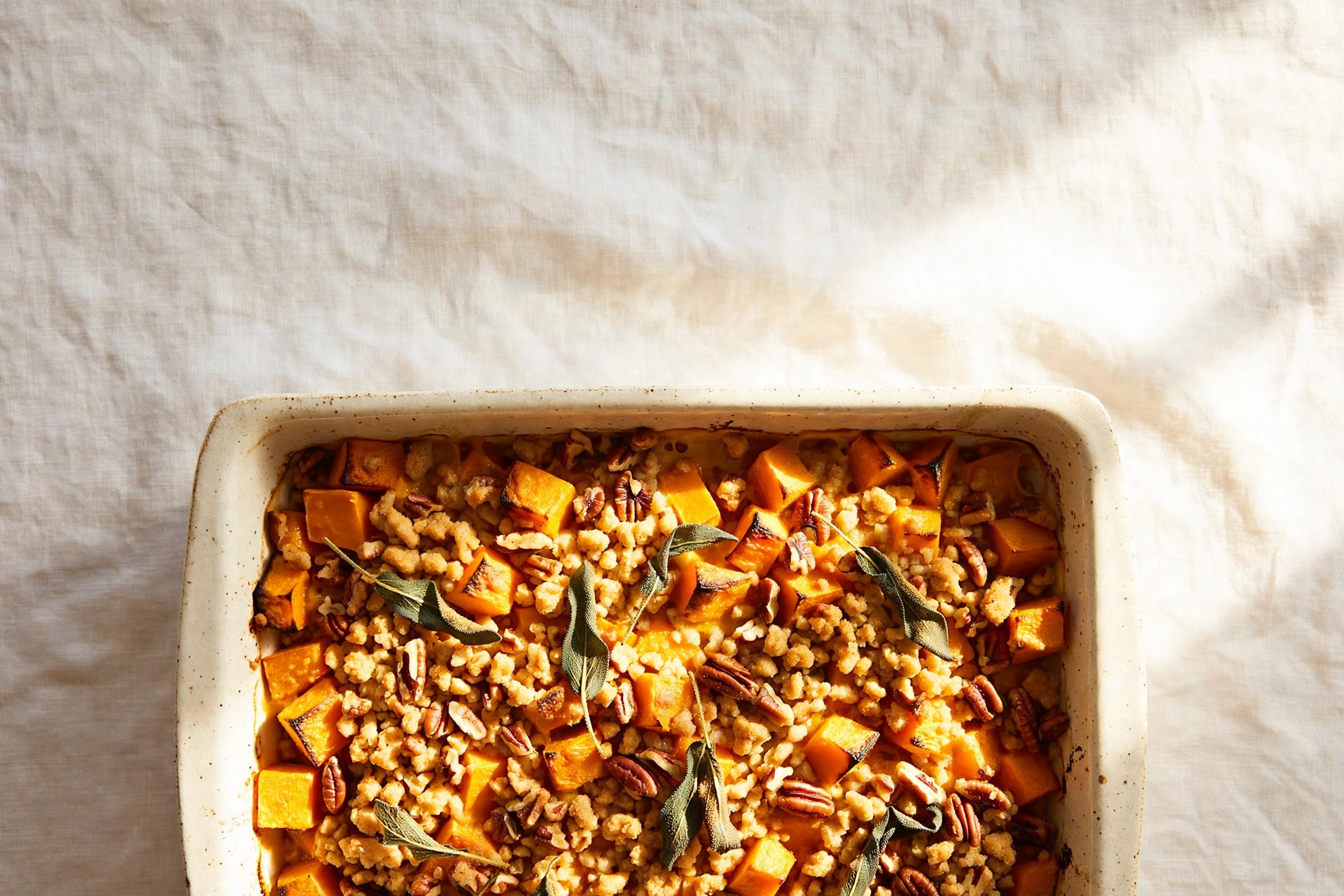
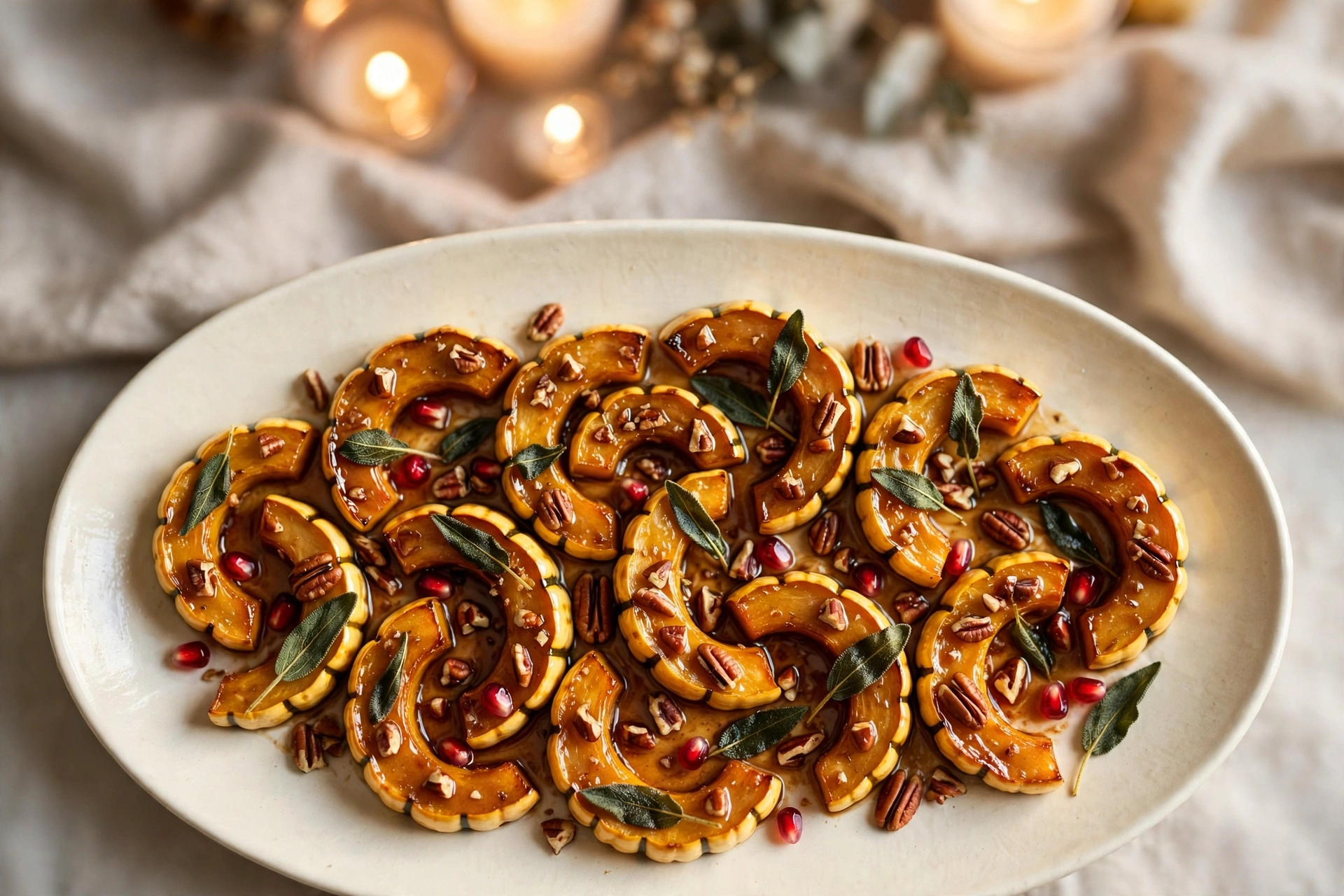
The finish is what makes guests ask about it. Amber brown butter, sage leaves fried crisp in the same pan, toasted pecans for crunch and pomegranate arils that pop against all that warmth.
There is no peeling, no cubing and no sauce to babysit. You cut half moons, roast them hard, and spend ninety seconds on the butter while the pan is still hot from the oven.
The plan is built for the real holiday, too. The squash roasts beautifully a day ahead, and the brown butter waits until the turkey is resting, so the dish lands glossy and hot.
Why Roasted Delicata Squash Needs No Peeling and High Heat
Roasted delicata squash starts with a gift no other winter squash gives you: skin thin enough to eat. Where butternut needs a peeler and a wrestling match, delicata only needs a good scrub.
That skin is not just convenient, it is structural. It holds each half moon together through a hard roast, so the slices keep their scalloped shape instead of slumping into mash on the platter.
High heat is the second half of the method. At 425 degrees F, the natural sugars in the flesh caramelize at the edges before the centers overcook, giving you the contrast this dish lives on.
Lower temperatures steam more than they roast. The slices soften, but they stay pale and wet, and no amount of garnish fixes a squash that never browned. Heat first, garnish second.
A light coat of maple syrup in the seasoning is the quiet accelerator. It does not make the squash sweet like dessert; it deepens the browning and helps the edges lacquer in the oven.
Finally, space does what seasoning cannot. Slices laid in a single layer with air between them roast; slices piled on top of each other poach in their own steam. Two pans, always.
Choosing Delicata: Weight, Stripes and Skin
Pick squash that feel heavy for their size. Weight means moisture, and moisture means flesh that roasts up creamy instead of dry and stringy. A light delicata has usually been sitting too long.
Look at the stripes next. Ripe delicata wear deep green or orange stripes over a creamy yellow base. The creamier and more golden the base color, the sweeter and riper the flesh inside.
Run a fingernail over the skin. On a ripe squash it resists and feels hard, almost like a thin shell. Soft spots, wrinkles or a skin your nail sinks into are all reasons to pass.
Size matters for even cooking more than for flavor. Choose three squash of similar length and girth, about a pound each, so every half moon lands near the same thickness and roasts at the same speed.
Store whole squash in a cool, dark spot for up to three weeks. Wait to wash and cut until roasting day, because cut squash dries at the edges and loses the freshness you just paid for.
Ingredients
- 3 medium delicata squash, about 3 pounds total, scrubbed well
- 2 tablespoons olive oil
- 1 tablespoon pure maple syrup
- 1 teaspoon fine salt, divided, plus flaky salt to finish
- 1/2 teaspoon black pepper
- 1/2 teaspoon ground coriander
- 1/4 teaspoon smoked paprika
- 5 tablespoons unsalted butter
- 12 fresh sage leaves
- 1 teaspoon apple cider vinegar (optional, for brightness)
- 1/2 cup pecans, toasted and roughly chopped
- 1/3 cup pomegranate arils
Everything here earns its place. The coriander adds a faint citrus warmth that most eaters notice without naming, and the smoked paprika leans the whole dish toward the savory side of the table.
Cutting Half Moons and Roasting the Delicata Squash
- Heat the oven to 425 degrees F. Line two large rimmed sheet pans with parchment paper. Two pans are not optional here; crowding is what steams the slices instead of browning them.
- Trim the stem and blossom ends from each squash. Cut each squash in half lengthwise, scoop the seeds and strings out with a spoon, and cut each half crosswise into half moons about 1/2 inch thick.
- Put the half moons in a large bowl. Add the olive oil, maple syrup, 3/4 teaspoon of the salt, the pepper, coriander and smoked paprika, then toss with your hands until every slice is glossy on both sides.
- Arrange the slices in a single layer on the prepared pans, cut sides down, with a little air between pieces. Slide both pans into the oven and roast for 12 minutes.
- Flip each slice with tongs and rotate the pans top to bottom. Roast 10 to 13 minutes more, until the edges are deeply caramelized, the centers are tender when pierced, and a few corners have turned almost amber.
- While the squash finishes, make the brown butter in the next section. Transfer the roasted slices to a warm serving platter in overlapping rows as soon as they come out of the oven.
Brown Butter and Crispy Sage, the Ninety Second Finish
Brown butter is regular butter cooked one minute past melted, until the milk solids toast and the whole pan smells like hazelnuts. It is the difference between a good side and the one people photograph.
Melt the butter in a light colored skillet over medium heat. A pale pan matters because you judge the color against it; in a dark pan, the butter goes from golden to burnt between glances.
Swirl as it foams, then settles. When the foam thins and amber flecks appear at the bottom, drop in the sage leaves. They sizzle hard for about thirty seconds and come out crisp and dark green.
Pull the pan off the heat immediately. Stir in the remaining 1/4 teaspoon of salt and the apple cider vinegar if you are using it. The vinegar is a whisper, not a dressing; it keeps the richness awake.
Spoon the butter and every crisp sage leaf over the platter of squash. Scatter the pecans and pomegranate arils over the top, finish with a pinch of flaky salt, and carry it straight to the table.
When the Edges Caramelize but the Centers Stay Pale
Pale, wet slices almost always trace back to the pan, not the squash. Too many pieces, a pan that went in cold, or slices of uneven thickness will steam the batch before it ever roasts.
The fix is unglamorous and total: two pans, one layer, real space between slices, and a full preheat. If your oven runs cool, give the empty pans five minutes inside while it heats.
Burnt butter is the other common failure, and it has a rescue window of about ten seconds. The moment the flecks smell sharp instead of nutty, pour the butter into a heatproof bowl to stop the cooking.
If it tastes bitter, it is gone; start over with fresh butter and lower heat. Burnt milk solids cannot be strained into tasting good, and five tablespoons of butter is a cheap lesson.
Soggy leftovers have their own fix. Skip the microwave, which steams the edges soft. A hot oven or a dry skillet brings the caramelized surfaces back in about five minutes.
Serving Delicata Squash Beside Turkey and Dressing
This is a table dish, not a stove dish. Serve it on the platter it was dressed on, in overlapping rows, with the sage leaves and pomegranate showing, and let people take slices with a wide spoon.
The classic partners are the rich ones. Beside maple glazed roast turkey breast, the sweet squash and bitter little sage leaves cut through in exactly the way cranberry sauce does.
It also holds its own next to Southern cornbread dressing, where the soft slices contrast the crumbly edges, and it brightens a plate of green bean casserole with color alone.
For a lighter plate, serve roasted delicata squash over a swipe of whipped ricotta or next to honey glazed roasted carrots. The colors alone will make the table look planned.
Roast Wednesday, Sauce Thursday: the Make Ahead Plan
The calm version of this recipe splits across two days. On Wednesday, cut, season and roast the squash exactly as written, but stop five minutes early, while the centers are just tender.
Cool the slices on their pans, then refrigerate them in a single layer in a sealed container for up to 24 hours. Stacked hot squash steams itself soft, so the cooling step is not a detail.
On Thursday, spread the slices on a sheet pan and reheat at 375 degrees F for 10 to 12 minutes, until the edges crisp again and the centers are hot all the way through.
Brown the butter while the turkey rests. It takes ninety seconds, it cannot be done well in advance, and the smell of it tells everyone at the table that dinner is close.
Leftovers keep four days in the fridge. Freeze them only if you accept softer slices afterward; they thaw into soups and grain bowls better than they return to the platter.
Walnuts, Pistachios and Other Easy Swaps
Pecans are the classic partner, but walnuts bring a pleasant bitterness that suits the brown butter, and pistachios add the green and red holiday color if pomegranate is not available.
For a nut free table, toasted pumpkin seeds give the same crunch. Add them at the very end, like the nuts, so they stay crisp under the warm butter.
Acorn squash is the nearest substitute and needs no peeling either, though its slices are thicker and want five extra minutes. Butternut must be peeled and cubed, and it will never hold the half moon shape.
Out of sage, thyme leaves fried in the same butter are lovely, and rosemary works if you use half as much. Dried sage is the one swap to skip; it turns dusty instead of crisp.
For a dairy free version, brown a good olive oil with the sage until the leaves crisp, and accept a lighter finish. The caramelized squash carries the dish either way.
Your Delicata Squash Questions, Answered
Do I really not have to peel delicata squash?
Really. The skin is thin, fully edible and tender after roasting, and it is what holds the half moons together. Just scrub the squash well, trim the ends, and slice. Peeling would cost you the shape and the prettiest part of the slice.
Why did my slices steam instead of browning?
The pan was crowded or the slices were uneven. Delicata releases moisture as it heats, and trapped moisture steams the batch. Use two pans, one layer, even 1/2 inch slices, and a fully preheated 425 degree F oven, and the edges will caramelize.
How do I know the brown butter is ready?
Watch for three signs together: the foam thins out, amber flecks collect at the bottom of the pan, and the smell turns nutty, like toasted hazelnuts. That is the moment for the sage. Brown butter waits for no one, so have the leaves ready.
Can I roast the squash a day ahead for Thanksgiving?
Yes, and the recipe is written for it. Under roast by five minutes, cool fully, refrigerate in a single layer, then reheat at 375 degrees F for 10 to 12 minutes. Brown the butter fresh on the day; reheated brown butter loses its perfume.
What can I use instead of pomegranate arils?
Dried cranberries are the closest swap and fit the table, though they are sweeter and chewier. A handful of chopped pistachios plus a squeeze of lemon gives the same bright contrast in a different way. Add either at the last second, never before roasting.
Can I make this in an air fryer?
Yes, in batches. Air fry the seasoned half moons at 400 degrees F for 10 to 12 minutes, shaking the basket halfway. The batches are small, so this suits two squash better than a holiday platter of three.
A Side Dish That Earns Its Place in the Middle of the Table
Roasted delicata squash asks for a scrub, a sharp knife and a hot oven, and it pays back like a dish that took all afternoon. That exchange is the whole reason it belongs in the Thanksgiving rotation.
The method is honest about its three pressure points: space on the pan, heat without fear, and butter watched for ninety seconds. Master those and the recipe repeats perfectly, year after year.
Serve it once next to the turkey and watch what happens. The plate that comes back empty first is rarely the one anyone predicted, and this platter has a way of winning that contest.
Nutrition per serving, estimated for 8 servings: Calories 205, Total Fat 15 g, Saturated Fat 6 g, Unsaturated Fat 8 g, Trans Fat 0 g, Carbohydrates 17 g, Fiber 4 g, Sugar 7 g, Protein 2 g, Sodium 300 mg, Cholesterol 20 mg. Ingredient values are informed by USDA FoodData Central.