Roasted Butternut Squash Wedges With Maple Butter and Flaky Salt
In this article:
- Why Wedges Beat Cubes for Roasted Butternut Squash
- Cutting the Squash Into Wedges, Safely
- Caramel First, Sweetness Second: The Flavor Logic
- High Heat and Space: The Two Rules of the Pan
- Ingredients
- How to Roast Butternut Squash Wedges
- Pale or Steamed Squash: What Went Wrong
- Variations for Every Table
- Lighter and Savory Twists
- Roast Ahead for Thanksgiving, Store and Reheat
- A Platter That Needs No Garnish
- Questions About This Roasted Butternut Squash
This roasted butternut squash skips the usual cubes and goes big: thick wedges with the skin left on, roasted hard at high heat until the cut sides turn deep amber and the centers go silky. A brush of maple butter at the very end makes them shine without ever turning them into dessert.
Wedges are more than a pretty shape. Each piece offers two wide flat faces for browning, a tender middle that stays moist, and a presentation that goes straight from the sheet pan to a platter. One squash, one pan, and the side dish is handled.
Why Wedges Beat Cubes for Roasted Butternut Squash
The case for wedges starts with surface. A roasted butternut squash wedge browns across one broad face at a time, building the deep caramel flavor that small cubes only get on their corners. The skin acts like a little tray, holding each piece together through flipping and serving.
Moisture behaves better too. Cubes have six cut sides drying out at once, while a wedge keeps most of its flesh protected. The result is a contrast worth chasing: crisp, dark edges outside, and a center so tender it almost spreads.
There is also less knife work. A single squash becomes eight generous wedges in a handful of cuts, with no peeling at all. For a holiday cook juggling a turkey and three other pans, that saved effort is very real.
Portions are easier to judge as well. Count on two wedges per person as a side, which makes a three pound squash serve four to six at a normal table. For a Thanksgiving spread with many sides, one wedge each is plenty, and the same squash stretches to eight.
Cutting the Squash Into Wedges, Safely
Butternut squash resists the knife, so set the work up properly. Trim a thin slice from the top and bottom so the squash stands steady, then cut it in half where the neck meets the round bulb. A flat base means the squash never rolls mid cut.
Cut each half in half again lengthwise, scoop the seeds from the bulb quarters with a sturdy spoon, and then cut each quarter into two wedges. Eight wedges is the sweet spot for a three pound squash: thick enough to stay silky, thin enough to cook through evenly.
If the squash fights back, warm it in the microwave for two minutes first. The flesh softens just enough to make the first cuts calmer, and the roasting time does not change. Always cut away from your body and keep the guiding hand curled.
Size is the last cutting decision, and it matters for timing. Wedges about one and a half inches thick at the wide end roast through in the time given here. Much thicker, and the centers lag behind the browning; much thinner, and the tips dry before the middle softens.
Save the seeds while you work. Rinsed, salted and roasted for twelve minutes, they make the cook’s snack and a crunchy garnish for the platter. It is a small habit, but it turns one squash into two useful things.
Caramel First, Sweetness Second: The Flavor Logic
Most roasted squash recipes sweeten first and hope for browning later, but sugar on raw squash mostly steams. Here the wedges roast in plain olive oil, salt, pepper, smoked paprika and garlic powder until the caramel is already built. Only then does sweetness arrive.
The maple butter goes on for the last few minutes, when the wedges are tender and the pan is hottest. It melts into the browned surfaces, glosses them, and cannot scorch because its oven time is so short. A drop of apple cider vinegar in the butter keeps the maple in balance.
Smoked paprika is the quiet star. It deepens the color, adds a whisper of smoke, and pulls the dish firmly toward savory, especially next to rich mains like our classic roast turkey. Flaky salt at the end makes every flavor read louder.
The seasoning sticks better than cooks expect, because the cut faces of butternut are naturally moist. Toss the wedges while the oil is fresh and give them a minute before panning, so the spices hydrate slightly instead of falling off on the sheet pan.
High Heat and Space: The Two Rules of the Pan
Rule one is heat: 425 degrees F, with the sheet pan heating inside the oven while it preheats. Cold squash on a hot pan starts browning on contact instead of warming up slowly in its own steam. That head start is worth several shades of color.
Rule two is space. Wedges need air between them; if they touch, the touching sides steam and stay pale. One large rimmed sheet pan fits a single squash comfortably. For a double batch, use two pans and swap their oven positions halfway.
Flip once, at the twenty five minute mark, so the second cut face gets its turn against the hot metal. More flipping only slows the browning and breaks the tender wedges apart.
Rack position fine tunes the result. The center rack gives even browning on both faces, while the lower third pushes deeper color on the pan side for cooks who like a darker crust. Avoid the top rack here; the maple butter stage can scorch under a close broiler element.
Dark pans brown faster than pale ones, sometimes by five minutes. If your sheet pan is dark and heavy, check the first side at twenty minutes instead of twenty five, and trust the color more than the clock.
Ingredients
- 1 large butternut squash, about 3 pounds
- 2 tablespoons olive oil
- 1 teaspoon kosher salt
- 1/2 teaspoon black pepper
- 1 teaspoon smoked paprika
- 1/2 teaspoon garlic powder
- 3 tablespoons unsalted butter, melted
- 1 tablespoon maple syrup
- 1 teaspoon apple cider vinegar
- Flaky sea salt, for finishing
- 1 tablespoon fresh thyme leaves or chopped parsley, to serve
Choose a squash that feels heavy for its size, with matte tan skin and a long thick neck. The neck is solid flesh with no seed cavity, so a long necked squash gives you the most generous wedges for the whole table.
How to Roast Butternut Squash Wedges
- Put a large rimmed sheet pan in the oven and heat to 425 degrees F. A preheated pan starts the browning the moment the squash lands on it.
- Trim the top and bottom of the squash so it stands steady. Cut it in half where the neck meets the bulb, then cut each piece in half lengthwise.
- Scoop the seeds and stringy pulp from the bulb pieces with a sturdy spoon. Cut each quarter into two wedges, eight wedges in total, and leave the skin on.
- Toss the wedges in a large bowl with the olive oil, kosher salt, pepper, smoked paprika and garlic powder until every cut face is evenly coated.
- Pull the hot pan from the oven and arrange the wedges on it in a single layer, one cut side down, with space between pieces. Return the pan to the oven.
- Roast for 25 minutes without touching them. The undersides should be deeply golden and the edges starting to darken.
- Flip each wedge onto its other cut side with tongs and roast for 10 minutes more, until the flesh is tender all the way through when pierced with a knife.
- Meanwhile, whisk the melted butter, maple syrup and apple cider vinegar in a small bowl. Brush the maple butter over the wedges and return the pan to the oven for 5 to 8 minutes, until glossy with dark caramel tips.
- Rest the wedges on the pan for 5 minutes. Finish with flaky sea salt and the thyme or parsley, then lift them onto a warm platter with a wide spatula and serve.

Pale or Steamed Squash: What Went Wrong
Pale wedges almost always mean steam, and steam has three usual causes. The pan was crowded, the squash went in wet, or the oven was not fully hot. Fix any one of the three and the color improves; fix all three and the edges turn properly dark.
If the wedges browned on the first side but stayed pale after flipping, the pan had cooled. Give the second side the full ten minutes before judging, and resist moving the pieces around while they catch up. Contact with the metal is what does the work.
Burnt tips with a firm center mean the wedges were cut unevenly. Trim any thin wedge so it matches the others, or pull the small pieces a few minutes early and let them wait, brushed with maple butter, while the thick ones finish.
Variations for Every Table
For a warmer spice profile, swap the smoked paprika for a teaspoon of cinnamon and a pinch of nutmeg, and finish with toasted pecans. The dish leans sweeter, closer to the classic holiday version, while the wedge method keeps the caramel that cubes rarely reach.
For a savory herb version, skip the maple butter and finish with brown butter and crispy sage instead, the way we treat our roasted delicata squash. A shower of parmesan in the last two minutes also works beautifully with the wedges.
For heat, add a pinch of cayenne to the spice mix and a drizzle of hot honey at the table. The sweetness and heat together make these wedges disappear next to rich mains, especially the cranberry glazed chicken from our holiday menu.
A brown sugar and pecan finish turns the wedges into the sweetest thing on the table, in a good way. Scatter chopped pecans over the maple butter for the last five minutes so they toast in place, and serve the platter next to the turkey where a sweet potato casserole would normally sit.
Lighter and Savory Twists
To lighten the finish, replace the maple butter with a teaspoon of olive oil whisked with orange zest and a squeeze of juice. The wedges stay glossy and bright, and the natural sweetness of the squash carries the dish on its own.
The squash itself brings plenty to the plate: the USDA FoodData Central entry for butternut squash shows strong fiber and vitamin A for modest calories. That is one reason this side earns its place beside heavier holiday dishes without apology.
For a fully savory plate, drop the maple entirely and serve the wedges with a spoonful of garlicky yogurt or a tahini drizzle. Both sauces love the caramelized edges and turn the side into something closer to a vegetarian main.
Roast Ahead for Thanksgiving, Store and Reheat
Thanksgiving cooks can roast the wedges a day ahead through the flip, stopping before the maple butter. Cool them on the pan, cover and refrigerate, then brush with maple butter and give them twelve minutes at 425 degrees F on the day. They come back glossy and nearly as crisp as fresh.
Leftovers keep for four days in the fridge. Reheat on a sheet pan at 425 degrees F for about ten minutes rather than in the microwave, which steams the edges soft again. The skin helps the wedges survive reheating intact.
For a crowd, the recipe doubles cleanly with two squash and two pans. Season everything in one big bowl, roast the pans on two racks, and swap their positions when you flip the wedges. The maple butter doubles in the same small bowl with no change in method.
Extra wedges rarely stay wedges for long in our kitchen. Blend them into soup, fold them into a grain salad with cranberries, or mash them roughly for a sandwich spread. They also freeze well for a month, ready to become the base of a weeknight soup.
A Platter That Needs No Garnish
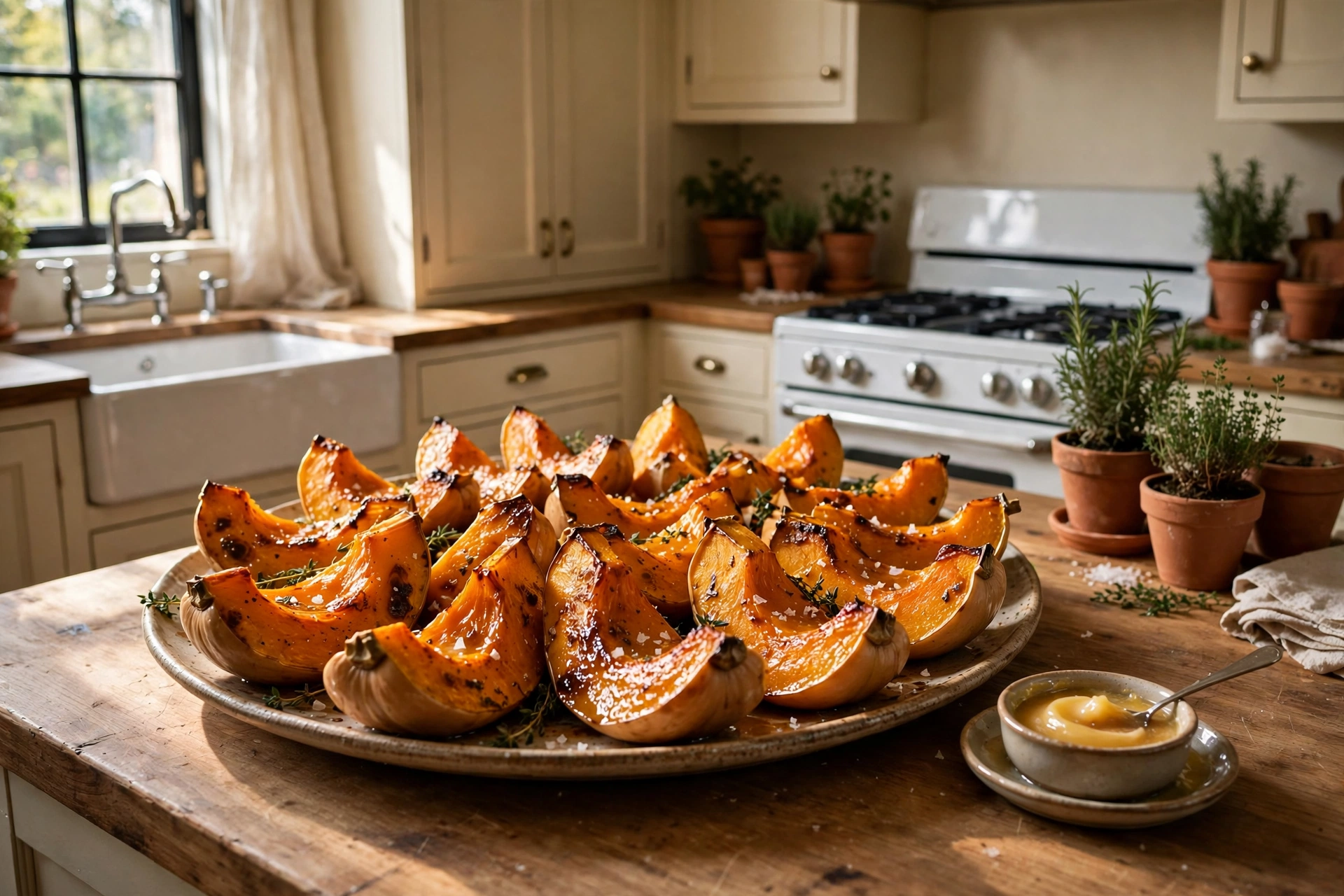
This roasted butternut squash earns its place on the holiday table by looking like itself: a pile of amber wedges, dark at the tips, shining with maple butter. A warm platter, a pinch of flaky salt and a scatter of thyme are all the styling it asks for.
Serve it beside the turkey, next to the honey butter roasted parsnips and carrots, and watch the colors carry the whole spread. The wedges hold their heat well, so they can wait patiently on the warm counter while the gravy gets its final whisk and the turkey rests.
If you take one habit from this recipe, let it be the hot pan and the late maple butter. Those two small choices turn a simple squash into the side people reach for twice.
Leftovers, if the table leaves any, reheat into a second life the next day. The wedges tuck into grain bowls, layer into sandwiches with sharp cheese, or blend into the fastest soup you will ever make.
Questions About This Roasted Butternut Squash
Do you eat the skin on roasted butternut squash wedges?
You can. Roasted at 425 degrees F, the skin turns tender and slightly chewy, and it holds each wedge together for serving. Many people eat it as is; if your squash was very large and the skin feels tough, the flesh scoops away from it easily at the table.
Why do my squash wedges steam instead of browning?
Crowding is the usual cause. Wedges that touch release steam onto each other and stay pale. Use one large pan for one squash, leave space between pieces, start with a preheated pan, and pat the cut faces dry if they look wet. Roasted butternut squash needs dry heat and room to caramelize.
Can I roast the wedges ahead for Thanksgiving?
Yes. Roast through the flip the day before, cool and refrigerate on the pan, then brush with maple butter and finish for about 12 minutes at 425 degrees F before serving. The edges crisp again and the glaze goes on fresh.
Wedges or cubes: which is better?
Cubes cook a little faster and suit soups and salads. Wedges brown across two wide faces, keep a silkier center, and look far better on a serving platter, so they win for a holiday side dish. Both use the same temperature and seasoning.
Can I use this method in an air fryer?
Yes, in a single layer at 400 degrees F for about 18 to 22 minutes, flipping once. Brush the maple butter on for the last 3 minutes only, since the sugars scorch quickly in the strong airflow.
Roasted Butternut Squash Wedges With Maple Butter and Flaky Salt
Thick butternut squash wedges with the skin left on, roasted at high heat on a preheated pan until the cut faces turn deep amber and the centers go silky. Smoked paprika and garlic season the roast, and a maple butter glaze goes on only for the last minutes, so the wedges shine with caramel instead of scorching sugar.
- Total Time: 55 minutes
- Yield: 6 side dish servings 1x
Ingredients
- 1 large butternut squash, about 3 pounds
- 2 tablespoons olive oil
- 1 teaspoon kosher salt
- 1/2 teaspoon black pepper
- 1 teaspoon smoked paprika
- 1/2 teaspoon garlic powder
- 3 tablespoons unsalted butter, melted
- 1 tablespoon maple syrup
- 1 teaspoon apple cider vinegar
- Flaky sea salt, for finishing
- 1 tablespoon fresh thyme leaves or chopped parsley, to serve
Instructions
- Put a large rimmed sheet pan in the oven and heat to 425 degrees F.
- Trim the top and bottom of the squash so it stands steady. Cut it in half where the neck meets the bulb, then cut each piece in half lengthwise.
- Scoop the seeds and stringy pulp from the bulb pieces with a sturdy spoon. Cut each quarter into two wedges, eight wedges in total, and leave the skin on.
- Toss the wedges in a large bowl with the olive oil, kosher salt, pepper, smoked paprika and garlic powder until every cut face is evenly coated.
- Pull the hot pan from the oven and arrange the wedges in a single layer, one cut side down, with space between pieces. Return the pan to the oven.
- Roast for 25 minutes without touching them, until the undersides are deeply golden and the edges start to darken.
- Flip each wedge onto its other cut side with tongs and roast for 10 minutes more, until the flesh is tender all the way through when pierced with a knife.
- Meanwhile, whisk the melted butter, maple syrup and apple cider vinegar in a small bowl. Brush the maple butter over the wedges and return the pan to the oven for 5 to 8 minutes, until glossy with dark caramel tips.
- Rest the wedges on the pan for 5 minutes. Finish with flaky sea salt and the thyme or parsley, then lift them onto a warm platter with a wide spatula and serve.
- Prep Time: 15 minutes
- Cook Time: 40 minutes
Nutrition
- Serving Size: 2
- Calories: 150
- Sugar: 8
- Sodium: 300
- Fat: 6
- Saturated Fat: 3
- Unsaturated Fat: 3
- Trans Fat: 0
- Carbohydrates: 24
- Fiber: 4
- Protein: 2
- Cholesterol: 10