Christmas Fruitcake, Dark and Moist, Aged Three Weeks on Orange Juice
In this article:
- What Makes a Fruitcake Moist: Fruit First, Batter Second
- The Overnight Orange Juice Soak, and Why Dried Fruit Needs It
- Ingredients for the Soak, the Batter and the Weekly Brushing
- How to Bake the Loaf, Low and Slow
- Sunken Fruit, Dry Crumb, Burnt Top: Fruitcake Fixes
- The Aging Calendar: Three Weeks of Brushing, Week by Week
- Fruit and Nut Swaps That Keep the Ratio Intact
- Storage, Shipping and the Freezer Rules
- Serve It Cold, Slice It Thin, Watch It Disappear
- FAQ
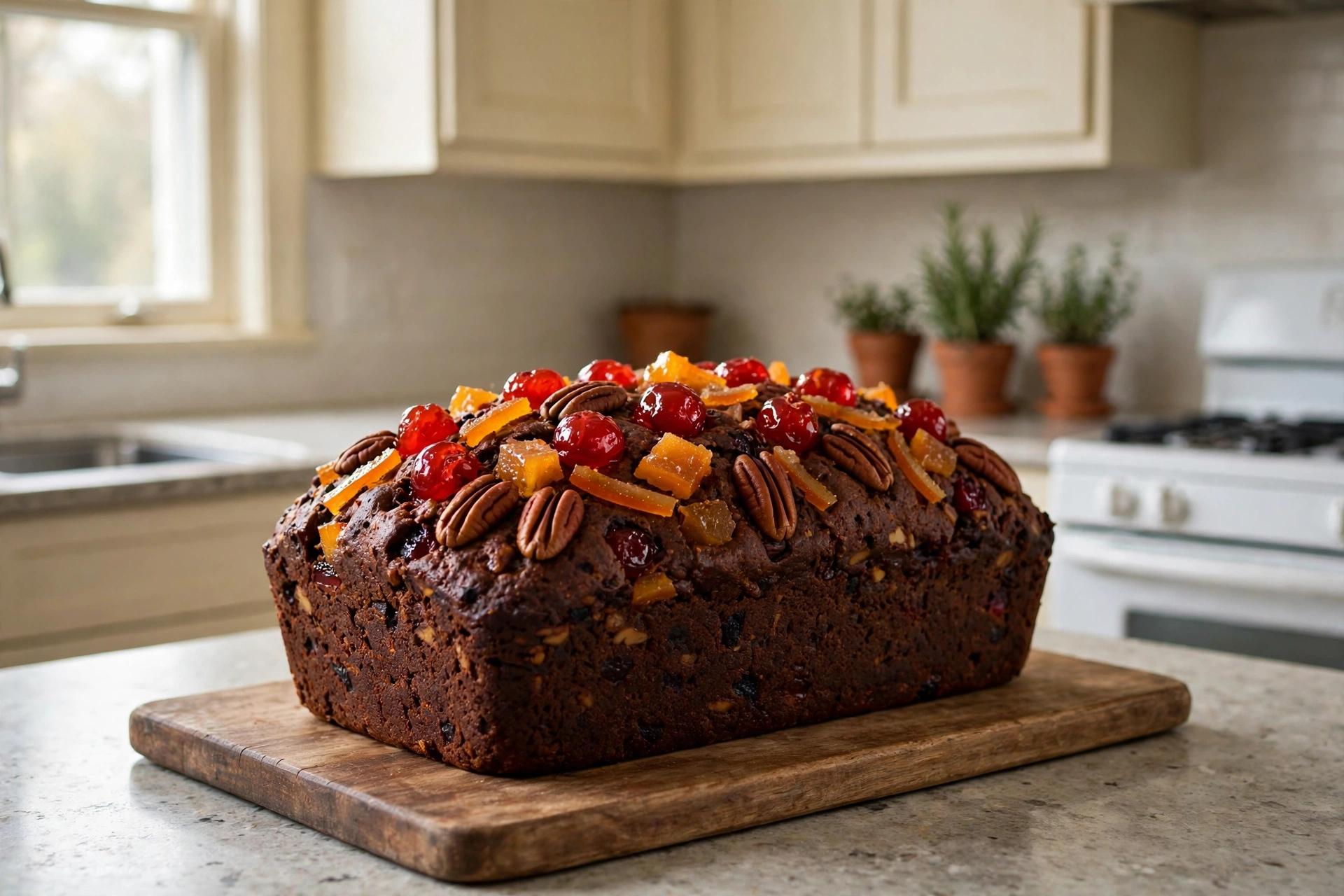
Christmas fruitcake has a reputation problem, and this loaf is the answer to it. Dark, moist, densely fruited and aged three weeks on nothing but orange juice, it slices into clean half inch pieces that taste like December itself: warm spice, candied citrus and butter, in that order.
The dry brick that gives fruitcake its bad name fails in predictable ways. The fruit goes in unsoaked and steals moisture from the crumb. The cake bakes too hot and dries at the edges. Then it is served the day it is made, before the flavors have had any chance to become one cake.
Here, every step runs the other way. The fruit drinks orange juice overnight. The batter is deliberately small, just enough to hold the fruit together. The loaf bakes low and slow, then rests in the refrigerator for three weeks of weekly brushing while the crumb turns supple and the spice blooms.
What Makes a Fruitcake Moist: Fruit First, Batter Second
A moist christmas fruitcake is a ratio before it is anything else. This loaf carries roughly four cups of fruit and nuts against one and a half cups of flour, which means the cake you taste is mostly fruit held together by a spiced, molasses dark batter. Cakes that taste dry and bready simply invert that ratio.
Moisture is the second lever, and it comes from the fruit, not from extra liquid in the batter. Fruit that has soaked overnight arrives in the oven already plump, so it keeps its juice instead of pulling water out of the crumb around it. Every bite stays tender because nothing in the slice is thirsty.
The third lever is the bake itself. A dense loaf at 300 degrees F cooks gently through the center before the edges can dry, and a shallow dish of hot water in the oven keeps the air humid around the pan. High heat is for rustic breads and sheet cakes. Fruitcake rewards patience.
The final lever is time, and it is the one home bakers skip. Fresh from the oven this loaf is good. Three weeks later it is a different and better cake, because the orange, spice and molasses have traded places until no single flavor shouts. Aging is not tradition for its own sake. It is the last ingredient.
The Overnight Orange Juice Soak, and Why Dried Fruit Needs It
Dried fruit is concentrated, which is its glory in January and its problem in a batter. Raisins, cranberries and apricots baked dry behave like little sponges with opinions: they pull moisture from the nearest crumb, swell unevenly, and leave the slice around them tight and dry. The soak pays that debt in advance.
Orange juice is the soaking liquid here, one full cup for the whole batch, and it earns the job three ways. Its acidity brightens fruit that can taste flat and sugary. Its flavor belongs in this cake. And it lets the loaf age for weeks with no other liquid involved, which keeps the flavor clean and family friendly.
Ten hours is the floor, not the ceiling. The fruit can sit in the refrigerator for a full day if your schedule demands it, and it improves for the wait. Stir the bowl once before bed so the pieces at the top get their turn at the bottom, where the juice pools.
Drain the fruit thoroughly before it meets the batter, pressing it lightly in a colander. Juice left clinging to the fruit loosens the batter and gives the pieces a slick surface to slide on in the oven. The soak is about plumping the fruit, not wetting the cake, and the drained liquid is discarded rather than added back.
Ingredients for the Soak, the Batter and the Weekly Brushing
- 1 cup golden raisins
- 1 cup dark raisins
- 3/4 cup dried cranberries
- 3/4 cup chopped dried apricots
- 1/2 cup candied cherries, halved
- 1/2 cup chopped candied orange peel
- 1 cup orange juice, plus 1/4 cup for brushing
- 1 tablespoon orange zest
- 1/2 cup unsalted butter, softened
- 3/4 cup packed dark brown sugar
- 2 large eggs, room temperature
- 1/4 cup molasses
- 1 teaspoon vanilla extract
- 1 1/2 cups all-purpose flour
- 1 teaspoon ground cinnamon
- 1/2 teaspoon ground nutmeg
- 1/4 teaspoon ground cloves
- 1/2 teaspoon baking powder
- 1/2 teaspoon fine sea salt
- 1 cup chopped pecans
- 2 tablespoons all-purpose flour, for dusting the fruit
Dark brown sugar and molasses together build the loaf’s deep color and its bass note of flavor. Light sugar makes a paler, sweeter, simpler cake. The spice blend stays warm rather than sharp: cinnamon in front, nutmeg behind it, and just a quarter teaspoon of cloves, which is plenty for a spice that takes over rooms.
The candied cherries and peel are the one festive non-negotiable. Halve the cherries so their color shows in every slice instead of hiding in a few. If your candied peel comes in large slabs, chop it small; big pieces of peel eat bitter in a way that small pieces, spread through the loaf, never do.
How to Bake the Loaf, Low and Slow
- The night before, combine the raisins, cranberries, apricots, cherries and candied peel in a large bowl. Pour the orange juice over, stir in the zest, cover and refrigerate at least 10 hours.
- Heat the oven to 300 degrees F. Line a 9 by 5 inch loaf pan with parchment, leaving an overhang on the long sides, and set a small oven safe dish of hot water on the lowest rack.
- Drain the fruit well in a colander and toss it with the 2 tablespoons of flour until every piece wears a light coat. Stir in the chopped pecans.
- Whisk the flour, cinnamon, nutmeg, cloves, baking powder and salt together in a medium bowl.
- Beat the butter and brown sugar until pale and fluffy, about 3 minutes. Beat in the eggs one at a time, then the molasses and vanilla, scraping the bowl once.
- Fold the dry ingredients into the butter mixture just until no flour streaks remain. The batter will be thick, closer to a soft dough than a cake batter, and that is correct.
- Fold in the floured fruit and pecans until the distribution looks even from every angle, then scrape the batter into the pan and smooth the top with a damp spatula.
- Bake for 1 hour and 15 minutes. Lay a sheet of parchment over the top of the loaf and bake 15 to 25 minutes more, until a tester inserted in the center comes out with moist crumbs and no wet batter.
- Cool in the pan for 20 minutes, then lift the loaf out using the parchment. Brush the warm top with 1 tablespoon of orange juice and let the loaf cool completely.
- Wrap the cooled loaf tightly in a fresh sheet of parchment, then in foil, and refrigerate to begin its three weeks of aging.
Sunken Fruit, Dry Crumb, Burnt Top: Fruitcake Fixes
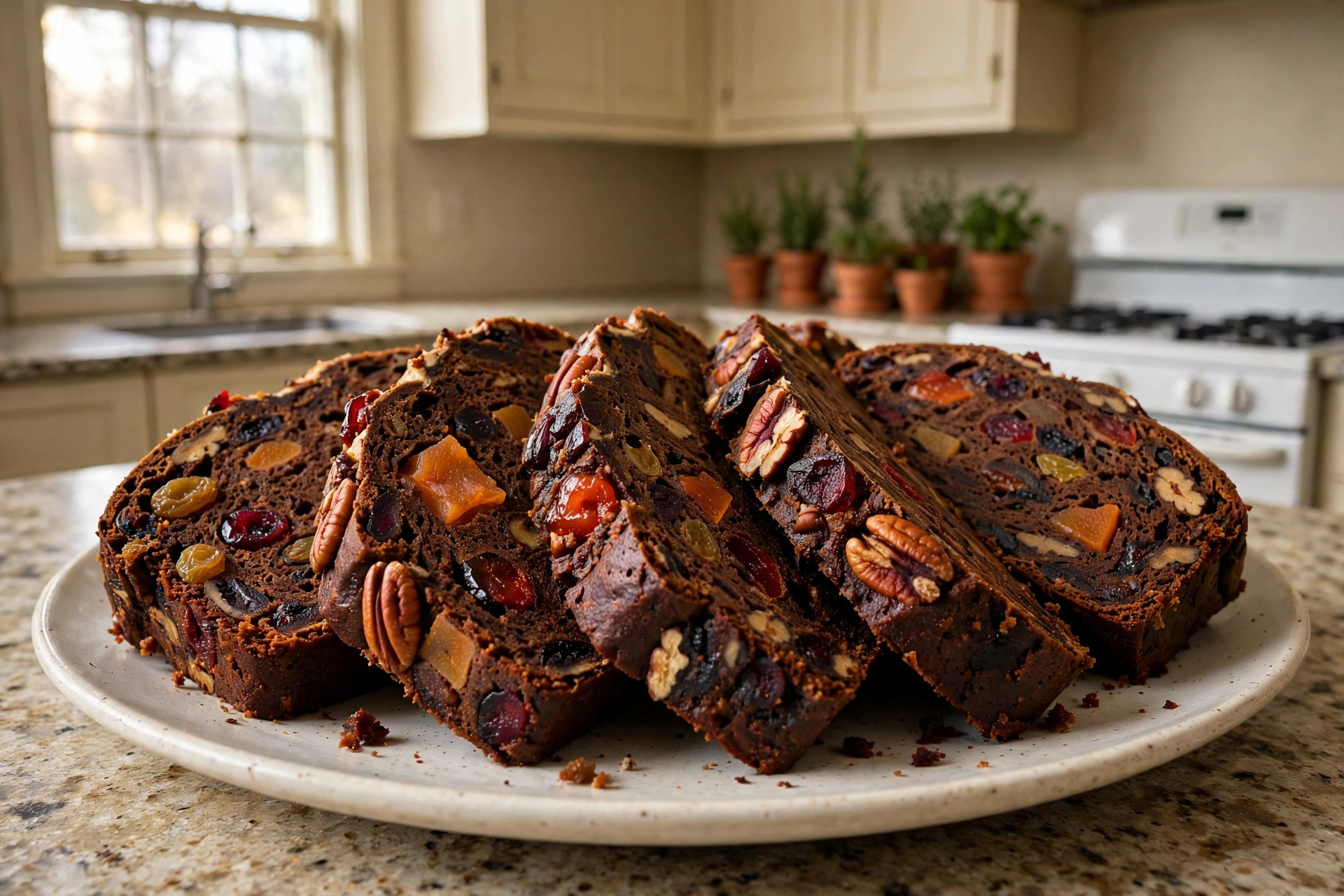
Fruit pooled at the bottom means the pieces slid during the bake, and two small changes stop it. First, the flour coat on the drained fruit is not garnish; it gives the batter something to grip. Second, keep the batter thick. A batter loosened by undrained soaking juice cannot hold four cups of fruit in suspension for ninety minutes.
A dry crumb in a fruitcake is rarely an oven problem alone. Check the soak first: fruit that soaked four hours instead of ten will borrow moisture from the crumb all through storage. Check the ratio second. An extra handful of flour added to make mixing easier is the quietest way to bake a dry loaf.
A top that darkens too fast is this cake’s most common scare, and the parchment shield at the seventy five minute mark is the standing answer. If the top is already dark before the shield goes on, your oven runs hot; bake the next loaf at 290 degrees F and add ten minutes. The center of a fruitcake finishes on patience, not heat.
Cracks across the top look alarming and matter not at all. This is a dense loaf with very little lift, and a shallow crack is simply where the little rise it has chose to exit. The loaf is sliced before serving, and nobody has ever sent back a slice over a crack.
The Aging Calendar: Three Weeks of Brushing, Week by Week
Aging is where this christmas fruitcake becomes itself, and it runs on a simple weekly rhythm. The wrapped loaf lives in the refrigerator. Once a week, unwrap it, brush the top and sides with one tablespoon of orange juice, let the surface drink it in for a minute, then wrap it again in fresh parchment and foil.
Week one is about moisture. The crumb is still settling, tight from the oven, and the first brushings disappear into it almost audibly. The flavor at this point is separate: spice here, fruit there. Slice a thin test piece if you must, but know that the cake is under construction.
Week two is where the flavors marry. The molasses moves into the fruit, the orange moves into the crumb, and the slice starts tasting like one thing instead of a list. The texture firms into that dense, clean cutting quality that lets you take slices down to a quarter inch for a cheese plate.
Week three is the peak this recipe is timed for. Bake the loaf in the first days of December and it reaches its best self right at Christmas, supple, dark and fragrant, ready to slice for the table or to wrap for giving, next to a batch of cranberry pistachio biscotti for the coffee that should always accompany it.
If your calendar runs longer, the loaf holds gracefully for a fourth and fifth week with the same weekly brushing. Past five weeks, freeze it instead, well wrapped, where it keeps its quality for three months.
Fruit and Nut Swaps That Keep the Ratio Intact
Swap freely inside the ratio and the loaf forgives you. Dried figs, chopped, replace apricots one for one. Dried cherries replace cranberries with a deeper, darker flavor. Dates bring extra sweetness, so if you use them for half the raisins, trim the brown sugar by two tablespoons to keep the balance.
Walnuts stand in for pecans at the same measure, and toasted hazelnuts make a more European loaf, closer in spirit to our christmas stollen. Keep the nut total at one cup. Nuts are structure in this cake as much as flavor, and doubling them makes the slice crumbly instead of clean.
For a brighter loaf, trade half the orange juice in the soak for cranberry juice and add an extra teaspoon of orange zest, a variation that leans toward our cranberry orange bundt cake. For a darker one, add a tablespoon of cocoa to the dry ingredients and nobody will call it anything but rich.
Storage, Shipping and the Freezer Rules
Wrapped in parchment and foil, the aging loaf keeps in the refrigerator for five weeks, well past the cooked goods guidance collected in the USDA FoodKeeper, because the dense, sugared, low moisture crumb is a naturally keeping cake. Once sliced, keep the cut face pressed with parchment so it does not dry.
Fruitcake ships better than any other Christmas bake. Wrap the aged loaf in parchment and foil, cushion it in a snug box so it cannot slide, and send it early in the week. It travels at room temperature for several days without complaint.
For the freezer, wrap the whole loaf or thick unsliced sections, two layers minimum, and freeze up to three months. Thaw overnight, still wrapped, in the refrigerator. Sliced pieces thaw in an hour on the counter and toast surprisingly well, which is how the last of the loaf usually disappears at our house, beside slices of gingerbread layer cake during the same afternoon.
Serve It Cold, Slice It Thin, Watch It Disappear
Serve this christmas fruitcake cold from the refrigerator, sliced a half inch thick with a long serrated knife and a gentle sawing motion. Cold slicing is not a preference, it is the technique: the firm loaf cuts clean, the fruit stays in its slices, and the crumb presents the mosaic that makes people reach for a second piece.
Set the plate out with coffee or strong tea and nothing else. The loaf has been preparing for this moment since the first week of December, one overnight soak, one slow afternoon in the oven, three patient weeks of brushing. It does not need a thing.
FAQ
How far ahead can I bake Christmas fruitcake?
Three weeks ahead is the sweet spot, and five weeks is the comfortable limit with weekly orange juice brushing in the refrigerator. Bake in the first days of December and the loaf peaks right at Christmas. For longer storage, freeze the wrapped loaf for up to three months.
Why did all the fruit sink to the bottom of my fruitcake?
The fruit needs its flour coat and the batter needs to stay thick. Toss the drained fruit in 2 tablespoons of flour so the batter can grip it, and drain the soaking juice thoroughly before mixing. A batter loosened by extra liquid cannot hold four cups of fruit up through a ninety minute bake.
Can I skip the aging and serve fruitcake the same week?
You can, and it will still be good, but it will taste like its separate parts: spice, then fruit, then cake. Even one week of wrapped refrigeration with a single orange juice brushing merges the flavors noticeably. If time is short, bake ahead by days at least, never hours.
How thin should I slice fruitcake, and should it be cold?
Slice it cold, straight from the refrigerator, at half an inch for dessert plates and a quarter inch for cheese boards. Use a long serrated knife with a gentle sawing motion. A cold, aged loaf cuts clean slices where a room temperature one crumbles and drags the fruit.
My fruitcake top browned too fast. What went wrong?
The top of a long baking loaf darkens before the dense center finishes. Lay a sheet of parchment over the loaf at the seventy five minute mark as written, and if it was already dark by then, your oven runs hot: bake the next loaf at 290 degrees F and add about ten minutes.
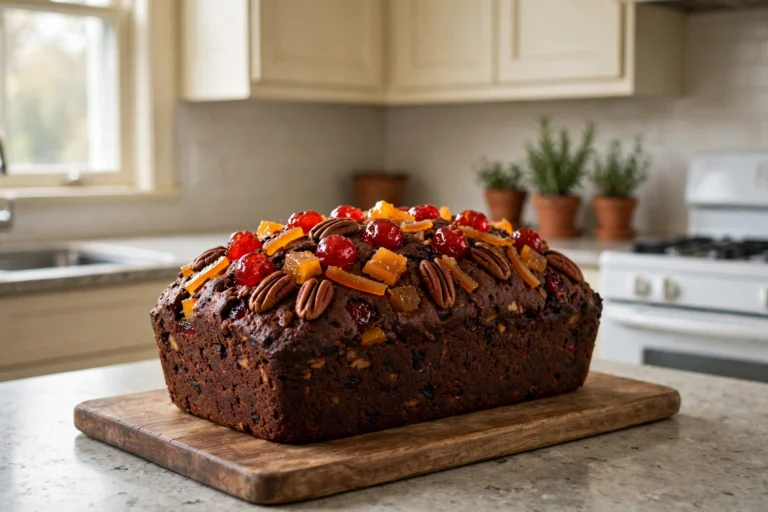
Christmas Fruitcake
A dark, moist Christmas fruitcake that never touches alcohol: the fruit soaks overnight in orange juice, bakes low and slow at 300 degrees F in a thick molasses batter, then ages wrapped in the refrigerator with a weekly brushing of orange juice. Peak flavor arrives at three weeks, and the loaf slices clean at half an inch. Bake it in early December and Christmas dessert is already done.
- Total Time: 14 hours
- Yield: One 9 by 5 inch loaf, 12 slices 1x
Ingredients
- 1 cup golden raisins
- 1 cup dark raisins
- 3/4 cup dried cranberries
- 3/4 cup chopped dried apricots
- 1/2 cup candied cherries, halved
- 1/2 cup chopped candied orange peel
- 1 cup orange juice, plus 1/4 cup for brushing
- 1 tablespoon orange zest
- 1/2 cup unsalted butter, softened
- 3/4 cup packed dark brown sugar
- 2 large eggs, room temperature
- 1/4 cup molasses
- 1 teaspoon vanilla extract
- 1 1/2 cups all-purpose flour
- 1 teaspoon ground cinnamon
- 1/2 teaspoon ground nutmeg
- 1/4 teaspoon ground cloves
- 1/2 teaspoon baking powder
- 1/2 teaspoon fine sea salt
- 1 cup chopped pecans
- 2 tablespoons all-purpose flour, for dusting the fruit
Instructions
- Combine the raisins, cranberries, apricots, cherries and candied peel in a large bowl. Pour the orange juice over, stir in the zest, cover and refrigerate overnight, at least 10 hours.
- Heat the oven to 300 degrees F. Line a 9 by 5 inch loaf pan with parchment, leaving an overhang on the long sides. Set a small oven safe dish of hot water on the lowest rack.
- Drain the fruit well and toss it with the 2 tablespoons of flour until every piece is lightly coated. Stir in the pecans.
- Whisk the flour, cinnamon, nutmeg, cloves, baking powder and salt in a medium bowl.
- Beat the butter and brown sugar until pale and fluffy, about 3 minutes. Beat in the eggs one at a time, then the molasses and vanilla.
- Fold the dry ingredients into the butter mixture just until no flour streaks remain. The batter will be thick.
- Fold in the floured fruit and pecans until evenly distributed, then scrape the batter into the pan and smooth the top.
- Bake for 1 hour and 15 minutes. Lay a sheet of parchment over the top and bake 15 to 25 minutes more, until a tester comes out with moist crumbs and no wet batter.
- Cool in the pan for 20 minutes, lift the loaf out with the parchment, and brush the warm top with 1 tablespoon of orange juice. Cool completely.
- Wrap the loaf tightly in parchment, then in foil, and refrigerate. Brush with 1 tablespoon of orange juice once a week while it ages, for up to three weeks.
Notes
Nutrition is an estimate based on the ingredients and cooking methods used.
- Prep Time: 30 minutes
- Cook Time: 1 hour 30 minutes
Nutrition
- Serving Size: one 1/2 inch slice
- Calories: 340
- Sugar: 42
- Sodium: 160
- Fat: 11
- Saturated Fat: 4
- Unsaturated Fat: 6
- Trans Fat: 0
- Carbohydrates: 58
- Fiber: 3
- Protein: 4
- Cholesterol: 45