Make-Ahead Mashed Potatoes, Fluffy and Buttery Two Days Early
In this article:
- Why These Make Ahead Mashed Potatoes Reheat Fluffy, Not Gluey
- Silky, Buttery and Built to Carry Gravy
- Yukon Gold Is the Potato That Survives the Refrigerator
- Ingredients for Make-Ahead Mashed Potatoes
- How to Make Make-Ahead Mashed Potatoes, Step by Step
- The Water Bath: The Gentlest Way to Reheat Mashed Potatoes
- The Thanksgiving Serving Timeline, Hour by Hour
- Too Firm, Too Loose, Too Grainy: Fixes After a Night in the Cold
- Storage, Freezing in Portions and the Two Hour Rule
- One Dish Already Done When the Day Gets Loud
- FAQ
Why These Make Ahead Mashed Potatoes Reheat Fluffy, Not Gluey
Make ahead mashed potatoes succeed or fail on one thing: what the cold does to potato starch overnight. When a mash chills, its starch firms up and drinks in the liquid around it, which is why so many holiday potatoes come back from the oven stiff, grainy or strangely sweet. This recipe is built to absorb that change instead of suffering it.
The first defense is fat, and plenty of it, folded in while the potatoes are still steaming. Butter and cream cheese coat the starch granules before they ever see the refrigerator. That coating keeps the texture supple through chilling, so the mash reheats creamy instead of pasty.
The second defense is restraint with the masher. These potatoes are mashed hot, by hand, and only until they turn smooth. Every extra pass ruptures more starch cells, and ruptured starch is exactly what turns gluey after a night in the cold.
The third defense is a small reserve of warm milk, held back on purpose. A chilled mash always needs loosening, and having the exact amount ready, warm and measured, means the fix takes one minute and never turns into a soupy guess at the stove.
Silky, Buttery and Built to Carry Gravy
A Thanksgiving mash has a specific job: be the soft, rich landing place for everything else on the plate. It should taste deeply of potato first, then butter, with enough salt to stand up to gravy without a fight. This version is seasoned for that table, not for eating plain in a quiet kitchen.
Yukon Gold potatoes bring their own buttery flavor, so the mash tastes complete before the butter even goes in. Their thin skins and golden flesh also mash into a naturally smooth puree with a color that looks like you added more cream than you did.
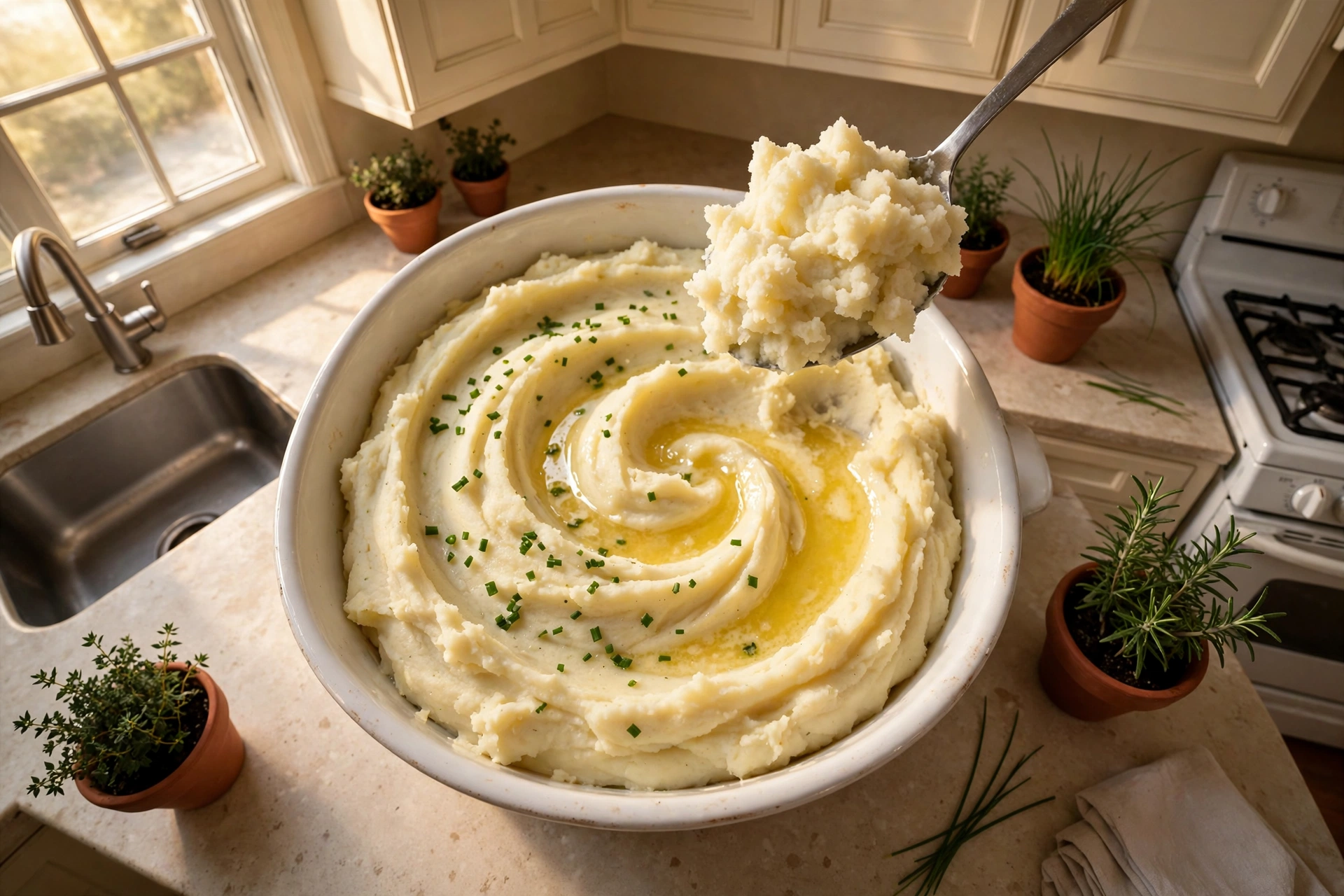
Cream cheese is the quiet insurance ingredient. You will not taste it as cheese; what you notice is a gentle tang at the back and a body that holds a swirl. It also keeps the surface of the reheated dish glossy instead of matte and tired.
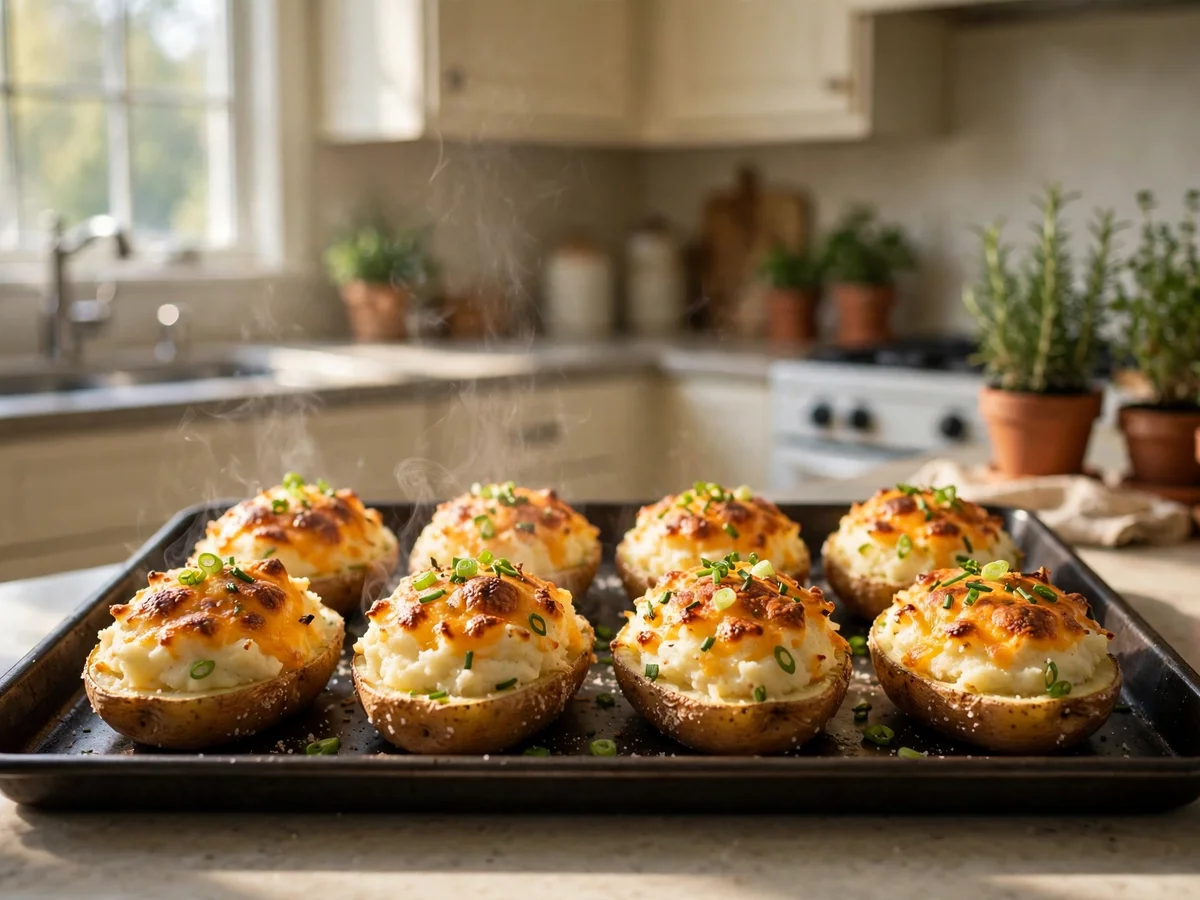
The finish is deliberately simple: a shallow pool of melted butter in the swirl and a scatter of chives. On a table crowded with sage, thyme and roasted everything, that clean green note is the one fresh flavor the plate is missing.
Yukon Gold Is the Potato That Survives the Refrigerator
Not every potato reheats well, and the difference is starch. Russets are high in starch and wonderfully fluffy on day one, but that same starch turns gummy and grainy after chilling, because the granules swell, burst and then set hard in the cold.
Yukon Golds sit in the middle: enough starch to mash smooth, enough natural moisture to stay silky. Their cells hold together through a night in the refrigerator and relax again with gentle heat, which is exactly the round trip a make-ahead recipe demands.
Waxy red potatoes go the other way. They resist mashing, stay in stubborn little pieces, and give a gluey, dense result when worked hard enough to smooth out. Save them for roasting and salads, where that firmness is a virtue.
Whichever potato you use, cut the pieces the same size, about one and a half inches, and start them in cold salted water. Even sizes mean even cooking, and even cooking means no hard cores hiding inside a smooth looking mash.
Ingredients for Make-Ahead Mashed Potatoes
- 5 pounds Yukon Gold potatoes, peeled and cut into 1 1/2 inch chunks
- 1 tablespoon fine sea salt, for the cooking water, plus 2 teaspoons for seasoning
- 8 tablespoons unsalted butter, at room temperature, plus 2 tablespoons melted for the top
- 8 ounces cream cheese, at room temperature and cut into cubes
- 1 cup whole milk, warmed, plus up to 1/2 cup more held back for reheating
- 1/2 teaspoon freshly ground black pepper
- 2 tablespoons finely snipped chives, for serving
How to Make Make-Ahead Mashed Potatoes, Step by Step
- Put the potato chunks in a large pot and cover with cold water by 1 inch. Add the tablespoon of salt and bring to a boil over high heat, then lower to a steady simmer.
- Cook for 15 to 20 minutes, until a knife slides into the largest chunk with no resistance at all. Undercooked centers are the first cause of lumpy mash, so give them the full time.
- Drain the potatoes well and return them to the hot pot. Set the pot back over low heat for 1 minute, shaking it once or twice, until the surface of the potatoes looks dry and matte. This steam off step keeps the mash from turning watery.
- Take the pot off the heat. Add the room temperature butter and cream cheese and let them melt into the hot potatoes for 1 full minute before touching anything.
- Mash by hand with a potato masher or pass the potatoes through a ricer, working just until smooth. Never use a food processor, a blender or an electric mixer; fast blades rupture the starch and the mash turns to glue.
- Pour in the warmed milk a third at a time, folding gently after each addition. Season with the remaining 2 teaspoons of salt and the pepper, and taste: the mash should be well seasoned now, because chilling dulls salt slightly.
- Spread the mash into a buttered 9 by 13 inch baking dish and smooth the top. Drizzle the 2 tablespoons of melted butter over the surface; this thin layer keeps a skin from forming in the cold. Cool at room temperature for no more than 30 minutes, cover tightly and refrigerate for up to 2 days.
- On serving day, take the dish out of the refrigerator 30 to 45 minutes before reheating, especially if it is glass or ceramic, and heat the oven to 325 degrees F.
- Bake covered for 35 to 40 minutes, until the center reaches 165 degrees F and the edges bubble gently. Fold in warm milk by the quarter cup, up to 1/2 cup, until the mash is soft and swirly again. Spoon into a warm serving bowl, swirl the top, add a knob of butter and the chives, and serve.

The Water Bath: The Gentlest Way to Reheat Mashed Potatoes
The oven method in the recipe works well, but the water bath is the method I trust most, and it is strangely absent from most holiday advice. Spoon the chilled mash into a heatproof bowl, set the bowl over a pot of barely simmering water, and stir every few minutes. The heat arrives slowly and evenly, with no hot spots, no dried edges and no risk of scorching.
A water bath takes about 20 to 25 minutes for a full recipe, and it asks almost nothing of you beyond an occasional stir. The mash comes back glossy and loose, and because the pot of water keeps it at a gentle hold, it can wait there, covered, while the classic roast turkey rests and the gravy gets its final whisk.
The slow cooker is the third option, best when the potatoes need to hold for a crowd. Add the chilled mash with a quarter cup of warm milk, cook on low for 3 to 4 hours with one or two stirs, then keep on warm for up to 2 hours. It is the only method that doubles as a serving station.
The microwave earns a place only for small leftovers: half power, one minute bursts, a splash of milk, a stir between each round. For a full holiday dish, its uneven heat creates the very graininess this recipe works to avoid.
The Thanksgiving Serving Timeline, Hour by Hour
Here is the schedule that makes the day feel calm. On Tuesday, or Wednesday at the latest, cook and assemble the mash exactly as written, and refrigerate it in its baking dish. That is the whole job done while the kitchen is still quiet and the counters are still clean.
On Thursday, plan backwards from the table. When the turkey comes out of the oven to rest, take the dish of potatoes out of the refrigerator; it needs 30 to 45 minutes to lose its deep chill. As the turkey rests under its foil, the potatoes go into the 325 degree oven.
Thirty five minutes later, while someone makes the turkey gravy from drippings, you fold warm milk into the hot mash, swirl it into its bowl and set it down. The potatoes hold their heat well under a clean towel for the few minutes the table needs to gather.
Quantities calm people down too. Half a pound of raw potatoes per guest is the right planning number when the table also carries creamed corn, stuffing and three other sides. This recipe, from 5 pounds, serves 12 generously at that measure, with the cook’s spoonful already accounted for.
Too Firm, Too Loose, Too Grainy: Fixes After a Night in the Cold
Too firm is the normal state of a chilled mash, not a failure. The starch has set and the fat has firmed, so the dish will look stiff in the refrigerator. Warm milk, added a quarter cup at a time to the hot potatoes, is the whole correction; stop the moment the mash holds a soft swirl again.
Too loose almost always traces back to the steam off step being skipped, so the potatoes carried their cooking water into the mash. The fix is patience at gentle heat: stir the hot mash over the water bath a few extra minutes and let the excess moisture evaporate rather than adding anything.
Graininess after reheating means the potatoes were worked too hard while cold, or reheated too hot and too fast. You cannot fully undo ruptured starch, but you can improve the bowl in front of you: fold in a spoonful of sour cream or extra cream cheese off the heat, which smooths the mouthfeel noticeably.
If the mash tastes flat on the day, resist adding cold salt at the table. Dissolve a pinch of salt in the warm milk as you loosen the potatoes, so the seasoning disperses evenly, then finish with the butter pool, which carries flavor better than any last minute sprinkle.
Storage, Freezing in Portions and the Two Hour Rule
Assembled and covered, the uncooked mash keeps in the refrigerator for up to 2 days; I do not push it further, because the texture is best inside that window. Leftovers after the meal keep for 3 to 4 days refrigerated, reheated by the same gentle methods with a splash of milk.
Freezing works better in portions than as one big dish. Spoon the cooled mash into freezer bags in 2 cup portions, press them flat, and freeze for up to 1 month. Flat bags thaw overnight in the refrigerator, stack without eating the freezer, and reheat in the water bath without any of the icy center problems a solid block gives you.
For storage times on holiday food generally, I follow the USDA cold storage chart, which gives the plain, reliable word on how long cooked dishes keep safely in the refrigerator.
One rule matters most on the day itself: a dish of mashed potatoes can sit out for 2 hours, and no longer, before it needs the refrigerator. Set the bowl down when the meal starts, and when the meal ends, the leftovers go straight into shallow containers and into the cold.
One Dish Already Done When the Day Gets Loud
Thanksgiving cooking fails at the level of the clock, not the recipe. The oven is promised to three dishes at once, the burners are all spoken for, and someone is always carving in the space where you need to stand. A finished dish waiting in the refrigerator is not a shortcut; it is logistics, and it is what calm hosts actually do.
These make ahead mashed potatoes sit happily beside the rest of the Cookaza Thanksgiving table: the turkey, the gravy, the green bean casserole and our cranberry sauce, which is the other great make-ahead of the season. Two dishes done early, and the day already feels half its size.
Make them once, with the hot mash, the gentle hands and the warm milk in reserve, and the last minute pot of boiling potatoes will never bully your Thanksgiving again. The quietest dish on the table turns out to be the one everybody asks about.
FAQ
How many potatoes do I need per person for Thanksgiving mashed potatoes?
Plan on 1/2 pound of raw potatoes per guest when the table carries several other sides, which is about 1 cup of finished mash each. This recipe uses 5 pounds and serves 12 at that measure. For a smaller table with fewer sides, scale up to 3/4 pound per person.
Can I reheat mashed potatoes in a water bath without drying them out?
Yes, and it is the gentlest method there is. Set the bowl of chilled mash over barely simmering water, cover it, and stir every few minutes for 20 to 25 minutes. The indirect heat cannot scorch or dry the edges, and the mash comes back glossy, especially with a splash of warm milk folded in at the end.
Why did my make ahead mashed potatoes turn firm and stiff overnight?
That stiffness is normal and expected. Potato starch firms as it chills and the butter sets, so the dish always looks rigid in the refrigerator. Reheat it fully, then fold in warm milk a quarter cup at a time, up to 1/2 cup, and it softens back into a swirly mash.
Can I freeze make ahead mashed potatoes in portions?
Yes. Spoon the cooled mash into freezer bags in 2 cup portions, press the bags flat and freeze for up to 1 month. Thaw a bag overnight in the refrigerator, then reheat it in the water bath or the oven with a little warm milk to restore the texture.
How long can mashed potatoes sit out during Thanksgiving dinner?
Two hours is the safe limit for a cooked dish at room temperature. Serve the potatoes when the meal starts, and once dinner is over, move the leftovers into shallow containers and refrigerate them right away rather than leaving the bowl on the counter.

Make-Ahead Mashed Potatoes
Yukon Gold potatoes mashed hot with butter, cream cheese and warm milk, spread into a baking dish under a thin layer of melted butter, then chilled for up to 2 days. On serving day they bake back to a fluffy, swirly mash while the turkey rests, with warm milk in reserve to restore the texture.
- Total Time: 1 hour 25 minutes
- Yield: About 10 cups 1x
Ingredients
- 5 pounds Yukon Gold potatoes, peeled and cut into 1 1/2 inch chunks
- 1 tablespoon fine sea salt, for the cooking water, plus 2 teaspoons for seasoning
- 8 tablespoons unsalted butter, at room temperature, plus 2 tablespoons melted for the top
- 8 ounces cream cheese, at room temperature and cut into cubes
- 1 cup whole milk, warmed, plus up to 1/2 cup more held back for reheating
- 1/2 teaspoon freshly ground black pepper
- 2 tablespoons finely snipped chives, for serving
Instructions
- Put the potato chunks in a large pot and cover with cold water by 1 inch. Add the tablespoon of salt and bring to a boil over high heat, then lower to a steady simmer.
- Cook for 15 to 20 minutes, until a knife slides into the largest chunk with no resistance at all. Undercooked centers are the first cause of lumpy mash, so give them the full time.
- Drain the potatoes well and return them to the hot pot. Set the pot back over low heat for 1 minute, shaking it once or twice, until the surface of the potatoes looks dry and matte. This steam off step keeps the mash from turning watery.
- Take the pot off the heat. Add the room temperature butter and cream cheese and let them melt into the hot potatoes for 1 full minute before touching anything.
- Mash by hand with a potato masher or pass the potatoes through a ricer, working just until smooth. Never use a food processor, a blender or an electric mixer; fast blades rupture the starch and the mash turns to glue.
- Pour in the warmed milk a third at a time, folding gently after each addition. Season with the remaining 2 teaspoons of salt and the pepper, and taste: the mash should be well seasoned now, because chilling dulls salt slightly.
- Spread the mash into a buttered 9 by 13 inch baking dish and smooth the top. Drizzle the 2 tablespoons of melted butter over the surface; this thin layer keeps a skin from forming in the cold. Cool at room temperature for no more than 30 minutes, cover tightly and refrigerate for up to 2 days.
- On serving day, take the dish out of the refrigerator 30 to 45 minutes before reheating, especially if it is glass or ceramic, and heat the oven to 325 degrees F.
- Bake covered for 35 to 40 minutes, until the center reaches 165 degrees F and the edges bubble gently. Fold in warm milk by the quarter cup, up to 1/2 cup, until the mash is soft and swirly again. Spoon into a warm serving bowl, swirl the top, add a knob of butter and the chives, and serve.
Notes
Nutrition is an estimate based on the ingredients and cooking methods used.
- Prep Time: 20 minutes
- Cook Time: 25 minutes
Nutrition
- Serving Size: 1 cup
- Calories: 285
- Sugar: 3
- Sodium: 480
- Fat: 15
- Saturated Fat: 9
- Unsaturated Fat: 5
- Trans Fat: 0
- Carbohydrates: 33
- Fiber: 3
- Protein: 5
- Cholesterol: 45