Twice Baked Potatoes, Crisp Salted Skins and a Cheddar Cloud Inside
In this article:
- Why These Twice Baked Potatoes Keep Their Crisp Skins
- Crisp Skin, Fluffy Center, a Golden Cheddar Top
- Built for the Thanksgiving Oven Schedule
- The Russet Rules: Size, Skin and Starch
- Ingredients for Twice Baked Potatoes
- How to Make Twice Baked Potatoes, Step by Step
- Mistakes That Make the Filling Gluey
- Four Fillings From the Same Shells
- Assemble Wednesday, Bake Thursday: Make Ahead and Storage
- The Side Dish That Eats Like a Main
- FAQ
Why These Twice Baked Potatoes Keep Their Crisp Skins
Twice baked potatoes live or die on contrast, and most versions lose it before the second bake even starts. The skin comes out of the first bake crisp, then gets covered, steamed or rushed, and arrives at the table soft. The filling, meanwhile, gets beaten smooth and turns dense. Two textures, both gone.
My method protects the skin at every step. The potatoes bake directly on the oven rack so hot air reaches every side, rubbed with oil and salt that season the shell you will actually eat. Nothing ever covers them, not in the first bake and not in the second, because trapped steam is the one enemy a crisp skin cannot survive.
The filling gets the opposite treatment: gentle, warm and brief. The scooped flesh is mashed while it is still steaming, the milk goes in warm, and everything is folded together with a spatula instead of whipped. Beating cooked potato breaks its starch into paste, and no amount of cheese can rescue a gluey filling.
One temperature runs the whole recipe, 400°F from start to finish. There is no guessing between the settings other recipes scatter across their steps. The first hour bakes the potatoes through and crisps the skins; twenty minutes at the same heat brings the assembled halves back to steaming, golden life.
The result is a potato that eats like a composed dish instead of a side note. You cut through a salty, shattering shell into a filling that stays light and separate, almost like a cloud of mashed potato held in an edible bowl. That contrast is the entire point of baking a potato twice.
Crisp Skin, Fluffy Center, a Golden Cheddar Top
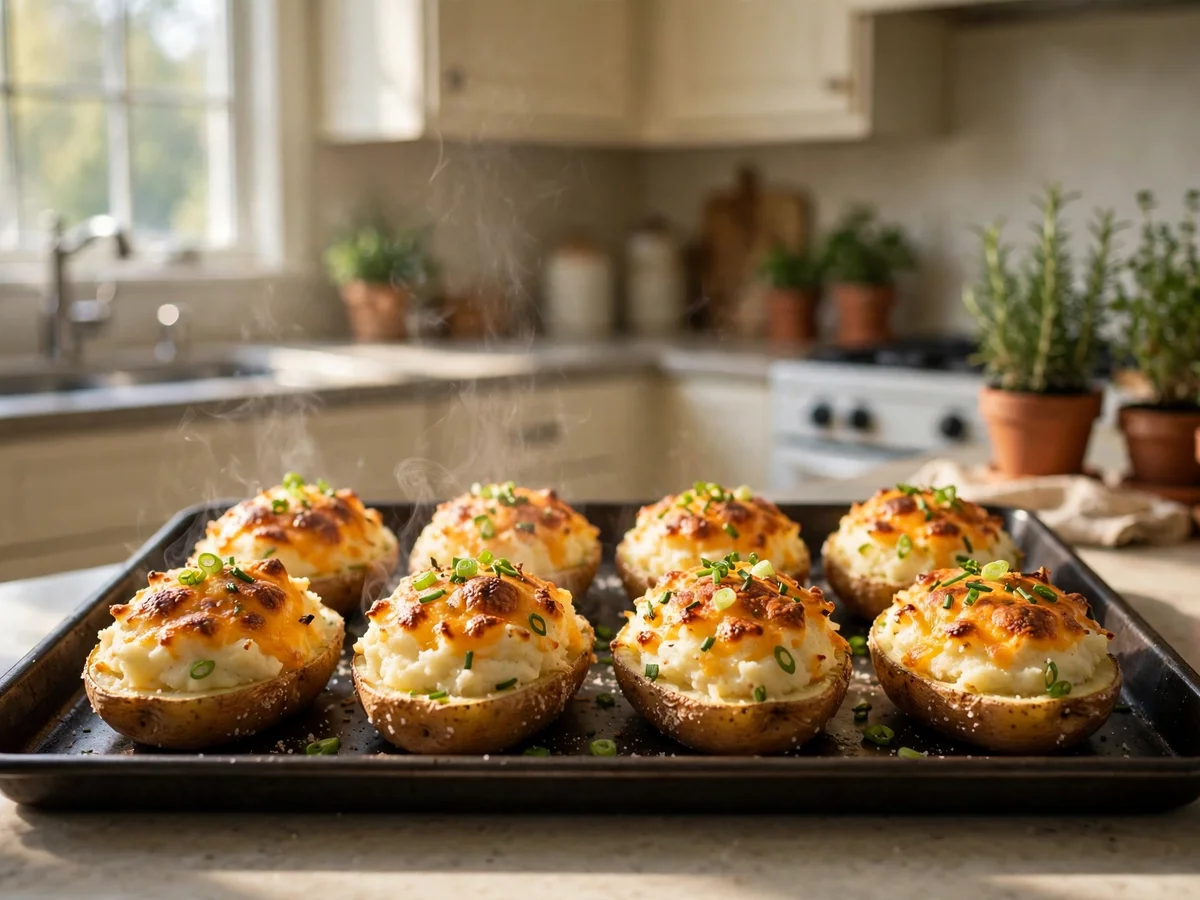
The first bite is about sound as much as taste. A well salted russet skin, baked uncovered on the rack, turns thin and crisp like the edge of a roast potato. It crackles against the knife, and that crackle is what tells everyone at the table this was done properly.
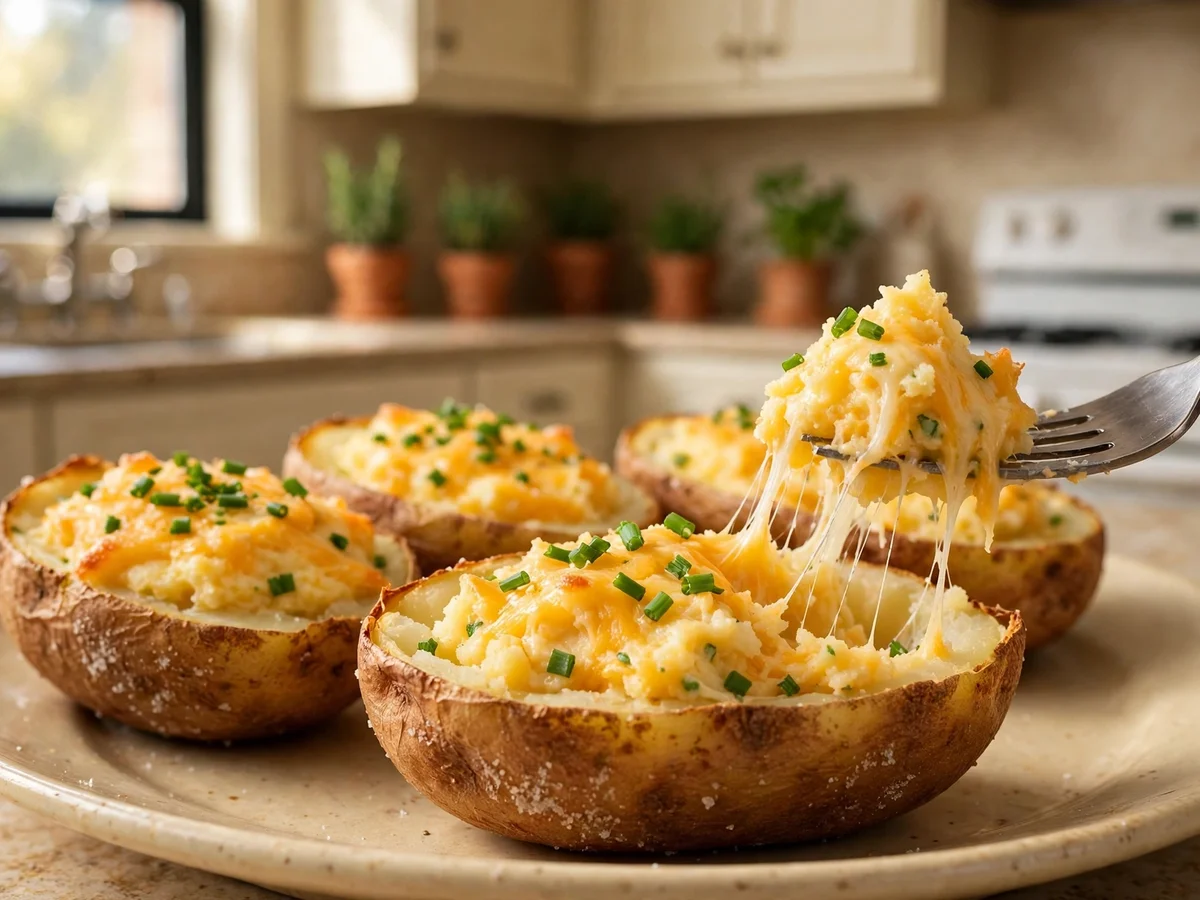
Inside, the filling stays pale, soft and steamy, carrying the butter first and the sour cream tang right behind it. Warm milk keeps it loose rather than stiff, so it settles into the shell in folds instead of standing in a dry mound. A spoon should sink through it with almost no resistance.
Sharp cheddar does the heavy lifting in the flavor. It melts through the hot flesh in streaks, then the second handful on top turns deep golden and lacy at the edges. Choosing a genuinely sharp cheese matters here, because a mild one disappears into all that potato and butter.
Smoked paprika is the quiet seasoning that pulls everything together. It gives the filling a gentle, fireside depth and a rusty color that looks beautiful against the green onions. Garlic powder supports it from underneath, present in every bite but never sharp or raw.
The finish is freshness, added after the oven has done its work. Chives and green onions go on at the very end so they stay bright and crisp against the rich filling. Hot shell, cool green, soft center: each bite resets itself as you eat.
Built for the Thanksgiving Oven Schedule
Oven space is the scarcest resource on Thanksgiving, and twice baked potatoes are unusually polite guests. Nearly all of their cooking can happen a day or two before, leaving only a twenty minute warm through for the day itself. Few side dishes offer this much presence for this little day of effort.
Here is the schedule I use. On Wednesday, bake the potatoes, scoop them, fill the shells and lay them on their serving pan. Cover the pan and refrigerate it. On Thursday, the filled potatoes go into the 400°F oven while the turkey rests and the gravy comes together, right alongside dishes like our classic roast turkey resting under its foil.
Because each potato is already portioned, serving is effortless. There is no carving, no scooping from a casserole, no last minute mashing while everything else goes cold. The pan goes straight from oven to table, and every guest gets a complete, composed portion.
The recipe scales without drama, too. Four large russets give eight halves, one per guest as a generous side. For sixteen people, double everything and use two sheet pans, rotating them once during the second bake so both pans color evenly.
The Russet Rules: Size, Skin and Starch
Russets are not a preference in this recipe, they are the structure. Their thick skins bake into sturdy shells that hold a generous mound of filling without tearing, and their dry, starchy flesh mashes into the fluffiest filling. Waxy potatoes make shells that slump and a filling that turns dense.
Size matters more than most recipes admit. Look for potatoes in the 10 to 12 ounce range, large enough to halve into a real portion but not so huge that the center stays raw while the skin overcooks. Potatoes of similar size finish together, which keeps the whole batch on one schedule.
Dry the skins properly before they meet the oil. After scrubbing, pat each potato completely dry with a towel, because water left on the skin steams in the oven and works against the crisp finish you are building. The salt rub does double duty here, seasoning the skin and drawing out the last surface moisture.
Finally, respect the rim when you scoop. Leaving about a quarter inch of flesh inside the shell is what keeps it standing tall through filling, chilling and a second bake. A shell scraped too thin tears at the table, and the whole effect collapses with it.
Ingredients for Twice Baked Potatoes
- 4 large russet potatoes, about 10 to 12 ounces each
- 2 tablespoons olive oil
- 1 1/2 teaspoons kosher salt, divided
- 4 tablespoons unsalted butter, cut into pieces
- 1/2 cup sour cream, at room temperature
- 1/3 cup whole milk, warmed
- 1 1/2 cups shredded sharp cheddar cheese, divided
- 1/2 teaspoon smoked paprika, plus more to finish
- 1/2 teaspoon garlic powder
- 1/4 teaspoon black pepper
- 3 green onions, thinly sliced, divided
- 1 tablespoon chopped fresh chives, to finish
How to Make Twice Baked Potatoes, Step by Step
- Heat the oven to 400°F. Scrub the potatoes and dry them very well. Prick each one 8 times with a fork, then rub all over with the olive oil and 1 teaspoon of the salt.
- Set the potatoes directly on the middle oven rack with a sheet pan on the rack below to catch drips. Bake for 55 to 65 minutes, until a knife slides into the center with no resistance and the skins feel crisp and papery.
- Rest the potatoes for 10 minutes, until cool enough to handle. Halve each one lengthwise. Scoop the flesh into a large bowl, leaving a rim of about 1/4 inch inside each shell so it stays sturdy.
- Return the empty shells to the oven for 5 minutes to firm up and crisp at the edges while you make the filling.
- Add the butter to the hot potato flesh and mash with a potato masher until the butter melts. Pour in the warm milk, then fold in the sour cream, 1 cup of the cheddar, the smoked paprika, garlic powder, remaining 1/2 teaspoon salt, black pepper and most of the green onions. Fold gently with a spatula until just combined. Do not whip or beat, that is what makes the filling gluey.
- Spoon the filling back into the shells, mounding it high. Top with the remaining 1/2 cup of cheddar and a light dusting of smoked paprika.
- Bake for 18 to 20 minutes, uncovered, until the filling is steaming hot, the cheese has melted and the edges of the filling are lightly golden.
- Rest for 5 minutes. Finish with the chives and the last of the green onions and serve hot.
Mistakes That Make the Filling Gluey
The most common failure is also the easiest to avoid: overworking the mash. An electric mixer or food processor tears the starch cells of cooked potato apart, and the filling sets into something closer to wallpaper paste than mashed potato. A hand masher and a spatula, used briefly, keep the texture light and separate.
Cold dairy is the second culprit. Milk and sour cream straight from the refrigerator cool the flesh down, and cool potato flesh resists absorbing fat, so the butter pools instead of blending. Warm the milk, let the sour cream sit out while the potatoes bake, and everything folds together in seconds.
Timing the mash matters too. Mash the flesh while it is still steaming hot, within minutes of scooping. As potato cools, its starch firms and turns stubborn, and the cook ends up working it harder and longer to get it smooth, which manufactures the very glue they were trying to avoid.
Watch the second bake with fresh eyes. The potatoes are done when the cheese is fully melted, the filling steams when cut, and the edges of the mash have taken on a light golden color. If the tops brown too fast in your oven, move the pan down a rack rather than covering it, because covering traps the steam that softens the skins.
Last, season in layers and taste before the shells are filled. Salt on the skins, salt in the filling, and a final taste of the mash itself. Once the filling is mounded and topped, adjusting is awkward, so the moment to fix the seasoning is in the bowl.
Four Fillings From the Same Shells
The shells are a platform, and the filling welcomes changes as long as the texture stays fluffy. For a garlic lover’s version, roast a head of garlic alongside the potatoes and squeeze the soft cloves into the mash with the butter. The flavor turns sweet and deep without any raw bite.
Broccoli cheddar is the family favorite variation. Fold in a cup of very finely chopped, well steamed broccoli with the cheddar, squeezing the broccoli dry first so it does not water down the filling. It eats like the beloved soup, in potato form, and it is a natural partner for our cheesy scalloped potatoes on the same table.
For a lighter filling, swap half the sour cream for plain Greek yogurt and use a reduced fat sharp cheddar. The tang stays, the richness softens, and the method does not change at all. If mashed potatoes are more your family’s language, our creamy garlic parmesan mashed potatoes cover that ground beautifully.
A ranch style filling works for casual dinners: replace the smoked paprika and garlic powder with a teaspoon each of dried dill, onion powder and dried parsley, and finish with extra chives. The shells stay the same, the personality of the dish changes completely.
Assemble Wednesday, Bake Thursday: Make Ahead and Storage
Assembled potatoes keep in the refrigerator for up to 2 days before the second bake, which is exactly how I handle them for Thanksgiving. Fill the shells, arrange them on the pan, cover tightly and chill. Add about 5 extra minutes to the second bake when they go in cold from the refrigerator.
They also freeze remarkably well. Freeze the filled, unbaked potatoes on the pan until solid, then wrap each half and store for up to 2 months. Bake from frozen at 350°F for 45 to 55 minutes, still uncovered, until the center is steaming hot all the way through.
Leftovers keep for 3 to 4 days in the refrigerator in a covered container, following the USDA cold storage chart for cooked vegetables and leftovers. Reheat them on a sheet pan at 375°F for 12 to 15 minutes, which brings the skins back to crispness. The microwave reheats them, but the skins go soft, so the oven earns its keep here too.
The Side Dish That Eats Like a Main
On a table full of casseroles and carved meat, twice baked potatoes hold a special position: they look plated, portioned and deliberate. A basket of warm honey butter dinner rolls on one side and a pan of these golden halves on the other, and the table already looks like a feast before the turkey lands. Add a bubbling dish of baked mac and cheese to that spread and nobody waits for an invitation to sit down.
Make them once with the rack bake, the warm milk and the gentle fold, and the difference explains itself at the first crisp bite. This is the version that turned a humble baked potato into the dish my guests ask about after the meal is over.
FAQ
Why did my twice baked potato filling turn out gluey?
Gluey filling comes from overworking hot potato. Electric mixers and food processors burst the starch cells and turn the mash into paste, and cold milk makes it worse by forcing longer mixing. Mash by hand while the flesh is steaming, add warm milk, and fold the rest in with a spatula just until combined.
Can I start the potatoes in the microwave to save time?
You can, and the filling will be fine, but the skins will never turn truly crisp, and crisp salted skin is half the point of this recipe. If time is tight, bake the potatoes fully the day before instead, then scoop, fill and chill them. The second bake on the day is only 20 minutes.
How do I bake assembled twice baked potatoes straight from the freezer?
Bake them from frozen, uncovered, at 350°F for 45 to 55 minutes, until a knife pushed into the center comes out steaming hot. There is no need to thaw first. If you prefer to thaw them overnight in the refrigerator, bake at 400°F for about 20 minutes instead.
What can I use if I cannot find large russet potatoes?
Choose the largest floury baking potatoes available, whatever they are called in your store. Starchy, thick skinned potatoes are the requirement, because they mash fluffy and hold their shells. Avoid waxy red potatoes and thin skinned varieties, which make dense filling and shells that tear.
Can I make the filling without sour cream?
Yes. Plain Greek yogurt is the closest swap, with the same tang and body, and it folds in exactly the same way. Or replace the sour cream with 2 ounces of softened cream cheese plus an extra splash of warm milk for a richer, milder filling.

Twice Baked Potatoes
Russet shells baked until the salted skins turn crisp, filled with a fluffy cheddar and sour cream mash that is folded, never whipped, and baked again at the same high heat until golden. All the loaded flavor, built for the Thanksgiving table and made to be assembled ahead.
- Total Time: 1 hour 45 minutes
- Yield: 8 potato halves 1x
Ingredients
- 4 large russet potatoes, about 10 to 12 ounces each
- 2 tablespoons olive oil
- 1 1/2 teaspoons kosher salt, divided
- 4 tablespoons unsalted butter, cut into pieces
- 1/2 cup sour cream, at room temperature
- 1/3 cup whole milk, warmed
- 1 1/2 cups shredded sharp cheddar cheese, divided
- 1/2 teaspoon smoked paprika, plus more to finish
- 1/2 teaspoon garlic powder
- 1/4 teaspoon black pepper
- 3 green onions, thinly sliced, divided
- 1 tablespoon chopped fresh chives, to finish
Instructions
- Heat the oven to 400°F. Scrub the potatoes and dry them very well. Prick each one 8 times with a fork, then rub all over with the olive oil and 1 teaspoon of the salt.
- Set the potatoes directly on the middle oven rack with a sheet pan on the rack below to catch drips. Bake for 55 to 65 minutes, until a knife slides into the center with no resistance and the skins feel crisp and papery.
- Rest the potatoes for 10 minutes, until cool enough to handle. Halve each one lengthwise. Scoop the flesh into a large bowl, leaving a rim of about 1/4 inch inside each shell so it stays sturdy.
- Return the empty shells to the oven for 5 minutes to firm up and crisp at the edges while you make the filling.
- Add the butter to the hot potato flesh and mash with a potato masher until the butter melts. Pour in the warm milk, then fold in the sour cream, 1 cup of the cheddar, the smoked paprika, garlic powder, remaining 1/2 teaspoon salt, black pepper and most of the green onions. Fold gently with a spatula until just combined. Do not whip or beat, that is what makes the filling gluey.
- Spoon the filling back into the shells, mounding it high. Top with the remaining 1/2 cup of cheddar and a light dusting of smoked paprika.
- Bake for 18 to 20 minutes, uncovered, until the filling is steaming hot, the cheese has melted and the edges of the filling are lightly golden.
- Rest for 5 minutes. Finish with the chives and the last of the green onions and serve hot.
- Prep Time: 25 minutes
- Cook Time: 1 hour 20 minutes
Nutrition
- Serving Size: 1
- Calories: 290
- Sugar: 3
- Sodium: 430
- Fat: 13
- Saturated Fat: 7
- Unsaturated Fat: 5
- Trans Fat: 0
- Carbohydrates: 34
- Fiber: 3
- Protein: 8
- Cholesterol: 35