In this article:
What Makes These Honey Butter Dinner Rolls Special
Honey butter dinner rolls win the Thanksgiving table before the turkey is even carved. The magic is a double hit of honey: a quarter cup folded into the dough, and a glossy honey butter glaze brushed over the hot rolls the second they leave the oven. One flavors the crumb, the other gives shine and a sticky sweet finish.
The texture is what turns first timers into annual volunteers. Bread flour builds a strong, elastic network that bakes up pillowy and slightly chewy, while an egg and a spoonful of butter keep the crumb tender and rich. They tear in soft sheets, steam rising, the kind of pull that makes the whole table reach at once.
Technique stays firmly in weeknight territory. One bowl, one rise that mostly minds itself, a second short proof while the oven heats. No tangzhong, no overnight starter, no shaping skills beyond rolling twelve smooth balls. This is the roll recipe for the cook who wants bakery results without a baking degree.
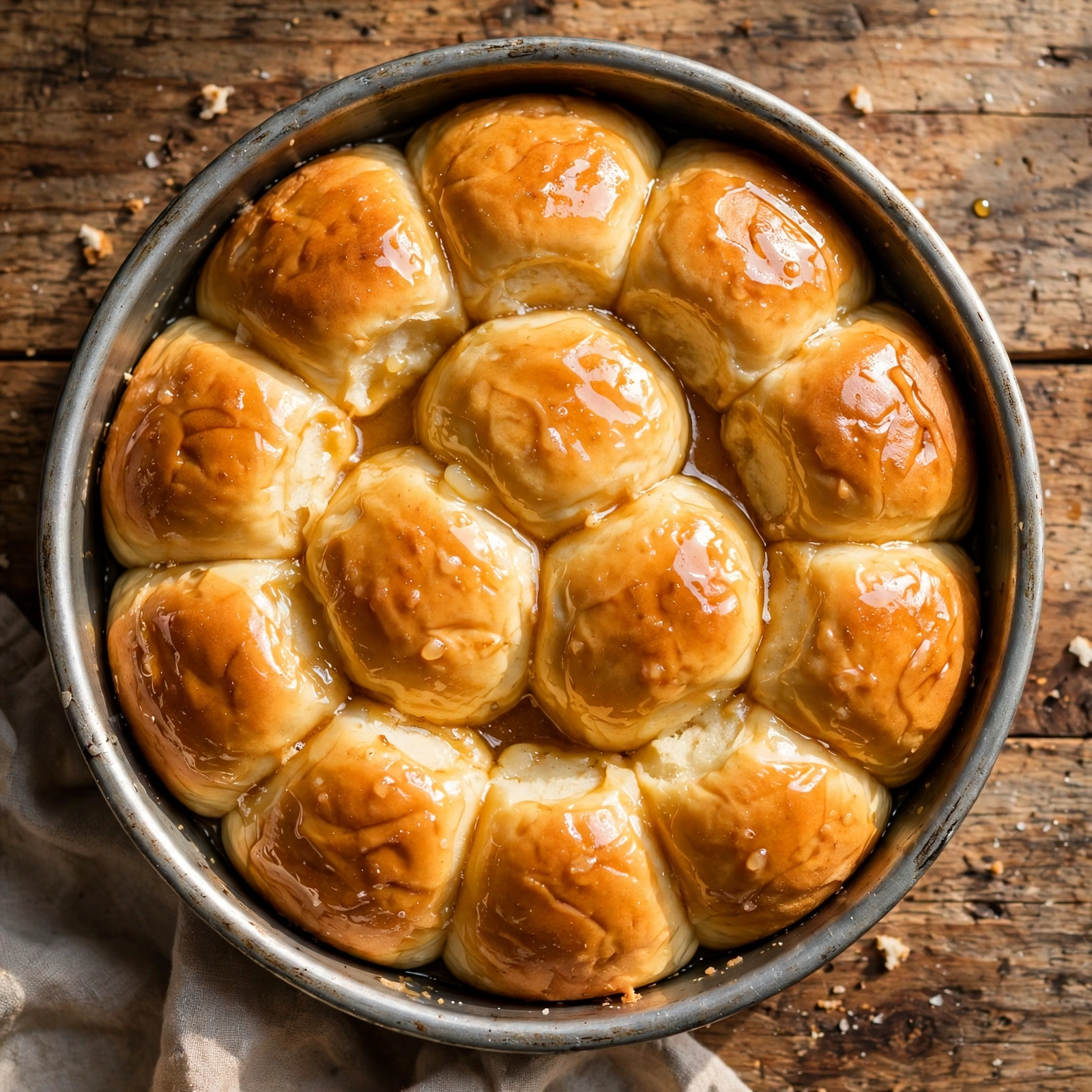
Honey butter dinner rolls are the quiet hero of the Thanksgiving table, the basket that empties while the turkey still rests. Picture them arriving warm: twelve golden domes crowded in a pan, tops glistening with melted honey butter, a whisper of flaky salt catching the light. They smell like a bakery and a beehive had a very happy meeting.
Every Thanksgiving spread needs a bread that stands up to gravy, cranberry sauce, and a full plate of sides. These rolls do more than keep up. They soak, they tear, they sandwich next day turkey like they were born for it, and guests will ask for the recipe before dessert.
What follows is the full method, tested for a busy holiday kitchen: a calm timeline, make ahead options, and every trick that keeps these rolls soft for hours. Read it once, bake it once, and you will never buy a bag of frozen rolls again.
Flavor Notes and Texture Contrast
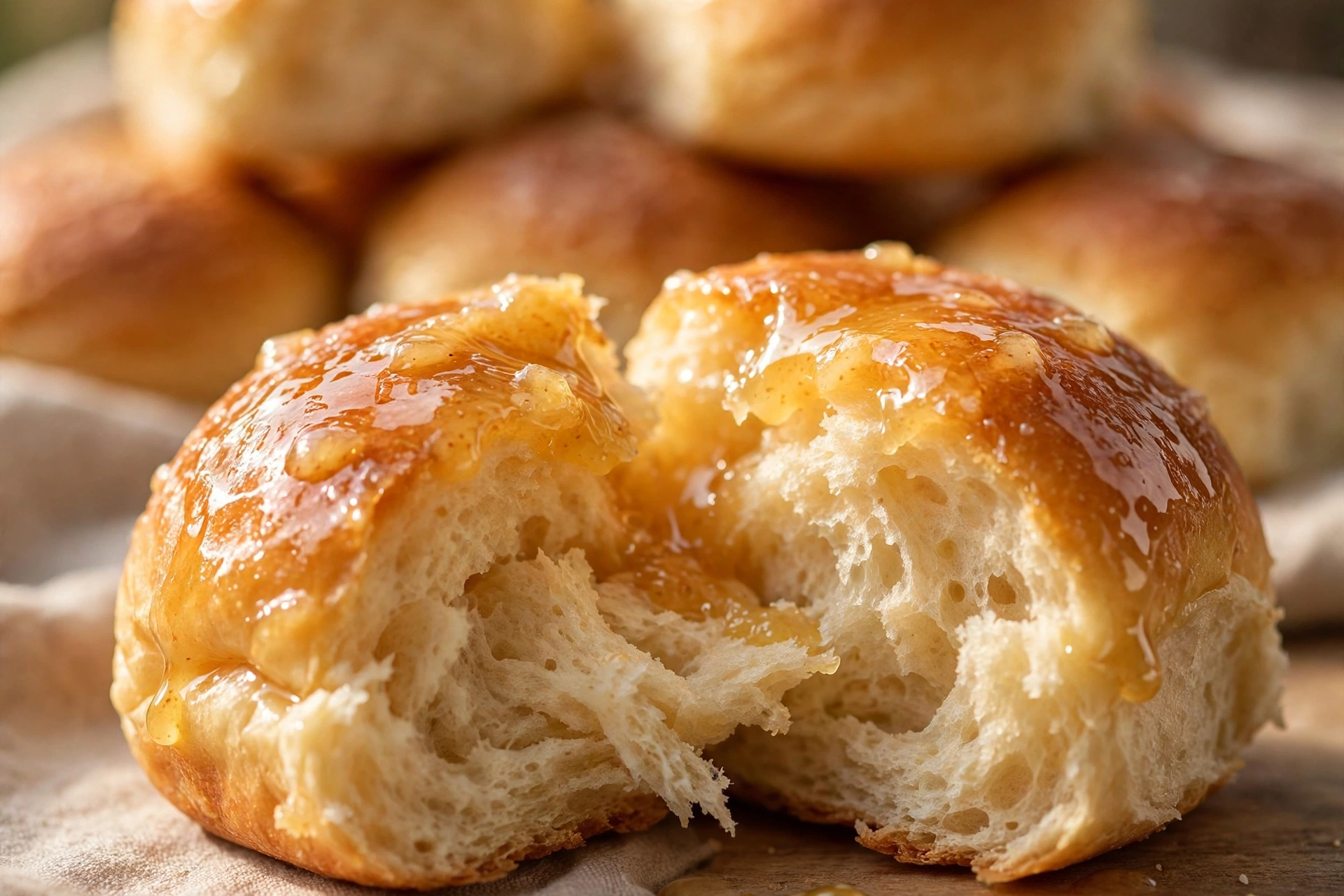
The first bite is all contrast. The crust is thin and golden with the faintest chew, then the crumb opens soft and feathery, still warm enough that the honey butter glaze melts a little deeper with every tear. Sweetness arrives first, gentle and floral, then the salted butter rounds it out so it never tips into dessert territory.
Honey does more than sweeten here. It keeps the crumb moist for hours, feeds the yeast for a strong rise, and caramelizes on the surface for deep amber color. A mild clover honey gives a clean, buttery sweetness that lets the dairy shine.
The flaky salt finish is the detail that separates good rolls from unforgettable ones. A few crystals on each warm roll create tiny bursts of salinity against the honey glaze, the same sweet salty logic that makes salted caramel work. Skip it and the rolls are lovely; include it and people close their eyes.
Texture wise, think pull apart, not slice apart. Baked in a 9 by 13 pan, the rolls press against each other as they rise, so the sides stay pale and soft while the tops turn golden. Tearing one free reveals a steamy interior made for sopping up gravy from your maple glazed roast turkey breast or catching cranberry sauce.
They also play beautifully with the rest of the plate. The mild sweetness echoes the brown sugar in a sweet potato casserole with pecan streusel without competing, and the soft crumb is the perfect foil for the creamy crunch of green bean casserole. Nothing on a Thanksgiving table fights these rolls; everything befriends them.
Why It Fits Your Schedule
This is where honey butter dinner rolls quietly outshine every other Thanksgiving bread. The active work is about twenty five minutes: ten to mix and knead, five to shape, ten to glaze. The yeast handles the other two hours while you baste the turkey, mash the potatoes, and set the table.
Count backward from dinner and the plan writes itself. For rolls at five, mix the dough at half past two, shape at quarter to four, and bake at twenty to five. They leave the oven just as the turkey finishes resting and hit the basket at peak warmth.
The overnight option is the real holiday gift. Mix and knead the dough Wednesday evening, let it rise once, then refrigerate the covered bowl. Thursday morning, shape the cold dough, give it a slightly longer second rise, and bake. Cold dough is actually easier to shape into tight, smooth balls.
Even the freezer gets involved. Shape the rolls, freeze them solid on a tray, then bag them for up to a month. Thaw in the refrigerator overnight Wednesday, let them proof Thursday afternoon, and bake fresh. Your future self, mid turkey chaos, will be grateful.
Diet Conscious Twists
The recipe is vegetarian as written and contains no alcohol, fitting most holiday tables without changes. For a dairy free version, swap the milk for unsweetened oat milk and use plant based butter in both the dough and the glaze. The honey flavor is bold enough to carry the swap.
To skip the egg, replace it with three tablespoons of aquafaba or a quarter cup of plain unsweetened plant yogurt. The crumb will be a touch less rich but stays soft and golden, and the honey butter glaze does most of the talking anyway. Brush the tops with a little oat milk before baking for color.
A partial whole wheat version works with one cup of white whole wheat flour replacing one cup of the all purpose flour. Expect a slightly heartier crumb and a nuttier flavor that pairs nicely with the honey. Add an extra tablespoon of milk, since whole grain flour drinks more liquid, and give the first rise fifteen extra minutes.
Ingredients
These rolls build from pantry staples plus one hero ingredient, and the whole list fits on a sticky note. Measure everything before the yeast goes in, warm the milk while you gather, and keep the salt away from the yeast until the flour goes in. Twelve rolls, one pan, zero stress.
- 1 cup (240 ml) whole milk, warmed to 110°F (43°C)
- 2 1/4 teaspoons instant yeast (1 standard packet)
- 1/4 cup (85 g) honey, divided (1 teaspoon for proofing, the rest for the dough)
- 1 large egg, at room temperature
- 1/4 cup (56 g) unsalted butter, melted and slightly cooled
- 3 1/2 cups (440 g) all-purpose flour, spooned and leveled
- 1 teaspoon fine sea salt
- 1/4 cup (56 g) unsalted butter, very soft
- 2 tablespoons honey
- 1/2 teaspoon flaky sea salt, for finishing
With the two groups measured, the bake flows in one steady rhythm. Proof the yeast first, since it needs its ten minutes, then mix, knead, and let time do the heavy lifting. Work in order and the rolls practically shape themselves.
Step by Step Instructions
- Proof the yeast. Whisk the warm milk, the yeast, and 1 teaspoon of the honey in the bowl of a stand mixer or a large mixing bowl. Loosely cover and rest 5 to 10 minutes, until the surface turns foamy and smells faintly of bread. No foam means the yeast is dead or the milk was too hot; start over with fresh yeast and cooler milk.
- Build the wet base. Whisk the egg, the remaining honey, and the melted butter into the foamy yeast mixture until smooth. The mixture will look thin and golden. Make sure the melted butter has cooled to just warm so it does not scramble the egg or shock the yeast.
- Add the dry ingredients. Sprinkle the flour over the wet mixture, then add the salt on top of the flour, keeping it off the yeast at first. Stir with a wooden spoon or the dough hook on low until a shaggy, rough dough forms and no dry flour remains at the bottom of the bowl.
- Knead until smooth and elastic. Knead with the dough hook on medium low for 8 minutes, or by hand on a lightly floured surface for 10 minutes. The dough should turn silky, pull away from the sides of the bowl, and pass the windowpane test: stretch a small piece thin enough to see light through without tearing. It will feel soft and just slightly tacky.
- First rise. Shape the dough into a ball, place it in a lightly greased bowl, and turn once to coat. Cover with plastic wrap or a damp towel and set in a warm, draft free spot for 60 to 75 minutes, until doubled in size. A turned off oven with the light on is the perfect warm corner.
- Shape twelve rolls. Punch the dough down gently and turn it onto a lightly floured surface. Divide into 12 equal pieces, about 65 g each if you own a scale. Roll each piece into a tight, smooth ball by cupping your hand over it and rolling in small circles, pinching the seam underneath. Even pieces bake evenly.
- Second rise and preheat. Arrange the balls seam side down in a greased 9 by 13 inch baking pan, nestled close but not squeezed. Cover loosely and proof 40 to 45 minutes, until puffy and touching. About halfway through, heat the oven to 375°F (190°C) with a rack in the center.
- Bake to golden. Bake 20 to 22 minutes, until the tops are deep golden brown. If they darken too quickly after 15 minutes, tent loosely with foil. For certainty, check one center roll with an instant read thermometer; 190°F (88°C) inside means fully baked with a soft, set crumb.
- Glaze while hot. The moment the pan leaves the oven, whisk the very soft butter with the 2 tablespoons of honey until smooth and brush it generously over every roll, letting it pool a little in the crevices. Sprinkle with the flaky sea salt. The heat melts the glaze into a glossy, sticky sweet coat.
- Rest briefly and serve. Cool in the pan 5 minutes so the glaze sets slightly and the crumb firms up enough to tear cleanly. Serve warm, with the extra honey butter on the side for anyone who wants a second swipe. These rolls wait for no one, so plan the basket accordingly.
Secrets for Foolproof Honey Butter Dinner Rolls
Respect the milk temperature above all. Yeast wakes up happily at 110°F and dies around 130°F, so warm the milk until it feels like comfortable bathwater on your wrist, never hot. If you own a thermometer, use it. This single detail decides whether your rolls rise or sulk.
Weigh the flour if you can. Three and a half cups should be 440 g, but a packed scoop can add 50 g or more, and that flour is the top cause of dense rolls. As King Arthur Baking explains in their yeast guide, a soft, tacky dough is the goal. When in doubt, hold back the last quarter cup.
Learn the poke test for the second rise. Press a floured fingertip into a roll; if the dent springs back slowly and leaves a mark, it is ready for the oven. If it springs back instantly, give it ten more minutes. If the dent stays put, it is over proofed; bake it right away anyway, it will still taste wonderful.
Glaze after baking, never before. Honey scorches quickly in a hot oven, turning bitter and dark instead of glossy and sweet. Brushing the honey butter over hot rolls lets it melt in without burning, giving you the shine and the flavor in one step. Reserve a spoonful of the glaze for the serving table; someone always asks.
Variations to Try Next Time
Add fresh herbs to the honey butter for a savory leaning roll that still loves Thanksgiving. Two teaspoons of finely chopped fresh rosemary or thyme whisked into the glaze gives an earthy perfume that pairs beautifully with turkey and gravy. Sage works too, but use half as much; it is potent.
Go whole grain and nutty with a streusel style crunch on top. Replace one cup of flour with white whole wheat as described above, and sprinkle the glazed rolls with a tablespoon of finely chopped toasted pecans. It nods to the pecan streusel on our sweet potato casserole with pecan streusel and adds welcome texture.
For a party version, bake the shaped balls in a greased bundt pan instead, brushing each layer lightly with honey butter as you stack them. They become a golden crown that guests tear apart by hand. Add five minutes to the bake time and check the center with a thermometer.
Whatever variation you try, keep the milk temperature and the post bake glaze sacred. Those two habits are the foundation everything else rests on. Flavors can wander; technique should not.
Keeping It Fresh: Storage Guide
Honey butter dinner rolls are at their peak in the first four hours, soft and steamy under a clean kitchen towel. For same day serving, keep the pan covered at room temperature and rewarm individual rolls for ten seconds in the microwave or five minutes in a 300°F oven wrapped in foil.
Baked rolls keep beautifully for two days. Cool completely, then store in an airtight container or zip top bag at room temperature; the honey in the crumb keeps them softer than plain rolls. Refresh them in a 325°F oven for eight minutes, tented in foil with a teaspoon of water sprinkled inside the tent for steam.
For longer storage, freeze the cooled rolls for up to one month. Wrap each roll in plastic wrap, then tuck them into a freezer bag with the air pressed out. Thaw at room temperature for an hour, then rewarm as above. Or freeze the shaped raw balls instead and bake fresh on the day, the true holiday power move.
Plan backward from the table for a calm Thanksgiving. Bake the morning of, or bake Wednesday and refresh Thursday; nobody will know. The rolls do the waiting so you do not have to.
Conclusion
Honey butter dinner rolls deserve a permanent spot in your Thanksgiving lineup, right between the slow cooker mashed potatoes and the pie. They ask for pantry staples, twenty five minutes of your hands, and a little patience, and they repay it with the basket that empties first every single year.
Bake them for the big Thursday, for Friendsgiving, or for a quiet Sunday roast. Brush the glaze generously, finish with the flaky salt, and serve them warm. Technique matters more than talent here: warm milk, soft dough, hot glaze. Do those three things and the rolls take care of the rest.
FAQ
Can I use active dry yeast instead of instant yeast in these rolls?
Yes, with one extra step. Dissolve the active dry yeast in the warm milk with 1 teaspoon of honey and wait 5 to 10 minutes until foamy before adding anything else. If the mixture never foams, the yeast is dead and you need a fresh packet; instant yeast can skip the wait and go straight into the bowl.
Why are my honey butter dinner rolls dense instead of fluffy?
Dense rolls almost always mean too much flour, so weigh 440 g or spoon and level carefully and keep the dough soft and slightly tacky. Under proofing is the second culprit: use the poke test and do not bake until the rolls look puffy and touching. Overbaking dries the crumb, so pull them at 190°F internal.
What kind of honey works best for the honey butter glaze?
A mild clover or wildflower honey gives the cleanest sweet butter flavor and lets the dairy shine. Raw or dark honeys like buckwheat taste wonderful but will dominate the roll, so save them for drizzling at the table. Never brush the glaze on before baking; honey scorches in a hot oven and turns bitter.
Can I freeze honey butter dinner rolls before baking them?
Yes, and it is the best Thanksgiving shortcut: shape the balls, freeze them solid on a tray, then bag them for up to one month. Thaw overnight in the refrigerator, arrange in the pan, let them proof until puffy, then bake as directed.
My rolls brown too fast but stay doughy inside. How do I fix it?
Tent the pan loosely with foil as soon as the tops look golden, usually around the 15 minute mark, and keep baking. Make sure the rack sits in the center of the oven, not near the top element. An oven thermometer helps too, since many ovens run hot; the true doneness test is 190°F in the center roll.
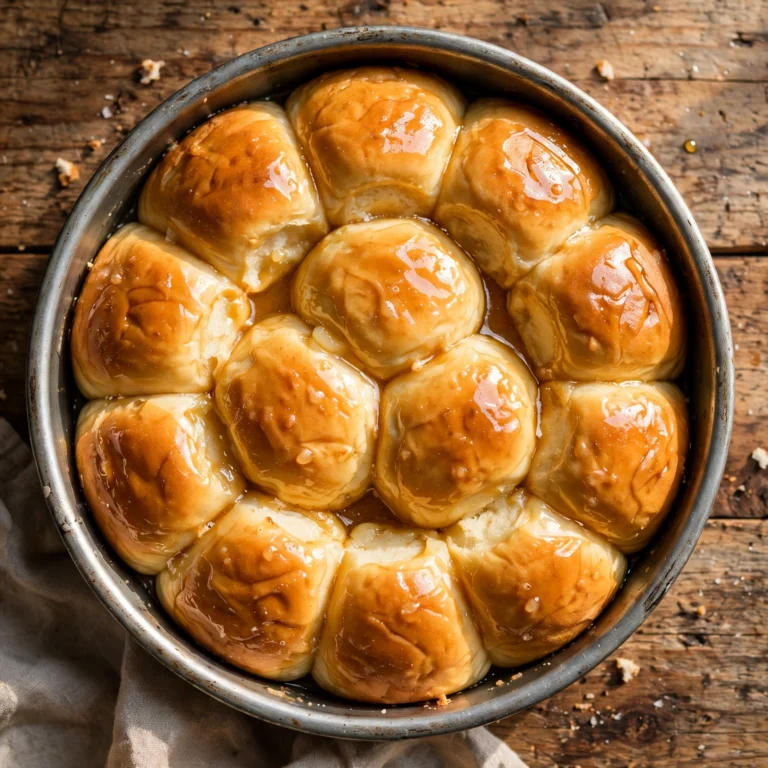
Honey Butter Dinner Rolls
Pillowy soft dinner rolls with honey folded into the dough and a glossy honey butter glaze brushed on while hot, finished with flaky sea salt. A make-ahead friendly Thanksgiving side that bakes up golden in a 9 by 13 pan.
- Total Time: 2 hours 37 minutes
- Yield: 12 rolls 1x
Ingredients
- 1 cup (240 ml) whole milk, warmed to 110°F (43°C)
- 2 1/4 teaspoons instant yeast (1 standard packet)
- 1/4 cup (85 g) honey, divided (1 teaspoon for proofing, the rest for the dough)
- 1 large egg, at room temperature
- 1/4 cup (56 g) unsalted butter, melted and slightly cooled
- 3 1/2 cups (440 g) all-purpose flour, spooned and leveled
- 1 teaspoon fine sea salt
- 1/4 cup (56 g) unsalted butter, very soft (for the topping)
- 2 tablespoons honey (for the topping)
- 1/2 teaspoon flaky sea salt, for finishing
Instructions
- Whisk the warm milk, yeast, and 1 teaspoon honey; rest 5 to 10 minutes until foamy.
- Whisk in the egg, remaining honey, and melted butter until smooth.
- Add the flour and salt; stir until a shaggy dough forms.
- Knead 8 minutes until smooth, elastic, and slightly tacky (windowpane test).
- Cover and rise 60 to 75 minutes in a warm spot until doubled.
- Divide into 12 equal pieces and roll into tight, smooth balls.
- Arrange seam side down in a greased 9 by 13 inch pan; proof 40 to 45 minutes until puffy. Preheat oven to 375°F (190°C).
- Bake 20 to 22 minutes until deep golden; tent with foil if browning too fast. Center roll should read 190°F (88°C).
- Brush hot rolls generously with the soft butter and honey glaze; sprinkle with flaky sea salt.
- Cool 5 minutes in the pan, then serve warm.
- Prep Time: 2 hours 15 minutes
- Cook Time: 22 minutes