Soft Dinner Rolls That Stay Pillowy Through the Whole Holiday
In this article:
- Why these rolls stay pillowy for days
- The windowpane test, knowing the dough is ready
- Ingredients
- From sticky dough to a pan of golden rolls
- 190 degrees, the finish line for perfect rolls
- Reading the dough, fixes for slow, pale or tough rolls
- Serving rolls with turkey, dressing and gravy
- Wednesday shaping, Thursday baking, the Thanksgiving plan
- Potato, honey butter and garlic variations
- Your roll questions, answered
- Warm rolls, zero last minute panic
Soft dinner rolls are the bread basket item everyone reaches for twice, yet they are the first thing many cooks buy instead of bake. The fear is reasonable: dense, pale, dry rolls have ended many good intentions.
This recipe takes that fear off the table. Warm milk, melted butter and one egg yolk build a dough that stays tender, and the method gives you a doneness test you can trust instead of a guess.
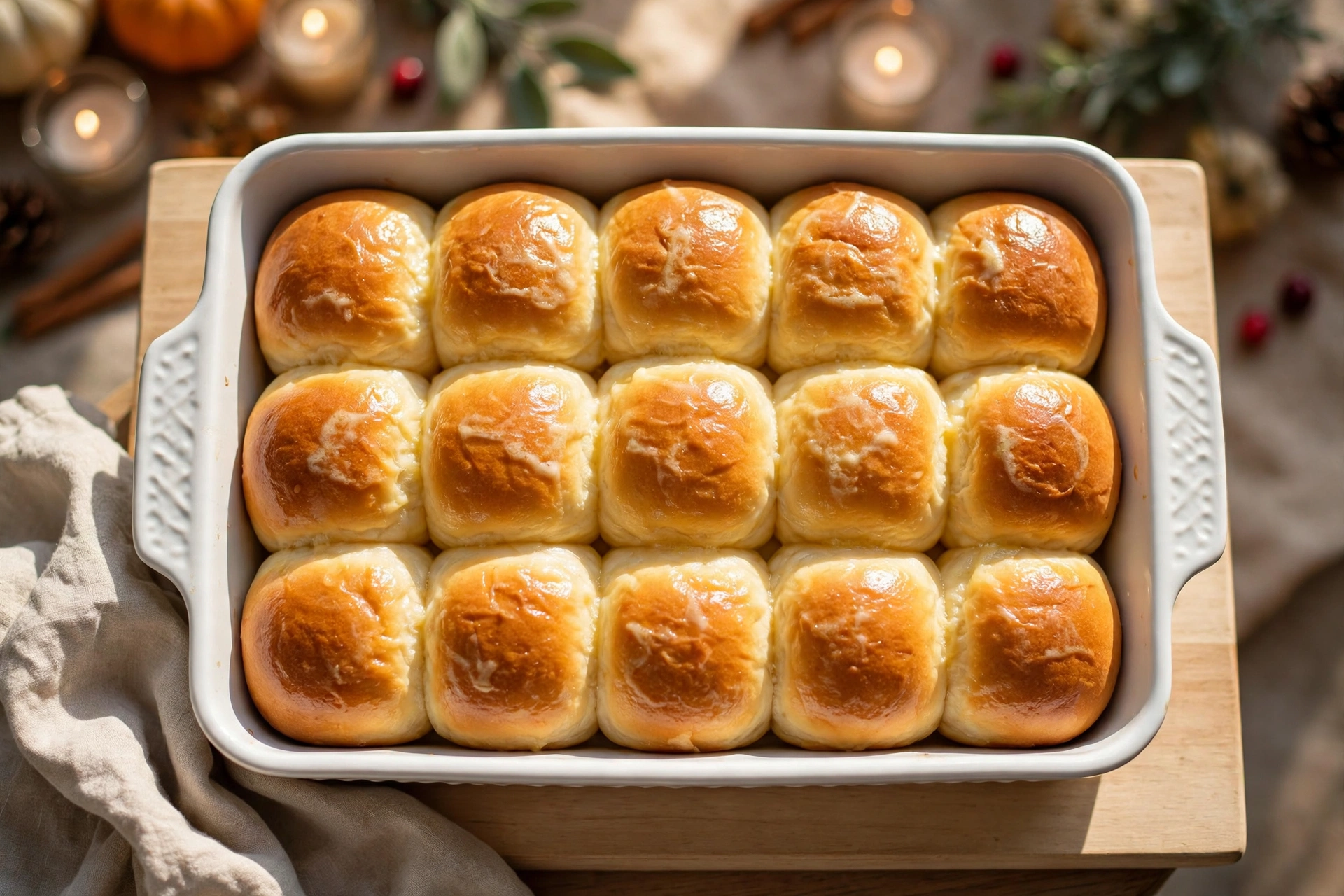
The rolls bake shoulder to shoulder in one pan, which is the real secret of the texture. Their sides stay soft because they steam against each other, while the tops turn glossy and deep golden.
For Thanksgiving, the plan matters as much as the dough. These rolls shape beautifully on Wednesday, sleep in the fridge overnight, and bake on Thursday while the turkey rests. No Thursday morning kneading required.
Why These Soft Dinner Rolls Stay Pillowy for Days
Rolls like these go stale faster than crusty breads when the formula is lean. This dough is enriched on purpose: milk, butter, sugar and egg yolk all slow staling and keep the crumb moist into the next day.
Whole milk does two jobs at once. Its fat coats the flour proteins so the gluten stays supple instead of tough, and its natural sugars help the crust color evenly in a moderate oven.
Melted butter beats softened butter here. Melted, it disperses through the dough in fine threads, so every bite tastes buttery and the crumb tears in soft sheets instead of crumbling apart.
The egg yolk is the quiet worker. Yolks bring emulsifiers that hold fat and water together, which is why the crumb stays fine and even instead of coarse, and why day two rolls still feel fresh.
Finally, the pan matters. Fifteen rolls packed into a 9 by 13 inch dish rise up instead of out, and the touching sides never form a crust. That soft sided structure is the whole identity of a dinner roll.
The Windowpane Test: Knowing the Dough Is Ready
Kneading builds the net that traps the gas the yeast produces. Under kneaded dough tears and bakes dense, so this recipe uses a simple test instead of a timer alone.
Pinch off a walnut sized piece of dough and stretch it gently between your fingers, turning it as you go. Ready dough stretches thin enough to see light through it without ripping, like a small window.
If the dough tears right away, knead three more minutes and test again. A stand mixer needs about eight minutes at medium low; by hand, expect ten to twelve minutes on a lightly floured counter.
Resist the urge to keep adding flour while you knead. This dough starts sticky and turns smooth as the gluten develops. Too much flour is the single most common reason homemade rolls bake up heavy.
Ingredients
- 1 cup (240 ml) whole milk, warmed
- 1/2 cup (113 g) unsalted butter, melted, plus 2 tablespoons more for brushing
- 1/4 cup (50 g) granulated sugar
- 2 1/4 teaspoons active dry yeast (one standard packet)
- 1 large egg plus 1 egg yolk, at room temperature
- 3 3/4 cups (450 g) all purpose flour, spooned and leveled, plus more as needed
- 1 teaspoon fine salt
- Flaky salt, for the tops (optional)
Weigh the flour if you can. A cup of flour scooped straight from the bag can hold 30 extra grams, and that difference alone turns a soft dough firm. The King Arthur ingredient weight chart is the reference bakers use for conversions.
From Sticky Dough to a Pan of Golden Rolls
- Stir the warm milk, melted butter and sugar together in a large bowl. The mixture should feel warm, not hot, about 110 degrees F. Sprinkle the yeast over the top, stir once, and let it stand for 5 to 10 minutes until foamy.
- Whisk in the egg and the yolk. Add the flour and salt, then stir with a sturdy spoon until a shaggy dough forms and no dry flour remains at the bottom of the bowl.
- Knead the dough for 8 minutes in a stand mixer with the dough hook, or 10 to 12 minutes by hand, until smooth, elastic and slightly tacky. Use the windowpane test to confirm it is ready.
- Place the dough in a lightly greased bowl, turn it once to coat, and cover. Let it rise in a warm spot for about 1 hour, until doubled in size and puffy.
- Grease a 9 by 13 inch baking dish. Turn the dough onto a clean counter and divide it into 15 equal pieces, about 65 grams each. Weighing the pieces is the fastest way to get rolls that bake evenly.
- Roll each piece into a smooth, tight ball by cupping your hand over it and moving in small circles against the counter. Arrange the balls in the dish in three rows of five.
- Cover the dish and let the rolls rise for 40 to 50 minutes, until they are puffy, touching each other, and a gentle poke springs back slowly, leaving a slight dent.
- Heat the oven to 350 degrees F. Bake the rolls for 18 to 22 minutes, until the tops are deep golden and the center roll reads 190 degrees F on an instant read thermometer.
- Brush the hot rolls with the remaining melted butter and scatter a pinch of flaky salt over the tops if you like. Rest them in the pan for 10 minutes, then serve warm, the way maple glazed roast turkey breast deserves to be served.
190 Degrees: the Finish Line for Perfect Rolls
Color alone misleads with enriched dough, because milk sugars brown the tops before the centers finish. The thermometer settles the question every time: soft dinner rolls are done at 190 degrees F in the center.
Pull the pan when the middle roll hits that number, even if the tops look a shade pale. Carryover heat finishes the crumb during the rest, and the butter brush deepens the color as it melts in.
If the tops race ahead of the centers, tent the pan loosely with foil for the last five minutes. The rolls keep baking, the crust stops darkening, and the finish stays even across the whole pan.
Reading the Dough: Fixes for Slow, Pale or Tough Rolls
A slow first rise usually means a cool kitchen or tired yeast. Move the bowl somewhere warmer, near a preheating oven or in a switched off oven with the light on, and give the dough a full extra thirty minutes before you judge it.
Check the yeast before blaming the room. If the milk mixture shows no foam after ten minutes, the yeast is dead or the milk was hot enough to kill it. Start that step over with fresh yeast and milk that feels like warm bath water.
Pale tops point to an oven running cool or a pan pulled early. Trust the thermometer over the clock, and remember that the butter brush only glosses the rolls; it cannot rescue an underbaked crumb, which tastes gummy and turns stale within hours.
Tough rolls almost always trace back to flour. Dough that needed constant flouring on the counter, or a cup measure packed hard from the bag, produces a tight crumb no amount of butter can fix. Weigh once and you will never guess again.
One more quiet detail: let the shaped rolls finish their second rise fully. Rolls that go into the oven under proofed bake up small and dense, while rolls left until puffy and touching expand into each other and stay soft sided.
Serving Rolls With Turkey, Dressing and Gravy
A pan of rolls belongs in the middle of the table, still in its dish, with a cloth tucked around it to hold the warmth. Guests tear them apart by hand, which is exactly the point of the soft sides.
The classic partners are rich ones. Rolls swipe through gravy, carry a bite of Southern cornbread dressing and balance the creaminess of green bean casserole in the same mouthful.
For a quieter plate, set out salted butter and a small dish of honey. Leftover rolls also make the best day after sandwiches, and they split and toast beautifully under honey glazed roasted carrots and sliced turkey.
Wednesday Shaping, Thursday Baking: the Thanksgiving Plan
The calmest Thanksgiving bakers shape their rolls the day before. Follow the recipe through shaping, cover the pan tightly, and refrigerate it for up to 18 hours. The slow cold rise deepens the flavor noticeably.
On Thursday, pull the pan out while the oven heats and the turkey rests. The rolls need about 30 minutes at room temperature to take the chill off, then they bake exactly as written.
Freezing works two ways. Freeze shaped, unbaked rolls on a tray, bag them, and thaw overnight in the pan in the fridge before the final rise and bake. Or freeze baked rolls for up to two months.
Reheat baked rolls, thawed or frozen, wrapped in foil at 325 degrees F for 10 to 15 minutes. A splash of water inside the foil packet steams them back to a just baked softness.
Potato, Honey Butter and Garlic Variations
Potato rolls are the old fashioned upgrade. Replace half a cup of the flour with half a cup of plain mashed potato, stirred in with the egg. The crumb turns extra tender and stays soft a day longer.
For honey butter rolls, swap the sugar for a quarter cup of honey and brush the baked rolls with honey melted into the butter. They lean sweet, so serve them with salty dishes and sharp cheese.
Garlic butter rolls suit a Sunday roast better than a holiday table. Stir a teaspoon of garlic powder into the dough and brush the tops with butter mixed with a grated garlic clove and parsley.
Your Roll Questions, Answered
Why did my rolls turn out dense?
Too much flour is the usual cause, followed by under proofing. Spoon and level the flour or weigh it, and let the dough fully double before shaping. Dough that feels slightly tacky bakes softer than dough that feels firm.
Can I proof the shaped rolls in the fridge overnight?
Yes, these soft dinner rolls are designed for exactly that. Shape the rolls, cover the pan tightly and refrigerate for up to 18 hours. Give them about 30 minutes on the counter before baking so the centers are not cold.
Can I freeze the rolls before baking?
Freeze the shaped balls on a tray until solid, then bag them for up to one month. Thaw them overnight in the greased pan in the fridge, let them finish rising at room temperature, then bake as written.
How do I reheat rolls without drying them out?
Wrap the rolls in foil with a splash of water inside the packet. Warm them at 325 degrees F for 10 to 15 minutes. The trapped steam restores the soft crumb instead of toasting it.
Can I mix the dough in a bread machine?
Yes, on the dough cycle. Add the ingredients in the order your machine prefers, let it knead and complete the first rise, then shape, proof and bake the rolls in the oven exactly as written for the softest tops.
Can I use instant yeast instead of active dry?
Yes. Use the same amount and skip the foaming step: stir the instant yeast straight in with the flour. The first rise may finish about ten minutes sooner, so watch the dough, not the clock.
Warm Rolls, Zero Last Minute Panic
Soft dinner rolls reward a baker who trusts the simple checks: foamy yeast, a windowpane stretch, equal pieces, and a thermometer that reads 190. None of those steps is hard, and together they make the recipe repeatable.
The Wednesday plan is what turns a good recipe into a holiday habit. The dough does its slow work in the fridge while you handle the rest of the menu, and Thursday stays calm.
Bake one pan for the table and, if your household is like most, a second pan for the sandwiches everyone is already planning. Warm rolls have a way of disappearing before the gravy boat makes its round.
Store any leftovers in a sealed bag at room temperature for two days, or freeze them the same night they bake. A ten minute warm through in a low oven brings back the soft crumb so completely that nobody will guess they were baked ahead.
Nutrition per serving, estimated for 15 servings: Calories 165, Total Fat 7 g, Saturated Fat 4 g, Unsaturated Fat 3 g, Trans Fat 0 g, Carbohydrates 22 g, Fiber 1 g, Sugar 4 g, Protein 4 g, Sodium 165 mg, Cholesterol 35 mg. Ingredient values are informed by USDA FoodData Central.
Print
Soft Dinner Rolls That Stay Pillowy for Days
Soft dinner rolls made from an enriched milk and butter dough, shaped in one pan so the sides stay pillowy. The recipe includes the windowpane kneading test, the 190 degree doneness check and a Wednesday shape, Thursday bake plan for Thanksgiving.
- Total Time: 2 hours 30 minutes
- Yield: 15 rolls 1x
Ingredients
- 1 cup (240 ml) whole milk, warmed
- 1/2 cup (113 g) unsalted butter, melted, plus 2 tablespoons more for brushing
- 1/4 cup (50 g) granulated sugar
- 2 1/4 teaspoons active dry yeast (one standard packet)
- 1 large egg plus 1 egg yolk, at room temperature
- 3 3/4 cups (450 g) all purpose flour, spooned and leveled, plus more as needed
- 1 teaspoon fine salt
- Flaky salt, for the tops (optional)
Instructions
- Stir the warm milk, melted butter and sugar together in a large bowl. The mixture should feel warm, not hot, about 110 degrees F. Sprinkle the yeast over the top, stir once, and let it stand for 5 to 10 minutes until foamy.
- Whisk in the egg and the yolk. Add the flour and salt, then stir with a sturdy spoon until a shaggy dough forms and no dry flour remains.
- Knead the dough for 8 minutes in a stand mixer with the dough hook, or 10 to 12 minutes by hand, until smooth, elastic and slightly tacky. Stretch a small piece thin: ready dough lets light through without tearing.
- Place the dough in a lightly greased bowl, turn it once to coat, and cover. Let it rise in a warm spot for about 1 hour, until doubled.
- Grease a 9 by 13 inch baking dish. Divide the dough into 15 equal pieces, about 65 grams each, and roll each piece into a smooth, tight ball. Arrange the balls in the dish in three rows of five.
- Cover the dish and let the rolls rise for 40 to 50 minutes, until puffy and touching, and a gentle poke springs back slowly, leaving a slight dent.
- Heat the oven to 350 degrees F. Bake the rolls for 18 to 22 minutes, until the tops are deep golden and the center roll reads 190 degrees F on an instant read thermometer.
- Brush the hot rolls with the remaining melted butter and scatter a pinch of flaky salt over the tops if you like. Rest them for 10 minutes, then serve warm.
- Prep Time: 25 minutes
- Cook Time: 20 minutes
Nutrition
- Serving Size: 1
- Calories: 165
- Sugar: 4
- Sodium: 165
- Fat: 7
- Saturated Fat: 4
- Unsaturated Fat: 3
- Trans Fat: 0
- Carbohydrates: 22
- Fiber: 1
- Protein: 4
- Cholesterol: 35