In this article:
- Why the Glaze Goes On Last: Two Stages, One Pan
- What They Taste Like: Amber Edges, Creamy Centers
- Choosing Carrots That Roast Evenly: Thickness Beats Shape
- Ingredients for the Carrots and the Maple Butter Glaze
- Roasting the Carrots, Stage by Stage
- Sharing the Oven With the Turkey: the Hour by Hour Plan
- No Oven Room at All: the 14 Minute Stovetop Version
- Pale, Wrinkled or Scorched at the Tips: Carrot Fixes
- Make Ahead, Storage and the Warming Return
- Small Turns: Ginger, Orange and Brown Butter Versions
- The Sweet Note a Savory Table Needs
- FAQ
Maple glazed carrots bring the one flavor a Thanksgiving plate is missing. The turkey is savory, the stuffing is herbed, the potatoes are rich, and everything sits in the same warm, brown register. These carrots arrive glossy and amber, sweet at the edges, with enough salt to stay firmly a side dish.
The usual failure is a pan of good intentions. Carrots tossed in syrup from the start come out pale and sticky, because the sugar sits in the steam the vegetables release and never quite caramelizes. Worse, the thin tips scorch while the thick ends stay firm.
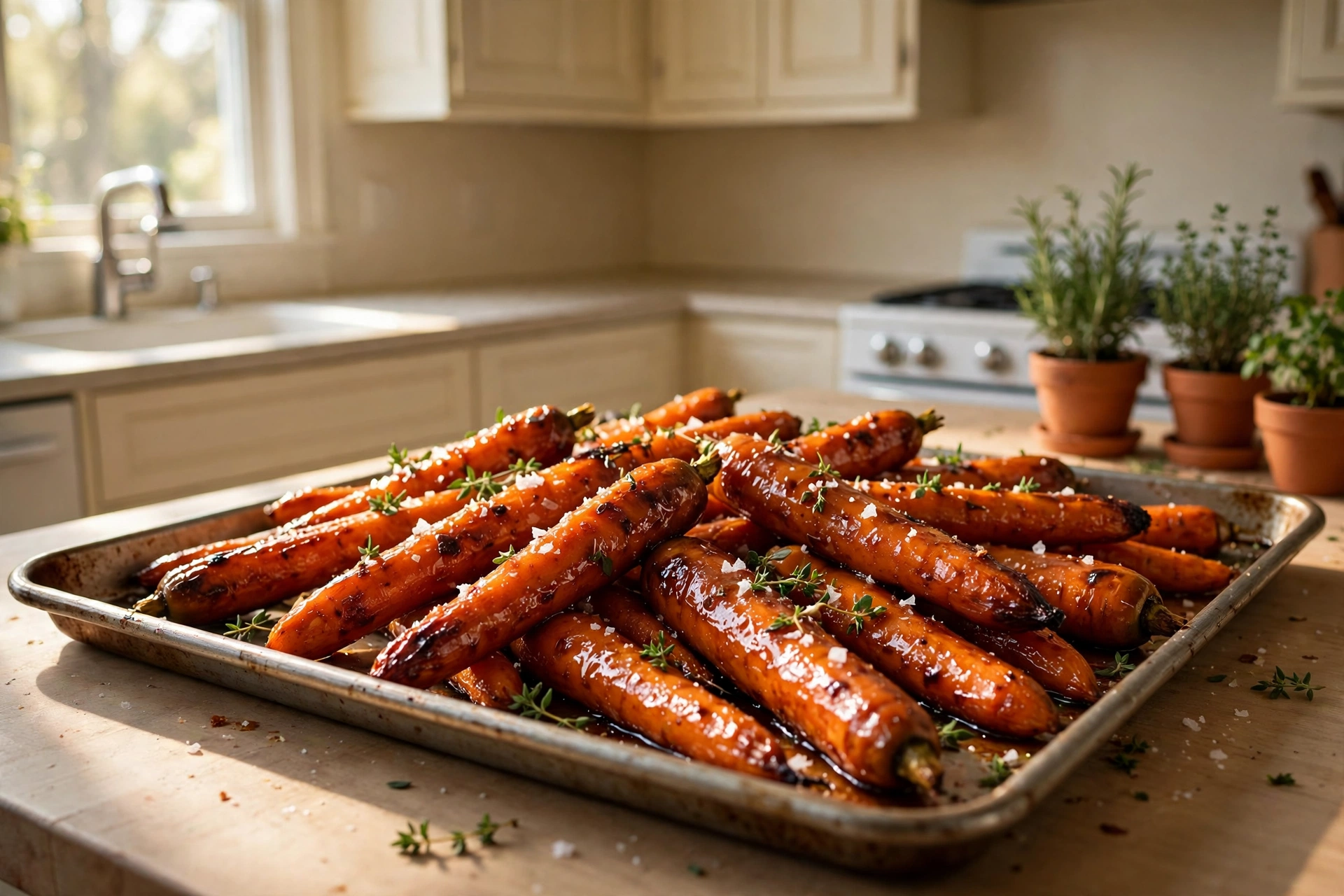
This recipe separates the work into two stages. The carrots roast first with oil and salt until their edges brown and their centers turn tender. Only then does the maple butter glaze go on, for ten minutes that lacquer instead of burn.
Why the Glaze Goes On Last: Two Stages, One Pan
Maple glazed carrots succeed or fail on water management. A raw carrot is mostly water, and a hot oven pulls that water out through every cut surface. If syrup coats the carrots from minute one, it dilutes into that escaping water and steams.
Twenty minutes of dry roasting changes the surface completely. The exterior dries, the natural sugars concentrate, and the edges take on the deep gold that no glaze can fake. The pan goes quiet, which is the sound of moisture leaving.
Butter belongs in the second stage for its own reason. Butter solids brown and then burn under long, high heat. Melted into the syrup and brushed on near the end, the butter stays sweet and nutty, and it helps the glaze cling in a thin, even coat.
The vinegar is the quiet ingredient. One teaspoon (5 g) of apple cider vinegar disappears into the glaze, but it sharpens the maple and keeps the finished carrots from reading as dessert. Sweetness without acidity tastes flat, no matter how good the syrup is.
What They Taste Like: Amber Edges, Creamy Centers
The first bite is about contrast. The outside carries a thin, sticky shell of caramelized maple with a faintly smoky depth from the dark syrup. Underneath, the carrot itself turns almost creamy, sweet in a cleaner, earthier way than the glaze.
Keeping the carrots whole protects that contrast. A whole carrot roasts from the outside in, so the center stays dense and silky while the surface concentrates. Coins and sticks dry at both ends and never quite reach the same custardy middle.
Thyme does more than decorate here. Its piney, savory edge cuts straight through the sweetness and reminds the palate that this is a vegetable course. Flaky salt at the end adds a tiny crunch and a bright pop against the soft glaze.
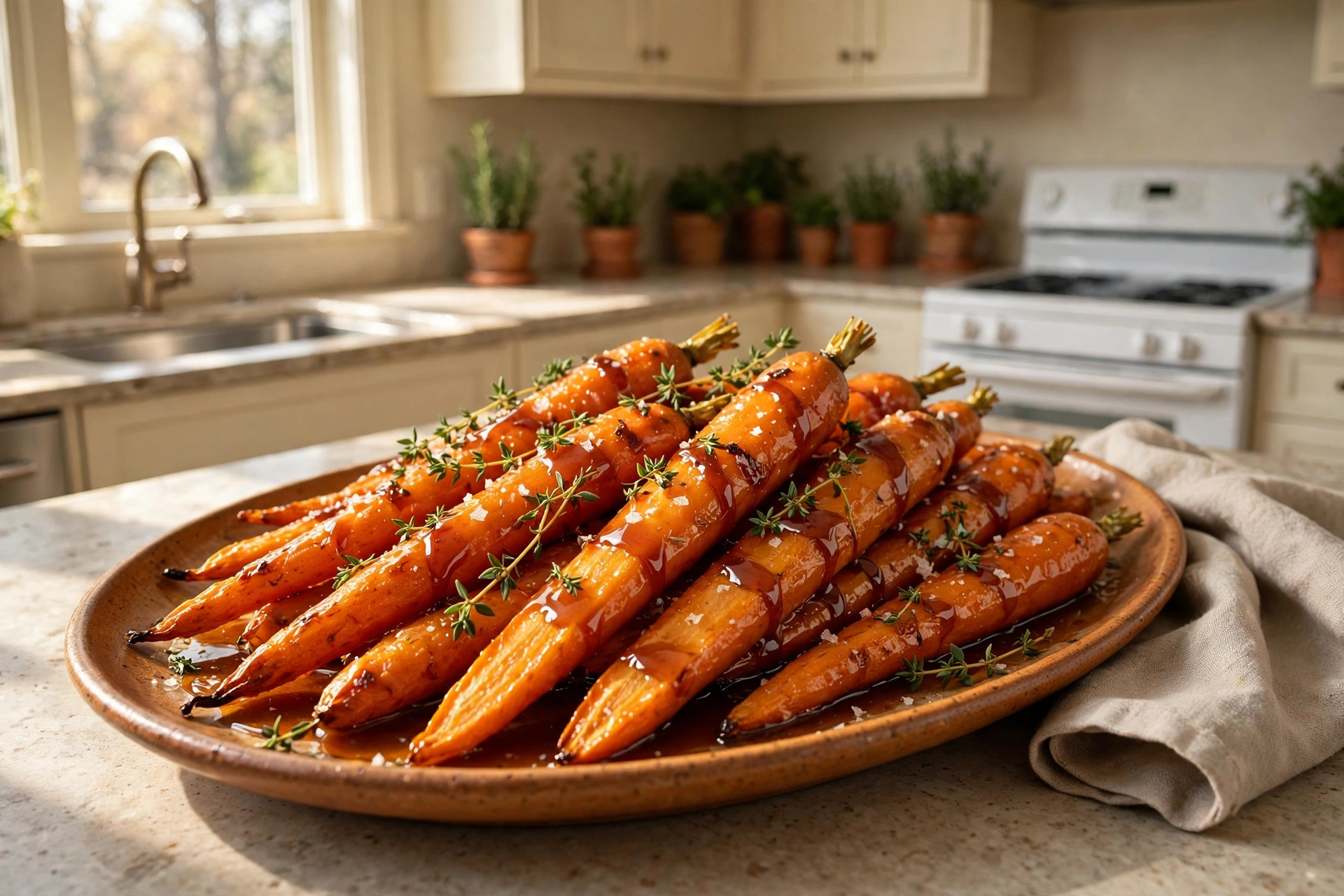
Served hot, the glaze shines like lacquer and holds to each carrot. As the platter cools toward warm, the coating sets into a soft chew, closer to candy. Both stages are good, and the table usually meets both.
Choosing Carrots That Roast Evenly: Thickness Beats Shape
Buy whole carrots of even thickness, close to 3/4 inch at the shoulder. A bag of mixed sizes guarantees mixed results, because a thin carrot surrenders ten minutes before a thick one. Uniformity matters more here than any particular variety.
Very thick carrots, over 1 inch at the top, should be halved lengthwise so the cut face can brown. The rest stay whole, which keeps the presentation simple and the centers creamy. Peel them, trim the tops, and leave a short green stub if you like the look.
Baby carrots work in a pinch, but know what they are: full sized carrots whittled down by machine. They carry more water, less sugar, and a blander flavor than the whole vegetable. If you use them, add five minutes to the first stage and expect a softer result.
Dry the peeled carrots well before they meet the oil. A clean towel and two minutes of patience here pay off in browning later. Water on the surface becomes steam in the oven, and steam is the one thing this recipe is organized against.
Ingredients for the Carrots and the Maple Butter Glaze
- 2 pounds whole carrots (907 g), peeled, tops trimmed
- 1 tablespoon olive oil (14 g)
- 1 teaspoon fine sea salt (6 g), divided
- 1/2 teaspoon black pepper (1 g)
- 3 tablespoons unsalted butter (43 g)
- 1/3 cup pure maple syrup (105 g), dark grade if you can find it
- 1 teaspoon apple cider vinegar (5 g)
- 1 teaspoon fresh thyme leaves (1 g), plus sprigs to serve
- Flaky salt, for finishing
Dark maple syrup earns its place in the glaze. It carries more mineral depth than the pale fancy grades, and that depth survives the oven. Save the delicate light syrup for pancakes, where nothing competes with it.
Roasting the Carrots, Stage by Stage
- Heat the oven to 425 degrees F. Line a large rimmed sheet pan with parchment, or leave it bare for deeper browning on the contact side.
- Toss the carrots with the olive oil, 3/4 teaspoon (5 g) of the fine salt and the pepper until every surface shines. Spread them in a single layer with a little space between each one.
- Roast for 20 minutes, turning the carrots once at the halfway mark, until the edges are golden and the thickest part yields slightly to a knife tip.
- While the carrots roast, melt the butter in a small saucepan over low heat. Stir in the maple syrup, the remaining 1/4 teaspoon (2 g) of salt and the vinegar. Keep the glaze warm, not boiling.
- Pull the pan out and brush or spoon the glaze over every carrot, turning them so all sides are coated. Return the pan to the oven.
- Roast 8 to 10 minutes more, until the glaze is glossy and thickened and the carrot tips are deep amber. Watch the last two minutes closely, because maple moves fast at the end.
- Rest the pan for 3 minutes. The glaze sets slightly as it cools, which is what keeps it on the carrots instead of the platter.
- Pile the carrots on a warm platter, spoon any pan glaze over the top, and finish with thyme leaves, thyme sprigs and a pinch of flaky salt.
Sharing the Oven With the Turkey: the Hour by Hour Plan
The turkey roasts at a lower temperature than these carrots want, which is why most holiday carrots end up compromised. The numbers below solve it without a second oven. Nothing here requires split second timing, only a rough order.
Option one, ride along: put the carrots in with the turkey at 350 degrees F for the first stage, and give them 40 to 45 minutes instead of 20. Pull them out when the bird comes out to rest, raise the oven to 425 degrees F, glaze them, and give them their 10 minutes while the turkey waits under foil.
Option two, work ahead: roast the full recipe in the morning, glaze included, and cool the carrots on the pan. Twenty minutes before serving, return the pan to a 425 degrees F oven for 8 minutes. The glaze re-glosses, the edges crisp again, and nobody can tell the difference.
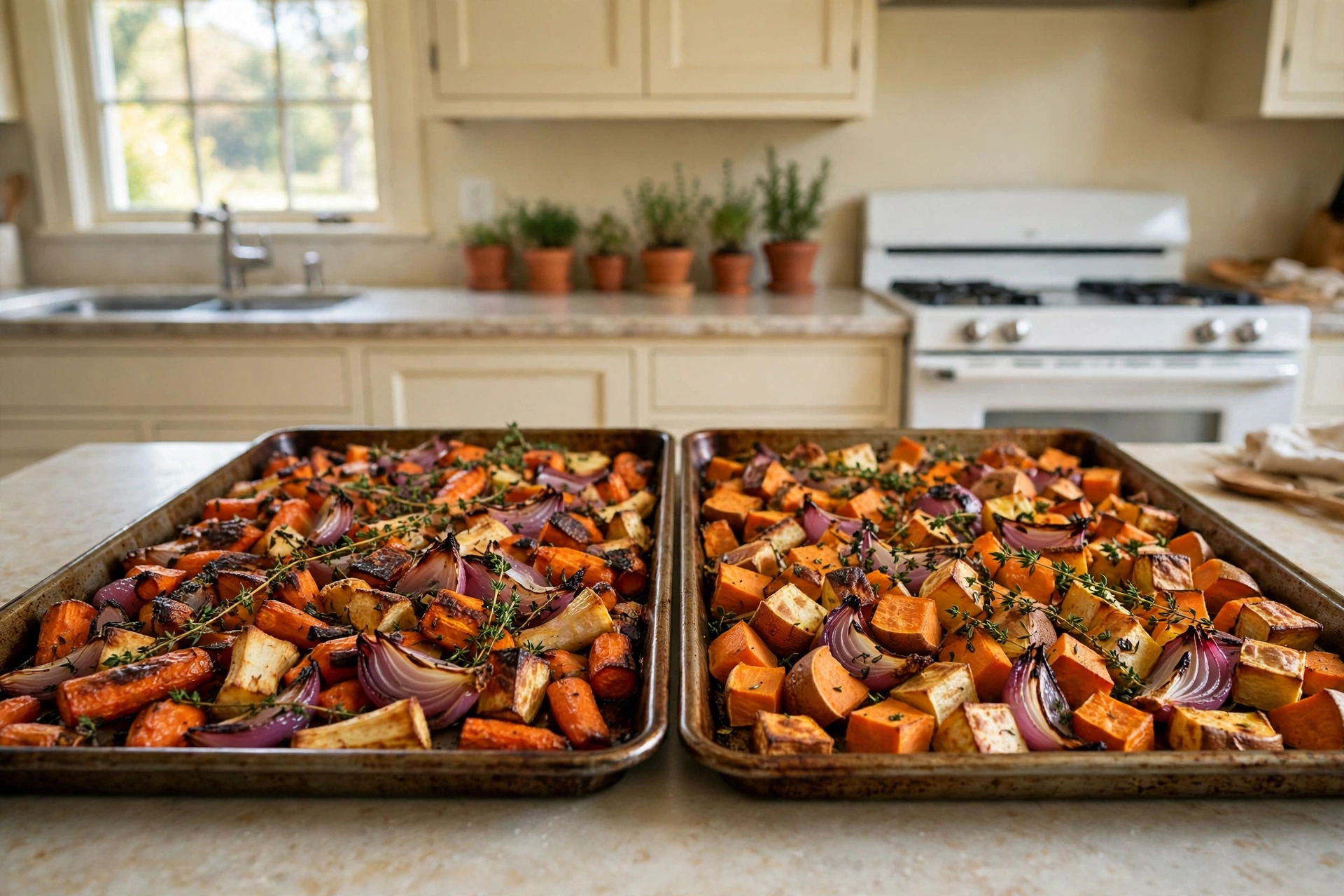
Either way, the carrots sit comfortably beside our classic roast turkey on the serving table. If your menu leans toward a mixed pan instead, our roasted root vegetables use the same two stage logic across five roots.
No Oven Room at All: the 14 Minute Stovetop Version
Some Thanksgiving ovens simply have no shelf left. For that case, cut the carrots into coins 1/2 inch thick (about 130 g per cup) and work on the stove. The flavor lands in the same place, with a slightly softer bite.
Simmer the coins in well salted water for 5 minutes, until just tender at the edge, then drain them thoroughly. Melt the butter in a wide skillet over medium high heat, add the carrots in one layer, and leave them undisturbed for 3 minutes.
Pour in the maple syrup and vinegar, and toss as the liquid reduces. In 4 to 5 minutes it thickens into a glaze that coats each coin. Finish with thyme and flaky salt, exactly as the oven version, and serve straight from the skillet.
Pale, Wrinkled or Scorched at the Tips: Carrot Fixes
Pale carrots were crowded or wet. Two pounds (907 g) is the most a single standard pan can hold in one honest layer. If your carrots touch shoulder to shoulder, split them across two pans and rotate the pans halfway through.
Wrinkled carrots were cut too thin or roasted too long before the glaze. Whole carrots forgive a few extra minutes, but thin coins do not. If the edges start to shrivel before the glaze stage, pull the pan five minutes early and glaze anyway.
Scorched tips mean the glaze went on too early or the oven runs hot at the back. Maple syrup goes from amber to burnt in about ninety seconds at 425 degrees F. Glaze late, and turn the pan around for the final minutes.
A dull, flat flavor usually means under salting. Carrots need more salt than their sweetness suggests, because the salt is what keeps the maple in the side dish category. Taste one carrot before plating and adjust the flaky salt at the end.
Make Ahead, Storage and the Warming Return
Peeled carrots keep well for two days in the refrigerator, wrapped in a damp towel inside a sealed container. The glaze can be mixed three days ahead and refrigerated in a jar. Warm it gently until it pours before using it.
Leftover glazed carrots keep for up to 4 days in an airtight container in the refrigerator, in line with the USDA FoodKeeper guidance on cooked vegetables at foodsafety.gov. Reheat them on a sheet pan at 400 degrees F for 8 to 10 minutes, not in the microwave, so the glaze shines again instead of pooling.
Freezing is not recommended for the glazed version. The carrots thaw soft and the glaze separates into a sweet puddle. If you must freeze, freeze the plain roasted carrots from stage one and glaze them fresh after reheating.
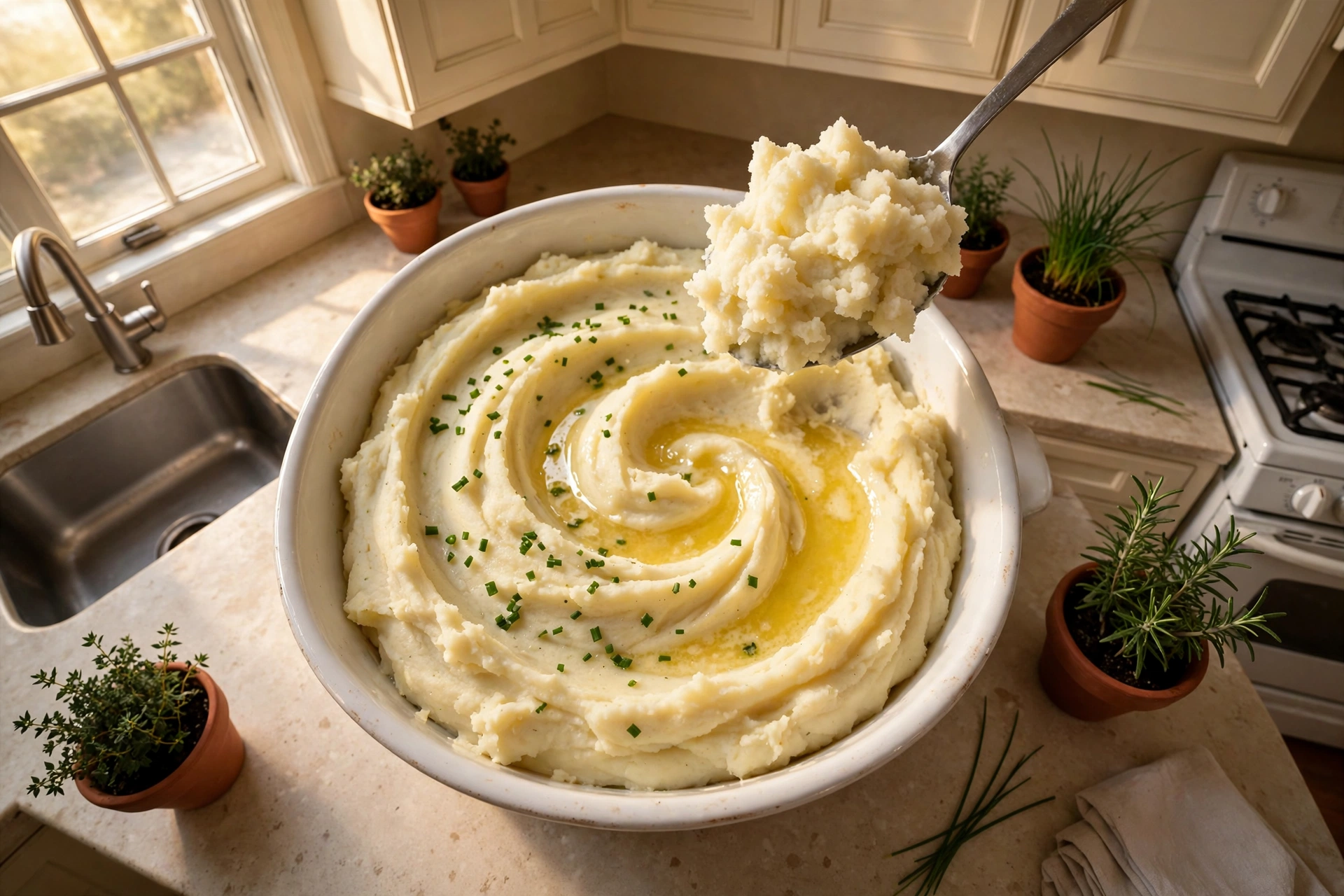
For a full make ahead menu, pair these with our make-ahead mashed potatoes and our candied yams. If parsnips are your household’s favorite, the honey butter roasted parsnips and carrots cover similar ground with a different sweetener.
Small Turns: Ginger, Orange and Brown Butter Versions
For a ginger version, grate 1 teaspoon fresh ginger (6 g) into the warm glaze and skip the thyme. The heat stays gentle and reads as warmth rather than spice. This version pairs especially well with roasted turkey or a menu built around chicken.
Orange brightens the whole pan. Replace the vinegar with 1 tablespoon orange juice (15 g) and add the zest of half an orange (about 3 g) to the finished platter. The citrus lifts the maple and gives the carrots a fresher, lighter finish.
Brown butter is the deepest variation. Cook the butter alone for 3 to 4 minutes, until the solids turn amber and smell nutty, then build the glaze in the same pan. Watch it closely, because brown butter continues to darken off the heat.
A pinch of warmth also works for winter menus. Add 1/8 teaspoon ground cinnamon (0.3 g) or a small pinch of cayenne to the glaze for Christmas. Keep the dose low, since the goal is a background glow, not a spiced candy.
The Sweet Note a Savory Table Needs
Maple glazed carrots do a quiet job at the table. They give the eye a bright color among the browns, they give the palate a rest between rich bites, and they are the dish children reach for without negotiation.
Make them once with the glaze kept late and the salt kept honest, and the method becomes permanent. The pan is simple, the ingredients are few, and the result looks like far more work than it was. That is exactly what a holiday side should be.
FAQ
Can I use baby carrots for maple glazed carrots?
Yes, with adjustments. Baby carrots hold more water, so extend the first dry roast by about five minutes and spread them with extra space. Expect a slightly softer, milder result than whole carrots of even thickness.
Why did my maple glaze burn before the carrots were tender?
The glaze went on too early. Maple syrup scorches after roughly ten minutes at 425 degrees F. Roast the carrots plain until nearly tender, then glaze for the final 8 to 10 minutes only.
Can maple glazed carrots cook at 350 degrees F with the turkey?
Yes. Give the first stage 40 to 45 minutes at 350 degrees F, then glaze the carrots and finish them at 425 degrees F for 10 minutes while the turkey rests. The edges brown a shade less, but the method holds.
Which grade of maple syrup is best for the glaze?
Dark, robust taste syrup is the better choice here. Its deeper mineral flavor survives the oven and stands up to butter and salt. Save light fancy grade syrup for pancakes and table use.
How far ahead can I make maple glazed carrots?
Roast them fully in the morning, cool on the pan, and reheat at 425 degrees F for 8 minutes before serving. The glaze turns glossy again and the edges re crisp. Leftovers keep up to 4 days refrigerated.
Maple Glazed Carrots
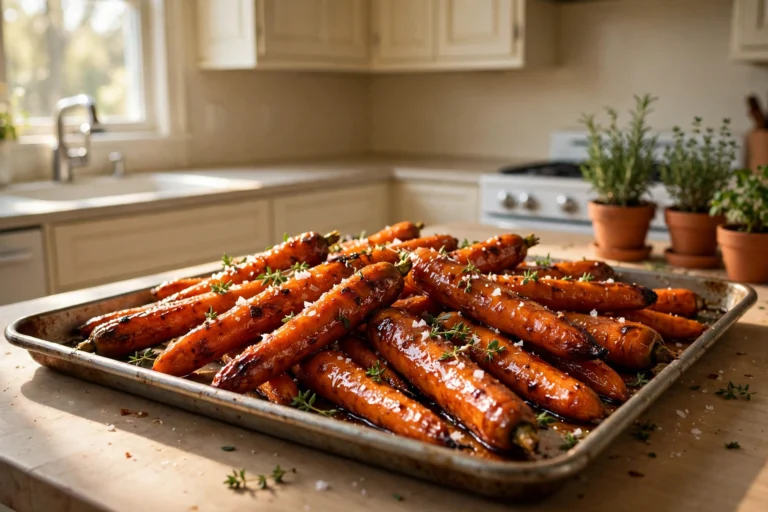
Whole carrots of even thickness, roasted plain for 20 minutes at 425 degrees F so their edges brown and their water leaves, then glazed with maple butter for the final 10 minutes so the syrup lacquers instead of burning. A teaspoon of cider vinegar keeps the sweetness in side dish territory, and the hour by hour oven sharing plan puts them beside the turkey without a second oven.
- Total Time: 47 minutes
- Yield: One sheet pan, 6 side servings
Ingredients
- 2 pounds whole carrots (907 g), peeled, tops trimmed
- 1 tablespoon olive oil (14 g)
- 1 teaspoon fine sea salt (6 g), divided
- 1/2 teaspoon black pepper (1 g)
- 3 tablespoons unsalted butter (43 g)
- 1/3 cup pure maple syrup (105 g), dark grade if available
- 1 teaspoon apple cider vinegar (5 g)
- 1 teaspoon fresh thyme leaves (1 g), plus sprigs to serve
- Flaky salt, for finishing
Instructions
- Heat the oven to 425 degrees F. Line a large rimmed sheet pan with parchment, or leave it bare for deeper browning.
- Toss the carrots with the olive oil, 3/4 teaspoon (5 g) of the fine salt and the pepper until coated. Spread in a single layer with space between the pieces.
- Roast for 20 minutes, turning once halfway, until the edges are golden and the thickest part yields slightly to a knife tip.
- Melt the butter in a small saucepan over low heat. Stir in the maple syrup, the remaining 1/4 teaspoon (2 g) of salt and the vinegar. Keep the glaze warm.
- Brush or spoon the glaze over every carrot, turning them so all sides are coated. Return the pan to the oven.
- Roast 8 to 10 minutes more, until the glaze is glossy and thickened and the tips are deep amber. Watch the final two minutes closely.
- Rest the pan for 3 minutes so the glaze sets slightly.
- Pile onto a warm platter, spoon the pan glaze over the top, and finish with thyme leaves, thyme sprigs and flaky salt.
Notes
Nutrition is an estimate based on the ingredients and cooking methods used.
- Prep Time: 15 minutes
- Cook Time: 32 minutes
Nutrition
- Serving Size: about 2 whole carrots
- Calories: 180
- Sugar: 18
- Sodium: 390
- Fat: 8
- Saturated Fat: 4
- Unsaturated Fat: 4
- Trans Fat: 0
- Carbohydrates: 25
- Fiber: 4
- Protein: 1
- Cholesterol: 15