Parker House Rolls, Buttery Fans That Open at the Table
In this article:
- Why Parker House Rolls Belong to the Thanksgiving Table
- The Off-Center Fold, and Why It Changes Everything
- Ingredients for Parker House Rolls
- Making Parker House Rolls, Step by Step
- A Thanksgiving Timeline That Ends With the Turkey Rest
- Flat, Pale or Sealed Shut: Reading a Pan of Rolls
- Small Changes Once the Classic Pan Is Yours
- Keeping Rolls Soft, From Freezer to Second Helping
- The Pan That Empties First
- FAQ
Why Parker House Rolls Belong to the Thanksgiving Table
Parker house rolls were invented for a hotel dining room, and it shows in the best way. The enriched dough, built on warm milk, egg and a full stick of butter, bakes into a roll that is soft enough to tear with two fingers yet sturdy enough to drag through gravy. Nothing about it fights the rest of the plate.
The fold is the real invention. Each oval of dough is brushed with butter and folded off-center, so the finished roll opens into a little fan at the table. That fan is a pocket, and a pocket of warm bread next to a pool of gravy is exactly what a Thanksgiving plate is missing.
There is also a quiet practical reason this recipe earns its place in November. The dough is forgiving about timing in a way most holiday baking is not. It tolerates a slow overnight rise in the refrigerator, which means the shaping happens on a calm Wednesday evening instead of in the middle of Thursday’s noise.
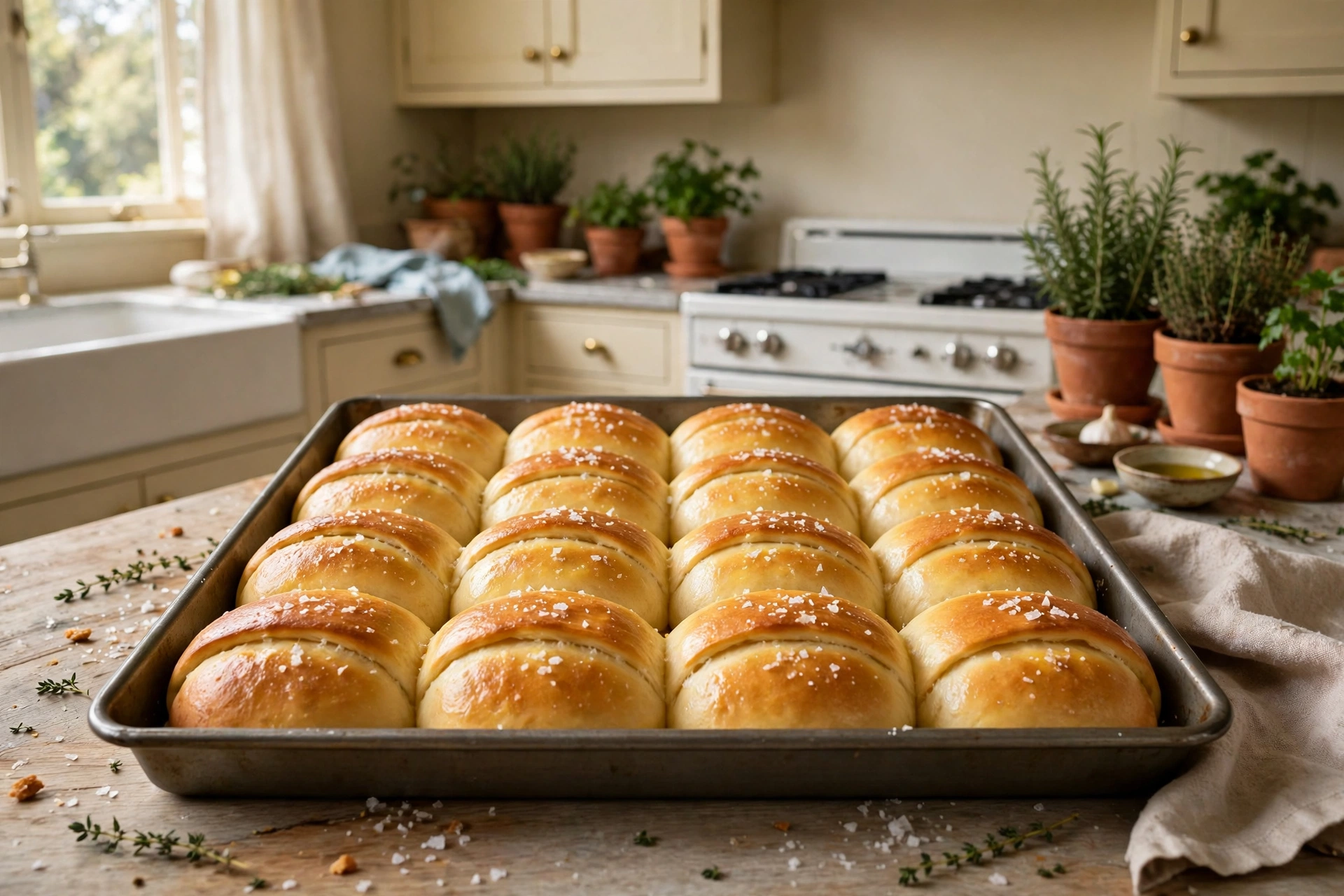
The texture contrast is the part guests remember. The top turns glossy and deep gold, the fold stays pale and tender, and the crumb pulls apart in feathery layers where the butter sealed the two halves. Salt flakes on the surface make each bite taste finished, not plain.
Finally, the recipe scales to the real holiday table. Twenty-four rolls sounds like a lot until you count the people who take two, the one who takes three, and the sandwich someone quietly builds from leftovers the next day.
The Off-Center Fold, and Why It Changes Everything
Every Parker house roll starts as a plain oval of dough, rolled about half an inch thick. The defining move comes next: a brush of melted butter across the surface, then a fold that stops short of the far edge. That small offset, roughly a quarter inch, is the whole recipe.
Folding short of the edge leaves a tiny lip of dough uncovered. During the rise, that lip keeps the two layers from sealing into one solid lump. In the oven, steam escapes along the fold line and the top layer lifts, opening the roll into its signature fan.
Fold exactly edge to edge and the butter glues the layers shut. The roll still tastes fine, but it eats like an ordinary dinner roll and tears in a straight line. Fold too far and the top flap flops open in the pan and browns unevenly.
The butter under the fold does double duty. It flavors the interior layers directly, and it keeps them separate enough to pull apart in soft sheets. This is why the crumb of a good Parker house roll looks layered, almost like a very gentle pastry.
Compare this with the plain round rolls elsewhere on this site, like our soft dinner rolls, which are shaped once and baked. The Parker house fold is one extra minute of work for a completely different eating experience, and on a holiday table that difference is the point.
Ingredients for Parker House Rolls
- 1 cup (240 ml) whole milk
- 1/2 cup (120 ml) warm water, about 110 degrees F
- 2 1/4 teaspoons (7 g) active dry yeast, one standard packet
- 1/4 cup (50 g) granulated sugar
- 4 1/2 cups (560 g) all-purpose flour, plus more for dusting
- 1 large egg, at room temperature
- 1 large egg yolk, at room temperature
- 10 tablespoons (140 g) unsalted butter, divided: 6 tablespoons very soft for the dough, 4 tablespoons melted for folding and finishing
- 1 1/2 teaspoons fine sea salt
- Flaky sea salt, for sprinkling over the baked rolls
A note on the milk: warming it is not optional decoration. Milk heated until steaming, then cooled to warm, gives a noticeably softer crumb than cold milk, because the heat tames a whey protein that otherwise tightens the dough. Let it cool until it feels like bath water before it meets the yeast.
Bread flour works in place of all-purpose and gives a slightly chewier pull. Avoid swapping in whole wheat for more than a third of the flour; the fold needs a supple, extensible dough, and too much bran makes the ovals tear instead of stretching.
Making Parker House Rolls, Step by Step
- Warm the milk in a small saucepan until it steams and small bubbles ring the edge, then let it cool to about 110 degrees F. Pour the warm water into a large bowl, sprinkle in the yeast and a pinch of the sugar, and let it foam for 5 to 10 minutes.
- Whisk the warm milk, the rest of the sugar, the egg and the yolk into the yeast mixture. Add the flour and salt, then stir until a shaggy dough forms and no dry flour remains at the bottom of the bowl.
- Work in the 6 tablespoons of very soft butter a spoonful at a time, kneading as you go. Knead by hand for 8 to 10 minutes, or with a dough hook for 6 to 7 minutes, until the dough is smooth, elastic and only slightly tacky.
- Cover the bowl and let the dough rise in a warm spot for 1 to 1 1/2 hours, until doubled. For the Thanksgiving schedule, you can instead refrigerate the covered dough right away and hold it up to 24 hours; let it warm for 30 minutes before shaping.
- Butter a 9 by 13 inch baking pan. Divide the dough into 24 equal pieces of about 45 g each; a scale makes this fast and guarantees even baking.
- Roll each piece into an oval about 4 inches long and 1/2 inch thick. Brush the top with melted butter, then fold the oval off-center so the top edge stops about 1/4 inch short of the bottom edge. Press the fold gently to set it.
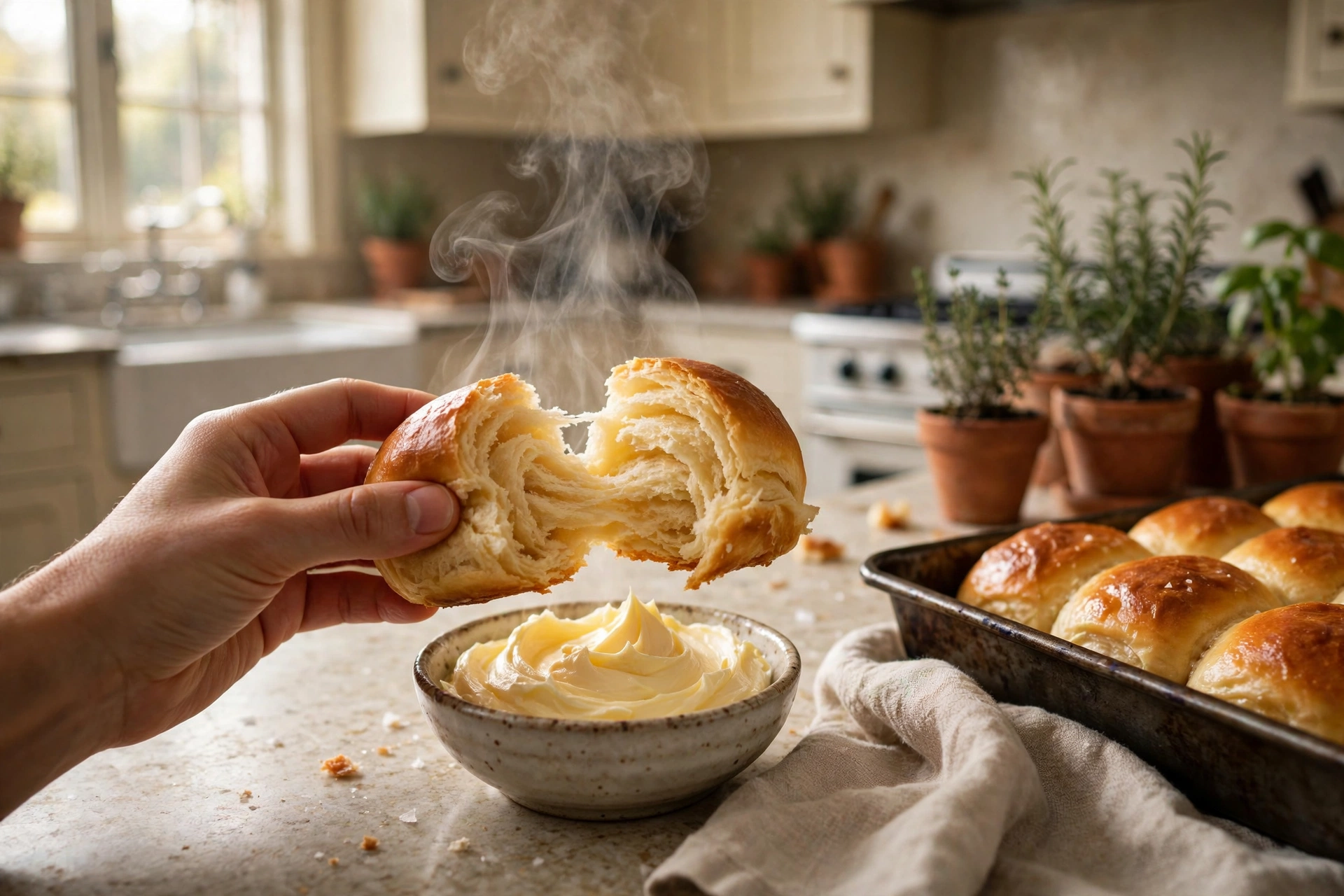
- Arrange the folded rolls in the pan in 4 rows of 6, fold line facing the same way, seams down. Cover and let rise for 45 to 60 minutes, until puffy and touching. For the overnight method, cover the pan tightly and refrigerate for 8 to 14 hours instead.
- Heat the oven to 375 degrees F. If the pan comes from the refrigerator, set it on the counter while the oven heats, about 20 minutes, no longer.
- Bake for 18 to 22 minutes, until the tops are deep golden and the center roll reads 190 degrees F on an instant read thermometer.
- Brush the hot rolls with the remaining melted butter and scatter a pinch of flaky salt over the pan. Rest 10 minutes, then serve warm, straight from the pan.
A Thanksgiving Timeline That Ends With the Turkey Rest
The question nobody answers in most roll recipes is the only one that matters on the day: when do I start? Here is the schedule this recipe was written for, built backwards from a 4 p.m. dinner and a bird like our classic roast turkey coming out of the oven to rest.
Tuesday evening, 15 minutes of work. Make the dough through the kneading step and put the covered bowl straight into the refrigerator. The cold does the first rise slowly and improves the flavor more than any same-day method.
Wednesday evening, 20 minutes of work. Let the dough warm for 30 minutes, then divide, roll and fold all 24 rolls. Arrange them in the buttered pan, cover tightly, and put the pan back in the refrigerator for its slow second rise.
Thursday, almost no work. When the turkey leaves the oven, set the pan of rolls on the counter. While the bird rests under foil for 30 to 45 minutes, the rolls take the chill off, the oven settles at 375 degrees F, and the pan bakes for about 20 minutes.
The rolls land on the table at the same moment as the carved turkey, genuinely hot, which is something no reheated roll can claim. If the day runs late, the pan simply waits in the cold; an extra two or three hours of slow rise harms nothing.
Cooking for a smaller table? The same dough, shaped and frozen, covers you. Our honey butter dinner rolls follow a similar make ahead logic for weeknights, but for the holiday itself, this folded pan is the one worth the refrigerator space.
Flat, Pale or Sealed Shut: Reading a Pan of Rolls
If the rolls come out flat, the yeast was tired or the milk was hot enough to kill it. Milk above 115 degrees F damages yeast on contact, which is why this recipe cools the scalded milk before mixing. Next time, test the milk on your wrist; it should feel warm, never hot.
Pale tops usually mean the pan needed two more minutes, not a higher temperature. Enriched dough colors slowly, then all at once. Trust the thermometer over the clock: the center roll should read 190 degrees F, and the fold creases should look dry, not doughy.
Rolls that refuse to open into fans were folded too neatly. An edge to edge fold seals with butter and bakes into a plain round. Leave the quarter inch lip, press only the fold line itself, and never press the whole roll flat with your palm.
A pan that browns on top but stays gummy underneath was crowded into a cold oven or set on a low rack. Bake on the center rack, and if your oven runs cool at the bottom, slide a preheated baking sheet under the pan for the first 10 minutes.
The United States Department of Agriculture’s leftover safety guidance is worth a glance before the holiday: cooked breads and sides should move into the refrigerator within two hours of serving, a rule that is easy to forget when the table lingers.
Small Changes Once the Classic Pan Is Yours
Herb butter is the gentlest variation. Stir a teaspoon of finely chopped fresh thyme or rosemary into the melted butter used for folding, and the rolls pick up a quiet holiday flavor without changing their look. Keep the herbs out of the dough itself, where they can cut the gluten strands.
For a slightly sweeter, bakery style top, brush the baked rolls with a teaspoon of honey whisked into the finishing butter. It should be a whisper of sweetness, closer to our biscuits’ finish than to a dessert. Serve those alongside the buttermilk biscuits and watch which basket empties first.
Shaping the same dough as cloverleaf rolls is the other classic presentation: three small balls per muffin cup, brushed with butter between them. They pull apart into thirds and suit a smaller, more formal table, though they lose the butter pocket that makes the fold special.
A garlic version exists on other sites, and it is good, but garlic fights with gravy and cranberry on the Thanksgiving plate. Save it for a January soup night, when these rolls next to a bowl of something brothy are exactly right.
Keeping Rolls Soft, From Freezer to Second Helping
Shaped, unbaked rolls freeze beautifully, and this is the version to make in early November. Freeze the folded rolls on a tray until solid, then bag them for up to 1 month. The night before baking, arrange them in the buttered pan, cover, and let them thaw and rise in the refrigerator for 10 to 12 hours.
Baked rolls keep at room temperature for 1 day in a sealed bag, and they refresh well: 8 minutes in a 325 degrees F oven, wrapped in foil, brings back the soft crumb. A splash of water on the foil before sealing adds just enough steam.
Leftovers beyond a day belong in the freezer, already baked. Wrap the pan’s worth in foil, then in a bag, for up to 2 months. Reheat from frozen, still wrapped, at 325 degrees F for 15 to 18 minutes and they eat like the first day.
One warning from experience: do not refrigerate baked rolls hoping to keep them soft. The refrigerator is where bread stales fastest. The counter for tonight, the freezer for later, and the fridge only for unbaked dough.
The Pan That Empties First
Parker house rolls ask for one small skill, the off-center fold, and repay it with the most useful bread on the holiday table. They are soft where they should be soft, golden where they should be golden, and they open into fans that seem designed for gravy.
Make the dough on Tuesday, fold on Wednesday, and bake while the turkey rests. That is the whole secret, and it leaves Thursday afternoon to everything else that needs you.
FAQ
Can Parker house rolls rise in the refrigerator overnight?
Yes, and the recipe is written for it. Shape and fold the rolls, arrange them in the buttered pan, cover tightly and refrigerate for 8 to 14 hours. Set the pan on the counter while the oven heats, about 20 minutes, then bake as directed; the slow cold rise gives better flavor than a fast warm one.
Why did my Parker house rolls not open into fans?
The fold was almost certainly sealed edge to edge, which lets the melted butter glue the layers shut. Fold off-center so the top edge stops about 1/4 inch short of the bottom edge, and press only along the fold line. That uncovered lip is what lifts and opens in the oven.
Can I freeze Parker house rolls before baking?
Yes. Freeze the shaped, folded rolls on a tray until solid, then store them in a freezer bag for up to 1 month. The night before you bake, arrange them in the buttered pan, cover and refrigerate for 10 to 12 hours so they thaw and rise, then bake as directed.
Do I have to scald the milk for Parker house rolls?
It helps more than most bakers expect. Scalding, then cooling the milk to about 110 degrees F, softens a whey protein that can tighten the crumb, so the baked rolls stay feathery for hours. If you skip it the rolls still work, but they firm up faster at the table.
How many Parker house rolls should I plan per person at Thanksgiving?
Plan on 2 rolls per guest, and 3 for anyone who treats the bread as a main event. This pan of 24 covers 10 to 12 people comfortably alongside a full spread of sides, with a few left for next day sandwiches.
Parker House Rolls
Classic Parker house rolls from a milk and egg enriched dough, each oval brushed with melted butter and folded off-center so it bakes into a soft fan. The shaped pan rises slowly in the refrigerator overnight and bakes fresh while the Thanksgiving turkey rests.
- Total Time: 3 hours 45 minutes
- Yield: 24 rolls 1x
Ingredients
- 1 cup (240 ml) whole milk
- 1/2 cup (120 ml) warm water, about 110 degrees F
- 2 1/4 teaspoons (7 g) active dry yeast
- 1/4 cup (50 g) granulated sugar
- 4 1/2 cups (560 g) all-purpose flour, plus more for dusting
- 1 large egg, at room temperature
- 1 large egg yolk, at room temperature
- 10 tablespoons (140 g) unsalted butter, divided: 6 tablespoons very soft and 4 tablespoons melted
- 1 1/2 teaspoons fine sea salt
- Flaky sea salt, for sprinkling
Instructions
- Heat the milk in a small saucepan until it steams and small bubbles ring the edge, then let it cool to about 110 degrees F. Pour the warm water into a large bowl, sprinkle in the yeast and a pinch of the sugar, and let it foam for 5 to 10 minutes.
- Whisk the warm milk, the remaining sugar, the egg and the yolk into the yeast mixture. Add the flour and the salt and stir until a shaggy dough forms with no dry flour left.
- Work in the 6 tablespoons of very soft butter a spoonful at a time, kneading as you go. Knead by hand for 8 to 10 minutes, or with a dough hook for 6 to 7 minutes, until smooth, elastic and only slightly tacky.
- Cover the bowl and let the dough rise for 1 to 1 1/2 hours, until doubled. For the holiday schedule, refrigerate the covered dough right after kneading for up to 24 hours instead, then let it warm for 30 minutes before shaping.
- Butter a 9 by 13 inch baking pan. Divide the dough into 24 equal pieces of about 45 g each.
- Roll each piece into an oval about 4 inches long and 1/2 inch thick. Brush the top with melted butter and fold the oval off-center, so the top edge stops about 1/4 inch short of the bottom edge. Press the fold gently to set it.
- Arrange the rolls in the pan in 4 rows of 6, folds facing the same way and seams down. Cover and let rise for 45 to 60 minutes, until puffy and touching, or cover tightly and refrigerate for 8 to 14 hours.
- Heat the oven to 375 degrees F. If the pan comes from the refrigerator, set it on the counter while the oven heats, about 20 minutes.
- Bake for 18 to 22 minutes, until the tops are deep golden and the center roll reads 190 degrees F on an instant read thermometer.
- Brush the hot rolls with the remaining melted butter, scatter flaky salt over the pan, rest for 10 minutes and serve warm.
Notes
Nutrition is an estimate based on the ingredients and cooking methods used.
- Prep Time: 35 minutes
- Cook Time: 20 minutes
Nutrition
- Serving Size: 1 roll
- Calories: 165
- Sugar: 3
- Sodium: 230
- Fat: 7
- Saturated Fat: 4
- Unsaturated Fat: 2
- Trans Fat: 0
- Carbohydrates: 21
- Fiber: 1
- Protein: 4
- Cholesterol: 35