In this article:
- Why Whipped Sweet Potatoes Stay Fluffy: Air In, Starch Intact
- Silky, Warm Spiced and Just Sweet Enough
- Garnet, Jewel or Pale Fleshed: Picking the Right Sweet Potato
- Ingredients for the Whip and the Maple Butter
- Roasting, Scooping and Whipping, in That Order
- The 90 Second Whip: Speeds, Warm Cream and the Stop Signal
- The Thanksgiving Clock: Roast in the Morning, Whip at Half Past Three
- Holding Warm, Leftovers and the Freezer Test
- Brown Butter, Orange Zest and a Savory Turn
- The Bowl That Empties First
- FAQ
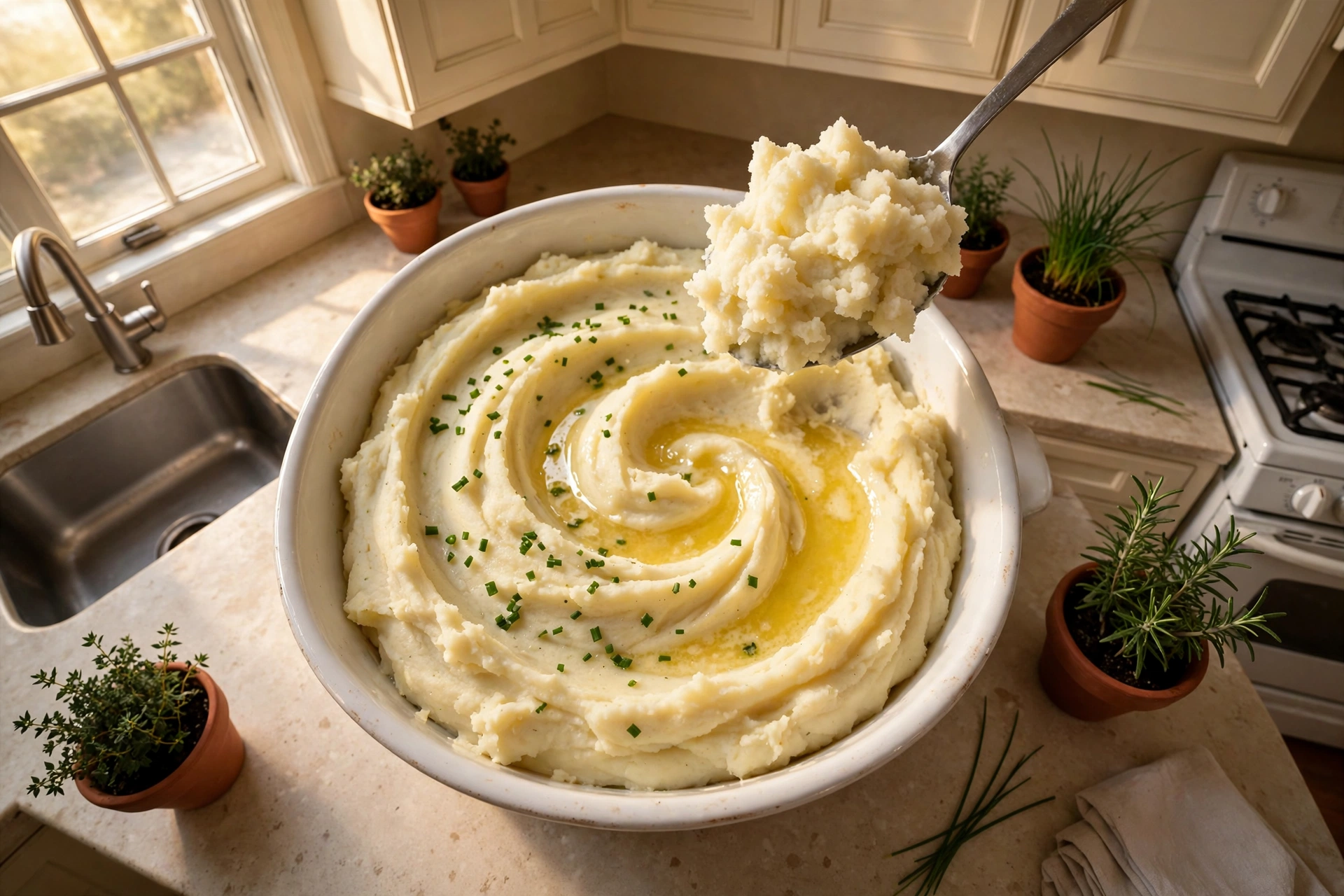
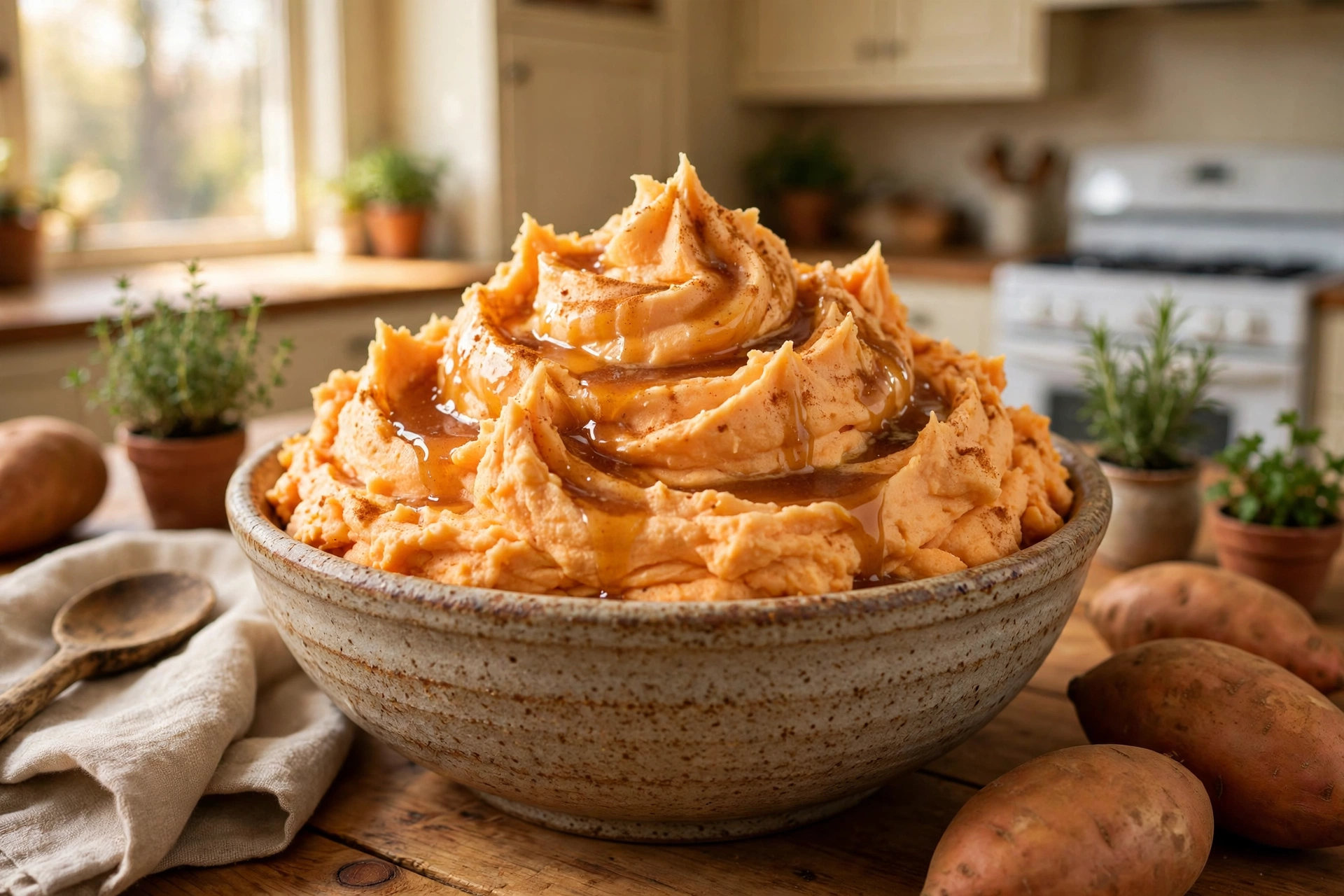
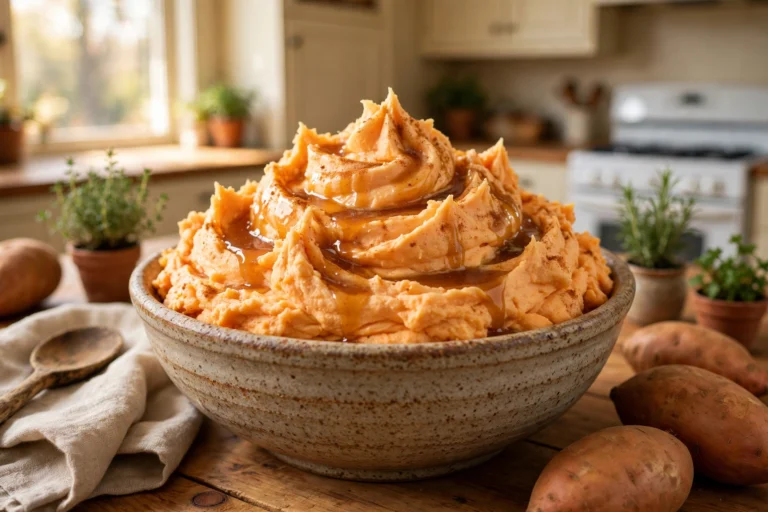
Whipped sweet potatoes are the side dish that behaves like a dessert and eats like a cloud. The bowl arrives at the table pale orange and glossy, holding soft peaks like frosting, and the first spoonful tastes of maple, warm butter and cinnamon.
Most versions never reach that texture. They are boiled until waterlogged, or blended until the starch turns to glue, or whipped with cold cream that shocks the whole bowl dense. The result is a mash, pleasant enough, but nobody asks how it was made.
This recipe is built around one idea: protect the starch, then add air. The potatoes roast whole in their skins, the butter and cream go in warm, and a hand mixer whips for ninety seconds, no more. Everything else is seasoning.
Why Whipped Sweet Potatoes Stay Fluffy: Air In, Starch Intact
Whipped sweet potatoes stay light for a mechanical reason. A hand mixer pushes air between the soft fibers of the flesh without shredding them. A food processor does the opposite: its blades tear the starch cells open, and freed starch turns the purée elastic and gummy.
Roasting whole is the second protection. Boiling fills the flesh with water, and waterlogged potatoes need more butter and cream to taste rich, which weighs the bowl down again. Roasted in the skin, the flesh concentrates, sweetens, and stays dry enough to whip tall.
Temperature is the third protection. Warm butter and warm cream fold into hot flesh and stay emulsified, glossy and loose. Cold dairy seizes on contact, the mixture tightens, and the cook keeps whipping to fix it, which is exactly how the texture dies.
The seasoning follows the same logic. Maple syrup sweetens without the grain of brown sugar, cinnamon and nutmeg stay at background level, and salt does the quiet work of making the natural sweetness read as flavor instead of candy.
Silky, Warm Spiced and Just Sweet Enough
The first taste is texture before flavor. The whip holds soft peaks on the spoon, then melts the moment it meets heat from the plate. There is no stringiness, because roasting whole relaxes the long fibers that make boiled sweet potatoes shred.
Maple leads, but gently. Three tablespoons (60 g) across eight servings is enough to round the edges of the potato without pushing the bowl toward dessert. The vanilla works underneath it, the way it does in ice cream, present but hard to name.
Cinnamon and nutmeg are measured in fractions on purpose. At three quarters of a teaspoon (2 g), cinnamon warms the whole bowl. At double that, it takes over, and the sweet potato becomes a vehicle for spice instead of the main event.
Served hot, the surface shines where the maple butter pools in the swirls. As the bowl cools toward warm, the texture firms slightly and the flavors deepen, which is why the leftovers taste even better the next day.
Garnet, Jewel or Pale Fleshed: Picking the Right Sweet Potato
Garnet sweet potatoes, with their copper skin and deep orange flesh, are the sweetest and moistest choice. They whip into the tallest, softest bowl and need the least added sugar. If your market labels only one variety by name, it is usually this one.
Jewel sweet potatoes sit in the middle: orange flesh, balanced sweetness, a little less water than garnets. They whip nearly as tall and hold their shape slightly better on a buffet, which makes them the safest pick for a long Thanksgiving afternoon.
Pale fleshed varieties, sometimes sold as Japanese or Hannah sweet potatoes, are drier and nuttier, closer to a chestnut than a dessert. They still whip well, but plan on an extra splash of warm cream, about 2 tablespoons (30 g), to reach the same softness.
Whichever variety you buy, choose potatoes of similar size, close to 8 ounces (225 g) each, so they finish roasting together. Scrub them well, since they roast in their skins, and skip any with soft spots or sprouting eyes.
Ingredients for the Whip and the Maple Butter
- 3 pounds garnet sweet potatoes (1360 g), about 6 medium, scrubbed
- 6 tablespoons unsalted butter (85 g), melted and warm
- 1/3 cup heavy cream (80 g), warmed
- 3 tablespoons pure maple syrup (60 g)
- 1 teaspoon vanilla extract (5 g)
- 3/4 teaspoon ground cinnamon (2 g)
- 1/4 teaspoon ground nutmeg (0.5 g)
- 3/4 teaspoon fine sea salt (4.5 g), plus more to taste
- 2 tablespoons unsalted butter (28 g), for the maple butter
- 1 tablespoon pure maple syrup (20 g), for the maple butter
- Flaky salt and a pinch of cinnamon, for serving
Everything except the potatoes divides into two moments. The first group goes into the whip itself, where it seasons the whole bowl. The second group, just butter and maple, becomes the glossy drizzle that makes the surface shine in the serving bowl.
If you serve a table that loves the classic casserole, point them to our sweet potato casserole as well. The two dishes share a flavor family but eat completely differently, one spooned in soft peaks, the other sliced under a pecan crust.
Roasting, Scooping and Whipping, in That Order
- Heat the oven to 400 degrees F. Line a rimmed sheet pan with foil, because roasted sweet potatoes leak syrup as they cook.
- Prick each potato 6 to 8 times with a fork. Set them on the pan with space between them so the skins dry instead of steaming.
- Roast for 50 to 60 minutes, turning once halfway, until a thin knife slides to the center with no resistance and the skins feel papery.
- Rest the potatoes for 10 minutes, until you can hold them in a towel. Halve each one lengthwise and scoop the flesh into a large, warm bowl, leaving the skins behind.
- Add the melted warm butter (85 g), the warmed cream (80 g), the maple syrup (60 g), vanilla, cinnamon, nutmeg and fine salt to the hot flesh.
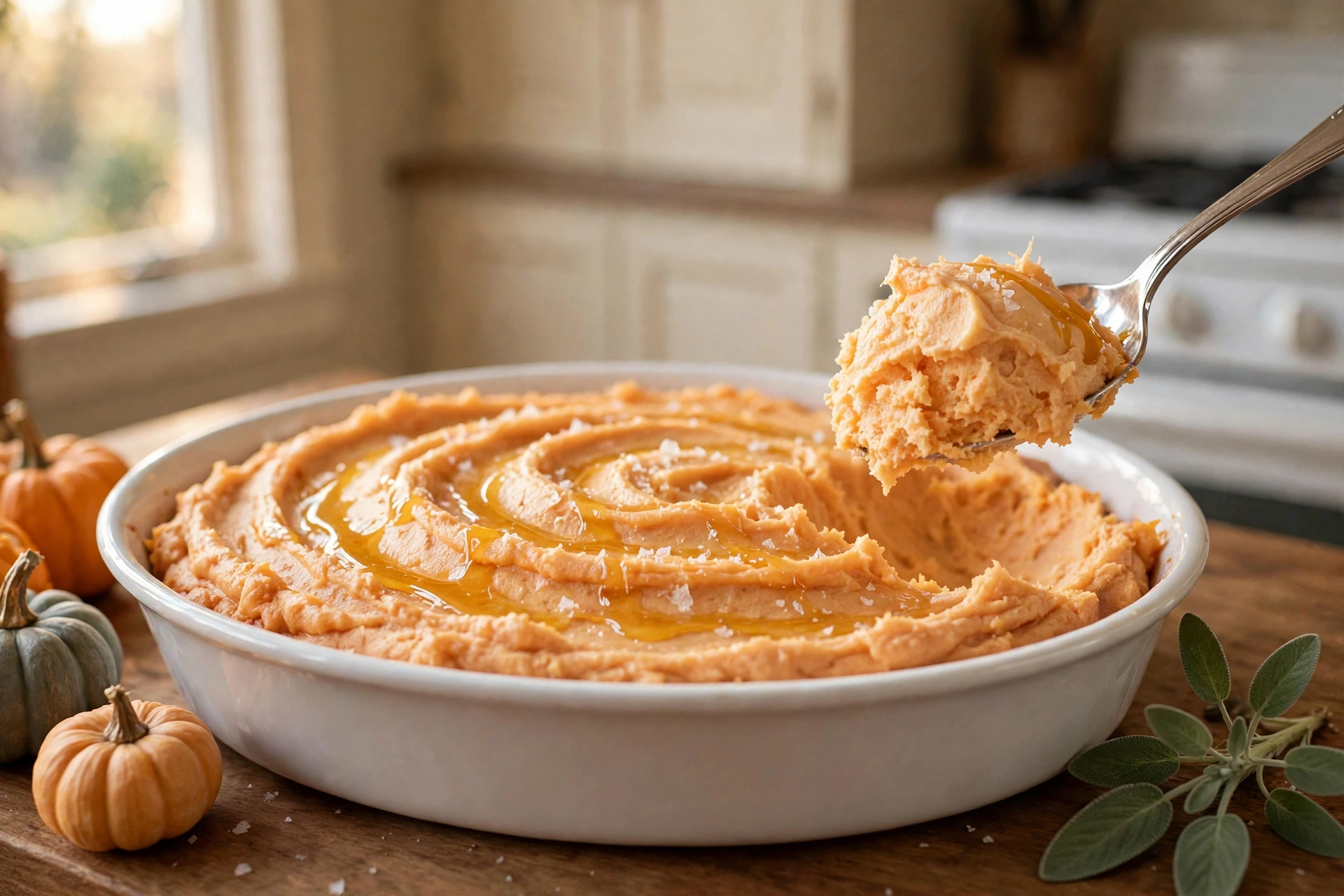
- Whip with a hand mixer on low for 20 seconds to combine, then on medium high for about 70 seconds, until the mixture turns paler, glossy and holds soft peaks that slump slowly.
- Stop the moment the peaks slump. Taste and add a pinch more salt if the sweetness tastes flat.
- Spoon into a warm serving bowl and swirl the top with the back of a spoon.
- Melt the remaining butter (28 g) with the maple syrup (20 g) in a small pan until just combined and glossy, about 1 minute. Drizzle over the swirls, finish with flaky salt and a pinch of cinnamon, and serve hot.
The 90 Second Whip: Speeds, Warm Cream and the Stop Signal
The clock matters more than the tool setting. Twenty seconds on low brings the bowl together without splashing, then seventy seconds on medium high does the actual whipping. Past two minutes total, the beaters start breaking the flesh down instead of lifting it.
Warm cream is not a fussy detail. Cream at fridge temperature drops the temperature of the flesh fast, the butter firms into tiny flecks, and the whip turns heavy. Sixty seconds in a small pan or twenty seconds in the microwave fixes it.
The stop signal is visual. The mixture lightens by a full shade, turns glossy, and forms peaks that fold over at the tip and settle slowly. When you see that, stop mid second if you have to. Another ten seconds will not make it fluffier, only looser.
If the bowl does go too far and turns shiny and slack, fold in 1/4 cup (60 g) of warm cream by hand with a spatula. It will not be quite as tall, but the texture comes back to soft and spoonable instead of gluey.
For the rest of the table, the same make ahead thinking drives our make ahead mashed potatoes, and the turkey itself follows the timing in the classic roast turkey guide, so the whole menu lands together.
The Thanksgiving Clock: Roast in the Morning, Whip at Half Past Three
The oven is the contested resource on Thanksgiving, so this dish is scheduled around the turkey instead of against it. Roast the sweet potatoes in the morning, between 9 and 10, while the oven is still free and the kitchen is calm.
Scoop the flesh into a covered container and refrigerate it. The butter, cream and seasonings wait, unmixed, because flesh whipped ahead and reheated never stands as tall as flesh whipped at the last minute.
At half past three, warm the flesh in a covered dish at 300 degrees F for 20 minutes, or in a pot over low heat with a splash of cream. Then whip exactly as written, ninety seconds, and drizzle the maple butter over the top.
If guests run late, the whipped bowl holds at 200 degrees F for up to 1 hour, covered, with the drizzle added at the table. The FoodKeeper guide from FoodSafety.gov gives the general two hour window for cooked sides at room temperature, and the low oven keeps you comfortably inside it.
Holding Warm, Leftovers and the Freezer Test
Leftovers keep for up to 4 days in the refrigerator, in a container with the surface pressed smooth so it does not dry. The flavor deepens overnight, because the cinnamon and nutmeg settle into the flesh instead of sitting on top of it.
Reheat on the stove over low heat with 1 to 2 tablespoons (15 to 30 g) of cream, stirring until hot and glossy. A quick 15 second pass with the hand mixer at the end restores most of the original height.
Freezing works better than most mashed dishes. Freeze in portions for up to 3 months, thaw overnight in the refrigerator, then reheat and rewhip as above. The texture loses a little loft, but for a weeknight side it passes easily.
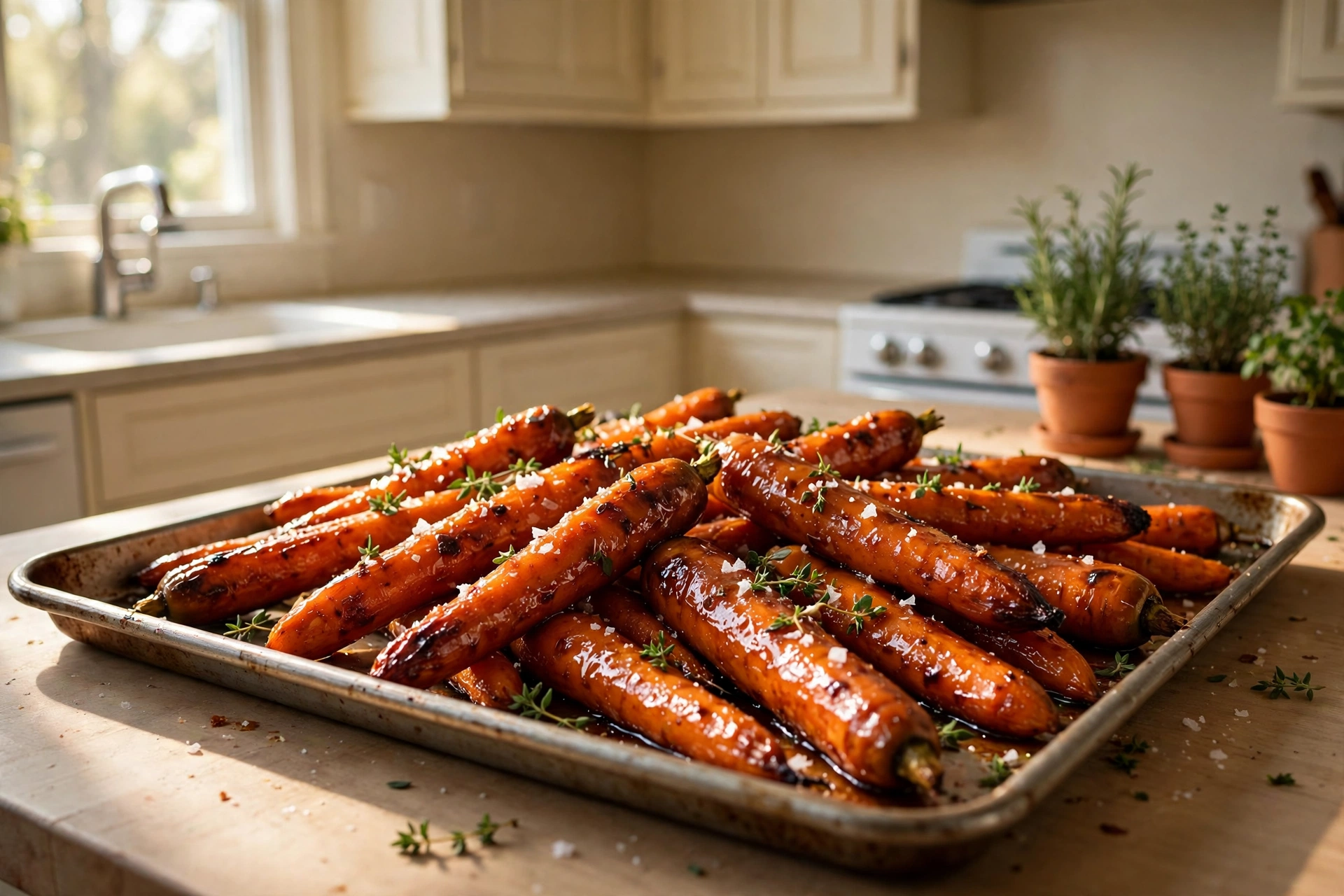
On a full holiday table, these sit comfortably beside our maple glazed carrots and a pan of creamed corn, the three of them covering sweet, glossy and creamy in one pass around the table.
Brown Butter, Orange Zest and a Savory Turn
Brown butter is the deepest variation. Cook the butter (85 g) alone for 3 to 4 minutes until the solids turn amber and smell nutty, then whip it in as written. The maple can drop to 2 tablespoons (40 g), because the browned butter brings its own sweetness.
Orange zest brightens the bowl for tables that find sweet potatoes heavy. Stir in 1 teaspoon (2 g) of finely grated zest with the seasonings and skip the nutmeg. The citrus lifts the whole dish without changing its character.
A savory turn suits the rest of the year. Cut the maple to 1 tablespoon (20 g), drop the vanilla and cinnamon, and add 1/2 teaspoon (1 g) of smoked paprika and a pinch of black pepper. The whip stays the same; only the mood changes.
For a dairy free bowl, replace the butter with 1/3 cup (75 g) of refined coconut oil, melted, and the cream with full fat coconut milk, warmed. The peaks stand slightly softer, and a faint coconut note sits under the maple.
The Bowl That Empties First
Whipped sweet potatoes earn their place by doing two jobs at once. They give the plate its color and its sweetness, and they give the cook a side dish that roasts in the morning and finishes in ninety seconds.
Make them once with the roast, the warm cream and the strict clock, and the method sticks. The bowl comes back empty, and the question at the table is never whether to make them again, only who is hosting next year.
FAQ
Can I whip sweet potatoes in a food processor instead of a hand mixer?
It works, but the texture suffers. Processor blades tear the starch cells open and the purée turns elastic and gummy within seconds. A hand mixer folds air in without shredding, which is what keeps the bowl fluffy.
Why did my whipped sweet potatoes turn gluey?
Almost always overwhipping or boiling. Boiled flesh holds too much water, and beating past about 90 seconds breaks the starch down. Roast the potatoes whole and stop whipping the moment soft peaks slump.
How far ahead can I make whipped sweet potatoes for Thanksgiving?
Roast and scoop the flesh up to 2 days ahead and refrigerate it plain. Warm it through, then whip with the warm butter and cream 30 minutes before serving. Whipping at the last minute keeps the peaks tall.
Do I have to peel the sweet potatoes before roasting?
No, and you should not. Roasting in the skin keeps the flesh dry and concentrated, and the skin slips away easily after cooking. Scoop the flesh out with a spoon and leave the skins behind.
Can whipped sweet potatoes be frozen?
Yes, for up to 3 months in portions. Thaw overnight in the refrigerator, reheat gently with a splash of cream, and give the bowl a 15 second whip to bring back the soft texture.
Whipped Sweet Potatoes
Garnet sweet potatoes roasted whole in their skins at 400 degrees F until the flesh concentrates, then whipped with warm butter, warm cream and maple syrup for exactly 90 seconds with a hand mixer, never a food processor. The starch stays intact, the air stays in, and a glossy maple butter drizzle finishes the swirls.
- Total Time: 1 hour 10 minutes
- Yield: One large serving bowl, 8 side servings
Ingredients
- 3 pounds garnet sweet potatoes (1360 g), about 6 medium, scrubbed
- 6 tablespoons unsalted butter (85 g), melted and warm
- 1/3 cup heavy cream (80 g), warmed
- 3 tablespoons pure maple syrup (60 g)
- 1 teaspoon vanilla extract (5 g)
- 3/4 teaspoon ground cinnamon (2 g)
- 1/4 teaspoon ground nutmeg (0.5 g)
- 3/4 teaspoon fine sea salt (4.5 g), plus more to taste
- 2 tablespoons unsalted butter (28 g), for the maple butter
- 1 tablespoon pure maple syrup (20 g), for the maple butter
- Flaky salt and a pinch of cinnamon, for serving
Instructions
- Heat the oven to 400 degrees F. Line a rimmed sheet pan with foil, because roasted sweet potatoes leak syrup as they cook.
- Prick each potato 6 to 8 times with a fork. Set them on the pan with space between them so the skins dry instead of steaming.
- Roast for 50 to 60 minutes, turning once halfway, until a thin knife slides to the center with no resistance and the skins feel papery.
- Rest the potatoes for 10 minutes, until you can hold them in a towel. Halve each one lengthwise and scoop the flesh into a large, warm bowl, leaving the skins behind.
- Add the melted warm butter (85 g), the warmed cream (80 g), the maple syrup (60 g), vanilla, cinnamon, nutmeg and fine salt to the hot flesh.
- Whip with a hand mixer on low for 20 seconds to combine, then on medium high for about 70 seconds, until the mixture turns paler, glossy and holds soft peaks that slump slowly.
- Stop the moment the peaks slump. Taste and add a pinch more salt if the sweetness tastes flat.
- Spoon into a warm serving bowl and swirl the top with the back of a spoon.
- Melt the remaining butter (28 g) with the maple syrup (20 g) in a small pan until just combined and glossy, about 1 minute. Drizzle over the swirls, finish with flaky salt and a pinch of cinnamon, and serve hot.
- Prep Time: 15 minutes
- Cook Time: 55 minutes
Nutrition
- Serving Size: 3
- Calories: 305
- Sugar: 17
- Sodium: 290
- Fat: 15
- Saturated Fat: 10
- Unsaturated Fat: 5
- Trans Fat: 0
- Carbohydrates: 41
- Fiber: 5
- Protein: 3
- Cholesterol: 44