In this article:
- Read the Weather First: Humidity Decides Before You Do
- The Syrup Is the Whole Recipe: 260 Degrees and Clean Pan Walls
- First the Shell, Then the Melt: How Divinity Eats
- Ingredients for the Candy and the Pecan Finish
- Beating, Dropping and Setting the Candy, in Order
- The Moment to Stop Beating: When the Shine Goes Matte
- Grainy, Flat or Sticky: the Three Divinity Failures
- Walnut, Cherry and a Peppermint Turn
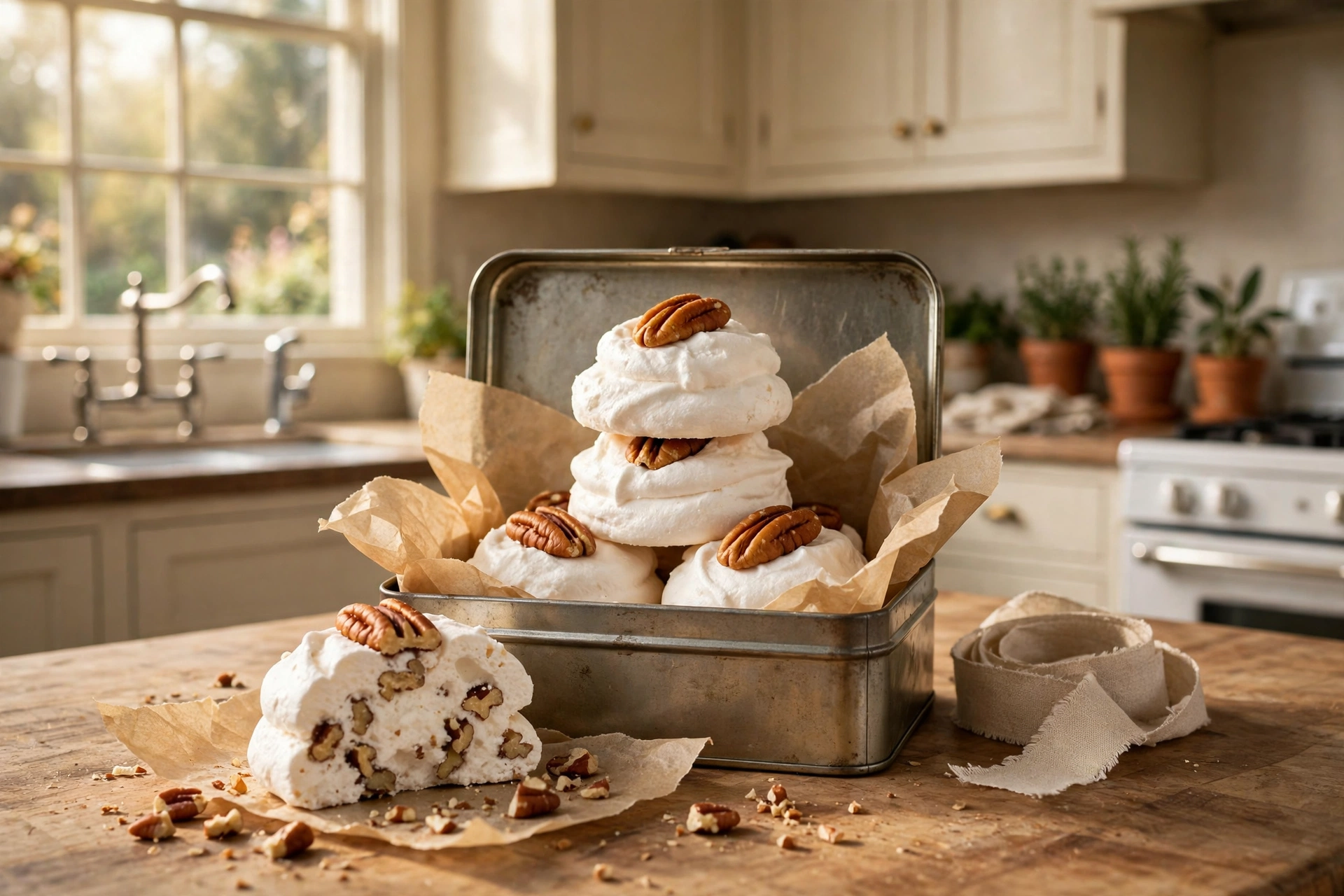
- Boxing It for Gifts: Parchment Layers and the Two Week Window
- A Candy That Tastes Like a December Kitchen
- FAQ
Old fashioned divinity candy is the sweetest kind of kitchen magic. A pot of plain sugar syrup and two egg whites become a tray of snowy white clouds, each one light enough to melt on the tongue, each one finished with a toasted pecan.
It is also the candy with a reputation. Generations of cooks have a story about a batch that stayed sticky, spread flat, or turned grainy, usually told while insisting the recipe came from a grandmother who never failed. The failures are real, but they are not mysterious.
Divinity fails for three reasons only: humid air, syrup that stopped short of temperature, and beating stopped at the wrong moment. This recipe names all three up front, with numbers, so the candy sets the way it should.
Read the Weather First: Humidity Decides Before You Do
Divinity is a cooked meringue, and meringue drinks moisture from the air. On a humid day, the candy absorbs water faster than it can dry, and no amount of beating fixes physics. Check the forecast before you check the pantry.
The working zones are simple. Below 50 percent relative humidity, make the candy with confidence. Between 50 and 60 percent, it can work but sets slowly and stays tender. Above 60 percent, choose another day, because the batch will likely stay soft and sticky.
December is kind to divinity makers in most houses. Heating season dries indoor air well below outdoor readings, so a cold, dry winter morning is often perfect even when the week looks damp. A small kitchen hygrometer settles the question in seconds.
Plan the batch for a dry morning and give the pieces the afternoon to set undisturbed. Rushing divinity into a tin before the surface dries is how good candy turns into a single fused layer.
The Syrup Is the Whole Recipe: 260 Degrees and Clean Pan Walls
Everything in divinity hangs on one number. The syrup of sugar, corn syrup and water must reach 260 degrees F, the hard ball stage. At that temperature, the syrup holds exactly the water content the candy needs to set firm and dry.
Five degrees short, and the candy stays soft for days. Ten degrees over, and it turns hard and crumbly instead of tender. A candy thermometer is not optional equipment here, and it should hang in the syrup without touching the bottom of the pan.
Crystallization is the second syrup danger. A single sugar crystal on the pan wall can seed the whole pot into grain. Stir only until the sugar dissolves, then stop, and wash down the sides with a wet pastry brush at the start of the boil.
The corn syrup is your insurance policy. Its long sugar chains physically block crystal formation, which is why divinity made without it so often turns sandy. Light corn syrup keeps the flavor clean and the color snow white.
First the Shell, Then the Melt: How Divinity Eats
A set piece of divinity has two textures in sequence. The outside dries into a delicate shell, firm enough to pick up and just crisp enough to notice. Inside, the candy stays soft and airy, closer to a firm marshmallow than to any fudge.
The bite gives way all at once. The shell yields, the center compresses, and the whole piece dissolves rather than chews. That disappearing quality is why people who claim not to like candy still take a second piece from the tray.
The pecans interrupt the sweetness twice. Chopped pieces inside give small, toasty crunches through the soft center. The half on top arrives first, roasted and warm tasting, and sets the flavor before the sugar lands.
Vanilla carries the whole profile, so use an extract you like on its own. There is nowhere for a harsh vanilla to hide in a candy this plain. Poured over the hot mixture at the end, it blooms in the steam and scents every piece.
Temperature matters at the table too. Divinity served from a cold room tastes firm and a little muted. An hour on the counter brings back the shell and melt contrast the candy was made for.
Ingredients for the Candy and the Pecan Finish
- 2 1/2 cups granulated sugar (500 g)
- 1/2 cup light corn syrup (160 g)
- 1/2 cup water (120 g)
- 1/4 teaspoon fine sea salt (1.5 g)
- 2 large egg whites (about 60 g), at room temperature
- 1/4 teaspoon cream of tartar (1 g)
- 1 teaspoon vanilla extract (4 g)
- 1 cup chopped pecans (100 g), toasted
- 24 pecan halves (about 30 g), toasted, for topping
Room temperature whites are not a nicety. Cold whites whip slowly and hold less air, and this candy is mostly air held in place by sugar. Set the whites out 30 to 45 minutes before you start, well inside the two hour safety window.
Beating, Dropping and Setting the Candy, in Order
- Line two baking sheets with parchment. Butter two teaspoons for dropping the candy, and have the chopped pecans and pecan halves beside the mixer. Once the beating starts, there is no pause to set up.
- Toast the pecans at 350 degrees F for 8 minutes, until fragrant. Cool them completely. Warm nuts folded into the candy melt its structure from the inside.
- Combine the sugar, corn syrup, water and salt in a heavy medium saucepan. Stir over medium heat only until the sugar dissolves, then brush down the pan walls with a wet pastry brush.
- Clip on a candy thermometer and cook the syrup without stirring to 260 degrees F, about 12 to 15 minutes. Watch closely near the end, because the last degrees move fast.
- When the syrup passes 240 degrees F, begin beating the egg whites with the cream of tartar in a stand mixer on medium high, until stiff, glossy peaks stand straight.
- At 260 degrees F, take the syrup off the heat. With the mixer running, pour it into the whites in a thin, steady stream, aiming between the whisk and the bowl wall. Pouring onto the whisk splashes hot syrup; pouring down the wall cools it too fast.
- Add the vanilla and beat on high until the candy turns thick and begins to lose its shine, 6 to 9 minutes. It should fall from the whisk in a heavy ribbon and hold a soft peak on the surface.
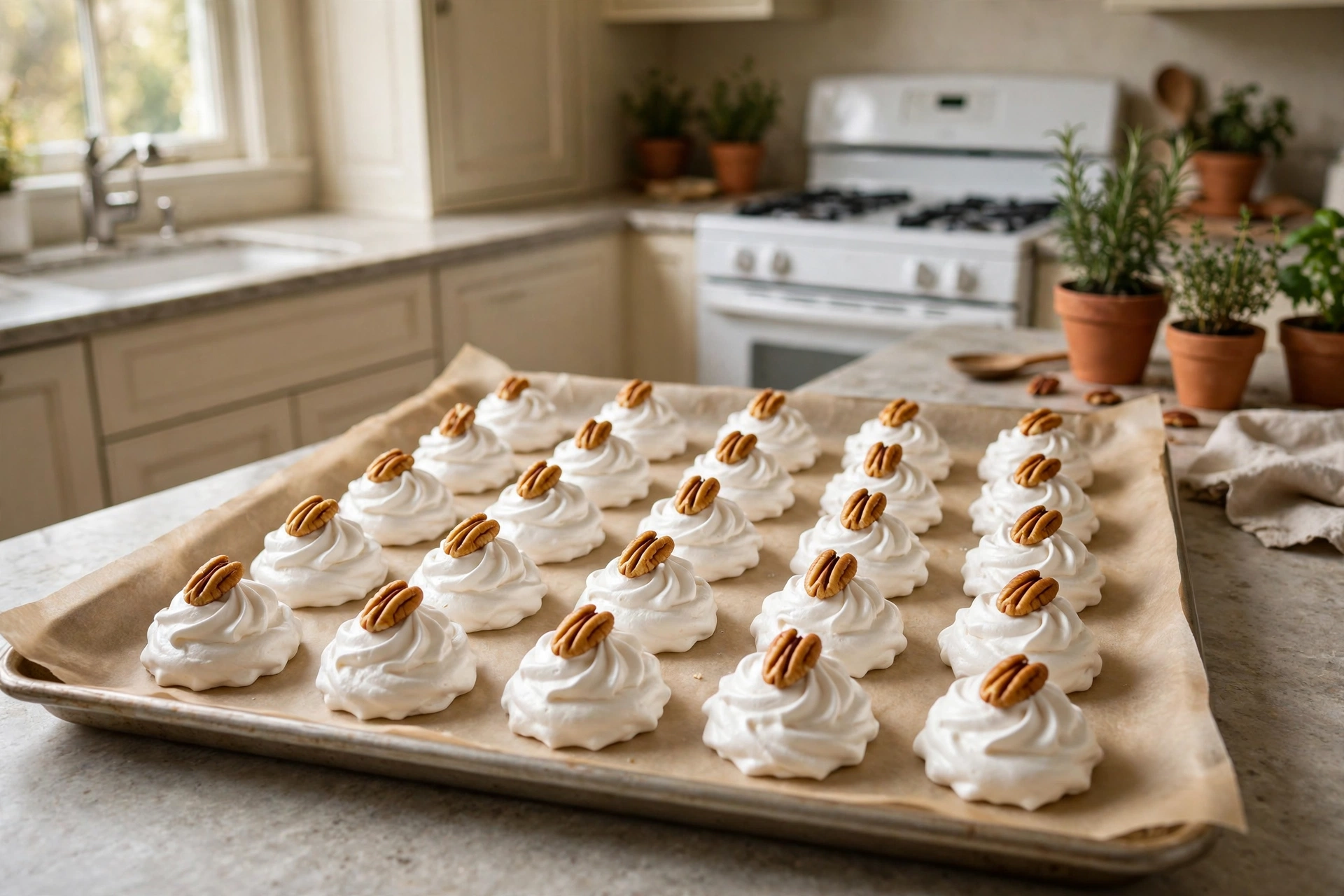
- Fold in the cooled chopped pecans quickly with a spatula. Drop the candy by buttered teaspoonfuls onto the parchment, swirling each mound, and press a pecan half on top of each piece.
- Leave the trays uncovered in a cool, dry room for at least 2 hours, until the surfaces feel dry and the pieces lift cleanly. Do not refrigerate them to speed this up.
The Moment to Stop Beating: When the Shine Goes Matte
Recipes argue about beating time because time is the wrong measure. Mixers differ, syrup temperatures drift, and room humidity changes the pace. The candy itself tells you when it is done, in three visible signs.
First, the gloss fades. Fresh divinity mixture shines like wet marshmallow; finished mixture looks satin, then matte at the edges of the bowl. Second, the whisk leaves a ribbon that sits on the surface for several seconds before melting back.
Third, a spoonful dropped on parchment holds a soft peak instead of spreading. Check all three together, starting at six minutes. If you beat past this point, the candy sets in the bowl and drops in stiff, dry lumps, still tasty but no longer elegant.
If the mixture is still glossy and flowing at ten minutes, the syrup was likely a few degrees short. Keep beating for two more minutes and drop the pieces a little smaller. They will set softer, closer to a firm marshmallow, and the lesson is logged for next time.
Grainy, Flat or Sticky: the Three Divinity Failures
Grainy candy means crystallization. The causes are specific: stirring after the boil began, sugar crystals left on the pan wall, or a thermometer that reads low. The fixes are the wet brush, a hands off boil, and a thermometer tested in boiling water, which should read 212 degrees F at sea level.
Flat, spreading candy means the structure never formed. Either the whites were underbeaten when the syrup arrived, the syrup fell short of 260 degrees F, or the beating stopped while the mixture still shone. All three are timing problems, and all three are preventable on the next batch.
Sticky candy that never dries points at the weather. Above 60 percent humidity, the surface pulls in water as fast as it loses it. Move the trays to the driest room in the house, near heating vents rather than the steamy kitchen, and give them up to 12 hours before judging.
Hard, crumbly candy means the syrup overshot. Even 268 degrees F pushes divinity toward a dry snap. Pull the syrup at 258 degrees F if your thermometer is known to run hot, and remember that the temperature climbs a degree or two after the pan leaves the heat.
Walnut, Cherry and a Peppermint Turn
Walnuts are the oldest swap in the book. Use 1 cup chopped walnuts (100 g) in place of the pecans for a slightly bitter edge that suits the sweetness. Toast them the same 8 minutes, and skip the halves on top if the look gets busy.
For a cherry version, fold in 1/2 cup finely chopped dried cherries (70 g) with the nuts, or in place of half of them. The tart red flecks against the white candy are made for a Christmas tin, and the chew contrasts nicely with the melt.
Peppermint divinity belongs on a holiday tray next to our homemade peppermint bark. Replace the vanilla with 1/2 teaspoon peppermint extract (2 g) and fold in 1/4 cup crushed candy canes (40 g) at the very end, accepting that the candy will soften a touch faster.
On safety, one reassurance worth having in writing: Clemson Extension lists divinity among the egg white preparations considered safe, because the hot syrup cooks the whites as it pours in. Their full guidance sits at Clemson Extension, Safe Handling of Eggs.
Boxing It for Gifts: Parchment Layers and the Two Week Window
Divinity makes an ideal gift precisely because it asks for no refrigeration and travels at room temperature. Wait until the pieces are fully dry to the touch, at least 2 hours, before any of them touch a tin.
Pack in a single layer when you can. If the tin needs two layers, separate them with parchment, and never stack divinity against fudge or caramels, whose moisture migrates and softens the shells. Our peppermint white chocolate fudge keeps its own tin for the same reason.
In a cool, dry room, boxed divinity keeps its texture for 10 to 14 days, which covers the whole Christmas mailing window. Keep the tin away from the stove and out of the refrigerator, where condensation is the enemy, and add a note that it is best in the first week.
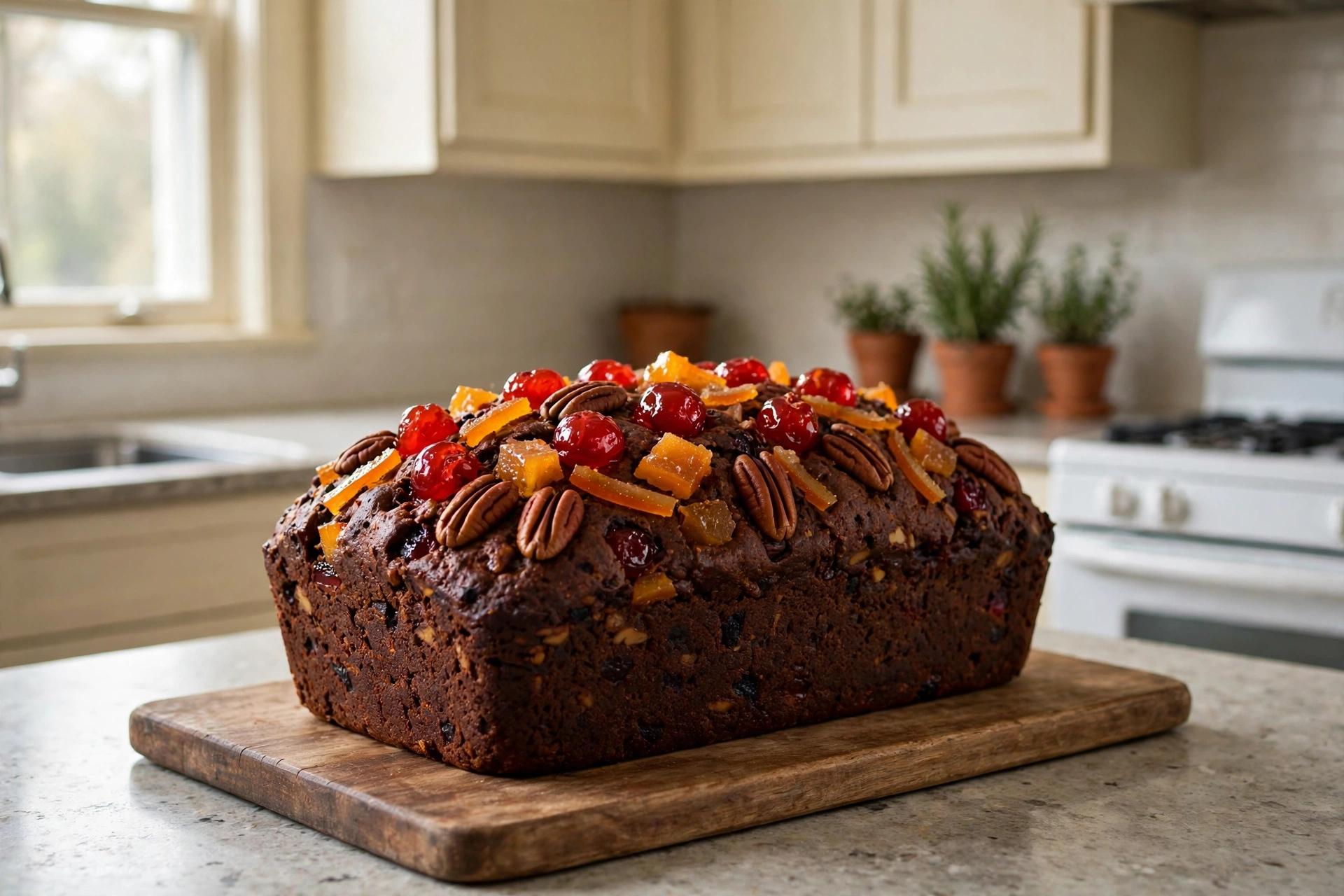
A mixed holiday box comes together fast from the Cookaza archives: divinity for the traditionalists, slices of our Christmas fruitcake for the patient, and our pecan pie bars for everyone in between.
A Candy That Tastes Like a December Kitchen
Old fashioned divinity candy rewards the cook who respects its three rules: dry air, honest temperature, and beating stopped at the matte moment. None of them is difficult. All three together separate the legendary batches from the sticky stories.
Make the first tray on a crisp morning, drop the swirls, press on the pecans, and let the house do the rest. By afternoon you will have a tin of white clouds that tastes like every good December kitchen at once.
FAQ
Why did my divinity stay sticky and never set?
Humidity is the usual cause. Above 60 percent relative humidity, divinity absorbs moisture faster than it dries. Move the trays to the driest room in the house and allow up to 12 hours before deciding the batch failed.
What temperature should the syrup reach for divinity?
Exactly 260 degrees F, the hard ball stage, read on a candy thermometer that does not touch the pan bottom. Below that, the candy stays soft; much above it, the candy turns hard and crumbly instead of tender.
How do I know when to stop beating divinity?
Watch the candy, not the clock. It is ready when the gloss turns matte, the whisk leaves a ribbon that holds for several seconds, and a dropped spoonful keeps a soft peak. On a stand mixer this usually takes 6 to 9 minutes.
Can I make divinity without a stand mixer?
A hand mixer works, but the beating runs 6 to 9 minutes at high speed and the bowl gets heavy with hot syrup being poured at the same time. A helper to pour while you hold the mixer makes it manageable.
How long does homemade divinity keep for Christmas gifts?
Packed dry in an airtight tin with parchment between layers, it keeps 10 to 14 days in a cool, dry room. Do not refrigerate it, and keep it in its own tin, away from moist candies like fudge.
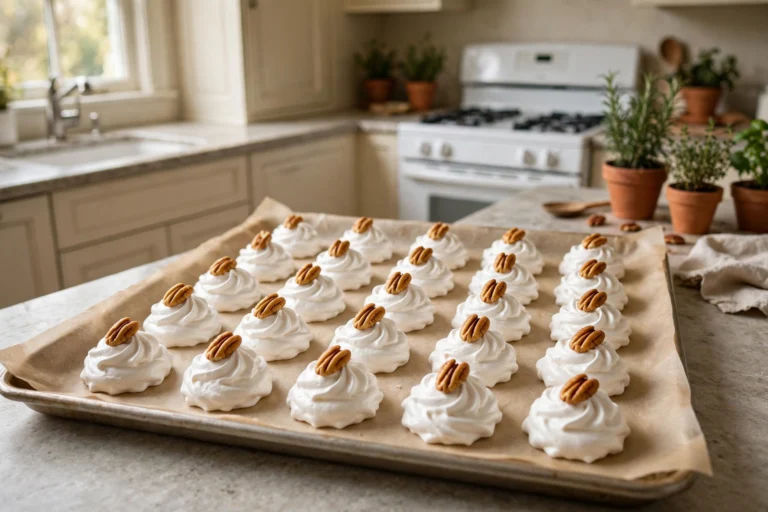
Old Fashioned Divinity Candy
A cooked meringue candy built on three rules: make it on a dry day with humidity under 50 percent, take the syrup to exactly 260 degrees F, and stop beating when the gloss turns matte and the ribbon holds. Toasted pecans fold in at the end, a pecan half tops each snowy piece, and the trays set uncovered for 2 hours before boxing for gifts.
- Total Time: 2 hours 35 minutes
- Yield: About 36 pieces 1x
Ingredients
- 2 1/2 cups granulated sugar (500 g)
- 1/2 cup light corn syrup (160 g)
- 1/2 cup water (120 g)
- 1/4 teaspoon fine sea salt (1.5 g)
- 2 large egg whites (about 60 g), at room temperature
- 1/4 teaspoon cream of tartar (1 g)
- 1 teaspoon vanilla extract (4 g)
- 1 cup chopped pecans (100 g), toasted
- 24 pecan halves (about 30 g), toasted, for topping
Instructions
- Line two baking sheets with parchment. Butter two teaspoons for dropping the candy, and set the pecans beside the mixer.
- Toast the pecans at 350 degrees F for 8 minutes, until fragrant. Cool completely.
- Combine the sugar, corn syrup, water and salt in a heavy medium saucepan. Stir over medium heat only until the sugar dissolves, then brush down the pan walls with a wet pastry brush.
- Cook the syrup without stirring to 260 degrees F on a candy thermometer, about 12 to 15 minutes.
- When the syrup passes 240 degrees F, beat the egg whites with the cream of tartar on medium high until stiff, glossy peaks stand straight.
- Pour the 260 degree syrup into the whites in a thin, steady stream with the mixer running, aiming between the whisk and the bowl wall.
- Add the vanilla and beat on high until the candy thickens, loses its shine and holds a ribbon, 6 to 9 minutes.
- Fold in the cooled chopped pecans. Drop by buttered teaspoonfuls onto the parchment, swirl each mound, and press a pecan half on top of each piece.
- Leave uncovered in a cool, dry room for at least 2 hours, until the surfaces feel dry and the pieces lift cleanly.
Notes
Nutrition is an estimate based on the ingredients and cooking methods used.
- Prep Time: 20 minutes
- Cook Time: 15 minutes
Nutrition
- Serving Size: 1 piece
- Calories: 90
- Sugar: 17
- Sodium: 20
- Fat: 3
- Saturated Fat: 1
- Unsaturated Fat: 2
- Trans Fat: 0
- Carbohydrates: 18
- Fiber: 0
- Protein: 1
- Cholesterol: 0